The History of Volvo: Gothenburg's Car Maker from 1927 to Today
Volvo is a Swedish car maker based in Gothenburg. The name, Latin for "I roll", was registered by the bearing maker SKF in 1915, and the first Volvo car, the ÖV 4 "Jakob", left the line on 14 April 1927. The company made its name with safety, its car division was sold to Ford in 1999, and has belonged to China's Geely since 2010.

Key takeaways
- 1915–1927: SKF registers the Volvo name; Assar Gabrielsson and Gustaf Larson build the first car in Gothenburg.
- 1944–1990s: the PV444, Amazon, 140 and 240 families build a reputation for durability and safety, including the three-point seat belt of 1959.
- 1999–2010: AB Volvo sells the car business to Ford; Volvo Cars and the truck maker Volvo Group become separate companies.
- Since 2010: Geely ownership, new platforms, electrified models and a stock market listing in 2021.

Volvo at a glance

| Fact | Detail |
|---|---|
| Name | from Latin "volvo", "I roll" |
| Trademark registered | 11 May 1915, by SKF |
| First car | ÖV 4 "Jakob", 14 April 1927 |
| Founders | Assar Gabrielsson (managing director) and Gustaf Larson (technical manager) |
| Headquarters | Torslanda, Gothenburg, Sweden |
| Owners of the car business | AB Volvo to 1999, Ford 1999–2010, Geely since 2010 |
| Plants today | Torslanda (Sweden), Ghent (Belgium), Chengdu and Daqing (China), Ridgeville (United States) |
| Production in 2025 | 710,042 cars |
SKF, a ball bearing and a name
The story began with a brand name, not a car. On 11 May 1915 the Swedish bearing manufacturer SKF registered "Volvo" as a trademark for a series of ball bearings intended for the American market. The plan was dropped, and the name waited for a better use.

That use came from two SKF men. Assar Gabrielsson, a sales manager, and Gustaf Larson, an engineer, persuaded the company to back a Swedish car built for Swedish roads and winters. The new firm was set up as an SKF subsidiary with Gabrielsson as managing director and Larson as technical manager, and the first car left the plant in Gothenburg on 14 April 1927.
The first cars: ÖV 4 to PV444
The ÖV 4, nicknamed "Jakob", was an open four-cylinder tourer, and a closed version, the PV4, followed. In 1929 the six-cylinder PV651 followed, and in 1936 the cheaper PV51 widened the market. The firm also built trucks from its early years, which later grew into the separate Volvo Group.

The model that turned the company into a real car maker was the PV444. Presented in 1944 and built from 1947, it was a compact fastback saloon with laminated glass in the windscreen, an early safety feature for a small car. Its successor, the PV544, kept the same basic shape into the 1960s.
| Model | Introduced | What it brought |
|---|---|---|
| ÖV 4 "Jakob" | 1927 | first Volvo, open four-cylinder tourer |
| PV651 | 1929 | first six-cylinder Volvo |
| PV51 | 1936 | cheaper family car |
| PV444 | 1944 (built from 1947) | compact fastback, laminated windscreen |
| Amazon (120 series) | 1956 | three-point seat belts from 1959 |
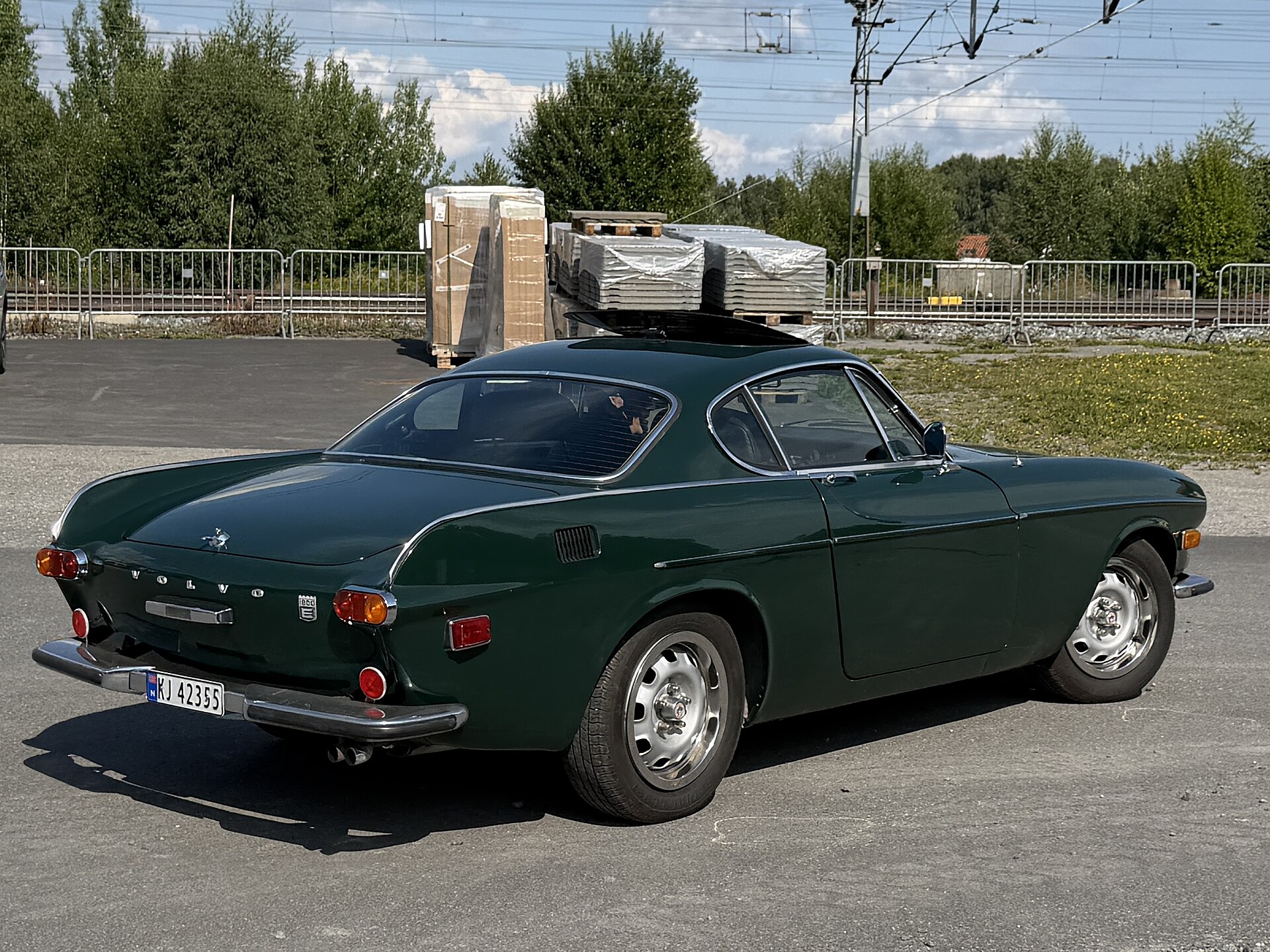
| P1800 | 1960 (shown) | sports coupé |
| 140 series | 1966 | start of three-digit model names |
| 240 | 1974 | long-lived saloon and estate |
| 850 | 1991 | first front-wheel-drive executive Volvo, SIPS |
| XC90 | 2002 | first Volvo SUV |
Safety becomes the brand
The brand's safety reputation rests on one invention above all. In 1959 the engineer Nils Bohlin designed the three-point seat belt, and it became standard on Volvo cars, first in the Amazon and PV544. The company then left the patent open, so other makers could use the design free of charge.
Further steps followed over the next decades. The 140 series of 1966 had brakes with two independent circuits and a body designed with crumple zones. The company also pioneered rear-facing child seats and collapsible steering columns, and was an early user of the three-way catalytic converter. In 1991 the 850 introduced the Side Impact Protection System (SIPS), later fitted to the 700 and 900 series as well.
Exports, new plants and the 240 years
The first cars reached the United States in 1955, and America became its most important export market. Production grew quickly: new plants opened in Halifax, Canada, in 1963, at Torslanda in Gothenburg in 1964 and in Ghent, Belgium, in 1965. The P1800 sports coupé, shown in 1960, gave the brand a glamorous image, and from 1966 the 140 series introduced three-digit model names.

The 240 of 1974 became the archetypal boxy Volvo saloon and estate and was built until 1993. In 1982 the 700 series moved the brand upmarket, and in 1986 American sales reached a record 113,267 cars. A planned merger with Renault in 1993 fell through, and the 850 of 1991 marked a move to front-wheel drive for the larger models.
Ford buys Volvo Cars (1999–2010)
In 1999 AB Volvo, the parent company, sold its car division to Ford for 6.45 billion US dollars, or about €6 billion at the exchange rate of the time. From then on the Volvo name was used by two separate businesses: Volvo Cars, owned by Ford, and AB Volvo, today's Volvo Group, which kept trucks, buses and construction equipment. The trademark is now owned jointly by the two, 50/50.

Under Ford, the Swedish brand launched its first SUV, the XC90, in 2002, and shared platforms with other Ford brands. The car business was in debt every year from 2005, and when Ford needed money during the financial crisis, Volvo Cars was put up for sale. Volvo's heavy trucks, such as the Volvo FH, belong to the other company and were never part of this deal.
The Geely era (since 2010)
Zhejiang Geely Holding bought Volvo Cars from Ford for 1.8 billion US dollars, about €1.4 billion at the 2010 rate; the deal closed on 2 August 2010. By our calculation, Ford sold the business for less than a third of what it had paid eleven years earlier. Geely's own rise is told in our history of Geely.

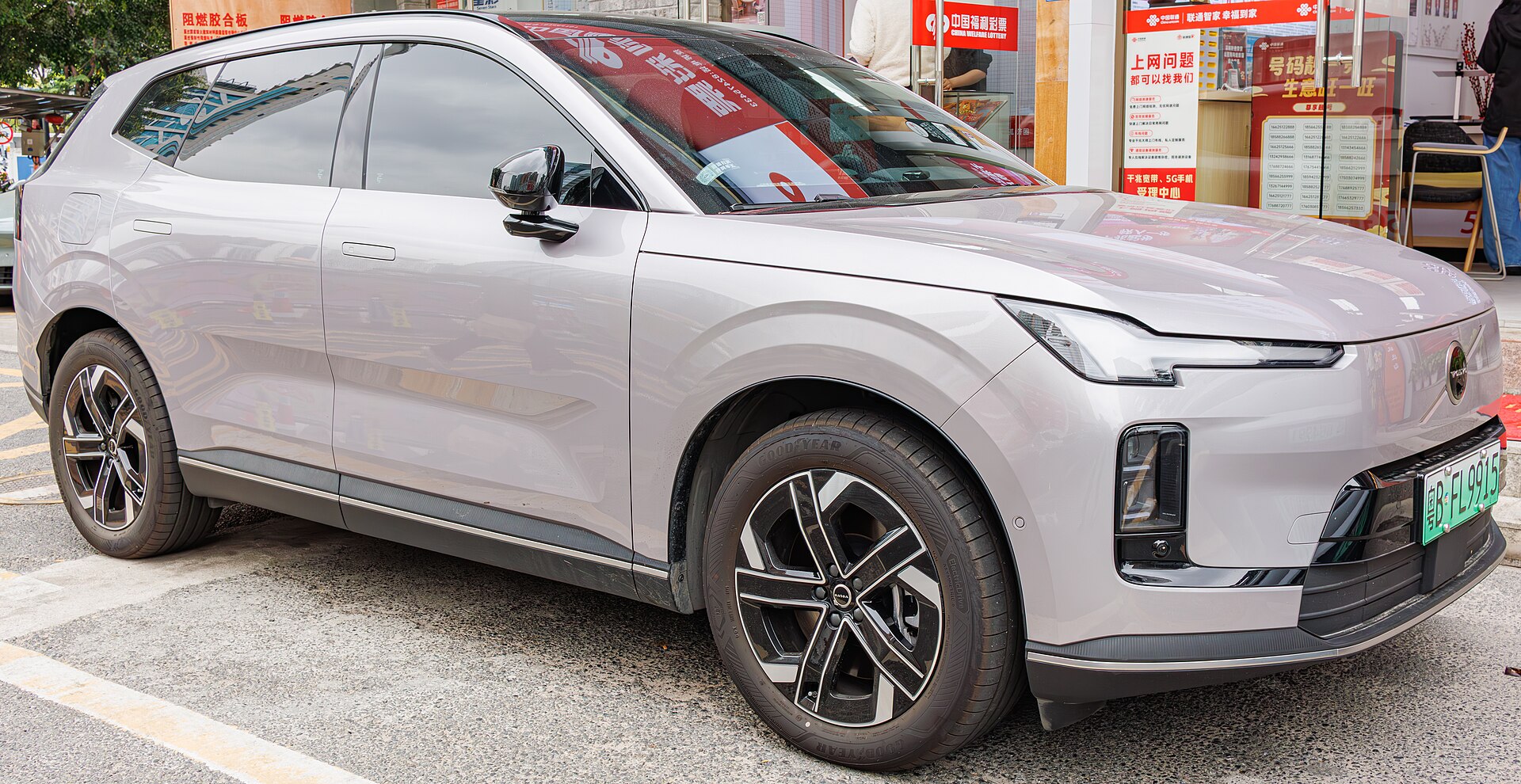
The new owner left Volvo's engineering in Sweden and funded new architectures. The Scalable Product Architecture (SPA) arrived with the second-generation Volvo XC90 in 2014 and was followed by the smaller CMA platform for the XC40. New plants opened in Chengdu (2013) and Daqing (2014) in China and in Ridgeville, South Carolina, in 2018. In 2015 Volvo sold more than half a million cars in a year for the first time.
Electrification and the stock market listing
In 2017 the company announced that every new model from 2019 would have an electric motor, either hybrid or fully electric. In March 2021 it went further and promised to sell only electric cars by 2030, but in 2024 it dropped that target and kept plug-in hybrids in the range.

In October 2021 Volvo Cars listed about 18 % of its shares on Nasdaq Stockholm, with Geely keeping majority control. In 2025 the company produced 710,042 cars, by our calculation about 42 % more than the half-million mark it first passed in 2015. Current models such as the XC60 and the S60 are listed in our Volvo catalogue, and our comparisons set the XC90 against the Audi Q7 and the XC60 against the BMW X3.
Volvo Cars and Volvo Group: two companies, one name
| Point | Volvo Cars | Volvo Group (AB Volvo) |
|---|---|---|
| Products | passenger cars | trucks, buses, construction equipment, engines |
| Owner | Geely majority, listed in Stockholm since 2021 | listed Swedish company |
| Separate since | 1999 sale to Ford | parent company before 1999 |
| Brand | Volvo trademark shared 50/50 | Volvo trademark shared 50/50 |
The old version of this page described Volvo as a maker of buses and off-road vehicles that had sold its car division. That mixed the two companies; the car maker described here is Volvo Cars.

Our verdict: which era of Volvo to look for
For classic buyers, the PV544, Amazon and 240 are the easiest entry into Volvo history: robust, simple and well supported by clubs. The P1800 is the stylish choice and costs more. For modern buyers, the Geely-era cars on SPA and CMA platforms bring the latest safety systems and plug-in hybrid or electric drive. The Ford-era cars of 1999–2010 are the cheapest way into a modern Volvo.

FAQ
When was Volvo founded?
SKF registered the Volvo name on 11 May 1915, and the car company started as an SKF subsidiary led by Assar Gabrielsson and Gustaf Larson. The first car, the ÖV 4, left the Gothenburg plant on 14 April 1927.
What does the name Volvo mean?
Volvo is Latin for "I roll". SKF first registered it in 1915 for a planned range of ball bearings, which suited the meaning, but the name was later given to the new car company instead.
Who owns Volvo Cars today?
Volvo Cars has been majority-owned by Zhejiang Geely Holding since August 2010, when Geely completed its purchase from Ford. Since October 2021 part of its shares has traded on Nasdaq Stockholm.
Did Volvo invent the seat belt?
Volvo engineer Nils Bohlin invented the three-point seat belt in 1959, and Volvo made it standard on its cars that year. The company left the patent open so that every maker could use it for free.
Are Volvo Cars and Volvo Trucks the same company?
No. Since the 1999 sale of the car division to Ford, Volvo Cars and the Volvo Group, which builds trucks and buses, have been separate companies that share the Volvo trademark 50/50.
Photos (5)


Videos 2

Video 1

Video 2