 Volvo V60 Cross Country
All generations, specs and history
Updated Published Sources (4) Report an error
By Felix Hartmann, Automotive Technology & EV Contributor Reviewed by Oleksandr Hnatiuk

- Built
- 2015–present
- Generations
- 2
- Top power
- 187 kW (254 PS)
Timeline
V60 Cross Country generations
Click a generation for its own page


- V60 Cross Country 2015–2018 · Station wagon · 110–187 kW (150–254 PS)
- V60 Cross Country II Current 2018–now · Station wagon · 140–184 kW (190–250 PS)
Newest first · 2 generations since 2015
-
2018

-
2015
All generations by year: V60 Cross Country II (2018–now) · V60 Cross Country (2015–2018)
Which one is mine?
Pick the year of first registration to see which generation it is.
- V60 Cross Country II 2018–present
- V60 Cross Country 2015–2018
Which V60 Cross Country to choose
Our verdict · Felix Hartmann
Choose the second generation if your budget allows. It has more space, all-wheel drive on every car and a more modern safety system. The D4 diesel suits drivers who cover long distances, while a mild-hybrid B4 or B5 makes more sense for mixed driving.
A first-generation D4 AWD or T5 AWD is the value choice for buyers who need real grip on snow or gravel. Avoid the front-wheel-drive versions if you bought the Cross Country for its off-road ability: they have the ground clearance but not the traction. Other models are on the Volvo brand page, and the wider choice is in the estate cars section.
The Volvo V60 Cross Country is a raised, all-road version of the V60 estate. The first generation, revealed at the Los Angeles show in November 2014, sat 65 mm higher than the normal V60. The second generation, built on Volvo's SPA platform, followed in September 2018 with standard all-wheel drive and a more rugged look.
In short
- First generation 2015–2018: front- or all-wheel drive, diesel and petrol engines from 110 to about 187 kW.
- Second generation from 2018: all-wheel drive as standard, D4 diesel at launch and later mild-hybrid petrol engines.
- About 60–75 mm more ground clearance than a standard V60, depending on generation and source.
- Boot space grew from 430 litres to 529 litres with the second generation.

Size at a glance
| Dimensions | Volvo V60 Cross Country |
|---|---|
| Length | 4,638 mm182.6 in |
| Width | 1,899 mm74.8 in |
| Height | 1,545 mm60.8 in |
| Wheelbase | 2,774 mm109.2 in |
Specs by version
Engines
Dimensions and weight
Verified Manufacturer and type-approval data from our catalog · Sources and methodology
V60 Cross Country generations at a glance

| Feature | First generation (2015–2018) | Second generation (2018–) |
|---|---|---|
| Revealed | Los Angeles, November 2014 | September 2018 |
| Platform | Ford-era EUCD (Volvo P3) | Volvo SPA |
| Drive | front-wheel or all-wheel drive | all-wheel drive |
| Engines at launch | D3, D4, T5 | D4 diesel |
| Gearboxes | 6-speed manual, 6- and 8-speed automatic | 8-speed automatic |
| Extra ground clearance | 65 mm over the V60 | 60–75 mm over the V60 |
| Boot | 430 l | 529 l, 1,441 l with seats folded |
| Euro NCAP | not tested separately | five stars (V60, 2018) |
Why Volvo made a Cross Country version of the V60
Volvo has sold raised estates since the V70 XC of the late 1990s, and the formula is simple: more ground clearance, plastic wheel-arch trims and underbody protection, while keeping the low roof and driving manners of an estate. The V60 Cross Country brought this idea to Volvo's mid-size estate for the first time.

Volvo revealed it at the Los Angeles Motor Show in November 2014. Orders opened in spring 2015, according to the old 1cars text, with the European and other markets following the North American launch. The car was a rival to the Audi A4 allroad quattro and the Subaru Outback, both of which use the same raised-estate idea. For a taller SUV alternative from the same brand, see the Volvo XC60.
First generation: design, size and cabin
The first V60 Cross Country was based on the facelifted V60 of 2014. Volvo added skid plates front and rear, side scuff plates and wider wheel-arch extensions. New 18-inch and 19-inch wheels came with high-profile tyres, which Volvo said improved comfort and reduced road noise.

| Dimension | First generation (old 1cars text) |
|---|---|
| Length | 4,638 mm |
| Width | 1,899 mm |
| Height | 1,545 mm |
| Wheelbase | 2,774 mm |
| Ground clearance | 201 mm (standard V60: 136 mm) |
| Kerb weight | 1,712–1,836 kg |
| Boot | 430 l, rear seats split 40/20/40 |
The cabin is the same as in the standard V60, with the "floating" centre console that was typical of Volvos of that period. The old 1cars text praises the quality of materials and the front seats, but notes that the centre rear passenger has to sit over a high transmission tunnel. By our calculation, the 65 mm of extra clearance is a 48 % increase over the standard car.
First-generation engines and fuel consumption
Volvo offered three main engines, with the choice depending on the market. Front-wheel-drive versions used the new four-cylinder Drive-E engines, while all-wheel-drive versions kept five-cylinder units.

| Version | Engine | Power | Drive | Combined fuel use |
|---|---|---|---|---|
| D3 | 2.0 four-cylinder diesel (Drive-E) | 110 kW (150 PS), 350 Nm | front | 4.2 l/100 km, 111 g/km (manual) |
| D4 FWD | 2.0 four-cylinder diesel (Drive-E) | 140 kW (190 PS) | front | 4.2 l/100 km, 111 g/km (manual) |
| D4 AWD | 2.4 five-cylinder diesel | 140 kW (190 PS) | all-wheel | - |
| T5 FWD | 2.0 four-cylinder petrol (Drive-E) | 180 kW (245 PS), 350 Nm | front | 6.6 l/100 km, 153 g/km (8-speed auto) |
| T5 AWD | 2.5 five-cylinder petrol turbo | about 184–187 kW (250–254 PS) | all-wheel | - |
The all-wheel-drive system uses a Haldex clutch at the rear axle. Hill Descent Control was standard on all-wheel-drive cars and holds a steady speed on steep slopes. According to the old 1cars text, the top speed of all versions was electronically limited to 210 km/h.
First-generation safety and equipment
Safety was a strong point. City Safety braked automatically at speeds up to 50 km/h, and Pedestrian and Cyclist Detection could also stop the car. Other systems included Lane Keeping Aid between 65 and 200 km/h and the Blind Spot Information System, which monitored up to 70 m behind. Cross Traffic Alert helped when reversing out of parking spaces, and Active High Beam Control was also available.

The old 1cars text lists three trim levels, Kinetic, Momentum and Summum, with a 5-inch screen on the base version and an 8-inch display on the upper trims. Electric power steering offered three levels of assistance.
Second generation: SPA platform and new styling
The second V60 Cross Country was announced in September 2018, shortly after the new V60 estate. It uses Volvo's Scalable Product Architecture (SPA), shared with the Volvo V90, the XC60 and the XC90. The body is just under 4.8 m long and just over 1.9 m wide.

Volvo raised the ride height by 75 mm according to its launch information, while a British road test gave 60 mm. The suspension was developed for rough roads, and an Off-Road drive mode joined Hill Descent Control. The car has a black wide grille with vertical bars, extra body cladding and its own wheel designs.
The boot holds 529 litres and 1,441 litres with the rear seats folded. In the same 2019 test, the Audi A4 Avant offered 504 litres and the BMW 3 Series Touring 495 litres, so the Volvo leads its premium rivals on space.
Second-generation engines, performance and towing
At launch the only engine was the D4 diesel: a 2.0-litre four-cylinder with 140 kW (190 PS) and 400 Nm. It came with an 8-speed automatic and all-wheel drive, reached 100 km/h in 8.2 seconds and had a top speed of 210 km/h. Combined fuel economy was 42.8–47.9 mpg in the WLTP cycle, or about 5.9–6.6 l/100 km by our conversion.

A T5 petrol with about 183 kW (249 PS) followed. From 2020 in Europe, Volvo switched the range to B-badged mild-hybrid engines with a 48-volt system. In the United States the V60 has been sold only as a Cross Country since 2021, and mild-hybrid versions replaced the plain petrol engines there by 2023.
| Second-generation data | Value |
|---|---|
| D4 power | 140 kW (190 PS), 400 Nm |
| 0–100 km/h (D4) | 8.2 s |
| Top speed (D4) | 210 km/h |
| Braked towing capacity | 2,000 kg |
| Euro NCAP | five stars (2018) |
V60 Cross Country against its rivals
| Model | Ground clearance idea | Boot (litres) | Drive |
|---|---|---|---|
| Volvo V60 Cross Country (2018) | raised estate | 529 | all-wheel |
| Audi A4 allroad quattro | raised estate | about 500 | all-wheel |
| Subaru Outback | raised estate | 559 | all-wheel |
| Vauxhall/Opel Insignia Country Tourer | raised estate | 560 | front or all-wheel |
The Subaru and the Insignia offer slightly more boot space, while the Volvo has the most complete safety equipment and the better-finished cabin. Use the 1cars comparison tool to compare dimensions and data side by side, or estimate running costs with the fuel cost calculator.

Volvo V60 Cross Country: first vs latest generation
| Spec | V60 Cross Country | V60 Cross Country II | Change |
|---|---|---|---|
| Years | 2015–2018 | 2018–present | 3 years apart |
| Most powerful version | 187 kW (254 PS) | 184 kW (250 PS) | −3 kW (−2%) |
Oldest and newest generation in the 1cars catalog. Power is the strongest version of each; other rows are shown only when both generations have the figure.
Image credits · Photos from Wikimedia Commons under free licences
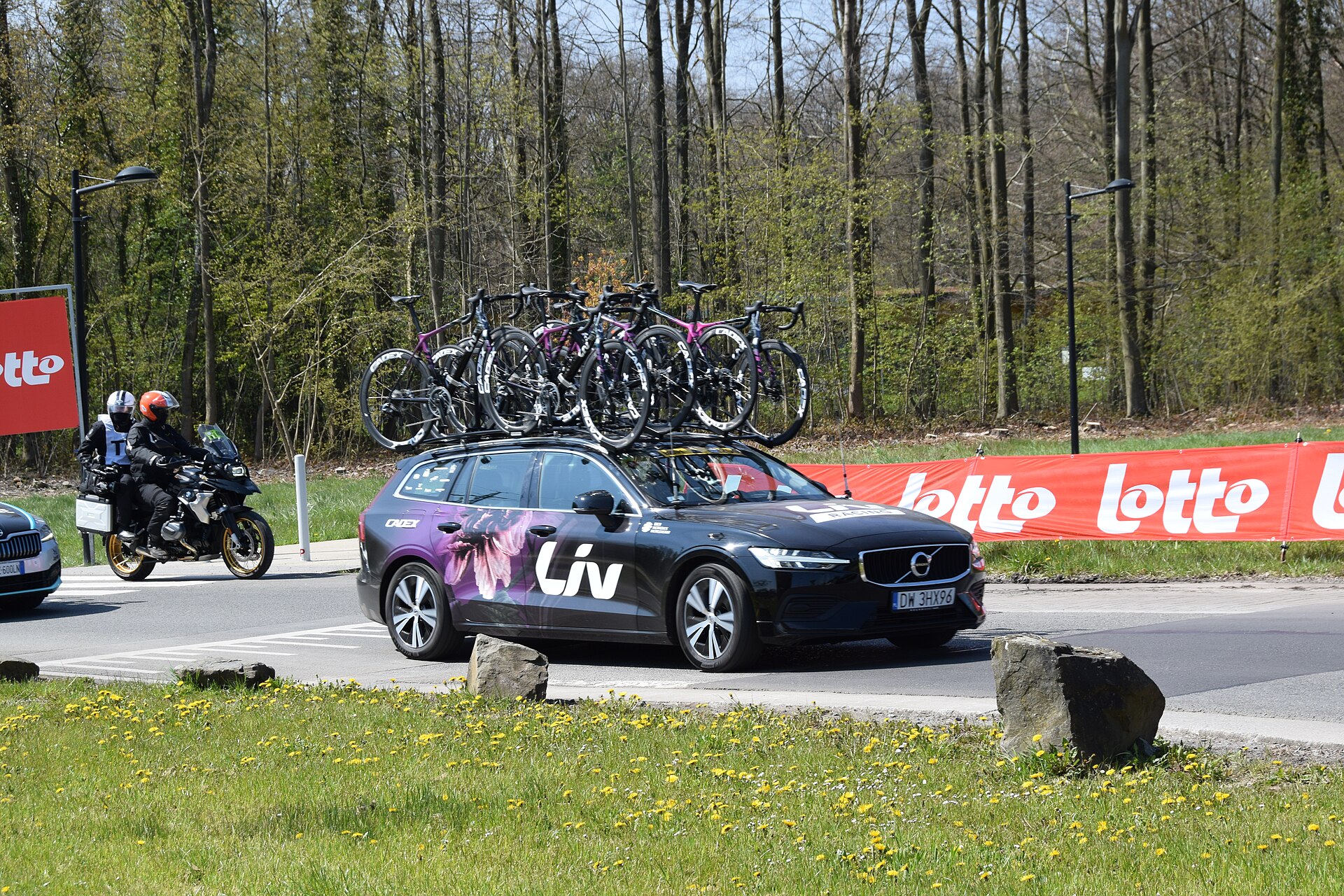
- Volvo V60 Cross Country · Photo: Jean Housen / Wikimedia Commons, CC BY-SA 4.0
Volvo V60 Cross Country in our rankings
- No. 6 of 16 · Biggest engines: station wagons (2,500 cc)
- No. 8 of 16 · Smallest station wagons (4,638 mm)
- No. 10 of 16 · Longest station wagons (4,638 mm)
- No. 138 of 403 · Widest cars (1,899 mm · top 35%)
- No. 350 of 912 · Longest-running car nameplates (11 years · top 39%)
- No. 194 of 420 · Longest cars (4,638 mm · top 47%)
Wider than 65% of ranked cars in the 1CARS catalog (No. 138 of 403).
Volvo V60 Cross Country photos 23


Volvo V60 Cross Country videos 2

Test drive

Video overview
FAQ
What is the difference between the V60 and the V60 Cross Country?
The Cross Country sits 60–75 mm higher than the standard V60 and has plastic cladding, skid plates and softer suspension. Since 2018 it has also come with all-wheel drive as standard.
Is the Volvo V60 Cross Country all-wheel drive?
The second generation from 2018 is all-wheel drive in every version. The first generation of 2015–2018 was also sold with front-wheel drive, using the four-cylinder Drive-E engines.
What is the ground clearance of the V60 Cross Country?
The first generation has about 201 mm, 65 mm more than the standard V60. Volvo quoted 75 mm of extra height for the second generation, while one British test measured 60 mm.
How big is the boot of the V60 Cross Country?
The second-generation car holds 529 litres with the seats up, rising to 1,441 litres when the rear backrests are folded. The first generation offered about 430 litres, with a three-part folding rear seat.
Is the V60 Cross Country a good tow car?
Yes, within its limits. The second generation is rated to tow braked trailers of up to 2,000 kg, and the all-wheel drive helps on wet grass or gravel at campsites and boat ramps.
Data sources
Data checked by an editor against the sources below.
- The text of this article (1cars archive)
- Wikipedia - Volvo V60
- Volvocars
- Co - New Volvo V60 Cross Country Announced