 Volvo S90
Specs, engines and history
Updated Published Sources (3) Report an error
By Felix Hartmann, Automotive Technology & EV Contributor Reviewed by Oleksandr Hnatiuk

- Built
- 2016–2025
- Top power
- 338 kW (460 PS)
Which Volvo S90 to buy
Our verdict · Felix Hartmann
For most buyers a used D4 or D5 diesel from 2016 to 2020 is the most economical choice for long distances, provided the car has a full service record. The fuel cost calculator shows how much a diesel saves against a petrol version at a given annual mileage. The mild-hybrid petrol versions from 2020 suit drivers who cover fewer miles and want a petrol engine. The Recharge T8 is the pick for owners who can charge at home and drive short distances on electricity; the 1cars hybrid section lists alternatives.
Before buying, check that the infotainment software is up to date, that all driver-assistance functions work, and that the eight-speed automatic has a documented service history. The old 1cars review quoted a service interval of 20,000 km for early cars; follow the interval in each car's service book. The first-generation S90 is now a classic for fans of rear-wheel-drive Volvos.
The Volvo S90 is Volvo's large executive saloon. The name first appeared in 1996 on the rear-wheel-drive 960, and returned in 2016 on an all-new front- and all-wheel-drive car built on the SPA platform. That second S90 offered four-cylinder petrol, diesel and plug-in hybrid engines from 110 to 338 kW until Western sales ended with the 2025 model year.
In short
- First S90 (1996–1998): the renamed Volvo 960 with straight-six engines and rear-wheel drive; replaced by the S80.
- Second S90 (2016–2025): revealed in Detroit in January 2016, shared the SPA platform with the XC90 and V90, and was built mainly in Daqing, China.
- Engines: 2.0-litre four-cylinder only, from the 110 kW D3 diesel to the 338 kW Recharge T8 plug-in hybrid.
- Strengths: safety, comfort and a calm cabin; weaknesses: low sales and an early exit from Europe and the United States.

Size at a glance
| Dimensions | Volvo S90 |
|---|---|
| Length | 4,963 mm195.4 in |
| Width | 1,890 mm74.4 in |
| Height | 1,443 mm56.8 in |
| Wheelbase | 2,935 mm115.6 in |
| Boot | 500 L17.7 cu ft |
Specs by version
Engines
| Version | Engine | Power | Torque | Drive |
|---|---|---|---|---|
| 132 kW (179 PS) Sedan | - | 132 kW 179 PS177 hp | 260 Nm192 lb-ft | - |
| 2.0 140 kW (190 PS) Sedan | 2.0 l 2,000 cc | 140 kW 190 PS188 hp | - | Front-wheel drive |
| 150 kW (204 PS) Sedan | - | 150 kW 204 PS201 hp | 267 Nm197 lb-ft | - |
| 173 kW (235 PS) Sedan | - | 173 kW 235 PS232 hp | - | All-wheel drive |
| 194 kW (264 PS) Sedan | - | 194 kW 264 PS260 hp | 350 Nm258 lb-ft | - |
| 302 kW (411 PS) Sedan | Plug-in hybrid | 302 kW 411 PS405 hp | - | - |
Performance
Show all 1 versions
| Version | Top speed |
|---|---|
| 2.0 140 kW (190 PS) Sedan | 230 km/h143 mph |
Dimensions and weight
Show all 6 versions
| Version | Boot |
|---|---|
| 132 kW (179 PS) Sedan | 500 l17.7 cu ft |
| 2.0 140 kW (190 PS) Sedan | 500 l17.7 cu ft |
| 150 kW (204 PS) Sedan | 500 l17.7 cu ft |
| 173 kW (235 PS) Sedan | 500 l17.7 cu ft |
| 194 kW (264 PS) Sedan | 500 l17.7 cu ft |
| 302 kW (411 PS) Sedan | 500 l17.7 cu ft |
Verified Manufacturer and type-approval data from our catalog · Sources and methodology
Volvo S90 at a glance
| Generation | Years | Platform | Engines | Power | Drive |
|---|---|---|---|---|---|
| S90 (960-based) | 1996–1998 | Volvo 960 (rear-wheel drive) | 2.5 and 2.9 l straight-six petrol | about 120–150 kW (163–204 PS) | rear-wheel drive |
| S90 II | 2016–2025 | SPA | 2.0 l four-cylinder petrol, diesel, mild and plug-in hybrid | 110–338 kW (150–460 PS) | front- or all-wheel drive |
The second S90 replaced the Volvo S80 as the brand's flagship saloon. Its estate twin is the Volvo V90, and its technology came from the Volvo XC90 of 2015.

The first S90: the renamed Volvo 960 (1996–1998)
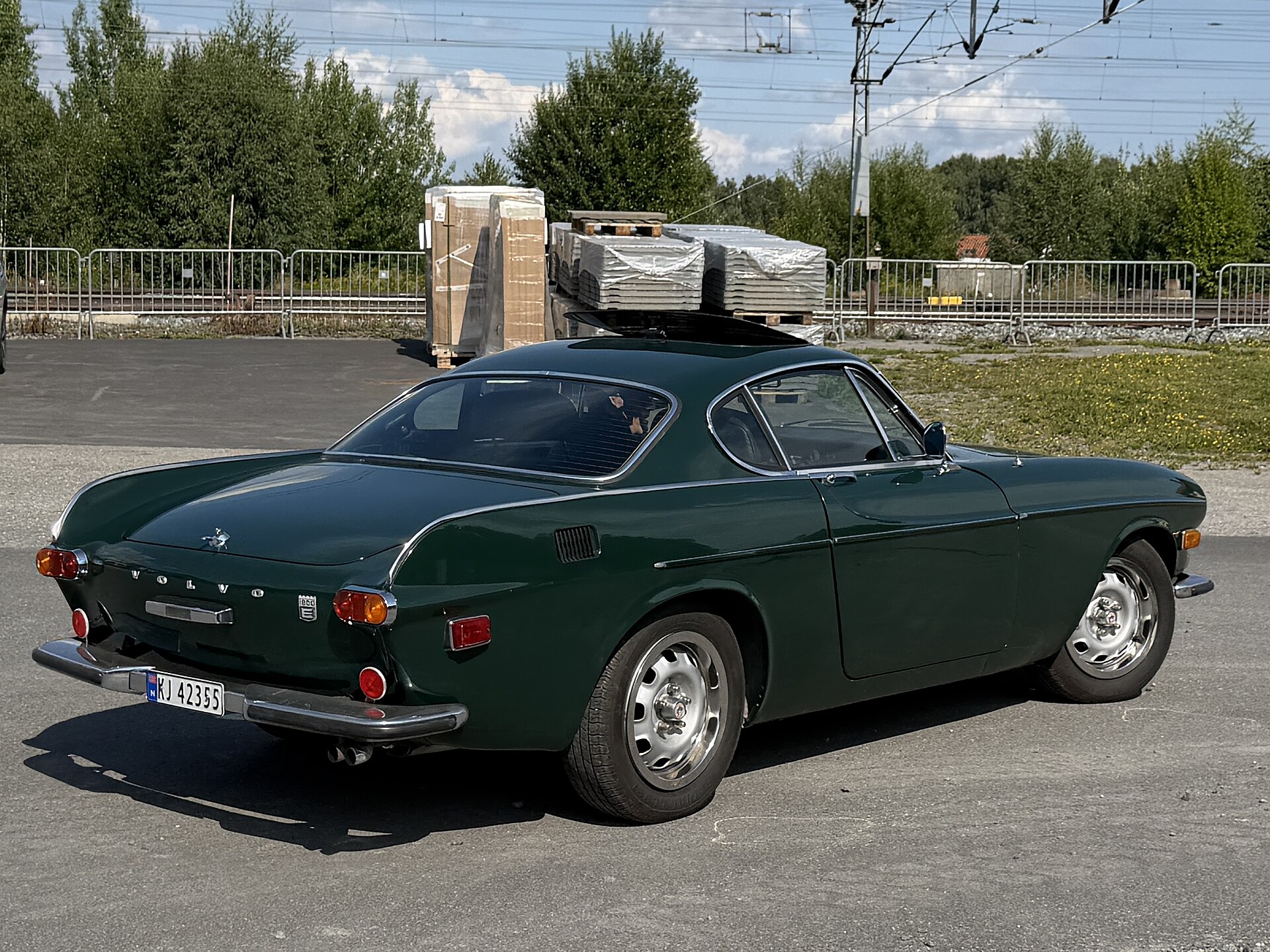
From the 1997 model year Volvo renamed the 960 saloon the S90 and the estate the V90, matching its new naming scheme. European markets received the new names in late 1996. The cars kept the 960's square styling, an aluminium 24-valve straight-six and a multi-link rear suspension with a transverse composite leaf spring.

The 2.5-litre six was rated at 120 or 125 kW (163 or 170 PS). The 2.9-litre six, launched at 150 kW (204 PS) in the 960, was the main engine. A five-speed manual gearbox was available in Europe, and a four-speed automatic was standard in many markets. All versions drove the rear wheels, which made the S90/V90 one of the last rear-wheel-drive Volvos for a quarter of a century. The old 1cars review gave the saloon's dimensions as 4,871 × 1,750 × 1,420 mm and a kerb weight of 1,643–1,700 kg.
Production ended in 1998. The 960, S90 and V90 together reached 154,329 cars: 112,710 saloons and 41,619 estates. The front-wheel-drive S80 took over in 1998.
The second S90: design, platform and production
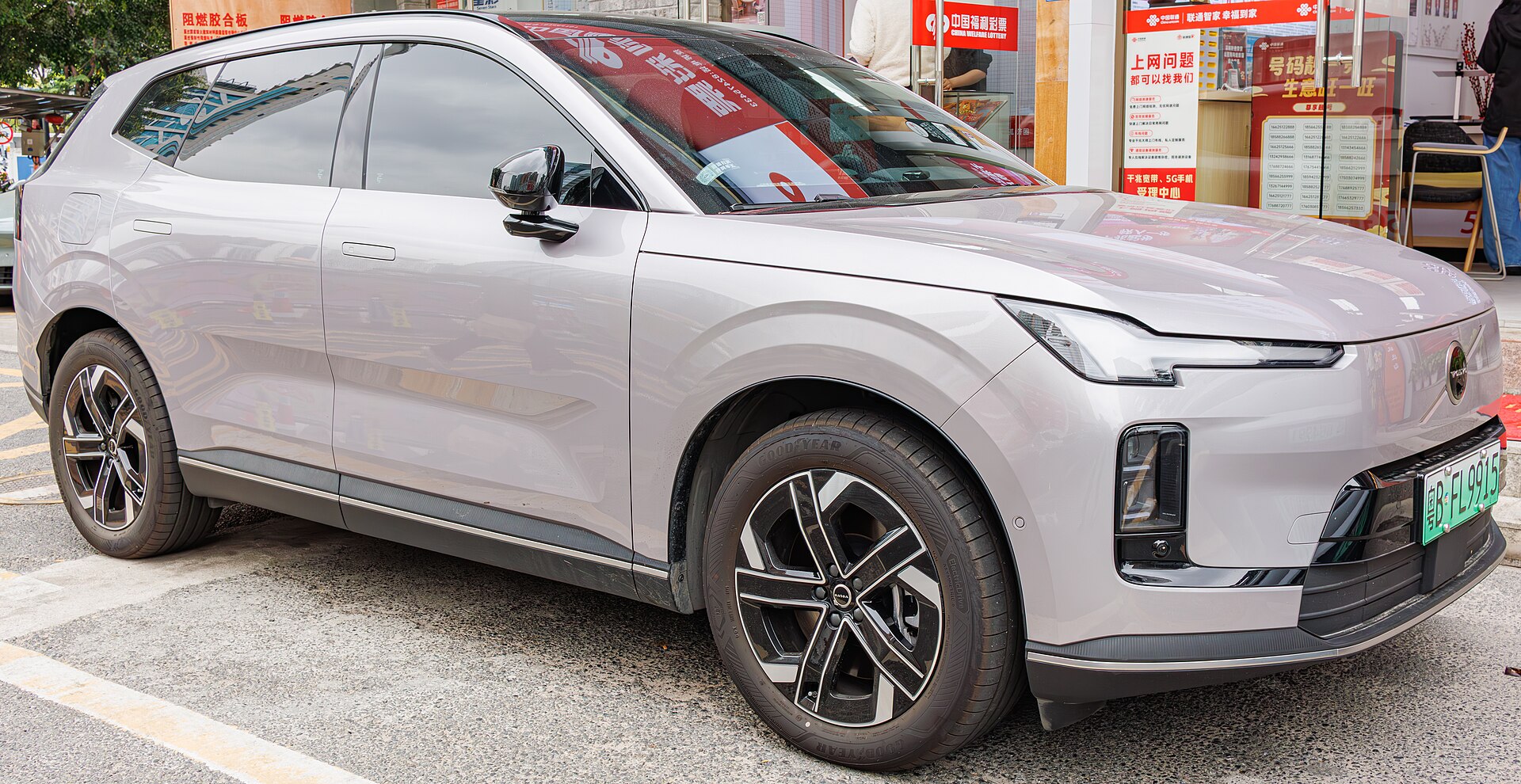
Volvo released the first official photos of the new S90 in December 2015 and showed it at the Detroit motor show in January 2016. Its styling, with T-shaped "Thor's hammer" LED daytime running lights, won a production-car design award for 2015. The car uses Volvo's Scalable Product Architecture (SPA), with a body of high-strength and ultra-high-strength steel plus aluminium parts in the front structure.

Production started in Torslanda, Sweden, but moved to Daqing in China by mid-2017; from then on Daqing supplied Europe, with cars shipped by train. Local assembly also took place in Malaysia and India. A long-wheelbase S90 with 120 mm more legroom in the back was first shown in China in November 2016. It became the standard body in the United States from 2018 and was offered alongside the normal car in Europe.
| Dimension | S90 | S90 long wheelbase |
|---|---|---|
| Length | 4,963 mm | 5,083 mm |
| Width (without mirrors) | 1,890 mm | 1,890 mm |
| Height | 1,443–1,450 mm | 1,443–1,450 mm |
| Wheelbase | 2,941 mm | about 3,060 mm |
| Ground clearance | 152 mm | about 152 mm |
| Boot | about 500 l | about 500 l |
| Kerb weight | 1,800–2,150 kg | 1,800–2,150 kg |
Engines and gearboxes of the S90 II
Every second-generation S90 has a 2.0-litre four-cylinder Drive-E engine. Diesels used two turbochargers; the D5 added PowerPulse, a small tank of compressed air that spins up the turbo from low revs to cut lag. The T6 combined a turbocharger with a supercharger, and the T8 Twin Engine added an electric motor on the rear axle.

| Version | Fuel | Power | Torque | Drive |
|---|---|---|---|---|
| D3 | diesel | 110 kW (150 PS) | 320–350 Nm | front |
| D4 | diesel | 140 kW (190 PS) | 400 Nm | front or AWD |
| D5 PowerPulse | diesel | 173 kW (235 PS) | 480 Nm | AWD |
| T4 | petrol | 140 kW (190 PS) | 350 Nm | front |
| T5 | petrol | 183–187 kW (249–254 PS) | 350 Nm | front |
| T6 | petrol | 235 kW (320 PS) | 400 Nm | AWD |
| T8 Twin Engine | petrol plug-in hybrid | 234 kW engine + 64 kW motor (early cars) | 400 Nm (engine) | AWD |
| Recharge T8 (2022–) | petrol plug-in hybrid | 338 kW (460 PS) system | 400 Nm (engine) | AWD |
Most versions use an eight-speed Aisin automatic. Early front-wheel-drive D3 and D4 cars could also be ordered with a six-speed manual gearbox, and the old 1cars review gave 8.2 seconds to 100 km/h for the manual D4. The all-wheel-drive system uses an electronically controlled clutch that sends torque to the rear axle when needed. Launch data quoted the D5 at 7.3 seconds to 100 km/h, 230 km/h and about 5.1 l/100 km on the old NEDC cycle.
From 2020 Volvo added 48-volt mild-hybrid engines, and over the following years the diesels and plain petrol engines disappeared from most markets. The early T8 offered about 45 km of electric range on the NEDC cycle; the Recharge T8 of 2022 brought a stronger rear motor with 105 kW.
Compared with the D4 diesel, which carries about 13 kg per kW, the 338 kW Recharge T8 needs only about 6.4 kg per kW even at 2,150 kg. That 1cars calculation explains why the heaviest S90 is also by far the quickest.
Interior, technology and safety
Inside, a large portrait touchscreen for the Sensus system replaces most buttons, and a 12.3-inch digital instrument display sits behind the wheel. Apple CarPlay and Android Auto were available. The Inscription trim offered ventilated front seats and a separate climate panel for the rear seats. The rear bench seats three, though the middle place suits shorter trips; the long-wheelbase car is the one to choose for chauffeur use.

The S90 carried Volvo's full safety equipment. City Safety automatic braking detects cars, pedestrians, cyclists and large animals, and Pilot Assist keeps the car in its lane up to about 130 km/h. Run-off-road protection and blind-spot monitoring were also available.
| Safety test | Result |
|---|---|
| ANCAP (2017, using Euro NCAP tests) | five stars: adult 91 %, child 80 %, pedestrian 76 %, safety assist 93 % |
| IIHS (USA) | Top Safety Pick 2017–2019, Top Safety Pick+ 2021–2023 |
Updates and the end of the S90
A February 2020 update brought mild-hybrid engines, sequential LED indicators and new bumper details. In 2022 the British range was cut to the Recharge plug-in hybrid only. From the 2023 model year the American S90 lost its conventional engines and used mild hybrids as the base.

Sales never matched the German rivals. In the United States the best year was 2017 with 8,640 cars; in China, where the long-wheelbase car sold well, deliveries peaked at 42,668 in 2019. Volvo withdrew the saloon from Europe, the United States, Canada and Australia, and production for those markets ended in late 2024 with the 2025 model year. A further facelift in April 2025, with the front of the 2024 XC90 and an 11.2-inch screen, was limited to China, the Middle East and South Korea. In Europe the electric ES90 of 2025 now fills the gap.
Rivals: how the S90 compares
| Rival | Drive | Plug-in hybrid offered | How it differs from the S90 |
|---|---|---|---|
| Mercedes-Benz E-Class | rear or AWD | yes | six-cylinder engines and a wider range |
| BMW 5 Series | rear or AWD | yes | sportier handling, six-cylinder options |
| Audi A6 | front or AWD | yes | more engine choice, including V6 diesels |
| Lexus GS | rear or AWD | full hybrid instead | V6 and V8 engines, no diesel |
The S90's advantages are its quiet cabin, comfortable seats and safety record. Its weak points are the four-cylinder-only range, which sounds less refined than the six-cylinder rivals, and the limited dealer support now that it has left many markets. Any two cars can be checked side by side in the comparison tool.

Volvo S90 in our rankings
- No. 57 of 420 · Longest cars (4,963 mm · top 14%)
- No. 31 of 149 · Most powerful sedans (338 kW · top 21%)
- No. 20 of 80 · Widest sedans (1,890 mm · top 25%)
- No. 226 of 859 · Most powerful cars (338 kW · top 27%)
- No. 24 of 86 · Longest sedans (4,963 mm · top 28%)
- No. 97 of 312 · Most powerful cars of the 2010s (302 kW · top 32%)
Longer than 86% of ranked cars in the 1CARS catalog (No. 57 of 420).
Volvo S90 photos 27


Volvo S90 videos 7

Volvo S90 video 1

Volvo S90 video 2

Volvo S90 video 3

Volvo S90 video 4

Crash test

Test drive

Video overview
FAQ
Is the Volvo S90 still made?
Volvo ended production for Europe, the United States, Canada and Australia in late 2024, with 2025 as the final model year there. A facelifted S90 continued for China, the Middle East and South Korea from April 2025.
Where is the Volvo S90 built?
The second-generation S90 was first built in Torslanda, Sweden, but production moved to Daqing in China by mid-2017. Daqing supplied Europe and other markets, with extra local assembly in Malaysia and India.
Is the Volvo S90 a reliable car?
The S90 shares its SPA engines and electronics with the XC90 and V90, which spreads parts and know-how across a large fleet. Software updates and a full service history matter more than mileage when buying a used car.
Is the Volvo S90 available with all-wheel drive or as a hybrid?
Yes. The D4, D5 and T6 could be ordered with all-wheel drive, and the T8 Twin Engine and Recharge T8 are plug-in hybrids with an electric rear motor, giving all-wheel drive with up to 338 kW.
What replaced the Volvo S80?
The second-generation Volvo S90 replaced the S80 as Volvo's flagship saloon in 2016. The original S80 had itself replaced the first S90, the renamed Volvo 960, in 1998.
Data sources
Data checked by an editor against the sources below.
- The text of this article (1cars archive)
- Wikipedia - Volvo S90
- Euro NCAP - Latest Volvos Stunt Ford S Mighty Mustang