 Audi Q3
All generations, specs and history
Published Sources (6) Report an error
By Felix Hartmann, Automotive Technology & EV Contributor
- Built
- 2011–present
- Generations
- 3
- Euro NCAP
- 5 stars · Q3 III
Timeline
Q3 generations
Click a generation for its own page


Newest first · 3 generations since 2011
-
2025
-
2018
-
2011
All generations by year: Q3 III (2025–now) · Q3 F3 (2018–2025) · Q3 8U (2011–2018)
Which one is mine?
Pick the year of first registration to see which generation it is.
Check by VINThe Audi Q3 is a premium compact crossover from the Ingolstadt-based manufacturer, with front- or all-wheel drive. It combines the qualities of a modern city car with the strengths of an SUV and sits above the Audi Q2 and below the Q5 in the range, with a focus on lifestyle and sporty driving rather than family or off-road use.
In short
- Three generations: the first was revealed at Auto Shanghai in April 2011, the second on 25 July 2018 and the third in June 2025.
- The second generation uses the MQB A2 platform and is built in Győr, Hungary; a coupé-style Q3 Sportback followed in 2019.
- Engines range from a 110 kW (150 PS) TFSI to a 169 kW (230 PS) 2.0 TFSI, plus 2.0 TDI diesels; the RS Q3 has a 2.5-litre five-cylinder.
- The boot holds 530 litres, rising to 1,525 litres, and the rear bench slides by 150 mm.
Specs by version
Engines
| Version | Engine | Gearbox | Drive | Production years |
|---|---|---|---|---|
| F3 · 2018–2025 | ||||
| F3 · 2 L 4 cyl Automatic (S8) · 2023 (EPA) | 2.0 l · 4 cyl 2,000 cc | 8-sp Automatic | All-wheel drive | 2023 |
| Q3 III · 2 L 4 cyl Automatic (AM-S7) · 2026 (EPA) | 2.0 l · 4 cyl 2,000 cc | 7-sp Dual-clutch | All-wheel drive | 2026 |
| Q3 III · 2 L 4 cyl Automatic (S8) · 2025 (EPA) | 2.0 l · 4 cyl 2,000 cc | 8-sp Automatic | All-wheel drive | 2025 |
Performance
Show all 3 versions
| Version | Fuel consumption |
|---|---|
| F3 · 2018–2025 | |
| F3 · 2 L 4 cyl Automatic (S8) · 2023 (EPA) | 9.4 l/100 km25.0 mpg US · 30.1 mpg UK |
| Q3 III · 2 L 4 cyl Automatic (AM-S7) · 2026 (EPA) | 9.4 l/100 km25.0 mpg US · 30.1 mpg UK |
| Q3 III · 2 L 4 cyl Automatic (S8) · 2025 (EPA) | 9.4 l/100 km25.0 mpg US · 30.1 mpg UK |
Verified Manufacturer and type-approval data from our catalog · Sources and methodology
Safety
-
Q3 III · Euro NCAP 2025
-
F3 · Euro NCAP 2018
Older protocol · Full Euro NCAP result
-
F3 · NHTSA 2024
US NCAP (NHTSA)
Stars from different years and organisations are not directly comparable: test protocols change every few years.
Audi Q3 at a glance
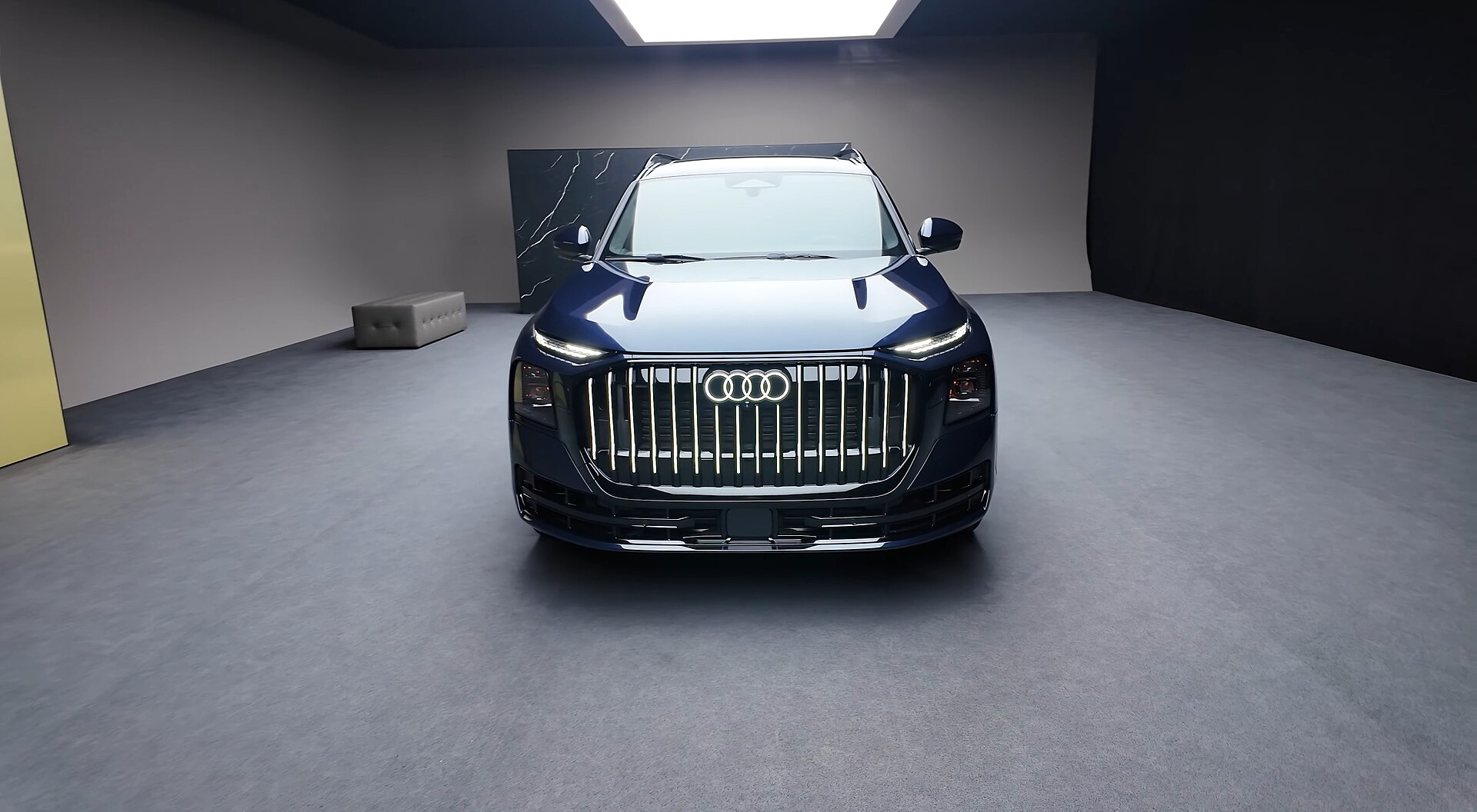
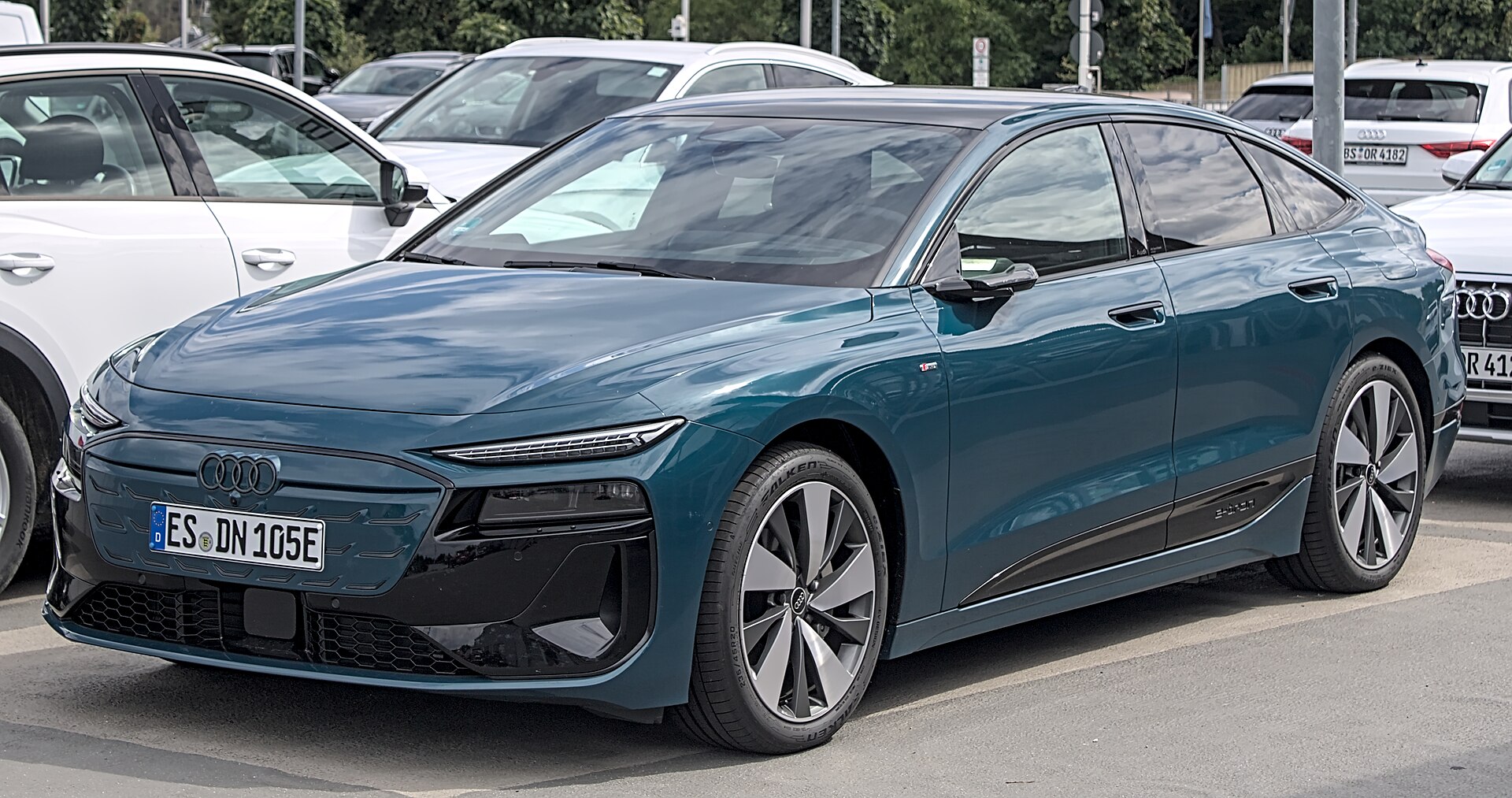
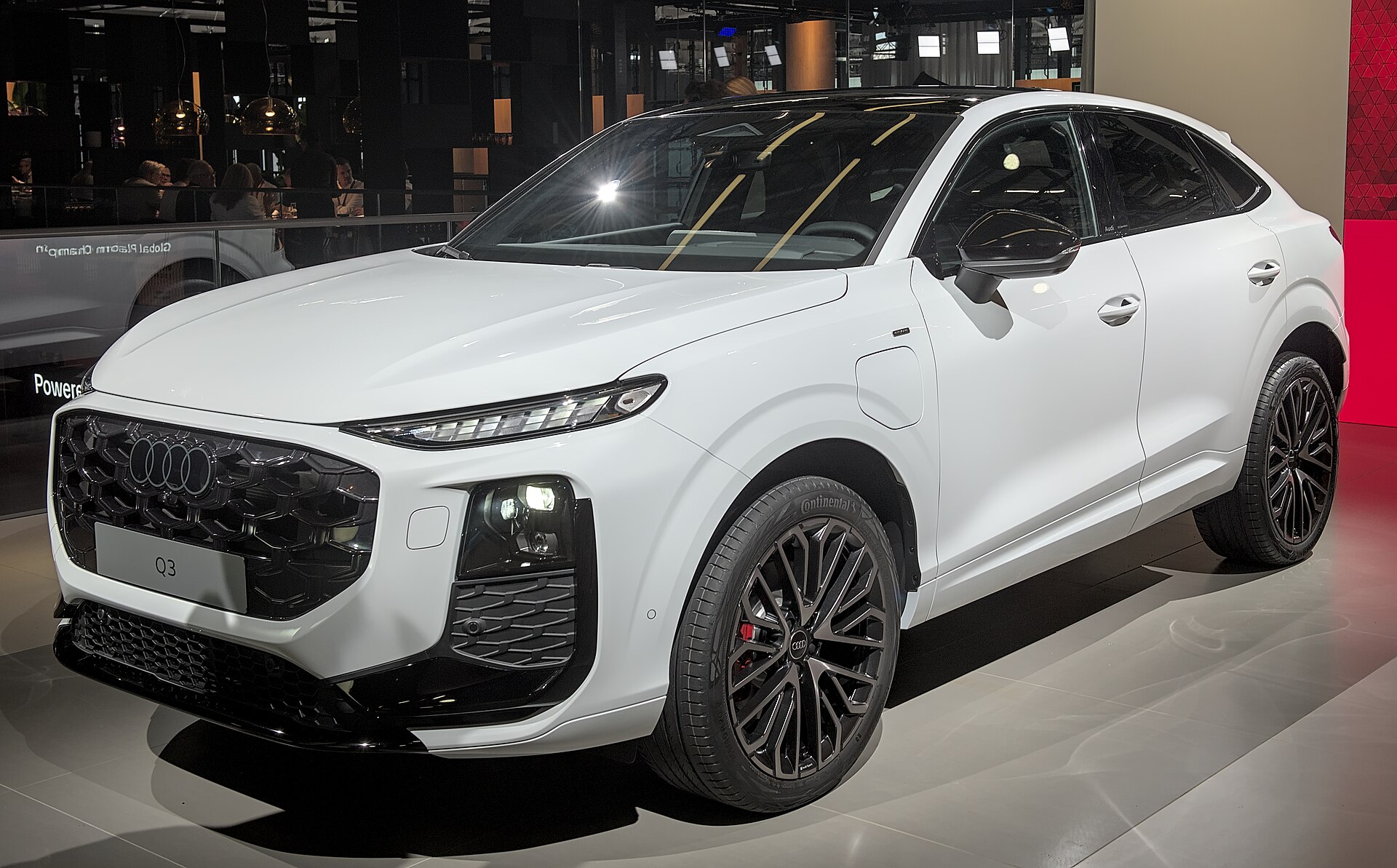
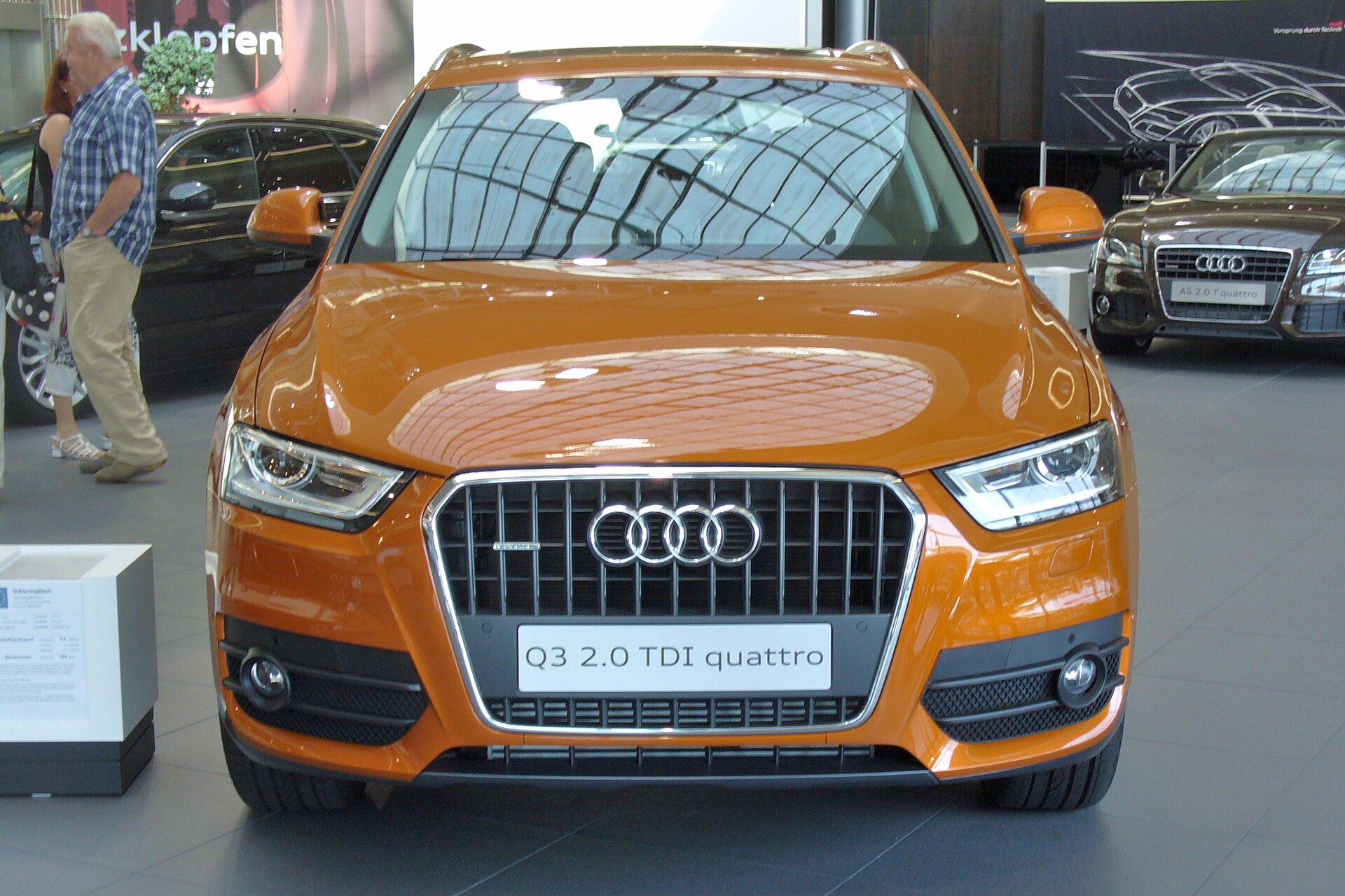
The first-generation Q3 followed a 2007 concept and was built in Spain, China, India and Brazil. It was facelifted for the 2015 model year. The second generation, presented at a special event in Germany on 25 July 2018, brought assertive and modern styling, a minimalist cabin, up-to-date technology and generous equipment. In June 2025 Audi unveiled the third generation, with 1.5 and 2.0 petrol engines, a 2.0 diesel and a 1.5 plug-in hybrid. This article focuses on the second generation. More of the brand's range is in our Audi catalogue.
Exterior of the second generation
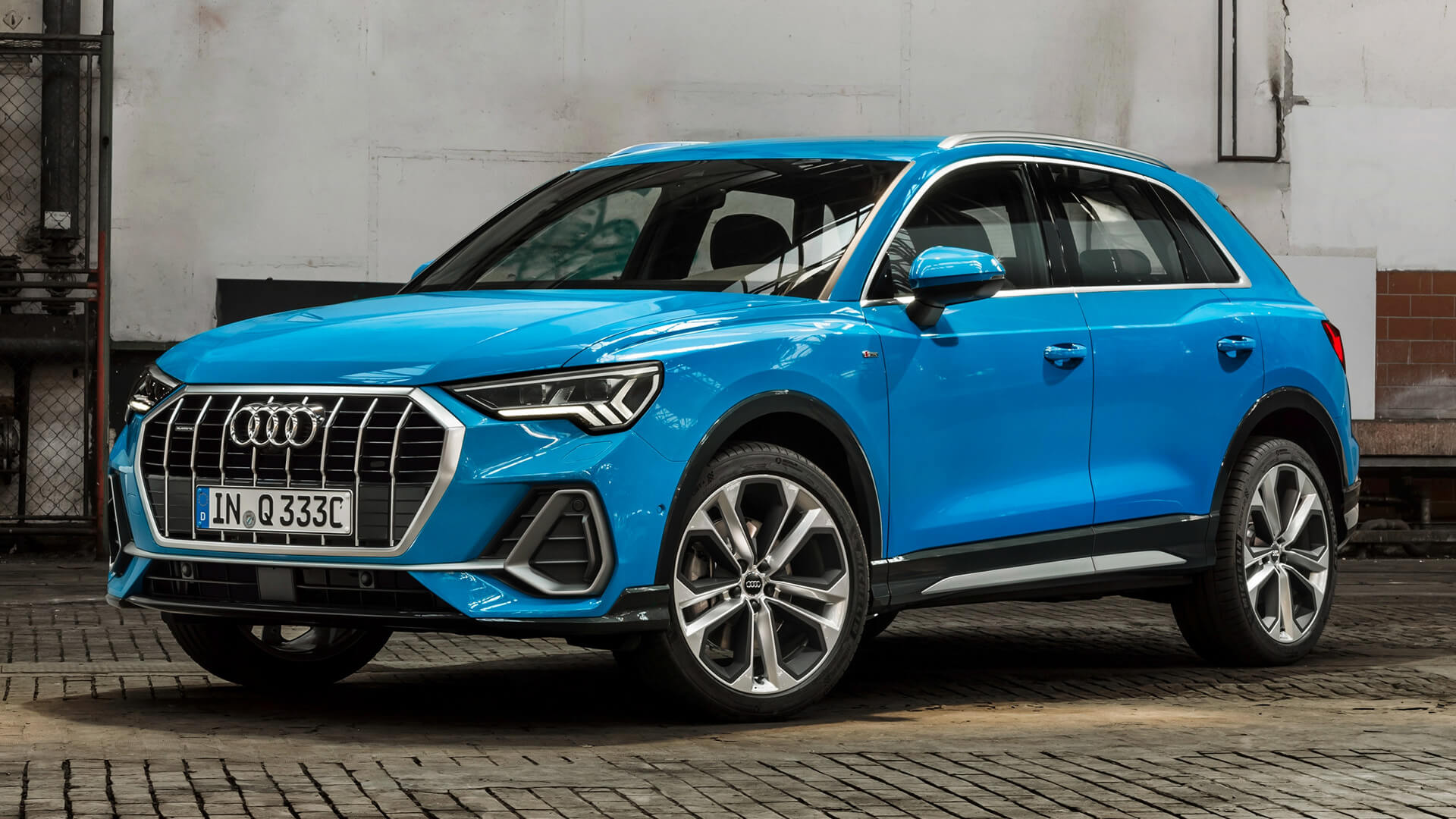
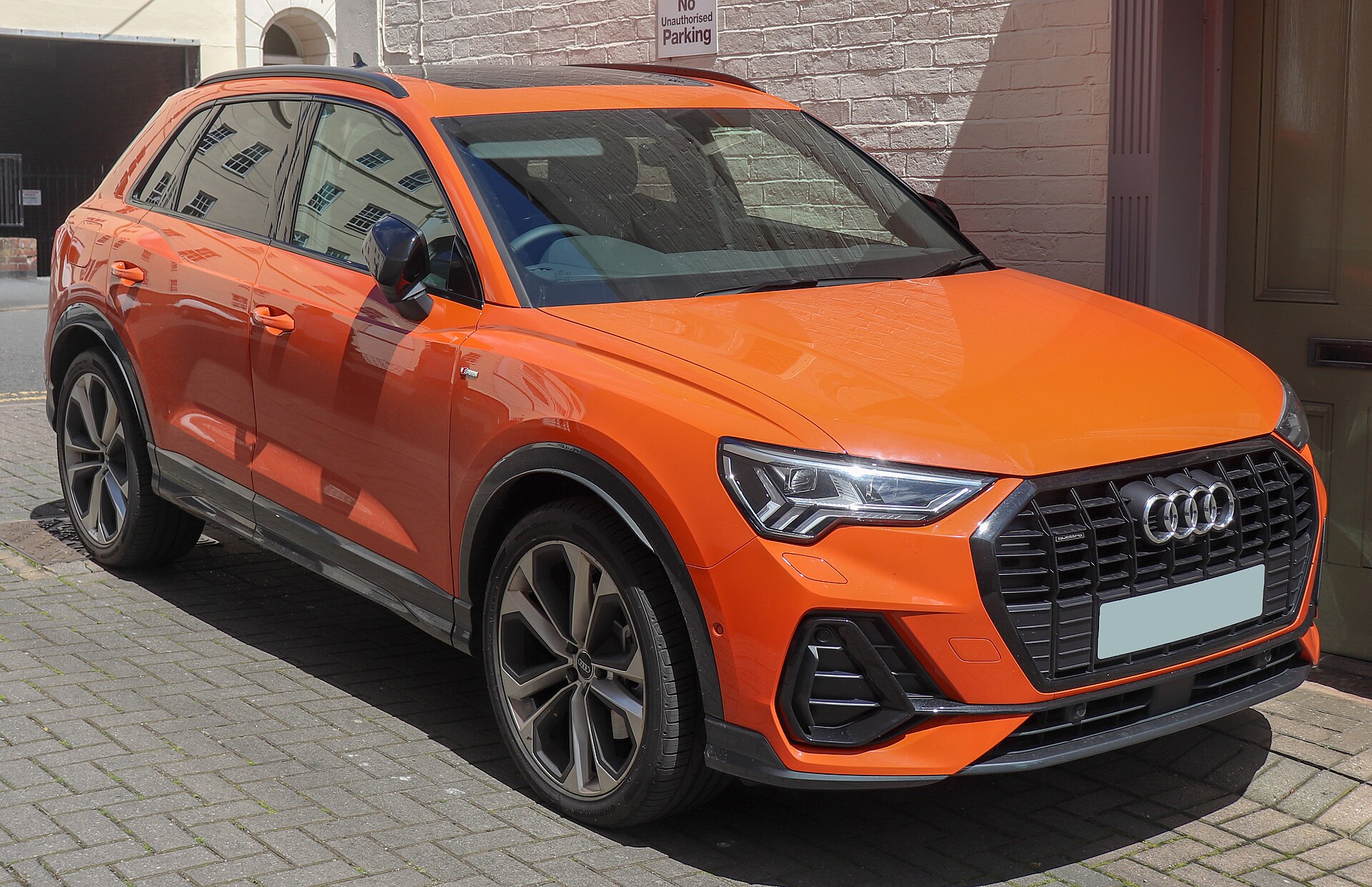
The first thing you notice is the larger body. The new Q3 is also more aggressive and dynamic, yet it keeps Audi's family traits: stepped surfaces, plenty of detailing, rectangular elements and straight lines. Some buyers choose it for the design alone. The front is dominated by a large octagonal Singleframe grille with eight vertical slats, a coarse mesh and a chrome surround. Slim LED headlights sit above it, with Matrix LED lights optional, and the lower bumper has triangular openings that cool the brakes. Sharp edges replace the smoother curves of the first generation, and the optional S line package makes the Q3 even sportier.
From the side, there is a little stepped sculpting, plastic protection low down and chrome-framed windows. Unusually for a crossover, the wheel arches sit almost flush with the body rather than being heavily flared. Thick rear pillars and an almost flat roofline give a confident stance. Ground clearance is 170 mm — fine in town, but rough terrain can be a challenge. Wheels range from 17 or 18 inches to optional 20-inch wheels from Audi Sport with low-profile tyres.
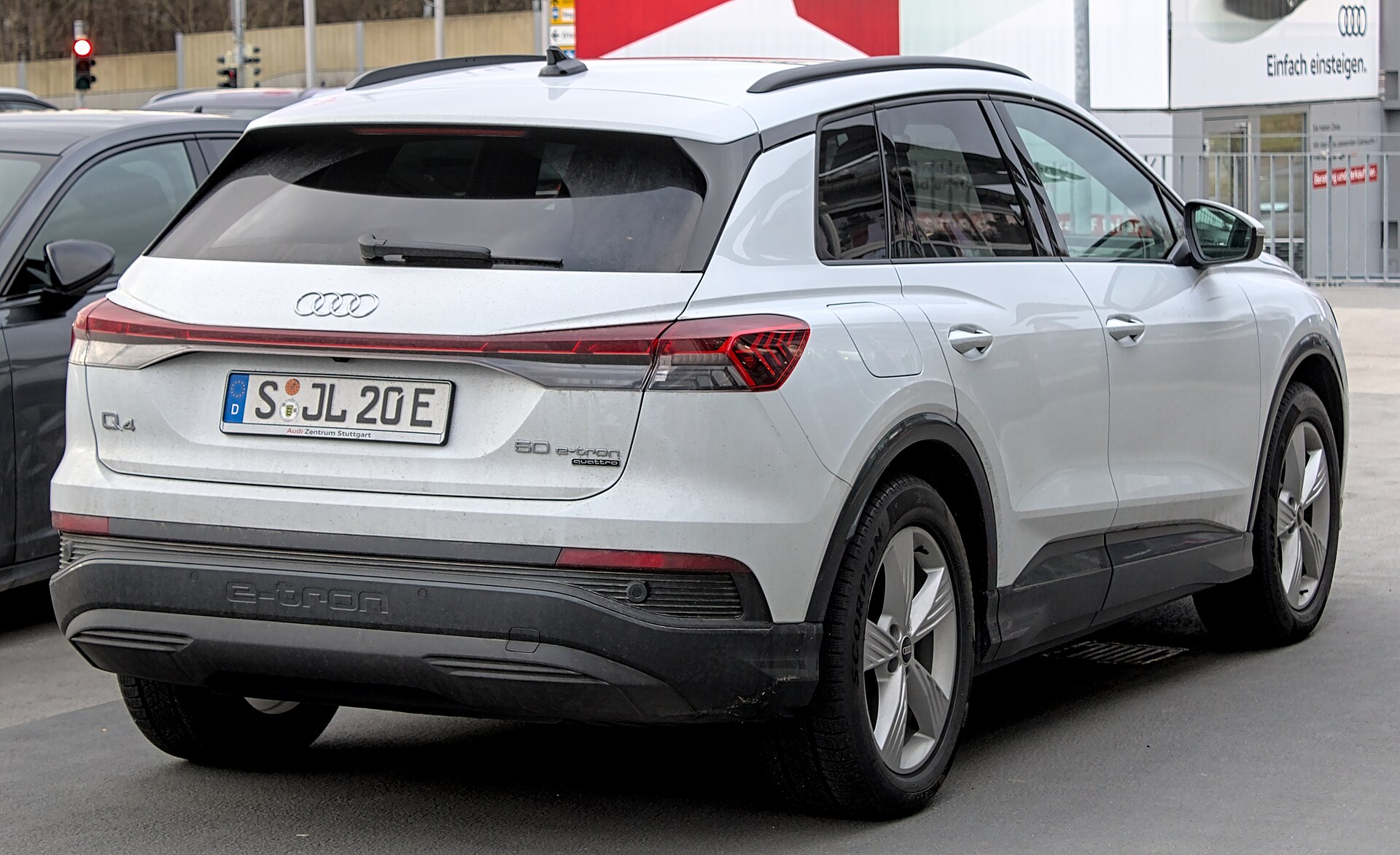
The rear is restrained by Audi's standards but aggressive compared with many rivals, with a small tailgate window, large triangular LED tail lights, a roof spoiler and a plastic and metal lower section echoing the front. There are no visible exhaust outlets, not even dummies. The details depend on the trim level, with the sporty versions looking most aggressive.
Interior and practicality
The cabin is a step up, though much depends on the version. Basic cars have cloth seats, with part-leather or synthetic leather optional and a choice of colours, and Audi offers some 30 options for decorative inlays. There is more space than before. Standard front seats can be replaced by sports seats with pronounced side bolsters, firm padding and a wide range of electric adjustment.
The driver has a three-spoke multifunction steering wheel, round or flat-bottomed, with optional heating. Instruments are digital as standard on a 10.25-inch display, and the 12.3-inch Audi virtual cockpit can show navigation maps; a head-up display is optional. A gloss-black panel in the centre of the dashboard holds the 10.1-inch MMI navigation plus touchscreen on more expensive versions or an 8.8-inch screen on basic ones. Functions include voice control, a Wi-Fi hotspot and Apple CarPlay. Unlike the e-tron, the Q3 keeps conventional climate controls with knobs and buttons, and below them is a row of buttons for the safety systems and the Audi drive select switch. The tunnel holds the gear selector, cupholders, the parking-brake switch and a wireless charging pad.
The rear bench seats three, though the centre passenger has a short cushion and a high tunnel; more expensive versions have rear climate controls. The bench slides by 150 mm to increase luggage space. The boot grew by about 70 litres to 530 litres, or 1,525 litres with the rear seats folded, with a loading height of 749 mm. A power tailgate that opens with the key or a kick under the bumper is available, and there is a space-saver spare under the floor.
Engines and transmissions (second generation)
| Version | Engine | Power (kW / PS) | Torque | 0–100 km/h | Top speed |
|---|---|---|---|---|---|
| 35 TFSI | 1.4/1.5 turbo petrol | 110 kW / 150 PS | 250 Nm | 9.2 s | 207 km/h |
| 40 TFSI | 2.0 turbo petrol | 132–140 kW / 180–190 PS | 320 Nm | 7.4 s | 220 km/h |
| 45 TFSI | 2.0 turbo petrol | 169 kW / 230 PS | 350 Nm | — | — |
| 35 TDI | 2.0 turbodiesel | 110 kW / 150 PS | 340 Nm | — | — |
| 40 TDI | 2.0 turbodiesel | 140 kW / 190 PS | 400 Nm | — | — |
The petrol engines have direct injection, 16 valves and variable valve timing; the diesels use common-rail injection. Less powerful versions are available with a six-speed manual gearbox, while the others use the seven-speed S tronic dual-clutch transmission. Front-wheel drive is standard, and quattro all-wheel drive uses a multi-plate clutch that sends up to 50% of the torque to the rear wheels when needed. The high-performance RS Q3 uses Audi's 2.5-litre five-cylinder turbo engine.
Chassis
The second-generation Q3 moved from the older PQ35 platform to the MQB modular platform, with a transverse engine and a body made of high-strength steel and aluminium. Suspension is independent with anti-roll bars: MacPherson struts at the front and a four-link rear axle. A firmer sports suspension or adaptive dampers with five modes (Auto, Comfort, Efficiency, Individual and Dynamic) are optional, and the drive select system also changes throttle response, steering weight and gearbox behaviour. Electric power steering is standard, with progressive steering optional, and the brakes are ventilated discs with ABS, EBD and other aids. The drag coefficient is 0.32.
Safety and equipment
The Q3 offers airbags around the cabin, full LED lighting, cruise control, stability control, seat-belt monitoring, Audi lane and side assist, hill-start assist, a parking assistant and automatic parking, tyre-pressure monitoring, a reversing camera and surround-view cameras, collision avoidance, quattro and ISOFIX mounts. Depending on the market, base versions include cloth upholstery, air conditioning, a cooled glovebox, LED lights, 17-inch alloys, heated front seats and the 8.8-inch infotainment system; better versions add cruise control, a power tailgate, parking sensors, dual-zone climate control, a heated steering wheel, adaptive suspension and 18-inch wheels.
Strengths and weaknesses
Owners praise the attractive styling, all-wheel drive, strong turbo engines, reasonable fuel consumption, excellent handling, high comfort and good materials and build quality. The second generation added digital instruments and a bigger boot, and the adaptive suspension makes it even more comfortable. Criticisms include a small glovebox, a high price, a rear seat that is uncomfortable in the middle, limited off-road ability, real-world fuel consumption above official figures for the more powerful versions, and expensive options. Rivals include the BMW X1, Mercedes-Benz GLA, Volvo XC40, Range Rover Evoque, Lexus UX and Volkswagen Tiguan.
Image credits · Photos from Wikimedia Commons under free licences
- Audi Q3 8U · Photo: Thomas doerfer / Wikimedia Commons, CC BY 3.0
- Audi Q3 F3 · Photo: Vauxford / Wikimedia Commons, CC BY-SA 4.0
- Audi Q3 III · Photo: Alexander-93 / Wikimedia Commons, CC BY-SA 4.0
Audi Q3 in our rankings
- No. 252 of 912 · Longest-running car nameplates (15 years · top 28%)
- No. 131 of 305 · Oldest car models still on sale (15 years · top 44%)
- No. 146 of 256 · Most economical cars (9.4 l/100 km · top 60%)
- No. 224 of 345 · Cars with the most generations (3 generations · top 68%)
- No. 75 of 125 · Biggest engines: SUVs and crossovers (2,000 cc · top 72%)
- No. 364 of 557 · Biggest engines: cars (2,000 cc · top 72%)
In production longer than 72% of ranked nameplates in the 1CARS catalog (No. 252 of 912).
FAQ
How many generations of the Audi Q3 are there?
Three: the first from 2011, the second from 2018 and the third, unveiled in June 2025.
Is the Audi Q3 four-wheel drive?
Front-wheel drive is standard; quattro all-wheel drive is available on more powerful versions.
How big is the Audi Q3 boot?
The second generation offers 530 litres, or 1,525 litres with the rear seats folded, and the rear bench slides by 150 mm.
Where is the Audi Q3 built?
The second generation is built in Győr, Hungary; the first was produced in Spain, China, India and Brazil.
Is there a coupé version of the Audi Q3?
Yes. The Q3 Sportback, with a sloping roofline, was revealed in 2019.
Data sources
Data checked by an editor against the sources below.
- Wikipedia — Audi Q3
- Wikipedia — Audi Q3 8U
- Euro NCAP — Euro Ncap Announces The Results For Twelve New Vehicles Including 5 Stars For A Pick Up
- Wikipedia — Audi Q3 F3
- Euro NCAP — Panda Wrangler Off The Pace In Latest Safety Ratings
- NHTSA 5-Star Safety Ratings (US NCAP) — U.S. Government work, public domain