 Audi Q5
All generations, specs and history
Published Sources (7) Report an error
By Felix Hartmann, Automotive Technology & EV Contributor
- Built
- 2008–present
- Generations
- 3 · 8R to GU
- Top power
- 270 kW (367 PS)
- Euro NCAP
- 5 stars · GU
Timeline
Q5 generations
Click a generation for its own page


Newest first · 3 generations since 2008
-
2024
-
2017
-
2008
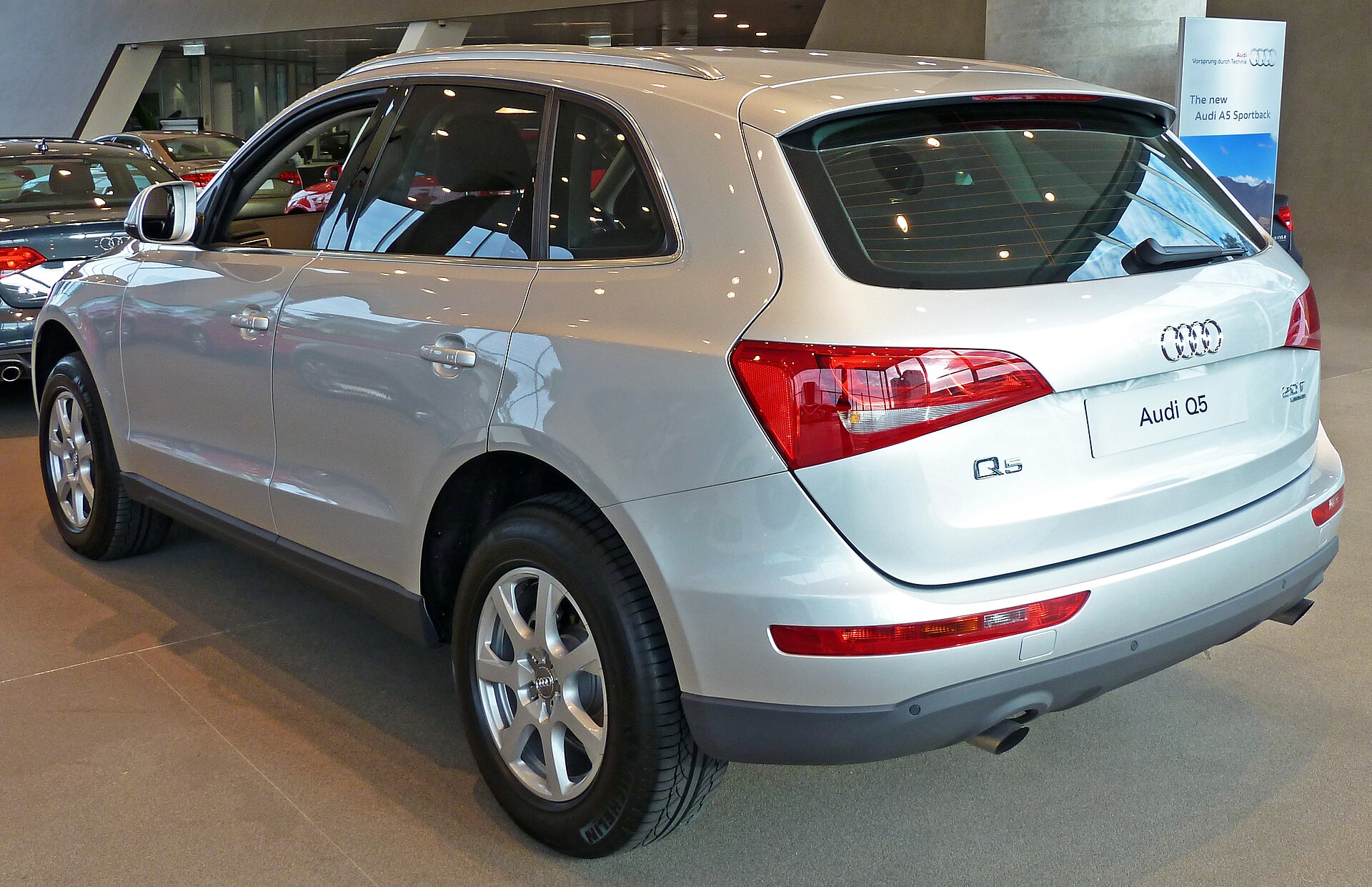
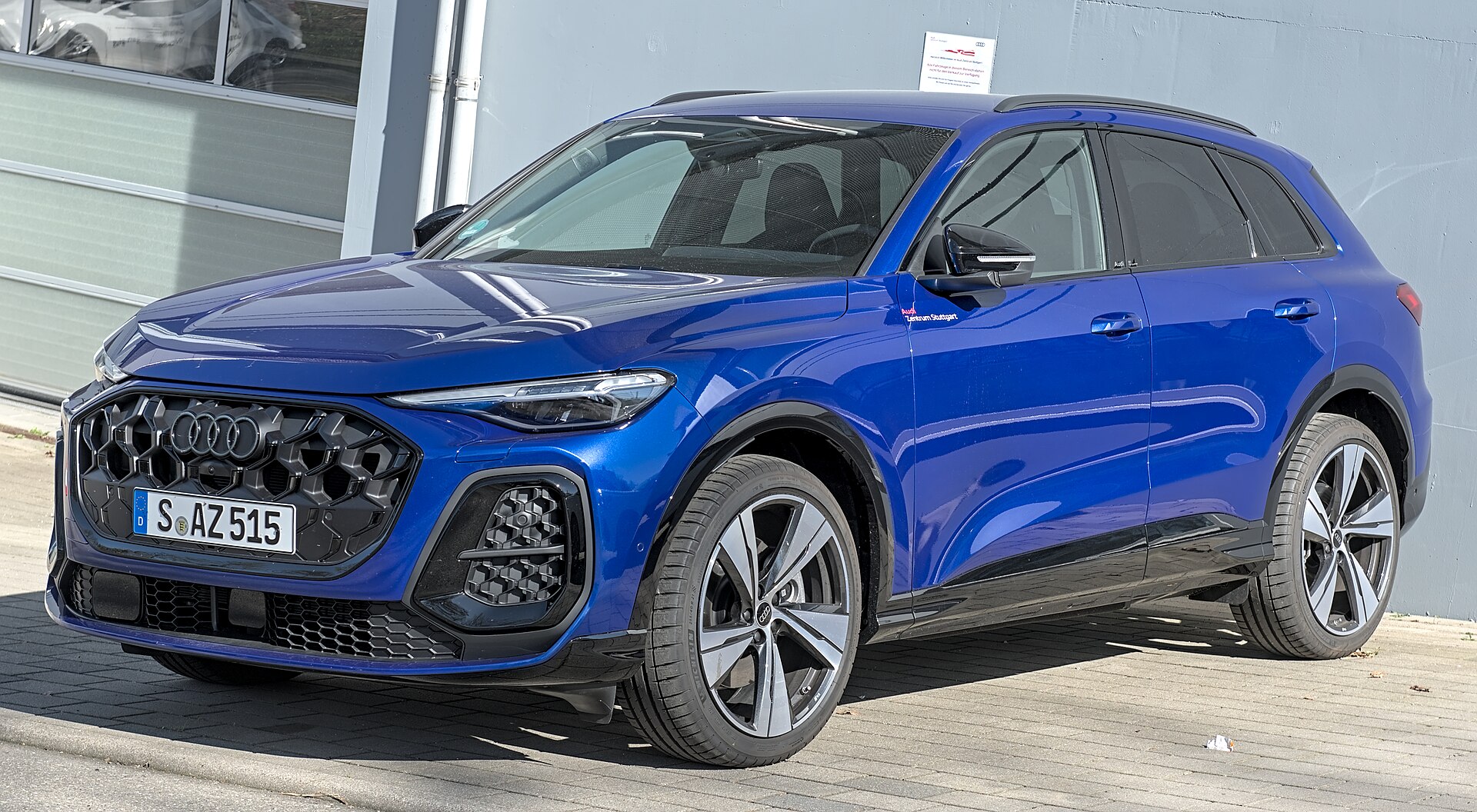
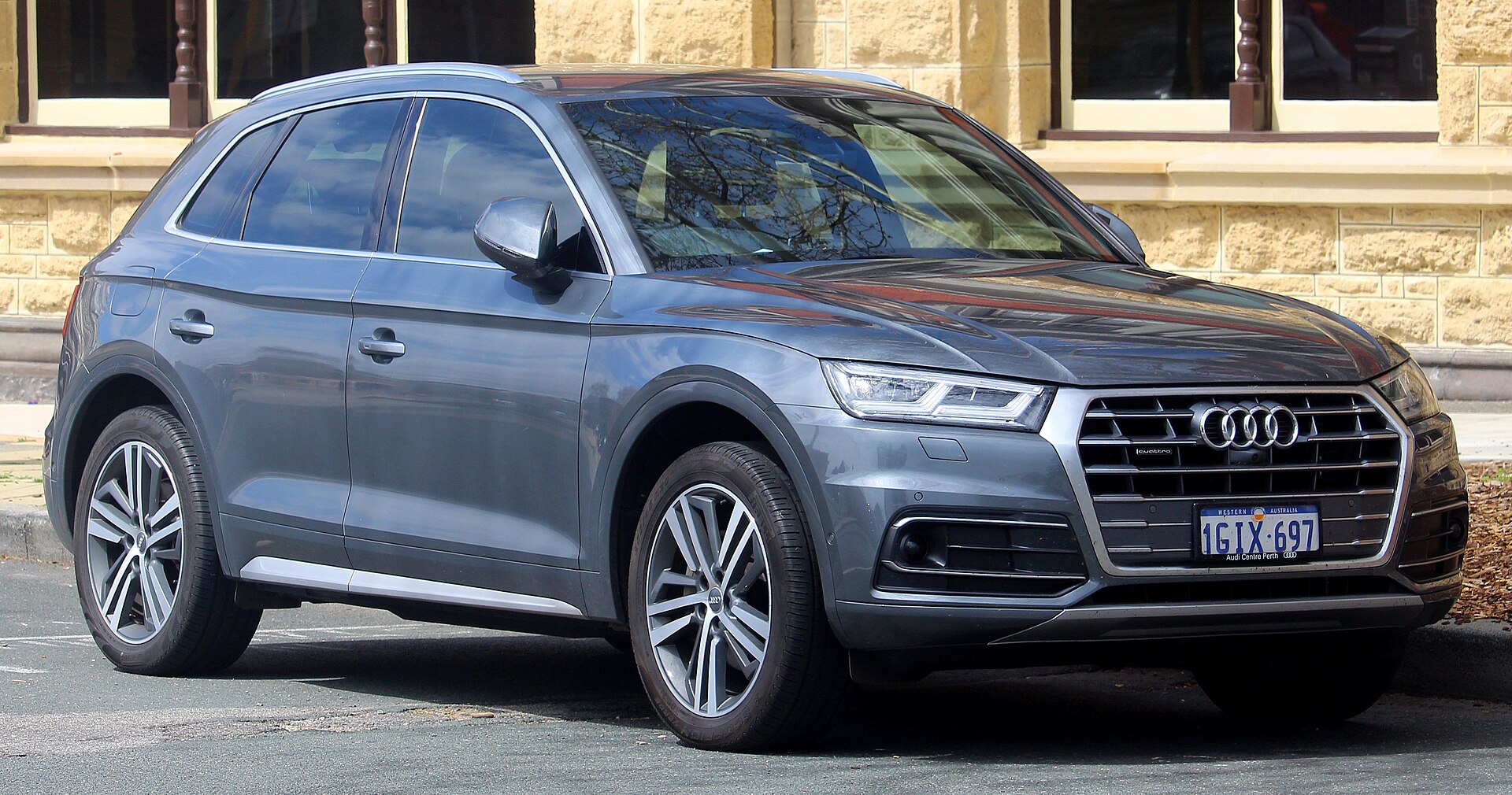
All generations by year: Q5 GU (2024–now) · Q5 FY (2017–2024) · Q5 8R (2008–2016)
Which one is mine?
Pick the year of first registration to see which generation it is.
Check by VINVerdict
Our verdict · Felix Hartmann
Audi updated the Q5 at the right moment, as premium SUVs remain in strong demand in many markets. The facelifted car stands out for its quality, modern exterior, sophisticated lighting, strong engines, all-wheel drive and decent rough-road ability. It suits buyers who value comfort, performance and safety and who occasionally leave the tarmac.
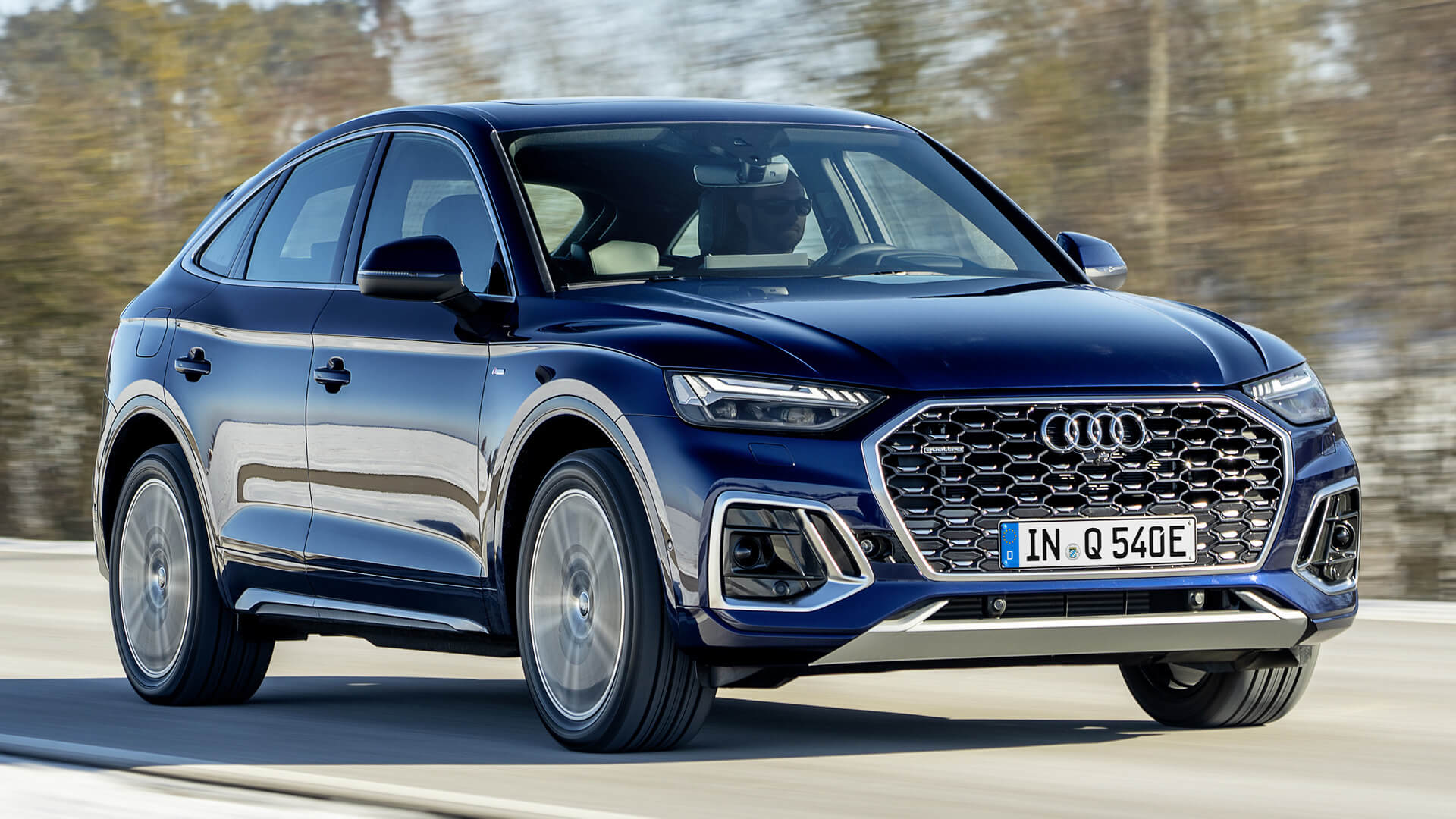
The Audi Q5 is a five-door, all-wheel-drive premium compact SUV and one of Audi's global models. It combines a modern look with sound practicality, composed road manners and a fair degree of rough-road ability. The first Q5 was unveiled at the 2008 Beijing motor show and updated in 2012; the second generation followed at the Paris motor show in September 2016, a coupé-styled Q5 Sportback joined it in early 2021, and the second generation was facelifted in the summer of 2020. This article focuses on that facelifted second-generation car; a third-generation Q5 on the new PPC platform followed in autumn 2024.
In short
- Two generations covered here: 8R (2008, facelift 2012) and FY (Paris 2016, facelift 2020); the Sportback arrived in 2021.
- Built on Audi's MLB Evo platform with all-round independent suspension and quattro all-wheel drive as standard.
- Petrol and diesel engines with roughly 150–195 kW (204–265 PS), plus a 270 kW (367 PS) plug-in hybrid.
- 550 litres of luggage space, rising to 1,550 litres with the rear seats folded.
Running cost
Fuel · Q5 GU 2.0 TDI quattro
about 1,550 EUR fuel a year at 15,000 km
6.3 l/100 km · diesel at 1.65 EUR/l · change mileage, fuel price or version
Specs by version
Engines
| Version | Engine | Power | Gearbox | Drive | Production years |
|---|---|---|---|---|---|
| Hybrid · 1 version | |||||
| FY · 2 L 4 cyl Automatic (AM-S7) · 2021 (EPA) | 2.0 l · 4 cyl · Hybrid 2,000 cc | — | 7-sp Dual-clutch | All-wheel drive | 2021 |
| Plug-in hybrid · 2 versions | |||||
| FY · 2 L 4 cyl Automatic (AM-S7) · 2021 (EPA) | 2.0 l · 4 cyl · Plug-in hybrid 2,000 cc | — | 7-sp Dual-clutch | All-wheel drive | 2021 |
| FY · 2 L 4 cyl Automatic (AM-S7) · 2020 (EPA) | 2.0 l · 4 cyl · Plug-in hybrid 2,000 cc | — | 7-sp Dual-clutch | All-wheel drive | 2020 |
| Diesel · 1 version | |||||
| GU · 2.0 TDI quattro | Diesel | 150 kW 204 PS201 hp | — | All-wheel drive | 2024 |
| Petrol · 2 versions | |||||
| GU · 2.0 TFSI | Petrol | 200 kW 272 PS268 hp | — | — | 2024 |
| GU · SQ5 3.0 V6 TFSI | Petrol | 270 kW 367 PS362 hp | — | All-wheel drive | 2024 |
| Other · 2 versions | |||||
| FY · 2 L 4 cyl Automatic (S7) · 2020 (EPA) | 2.0 l · 4 cyl 2,000 cc | — | 7-sp Automatic | All-wheel drive | 2020 |
| FY · 2 L 4 cyl Automatic (S7) · 2019 (EPA) | 2.0 l · 4 cyl 2,000 cc | — | 7-sp Automatic | All-wheel drive | 2019 |
Performance
Show all 6 versions
| Version | Fuel consumption |
|---|---|
| Hybrid · 1 version | |
| FY · 2 L 4 cyl Automatic (AM-S7) · 2021 (EPA) | 9.4 l/100 km25.0 mpg US · 30.1 mpg UK |
| Plug-in hybrid · 2 versions | |
| FY · 2 L 4 cyl Automatic (AM-S7) · 2021 (EPA) | 8.7 l/100 km27.0 mpg US · 32.5 mpg UK |
| FY · 2 L 4 cyl Automatic (AM-S7) · 2020 (EPA) | 8.7 l/100 km27.0 mpg US · 32.5 mpg UK |
| Diesel · 1 version | |
| GU · 2.0 TDI quattro | 6.3 l/100 km37.3 mpg US · 44.8 mpg UK |
| Other · 2 versions | |
| FY · 2 L 4 cyl Automatic (S7) · 2020 (EPA) | 9.8 l/100 km24.0 mpg US · 28.8 mpg UK |
| FY · 2 L 4 cyl Automatic (S7) · 2019 (EPA) | 9.8 l/100 km24.0 mpg US · 28.8 mpg UK |
Dimensions and weight
Show all 1 versions
| Version | Kerb weight |
|---|---|
| GU · 2024–present | |
| GU · 2.0 TDI quattro | 2,092 kg4,612 lb |
Verified Manufacturer and type-approval data from our catalog · Sources and methodology
Safety
-
GU · Euro NCAP 2025
-
FY · Euro NCAP 2017
Older protocol · Full Euro NCAP result
-
8R · Euro NCAP 2009
Older protocol · Full Euro NCAP result
-
GU · NHTSA 2025
US NCAP (NHTSA)
-
FY · NHTSA 2021
US NCAP (NHTSA)
-
8R · NHTSA 2016
US NCAP (NHTSA)
Stars from different years and organisations are not directly comparable: test protocols change every few years.
Audi Q5 at a glance
The Q5 sits between the Q3 and the larger Q7 in Audi's SUV range and competes directly with the BMW X3, Mercedes-Benz GLC and Volvo XC60. More Audi models are listed in our Audi catalogue, and the brand's background is covered in our history of Audi.
Generations
| Generation | Code | Debut | Facelift | Notes |
|---|---|---|---|---|
| First | 8R | Beijing motor show, 2008 | 2012 | Audi's first compact SUV |
| Second | FY | Paris motor show, 2016 | 2020 | MLB Evo platform; Sportback from 2021 |
The second generation went into production in September 2016. The facelift was revealed online in June 2020 and went on sale that summer. It refreshed the exterior, brought a new-generation MMI infotainment system and added a long list of new options. In Europe the engine range was revised at the same time, with mild-hybrid technology on the four-cylinder engines.
Exterior
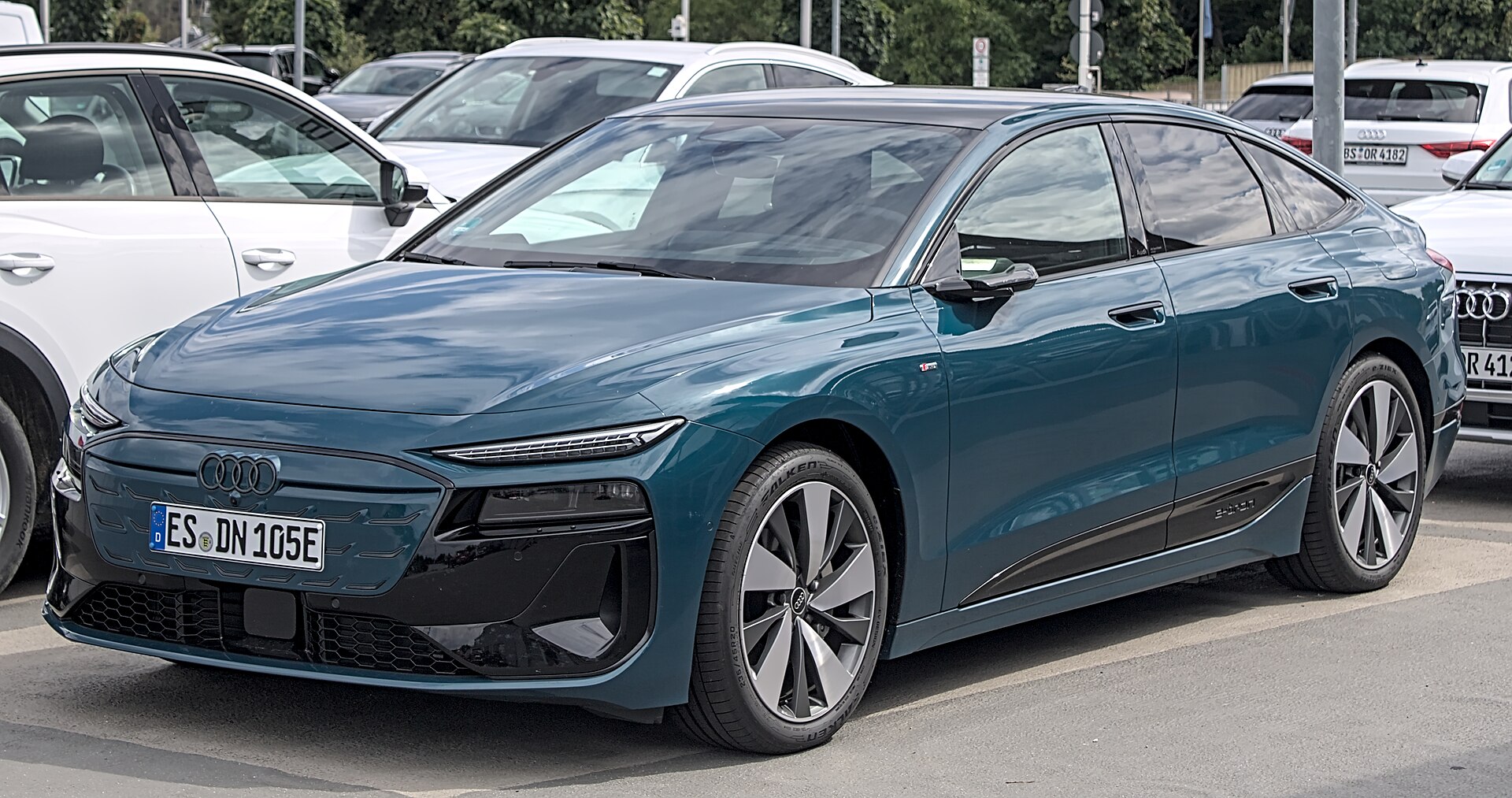
Compared with the earlier car, the facelifted Q5 is slightly longer — about 4.8 metres — and looks more muscular. It mixes proven Audi design cues with new elements, and its lights, surfacing and trim are arranged more tidily than before.
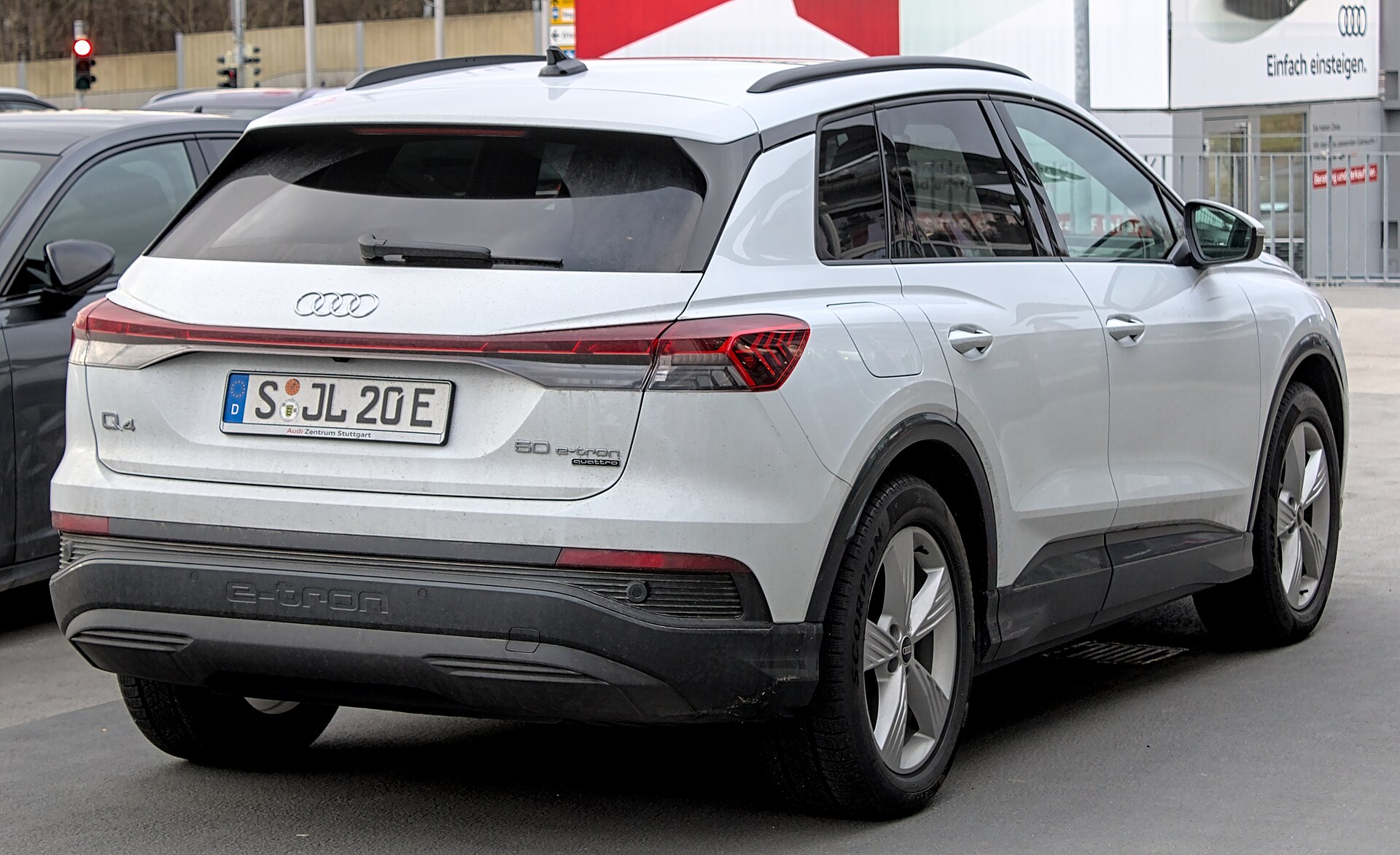
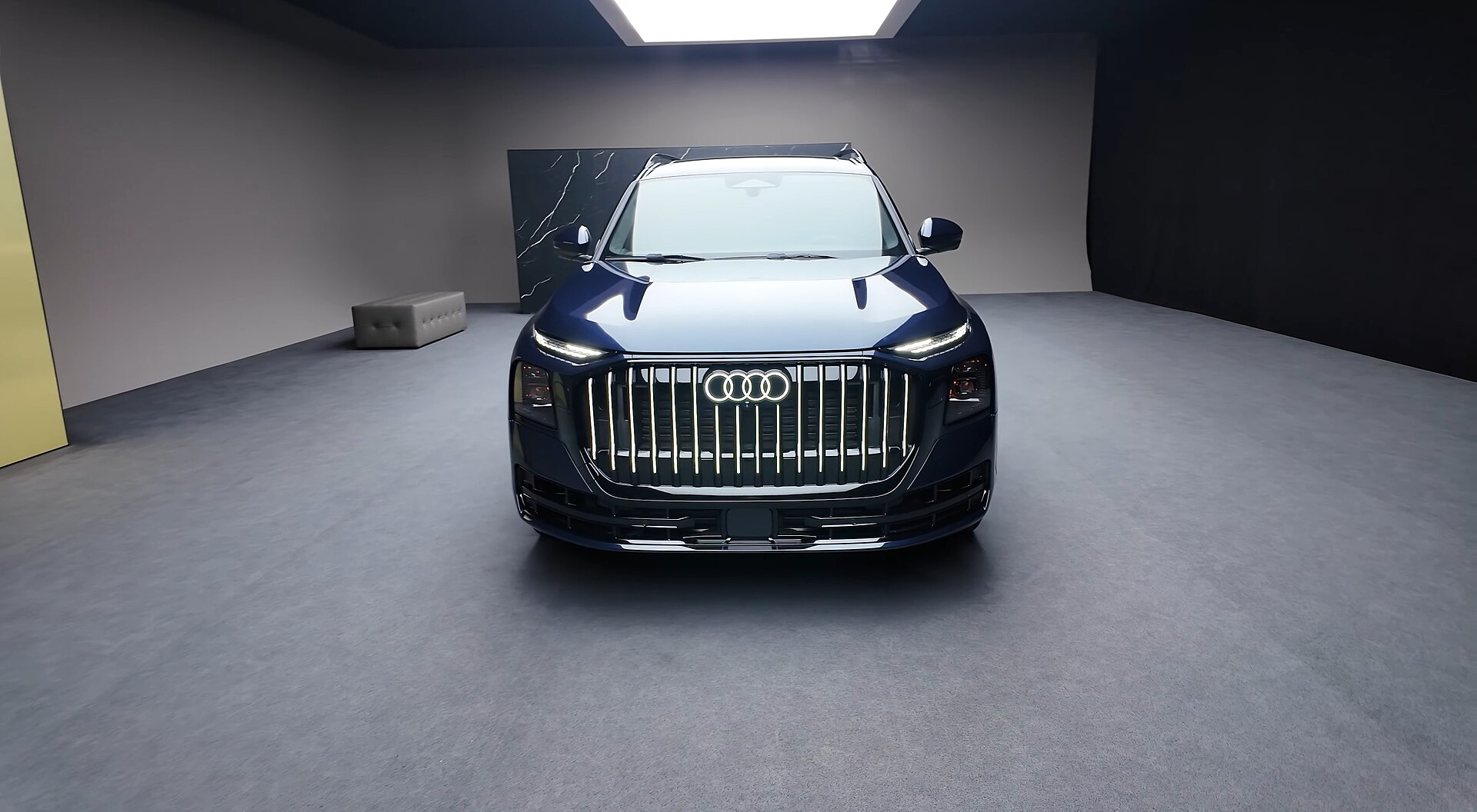
The front is tall and wide but not especially long. A large, steeply raked windscreen meets a rounded bonnet with twin creases along its edges. Below them sit new four-sided LED headlights split into several distinct segments; standard LED units can be replaced by optional Audi Matrix LED headlights, which control the beams automatically so the driver never has to switch between high and low beam. The headlights no longer touch the grille. Between them is a tall, wide hexagonal grille with a heavy chrome surround and thin horizontal slats, the Audi rings at the top and the number-plate mount below. The bumper has several aerodynamic steps, side recesses with slots and fog lamps, and sturdy protection along its lower edge.
In profile the Q5 is defined by round wheel arches that can take wheels of up to 21 inches, a neat sill line and large rounded mirrors with integrated indicators. Ground clearance is a useful 200 mm; with the optional air suspension it can be varied between 171 and 231 mm. At the rear, a slim roof spoiler shades a small rounded window above wide horizontal LED tail lights. A new option on the facelift is OLED rear lights: three panels of six segments each can display several light signatures, which change, for example, when the driver selects the Dynamic driving mode. The sculpted tailgate carries plenty of badges, and the bumper has thin light strips at the sides, a slim diffuser with a mesh centre section and revised exhaust trims.
Interior
The cabin matches the Q5's premium status, with high-quality fabric, leather, plastics and metal trim. The infotainment is quicker than before, and a range of driver assistants and comfortable seats make longer journeys easy. For music lovers, a premium Bang & Olufsen sound system is available.
The driver faces a sculpted three-spoke multifunction steering wheel. Behind it, the optional 12.3-inch Audi virtual cockpit plus has a resolution of 1,920 × 720 pixels, while base versions keep analogue dials. A head-up display shows speed, navigation instructions and warnings from the assistance systems, and the Q5 Sportback gets sportier seats with better lateral support.
The large T-shaped centre console is arranged in tiers. At the top, a row of air vents frames a 10.1-inch touchscreen running the MIB 3 platform with MMI infotainment, which understands natural voice commands — so the old rotary controller on the tunnel is gone. Apple CarPlay and Android Auto connect wirelessly. Below the screen are the climate controls and a few buttons for lights and auxiliary functions, and at the base of the console there is a wireless charging pad and ports for external media. The wide tunnel carries the gear selector, a covered storage compartment and a comfortable armrest with a cooled box.
The Q5 seats five. Front seats with good side support, electric adjustment and heating are standard on the facelifted car. The rear bench has a fold-down armrest, its own climate zone and backrests with adjustable angle, although the centre passenger has a short cushion and a raised transmission tunnel to contend with. The boot holds 550 litres with all seats in use and up to 1,550 litres with the rear backrests folded; a powered tailgate is standard.
Engines and transmissions
| Version | Engine | Power (kW / PS) | Torque | Gearbox | Drive |
|---|---|---|---|---|---|
| 40 TDI | 2.0 four-cylinder turbodiesel, 12 V mild hybrid | 150 kW / 204 PS | — | 7-speed S tronic | quattro ultra |
| 45 TFSI | 2.0 four-cylinder turbo petrol, 12 V mild hybrid | 195 kW / 265 PS | — | 7-speed S tronic | quattro ultra |
| 45 TFSI (some markets) | 2.0 four-cylinder turbo petrol | 183 kW / 249 PS | 370 Nm | 7-speed S tronic | quattro ultra |
| 45 TDI (some markets) | 3.0 V6 turbodiesel | 183 kW / 249 PS | 600 Nm | 8-speed tiptronic | quattro with Torsen centre differential |
| 55 TFSI e | 2.0 turbo petrol plug-in hybrid | 270 kW / 367 PS | 500 Nm | 7-speed S tronic | quattro |
The 2.0 TFSI petrol engine has a turbocharger, combined port and direct injection, variable timing on both camshafts, 16 valves driven by a chain, an electronically controlled thermostat and Audi valvelift on the exhaust side. In the 183 kW (249 PS) version it uses about 7.7 l/100 km on the combined cycle. The 3.0 V6 TDI has a variable-geometry turbocharger, common-rail injection and variable exhaust valve lift; it uses about 7.2 l/100 km. Both 183 kW versions reach 100 km/h in 6.2–6.3 seconds and top out at 237–240 km/h.
The European four-cylinder engines add a 12-volt starter-generator. It works with the start-stop system and can shut the engine down while the car is coasting to a stop from 22 km/h; Audi quotes a saving of about 0.3 l/100 km. Six-cylinder versions use a 48-volt system.
Petrol models use the seven-speed S tronic dual-clutch gearbox and quattro with ultra technology: the car is normally front-driven, and an electromechanical clutch engages the rear axle when needed. The V6 diesel has an eight-speed tiptronic automatic and permanent quattro with a Torsen centre differential that splits torque 40:60 in favour of the rear wheels.
Chassis and body
The facelifted Q5 uses the modular MLB Evo platform with independent five-link suspension at both axles. The body combines high-strength steels with aluminium, which is used for the front suspension mounts, the bonnet, the front bumper beam and the tailgate. Standard equipment includes electromechanical power steering, disc brakes on all wheels (ventilated at the front) and electronic aids such as ABS, EBD and brake assist. Options include electronically controlled adaptive dampers, air suspension that can raise the body by up to 60 mm, and progressive steering.
Safety
The Q5 offers a broad set of assistance systems:
- a blind-spot warning that uses LED indicators in the door mirrors;
- lane departure warning with steering intervention that brings the car back into its lane;
- Audi pre sense rear and side assist, with radar sensors in the rear bumper that warn of approaching vehicles;
- a parking assistant and acoustic parking sensors;
- a trailer assistant for reversing with a trailer;
- adaptive cruise control with traffic jam assist, which accelerates and brakes the car;
- top-view cameras — four wide-angle cameras that give a 360-degree view around the car.
Six airbags, LED headlights and front and rear parking sensors are standard.
Equipment
Even the entry-level facelifted Q5 comes with six airbags, single-zone climate control, 19-inch alloy wheels, LED headlights and tail lights, a powered tailgate, an infotainment system with ten speakers, front and rear parking sensors and heated front seats. Sportier versions add three-zone climate control, mixed upholstery, electric front seats, a heated steering wheel and special exterior and interior trim. The option list is long and has a big effect on the final price.
Rivals
The Q5's main rivals are the BMW X3, Mercedes-Benz GLC, Volvo XC60, Lexus NX, Jaguar F-Pace and Infiniti QX50. For a sportier take on the same body, see our review of the Audi SQ5.
Audi Q5 evolution in numbers
Did you know?
- The Audi Q5 has been around for 18 years: 3 generations in our catalog since 2008.
- The longest-running generation is the Q5 8R (2008–2016): 8 years.
Image credits · Photos from Wikimedia Commons under free licences
- Audi Q5 8R · Photo: OSX / Wikimedia Commons, Public domain
- Audi Q5 FY · Photo: EurovisionNim / Wikimedia Commons, CC BY-SA 4.0
- Audi Q5 GU · Photo: Alexander Migl / Wikimedia Commons, CC BY-SA 4.0
Popular comparisons
Audi Q5 in our rankings
- No. 65 of 304 · Heaviest cars (2,092 kg · top 22%)
- No. 196 of 912 · Longest-running car nameplates (18 years · top 23%)
- No. 41 of 143 · Most powerful diesel cars (150 kW · top 29%)
- No. 80 of 256 · Most economical cars (6.3 l/100 km · top 32%)
- No. 72 of 197 · Most powerful SUVs and crossovers (270 kW · top 38%)
- No. 330 of 859 · Most powerful cars (270 kW · top 39%)
Heavier than 78% of ranked cars in the 1CARS catalog (No. 65 of 304).
FAQ
When did the second-generation Audi Q5 appear?
It debuted at the Paris motor show in September 2016 and was facelifted in 2020.
Is every Audi Q5 all-wheel drive?
Yes. Petrol versions use quattro with ultra technology, which engages the rear axle on demand; the V6 diesel uses permanent quattro with a Torsen centre differential.
How big is the Audi Q5 boot?
550 litres with five seats in use and up to 1,550 litres with the rear seats folded.
What is the most powerful facelifted Audi Q5 apart from the SQ5?
The 55 TFSI e plug-in hybrid, with 270 kW (367 PS) and 500 Nm.
Data sources
Data checked by an editor against the sources below.
- Wikipedia — Audi Q5
- Co
- Euro NCAP — Fiat And Ford Fall Short Of Rivals Safety Ratings
- Euro NCAP
- US EPA fueleconomy.gov — 43276.shtml
- EEA CO₂ monitoring (European Environment Agency, CC BY 4.0)
- NHTSA 5-Star Safety Ratings (US NCAP) — U.S. Government work, public domain