Most powerful supercars: the road cars with the highest outputs
Power figures in the supercar world are easy to quote and hard to compare. Some are pre-production claims, some apply only on special fuel, and some belong to track-only cars that can never be registered. For this list we set clear rules: road-legal series-production cars only, ranked by the peak system output of the model entry on 1cars – the combined figure for hybrids – on standard fuel.
Every figure was checked against manufacturer data as reported by Wikipedia, and where our catalogue held an outdated or wrong value we corrected it before publication. Faster special editions such as the Chiron Super Sport and the Nevera R are mentioned in the text but do not change the ranking, which follows the main model entry.
The nine cars below run from the all-electric Lotus Evija with 1,500 kW to the naturally aspirated Ferrari 812 Superfast with 588 kW. Electric hypercars now lead the table, but combustion and hybrid engineering are well represented. For each car we explain why it earns its place, who it suits and the drawback you should know about.
-
1. Lotus Evija
1,500 kW (2,039 PS)
- Production years
- 2023–present
- Body type
- Coupe
- Fuel
- Electric
- Power output
- 1,500 kW (2,039 PS)
Lotus revealed the Evija in July 2019, but production only began in July 2023 after a four-year delay, and just 130 cars are planned. Four electric motors, one at each wheel and each rated at 375 kW, give a combined 1,500 kW (2,039 PS) and 1,704 Nm, fed by a 93 kWh battery. Lotus claims under three seconds from 0 to 100 km/h and a limited top speed of 349 km/h, with an electric range of about 346 km. It suits collectors who want the most powerful road car on this list. The drawback: at 1,887 kg it is heavy for a car of its kind.
Full review: Lotus EvijaPros
- 1,500 kW (2,039 PS) from four motors
- 1,704 Nm of torque
- Only 130 planned
Cons
- Heavy: 1,887 kg
-
2. Rimac Nevera
1,408 kW (1,914 PS)
- Production years
- 2021–2018
- Body type
- Coupe
- Fuel
- Electric
- Power output
- 1,408 kW (1,914 PS)
Shown as the C_Two concept at the 2018 Geneva show, Rimac's hypercar went into production as the Nevera in 2022, limited to 150 cars. Four motors and a 120 kWh battery deliver 1,408 kW (1,914 PS) and 2,360 Nm. In May 2023 it set 23 records in a single day, including 0–100 km/h in 1.82 seconds, and it lapped the Nürburgring in 7:05.298 minutes, a record for a production electric car. The 2024 Nevera R raises output to 1,550 kW (2,107 PS). It suits buyers who want the ultimate in acceleration. The drawback: only 150 will be built, and more than 50 had been delivered by May 2024.
Full review: Rimac NeveraPros
- 1,408 kW (1,914 PS) and 2,360 Nm
- 0–100 km/h in 1.82 s (2023 record)
- Nevera R: 1,550 kW (2,107 PS)
Cons
- Limited to 150 cars
-
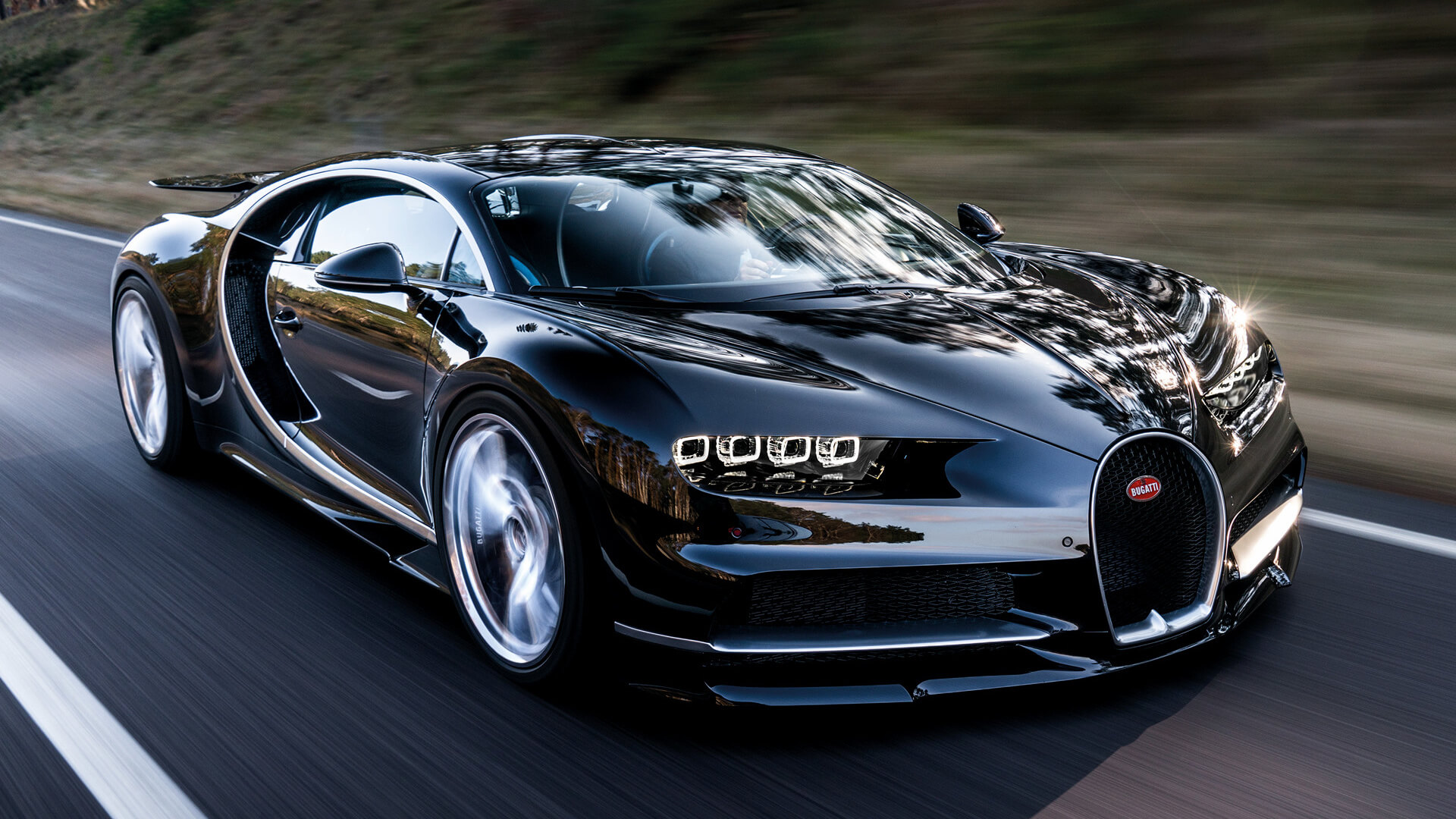
3. Bugatti Chiron
1,103 kW (1,500 PS)
- Production years
- 2016–2024
- Body type
- Coupe
- Fuel
- Petrol
- Power output
- 1,103–1,177 kW (1,500–1,600 PS)
The Chiron, built from 2016 to 2024, took the Veyron's formula further: an 8.0-litre quad-turbocharged W16 with 1,103 kW (1,500 PS), and 500 cars in total. The Chiron Super Sport 300+ raised output to 1,177 kW (1,600 PS), and in August 2019 a pre-production car reached 490.484 km/h at Ehra-Lessien; customer cars are limited to 440 km/h. The standard Chiron is electronically limited to 420 km/h. It suits collectors who want the definitive combustion-engined hypercar. The drawback: production has ended, so every Chiron is now a used purchase from a very small pool.
Pros
- 8.0-litre quad-turbo W16
- Super Sport: 1,177 kW (1,600 PS)
- 490.484 km/h record run (2019)
Cons
- Only 500 built; production ended in 2024
Spec sheet: Bugatti Chiron 8.0 l Chiron 1,103 kW (1,500 PS)
Full review: Bugatti Chiron -
4. Bugatti Veyron Super Sport
882 kW (1,200 PS)
- Production years
- 2010–2011
- Body type
- Coupe
- Fuel
- Petrol
- Power output
- 883 kW (1,201 PS)
The Veyron 16.4 of 2005 already had 736 kW (1,001 PS). The Super Sport, built in 2010 and 2011, raised that to 882 kW (1,200 PS) and recorded 431.072 km/h in July 2010, although customer cars were limited to 415 km/h to protect the tyres. Only 48 Super Sports were built among 450 Veyrons, alongside 92 Grand Sport Vitesse cars, the open targa version derived from the Super Sport. It suits collectors of landmark cars that redefined what a road car could do. The drawback: with only 48 built, finding a Super Sport for sale is difficult.
Pros
- 882 kW (1,200 PS)
- 431.072 km/h in July 2010
- Veyron 16.4: 736 kW (1,001 PS) as early as 2005
Cons
- Only 48 built
Spec sheet: Bugatti Veyron Super Sport 8.0 l 883 kW (1,201 PS)
Full review: Bugatti Veyron Super Sport -
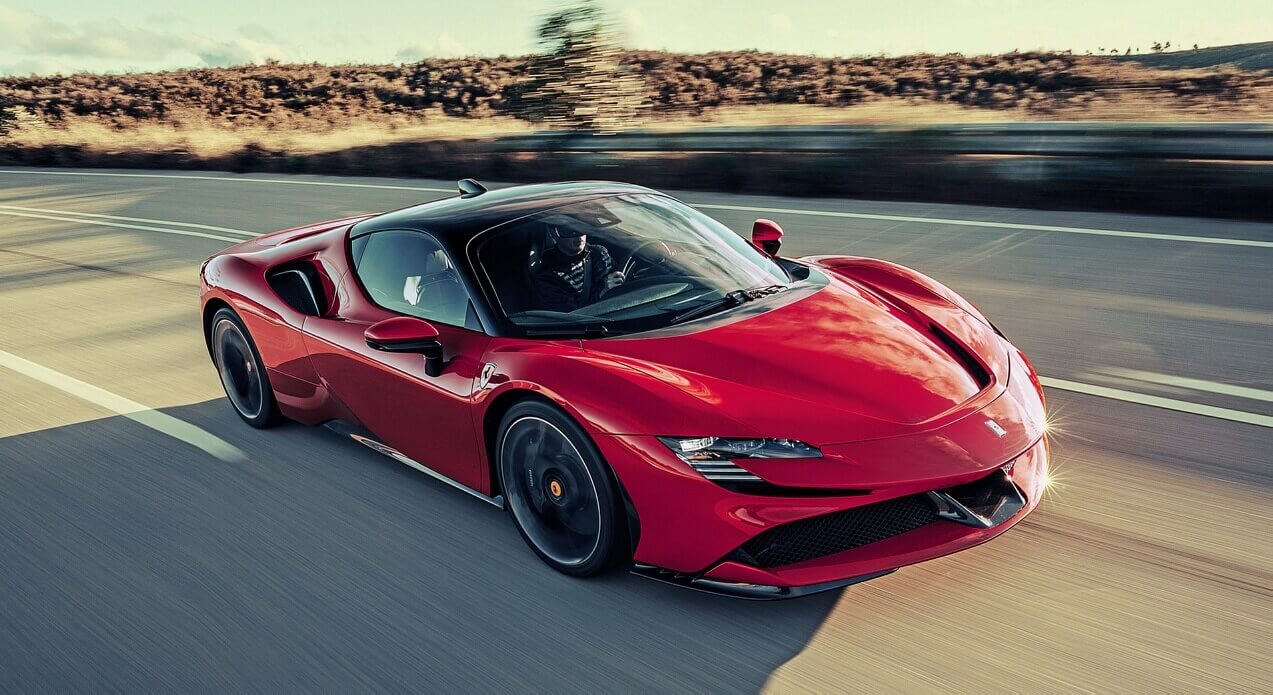
5. Ferrari SF90 Stradale
735 kW (1,000 PS)
- Production years
- 2019–2024
- Body type
- Coupe
- Fuel
- Petrol, Hybrid, Plug-in hybrid
- Power output
- 735 kW (999 PS)
The SF90 Stradale, built from 2019 to 2024, is Ferrari's plug-in hybrid flagship: a 4.0-litre twin-turbo V8 works with three electric motors – one at the gearbox and one on each front wheel – for 735 kW (1,000 PS) and all-wheel drive. Ferrari quotes 2.5 seconds from 0 to 100 km/h, 340 km/h and 26 km of electric-only range from a 7.9 kWh battery. A Spider version and an Assetto Fiorano pack were offered. It suits owners who want hypercar pace in a car they can use often. The drawback: the hybrid hardware adds weight – the Spider weighs 1,670 kg.
Pros
- 735 kW (1,000 PS) combined
- All-wheel drive
- 26 km electric-only range
Cons
- Hybrid system adds weight
Spec sheet: Ferrari SF90 Stradale 4.0 l 735 kW (999 PS)
Full review: Ferrari SF90 Stradale -
6. Koenigsegg Agera R
706 kW (960 PS)
- Production years
- 2011–2014
- Body type
- Coupe
- Fuel
- Petrol
- Power output
- 706–838 kW (960–1,139 PS)
Koenigsegg's Agera R, built from 2011 to 2014, shows how much fuel matters: its V8 produces 706 kW (960 PS) on ordinary low-octane petrol but 838 kW (1,140 PS) on E85 biofuel. In September 2011 it set a 0–300–0 km/h record of 21.19 seconds, and the later Agera RS averaged 447.2 km/h in 2017. Only 65 cars of the whole Agera family were made between 2010 and 2018. It suits collectors who want a Swedish hypercar from a small, specialist maker. The drawback: with so few cars, buying one depends on rare private sales.
Pros
- Up to 838 kW (1,140 PS) on E85
- 0–300–0 km/h in 21.19 s (2011)
- Only 65 Agera-family cars
Cons
- Very few cars exist
Spec sheet: Koenigsegg Agera R 5.0 l Agera R 706 kW (960 PS)
Full review: Koenigsegg Agera R -
7. McLaren P1
674 kW (916 PS)
- Production years
- 2013–2015
- Body type
- Coupe
- Fuel
- Petrol, Hybrid
- Power output
- 674 kW (916 PS)
McLaren built 375 P1s between October 2013 and December 2015. A 3.8-litre twin-turbo V8 with 542 kW (737 PS) works with a 132 kW electric motor for a combined 674 kW (916 PS) and 900 Nm, and the car can cover about 11 km on electricity alone (NEDC). Top speed is limited to 350 km/h, and McLaren quotes 2.8 seconds from 0 to 100 km/h. With the LaFerrari and Porsche 918 Spyder, it was one of the first high-performance hybrid supercars. It suits collectors of modern milestones. The drawback: only 375 were built, and the electric range is very short.
Pros
- 674 kW (916 PS) and 900 Nm
- Early high-performance hybrid
- 350 km/h limited top speed
Cons
- Only 375 built
Spec sheet: McLaren P1 3.8 l P1 674 kW (916 PS)
Full review: McLaren P1 -
8. Lamborghini Sian
602 kW (819 PS)
- Production years
- 2019–2022
- Body type
- Coupe
- Fuel
- Petrol, Hybrid
- Power output
- 602 kW (818 PS)
The Sián FKP 37, revealed in September 2019, is Lamborghini's first hybrid production car. Its 6.5-litre V12 makes 577 kW (785 PS), and a 48-volt electric motor in the gearbox adds 25 kW (34 PS); instead of a lithium-ion battery, it stores energy in a supercapacitor. Combined output is 602 kW (819 PS). Only 63 coupés and 19 roadsters were made, and all were sold. It suits V12 enthusiasts who want a naturally aspirated engine with a little electric help. The drawback: with 82 cars in total, it is almost impossible to buy.
Pros
- 602 kW (819 PS) combined
- Naturally aspirated V12 with supercapacitor hybrid
- Lamborghini's first hybrid
Cons
- Only 82 built
Spec sheet: Lamborghini Sian 6.5 l Sián FKP 37 602 kW (818 PS)
Full review: Lamborghini Sian -
9. Ferrari 812
588 kW (800 PS)
- Production years
- 2017–2024
- Body type
- Coupe, Convertible
- Fuel
- Petrol
- Power output
- 588–610 kW (799–829 PS)
Unveiled at the 2017 Geneva show, the 812 Superfast is the only car on this list without turbochargers or electric help: a front-mid-mounted 6.5-litre V12 with 588 kW (800 PS) at 8,500 rpm, which Ferrari called the most powerful naturally aspirated production car engine ever made. It was built from 2017 to 2024, and the 812 Competizione raised output to 610 kW (830 PS). Ferrari quotes a top speed of 340 km/h. It suits drivers who want a front-engined grand tourer with supercar power. The drawback: all that power goes to the rear wheels alone, which demands care in poor conditions.
Pros
- 588 kW (800 PS) naturally aspirated V12
- Peak power at 8,500 rpm
- Competizione: 610 kW (830 PS)
Cons
- Rear-wheel drive only
Spec sheet: Ferrari 812 6.5 l Superfast 588 kW (799 PS)
Full review: Ferrari 812





Data ranking: Most powerful cars - all 859 models in our catalog with a figure, ranked by the numbers.
Catalog: All supercars: leagues, prices and history - every model with specs, not only our picks.
How we chose
Selection and ranking. Road-legal, series-production supercars with a published model page on 1cars, ranked by verified peak system output on standard fuel. Track-only cars such as the Ferrari FXX K and Pagani Zonda R are not included. The Koenigsegg CCX, Lamborghini Veneno, Gumpert Apollo, McLaren 625C and Aston Martin Vantage dropped out because more powerful verified cars were available. We added the Lotus Evija, Rimac Nevera (catalogue entry C_Two), Bugatti Chiron, Ferrari SF90 Stradale, McLaren P1, Lamborghini Sián FKP 37 and Ferrari 812 Superfast, and list the Veyron by its Super Sport version.
Data sources. Card facts come from the 1cars catalogue; the Lotus Evija's production year and power were corrected from Wikipedia before publication. Text facts – outputs, production years, build numbers, records – were checked against manufacturer data as reported by English-language Wikipedia. Power is given in kW first, then PS. Performance figures are manufacturer claims unless stated otherwise.
Note. The ranking is by power only and says nothing about lap times, handling or value. Prices are deliberately not given.
Frequently asked questions
What is the most powerful road car on this list?
The Lotus Evija, with 1,500 kW (2,039 PS) from four electric motors. The Rimac Nevera R special edition of 2024 has 1,550 kW (2,107 PS), but this list ranks the main model entries.
Why are the Ferrari FXX K and Pagani Zonda R not included?
Both are track-only cars that cannot be registered for road use. This list only includes road-legal series-production cars.
Why is the Koenigsegg Agera R ranked by its lower figure?
It produces 706 kW (960 PS) on ordinary petrol and 838 kW (1,140 PS) on E85 biofuel. We rank every car on standard fuel so that the figures are comparable.
Why are there no prices in this list?
Prices depend on the country, age, mileage and condition of each car and change quickly. We only publish facts that can be checked, so compare current local listings and a full service history before you buy.