
 Fiat 130
All generations, specs and history
Published Sources (3) Report an error
By Sarah Whitmore, Senior Automotive Writer
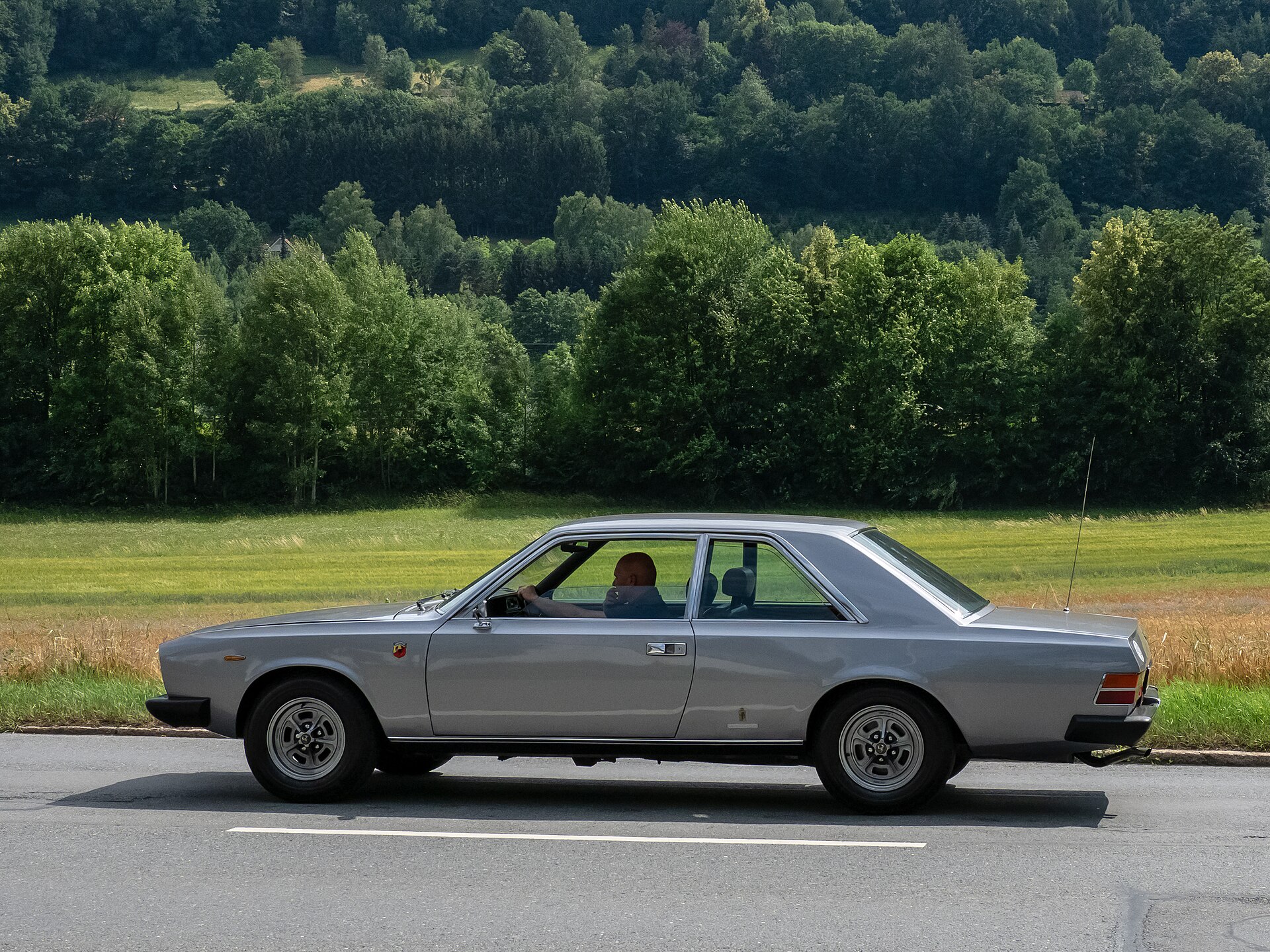
- Built
- 1969–1977
- Generations
- 2
- Top power
- 121 kW (165 PS)
Timeline
130 generations
Click a generation for its own page
Berlina and Coupe overlapped in 1971–1976, so Coupe sits on a second lane
- 130 Berlina 1969–1976 · Sedan · 103–121 kW (140–165 PS)
- 130 Coupe 1971–1977 · Coupe · 121 kW (165 PS)
Newest first · 2 generations since 1969
- 1971 Coupe 1971–1977 · Coupe · 121 kW (165 PS) Berlina and Coupe overlapped in 1971–1976
- 1969 Berlina 1969–1976 · Sedan · 103–121 kW (140–165 PS)
All generations by year: 130 Coupe (1971–1977) · 130 Berlina (1969–1976)
Which one is mine?
Pick the year of first registration to see which generation it is.
- 130 Coupe 1971–1977
- 130 Berlina 1969–1976
The Fiat 130 is the large executive car Fiat built from 1969 to 1977, first as a four-door saloon and from 1971 as a two-door coupe styled and built by Pininfarina. Both used a V6 designed by former Ferrari engineer Aurelio Lampredi, first of 2.9 litres and later 3.2 litres. Only 15,093 saloons and about 4,491 coupes were made, and Fiat never built a direct successor.
In short
- Saloon shown at Geneva in March 1969; coupe shown at Geneva in March 1971 and built until 1977.
- 60-degree V6 with one belt-driven camshaft per bank: 2,866 cc with 103-118 kW (140-160 PS), then 3,235 cc with 121 kW (165 PS).
- Three-speed Borg-Warner automatic as standard, ZF five-speed manual as an option.
- Total output about 19,600 cars; Fiat aimed the 130 at the Mercedes-Benz S-Class and the Jaguar XJ.
Size at a glance
| Dimensions | Fiat 130 Berlina |
|---|---|
| Length | 4,750 mm187.0 in |
| Width | 1,803 mm71.0 in |
| Height | 1,473 mm58.0 in |
| Wheelbase | 2,720 mm107.1 in |
Specs by version
Engines
| Version | Engine | Power | Gearbox | Drive | Production years |
|---|---|---|---|---|---|
| 130 Berlina · 2800 V6 (140 PS) | 2.9 l · 6 cyl · Petrol 2,866 cc | 103 kW 140 PS138 hp | 3-sp Automatic | Rear-wheel drive | 1969–1970 |
| 130 Berlina · 2800 V6 (160 PS) | 2.9 l · 6 cyl · Petrol 2,866 cc | 118 kW 160 PS158 hp | 3-sp Automatic | Rear-wheel drive | 1970–1971 |
| 130 Berlina · 3200 V6 | 3.2 l · 6 cyl · Petrol 3,235 cc | 121 kW 165 PS162 hp | 3-sp Automatic | Rear-wheel drive | 1971–1976 |
| 130 Coupe · Coupe 3200 V6 | 3.2 l · 6 cyl · Petrol 3,235 cc | 121 kW 165 PS162 hp | 3-sp Automatic | Rear-wheel drive | 1971–1977 |
Performance
Show all 3 versions
| Version | Top speed |
|---|---|
| 130 Berlina · 2800 V6 (140 PS) | 182 km/h113 mph |
| 130 Berlina · 3200 V6 | 190 km/h118 mph |
| 130 Coupe · Coupe 3200 V6 | 195 km/h121 mph |
Dimensions and weight
Show all 2 versions
| Version | Length | Width | Height | Wheelbase | Kerb weight |
|---|---|---|---|---|---|
| 130 Berlina · 2800 V6 (140 PS) | 4,750 mm187.0 in | 1,803 mm71.0 in | 1,473 mm58.0 in | 2,720 mm107.1 in | 1,550 kg3,417 lb |
| 130 Coupe · Coupe 3200 V6 | 4,850 mm190.9 in | - | - | 2,720 mm107.1 in | - |
Verified Manufacturer and type-approval data from our catalog · Sources and methodology
Fiat 130 at a glance
| Item | Fiat 130 |
|---|---|
| Years | saloon 1969-1976; coupe 1971-1977 |
| Production | 15,093 saloons; 4,491 coupes (Wikipedia text: 4,294) |
| Body styles | four-door saloon; two-door coupe; four Familiare estates by Introzzi |
| Designers | saloon: Fiat Centro Stile (Boano); coupe: Paolo Martin at Pininfarina |
| Project leader | Dante Giacosa; engine by Aurelio Lampredi |
| Layout | front engine, rear-wheel drive, limited-slip differential |
| Engines | 2,866 cc V6 (1969-1971); 3,235 cc V6 (1971-1977) |
| Power | 103 kW (140 PS) to 121 kW (165 PS) |
| Kerb weight | saloon 1,550 kg; coupe 1,559-1,610 kg |
| Top speed | saloon 182-190 km/h; coupe 195 km/h (SP-X) |
| 0-60 mph | coupe 9.5-10.6 s (Classic & Sports Car) |
| Price new | coupe GBP 5,609 in 1973; about 13 million lire in 1975 |
The 130 is listed in the Fiat catalogue.
Fiat's flagship for its 70th anniversary
Design work on the saloon began in 1963, under Fiat's technical chief Dante Giacosa. According to the SP-X history published for the car's 50th birthday, Fiat wanted a flagship for its 70th anniversary that could face the Mercedes-Benz S-Class, the Jaguar XJ and the six-cylinder saloons from BMW and Volvo. The 130 replaced the Fiat 2300 and sat far above the rest of the range: in 1975 it cost about 13 million lire, against 4.8 million for a Fiat 132.
The saloon was styled in Fiat's own Centro Stile. Wikipedia EN credits Gian Paolo Boano, while SP-X names Mario Felice Boano, so the attribution varies between sources. Its long, square body measured 4,750 mm on a 2,720 mm wheelbase. Motor praised the handling and interior but criticised noise, fuel use and price, and Autocar summed it up as "a dignified Italian".

A V6 from a former Ferrari engineer
Aurelio Lampredi developed the engine, a 60-degree V6 with a single belt-driven overhead camshaft on each bank and two valves per cylinder. The first 2,866 cc version gave 103 kW (140 PS) at 5,600 rpm. For 1970 the compression ratio went from 8.3:1 to 9.0:1 and output rose to 118 kW (160 PS). In 1971 the bore grew from 96 mm to 102 mm, giving 3,235 cc and 121 kW (165 PS) at 5,600 rpm, with 249 Nm (184 lb ft) at 3,400 rpm according to Classic & Sports Car.
| Engine | Years | Displacement | Power | Top speed (SP-X) |
|---|---|---|---|---|
| 130 saloon 2.8 | 1969-1970 | 2,866 cc | 103 kW (140 PS) | 182 km/h |
| 130 saloon 2.8, higher compression | 1970-1971 | 2,866 cc | 118 kW (160 PS) | 185-190 km/h |
| 130 saloon 3200 | 1971-1976 | 3,235 cc | 121 kW (165 PS) | 190 km/h |
| 130 Coupe | 1971-1977 | 3,235 cc | 121 kW (165 PS) | 195 km/h |
Most cars used the three-speed Borg-Warner automatic; the ZF S5-18/3 five-speed manual was optional. The front suspension used modified MacPherson struts with longitudinal torsion bars and adjustable ride height, the rear a Chapman-type strut with coil springs. ZF power steering and an adjustable column were standard. Abarth later used the 3.2-litre V6 in its SE030 and 031 prototypes, which won the Giro d'Italia road race for cars in 1974 and 1975.
The Pininfarina coupe
The coupe arrived at Geneva in March 1971. Paolo Martin drew it at Pininfarina, with Leonardo Fioravanti also credited by SP-X, and Pininfarina built it. It shared the saloon's 2,720 mm wheelbase but was longer at 4,850 mm and had a body of its own. One unusual detail: the driver could open the passenger door from the driver's seat. Car magazine found the coupe better controlled than the saloon.
| Year | Coupes built |
|---|---|
| 1971 | 347 |
| 1972 | 1,746 |
| 1973 | 1,344 |
| 1974 | 617 |
| 1975 | 197 |
| 1976 | 221 |
| 1977 | 19 |
| Total | 4,491 |
The coupe also changed the saloon. From 1971 the four-door gained the 3.2-litre engine together with the coupe's steering, dashboard and centre console. In March 1974 Pininfarina showed two more ideas on the same base, the Maremma shooting brake and the four-door Opera, but neither went into production.

State cars, family estates and a quiet exit
The 130 became a car for officials. The Italian state bought many saloons, often armoured, and SP-X lists an armoured saloon for Nicolae Ceausescu and a long-wheelbase car for the Pope. Former prime minister Aldo Moro was travelling in a blue 130 when he was kidnapped in 1978. The Agnelli family ordered four Familiare estates, converted by Introzzi of Como; Gianni Agnelli's car is known as the 130 Villa d'Este.
Sales never matched the ambitions. SP-X notes that Fiat lacked the prestige to sell a car at this price in large numbers. Saloon production ended in 1976 and the coupe followed in 1977. Fiat had bought Lancia and Ferrari in 1969, and the representative role passed to the Lancia Gamma saloon and coupe of 1976-1977. The wider story of the company is told in the history of Fiat, and the coachbuilder's side in the history of Pininfarina.
Fiat 130 today: what to check when buying
Classic & Sports Car's buying guide of December 2021 warns that the body rots and that rust and low values killed many cars in the 1980s and 1990s. The Fiat 130 Coupe Register estimates that about 25% of coupes survive, about 30% of them with the manual gearbox. Look for a car with little corrosion and complete original trim, because headlamps and tail lights are unique and scarce.
The Lampredi V6 was used only in the 130, so rebuild parts are limited. Change the timing belts every five years or 30,000 miles (48,000 km) and check the water pump for play, since a failure can wreck the engine. Rattles, knocks or heavy oil breathing point to wear. Automatic gearbox fluid should be red; the ZF manual needs good synchromesh, and rebuilding it costs much more than rebuilding the Borg-Warner. Steering box rebuilds are expensive, and calipers can seize on little-used cars. Velour trim ages badly, leather lasts better.
The same guide gave about EUR 23,000 (GBP 20,000) for an average automatic coupe and EUR 25,300 (GBP 22,000) for a manual, rising to EUR 51,800-57,500 (GBP 45,000-50,000) for show cars and falling to about EUR 8,000 (GBP 7,000) for restoration projects. More big saloons and coupes of the period are in the classic cars section.
Fiat 130: first vs latest generation
| Spec | 130 Berlina | 130 Coupe | Change |
|---|---|---|---|
| Years | 1969–1976 | 1971–1977 | 2 years apart |
| Most powerful version | 121 kW (165 PS) | 121 kW (165 PS) | same (0%) |
| Length | 4,750 mm | 4,850 mm | +100 mm |
| Wheelbase | 2,720 mm | 2,720 mm | same |
| Top speed | 190 km/h | 195 km/h | +5 km/h |
Oldest and newest generation in the 1cars catalog. Power is the strongest version of each; other rows are shown only when both generations have the figure.
Fiat 130 in our rankings
- No. 18 of 113 · Longest coupes (4,850 mm · top 16%)
- No. 120 of 586 · Longest cars (4,850 mm · top 21%)
- No. 64 of 184 · Biggest engines: sedans (3,235 cc · top 35%)
- No. 15 of 43 · Fastest cars of the 1960s (182 km/h · top 35%)
- No. 17 of 48 · Fastest cars of the 1970s (195 km/h · top 40%)
- No. 307 of 729 · Biggest engines: cars (3,235 cc · top 43%)
Longer than 84% of ranked coupes in the 1CARS catalog (No. 18 of 113).
FAQ
What engine does the Fiat 130 have?
A 60-degree V6 developed by Aurelio Lampredi, with one belt-driven camshaft per bank. It started at 2,866 cc and 103 kW (140 PS) in 1969 and grew to 3,235 cc and 121 kW (165 PS) in 1971.
How many Fiat 130 coupes were built?
Pininfarina's yearly figures add up to 4,491 coupes from 1971 to 1977, with the best year in 1972 at 1,746 cars. Wikipedia's text gives 4,294 and SP-X 4,493, so totals vary slightly.
Who designed the Fiat 130 Coupe?
Paolo Martin designed it at Pininfarina, which also built the car. SP-X also credits Leonardo Fioravanti. The saloon came from Fiat's own Centro Stile. The coupe arrived at Geneva in March 1971 on the saloon's 2,720 mm wheelbase, with a body of its own 4,850 mm long.
What replaced the Fiat 130?
Fiat built no direct successor. The saloon ended in 1976 and the coupe in 1977, and the group's top-level role passed to the Lancia Gamma of 1976-1977. Wikipedia's infobox lists the later Fiat Argenta as the successor in Fiat's range.
Data sources
Data checked by an editor against the sources below.
- Wikipedia - Fiat 130
- Classicandsportscar
- Autoplenum - Stilpraegende Grandezza Vom Kleinwagenspezialisten Tradition 50 Jahre Fiat 130 Id43467


