
 Fiat 850
All generations, specs and history
Published Sources (1) Report an error
By Oleksandr Hnatiuk, Automotive Editor & Used Car Specialist
- Built
- 1964–1973
- Generations
- 2
- Top power
- 38 kW (52 PS)
Timeline
850 generations
Click a generation for its own page
saloon and Coupé and Spider overlapped in 1965–1971, so Coupé and Spider sits on a second lane
- 850 saloon 1964–1971 · Sedan · 25–35 kW (34–48 PS)
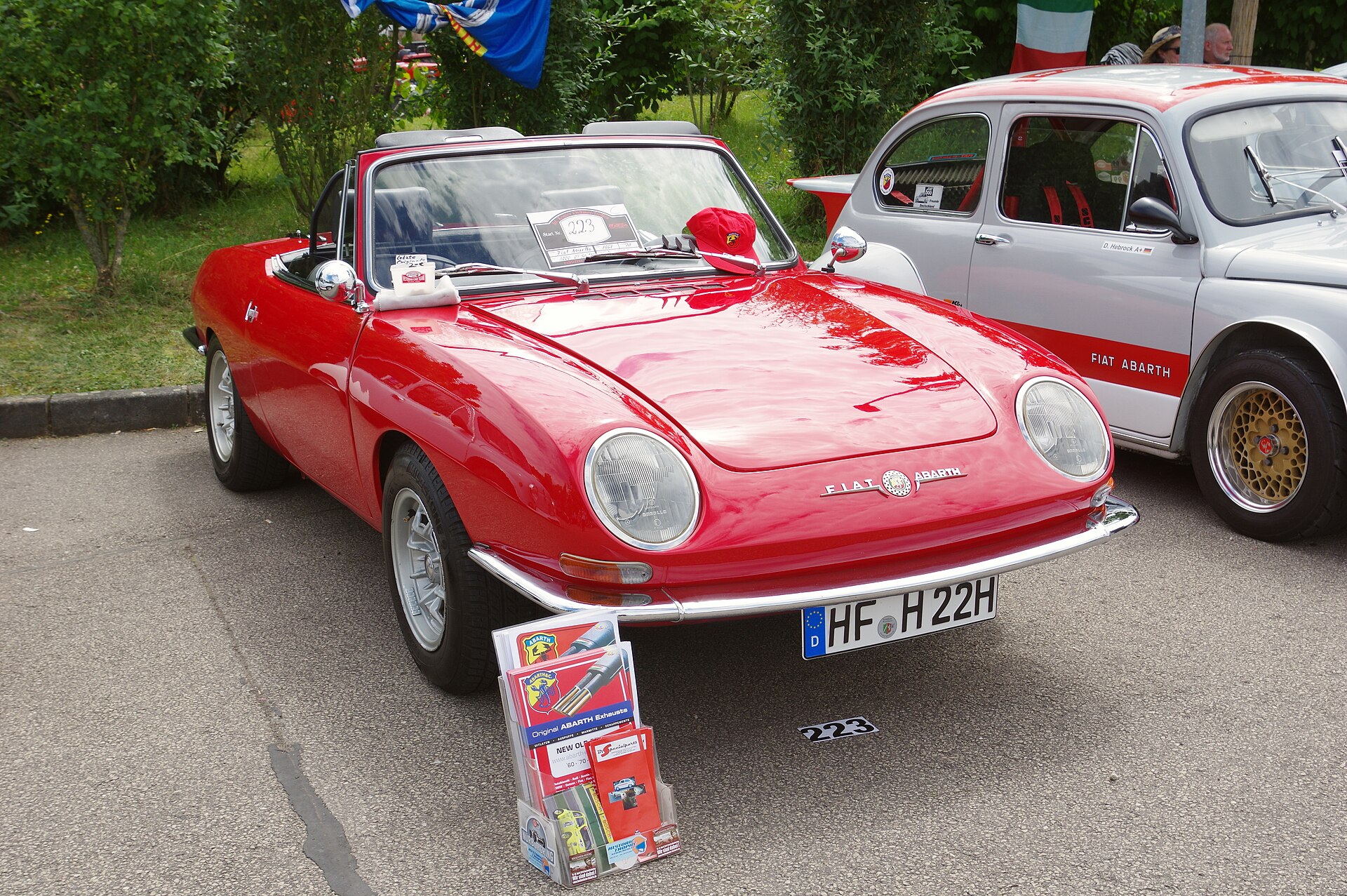
- 850 Coupé and Spider 1965–1973 · Coupe, Roadster · 35–38 kW (48–52 PS)
Newest first · 2 generations since 1964
- 1965 Coupé and Spider 1965–1973 · Coupe, Roadster · 35–38 kW (48–52 PS) saloon and Coupé and Spider overlapped in 1965–1971
- 1964 saloon 1964–1971 · Sedan · 25–35 kW (34–48 PS)
All generations by year: 850 Coupé and Spider (1965–1973) · 850 saloon (1964–1971)
Which one is mine?
Pick the year of first registration to see which generation it is.
- 850 Coupé and Spider 1965–1973
- 850 saloon 1964–1971
The Fiat 850 is a rear-engined small car that Fiat built from 1964 to 1973 as a two-door saloon, a 2+2 Coupé and a Bertone-styled Spider. It grew out of the Fiat 600, with an 843 cc four of 25 kW (34 PS) in the basic saloon and a 903 cc engine of 38 kW (52 PS) in the 1968 Sport models. About 2.3 million were sold worldwide.
In short
- Saloon launched in May 1964; Coupé and Spider shown at the Geneva Motor Show in spring 1965.
- Spider styled by Giorgetto Giugiaro at Bertone and built at Grugliasco near Turin.
- Rear-mounted four-cylinder engines of 843 cc and 903 cc, 25-38 kW (34-52 PS).
- Licence production by SEAT in Spain, NSU-Fiat in Germany and Pirin-Fiat in Bulgaria.
Size at a glance
Fiat 850 saloon
The Fiat 850 Coupé and Spider is 77 mm longer, 75 mm wider and 85 mm lower than the Fiat 850 saloon.
| Dimensions | Fiat 850 Coupé and Spider | Fiat 850 saloon | Difference |
|---|---|---|---|
| Length | 3,652 mm143.8 in | 3,575 mm140.7 in | +77 mm+3.0 in |
| Width | 1,500 mm59.1 in | 1,425 mm56.1 in | +75 mm+3.0 in |
| Height | 1,300 mm51.2 in | 1,385 mm54.5 in | −85 mm−3.3 in |
| Wheelbase | 2,027 mm79.8 in | 2,027 mm79.8 in | Same |
Specs by version
Engines
| Version | Engine | Power | Gearbox | Drive | Production years |
|---|---|---|---|---|---|
| 850 saloon · 843 Normale (34 PS) | 0.8 l · 4 cyl · Petrol 100G.000 | 25 kW 34 PS34 hp | 4-sp Manual | Rear-wheel drive | 1964 |
| 850 saloon · 843 Super (37 PS) | 0.8 l · 4 cyl · Petrol 100G.002 | 27 kW 37 PS36 hp | 4-sp Manual | Rear-wheel drive | 1964–1968 |
| 850 saloon · 843 Special (47 PS) | 0.8 l · 4 cyl · Petrol 100GB.000 | 35 kW 48 PS47 hp | - | Rear-wheel drive | 1968–1971 |
| 850 Coupé and Spider · 843 Coupé (47 PS) | 0.8 l · 4 cyl · Petrol 100GC.000 | 35 kW 48 PS47 hp | - | Rear-wheel drive | 1965–1968 |
| 850 Coupé and Spider · 843 Spider (49 PS) | 0.8 l · 4 cyl · Petrol 100GS.000 | 36 kW 49 PS48 hp | - | Rear-wheel drive | 1965–1968 |
| 850 Coupé and Spider · 903 Sport Spider (52 PS) | 0.9 l · 4 cyl · Petrol 100GBS.000 | 38 kW 52 PS51 hp | - | Rear-wheel drive | 1968–1973 |
Performance
Show all 4 versions
| Version | Top speed |
|---|---|
| 850 saloon · 843 Normale (34 PS) | 120 km/h75 mph |
| 850 saloon · 843 Super (37 PS) | 125 km/h78 mph |
| 850 Coupé and Spider · 843 Coupé (47 PS) | 135 km/h84 mph |
| 850 Coupé and Spider · 843 Spider (49 PS) | 145 km/h90 mph |
Dimensions and weight
Show all 6 versions
| Version | Length | Width | Height | Wheelbase | Kerb weight |
|---|---|---|---|---|---|
| 850 saloon · 843 Normale (34 PS) | 3,575 mm140.7 in | 1,425 mm56.1 in | 1,385 mm54.5 in | 2,027 mm79.8 in | 670 kg1,477 lb |
| 850 saloon · 843 Super (37 PS) | 3,575 mm140.7 in | 1,425 mm56.1 in | 1,385 mm54.5 in | 2,027 mm79.8 in | 670 kg1,477 lb |
| 850 saloon · 843 Special (47 PS) | 3,575 mm140.7 in | 1,425 mm56.1 in | 1,385 mm54.5 in | 2,027 mm79.8 in | - |
| 850 Coupé and Spider · 843 Coupé (47 PS) | 3,652 mm143.8 in | 1,500 mm59.1 in | 1,300 mm51.2 in | 2,027 mm79.8 in | 720 kg1,587 lb |
| 850 Coupé and Spider · 843 Spider (49 PS) | 3,782 mm148.9 in | 1,498 mm59.0 in | 1,220 mm48.0 in | 2,027 mm79.8 in | 725 kg1,598 lb |
| 850 Coupé and Spider · 903 Sport Spider (52 PS) | - | - | - | 2,027 mm79.8 in | - |
Verified Manufacturer and type-approval data from our catalog · Sources and methodology
Fiat 850 at a glance
| Item | Fiat 850 |
|---|---|
| Years | 1964-1971 (saloon, Coupé); Spider to 1973; Familiare to 1976 |
| Production total | about 2.3 million, including about 140,000 Spiders; figures vary between sources |
| Main plant | Mirafiori, Turin; Spider bodies by Bertone, Grugliasco |
| Body styles | 2-door saloon, 2+2 Coupé, 2-seat Spider, Familiare minibus, 850T van |
| Design | saloon: Dante Giacosa; Spider: Giorgetto Giugiaro at Bertone; Coupé: Fiat Centro Stile |
| Layout | rear engine, rear-wheel drive, 2,027 mm wheelbase |
| Engines | 843 cc and 903 cc OHV fours; 817 cc for the US |
| Power | 25 kW (34 PS) to 38 kW (52 PS) |
| Kerb weight | 670 kg saloon, 720 kg Coupé, 725 kg Spider |
| Top speed | about 120-125 km/h saloon, 135 km/h Coupé, 145 km/h Spider |
| Price new | ITL 750,000 saloon, ITL 950,000 Coupé; DM 4,590, DM 5,980 and DM 7,150 (Spider) in Germany at launch |
A bigger 600 with an 843 cc engine
Fiat launched the 850 as the successor to the 600. The saloon kept the 600's rear-engine layout, front suspension and rear swing arms, but the engine grew from the 600D's 767 cc to 843 cc. Dante Giacosa, Fiat's chief engineer, planned the 850 as a platform that could carry several bodies.
The saloon arrived in May 1964 in two versions: the Normale with 25 kW (34 PS) and the Super with 27 kW (37 PS). Top speed was about 120-125 km/h. From the mid-1960s the Idroconvert option added an automatic clutch with a torque converter to the four-speed gearbox, but it sold poorly. In 1968 the Special replaced the Super, with a Weber twin-choke carburettor, 9.3:1 compression and 35 kW (47 PS), plus chrome trim and a 160 km/h speedometer.
The family also included the Familiare, a seven-seat minibus that succeeded the 600 Multipla, and the 850T van. Fiat built the Familiare until 1976, longer than any other 850.

Two sporting bodies on one floorpan
Both sports models used the saloon's floorpan, wheelbase and running gear. The Coupé, styled in-house at the Centro Stile, had 35 kW (47 PS) and reached 135 km/h. Road & Track called it in 1967 "one of the handsomest, best-balanced designs ever seen on a small car." The Spider, styled by Giugiaro and built by Bertone at Grugliasco, had 36 kW (49 PS), front disc brakes and weighed 725 kg. Its top speed was about 145 km/h.
In 1968 both became the Sport Coupé and Sport Spider with a 903 cc engine of 38 kW (52 PS). The Coupé gained a longer tail with four round rear lights; the Spider got a new front end. A short-lived third-series Coupé followed in 1971.
| Version | Years | Engine | Power | Weight | Top speed |
|---|---|---|---|---|---|
| Normale saloon | 1964-1971 | 843 cc | 25 kW (34 PS) | 670 kg | about 120 km/h |
| Super saloon | 1964-1968 | 843 cc | 27 kW (37 PS) | 670 kg | about 125 km/h |
| Special saloon | 1968-1971 | 843 cc | 35 kW (47 PS) | - | over 135 km/h |
| Coupé | 1965-1968 | 843 cc | 35 kW (47 PS) | 720 kg | 135 km/h |
| Spider | 1965-1968 | 843 cc | 36 kW (49 PS) | 725 kg | 145 km/h |
| Sport Coupé / Sport Spider | 1968-1973 | 903 cc | 38 kW (52 PS) | - | - |
For the United States, Fiat cut capacity to 817 cc to stay under the 50 cubic inch limit that triggered emissions rules. Production figures for the sports models vary: Hagerty UK gives about 380,000 Coupés and 140,000 Spiders, while Classic & Sports Car lists 342,873 and 124,600.

Licence builds and Abarth specials
In Spain, SEAT built the 850 from 1966 to 1974, including two four-door saloons designed by Francis Lombardi. In Heilbronn, NSU-Fiat assembled 6,619 cars as the Neckar Adria between June 1965 and September 1969, and Pirin-Fiat in Bulgaria assembled kits from 1967 to 1971. The Yugoslav maker Zastava used the 850T as the base of its 430 van from 1970.
Abarth went much further. The OT 850 saloon of 1964 had 33 kW (44 hp), the OT 1000 Coupé and Spider of 1965 reached 155-160 km/h, and the OT 2000 Coupé America produced 138 kW (185 hp); only three were made. Vignale built about 70 coupés and convertibles to a Michelotti design.

Replaced by the 127, 128 and X1/9
From 1971 the front-wheel-drive Fiat 127 replaced the saloon, using an engine developed from the 903 cc unit. The Coupé was dropped first and the Spider last; Classic & Sports Car names the mid-engined X1/9 as its replacement for 1973. The 900T of 1976 replaced the Familiare and the van. In its class the 850 competed with the Simca 1000, another rear-engined saloon of the 1960s, and it sat above the Fiat Nuova 500 in Fiat's range.
Fiat 850 today: what to check when buying
Rust is the main problem. Hagerty UK lists panel joins, sills, doors, wings, screen surrounds, suspension mounts, jacking points, floorpans, the front boot floor and the inner wings. In the United States, a recall issued between 1978 and 1983 covered rust on cars going back about ten years.
Mechanical points:
- The radiator is marginal; a re-core or thicker core helps, and hoses and antifreeze need checking.
- Engine-bay heat cracks distributor caps and damages HT leads.
- The differential casing can develop hairline cracks and oil leaks.
- Front kingpins need regular greasing.
Seat retrim kits and common Fiat electrical parts are available, while rare trim, especially for the third-series Coupé, is hard to find. Few cars remain in Britain, so many buyers import from mainland Europe or the United States.
Hagerty UK's buyer's guide (June 2025) gives these values, converted at about 1.15: a running saloon from GBP 3,000 (about EUR 3,450) and a tidy one around GBP 8,000 (about EUR 9,200); the best Coupés up to GBP 14,500 (about EUR 16,700); Spiders from GBP 12,000 (about EUR 13,800) in good condition to GBP 20,500 (about EUR 23,600) for the best. The Fiat catalogue lists the brand's other models, and more small cars of the decade are in our classic cars section.
Fiat 850: first vs latest generation
| Spec | 850 saloon | 850 Coupé and Spider | Change |
|---|---|---|---|
| Years | 1964–1971 | 1965–1973 | 1 years apart |
| Most powerful version | 35 kW (48 PS) | 38 kW (52 PS) | +3 kW (+9%) |
| Length | 3,575 mm | 3,782 mm | +207 mm |
| Width | 1,425 mm | 1,500 mm | +75 mm |
| Wheelbase | 2,027 mm | 2,027 mm | same |
| Lightest kerb weight | 670 kg | 720 kg | +50 kg |
| Top speed | 125 km/h | 145 km/h | +20 km/h |
Oldest and newest generation in the 1cars catalog. Power is the strongest version of each; other rows are shown only when both generations have the figure.
Fiat 850 in our rankings
- No. 1 of 97 · Lightest coupes (720 kg)
- No. 1 of 74 · Lightest sedans (670 kg)
- No. 2 of 108 · Smallest coupes (3,652 mm)
- No. 3 of 117 · Smallest sedans (3,575 mm)
- No. 3 of 37 · Smallest convertibles and roadsters (3,652 mm)
- No. 4 of 28 · Lightest convertibles and roadsters (725 kg)
Lighter than 98% of ranked coupes in the 1CARS catalog (No. 1 of 97).
FAQ
When was the Fiat 850 made?
The saloon was launched in May 1964 and built until 1971, when the 127 took over. The Spider stayed in production until 1973, and the Familiare minibus until 1976.
How powerful is the Fiat 850?
The basic 843 cc saloon had 25 kW (34 PS). The Coupé had 35 kW (47 PS), the Spider 36 kW (49 PS), and the 1968 Sport Coupé and Sport Spider 38 kW (52 PS) from 903 cc.
Who designed the Fiat 850 Spider?
Giorgetto Giugiaro styled the Spider while working at Bertone, which also built the bodies at its Grugliasco plant near Turin. The Coupé was styled in-house by Fiat.
How many Fiat 850s were built?
About 2.3 million in total, according to Wikipedia EN and Motor1, including about 140,000 Spiders. Figures for the Coupé vary between sources, from 342,873 to about 380,000.
Data sources
Data checked by an editor against the sources below.
- Wikipedia - Fiat 850


