Zastava — The Kragujevac Car Maker Behind the Yugo
Zastava was a car maker from Kragujevac in Serbia, part of an industrial works whose roots go back to a military foundry of 1853. From 1954 it built Fiat designs under licence. Its best-known products were the 750, known as the Fića, the 101 Stojadin and the small Yugo, which was also sold in the United States. Sanctions in the 1990s and the 1999 bombing of the factory cut production sharply. The last Zastava-branded car was built on 21 November 2008, after which the plant passed to Fiat.
Key takeaways
- Roots in the Military Technical Institute of Kragujevac (1851) and its cannon foundry (1853); car repairs from 1904 and Chevrolet truck assembly from 1939.
- The Fiat cooperation agreement of 12 August 1954 led to the Zastava 750 (1955–1985), of which 923,487 were built.
- The Fiat 128-based family, including the 101, reached 1,273,532 cars; the Yugo sold 141,651 in the United States.
- Fiat Automobili Srbija took over the plant in 2008, 67% owned by Fiat and 33% by the Serbian government.
Zastava at a glance
| Fact | Value |
|---|---|
| Location | Kragujevac, Serbia |
| Origins | Military Technical Institute (1851), cannon foundry (1853) |
| First car | Fiat 1400 assembled in 1954 |
| Licensor | Fiat (agreement of 12 August 1954) |
| Best-known models | 750 (Fića), 1300, 101 (Stojadin), Koral (Yugo), Florida |
| Peak output | 180,950 cars (1989) |
| Last Zastava car | 21 November 2008 |
| Successor | Fiat Automobili Srbija |
Origins: the Kragujevac works
The Military Technical Institute was founded in Kragujevac in 1851, and a cannon foundry division followed in 1853. The works began making firearms in the 1880s and opened an automobile section in 1904, which repaired cars and made some parts. In 1939 it began assembling Chevrolet military trucks. The Axis invasion of Yugoslavia in 1941 stopped production after about 400 trucks, at a time when the works employed 12,000 people.
After the war the workforce decided the plant's future. In a referendum on 26 August 1953, 96% of employees voted to build cars, and that year 162 Willys Jeeps left the factory.
The Fiat agreement and the 750
On 12 August 1954 the works signed a cooperation agreement with Fiat. About three months later, assembly of the Fiat 1400, 1100 B and AR-55 Campagnola began, and the Fiat 1400 became the first car assembled in Kragujevac. The wider story of the licensor is told in the history of Fiat.
The first car built in large numbers was the licence-built Fiat 600. Production ran from 18 October 1955 to 18 November 1985, and from 1962 the car carried the Zastava 750 badge. Its 767 cc engine produced 18 kW (25 PS), or 22 kW (30 PS) in the 750 SE. The car became known as the Fića, a name taken from a comic character in the newspaper Borba, and 923,487 were built. Output grew from 1,044 vehicles in 1955 to 13,719 in 1960. The larger 1300 and 1500 followed from 1961 to 1979, with 201,160 built, and in 1965 the first official exports went to Poland.

The 101 and the Yugo
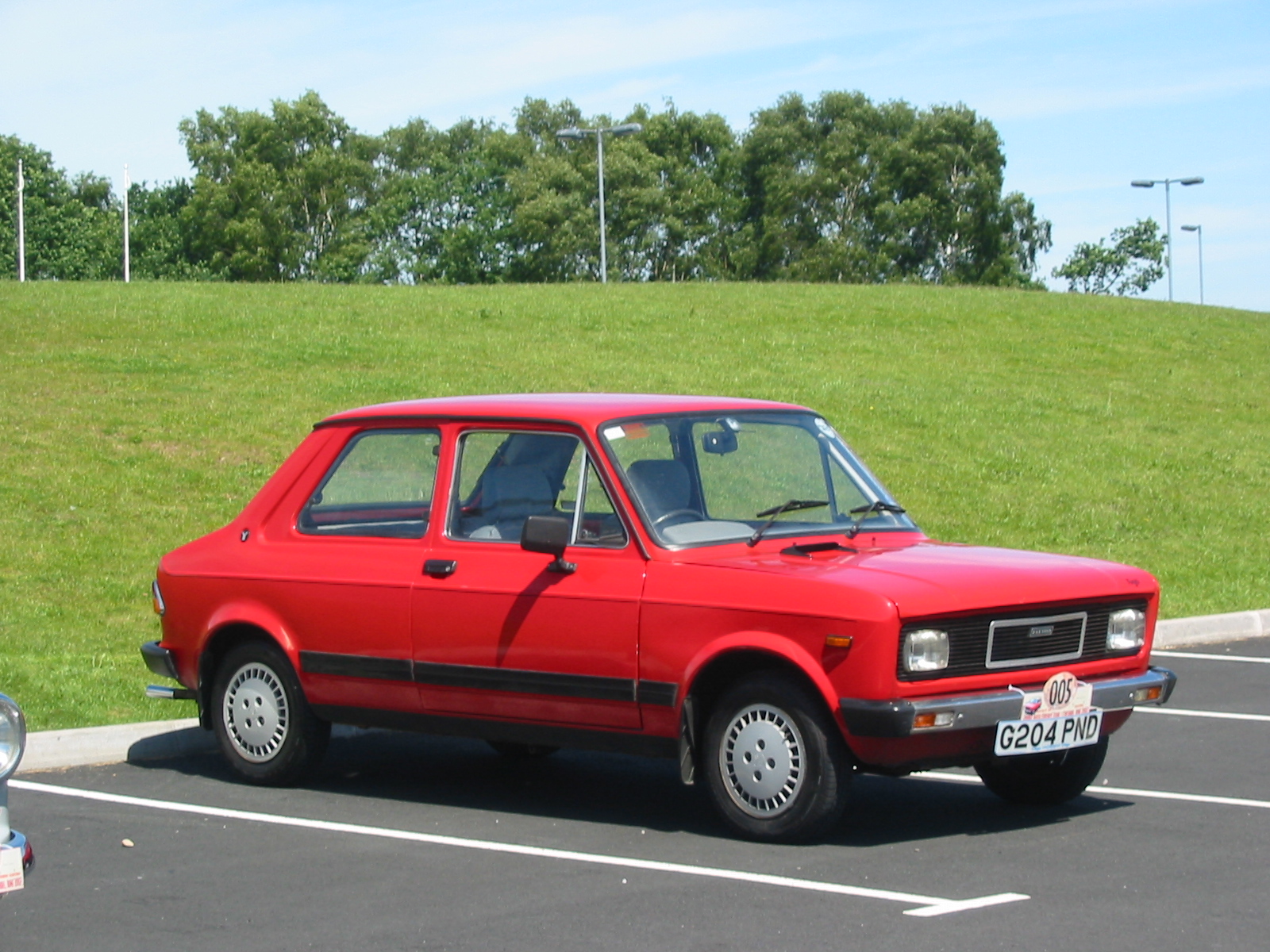
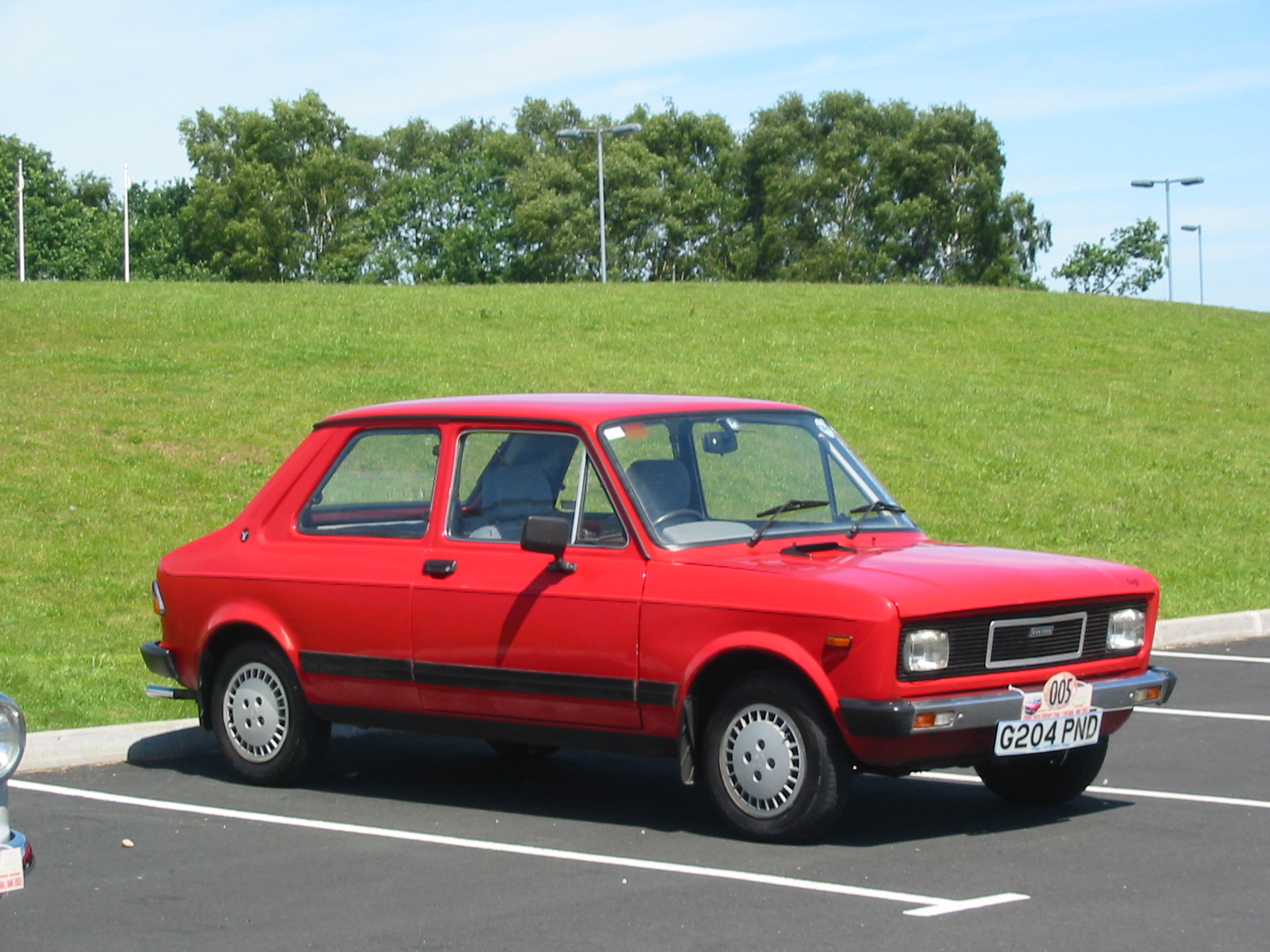
The Zastava 101 of 15 October 1971 was derived from the Fiat 128. Its 1,116 cc engine produced 41 kW (55 hp), and later 1.3-litre engines up to 54 kW (73 hp). It was nicknamed the Stojadin, a play on "sto jedan", meaning one hundred and one. Later versions were sold as the Skala. Counting the Zastava 128 saloon, 1,273,532 cars of this family were built, and the 101 itself stayed in production until 20 November 2008.
The Koral, better known abroad as the Yugo, entered series production on 28 November 1980. It was a shortened version of the Fiat 128 design. The Yugo 45 had a 903 cc engine of 33 kW (45 hp), and the Yugo 55 and 65 had engines of 1,116 and 1,301 cc with about 41 and 48 kW. Zastava also entered the British market, where 3,101 cars were registered in 1982. In 1983 it built 147,714 passenger cars, of which 25,509 were exported.
Malcolm Bricklin's company brought the Yugo to the United States. It showed the first cars at the Los Angeles Auto Show in May 1984, and sales began in mid-1986. The entry-level GV cost US$3,990 in the United States in 1986. US sales peaked at 48,812 in 1987 and totalled 141,651 until 1992. Critics faulted the car's design, safety and reliability, and Time later listed the GV among its 50 worst cars. The Yugo still has a cult following, especially in the former Yugoslav republics. The last of more than 794,000 Yugos was built on 11 November 2008. The Zastava Koral article covers the car in detail.
Florida, sanctions and the war years
The Florida, designed by Giorgetto Giugiaro and developed by Zastava engineers at Italdesign, was presented on 19 February 1987 and went on sale on 2 October 1988. Its name honoured the Yugo's success in the United States. In Britain it was sold as the Yugo Sana. Zastava production peaked at 180,950 cars in 1989, and near the end of the decade the plant had a capacity of about 230,000 cars a year and sold its cars in 70 countries.
The 1990s reversed this. United Nations trade sanctions from 1992 stopped exports and disrupted the supply of parts, and production stopped in 1993. During the Kosovo War in 1999 NATO bombed the Kragujevac factory; some car-making buildings were damaged and many workers were injured. When sanctions were lifted in October 2000, output was about 9% of the former capacity, and a reorganisation with the World Bank led to mass layoffs. From September 2002 the Florida used Peugeot engines after a split with Fiat, and 29,950 were built in all until November 2008.

Fiat Automobili Srbija
In 2005 Zastava and Fiat agreed to build the Zastava 10, based on the Fiat Punto, and 4,224 were made from 2006 to 2008. On 7 May 2008 Fiat Group Automobiles signed a memorandum of understanding for the Kragujevac plant. The new company, Fiat Automobili Srbija, was 67% owned by Fiat and 33% by the Serbian government, with an investment of about €700 million in 2008, including €200 million from the government.
The last Zastava-branded car left the line on 21 November 2008. The remaining Group Zastava Vehicles filed for bankruptcy in May 2017 and was sold at auction in March 2024. Zastava models are listed in the Zastava catalogue.

Zastava timeline
| Year | Event |
|---|---|
| 1853 | Cannon foundry in Kragujevac |
| 1904 | Automobile section opened |
| 1939 | Chevrolet truck assembly |
| 1953 | Workers vote for car production; Willys Jeeps |
| 1954 | Fiat cooperation agreement (12 August) |
| 1955 | Zastava 750 (Fiat 600) production begins (18 October) |
| 1971 | Zastava 101 (15 October) |
| 1980 | Koral (Yugo) series production (28 November) |
| 1986 | Yugo on sale in the United States |
| 1988 | Florida on sale (2 October) |
| 1989 | Record output of 180,950 cars |
| 1992 | UN sanctions halt exports |
| 1999 | Factory bombed during the Kosovo War |
| 2008 | Fiat Automobili Srbija; last Zastava car (21 November) |
Landmark Zastava models
| Model | Years | Why it matters |
|---|---|---|
| Fiat 1400 | 1954 | First car assembled in Kragujevac |
| 750 (Fića) | 1955–1985 | Licence-built Fiat 600, 923,487 built |
| 1300/1500 | 1961–1979 | Larger saloons, 201,160 built |
| 101 (Stojadin) | 1971–2008 | Fiat 128-based family, over 1.27 million |
| Koral (Yugo) | 1980–2008 | Over 794,000 built, sold in the United States |
| Florida | 1987–2008 | Giugiaro-designed hatchback, 29,950 built |
| Zastava 10 | 2006–2008 | Fiat Punto-based last model |
Photo gallery

FAQ
What is the difference between Zastava and Yugo?
Zastava was the maker in Kragujevac; Yugo was the export name of its small Koral model and was later used on other models such as the Florida.
Were Zastava cars Fiats?
Most were built under licence from Fiat: the 750 was a Fiat 600, the 101 was derived from the Fiat 128 and the Zastava 10 from the Fiat Punto.
How many Yugos were sold in the United States?
141,651 between 1986 and 1992, with a peak of 48,812 in 1987.
What happened to the Zastava factory?
It was bombed in 1999 during the Kosovo War. In 2008 it passed to Fiat Automobili Srbija, a joint company of Fiat and the Serbian government.
When was the last Zastava built?
The last Zastava-branded car left the line on 21 November 2008.
Sources
- Wikipedia — Zastava Automobiles (accessed 24 Oct 2026)
- Wikipedia — Zastava 750 (accessed 24 Oct 2026)
- Wikipedia — Zastava 101 (accessed 24 Oct 2026)
- Wikipedia — Zastava Koral (accessed 24 Oct 2026)
- Wikipedia — Zastava Florida (accessed 24 Oct 2026)
Found a mistake? Report an error