 Zastava Koral
Specs, engines and history
Published Sources (1) Report an error
By Oleksandr Hnatiuk, Automotive Editor & Used Car Specialist
- Built
- 1980–2008
- Top power
- 48 kW (65 PS)
Zastava is a manufacturer from Kragujevac in Serbia whose roots go back to a cannon foundry of 1853. An automobile section opened in 1904, and in 1939 the works began assembling Chevrolet military trucks. On 12 August 1954 Zastava signed a cooperation agreement with Fiat, and Fiat-based cars became its business. The Zastava 750, a licence-built Fiat 600, was made from 1955 to 1985 with 923,487 cars, and the Fiat 128-based Zastava 101 followed in the early 1970s. The post-war name Zavodi Crvena Zastava translates as "Red Flag Factories". Zastava car production ended in November 2008, and the plant passed to Fiat Automobiles Serbia.
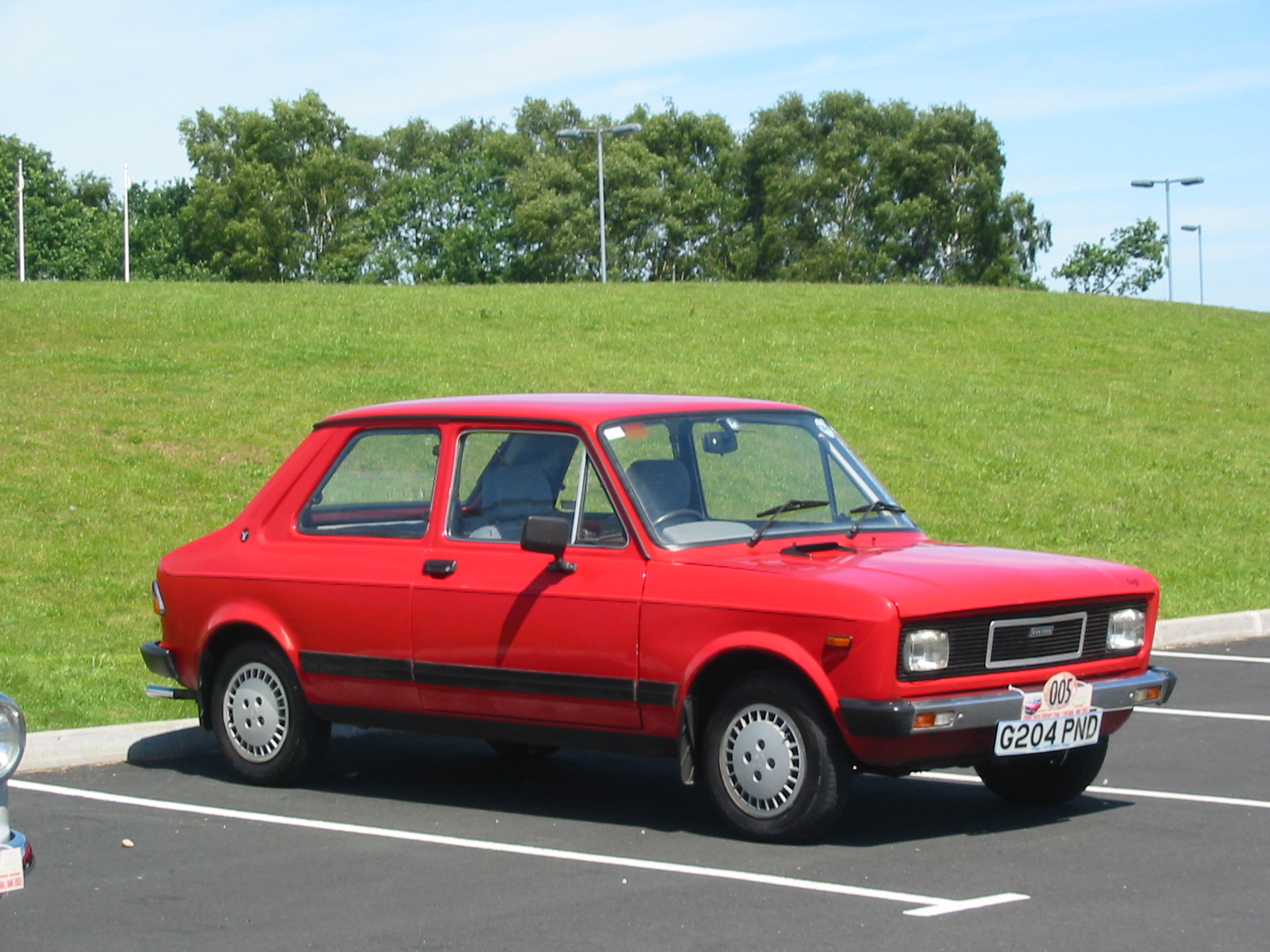
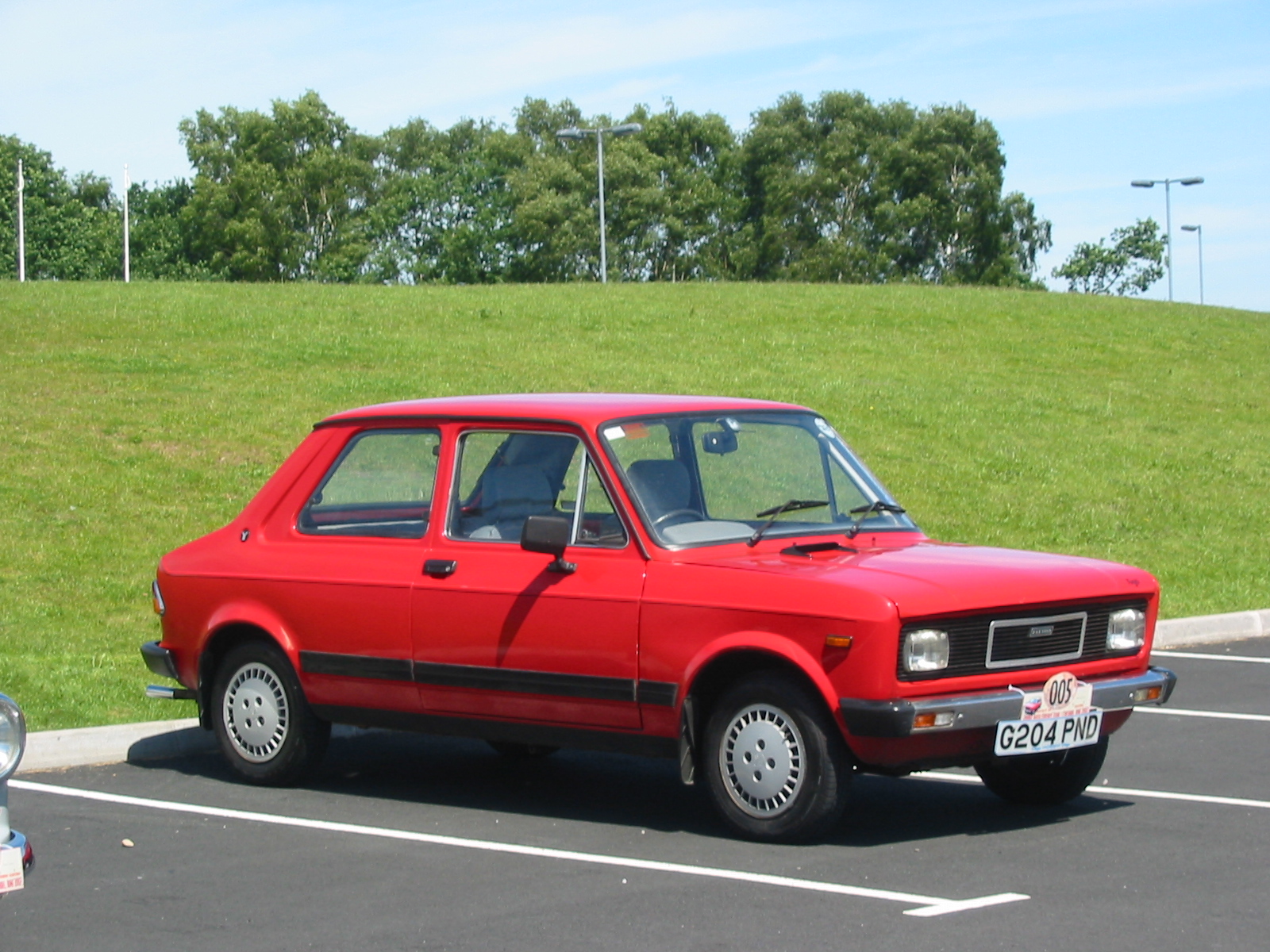
The Koral, sold in many export markets as the Yugo, is Zastava's best-known car. It is a small three-door hatchback built on the Zastava 101 platform, a shortened version of Fiat 128 technology, with engines of 903 to 1,301 cc. Series production began in Kragujevac in 1980, and the last car, the 794,428th, was finished on 11 November 2008. About 250,000 were exported, among them 141,651 sold in the United States between 1985 and 1992.
Specs by version
Verified Manufacturer and type-approval data from our catalog · Sources and methodology
In short
- Built in Kragujevac from 1980 to 11 November 2008; 794,428 cars, about 250,000 exported.
- Fiat-derived four-cylinders: 903 cc with 33 kW (45 hp) in the Yugo 45, up to 1,301 cc in the Yugo 65.
- Sold as Yugo 45/55/60/65, Koral, Tempo, Ciao, Cabrio and, in Italy, Innocenti Koral.
- US price in 1986: US$3,990 for the Yugo GV; 48,812 US sales in the peak year 1987.
Zastava Koral at a glance: maker, production years (1980–2008), purpose
| Parameter | Value |
|---|---|
| Maker | Zastava (Zavodi Crvena Zastava), Kragujevac, Yugoslavia / Serbia |
| Production | 1980 – 11 November 2008 |
| Built | 794,428 |
| Exports | about 250,000 |
| Purpose | low-cost small car |
| Body | three-door hatchback; Cabrio convertible |
| Layout | transverse front engine, front-wheel drive |
| Base | Zastava 101 platform, Fiat 128 technology |
| Engines | 903, 1,116, 1,124 (Peugeot) and 1,301 cc four-cylinders |
| Power | 33 kW (45 hp) to 48 kW (65 hp); Koral IN 1.1i 46 kW |
| Gearbox | four- or five-speed manual; three-speed automatic for the 1.3 |
| Top speed | 138–145 km/h depending on version |
| Successor | Zastava 10 (Fiat Punto-based, 2006–2008) |
Development and production history
The first prototype was completed on 2 October 1978, and series production began in late 1980; English Wikipedia gives both October and 28 November 1980. Zastava's history article says the Zastava 102 became the Yugo 45 in 1981. Zdravko Menjak led research and development, and for the American market Tony Ciminera made more than 500 changes to the car.
Annual output rose to nearly 200,000 cars in 1989 (Zastava's history article gives 180,950 for that year). The break-up of Yugoslavia then disrupted the supply of parts, and international sanctions from May 1992 stopped exports. Output fell to about 14,000 cars in 1992 and 7,000 in 1993 and 1994. After the sanctions were lifted in 1996 production increased again. In 1999 the Kragujevac factory was severely damaged by bombing during the Kosovo war but was not put out of action, and production restarted in 2000.
In October 2003 Zastava signed an agreement with Fiat that led to the Zastava 10, a Fiat Punto built from 2006. The Koral was built until 11 November 2008. A memorandum of 7 May 2008 created Fiat Automobiles Serbia, with Fiat holding 67% and the Serbian government 33%, and a planned investment of about €700 million in 2008.
Design and engineering
The Koral is a short three-door hatchback on the platform of the Zastava 101, itself a Fiat 128 derivative. The engine sits across the front and drives the front wheels. In later years the Koral IN versions used a 1,124 cc Peugeot engine and fuel injection, and the Koral IN L passed a TÜV safety test for import into the European Union. A two-door Cabrio was sold in the United States from 1988. For the American market the 1,116 cc cars kept a four-speed gearbox, while European versions with this engine had five speeds.
Engine and drivetrain
| Engine | Model names | Power | Gearbox |
|---|---|---|---|
| 903 cc | Yugo 45, Koral 45, Koral 1.0 | 33 kW (45 hp) | four-speed manual |
| 1,116 cc | Yugo 55, Yugo 60, Koral 1.1 | 41–45 kW (55–60 hp) | five-speed (four-speed in the US) |
| 1,124 cc Peugeot | Koral IN | 44 kW (60 PS); 46 kW for the 1.1i | five-speed |
| 1,301 cc | Yugo 65, Koral 1.3 | 48 kW (65 hp) | five-speed; Renault-designed three-speed automatic optional |
English Wikipedia gives a top speed of 145 km/h with the overhead-cam engine derived from the Fiat 128 and 138 km/h for the American Yugo 55. The American GVX needed 13.56 seconds from 0 to 60 mph, half a second less than the GV. English Wikipedia quotes predicted US fuel economy of 42–45 mpg for the Yugo 45 and about 30 mpg for the 55; the fuel economy converter turns those figures into l/100 km.
Zastava Koral specifications
| Data | Value |
|---|---|
| Engines | 903 / 1,116 / 1,124 / 1,301 cc, four cylinders |
| Power | 33–48 kW (45–65 hp) |
| Top speed | 145 km/h (overhead-cam engine); 138 km/h (US Yugo 55) |
| 0–60 mph | 13.56 s (US GVX) |
| Gearboxes | four- and five-speed manual; three-speed automatic |
| Production peak | nearly 200,000 in 1989 (Kragujevac total) |
Variants and derivatives: Yugo, Koral, Tempo and Innocenti
- Yugo 45, 55, 60 and 65 / Koral 1.0, 1.1, 1.3: the main versions by engine.
- Yugo GV, GV Plus, GV Sport, GVC, GVL, GVS, GVX: US versions.
- Yugo Cabrio: convertible, in the US from 1988.
- Yugo CL, Ciao and Tempo: versions of around 1991.
- Zastava Koral IN: later versions with fuel injection and the Peugeot 1.1-litre engine.
- Innocenti Koral and Koral Cabrio: sold in Italy by Innocenti under Fiat ownership.
The larger Zastava Florida of 1988, styled by Giorgetto Giugiaro, was a separate model, sold in Britain as the Sana.

In service: the Yugo in America and at home
Malcolm Bricklin's company International Automobile Importers, later Yugo America, brought the car to the United States. It was shown at the Los Angeles Auto Show in May 1984 and promoted at US$4,500 with a ten-year warranty. In November 1984 the rights for a first 5,000 cars had been sold for US$50,000, or US$10 per car. In mid-1986 the Yugo GV cost US$3,990. Sales reached 48,812 in 1987 and 141,651 in total from 1985 to 1992. A recall of more than 126,000 cars and falling sales led Yugo America to stop importing and close in April 1992.
The American press was harsh: the radio show Car Talk called it the worst car of the millennium, and Time listed the GV among its 50 worst cars. A 1987 Popular Mechanics survey found that 42.4% of owners would buy one again and 57.2% had mechanical trouble. In the former Yugoslavia the car is remembered more kindly, as cheap, simple and easy to repair. Exports also went to China, which took 500 cars in early 1985, and to Bulgaria, Egypt, Greece, Lebanon, Libya, Syria, Tunisia, Germany and Latin America. Britain was the only market for right-hand-drive cars; Zastava Cars Limited was set up in Reading in 1981 and closed in 1993.

Preservation and collecting today
Yugos are now rare in some former export markets: English Wikipedia counts 14 on British roads in 2022, and in the United States 408 of 450 automatic cars with air conditioning shipped in 1990 were still in service in 2021. No reliable public price data in euros was found for this article, so no market values are given.
Which Koral to choose:
- For simplicity: a Yugo 45 or Koral 1.0 with the 903 cc engine.
- For more power: a Yugo 65 or Koral 1.3 with five speeds.
- For open-air driving: the Yugo Cabrio.
- For the latest technology: a Koral IN with fuel injection.
More small cars of the period are in the 1980s classics and the classic cars section; Zastava models are in the Zastava catalogue.
Zastava Koral in our rankings
- No. 78 of 912 · Longest-running car nameplates (28 years · top 9%)
- No. 60 of 70 · Biggest engines: hatchbacks (1,301 cc · top 86%)
- No. 530 of 557 · Biggest engines: cars (1,301 cc · top 96%)
- No. 57 of 59 · Most powerful cars of the 1980s (48 kW · top 97%)
- No. 833 of 859 · Most powerful cars (48 kW · top 97%)
- No. 104 of 106 · Most powerful hatchbacks (48 kW · top 99%)
In production longer than 91% of ranked nameplates in the 1CARS catalog (No. 78 of 912).
FAQ
Is the Zastava Koral the same car as the Yugo?
Yes; the car was sold as the Zastava Koral and, in many export markets, as the Yugo 45, 55, 60 or 65 and other names.
How many Yugos were built?
794,428 between 1980 and 11 November 2008, of which about 250,000 were exported.
What engine does the Yugo have?
Fiat-derived four-cylinders of 903 cc with 33 kW (45 hp), 1,116 cc with 41–45 kW (55–60 hp) and 1,301 cc with 48 kW (65 hp); later Koral IN versions used a Peugeot 1.1-litre.
How much did a Yugo cost in the United States?
The Yugo GV cost US$3,990 in mid-1986; the car had been promoted at US$4,500 in 1984.
When did Yugo production end?
The last car, the 794,428th, was finished in Kragujevac on 11 November 2008.
Data sources
Data checked by an editor against the sources below.