
 Fiat 131
All generations, specs and history
Published Sources (3) Report an error
By Oleksandr Hnatiuk, Automotive Editor & Used Car Specialist
- Built
- 1974–1984
- Generations
- 2
- Top power
- 103 kW (140 PS)
Timeline
131 generations
Click a generation for its own page
Mirafiori and Abarth Rally overlapped in 1976–1984, so Abarth Rally sits on a second lane
- 131 Mirafiori 1974–1984 · Sedan, Station wagon · 40–103 kW (54–140 PS)
- 131 Abarth Rally 1976–1978 · Sedan · 103 kW (140 PS)
Newest first · 2 generations since 1974
- 1976 Abarth Rally 1976–1978 · Sedan · 103 kW (140 PS) Mirafiori and Abarth Rally overlapped in 1976–1984
- 1974 Mirafiori 1974–1984 · Sedan, Station wagon · 40–103 kW (54–140 PS)
All generations by year: 131 Abarth Rally (1976–1978) · 131 Mirafiori (1974–1984)
Which one is mine?
Pick the year of first registration to see which generation it is.
- 131 Abarth Rally 1976–1978
- 131 Mirafiori 1974–1984
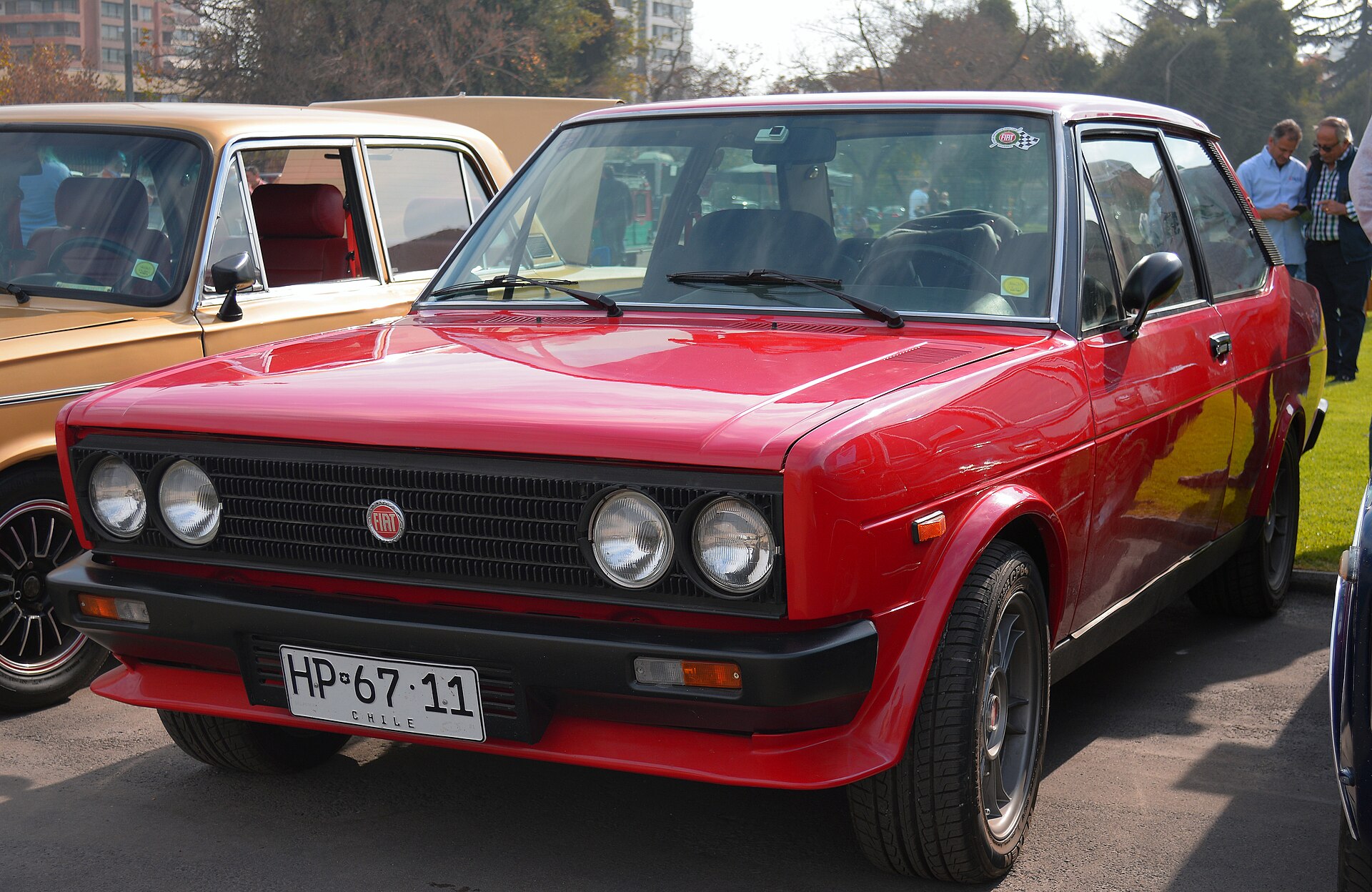
The Fiat 131 is the rear-wheel-drive family saloon and estate that Fiat built at its Mirafiori plant in Turin from autumn 1974 to 1984, which is why it was also sold as the Mirafiori. Engines ran from a 1.3-litre pushrod four to a 2.0-litre twin-cam and two diesels. Its Abarth 131 Rally version, of which 400 road cars were built, won three World Rally Championship manufacturers' titles.
In short
- 1,513,800 built by Fiat; two- and four-door saloons and a five-door estate (Familiare, Panorama, Maratea).
- Three series: 1974, 1978 (twin-cam Supermirafiori, Racing and diesels) and 1981 (new overhead-cam engines, five-speed gearbox standard).
- Power from 40 kW (55 PS) to 103 kW (140 PS) in the Abarth Rally road car and the supercharged Volumetrico Abarth.
- Abarth 131 Rally: manufacturers' world titles in 1977, 1978 and 1980, drivers' title for Walter Röhrl in 1980.
Specs by version
Engines
| Version | Engine | Power | Gearbox | Drive | Production years |
|---|---|---|---|---|---|
| Diesel · 1 version | |||||
| 131 Mirafiori · Diesel 2500 | 2.4 l · 4 cyl · Diesel 2,445 cc | 53 kW 72 PS71 hp | Manual | Rear-wheel drive | 1978–1984 |
| Petrol · 5 versions | |||||
| 131 Mirafiori · 1300 | 1.3 l · 4 cyl · Petrol 1,297 cc | 48 kW 65 PS64 hp | 4-sp Manual | Rear-wheel drive | 1974–1981 |
| 131 Mirafiori · 1600 | 1.6 l · 4 cyl · Petrol 1,585 cc | 55 kW 75 PS74 hp | 4-sp Manual | Rear-wheel drive | 1974–1981 |
| 131 Mirafiori · Supermirafiori 1600 TC | 1.6 l · 4 cyl · Petrol 1,585 cc | 71 kW 97 PS95 hp | Manual | Rear-wheel drive | 1978–1984 |
| 131 Mirafiori · Racing 2000 TC | 2.0 l · 4 cyl · Petrol 1,995 cc | 85 kW 116 PS114 hp | 5-sp Manual | Rear-wheel drive | 1978–1981 |
| 131 Abarth Rally · Abarth Rally 2.0 16V | 2.0 l · 4 cyl · Petrol 1,995 cc | 103 kW 140 PS138 hp | 5-sp Manual | Rear-wheel drive | 1976–1978 |
Performance
Show all 5 versions
| Version | Top speed |
|---|---|
| Diesel · 1 version | |
| 131 Mirafiori · Diesel 2500 | 150 km/h93 mph |
| Petrol · 4 versions | |
| 131 Mirafiori · 1300 | 150 km/h93 mph |
| 131 Mirafiori · 1600 | 160 km/h99 mph |
| 131 Mirafiori · Supermirafiori 1600 TC | 170 km/h106 mph |
| 131 Mirafiori · Racing 2000 TC | 180 km/h112 mph |
Dimensions and weight
Show all 2 versions
| Version | Kerb weight |
|---|---|
| 131 Mirafiori · 1600 | 1,029 kg2,269 lb |
| 131 Abarth Rally · Abarth Rally 2.0 16V | 980 kg2,161 lb |
Verified Manufacturer and type-approval data from our catalog · Sources and methodology
Fiat 131 at a glance
| Item | Fiat 131 |
|---|---|
| Years | October 1974 to 1984 (saloons to 1983, estates to 1984) |
| Production total | 1,513,800 (Fiat, Italy) |
| Plant | Mirafiori, Turin |
| Body styles | two-door saloon, four-door saloon, five-door estate |
| Layout | front engine, rear-wheel drive, live rear axle on coil springs (independent on the Abarth Rally) |
| Engines | 1.3-2.0 litre petrol (OHV, SOHC, DOHC), 2.0 and 2.5 litre diesel |
| Power | 40-103 kW (55-140 PS) |
| Kerb weight | 950-1,145 kg |
| Top speed | about 150 km/h (1300) to 180 km/h (Racing) and 190 km/h (Volumetrico Abarth) |
| 0-97 km/h (60 mph) | 13.7 s (1600 CL, period road test) |
| Price new | GBP 1,619 (two-door 1300) to GBP 2,080 (estate) in the UK in 1975 |
The 131 appears in the Fiat catalogue alongside its predecessors and successors.
Mirafiori: the 124's successor
Fiat presented the 131 at the Turin Motor Show in October 1974 as the successor to the 124. Its wheelbase grew from 2,420 mm to 2,490 mm, and it kept a conventional layout: front engine, rear-wheel drive, MacPherson struts at the front and a live rear axle on coil springs, located by four longitudinal arms and a Panhard rod. Steering was by rack and pinion, with servo-assisted front discs and rear drums.
A German test of 1975 praised the plain, functional shape, the low maintenance needs and the safety cage of the body. Car magazine called the 131 "just about the best compromise possible between brio and the tin box" in a June 1975 group test. In Britain the main rival was the Ford Cortina Mk III, and prices in 1975 ran from GBP 1,619 for the two-door 1300 to GBP 2,080 for the estate. Fiat backed the 1300 with a two-year guarantee against rust, which the writer L.J.K. Setright singled out for praise.
Motor Sport tested a 1600 S four-door in July 1975. It reached just short of 100 mph (161 km/h), returned 33.4 mpg (8.5 l/100 km) when driven gently, and cost GBP 1,935. Another period test of the 1600 CL recorded 0-60 mph in 13.7 seconds and an unladen weight of 1,029 kg.
Three series in ten years
The first series had two pushrod engines: 1,297 cc with 48 kW (65 PS), or 40 kW (55 PS) for Germany, where it ran on regular fuel, and 1,585 cc with 55 kW (75 PS). The estate, called Familiare, joined in March 1975. The March 1978 facelift created the second series, with the twin-cam Supermirafiori, Fiat's first diesels in the car and a renamed Panorama estate. The Racing (Sport in some markets) of 1978 had a 2.0 twin-cam, four headlamps and a five-speed gearbox, and the Ford Escort RS2000 was its target in Britain.
The third series of April 1981 brought single-overhead-cam engines with a balance shaft, a standard five-speed gearbox and the end of the two-door body. The same year Abarth converted about 200 two-door cars into the Volumetrico Abarth with a Roots-type supercharger, sold only in Italy.
| Version | Series | Displacement | Power | Top speed |
|---|---|---|---|---|
| 1300 OHV | 1-2 | 1,297/1,301 cc | 48 kW (65 PS) | 150 km/h |
| 1600 OHV | 1-2 | 1,585 cc | 55 kW (75 PS) | 160 km/h |
| Supermirafiori 1300 TC | 2 | 1,301 cc | 57 kW (78 PS) | 160 km/h |
| Supermirafiori 1600 TC | 2 | 1,585 cc | 71 kW (96 PS) | 170 km/h |
| Racing 2000 TC | 2 | 1,995 cc | 85 kW (115 PS) | 180 km/h |
| Diesel 2000 | 2-3 | 1,995 cc | 44 kW (60 PS) | 140 km/h |
| Diesel 2500 | 2-3 | 2,445 cc | 53 kW (72 PS) | 150 km/h |
| 1400 SOHC | 3 | 1,367 cc | 51 kW (70 PS) | - |
| 1600 SOHC | 3 | 1,585 cc | 63 kW (85 PS) | - |
| Supermirafiori 2000 TC | 3 | 1,995 cc | 83 kW (113 PS) | 175 km/h |
| Volumetrico Abarth | 2-3 | 1,995 cc | 103 kW (140 PS) | 190 km/h |
Top speeds are from the Italian Wikipedia; Supermirafiori outputs later rose to 60 and 72 kW (82 and 98 PS). The power converter handles other units.
Abarth 131 Rally: 400 road cars for Group 4
To compete in Group 4, Fiat needed 400 road cars, and Abarth built them from 1976. Bertone designed and built the bodies on the two-door shell, with glassfibre and resin panels, aluminium doors, wide arches, air dams and wings. The road car weighed about 980 kg. Abarth replaced the live axle with independent rear suspension on MacPherson struts.
The 1,995 cc twin-cam, designed by the former Ferrari engineer Aurelio Lampredi, had a 16-valve head. In road form it used a twin-choke Weber carburettor and gave 103 kW (140 PS) at 6,400 rpm with a top speed above 190 km/h. Works rally cars switched to Kugelfischer mechanical injection and produced 165-180 kW (225-245 PS) depending on year and source. Production dates also differ: Fiat's heritage department gives 1976-1978, German sources January 1976 to July 1980.

Three world titles for a family saloon
The 131 Abarth won its first World Championship rally in 1976, the 1000 Lakes in Finland, with Markku Alén. Fiat then took the manufacturers' world title in 1977, 1978 and 1980. Alén won the FIA Cup for Drivers in 1978, the forerunner of the drivers' championship, and Walter Röhrl became world champion in 1980. Figures for total World Championship wins vary between 18 and 20; the last came in Portugal in 1981 with Alén. Other works drivers included Timo Salonen, Björn Waldegård, Bernard Darniche and Michèle Mouton. The history of Abarth puts the car in the context of the company's other projects.

Built in Spain, Turkey and Poland
SEAT built the 131 in Barcelona from early 1975 and made 356,670 by 1982. Tofaş in Bursa built it as the Murat 131 and later as the Şahin, Doğan and Kartal from 1977 to 2002, with more than 1.25 million made. FSO in Warsaw assembled 3,102 Polski Fiat 131p cars between 1975 and 1981, and assembly in Ethiopia continued until 2010.
In Italy the Ritmo-based Regata replaced the saloon in 1983, and the estate continued as the Maratea with the 2.0 TC (83 kW, 113 PS) and 2.5 diesel (53 kW, 72 PS) until 1984.
Fiat 131 today: what to check when buying
Ordinary 131s have become rare, and a British classic insurer's history of the car calls any survivor "an exclusive sight". On the body, check the sills, floor, front and rear wheel arches, jacking points, door bottoms and the boot floor, and look at the rear axle mounting points and Panhard rod brackets. Mechanical parts are easy to find because many are shared with the Fiat 124 and 132, and clubs and specialists stock most service items. On twin-cam engines, ask when the cam belts were last renewed.
For an Abarth 131 Rally, provenance matters more than anything. Only a fraction of the 400 road cars survive in original form, and converted tributes built from ordinary two-door cars are on sale, so compare chassis numbers and Bertone body details with marque records. Parts from wheel nuts to body panels are available from specialists, Motor Sport reported in April 2020.
Values: Classic Trader's market overview, checked in November 2026, gives about EUR 4,000-20,000 for Mirafiori, Supermirafiori and Panorama cars, about EUR 25,000-70,000 for Racing and Volumetrico models, and about EUR 115,000-210,000 for the Abarth 131 Rally, with occasional peaks to EUR 225,000. More Italian classics are in the classic cars section.
Fiat 131: first vs latest generation
| Spec | 131 Mirafiori | 131 Abarth Rally | Change |
|---|---|---|---|
| Years | 1974–1984 | 1976–1978 | 2 years apart |
| Most powerful version | 103 kW (140 PS) | 103 kW (140 PS) | same (0%) |
| Lightest kerb weight | 1,029 kg | 980 kg | −49 kg |
Oldest and newest generation in the 1cars catalog. Power is the strongest version of each; other rows are shown only when both generations have the figure.
Fiat 131 in our rankings
- No. 9 of 67 · Lightest sedans (980 kg)
- No. 28 of 405 · Lightest cars (980 kg · top 7%)
- No. 28 of 66 · Power-to-weight: sedans (105 kW/t · top 43%)
- No. 436 of 1124 · Longest-running car nameplates (10 years · top 43%)
- No. 192 of 402 · Power-to-weight: cars (105 kW/t · top 48%)
- No. 86 of 157 · Biggest engines: sedans (2,445 cc · top 55%)
Lighter than 93% of ranked cars in the 1CARS catalog (No. 28 of 405).
FAQ
Why is the Fiat 131 called Mirafiori?
It was built at Fiat's Mirafiori plant in Turin, named after the district, and many markets sold it as the Fiat 131 Mirafiori or simply the Mirafiori. Later twin-cam models were called Supermirafiori.
How many Fiat 131s were built?
Fiat built 1,513,800 in Italy between 1974 and 1984. Licensed production added 356,670 SEAT 131s in Spain, more than 1.25 million Tofaş cars in Turkey and 3,102 Polski Fiat 131p cars.
How many Fiat 131 Abarth Rally cars were made?
400 road cars were built for Group 4 homologation, with a 2.0-litre 16-valve engine of 103 kW (140 PS). Fiat's heritage department dates them 1976-1978; other sources extend production to 1980.
What replaced the Fiat 131?
The Fiat Regata, a saloon based on the Ritmo, replaced the 131 saloon in 1983. The estate stayed on as the 131 Maratea until 1984.
Data sources
Data checked by an editor against the sources below.
- Wikipedia - Fiat 131
- Heritagehubitaly - Fiat 131 Abarth Rally Gr 4
- Com - Car Info Fiat 131


