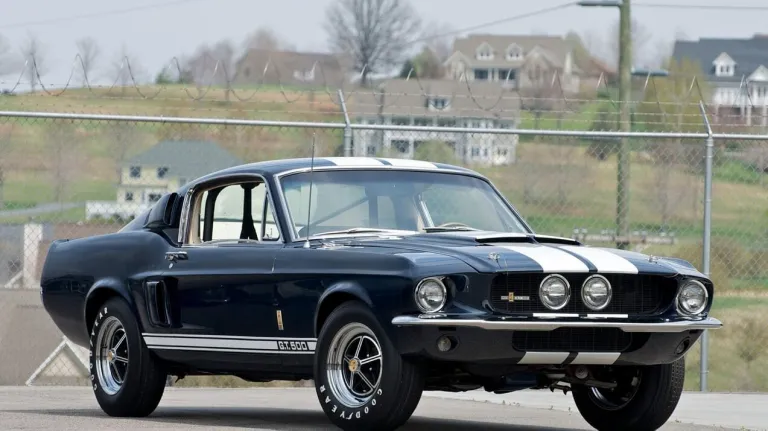
The History of Pininfarina: From Turin Coachworks to Design House
Pininfarina is an Italian design company founded in Turin in May 1930 by Battista "Pinin" Farina. It built special bodies in the 1930s, became famous with the Cisitalia 202 and decades of Ferrari designs, and assembled tens of thousands of cars for Peugeot, Fiat, Alfa Romeo, Cadillac, Ford, Volvo and Mitsubishi. Car production ended in 2011, and since December 2015 the company has been controlled by India's Mahindra Group.

Key takeaways
- Founded as Carrozzeria Pinin Farina at Corso Trapani 107, Turin; the papers were filed on 22 May 1930.
- Breakthrough: the 1947 Cisitalia 202, shown at New York's Museum of Modern Art in 1951; the Ferrari partnership began the same year.
- Industrial era: the Grugliasco plant (1958) built 198,120 Fiat 124 Sport Spiders and 21,430 Cadillac Allanté bodies, among others.
- Today: a design and engineering consultancy with more than 700 staff (2021), owned 76.06 % by Mahindra; the sister brand Automobili Pininfarina builds the electric Battista.

Pininfarina at a glance

| Fact | Value |
|---|---|
| Founded | 22 May 1930, Turin, Italy |
| Founder | Battista "Pinin" Farina |
| Family name change | Farina became Pininfarina in 1961 |
| Main sites | Corso Trapani (Turin), Grugliasco, San Giorgio Canavese, Bairo Canavese |
| Known for | Ferrari designs, the Cisitalia 202, the Fiat 124 Sport Spider |
| Peak staff | 2,768 (2006) |
| Owner since 2015 | Mahindra Group, 76.06 % |
| Car production | ended in 2011 |
Battista Farina and the 1930 coachworks
Battista Farina, known since childhood as "Pinin" (the little one), learned his trade in his elder brother's coachbuilding shop in Turin. In 1928 he decided to work under his own name, and on 22 May 1930 the papers for Carrozzeria Pinin Farina were filed, with the workshop at Corso Trapani 107. The company's own history uses 1930 as the founding year, and it celebrated its 90th anniversary in 2020.

The new firm built bodies one at a time or in very small series on chassis supplied by the makers. The first official Pinin Farina special was a Lancia Dilambda in 1931. An Alfa Romeo 8C 2300 followed in 1933 and a 6C 2300 B cabriolet in 1934. Before the war the workshop also clothed Hispano-Suiza, Isotta Fraschini, Cadillac, Rolls-Royce and Fiat chassis.
The company stayed a small specialist until the 1950s, building bodies to order rather than in series.
The Cisitalia 202: the car in a museum
The design that made the name came straight after the war. At the end of 1945 the team drew the Cisitalia 202 coupé, a small car on Fiat parts with a low bonnet, fared-in headlamps and wings that flowed into the body. Cisitalia built it from 1947 to 1952, only 170 coupés in all.
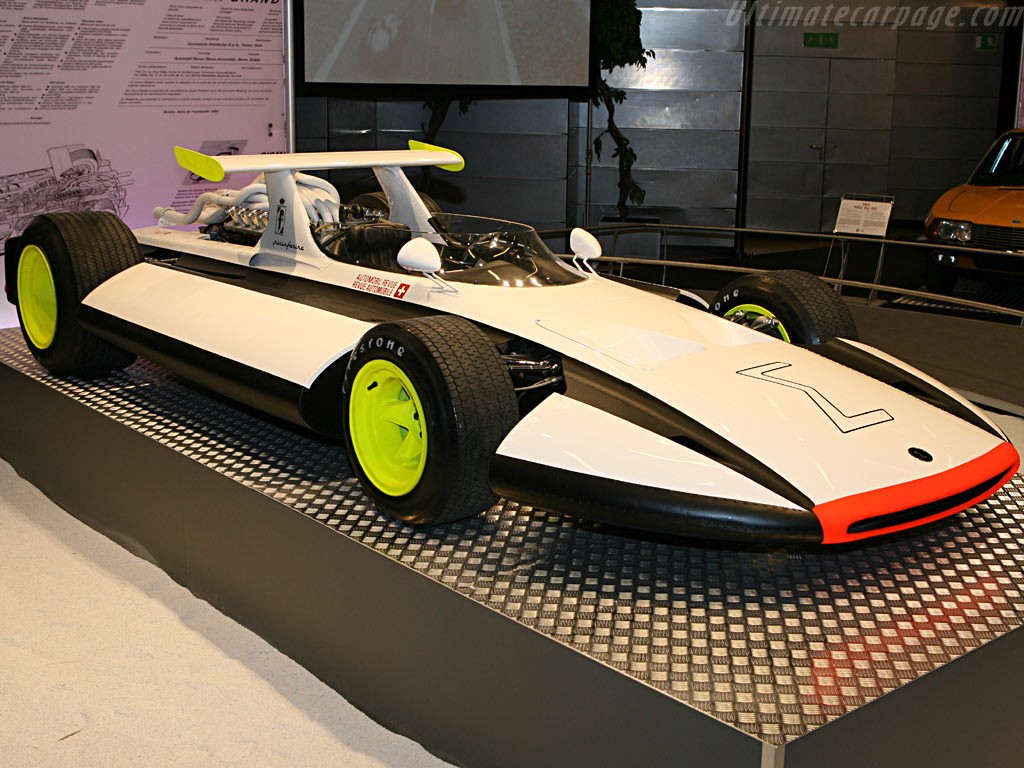
Its influence was far greater than its numbers. In 1951 the Museum of Modern Art in New York included it in the exhibition "Eight Automobiles", which presented cars as works of design. Its smooth, uninterrupted flank became a template for the sports cars of the following decade.
Pinin Farina in America: Nash and the 1950s
The American link started with Nash. In 1952 Pinin Farina styled the Nash Ambassador and Statesman, and from 1952 to 1954 the Nash-Healey sports car used bodies built in Turin. Nash advertised the Italian name, and many American buyers learned the word "Pinin Farina" from those advertisements.

The same year, 1951, brought a meeting in Tortona with Enzo Ferrari. From that handshake grew the longest partnership in the industry: Pinin Farina, later Pininfarina, drew most road Ferraris for six decades, including the 250, 275, 330, 365, 308/328 and 288 GTO families. Early results included the berlinettas of the Ferrari 375 MM, and the long relationship is described in our history of Ferrari. Other Italian work of the period included racing bodies such as the Lancia D24 spider.
Grugliasco and the industrial years
In 1954–1955 the company bought land in Grugliasco, on the western edge of Turin, and the new factory opened in 1958 with nearly 1,000 employees. In 1961 Battista handed control to his son Sergio and his son-in-law Renzo Carli, and the family surname officially became Pininfarina. Sergio's own story and the one-off Ferrari named after him are covered in our page on the Ferrari Sergio.
Grugliasco did not only design cars; it built them for other makers, usually the open and coupé versions that big plants found awkward to produce.
| Model | Years | Built at | Units |
|---|---|---|---|
| Peugeot 404 Coupé and Cabriolet | 1961–1968 | Grugliasco | 17,223 |
| Alfa Romeo Spider "Duetto" 1600 | 1966–1968 | Grugliasco | 6,322 |
| Fiat 124 Sport Spider | 1966–1985 | Grugliasco | 198,120 |
| Cadillac Allanté | 1986–1993 | San Giorgio Canavese | 21,430 |
| Ford Focus Coupé-Cabriolet | 2006–2010 | Bairo Canavese | 36,374 |
| Mitsubishi Colt CZC | 2006–2008 | Bairo Canavese | 16,695 |
| Volvo C70 (second generation) | 2006–2013 | Uddevalla joint venture | - |
Two research projects changed the way cars were developed in Italy. The Studies and Research Centre opened at Grugliasco in 1966, and a full-scale wind tunnel, started the same year, was completed in 1972. Pininfarina could now test real cars in moving air instead of models.
The Allanté contract, agreed with General Motors in 1983, was the most unusual. GM flew parts to Turin, and the finished bodies were flown back to Detroit for final assembly. By our calculation the Fiat 124 Sport Spider alone accounts for about 67 % of the 296,164 cars in this table. The Allanté is the only contract in it that crossed the Atlantic by air, and it averaged about 2,700 cars a year over eight seasons.
Designs beyond cars
From the 1980s Pininfarina spread into industrial design. It shaped high-speed trains, trams and yachts; the Italian ETR 500 trainset, built from 1987 to 2000, is one of the best-known examples.

Crisis, the end of car building and Mahindra
The 2000s were the hardest decade. Andrea Pininfarina, Sergio's son, took over in 2001 and expanded production. Employment peaked at 2,768 in 2006, but losses reached 115 million euros by the end of 2007. By the end of November 2008 debts stood at 598 million euros, 555 million of them under a restructuring agreement. Andrea died in 2008, and his younger brother Paolo became chief executive.
The contract-building business could not be saved. The San Giorgio plant stopped in November 2010, and on 10 December 2011 Pininfarina announced the end of all mass car production. Employment fell to 821 in 2012. Ferrari, the most important client, moved design in-house the same year; the F12berlinetta was the last production Ferrari with a Pininfarina badge.
On 14 December 2015 the Mahindra Group bought 76.06 % of Pininfarina S.p.A. for about 168 million euros. The family kept a link through Paolo Pininfarina, who stayed at the head of the company until his death in April 2024.
Automobili Pininfarina and the Battista
Mahindra created Automobili Pininfarina in 2018 as a separate car brand, finally giving Battista Farina's name to a car of its own. In November 2018 it invested more than 20 million euros in the design company's services. The first model, the electric Battista hypercar, was announced in 2019 with about 1,400 kW (1,900 hp) and a planned run of 150 cars. The name on the badge is the founder's own: the car is called simply Battista.
Pininfarina timeline
| Year | Event |
|---|---|
| 1930 | Carrozzeria Pinin Farina founded in Turin (22 May) |
| 1931 | first official special, a Lancia Dilambda |
| 1947 | Cisitalia 202 enters production |
| 1951 | MoMA exhibition; first meeting with Enzo Ferrari |
| 1952 | Nash Ambassador styling; Nash-Healey bodies |
| 1958 | Grugliasco factory opens |
| 1961 | Sergio Pininfarina and Renzo Carli take over; name becomes Pininfarina |
| 1972 | full-scale wind tunnel completed |
| 1986 | Cadillac Allanté production starts |
| 2008 | Andrea Pininfarina dies; Paolo becomes CEO |
| 2011 | end of mass car production |
| 2015 | Mahindra buys 76.06 % |
| 2019 | Automobili Pininfarina announces the Battista |
Our verdict: which Pininfarina cars to collect
Most Pininfarina-bodied cars carry a small "f" badge on the flank. For collectors, our verdict is simple: the most accessible pieces of the company's history are its production cars. The Fiat 124 Sport Spider and the Alfa Romeo Duetto are plentiful, simple and well supported. The Peugeot 404 cabriolet and the Cadillac Allanté are rarer but still affordable. Early Ferraris and the Cisitalia are museum-level cars. Pininfarina also styled cheaper cars outside Italy, such as the Chinese Hafei Brio, and every brand it worked for can be browsed in the car catalogue. Two of its designs can be set side by side with the comparison tool, and its most famous Ferraris appear in our rankings.
FAQ
Who founded Pininfarina and when?
Battista "Pinin" Farina founded the company in Turin. He went into business on his own in 1928, and the company's incorporation documents carry the date 22 May 1930, which Pininfarina treats as its birthday.
Why is it called Pininfarina?
"Pinin" was Battista Farina's childhood nickname, meaning "the little one" in the Piedmontese dialect. In 1961 the family surname was officially changed from Farina to Pininfarina, and the company adopted the joined spelling.
Did Pininfarina design every Ferrari?
No, but it designed most road Ferraris from the early 1950s to 2012, including the 250, 275, 365, 308 and 288 GTO families. Ferrari then moved styling in-house; the F12berlinetta was the last production model with a Pininfarina badge.
Does Pininfarina still build cars?
Pininfarina S.p.A. stopped mass car production in 2011 and now works as a design and engineering consultancy. Its sister company Automobili Pininfarina, created by Mahindra in 2018, sells the electric Battista hypercar in a run of 150.
Who owns Pininfarina now?
Since 14 December 2015 the Indian Mahindra Group has held a 76.06 % stake, bought for about 168 million euros. The company had more than 700 employees in 2021.