The History of Bentley Motors: Le Mans, Rolls-Royce and VW
Bentley Motors was founded by W. O. Bentley in Cricklewood, north London, in 1919. It won Le Mans five times between 1924 and 1930, fell into receivership in 1931 and was bought by Rolls-Royce. Since 1946 its cars have been built in Crewe, and since 1998 Bentley has belonged to the Volkswagen Group.
Key takeaways
- 1919 to 1931: an independent maker of fast tourers, famous for the Bentley Boys and Le Mans victories in 1924 and 1927–1930.
- 1931 to 1998: owned by Rolls-Royce and later Vickers, with many Bentleys sharing parts with Rolls-Royce models.
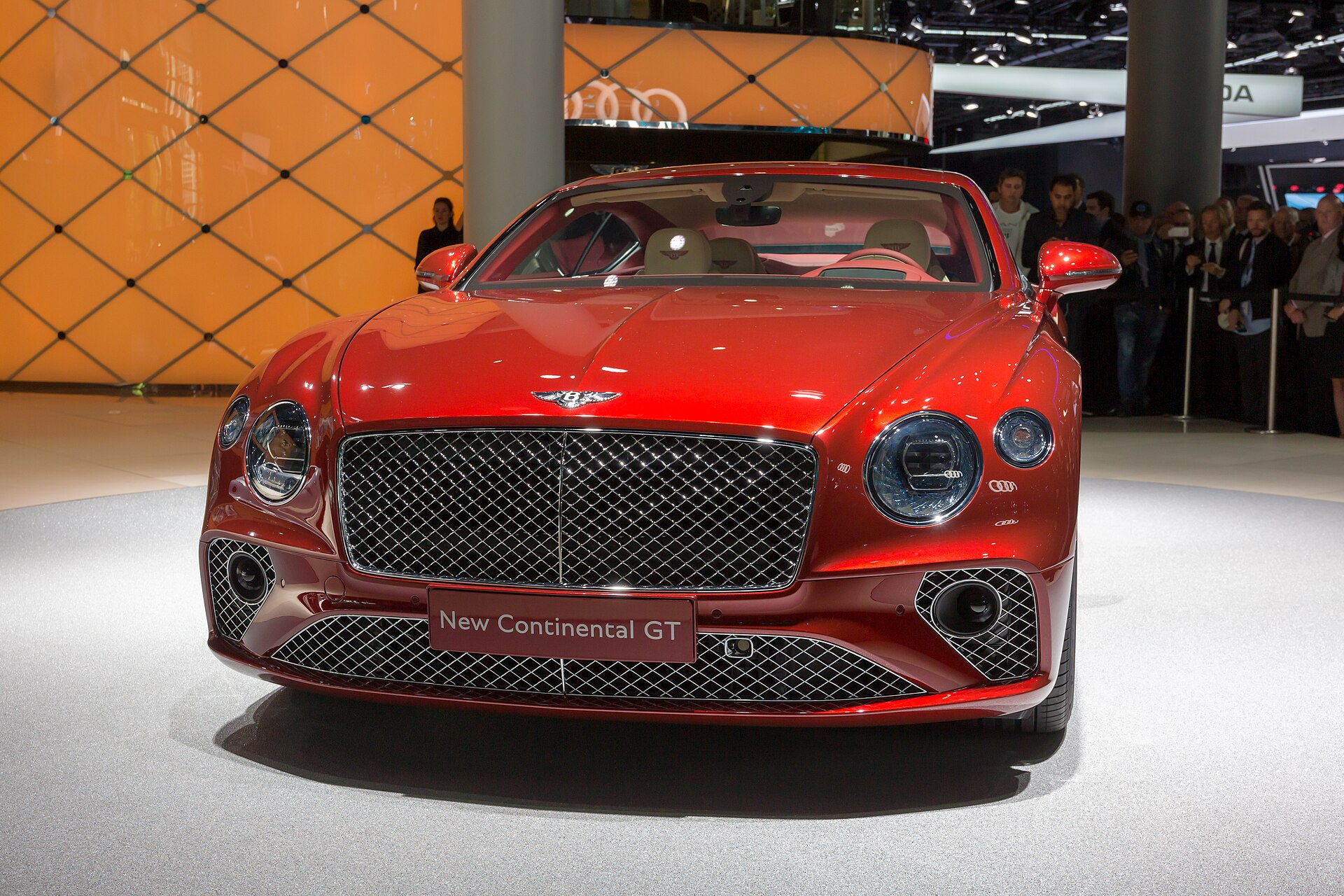
- Since 1998: part of the Volkswagen Group; the 2003 Continental GT made Bentley a volume luxury brand.
- Output of 13,560 cars in 2023, and a plan to sell only electric cars from 2035.

Bentley timeline at a glance

| Period | Owner | Main events |
|---|---|---|
| 1919–1931 | W. O. Bentley, then Woolf Barnato | 3 Litre, 4½ Litre, Speed Six, 8 Litre; five Le Mans wins |
| 1931–1970 | Rolls-Royce | Derby Bentleys from 1933; move to Crewe in 1946; R Type Continental |
| 1971–1980 | Rolls-Royce Motors | T series; Bentley falls to a small share of output |
| 1980–1998 | Vickers | Mulsanne, Turbo R, Continental R; Bentley overtakes Rolls-Royce |
| Since 1998 | Volkswagen Group | Continental GT, Le Mans win 2003, Bentayga, electrification plan |
W. O. Bentley and the first 3 Litre (1919–1924)
Walter Owen Bentley, known as W. O., had built aero engines in the First World War and sold French cars with his brother H. M. Bentley before the war. He founded Bentley Motors on 18 January 1919, the same day the Paris Peace Conference opened. A chassis with a dummy engine was shown at the Olympia motor show in London that November, and the first engine ran in December.

The 3 Litre took longer to reach customers than planned. The first car was delivered in September 1921 to Noel van Raalte, at a price of 1,050 pounds sterling. W. O. had used aluminium pistons in his wartime aero engines, and the 3 Litre's four-cylinder engine used four valves per cylinder and an overhead camshaft. The old 1cars text credits the brand's early fame to this engine's power and reliability, which race results soon confirmed.
In 1922 Douglas Hawkes took a Bentley to 13th place in the Indianapolis 500, at an average of about 121 km/h (74.95 mph). Two years later the company won its first Le Mans 24 Hours.
Le Mans and the Bentley Boys (1924–1930)
The cars that made Bentley famous were driven by a group of wealthy amateur racers known as the Bentley Boys. They included Woolf Barnato, Tim Birkin, Glen Kidston, Sammy Davis, Dudley Benjafield and George Duller. Their victories at Le Mans gave the brand a sporting image that it still uses today.

| Year | Winning car | Winning drivers |
|---|---|---|
| 1924 | 3 Litre | John Duff, Frank Clement |
| 1927 | 3 Litre ("Old No. 7") | Dudley Benjafield, Sammy Davis |
| 1928 | 4½ Litre | Woolf Barnato, Bernard Rubin |
| 1929 | Speed Six | Woolf Barnato, Tim Birkin |
| 1930 | Speed Six | Woolf Barnato, Glen Kidston |
In 1929 Bentleys took the first four places, and in 1930 the Speed Sixes finished first and second. Bentley then withdrew from racing. That same year Barnato bet 100 pounds that he could drive from Cannes to London faster than the Blue Train reached Calais. He won the bet, and the story became part of the brand's folklore.
Birkin's supercharged "Blower" 4½ Litre, developed at Welwyn Garden City in 1929, is now one of the most valuable Bentleys. Fifty road cars were built to qualify it for racing. It never won a race, although Birkin finished second in the 1930 French Grand Prix at Pau in a stripped Blower.
Barnato's money and the 1931 receivership
Racing success did not make the firm profitable. In May 1926 Woolf Barnato took control through his company Baromans, paid creditors about 75,000 pounds and became chairman. He put in further loans of 35,000 pounds in 1927, 40,000 pounds in 1928 and 25,000 pounds in 1929.

The large 8 Litre of 1930 was the most luxurious Bentley of its time. It arrived just as the Great Depression reduced demand for expensive cars. On 10 July 1931 a receiver was appointed. Napier wanted to buy the business, but a sealed bid of 125,000 pounds from the British Central Equitable Trust won. That trust turned out to be acting for Rolls-Royce. Henry Royce had studied the 8 Litre and admitted that it was in some respects better than his own cars.
The Derby Bentleys and the move to Crewe
Under Rolls-Royce, production restarted in Derby after a two-year pause. The 3½ Litre of 1933 was a sporting version of the Rolls-Royce 20/25, and buyers called it "the silent sports car". W. O. Bentley stayed under contract until the end of April 1935 and then left for Lagonda.

In July 1938 Rolls-Royce began building a factory on a 60-acre site at Crewe, in Cheshire, to make Merlin aero engines. About 25,000 Merlins were built there during the Second World War, and the workforce peaked at 10,000 in 1943. In early 1946 the first steel-bodied Bentley Mark VI left the Crewe line, and Bentley has been based there ever since.
Shared cars: R Type Continental, S series and T series
After the war most cars from Crewe were close relatives of Rolls-Royce models with a different grille and badge. The exception was the R Type Continental of 1952, a fastback coupé that was among the fastest four-seat cars of its day. The S1 of 1955, S2 of 1959 and S3 of 1962 followed; the S2 introduced a 6.2-litre aluminium V8, later enlarged to 6.75 litres.

In October 1965 the monocoque T series replaced the S3. It was a twin of the Rolls-Royce Silver Shadow, and the brand's share of output shrank. The old 1cars text notes that experts at the time saw a Bentley as a variant of a Rolls-Royce. Parts sharing between the two brands continued until 2003.
In 1970 Rolls-Royce went bankrupt over the cost of its RB211 jet engine. The car business was separated as Rolls-Royce Motors, and W. O. Bentley died in August 1971 at the age of 82.
Vickers and the turbo revival (1980–1998)
Vickers bought Rolls-Royce Motors in August 1980. The Bentley Mulsanne arrived the same year, and the Mulsanne Turbo of 1982 gave the brand back its sporting edge. The Turbo R of 1985 added firmer suspension and became the best seller of its time.

The brand's share of Crewe's output climbed steadily: to 40 % in 1986 and to parity with Rolls-Royce in 1991. By about 1995 Bentleys outsold Rolls-Royces two to one. The Continental R coupé of 1991 was the first Bentley in decades with a body of its own.
Volkswagen buys Bentley (1998–2003)
In 1997 Vickers decided to sell the car business. BMW offered 340 million pounds, but Volkswagen won with 430 million pounds, about €640 million at the 1998 rate. BMW then paid 40 million pounds for the right to use the Rolls-Royce name and logo. From 1 January 2003 Volkswagen built only Bentleys at Crewe, and BMW made Rolls-Royce cars at a new plant in Goodwood.

Volkswagen announced investment of 500 million pounds after the purchase. The old 1cars text says the group put about 2 billion US dollars into Bentley over the following decade and more than doubled the Crewe workforce, to about 3,500 by 2010. In 2002 Bentley built the State Limousine for Queen Elizabeth II's Golden Jubilee.
The Continental GT era and the 2003 Le Mans win
The 2003 Continental GT changed the size of the company. It used a 6.0-litre twin-turbo W12 and Volkswagen Group technology, and it was far cheaper than earlier Crewe coupés. The Flying Spur saloon and the GTC convertible followed. Demand was so high that some Flying Spurs were built in Dresden, Germany, before all production returned to Crewe in 2006.

In 2003 the company also returned to Le Mans and won with the Speed 8, driven by Tom Kristensen, Rinaldo Capello and Guy Smith. It was the brand's first win there since 1930.
| Year | Bentley deliveries | Note |
|---|---|---|
| 2005 | 8,627 | Continental range at full production |
| 2007 | 10,014 | first year above 10,000 |
| 2009 | 4,616 | financial crisis |
| 2011 | 7,003 | up 37 % on 2010 |
| 2013 | 10,120 | recovery complete |
| 2023 | 13,560 | production figure |
| 2024 | 10,643 | lower demand, model changeover |
By our calculation, the 2009 crisis cut deliveries by 54 % in two years, and output more than doubled again by 2013. Compared with 2005, the 2023 output of 13,560 cars meant 57 % more Bentleys leaving Crewe.
Bentayga, hybrids and the electric plan
The second-generation Mulsanne of 2010 marked 90 years of the brand and was built until 2020. The Bentley Bentayga of 2015 was the first Bentley SUV and quickly became its best seller. The third Continental GT followed in 2018 and a new Flying Spur in 2019.
In November 2020 Bentley announced the Beyond100 plan, aiming for an all-electric range. The target date for an electric-only range has since moved from 2030 to 2035, and plug-in hybrids now cover every model line. Frank-Steffen Walliser became chief executive in June 2024. For the company's earlier Rolls-Royce-era saloon, see the Bentley Arnage and all current models on the Bentley brand page.
Bentley today: our take on the brand
It is one of very few British luxury brands that have survived bankruptcy, a takeover by a rival and a change of national owner. Its value lies in the Le Mans legacy, in the Crewe craftsmanship and in a model range that now spans coupés, convertibles, saloons and an SUV. For buyers who want to see where Bentley sits among other fast grand tourers, the supercars section and the 1cars rankings give useful context, and any two models can be set side by side in the comparison tool.
FAQ
Who founded Bentley and when?
Walter Owen Bentley founded Bentley Motors in London on 18 January 1919, with his brother H. M. Bentley. The first production car, a 3 Litre, was delivered to a customer in September 1921.
How many times has Bentley won Le Mans?
Bentley has won the Le Mans 24 Hours six times: in 1924, 1927, 1928, 1929, 1930 and 2003. The last victory came with the Speed 8 prototype, more than 70 years after the fifth win.
Why did Rolls-Royce own Bentley?
Bentley went into receivership in July 1931 during the Depression. Rolls-Royce bought it through an intermediary for 125,000 pounds, and the two brands stayed together until Volkswagen bought Bentley in 1998.
Who owns Bentley now?
Bentley has been part of the Volkswagen Group since 1998 and is now managed within the group's Audi brand family. Its headquarters and main factory are still in Crewe, England, where the cars are built.
Where are Bentley cars made?
All current Bentleys are assembled in Crewe, Cheshire, where the factory opened in 1938 to build aero engines. Some bodies and parts come from other Volkswagen Group plants, including Zwickau in Germany.
Videos 2

Video 1

Video 2