
 Pontiac Firebird Firehawk
All generations, specs and history
Published Sources (4) Report an error
By Felix Hartmann, Automotive Technology & EV Contributor
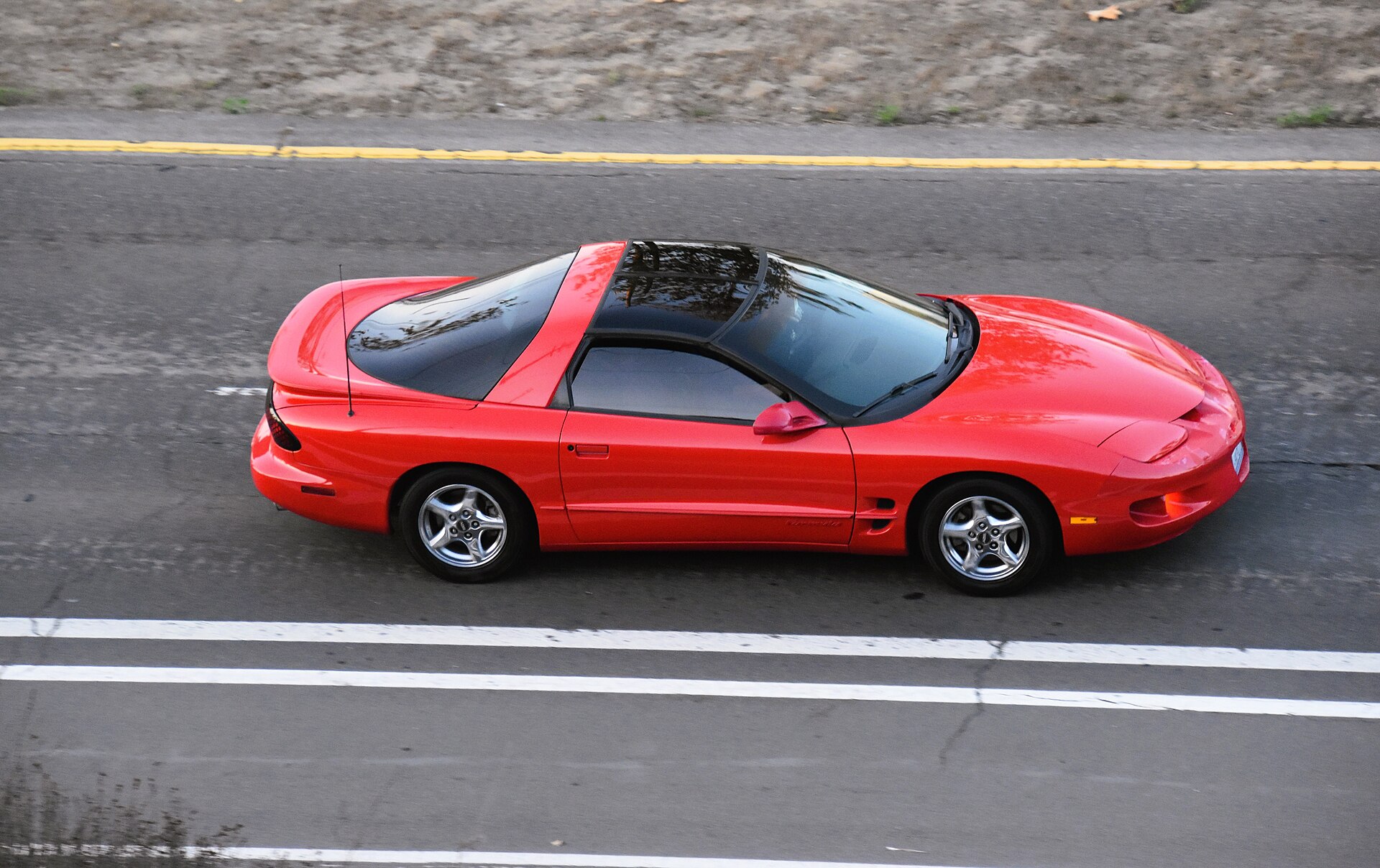
- Built
- 1991–2002
- Generations
- 3
- Top power
- 261 kW (355 PS)
Timeline
Firebird Firehawk generations
Click a generation for its own page
- Formula Firehawk 1991–1992 · Coupe · 261 kW (355 PS)
- Firehawk LT1 1993–1997 · Coupe, Convertible · 224–246 kW (305–334 PS)
- Firehawk LS1 1999–2002 · Coupe, Convertible · 244–257 kW (332–349 PS)
Newest first · 3 generations since 1991
- 1999 Firehawk LS1 1999–2002 · Coupe, Convertible · 244–257 kW (332–349 PS)
- 1993 Firehawk LT1 1993–1997 · Coupe, Convertible · 224–246 kW (305–334 PS)
- 1991 Formula Firehawk 1991–1992 · Coupe · 261 kW (355 PS)
All generations by year: Firehawk LS1 (1999–2002) · Firehawk LT1 (1993–1997) · Formula Firehawk (1991–1992)
Which one is mine?
Pick the year of first registration to see which generation it is.
- Firehawk LS1 1999–2002
- Firehawk LT1 1993–1997
- Formula Firehawk 1991–1992
The Firehawk was a Firebird converted by SLP Engineering and sold new through Pontiac dealers with a factory option code. The 1991-1992 Formula Firehawk had a 261 kW (350 hp) 5.7 L V8 and cost US$39,995 in 1992; only 25 were built. From 1993 to 2002 SLP converted LT1 and then LS1 Firebirds, ending with 257 kW (345 hp) and 1,505 cars in the final year.
In short
- Ordered at a Pontiac dealer as RPO B4U (1991-1992), R6V (1993) and WU6 (LS1 cars), then converted by SLP in Toms River, New Jersey.
- 1991-1992: SLP-built 350 with 261 kW (350 hp) at 5,500 rpm and 529 Nm (390 lb-ft) at 4,400 rpm, ZF six-speed and Dana 44 axle.
- LT1 cars 1993-1997 from 224 kW (300 hp); 29 LT4 cars of 1997 had 246 kW (330 hp).
- LS1 cars 1999-2002 from 244 kW (327 hp) to 257 kW (345 hp), on the Formula and, for the first time, the Trans Am.
Specs by version
| Version | Engine | Power | Torque | Drive | Production years |
|---|---|---|---|---|---|
| Formula Firehawk · SLP 5.7 V8, 6-speed manual | 5.7 l · 8 cyl · Petrol 5,733 cc | 261 kW 355 PS350 hp | 529 Nm390 lb-ft | Rear-wheel drive | 1991–1992 |
| Firehawk LT1 · 5.7 LT1 V8 | 5.7 l · 8 cyl · Petrol 5,733 cc | 224 kW 305 PS300 hp | 447 Nm330 lb-ft | Rear-wheel drive | 1993 |
| Firehawk LT1 · 5.7 LT4 V8 | 5.7 l · 8 cyl · Petrol 5,733 cc | 246 kW 334 PS330 hp | - | Rear-wheel drive | 1997 |
| Firehawk LS1 · 5.7 LS1 V8 (327 hp) | 5.7 l · 8 cyl · Petrol 5,665 cc | 244 kW 332 PS327 hp | 468 Nm345 lb-ft | Rear-wheel drive | 1999 |
| Firehawk LS1 · 5.7 LS1 V8 High Flow Induction (345 hp) | 5.7 l · 8 cyl · Petrol 5,665 cc | 257 kW 349 PS345 hp | - | Rear-wheel drive | 2002 |
Verified Manufacturer and type-approval data from our catalog · Sources and methodology
Firebird Firehawk at a glance
| Specification | Pontiac Firebird Firehawk |
|---|---|
| Built | 1991-1992 and 1993-2002 (none in 1998) |
| Converter | SLP Engineering, Toms River, New Jersey |
| Base car | Formula (1991-1997); Formula and Trans Am (1999-2002) |
| Body | coupé, T-top coupé from 1995, convertible from 1995 |
| Engines | 5.7 L (350 cu in) V8: L98-based (1991-1992), LT1, LT4 (1997), LS1 |
| Power | 224-261 kW (300-350 hp) |
| Torque | 529 Nm (390 lb-ft), 1992; 447 Nm (330 lb-ft), 1993 |
| Gearbox (1992) | ZF six-speed manual |
| Tyres | Firestone Firehawk 275/40ZR17 |
| 0-60 mph | 4.9 s, quarter mile 13.4 s at 105 mph (Motor Trend, 1991-1992 car) |
| Price new | US$39,995 (1992), Competition package US$9,995 extra |
How a tuner car got a Pontiac option code
SLP, short for Street Legal Performance, offered its modified Firebird to the public in late 1991, and The Autopian names Ed Hamburger as the man who wanted a Firebird faster than most exotic cars of the day. The arrangement was unusual for General Motors. Buyers ordered a Formula from a Pontiac dealer with Regular Production Option B4U; the car left the Van Nuys, California, plant for SLP's shop in Toms River, New Jersey, where it was rebuilt and then delivered through the dealer. Pontiac and SLP showed the car at the Boston World of Wheels in the first week of January 1992.
Old Cars Weekly breaks down the 1992 sticker: US$19,242 for the Formula and US$20,753 for the Firehawk street package, a total of US$39,995. SLP planned 250 cars. Only 27 were ordered and 25 built, eight as 1991 models and 17 as 1992 models according to LSX Magazine, before the third-generation Firebird ran out. Wikipedia records 21 cars in red, with the rest in aqua, white, blue and green; eleven had the Competition package, three had aluminium blocks, one had T-tops and one was a convertible.
The 1991-1992 Formula Firehawk
SLP rebuilt the 350 with a forged crankshaft, forged connecting rods, lighter pistons, its own cylinder heads, intake and exhaust. The rating was 261 kW (350 hp) at 5,500 rpm with 529 Nm (390 lb-ft) at 4,400 rpm, and a 6,000 rpm redline. LSX Magazine gives 268 kW (360 hp) for the same engine. Power went through a ZF six-speed manual and a Dana 44 rear axle with 3.54:1 limited-slip gears to 17 x 9.5-inch Ronal wheels.
The Competition package, US$9,995 in 1992 per Wikipedia and LSX Magazine (Old Cars Weekly quotes US$9,905), turned the car into a club racer. It added 13-inch cross-drilled Brembo brakes, an aluminium bonnet, a roll cage in place of the rear seat and Recaro racing seats with Simpson harnesses.
| Test or claim | 0-60 mph | Quarter mile | Other |
|---|---|---|---|
| SLP brochure | 4.6 s | 13.2 s at 107 mph | 160 mph (257 km/h), 0.88 g |
| Motor Trend | 4.9 s | 13.4 s at 105 mph | 60-0 mph in 135 ft (41 m), 0.94 g |
| Car and Driver test car | - | - | US$51,989 as tested (1992) |
The Autopian, in a 2026 retrospective, describes a punishing ride and tramlining on public roads, and points out that a Trans Am or GTA cost about half as much with more refinement.
LT1 Firehawks, 1993-1997
The fourth-generation Formula of 1993 gave SLP a stronger starting point. The 1993 Firehawk, option R6V, had the LT1 with 224 kW (300 hp) and 447 Nm (330 lb-ft), against 205 kW (275 hp) for the standard Formula. Its identity came from a functional twin-inlet bonnet over its own air box and 17-inch Firestone Firehawk tyres. For 1994 a US$1,199 Performance Exhaust raised output to 235 kW (315 hp), and a US$1,599 Bilstein suspension became available. The SLP conversion cost US$6,495 in 1995, US$500 more than in 1993 and 1994.
In 1995 T-top coupés and convertibles could be ordered as Firehawks for the first time, and 102 convertibles were built that year. Old Cars Weekly quotes a 1995 six-speed coupé with the performance exhaust at 4.9 s to 60 mph and 13.5 s at 103.5 mph. For 1996 the exhaust became standard and the cars gained rectangular driving lamps in the front scoops and the Trans Am's tall rear wing, except on convertibles. In 1997 SLP built 29 Firehawks with the LT4 engine and 246 kW (330 hp).
LS1 Firehawks and the final run, 1999-2002
No Firehawks were built for 1998. The 1999 car returned with the aluminium LS1, 244 kW (327 hp) and 468 Nm (345 lb-ft), and with the Trans Am as a base for the first time: of 719 cars sold, 613 were Trans Ams ordered under option WU6. The package cost US$3,999 on top of a Formula or Trans Am in 1999. Ratings rose to 246 kW (330 hp) in 2000 and 250 kW (335 hp) in 2001 with the LS6 intake.
| Model year | Engine | Rating | Built (LSX Magazine) |
|---|---|---|---|
| 1991-1992 | SLP 350 | 261 kW (350 hp) | 25 |
| 1993 | LT1 | 224 kW (300 hp) | 201 |
| 1994 | LT1 | 224-235 kW (300-315 hp) | 500 |
| 1995 | LT1 | 224-235 kW (300-315 hp) | 671 |
| 1996 | LT1 | 235 kW (315 hp) | 41 |
| 1997 | LT1, LT4 | up to 246 kW (330 hp) | 116 or 145 |
| 1999 | LS1 | 244 kW (327 hp) | 719 |
| 2000 | LS1 | 246 kW (330 hp) | 741 |
| 2001 | LS1 | 250 kW (335 hp) | 540 |
| 2002 | LS1 | 250-257 kW (335-345 hp) | 1,505 |
For 2001 SLP added a tenth-anniversary edition: black Trans Am coupés and convertibles with gold 17-inch wheels and gold stripes, 123 coupés and 16 convertibles. Cars built after August 2001 for the 2002 model year received the High Flow Induction System and 257 kW (345 hp). SLP's 2002 brochure lists Bilstein suspension, an optional 1LE set-up with double-adjustable Koni dampers, an Auburn limited-slip differential, a composite bonnet with scoops and heat extractors and a claimed 0.90 g, with a three-year or 36,000-mile warranty. The WU6 package cost US$4,300 in 2002. When the F-body ended that year, the Firehawk ended with it.
Firehawk today: what to check
A Firehawk is defined by its option code and paperwork as much as by its parts. The 2002 brochure states that a car without the WU6 code is not a Firehawk, and that SLP content could not be added to a WS6 Firebird.
- 1991-1992 cars: 25 official cars, all on the Formula, most in red; LSX Magazine mentions a 26th car outside the official count.
- 1997: Firehawk.org counts 116 cars, FirebirdFever 145 including the 29 LT4 cars, so the year's total is uncertain.
- From 1999, a Trans Am Firehawk is far more common than a Formula Firehawk: LSX Magazine counts 406 Formula Firehawks for 1998-2002.
- The Autopian (March 2026) puts recent sales of 1991-1992 cars at around US$30,000 to US$40,000.
Ford's factory answer of the same years was the Mustang SVT Cobra, while Saleen worked the same tuner-to-showroom route with the Mustang. The Firehawk's base cars are covered in the Firebird Trans Am hub and the fourth-generation Camaro shares its F-body, while the Pontiac Firebird guide and the Pontiac catalogue list the rest of the range.

Pontiac Firebird Firehawk evolution in numbers
Did you know?
- The Pontiac Firebird Firehawk ran for 11 years, from 1991 to 2002, over 3 generations in our catalog.
- The longest-running generation is the Firehawk LT1 (1993–1997): 4 years.
- The biggest jump in power came with the Firehawk LS1: up to 257 kW (349 PS), 11 kW more than the Firehawk LT1.
Most powerful version, kW
Figures from the 1cars catalog: power is the strongest version of each generation; generations without the figure are left out.
Pontiac Firebird Firehawk: first vs latest generation
| Spec | Formula Firehawk | Firehawk LS1 | Change |
|---|---|---|---|
| Years | 1991–1992 | 1999–2002 | 8 years apart |
| Most powerful version | 261 kW (355 PS) | 257 kW (349 PS) | −4 kW (−2%) |
Oldest and newest generation in the 1cars catalog. Power is the strongest version of each; other rows are shown only when both generations have the figure.
Pontiac Firebird Firehawk in our rankings
- No. 22 of 113 · Most powerful cars of the 1990s (261 kW · top 20%)
- No. 128 of 668 · Biggest engines: cars (5,733 cc · top 20%)
- No. 71 of 206 · Most powerful cars of the 2000s (257 kW · top 35%)
- No. 397 of 1045 · Most powerful cars (261 kW · top 38%)
- No. 398 of 1114 · Longest-running car nameplates (11 years · top 39%)
- No. 201 of 513 · Most torque: cars (529 Nm · top 40%)
More powerful than 80% of ranked cars of the 1990s in the 1CARS catalog (No. 22 of 113).
FAQ
How many 1991-1992 Firebird Firehawks were built?
25 official cars, out of 27 orders and a planned 250. Eight were 1991 models and 17 were 1992 models, according to LSX Magazine.
How much horsepower did the Firehawk have?
261 kW (350 hp) in 1991-1992, 224-246 kW (300-330 hp) with the LT1 and LT4 in 1993-1997, and 244-257 kW (327-345 hp) with the LS1 in 1999-2002.
Was the Firehawk a factory Pontiac?
It was sold and warranted through Pontiac dealers with a GM option code, but the conversion was done by SLP Engineering in New Jersey on cars delivered from the factory.
What did a Firehawk cost?
US$39,995 in 1992 for the street car and US$9,995 more for the Competition package. Later conversions cost US$6,495 in 1995, US$3,999 in 1999 and US$4,300 in 2002, added to the base car.
Which year had the most Firehawks?
2002, with 1,505 cars, the last year of the Firebird.
Data sources
Data checked by an editor against the sources below.
- Wikipedia - Pontiac Firebird (fourth generation)
- Wikipedia - Pontiac Firebird (third generation)
- Lsxmag
- Firehawk - 2002Firehawk


