 Pontiac Can Am
Specs, engines and history
Published Sources (1) Report an error
By Sarah Whitmore, Senior Automotive Writer
- Built
- 1977
- Top power
- 149 kW (203 PS)
Which late-1970s Pontiac to choose
Our verdict · Sarah Whitmore
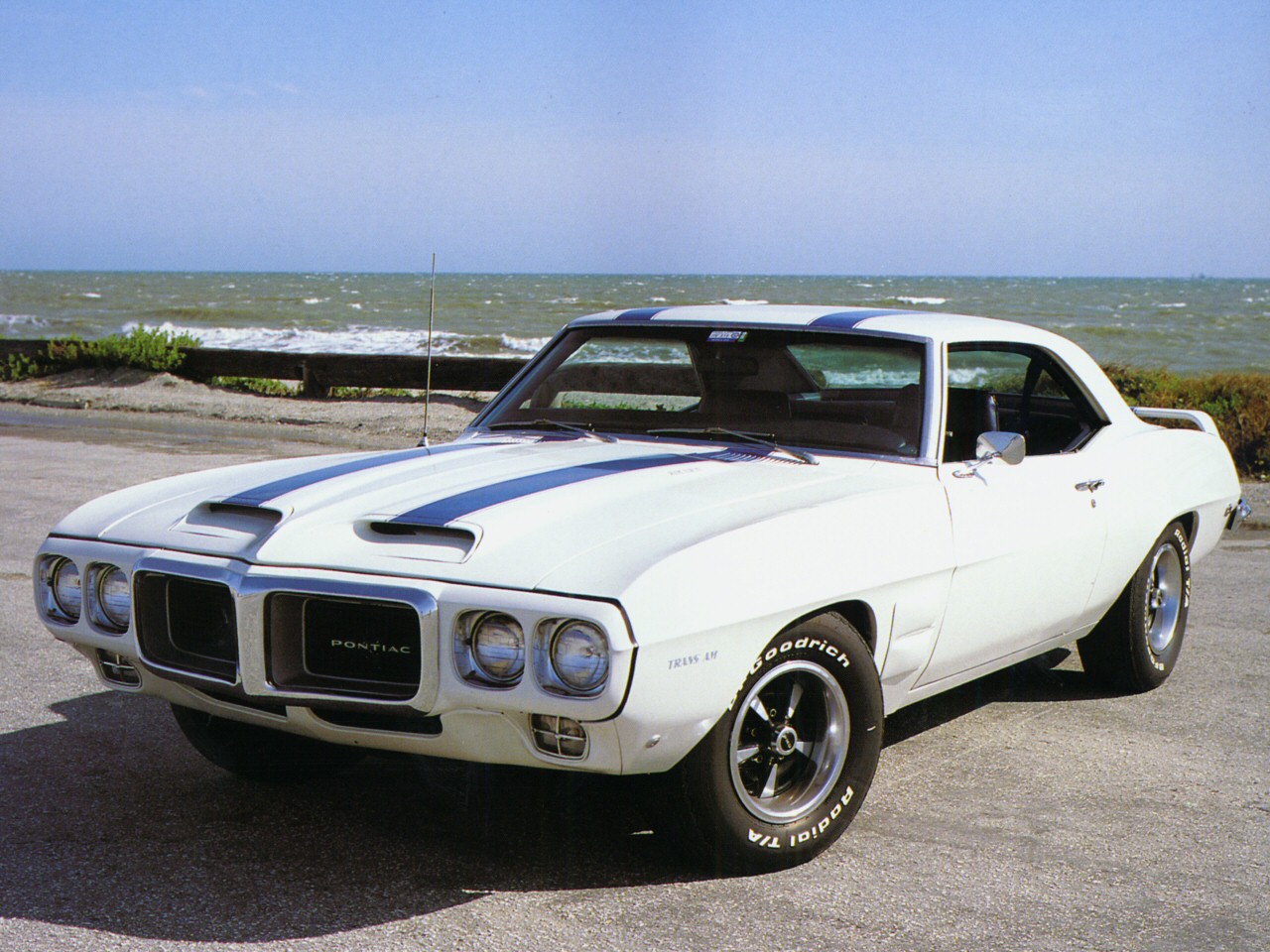
- For rarity: the Can Am, about 1,377 cars from one half-year.
- For more performance from the same engine: the four-speed 1977 Trans Am, quicker in Car and Driver's tests.
- For the original idea: a first-generation GTO from 1964–1967.
The Can Am is listed in the malaise-era muscle car guide and on the Pontiac muscle car page. The Pontiac brand history covers the rest of the range.
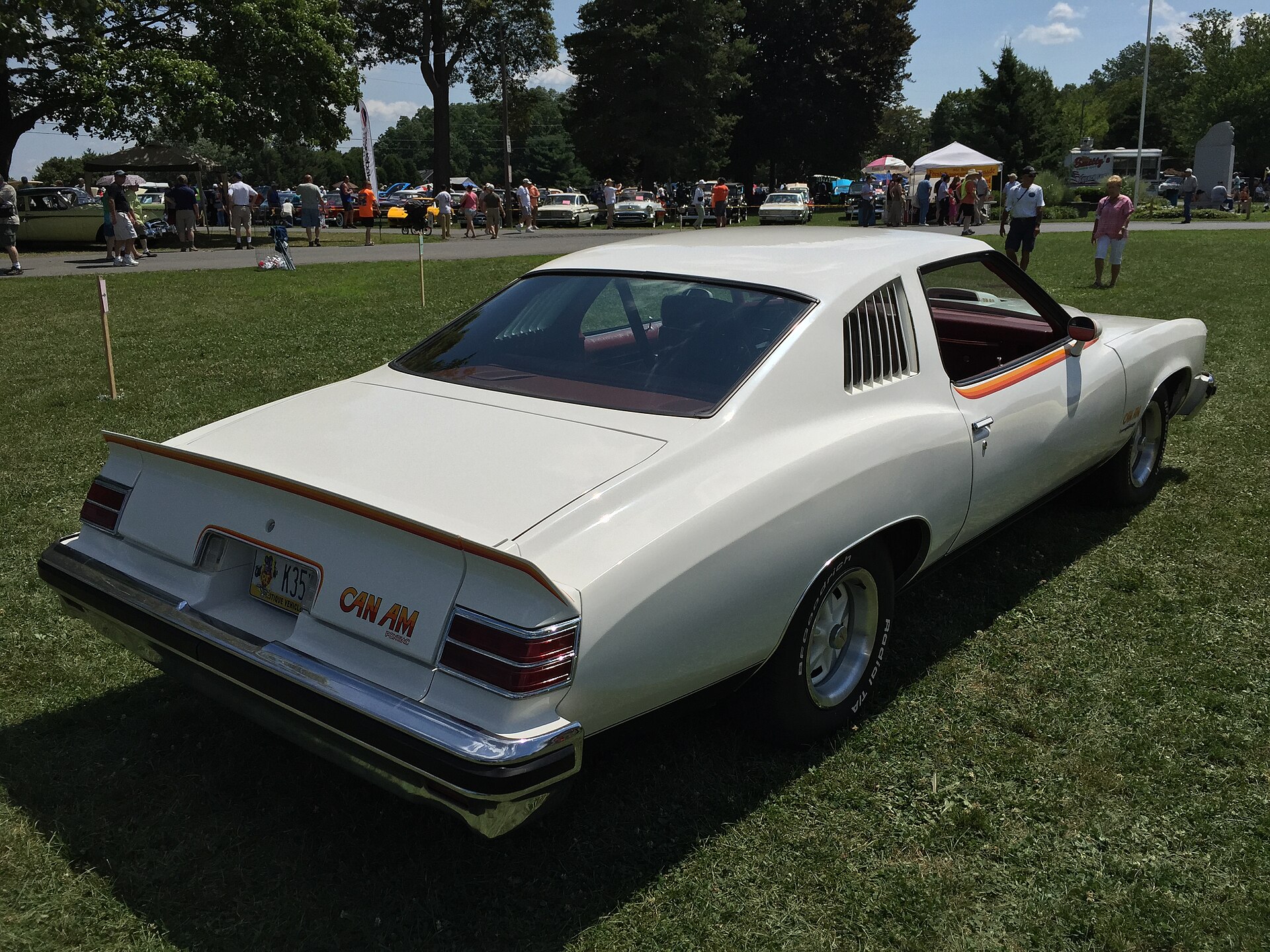
The Pontiac Can Am was a one-year special edition of the 1977 LeMans Sport Coupe: a white mid-size coupé with the Trans Am's shaker bonnet scoop and its T/A 6.6 V8, a rear spoiler and bright stripes. Proposed by Jim Wangers, the marketing man behind the 1964 GTO, it drew more orders than Pontiac had planned, but production stopped after about six months when the tool for the spoiler broke. About 1,377 cars were built.
In short
- Model year 1977 only; shown at the Detroit auto show in January 1977, cancelled in mid-June 1977.
- Engines: Pontiac 400 T/A 6.6 (W72) with 149 kW (200 hp, SAE net), or an Oldsmobile 403 with 138 kW (185 hp) in California and at high altitude.
- Automatic gearbox only; every car left the factory in Cameo White.
- Production: 1,377 is the figure most sources accept; one count used by Wikipedia and Street Muscle stops at 1,133.
Specs by version
Engines
Dimensions and weight
Show all 2 versions
| Version | Wheelbase |
|---|---|
| Oldsmobile 403 V8 (California, high altitude) | 2,845 mm112.0 in |
| Pontiac 400 T/A 6.6 V8 (W72) | 2,845 mm112.0 in |
Verified Manufacturer and type-approval data from our catalog · Sources and methodology
Pontiac Can Am at a glance
| Specification | Pontiac Can Am |
|---|---|
| Model year | 1977 |
| Base car | Pontiac LeMans Sport Coupe (GM A-body) |
| Conversion | Motortown Corporation |
| Package | RPO WW3, US$1,214 in 1977 (Hagerty) |
| Engines | 400 cu in (6.6 l) Pontiac V8; 403 cu in (6.6 l) Oldsmobile V8 |
| Power | 149 kW (200 hp) Pontiac W72; 138 kW (185 hp) Oldsmobile, SAE net |
| Torque | 441 Nm (325 lb-ft) for the W72, according to Street Muscle |
| Gearboxes | Turbo-Hydramatic 400 (Pontiac engine), Turbo-Hydramatic 350 (Oldsmobile engine) |
| Wheelbase / length | 2,845 mm / 5,298 mm |
| Built | about 1,377 (1,335 for the US and 42 for Canada, per Consumer Guide) |
The Can Am follows the Pontiac GTO idea of a performance package on the mid-size Pontiac and borrows its engine and bonnet scoop from the Firebird Trans Am.
How the Can Am came about
The Can Am took over from the 1973–1975 Grand Am, which had sold slowly. Jim Wangers, often called the godfather of the GTO, proposed a new package together with Motortown, the company that would do the conversion. According to Hagerty, Pontiac general manager Alex Mair was receptive and product planner Ben Harrison supported the plan, while a revival of the GTO Judge was rejected in favour of a more contemporary design.
The name came from the SCCA Can-Am sports-car series, revived for 1977; Pontiac had no connection with it. The car was shown at the Detroit auto show in January 1977, next to the Sunbird Sport Hatch, and production started by spring. The plan was to build 2,500 cars; Wangers later said dealer orders were roughly double that, and Street Muscle and Hooniverse give the target as 5,000.

Design and equipment
The Can Am started as a Cameo White LeMans Sport Coupe with louvred rear quarter windows. Motortown cut the bonnet for the shaker scoop and added the rest:
- the Trans Am's shaker scoop, lettered "T/A 6.6" on Pontiac-engined cars and "6.6 Litre" on Oldsmobile-engined cars;
- a glass-fibre ducktail spoiler taken from the Grand Am All-American show car;
- orange, red and yellow graphics with blacked-out lower panels and window trim;
- body-coloured Rally II wheels with chrome trim rings and GR70-15 steel-belted radial tyres;
- the Rally-Tuned Suspension and 11-inch front disc brakes.
Inside, buyers chose red, black, white or tan trim, and the dashboard and console came from the Pontiac Grand Prix. Street Muscle mentions swivel bucket seats. Options included cast-aluminium "snowflake" wheels, a steel or glass sunroof and the Safe-T-Track limited-slip axle.
Hooniverse addresses a persistent story about seven Mandarin Orange cars: Wangers said Motortown built no orange Can Ams officially.
Engines and performance
Most Can Ams have the Pontiac 400 in its W72 "T/A 6.6" form with 149 kW (200 hp), 15 kW (20 hp) more than the regular 400. Cars sold in California and at high altitude received the Oldsmobile 403 with 138 kW (185 hp). No Can Am was built with a manual gearbox.
| Engine | Power | Gearbox | Axle |
|---|---|---|---|
| Pontiac 400 W72 (T/A 6.6) | 149 kW (200 hp) | Turbo-Hydramatic 400 | 3.08:1 (Wikipedia), 3.23:1 (Hagerty) |
| Oldsmobile 403 | 138 kW (185 hp) | Turbo-Hydramatic 350 | 2.41:1 |
The magazines of 1977 measured very different times, partly because the test weights differed by about 260 kg:
| Test | Weight | Quarter mile | 0–60 mph |
|---|---|---|---|
| Hot Rod, March 1977 (Pontiac's figures) | 1,614 kg (3,558 lb) | 15.88 s at 88 mph | - |
| Motor Trend, May 1977 | - | 17 s at 84 mph | about 10 s |
| Car and Driver, May 1977 (instrumented) | 1,871 kg (4,125 lb) | 17.1 s at 79.7 mph | - |
For comparison, Car and Driver's four-speed 1977 Trans Am with the same engine ran 16.9 seconds at 82 mph. Hooniverse puts the Can Am in context: the 1977 Mustang Cobra II's 302 V8 had 95 kW (127 hp).
The Can Am in numbers
1CARS calculated these ratios from the sourced weights and power ratings; they are not measured values.
| Measure | Hot Rod weight, 1,614 kg | Car and Driver weight, 1,871 kg |
|---|---|---|
| Weight per kW, W72 (149 kW) | 10.8 kg | 12.6 kg |
| Weight per kW, Oldsmobile 403 (138 kW) | 11.7 kg | 13.6 kg |
The W72 engine gives 22.6 kW per litre from its 6.6 litres. By the standards of 1977, when emission rules had cut outputs across the industry, the Can Am was a quick mid-size car rather than a match for the golden-age cars ranked on the most powerful muscle cars page. The comparison tool sets it against the Trans Am and other cars of its year.
Why production ended
The rear spoiler stopped the car. Motortown converted 30 to 40 cars a day at its peak, according to Street Muscle, but the tool for the glass-fibre spoiler broke and a replacement would have taken 90 days. The company did not want to ship cars without spoilers for dealers to finish, and cancelled the programme in mid-June 1977.
There was also opposition inside the company. Wangers told Hagerty that some managers were against the car from the start, and Wikipedia notes that executives saw Can Am sales as lost Grand Prix sales. The Can Am used the Grand Prix dashboard, and the Grand Prix was heading for about 288,000 cars that year against roughly 80,000 LeMans. Street Muscle adds that the downsized 1978 LeMans would have been 270–360 kg (600–800 lb) lighter, with a projected Can Am weight of about 1,450 kg (3,200 lb).
How many were built
| Source | Figure |
|---|---|
| Verne Howard, quoted by Hagerty and Consumer Guide | 1,377 |
| Consumer Guide | 1,335 for the US, 42 for Canada |
| Wikipedia's own estimate and Street Muscle | 1,133 |
| Hooniverse | 1,100 or 1,377, depending on the source |
Against the more than 81,000 LeMans sold in 1977, the Can Am was a very small series either way. Consumer Guide says about 300 survive.
Pontiac Can Am buying guide
- Engine and scoop must match: "T/A 6.6" lettering means the Pontiac W72; "6.6 Litre" means the Oldsmobile 403.
- Colour: every genuine car is Cameo White (paint code 11, per Consumer Guide); an orange car is not a factory Can Am.
- Spoiler and stripes: the glass-fibre ducktail and the graphics were Motortown parts and are hard to replace correctly.
- Gearbox: a manual car has been converted; none left the factory that way.
- Interior: the Grand Prix dashboard and console should be present.
Pontiac Can Am in our rankings
- No. 188 of 368 · Most torque: cars (441 Nm · top 52%)
- No. 582 of 859 · Most powerful cars (149 kW · top 68%)
- No. 60 of 88 · Most powerful cars of the 1970s (149 kW · top 69%)
- No. 80 of 106 · Most torque: coupes (441 Nm · top 77%)
- No. 125 of 154 · Most powerful American cars (149 kW · top 82%)
- No. 275 of 313 · Most powerful coupes (149 kW · top 88%)
More torque than 48% of ranked cars in the 1CARS catalog (No. 188 of 368).
FAQ
How many Pontiac Can Ams were made?
About 1,377, the figure most sources accept, with 1,335 for the US and 42 for Canada; some counts stop at 1,133.
What engine does the Pontiac Can Am have?
Most have the Pontiac 400 T/A 6.6 with 149 kW (200 hp); California and high-altitude cars have the Oldsmobile 403 with 138 kW (185 hp).
Why was the Pontiac Can Am only made in 1977?
The tool for the glass-fibre rear spoiler broke, a new one would have taken 90 days, and some Pontiac managers saw the car as a threat to Grand Prix sales.
Was the Can Am available with a manual gearbox?
No. All cars had a three-speed Turbo-Hydramatic automatic: the TH400 behind the Pontiac 400 and the TH350 behind the Oldsmobile 403.
What colour is the Pontiac Can Am?
Every car was Cameo White with orange, red and yellow graphics and blacked-out lower panels; Jim Wangers said Motortown officially built no orange cars.
Data sources
Data checked by an editor against the sources below.