
 Pontiac LeMans GT-37
All generations, specs and history
Published Sources (4) Report an error
By Felix Hartmann, Automotive Technology & EV Contributor
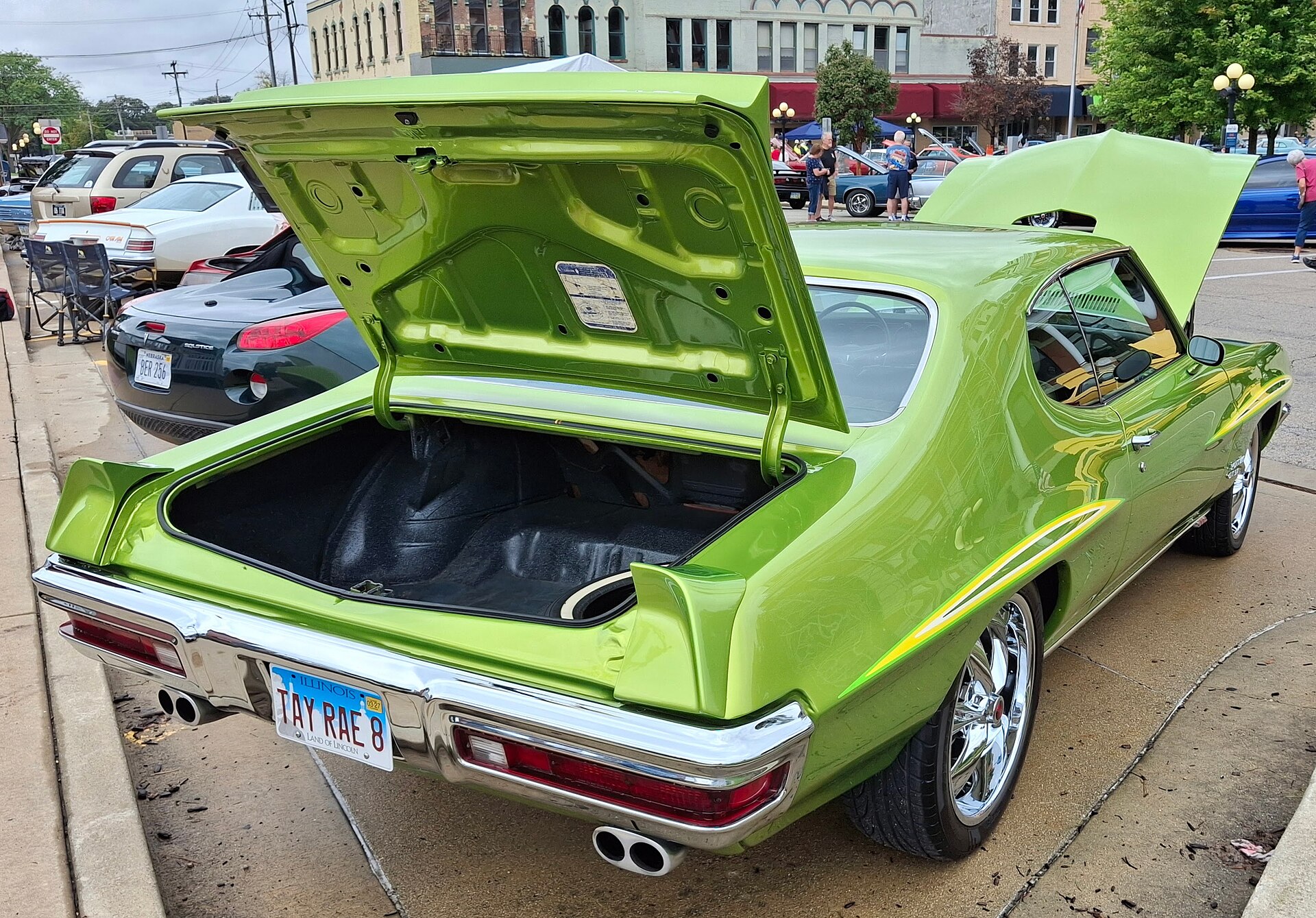
- Built
- 1970–1971
- Generations
- 2
- Top power
- 250 kW (340 PS)
Timeline
LeMans GT-37 generations
Click a generation for its own page
Newest first · 2 generations since 1970
All generations by year: GT-37 (1971) · GT-37 (1970)
Which one is mine?
Pick the year of first registration to see which generation it is.
Check by VINThe GT-37 was a performance package for the T-37, the cheapest Pontiac intermediate hardtop, sold from spring 1970 to the end of the 1971 model year. It added GTO-type exhausts, Rally II wheels and bonnet pins to a car priced below the GTO, with V8s from the 190 kW (255 hp) 350 to the 1971 455 HO with 250 kW (335 hp, SAE gross). Pontiac built 5,802 GT-37s in 1971.
In short
- Base car: the T-37 hardtop of February 1970, about US$2,600 in 1970; the GT-37 package added US$198 (The Autopian).
- 1970 engines: 350 two-barrel, 400 two-barrel and 400 four-barrel with 246 kW (330 hp, SAE gross); Street Muscle counts 1,419 cars.
- 1971: 5,802 built, 5,015 with the 350 and 54 with the 455 HO.
- Sold as "The GTO for Kids under 30" and replaced in 1972 by the LeMans GT option.
Specs by version
Engines
| Version | Engine | Power | Drive | Production years |
|---|---|---|---|---|
| GT-37 · 350 2-barrel V8 (SAE gross), 3-speed manual | 5.7 l · 8 cyl · Petrol 5,735 cc | 190 kW 258 PS255 hp | Rear-wheel drive | 1970 |
| GT-37 · 400 4-barrel V8 (SAE gross) | 6.6 l · 8 cyl · Petrol 6,555 cc | 246 kW 334 PS330 hp | Rear-wheel drive | 1970 |
| GT-37 · 350 2-barrel V8 (SAE gross) | 5.7 l · 8 cyl · Petrol 5,735 cc | 186 kW 253 PS249 hp | Rear-wheel drive | 1971 |
| GT-37 · 455 HO V8 (SAE gross) | 7.5 l · 8 cyl · Petrol 7,457 cc | 250 kW 340 PS335 hp | Rear-wheel drive | 1971 |
Dimensions and weight
Show all 4 versions
| Version | Wheelbase |
|---|---|
| GT-37 · 350 2-barrel V8 (SAE gross), 3-speed manual | 2,845 mm112.0 in |
| GT-37 · 400 4-barrel V8 (SAE gross) | 2,845 mm112.0 in |
| GT-37 · 350 2-barrel V8 (SAE gross) | 2,845 mm112.0 in |
| GT-37 · 455 HO V8 (SAE gross) | 2,845 mm112.0 in |
Verified Manufacturer and type-approval data from our catalog · Sources and methodology
GT-37 at a glance
| Specification | Pontiac GT-37 |
|---|---|
| Model years | mid-1970 to 1971 |
| Base car | Tempest T-37 (1970), T-37 series (1971) |
| Body | two-door hardtop; pillared coupé also offered in 1970 |
| Platform | GM A-body, 2,845 mm (112 in) wheelbase |
| Engines | 350 cu in (5.7 L), 400 cu in (6.6 L) and, from 1971, 455 cu in (7.5 L) V8 |
| Power | 186-250 kW (250-335 hp), SAE gross |
| Torque | 481 Nm (355 lb-ft), standard 1970 350 |
| Gearboxes | heavy-duty three-speed manual with Hurst floor shifter; four-speed manuals and automatics optional |
| Brakes | 241 mm (9.5 in) drums (1971) |
| Tyres | G70-14 white-letter |
| Built | 1,419 (1970, Street Muscle); 5,802 (1971) |
| Price | T-37 about US$2,600 plus US$198 for GT-37 (1970) |
The T-37 and the insurance problem
In February 1970 Pontiac introduced the T-37 hardtop coupé, which also took over the Tempest name on the two-door pillared coupé. Pontiac called it General Motors' lowest-priced hardtop, a claim that lasted a few weeks until a base Chevrolet Chevelle hardtop undercut it. The name was internal shorthand: T for Tempest and 37 for Pontiac's hardtop body code.
By 1970 the problem for young buyers was the running cost of a muscle car, above all the insurance premium. A GTO hardtop cost US$3,267 in 1970, and the Judge package added US$337.02. The Plymouth Road Runner had shown in 1968 how much a cheap, plain car with a big engine could sell, and Street Muscle describes the GT-37 as Pontiac's mid-year answer. The Tempest-based name and classification were meant to look tamer to insurers than a GTO badge.
The 1970 package
Wikipedia calls the GT-37 a "stripper" muscle package, and the list of parts shows where the money went. The 1970 car had:
- Rally II wheels without trim rings and G70-14 white-letter tyres;
- chrome-tipped dual exhausts leaving through the rear valance;
- a heavy-duty three-speed manual with a Hurst floor shifter;
- bonnet locking pins, sport mirrors and vinyl accent stripes taken from the 1969 GTO Judge;
- GT-37 decals on the front wings and boot lid.
| 1970 engine | Carburettor | Rating (SAE gross) | Torque |
|---|---|---|---|
| 350 V8 (L30) | two-barrel | 190 kW (255 hp) | 481 Nm (355 lb-ft) |
| 400 V8 (L65) | two-barrel | 198 kW (265 hp) | 538 Nm (397 lb-ft) |
| 400 V8 | four-barrel | 246 kW (330 hp) | - |
The 400 four-barrel came with dual exhausts. Street Muscle, which decoded the engine codes, says manual cars used the GTO's regular 400 and not the Ram Air III, while automatic cars received a small-valve 400 from the Catalina. Street Muscle counts 1,419 GT-37s for the half-year of 1970; The Autopian says the 1970 total is not known.
1971: lower compression and the 455
For 1971 Pontiac dropped the Tempest name, and the T-37 became the bottom of the A-body range under the LeMans. The GT-37 kept the 1970 recipe, with GTO split exhausts through a steel rear valance, dechromed Rally II wheels and new body-colour mirrors. Its striping changed twice: eyebrow stripes modelled on the GTO Judge at launch, then from mid-March 1971 a reflective full-length sword stripe in black, silver, blue or gold, which collectors call the 1971½ GT-37. Honeycomb wheels were new that year.
GM lowered compression across its 1971 engines so they could run on lower-octane fuel, and the 455, a GTO-only engine in 1970, became available in the T-37 range. Street Muscle gives production by engine:
| 1971 engine | Rating | GT-37s built |
|---|---|---|
| 350 two-barrel | 186 kW (250 hp) gross, 134 kW (180 hp) net | 5,015 |
| 400 two-barrel | - | 146 |
| 400 four-barrel | 224 kW (300 hp) gross | 572 |
| 455 four-barrel | 242 kW (325 hp) gross | 15 |
| 455 HO (LS5) | 250 kW (335 hp) gross, 231 kW (310 hp) net | 54 |
| Total | 5,802 |
The 455 HO had 8.4:1 compression against 8.2:1 for the regular 455, according to autoevolution. Few cars had the Muncie M22 close-ratio four-speed; the same source estimates fewer than 40 across the T-37 and GT-37 together. Brakes were 9.5-inch drums.

GT-37 against the GTO and the Road Runner
The GT-37 sold the GTO's performance without the GTO's badge, and in 1971 it took sales from it. That year 641 GT-37s left the factory with GTO engines: the 400 four-barrel, the 455 and the 455 HO. Pontiac sold 10,532 GTOs in 1971, against 40,149 in 1970, and Street Muscle reads part of that fall as the GT-37 taking buyers from the Pontiac GTO. The GTO Judge that lent the GT-37 its stripes sold only 357 cars in 1971.
Its intended rival was Chrysler's low-price car. Street Muscle puts the Plymouth Road Runner under US$2,900 at the time and the GTO and the bigger Mopars around US$3,000. Within GM, the Chevrolet Chevelle both undercut the T-37 on price and offered its own SS models on the same A-body.
The end and the LeMans GT
The GT-37 was not offered for 1972. Its place went to the LeMans GT option on LeMans pillared and hardtop coupés, which kept the sword stripe and the handling parts, could be ordered with any V8 from the 350 two-barrel to the 455 HO, and was also available as a convertible. Street Muscle gives 8,880 LeMans GTs. The GTO itself became an option package on the LeMans and LeMans Sport coupés in 1972, and the LeMans line later carried the 1977 Can Am.
GT-37 today: what to check
A T-37 is easy to dress up, so the details carry the proof. A genuine car should show GT-37 badges on the front wings and the boot lid, bonnet pins, the exhaust exiting through the valance and Rally II wheels. A 1971 car with the sword stripe should be a late build.
- The engine matters most: 5,015 of the 5,802 cars of 1971 had the 350, so a 400 four-barrel or a 455 needs supporting paperwork.
- The 54 cars with the 455 HO and the few M22 four-speed cars are the rarest combinations.
- Hagerty's valuation tool lists the 1970 GT-37 as a two-door coupé with the 350 and 255 hp, and The Autopian (April 2024) put typical sales at about US$25,000 to US$40,000.
The Pontiac catalogue lists the T-37's relatives, from the Tempest to the LeMans.
Pontiac LeMans GT-37: first vs latest generation
| Spec | GT-37 | GT-37 | Change |
|---|---|---|---|
| Years | 1970 | 1971 | 1 years apart |
| Most powerful version | 246 kW (334 PS) | 250 kW (340 PS) | +4 kW (+2%) |
| Wheelbase | 2,845 mm | 2,845 mm | same |
Oldest and newest generation in the 1cars catalog. Power is the strongest version of each; other rows are shown only when both generations have the figure.
Pontiac LeMans GT-37 in our rankings
- No. 21 of 674 · Biggest engines: cars (7,457 cc · top 4%)
- No. 17 of 208 · Biggest engines: coupes (7,457 cc · top 9%)
- No. 37 of 113 · Most powerful cars of the 1970s (250 kW · top 33%)
- No. 429 of 1051 · Most powerful cars (250 kW · top 42%)
- No. 230 of 518 · Most torque: cars (481 Nm · top 45%)
- No. 115 of 196 · Most powerful American cars (250 kW · top 59%)
Bigger engine than 96% of ranked cars in the 1CARS catalog (No. 21 of 674).
FAQ
What does GT-37 stand for?
The T-37 was the name of the base Tempest hardtop: T for Tempest and 37 for Pontiac's hardtop body code. GT-37 was the performance package for that car.
How many GT-37s were made?
5,802 in 1971, according to Street Muscle, and 1,419 in the half-year of 1970 by the same source. The Autopian considers the 1970 figure unknown.
What engines did the GT-37 have?
A 350 two-barrel was standard. Options were the 400 with two or four barrels in 1970, and from 1971 also the 455 and the 455 HO with 250 kW (335 hp, SAE gross).
Was the GT-37 cheaper than a GTO?
Yes. The T-37 cost about US$2,600 in 1970 and the GT-37 package US$198, while a GTO hardtop listed at US$3,267 in 1970.
What replaced the GT-37?
The LeMans GT option of 1972, with the same look and engines up to the 455 HO. Street Muscle gives 8,880 LeMans GTs.
Data sources
Data checked by an editor against the sources below.
- Wikipedia - Pontiac LeMans
- Slashgear - Pontiac Gt37 What Years Make How Much Horsepower Have
- Streetmusclemag
- Hagerty - 1971 Pontiac GT~37


