 Alfa Romeo Spider
All generations, specs and history
Published Sources (1) Report an error
By Felix Hartmann, Automotive Technology & EV Contributor
- Built
- 1966–1993
- Generations
- 4
- Top power
- 97 kW (132 PS)
Timeline
Spider generations
Click a generation for its own page
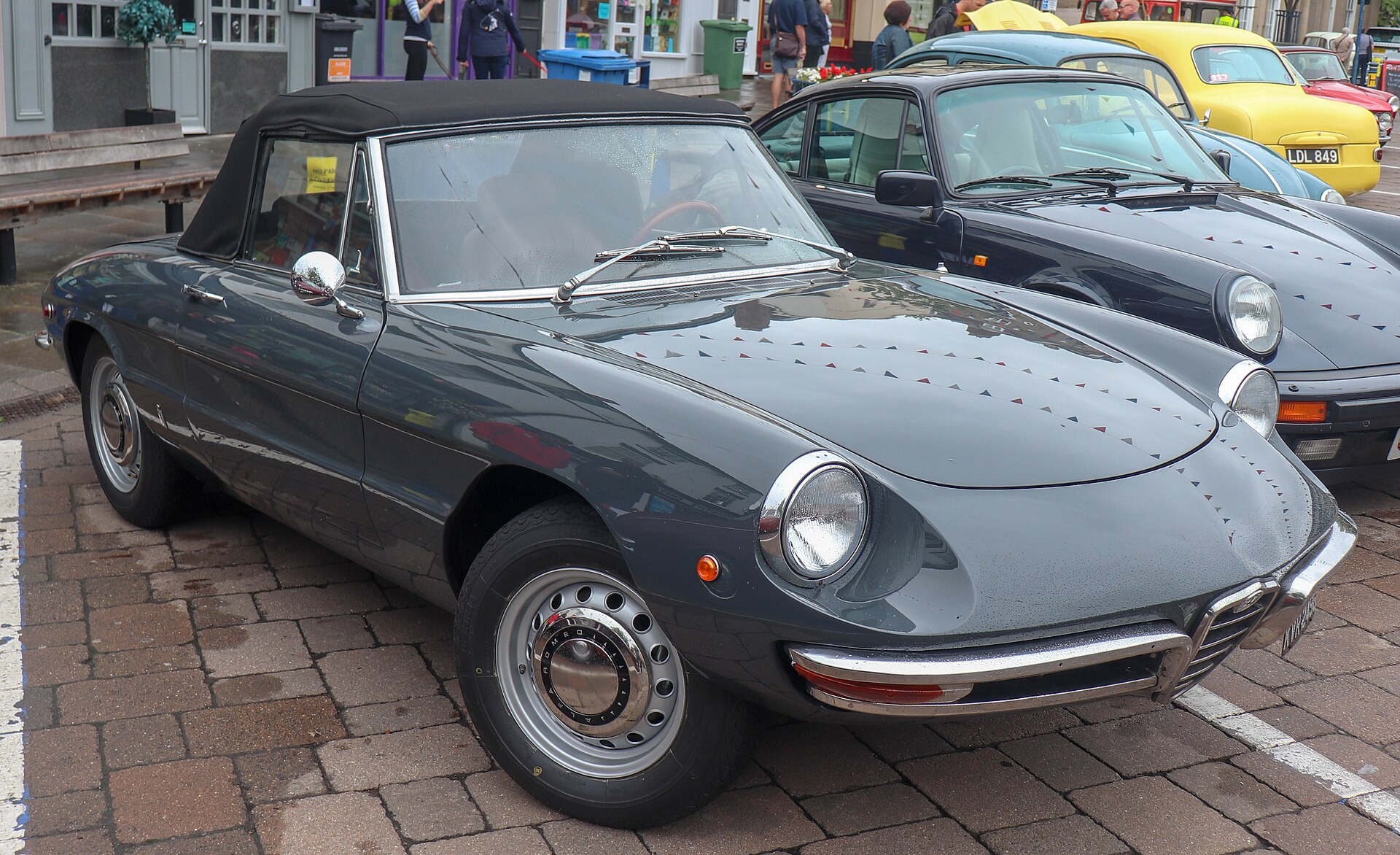
- Spider Series 1 'Duetto' 1966–1969 · Roadster · 65–87 kW (88–118 PS)
- Spider Series 2 'Coda Tronca' 1970–1982 · Roadster · 65–97 kW (88–132 PS)
- Spider Series 3 'Aerodinamica' 1982–1989 · Roadster · 94 kW (128 PS)
- Spider Series 4 1990–1993 · Roadster · 93 kW (126 PS)
Newest first · 4 generations since 1966
-
1990
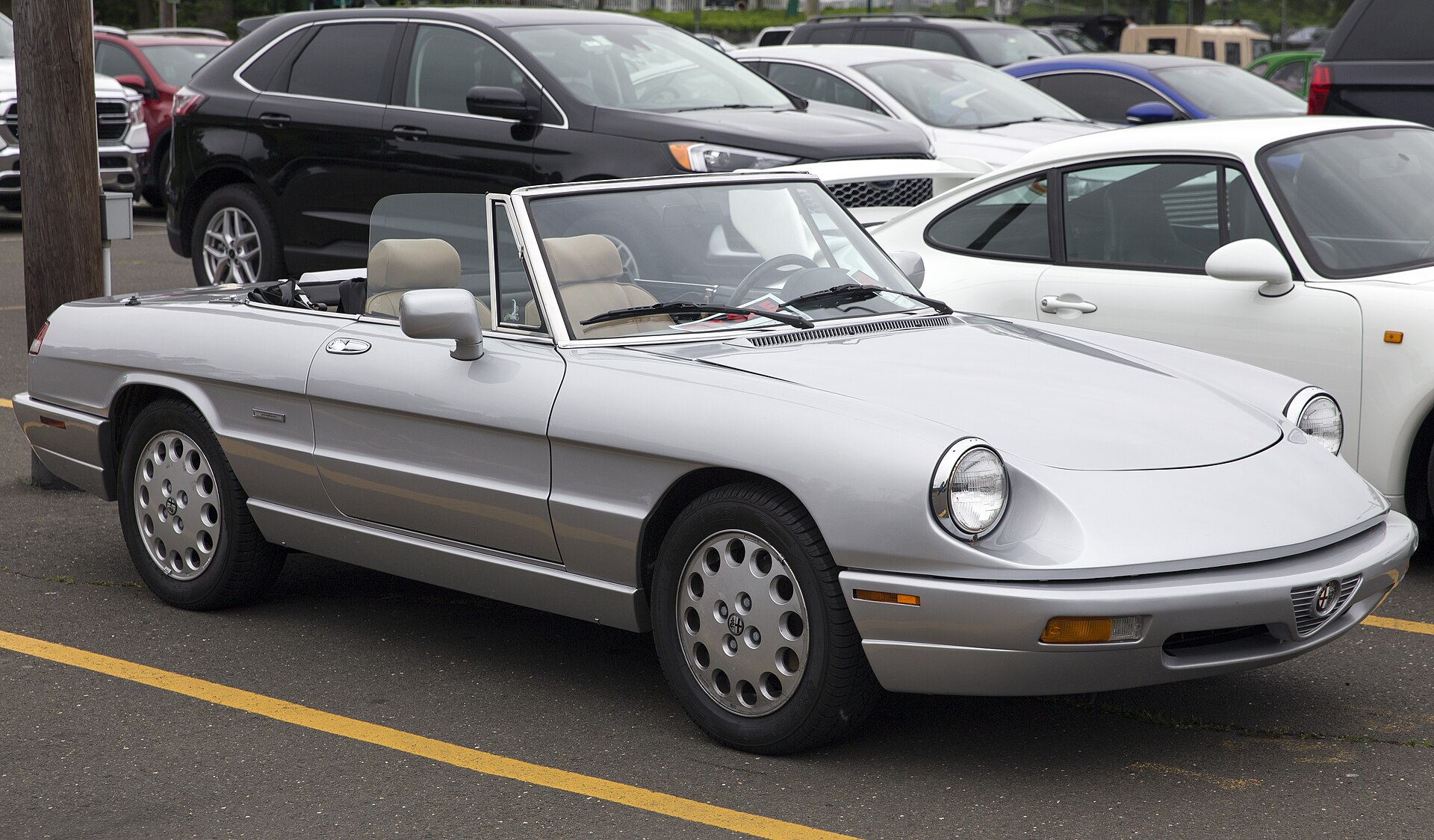
-
1982
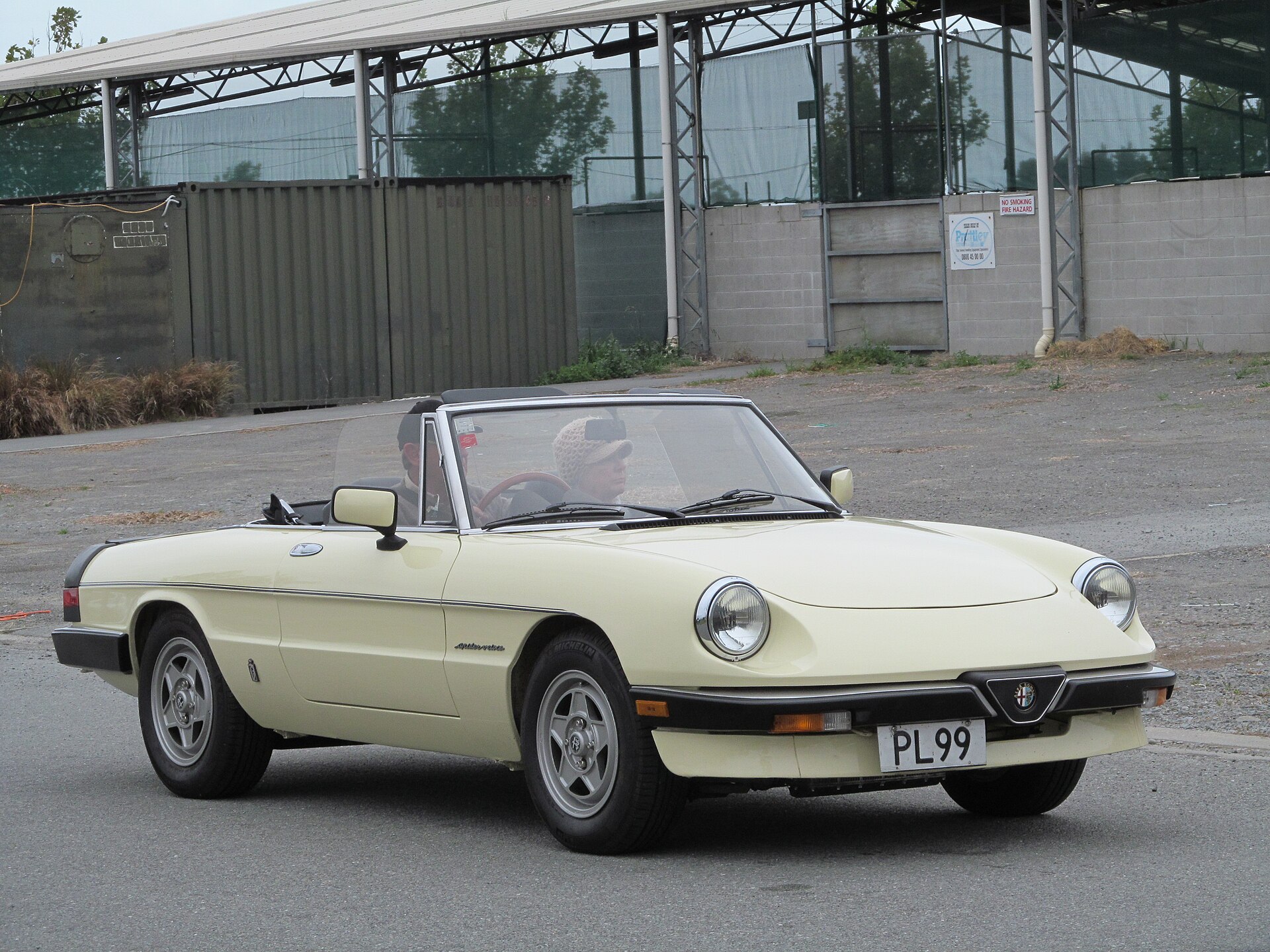
-
1970
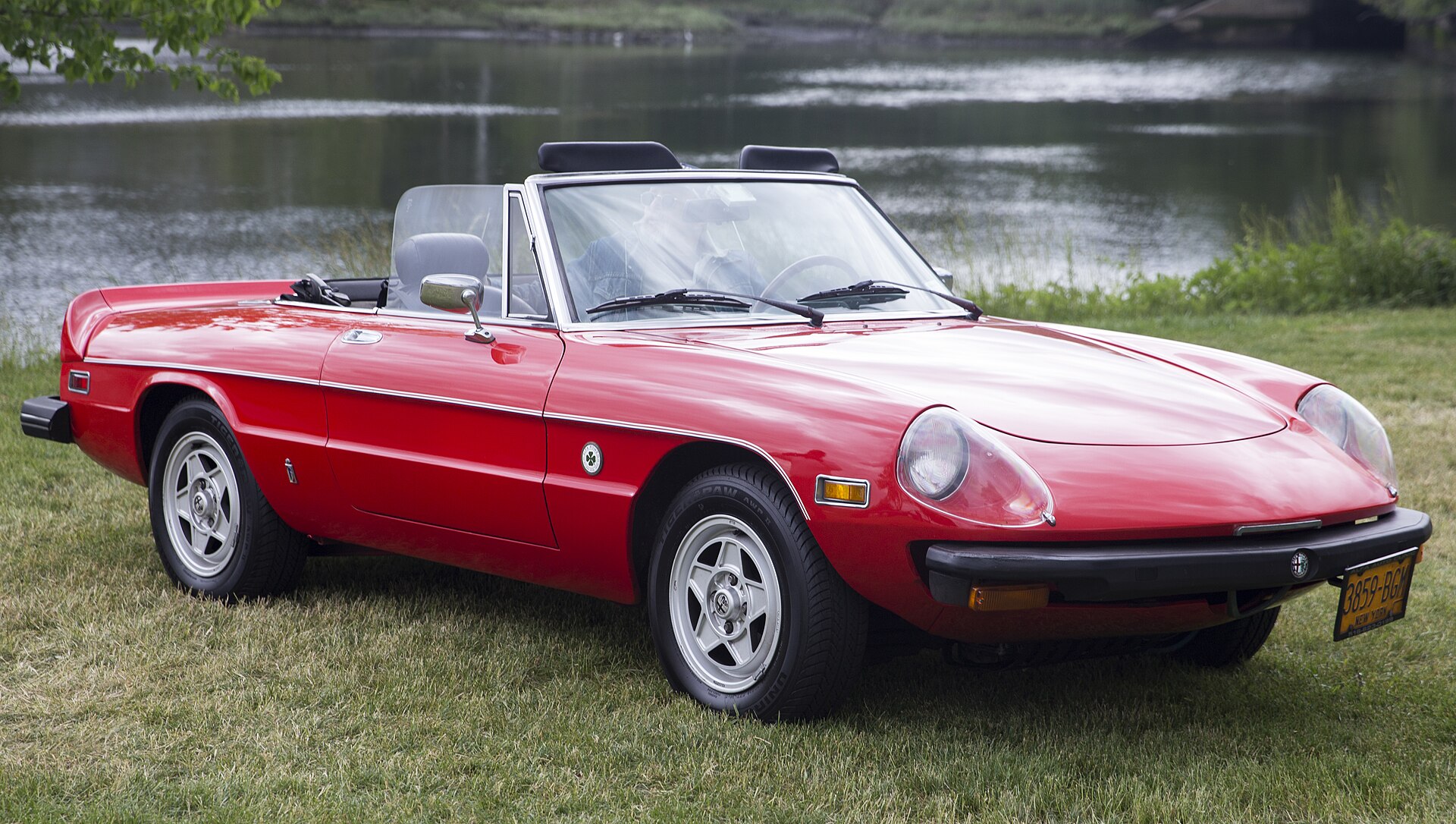
-
1966
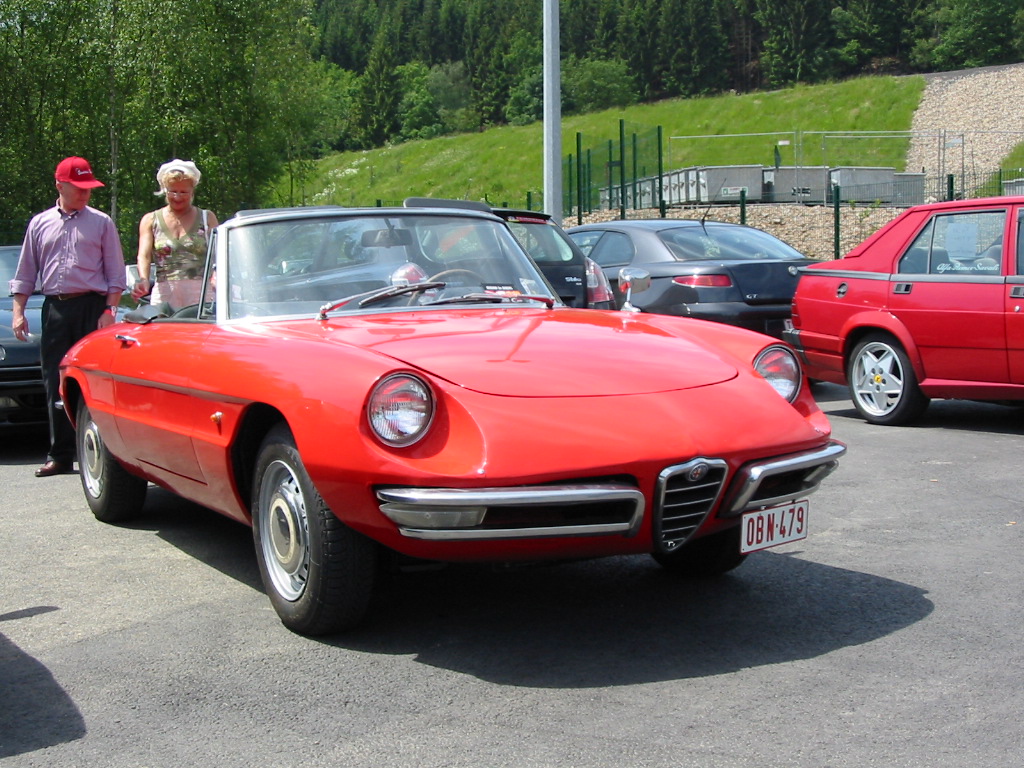


All generations by year: Spider Series 4 (1990–1993) · Spider Series 3 'Aerodinamica' (1982–1989) · Spider Series 2 'Coda Tronca' (1970–1982) · Spider Series 1 'Duetto' (1966–1969)
Which one is mine?
Pick the year of first registration to see which generation it is.
- Spider Series 4 1990–1993
- Spider Series 3 'Aerodinamica' 1982–1989
- Spider Series 2 'Coda Tronca' 1970–1982
- Spider Series 1 'Duetto' 1966–1969
Which Spider to choose
Our verdict · Felix Hartmann
- For the original shape: a Series 1 Duetto or 1750 Spider Veloce, the rarest series.
- For the best value: a Series 2 Kamm-tail 2000 Spider Veloce with 97 kW (132 PS).
- For a late, usable car: a Series 4 with Motronic injection and full-width bumpers.
- For film history: a Series 1 1600 like the car in The Graduate, or a US "Graduate" edition.
Today's Alfa Romeo models, including the Giulia, are in the Alfa Romeo catalogue, and more open cars of the decade are under 1960s classics.
The Alfa Romeo Spider is the two-seat roadster that Alfa Romeo and Pininfarina built from 1966 to 1993 in four series, from the round-tailed "Duetto" to the Series 4 with Bosch Motronic injection. Launched at the Geneva Motor Show in March 1966, it was the last project Battista Pininfarina was involved in, appeared in the 1967 film The Graduate. It stayed in production for 27 years with twin-cam four-cylinder engines of 1.3 to 2.0 litres. In total 124,104 were made.
In short
- Series 1 "Duetto" 1966–1969, Series 2 "Coda Tronca" 1970–1982, Series 3 "Aerodinamica" 1982–1989, Series 4 1990–1993.
- Twin-cam four-cylinders: 1,290 cc with 65 kW (89 PS) to 1,962 cc with 97 kW (132 PS).
- Launch price in 1966: 2,195,000 lire in Italy and US$3,950 in the United States.
- Bodies built and cars assembled by Pininfarina at Grugliasco, the last series at San Giorgio Canavese.
Specs by version
Engines
| Version | Engine | Power | Gearbox | Drive | Production years |
|---|---|---|---|---|---|
| Spider Series 1 'Duetto' · Spider 1300 Junior (1290 cc) | 1.3 l · 4 cyl · Petrol 1,290 cc | 65 kW 88 PS87 hp | 5-sp Manual | Rear-wheel drive | 1968 |
| Spider Series 1 'Duetto' · Spider 1600 (1570 cc) | 1.6 l · 4 cyl · Petrol 1,570 cc | 80 kW 109 PS107 hp | 5-sp Manual | Rear-wheel drive | 1966 |
| Spider Series 1 'Duetto' · 1750 Spider Veloce (1779 cc) | 1.8 l · 4 cyl · Petrol 1,779 cc | 87 kW 118 PS117 hp | 5-sp Manual | Rear-wheel drive | 1968 |
| Spider Series 2 'Coda Tronca' · 2000 Spider Veloce (1962 cc) | 2.0 l · 4 cyl · Petrol 1,962 cc | 97 kW 132 PS130 hp | 5-sp Manual | Rear-wheel drive | 1971 |
| Spider Series 3 'Aerodinamica' · Spider 2000 Series 3 (1962 cc) | 2.0 l · 4 cyl · Petrol 1,962 cc | 94 kW 128 PS126 hp | 5-sp Manual | Rear-wheel drive | — |
| Spider Series 4 · Spider 2000 Series 4 (1962 cc) | 2.0 l · 4 cyl · Petrol 1,962 cc | 93 kW 126 PS125 hp | 5-sp Manual | Rear-wheel drive | — |
Performance
Show all 2 versions
| Version | Top speed |
|---|---|
| Spider Series 1 'Duetto' · Spider 1300 Junior (1290 cc) | 170 km/h106 mph |
| Spider Series 1 'Duetto' · 1750 Spider Veloce (1779 cc) | 190 km/h118 mph |
Verified Manufacturer and type-approval data from our catalog · Sources and methodology
Alfa Romeo Spider at a glance
| Parameter | Value |
|---|---|
| Maker | Alfa Romeo; design, bodies and final assembly by Pininfarina |
| Production | 1966–1993 (model years 1966–1994) |
| Built | 124,104 |
| Body | two-seat roadster |
| Engines | 1.3–2.0 l twin-cam inline-four |
| Power | 65 kW (89 PS) to 97 kW (132 PS) |
| Gearbox | five-speed manual; automatic option in Series 4 |
| Designers | Aldo Brovarone and Battista Pininfarina |
| Plants | Grugliasco (Series 1–3), San Giorgio Canavese (Series 4) |
| Successor | Alfa Romeo Spider (916), presented in 1994 |
Development and production history
The Spider was designed at Pininfarina by Aldo Brovarone and Battista Pininfarina, for whom the 1600 Spider was the last project he was involved in. It was presented at the Geneva Motor Show in March 1966. Alfa Romeo ran a write-in contest to name the car. Guidobaldo Trionfi of Brescia won with "Duetto", but a court ruled that the confectioner Pavesi held the rights to that name, so the car was officially sold as the Spider 1600. Its rounded tail also earned it the nickname osso di seppia, "cuttlebone".
The Spider was a car of the sixties that lasted into the nineties. Series 1 was built until 1969. Series 2 of 1970 cut off the tail in a Kamm shape, the "Coda Tronca", to gain luggage space. Series 3 of 1982, called "Aerodinamica" or "Duck Tail", added a rear spoiler and, in North America, Bosch L-Jetronic fuel injection. Series 4 of 1990 introduced Bosch Motronic injection, full-width bumpers and an optional automatic gearbox, and moved assembly to San Giorgio Canavese. Production ended in 1993, and a new Spider (916) was presented in 1994.
| Year | Event |
|---|---|
| March 1966 | Spider 1600 "Duetto" launched in Geneva |
| 1967 | Appears in The Graduate |
| 1968 | 1750 Spider Veloce and Spider 1300 Junior |
| 1969 | SPICA mechanical injection on US 1750s |
| 1970 | Series 2 with Kamm tail |
| 1971 | 2000 Spider Veloce |
| 1982 | Series 3 "Aerodinamica"; Bosch L-Jetronic in North America |
| 1990 | Series 4 with Bosch Motronic, assembled at San Giorgio Canavese |
| 1993 | End of production |

Design and engineering
The first Spider had a long, rounded tail, the feature behind its "cuttlebone" and "roundtail" nicknames. The Kamm tail of the Series 2 was a redesign of the rear for more luggage space; the Series 3 earned the names "Aerodinamica" and "Duck Tail"; the Series 4 received full-width bumpers. Through all four series the Spider remained a two-seater with the engine at the front and rear-wheel drive.
The Spider uses Alfa Romeo's twin-cam four-cylinder engines and a five-speed gearbox driving the rear wheels. In 1966 it cost US$3,950 in the United States, compared with US$3,991 (1966) for a Lotus Elan and US$2,607 (1966) for an MGB, according to English Wikipedia.
Engines and drivetrain
| Version | Introduced | Displacement | Power | Top speed |
|---|---|---|---|---|
| Spider 1600 "Duetto" | 1966 | 1,570 cc | 80 kW (109 PS DIN), two Weber carburettors | — |
| 1750 Spider Veloce | 1968 | 1,779 cc | 87 kW (118 PS DIN) in Europe | 190 km/h |
| Spider 1300 Junior | 1968 | 1,290 cc | 65 kW (89 PS DIN) | 170 km/h |
| 2000 Spider Veloce | 1971 | 1,962 cc | 97 kW (132 PS) | — |
| Spider 2000 Series 3 | 1982 | 1,962 cc | 94 kW (128 PS) | — |
| Spider 2000 Series 4 | 1990 | 1,962 cc | 93 kW (126 PS), Bosch Motronic | — |
In the United States the 1750 was rated at 97 kW (132 PS), and from 1969 US cars used SPICA mechanical fuel injection to meet emission rules. Our power converter translates the DIN figures into kW and hp.
Alfa Romeo Spider specifications
| Parameter | Value |
|---|---|
| Layout | front engine, rear-wheel drive |
| Engines | 1,290 / 1,570 / 1,779 / 1,962 cc twin-cam I4 |
| Power | 65–97 kW (89–132 PS DIN) |
| Gearbox | five-speed manual; automatic option (Series 4) |
| Fuel system | Weber carburettors; SPICA injection (US, from 1969); Bosch L-Jetronic (US, Series 3); Bosch Motronic (Series 4) |
| Top speed | 170 km/h (1300 Junior) to 190 km/h (1750 Veloce) |
| Seats | two |
English Wikipedia does not give the weight and dimensions of the Spider, so they are not listed here.
Series and production numbers
| Series | Years | Nickname | Built |
|---|---|---|---|
| Series 1 | 1966–1969 | Duetto, osso di seppia, roundtail | 13,678 |
| Series 2 | 1970–1982 | Coda Tronca (Kamm tail) | 51,811 |
| Series 3 | 1982–1989 | Aerodinamica, Duck Tail | 37,208 |
| Series 4 | 1990–1993 | — | 21,407 |
| Total | 1966–1993 | — | 124,104 |
Series 2, built for 13 years, accounts for 42% of all Spiders; the original Duetto for only 11%. The individual Series 1 versions listed in the source add up to 13,504 rather than 13,678, a small inconsistency.

Variants and derivatives
| Variant | Years | Engine | Power | Notes |
|---|---|---|---|---|
| Spider 1600 "Duetto" | from 1966 | 1,570 cc | 80 kW (109 PS) | Series 1, Weber carburettors |
| Spider 1300 Junior | from 1968 | 1,290 cc | 65 kW (89 PS) | entry model, 170 km/h |
| 1750 Spider Veloce | from 1968 | 1,779 cc | 87 kW (118 PS); 97 kW (132 PS) in the US | SPICA injection in the US from 1969 |
| 2000 Spider Veloce | from 1971 | 1,962 cc | 97 kW (132 PS) | Series 2 |
| Spider 2000 / Quadrifoglio Verde | 1982–1989 | 1,962 cc | 94 kW (128 PS) | Series 3 |
| "Graduate" (US) | 1985–1990 | — | — | US trim named after the film |
| Spider 2000 Series 4 | 1990–1993 | 1,962 cc | 93 kW (126 PS) | Bosch Motronic, optional automatic |
From 1968 the 1300 Junior and the 1750 Spider Veloce widened the range below and above the original 1600, a pattern of several engine sizes that continued in the later series.

The Spider in numbers
A few calculations from the figures in English Wikipedia show how the Spider sold. Over 28 calendar years, the 124,104 cars correspond to about 4,400 a year. Series 2 sold about 4,000 cars a year over its 13 years. Series 4 reached more than 5,300 a year in its four years — the highest yearly average of any series, at the end of the car's life. In 1966 the Spider cost about 52% more than an MGB in the United States but almost exactly as much as a Lotus Elan, only 41 dollars less at 1966 prices.
The engines changed little in specific output. The first 1,570 cc engine gave about 51 kW per litre; the Series 4 2.0-litre, with Bosch Motronic and emission equipment, about 47 kW per litre. The 1300 Junior, at 65 kW (89 PS), was the entry model with the smallest engine, and its top speed of 170 km/h was only 20 km/h below that of the 1750 Spider Veloce. Our power-to-weight calculator helps to compare such figures with other roadsters.
The Graduate and special editions
A 1966 Series 1 Spider 1600 is driven by Dustin Hoffman in The Graduate (1967). Alfa Romeo later used the connection: a "Graduate" trim was sold in the US from 1985 to 1990. The Series 3 also offered a Quadrifoglio Verde version, listed at 94 kW (128 PS) or 92 kW (125 PS) in different places of English Wikipedia. More of Alfa Romeo's history, from the early racing cars to today's models, is in our history of Alfa Romeo.
Photo gallery


Alfa Romeo Spider evolution in numbers
Did you know?
- The Alfa Romeo Spider ran for 27 years, from 1966 to 1993, over 4 generations in our catalog.
- The longest-running generation is the Spider Series 2 'Coda Tronca' (1970–1982): 12 years.
- The biggest jump in power came with the Spider Series 2 'Coda Tronca': up to 97 kW (132 PS), 10 kW more than the Spider Series 1 'Duetto'.
Most powerful version, kW
Figures from the 1cars catalog: power is the strongest version of each generation; generations without the figure are left out.
Alfa Romeo Spider: first vs latest generation
| Spec | Spider Series 1 'Duetto' | Spider Series 4 | Change |
|---|---|---|---|
| Years | 1966–1969 | 1990–1993 | 24 years apart |
| Most powerful version | 87 kW (118 PS) | 93 kW (126 PS) | +6 kW (+7%) |
Oldest and newest generation in the 1cars catalog. Power is the strongest version of each; other rows are shown only when both generations have the figure.
Image credits · Photos from Wikimedia Commons under free licences
- Alfa Romeo Spider Series 1 'Duetto' · Photo: Marvin Raaijmakers / Wikimedia Commons, CC BY-SA 2.5
- Alfa Romeo Spider Series 2 'Coda Tronca' · Photo: Mr.choppers / Wikimedia Commons, CC BY-SA 3.0
- Alfa Romeo Spider Series 3 'Aerodinamica' · Photo: Riley from Christchurch, New Zealand / Wikimedia Commons, CC BY 2.0
- Alfa Romeo Spider Series 4 · Photo: Mr.choppers / Wikimedia Commons, CC BY-SA 3.0
Alfa Romeo Spider in our rankings
- No. 83 of 912 · Longest-running car nameplates (27 years · top 11%)
- No. 91 of 345 · Cars with the most generations (4 generations · top 41%)
- No. 188 of 281 · Fastest cars (190 km/h · top 68%)
- No. 420 of 557 · Biggest engines: cars (1,962 cc · top 76%)
- No. 76 of 94 · Most powerful cars of the 1960s (87 kW · top 81%)
- No. 74 of 91 · Most powerful cars of the 1990s (93 kW · top 82%)
In production longer than 89% of ranked nameplates in the 1CARS catalog (No. 83 of 912).
FAQ
When was the Alfa Romeo Spider produced?
From 1966 to 1993 (model years to 1994), in four series, at Pininfarina in Grugliasco and, for Series 4, San Giorgio Canavese.
How many Alfa Romeo Spiders were built?
124,104: 13,678 Series 1, 51,811 Series 2, 37,208 Series 3 and 21,407 Series 4.
What engine does the Alfa Romeo Spider have?
An Alfa Romeo twin-cam four-cylinder of 1,290 to 1,962 cc, from 65 kW (89 PS) to 97 kW (132 PS).
Why is the Spider called the Duetto?
"Duetto" won Alfa Romeo's naming contest, but the confectioner Pavesi held the rights, so the car was sold as the Spider 1600; the nickname stuck.
Which Alfa Romeo Spider was in The Graduate?
A 1966 Series 1 Spider 1600, driven by Dustin Hoffman in the 1967 film.
Data sources
Data checked by an editor against the sources below.