
 Alfa Romeo 6C 3000 CM Colli Spider
Specs, engines and history
Updated Published Sources (3) Report an error
By Felix Hartmann, Automotive Technology & EV Contributor Reviewed by Oleksandr Hnatiuk

- Built
- 1952
- Top power
- 202 kW (275 PS)
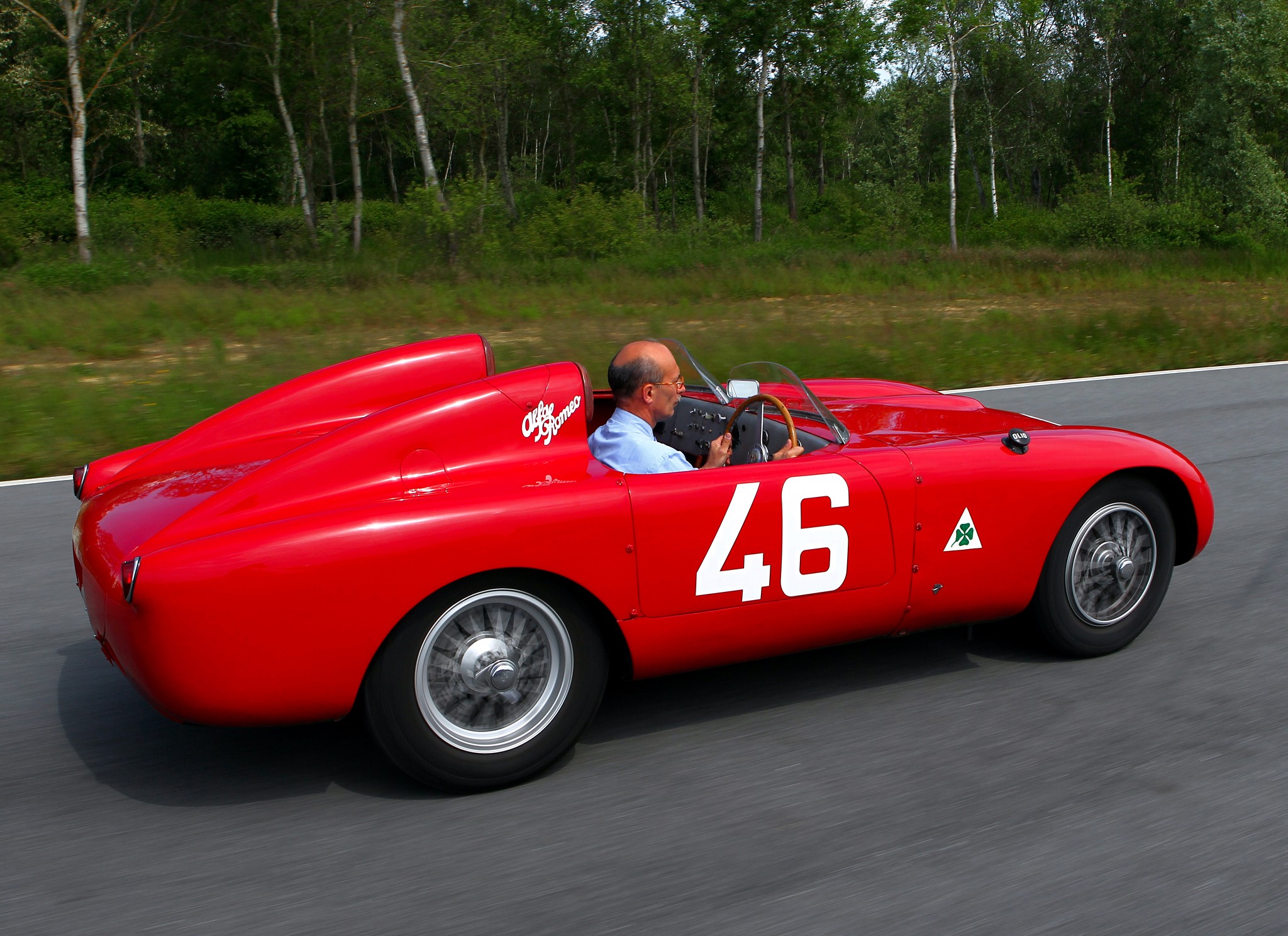
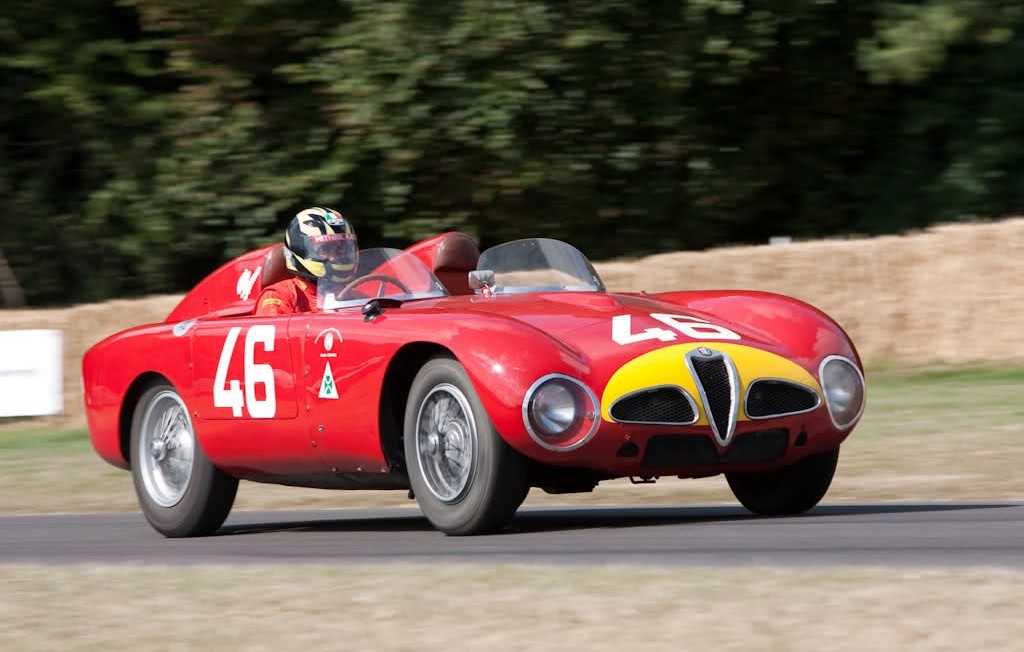
The Alfa Romeo 6C 3000 CM is a sports racing car built in 1953 to win the Mille Miglia. Only six were made, four coupés and two spiders, all bodied by Carrozzeria Colli of Milan. Its 3.5-litre straight-six produced up to 202 kW (275 PS), and Juan Manuel Fangio drove it to second place in the 1953 Mille Miglia and to victory at Merano in the Colli spider.
In short
- Built: 1953, six cars on a tubular chassis; "CM" stands for Competizione Maggiorata, an enlarged competition model.
- Engine: 3,495 cc twin-cam straight-six with six twin-choke Weber carburettors, 181–202 kW (246–275 PS) at 6,500 rpm.
- Racing: second in the 1953 Mille Miglia, three retirements at Le Mans, a win in the Gran Premio Supercortemaggiore at Merano.
- Afterlife: one spider is in the Alfa Romeo museum; a coupé became Pinin Farina's Superflow show cars.
Specs by version
Verified Manufacturer and type-approval data from our catalog · Sources and methodology
Alfa Romeo 6C 3000 CM at a glance

| Fact | Detail |
|---|---|
| Built | 1953 |
| Number made | 6: four coupés and two spiders by Carrozzeria Colli |
| Engine | 3,495 cc straight-six, 87 × 98 mm, twin overhead camshafts |
| Power | 181–202 kW (246–275 PS) at 6,500 rpm |
| Gearbox | five-speed manual, limited-slip differential |
| Chassis | tubular steel frame, aluminium body |
| Suspension | double wishbones at the front, de Dion axle at the rear |
| Brakes | drums all round |
| Weight | 930–960 kg without fluids |
| Top speed | about 246 km/h |
From the 6C 3000 prototypes to the CM
The 6C name belongs to Alfa Romeo's six-cylinder family that began with the 6C 1500 of 1927 and continued with the 6C 1750 and 6C 2500. After the Second World War the 6C 2500 was Alfa's first new model, and in 1950 Fangio drove a 6C 2500 Competizione in the Mille Miglia.

A larger successor was planned at the end of the 1940s. Three 6C 3000 prototypes with a 2,955 cc engine were built in 1948–1949, but the project was stopped to save money. In 1950 one of their engines was tuned and fitted to a 6C 2500 Competizione, producing the 6C 3000 C50. In 1952 Alfa Romeo restarted the project with a clear target: a car fast enough to beat the Ferrari 4100 and the Lancia D20 in the 1953 Mille Miglia. The engine was enlarged from 3.0 to 3.5 litres, which gave the car its "Maggiorata" name.
The old version of this page said that Alfa had hidden its cars during the war and that the CM appeared as a "prototype" after the 6C 2500 restarted in 1947. The 6C 3000 CM was, in fact, a purpose-built racing car of 1953.
Engine and chassis
The straight-six had a bore and stroke of 87 × 98 mm, a capacity of 3,495 cc and a compression ratio of 8.2:1. Two overhead camshafts worked two valves per cylinder, the crankshaft ran in seven main bearings, and six horizontal twin-choke Weber carburettors fed the engine. Wikipedia gives two outputs: 181 kW (246 PS) in standard form and 202 kW at peak revs in Mille Miglia tune. The Fangio Museum, which owns one of the cars, quotes 245–280 hp.

By our calculation, the 275 PS engine produced about 79 PS per litre (our power converter translates PS, hp and kW), and at 960 kg the car carried about 4.8 kg per kW. That was a strong figure for 1953; our power-to-weight calculator puts it in context against later sports cars.
The tubular frame had a short wheelbase of 2,250 mm and a track of 1,310 mm. The front suspension used double wishbones, coil springs and an anti-roll bar; the rear had a de Dion axle with a Watt linkage, coil springs and an anti-roll bar. Brakes were hydraulic drums, and fuel tanks of 110 or 200 litres were fitted depending on the race. Drive went through a five-speed gearbox and a limited-slip differential to the rear wheels.
Colli coupés and Colli spiders
Carrozzeria Colli of Milan bodied all six cars. For the Mille Miglia and Le Mans, Alfa Romeo used closed berlinettas, because a roof gave better aerodynamics at speed. Two open spiders followed later in the season.

| Chassis | Body | Known history |
|---|---|---|
| 1361.00125 | Colli berlinetta | Le Mans 1953 with Fangio, retired; later rebodied as a Zagato spider |
| 1361.00126 | Colli berlinetta | team car, 1953 |
| 1361.00127 | Colli spider | Fangio's winner at Merano in 1953; kept by Alfa Romeo, used to test disc brakes, now in the Museo Storico Alfa Romeo |
| 1361.00128 | Colli berlinetta | team car, 1953 |
The chassis list comes from the Italian coachbuilding archive Carrozzieri Italiani. The old version of this page described the spider's cabin. It mentioned a three-spoke wheel, the speedometer near the gear lever and two small separate windscreens; we keep that description from the old page, as it is not covered by the sources above.
The 1953 racing season
| Date | Race | Drivers | Result |
|---|---|---|---|
| 26 April 1953 | Mille Miglia | Juan Manuel Fangio, Giulio Sala | 2nd overall, about 11 minutes behind the winner |
| 13–14 June 1953 | 24 Hours of Le Mans | three cars, including Fangio and Onofre Marimón | all three retired |
| July 1953 | 24 Hours of Spa-Francorchamps | Fangio, Consalvo Sanesi | retired after leaving the road in rain |
| 1953 | Gran Premio Supercortemaggiore, Merano | Juan Manuel Fangio | win, in the Colli spider |
The Mille Miglia was the race the car was built for, and it nearly won. Fangio led until a crack in the chassis near the steering box, after Bologna, made the car hard to steer; he slowed and finished second, about 11 minutes behind Giannino Marzotto's Ferrari. At Le Mans in June, all three cars retired, Fangio's with a broken piston, and at Spa Sanesi went off the road in heavy rain.

The only victory came at the first Gran Premio Supercortemaggiore at Merano, a race of 15 laps on an 18 km circuit, which Fangio won in the spider. On the long straights of Le Mans, the coupés had reached about 154 mph, or 248 km/h. Ferrari's rival cars of 1953 are covered on our page on the Ferrari 375 MM Berlinetta, and Lancia's on the Lancia D24.
After 1953: Superflow show cars and new owners
For 1954 the rules changed, and Alfa Romeo developed a 6C 3000 PR with the engine reduced to 2,943 cc. The original CMs were rebodied, sold or kept for testing.

The most famous later life belongs to the coupé that had raced in the 1953 Mille Miglia. Pinin Farina rebuilt it as a series of show cars. They were the Superflow at the Turin show in 1956 and the Superflow II at Paris the same year, followed by the Spider Super Sport at Geneva in 1959 and the Superflow IV, with a transparent roof, at Geneva in 1960. Pinin Farina's wider story is in our page on Pininfarina's history.
Other cars went abroad. According to Supercars.net, one coupé received a Zagato body and raced in Swedish colours for Joakim Bonnier until 1956. Another, rebodied by Boano, was given to the Argentine president Juan Perón; we found only one source for these two stories. A 6C 3000 is displayed today at the Juan Manuel Fangio Museum in Balcarce, Argentina.
Alfa Romeo 6C 3000 CM compared with the 6C 2500
| Point | 6C 2500 Competizione | 6C 3000 CM |
|---|---|---|
| Engine | 2.5-litre straight-six | 3.5-litre straight-six |
| Power | roughly half of the CM's | 181–202 kW (246–275 PS) |
| Wheelbase | longer, closer to the road cars | 2,250 mm |
| Purpose | postwar sports racing | to win the 1953 Mille Miglia |
Supercars.net notes that the 3000 CM produced nearly double the power of the 6C 2500 Competizione on a shorter wheelbase than the road cars. Alfa Romeo's racing story continues in our history of Alfa Romeo.

Value and collecting
With six cars built and one in the factory museum, a 6C 3000 CM almost never comes to the open market. The old version of this page gave a value of about €1.83 million without a date or a sale behind it, so we have removed that figure; there is no recent public auction result. Any car offered would be judged on its chassis number, its 1953 race history and whether it still carries a Colli body or a later one. Other cars of the decade are in our 1950s classics section.

Alfa Romeo 6C 3000 CM Colli Spider photos 13


FAQ
What does CM stand for on the Alfa Romeo 6C 3000 CM?
CM stands for Competizione Maggiorata, Italian for an enlarged competition car. The engine of the earlier 6C 3000 prototypes was increased from about 3.0 to 3.5 litres for the 1953 season.
How many Alfa Romeo 6C 3000 CMs were built?
Alfa Romeo completed six cars in 1953, of which four were closed berlinettas and two were open spiders from the Colli workshop. Some were later rebodied by Zagato, Boano and Pinin Farina.
How powerful was the 6C 3000 CM?
Its 3,495 cc straight-six produced 181 kW (246 PS) in standard form and 202 kW (275 PS) at 6,500 rpm in Mille Miglia tune. With a weight of about 930–960 kg, it could reach roughly 246 km/h.
Did Fangio win the Mille Miglia in the 6C 3000 CM?
No. Fangio led the 1953 Mille Miglia but a cracked chassis near the steering box forced him to slow down. He crossed the line in second place, 11 minutes down on the winning Ferrari of Marzotto.
Where can you see a 6C 3000 CM today?
The Colli spider that won at Merano is displayed at the Museo Storico Alfa Romeo in Arese, Italy. Fangio's own museum in his Argentine home town also displays a 6C 3000.
Data sources
Data checked by an editor against the sources below.
- The text of this article (1cars archive)
- Wikipedia - Alfa Romeo 6C
- Carrozzieri-italiani


