 Citroen C4 Cactus
Specs, engines and history
Published Sources (2) Report an error
By Oleksandr Hnatiuk, Automotive Editor & Used Car Specialist
- Built
- 2014–2024
- Top power
- 96 kW (131 PS)
- Euro NCAP
- 4 stars · 2014
Which C4 Cactus to choose
Our verdict · Oleksandr Hnatiuk
- For low running costs: a facelifted PureTech 110 with the manual gearbox, or a BlueHDi 100 for high mileage.
- For an automatic: the PureTech 130 with the six-speed EAT6 from July 2019, a torque-converter automatic rather than the ETG automated manual.
- For the original look: a 2014–2017 car with full-size Airbumps, ideally in the top Flair trim.
- For comfort: any car built after April 2018 with Advanced Comfort dampers and the extra driver aids.
Citroën's larger SUVs, such as the C4 Aircross and the C5 Aircross, offer more room. For the maker's past, read our history of Citroën.
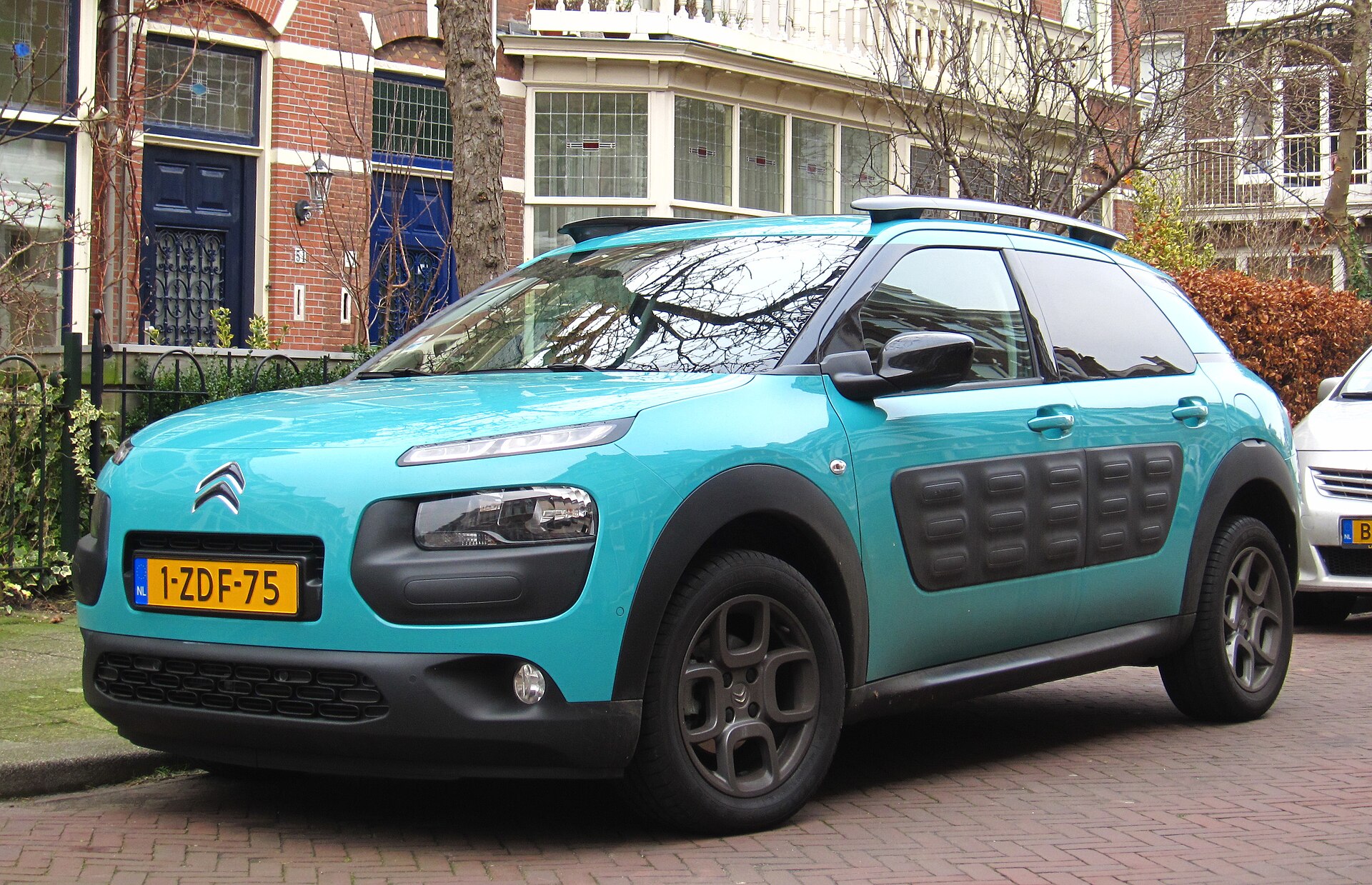
The Citroën C4 Cactus is a compact crossover built from 2014 to 2020 in Madrid and from 2018 to 2024 in Brazil. It is best known for its Airbumps: soft, air-filled panels on the doors that protect the paint from car-park knocks. Engines are 1.2-litre PureTech petrols and 1.6-litre diesels with 55–96 kW, and a comfort-oriented facelift arrived in 2018. In Europe the third-generation C4 replaced it in 2020.
In short
- Built at Villaverde, Madrid, from April 2014; Brazilian production at Porto Real from 2018 to 2024.
- About 200 kg lighter than a regular C4 of the time, with a kerb weight from about 1,020 kg.
- Four Euro NCAP stars in October 2014; World Car Design of the Year 2015.
- The 2018 facelift slimmed the Airbumps and added Advanced Comfort suspension and driver aids.
Size at a glance
| Dimensions | Citroen C4 Cactus I |
|---|---|
| Length | 4,157 mm163.7 in |
| Width | 1,729 mm68.1 in |
| Height | 1,481 mm58.3 in |
| Wheelbase | 2,595 mm102.2 in |
| Boot | 358 L12.6 cu ft |
Running cost
Fuel · C4 Cactus PureTech 75
about 1,200 EUR fuel a year at 15,000 km
4.6 l/100 km · petrol at 1.75 EUR/l · change mileage, fuel price or version
Specs by version
Engines
| Version | Engine | Power | Gearbox | Drive | Production years |
|---|---|---|---|---|---|
| Diesel · 2 versions | |||||
| e-HDi 92 | 4 cyl · Diesel | 68 kW 92 PS91 hp | — | Front-wheel drive | 2014–2018 |
| BlueHDi 100 | 4 cyl · Diesel | 73 kW 99 PS98 hp | Manual | Front-wheel drive | 2014 |
| Petrol · 4 versions | |||||
| PureTech 75 | 1.2 l · 3 cyl · Petrol 1,199 cc | 55 kW 75 PS74 hp | Manual | Front-wheel drive | 2014–2018 |
| PureTech 82 | 1.2 l · 3 cyl · Petrol 1,199 cc | 60 kW 82 PS80 hp | Manual | Front-wheel drive | 2014 |
| PureTech 110 | 1.2 l · 3 cyl · Petrol 1,199 cc | 81 kW 110 PS109 hp | Manual | Front-wheel drive | 2014 |
| PureTech 130 | 1.2 l · 3 cyl · Petrol 1,199 cc | 96 kW 131 PS129 hp | 6-sp Automatic | Front-wheel drive | 2018 |
Performance
Show all 6 versions
| Version | 0–100 km/h | Top speed | Fuel consumption | CO₂ |
|---|---|---|---|---|
| Diesel · 2 versions | ||||
| e-HDi 92 | 11.4 s 0–62 mph | 182 km/h113 mph | 3.5 l/100 km67.2 mpg US · 80.7 mpg UK | 92 g/km |
| BlueHDi 100 | 10.7 s 0–62 mph | 184 km/h114 mph | 3.4 l/100 km69.2 mpg US · 83.1 mpg UK | 90 g/km |
| Petrol · 4 versions | ||||
| PureTech 75 | 12.9 s 0–62 mph | 171 km/h106 mph | 4.6 l/100 km51.1 mpg US · 61.4 mpg UK | 105 g/km |
| PureTech 82 | 12.9 s 0–62 mph | 171 km/h106 mph | 4.6 l/100 km51.1 mpg US · 61.4 mpg UK | 107 g/km |
| PureTech 110 | 9.3 s 0–62 mph | 190 km/h118 mph | 4.7 l/100 km50.0 mpg US · 60.1 mpg UK | 107 g/km |
| PureTech 130 | — | — | 6.1 l/100 km38.6 mpg US · 46.3 mpg UK | 138 g/km |
Dimensions and weight
Show all 6 versions
| Version | Length | Width | Height | Wheelbase | Kerb weight | Boot | Fuel tank |
|---|---|---|---|---|---|---|---|
| Diesel · 2 versions | |||||||
| e-HDi 92 | 4,157 mm163.7 in | 1,729 mm68.1 in | 1,481 mm58.3 in | 2,595 mm102.2 in | 1,130 kg2,491 lb | 358 l12.6 cu ft | 45 l11.9 gal US |
| BlueHDi 100 | 4,157 mm163.7 in | 1,729 mm68.1 in | 1,481 mm58.3 in | 2,595 mm102.2 in | 1,145 kg2,524 lb | 358 l12.6 cu ft | 45 l11.9 gal US |
| Petrol · 4 versions | |||||||
| PureTech 75 | 4,157 mm163.7 in | 1,729 mm68.1 in | 1,481 mm58.3 in | 2,595 mm102.2 in | 1,040 kg2,293 lb | 358 l12.6 cu ft | — |
| PureTech 82 | 4,157 mm163.7 in | 1,729 mm68.1 in | 1,481 mm58.3 in | 2,595 mm102.2 in | 1,040 kg2,293 lb | 358 l12.6 cu ft | 50 l13.2 gal US |
| PureTech 110 | 4,157 mm163.7 in | 1,729 mm68.1 in | 1,481 mm58.3 in | 2,595 mm102.2 in | 1,095 kg2,414 lb | 358 l12.6 cu ft | 50 l13.2 gal US |
| PureTech 130 | 4,157 mm163.7 in | 1,729 mm68.1 in | 1,481 mm58.3 in | 2,595 mm102.2 in | 1,165 kg2,568 lb | — | — |
Verified Manufacturer and type-approval data from our catalog · Sources and methodology
Safety
-
Euro NCAP 2014
Older protocol · Full Euro NCAP result
Stars from different years and organisations are not directly comparable: test protocols change every few years.
C4 Cactus at a glance
| Parameter | Value |
|---|---|
| Production | 2014–2020 (Spain), 2018–2024 (Brazil) |
| Plant | Villaverde, Madrid; Porto Real, Brazil |
| Platform | PSA PF1, shared with the Citroën C3 and DS3 |
| Body | five-door crossover, front-wheel drive |
| Length / wheelbase | 4,157 mm / 2,595 mm |
| Width / height | 1,729 mm / 1,481 mm (1,563 mm for the Latin American car) |
| Kerb weight | 965–1,070 kg |
| Boot | 358 l, 1,170 l with the rear bench folded |
| Engines | 1.2 PureTech three-cylinder petrol, 1.6 diesel |
| Power | 55–96 kW |
| Euro NCAP | four stars (2014) |
| Successor in Europe | Citroën C4 (third generation, 2020) |
From concept to Madrid production
The Cactus concept appeared at the Frankfurt Motor Show in 2013 and gave an accurate preview of the production model. The finished C4 Cactus was presented in Geneva in March 2014. Production started in April 2014 at PSA's Villaverde plant in Madrid, and French sales began in June.
The car uses the PF1 platform of the C3 and DS3 rather than the larger C4 platform, despite the name. CAR Magazine put the weight saving over a regular C4 at about 200 kg. Aluminium panels and simpler components helped, and the test car weighed 1,020 kg. Launch trims were Touch, Feel and Flair. Flair Edition, Rip Curl and W versions followed in 2016; the W was soon dropped because of slow sales.
Airbumps and design
The Airbumps are pockets of air inside a thermoplastic polyurethane skin. Citroën fitted them to the doors and to parts of the front and rear, to protect the body from scuffs in car parks. They came in black as standard, with three other colours available at extra cost.
Inside, CAR praised the comfortable front seats and the quality for the price. The magazine also listed several economies. The rear side windows pop out instead of winding down, the rear bench does not split, and the steering column has no reach adjustment. Rear headroom and legroom suit adults up to about six feet.
Engines and gearboxes
The size comparison tool shows how the 4,157 mm Cactus measures up against a C3 or C4.
All petrol versions use the 1.2-litre PureTech three-cylinder, with or without a turbo. Diesels are 1.6-litre four-cylinders with 68–73 kW, sold first as e-HDi and later as BlueHDi.
| Version | Engine | Power | Gearbox | Period |
|---|---|---|---|---|
| PureTech 75 | 1.2 three-cylinder | 55 kW (75 PS) | manual | 2014–2018 |
| PureTech 82 | 1.2 three-cylinder | 60 kW (82 PS) | manual | 2014–2020 |
| PureTech 110 | 1.2 three-cylinder turbo | 81 kW (110 PS) | manual | 2014–2020 |
| PureTech 130 | 1.2 three-cylinder turbo | 96 kW (131 PS) | 6-speed manual; 6-speed EAT6 automatic from July 2019 | facelift |
| 1.6 diesel | four-cylinder (e-HDi, BlueHDi 100) | 68–73 kW | manual; ETG automated on some versions | 2014–2020 |
CAR quoted a claimed 61.4 mpg (about 4.6 l/100 km) for the turbo petrol. Some versions used the ETG automated manual gearbox. From July 2019 the PureTech 130 was sold only with the six-speed EAT6 automatic. Our power converter translates the kW figures into PS and hp.

The 2018 facelift: comfort instead of protection
Citroën presented the revised car in October 2017, showed it at the Vienna Autoshow in January 2018 and delivered it from 14 April 2018.
- The side Airbumps became narrower, moved lower and lost their air chambers.
- New dampers with an extra hydraulic stop arrived under the Advanced Comfort label.
- Driver aids included emergency brake assist, lane departure warning, traffic sign recognition, blind-spot monitoring and automated parking.
- Tail lights and the grille emblem were redesigned, and less matte plastic trim was used.
The PureTech 130 joined the range with 96 kW (131 PS), 41 kW more than the original PureTech 75. The Spanish plant built the car until 2020, when the third-generation C4 took its place without the Cactus name. Current models are listed in the Citroën catalogue.

The Brazilian C4 Cactus (2018–2024)
Before the facelift, South American buyers received cars built in Spain. From 2018 Citroën built its own version at Porto Real, Brazil, and sold it as a small SUV. It kept the roof bars, gained ground clearance and has conventional rear windows that roll down into the doors. Brazilian production continued long after Madrid stopped, with exports to the Mercosur countries and other Latin American markets.
Sales by year
| Year | Europe | Brazil | Argentina |
|---|---|---|---|
| 2014 | 28,974 | – | – |
| 2015 | 78,888 | – | – |
| 2016 | 71,378 | – | – |
| 2017 | 56,245 | – | 652 |
| 2018 | 57,637 | 3,300 | 2,424 |
| 2019 | 52,600 | 16,439 | 4,260 |
| 2020 | 26,379 | 9,529 | 4,763 |
| 2021 | 1,188 | 19,553 | 5,579 |
| 2022 | – | 18,450 | 7,757 |
| 2023 | – | 3,674 | 2,900 |
Europe here means the EU27, the UK, Switzerland, Norway and Iceland. European sales peaked at 78,888 in 2015, while Brazil reached its best year in 2021. In Germany, 25,799 cars were registered from launch to December 2021, with 6,272 in the best year, 2015.
Safety, awards and prices
Euro NCAP published its result on 1 October 2014 and gave the C4 Cactus four stars. Wikipedia notes that the car scored particularly well in the pedestrian tests.
The design brought several prizes:
- Top Gear Magazine's Hatchback of the Year in 2014;
- World Car Design of the Year in 2015, announced at the New York show;
- Car Design News Production Car of the Year in 2015;
- Auto Express Small SUV of the Year in 2017.
In the UK the car went on sale in October 2014 at £13,000 to £18,000 (about €16,000–22,000 at 2014 rates).
Citroen C4 Cactus in our rankings
- No. 1 of 77 · Most economical SUVs and crossovers (3.4 l/100 km)
- No. 3 of 99 · Lightest SUVs and crossovers (1,040 kg)
- No. 4 of 256 · Most economical cars (3.4 l/100 km)
- No. 11 of 146 · Smallest SUVs and crossovers (4,157 mm · top 8%)
- No. 26 of 304 · Lightest cars (1,040 kg · top 9%)
- No. 70 of 420 · Smallest cars (4,157 mm · top 17%)
More economical than 98% of ranked SUVs and crossovers in the 1CARS catalog (No. 1 of 77).
FAQ
What are the Airbumps on the C4 Cactus?
Air-filled panels with a thermoplastic polyurethane skin, fitted mainly to the doors to protect the paint from scrapes and car-park knocks.
When was the C4 Cactus discontinued?
Spanish production ended in 2020, when the new C4 replaced it in Europe. The Brazilian-built version continued until 2024.
Is the C4 Cactus based on the C4?
No. Despite its name, it uses the smaller PF1 platform of the Citroën C3 and DS3.
How big is the C4 Cactus boot?
CAR's 2014 review measured 358 litres, rising to 1,170 litres once the one-piece bench is folded.
Why do the rear windows of the C4 Cactus not wind down?
The European car has pop-out rear side windows, one of the simplifications CAR noted in 2014. The Brazilian version has conventional wind-down glass.
Data sources
Data checked by an editor against the sources below.
- Wikipedia — Citroën C4 Cactus
- EEA CO₂ monitoring (European Environment Agency, CC BY 4.0)