 Citroen Saxo
Specs, engines and history
Published Sources (1) Report an error
By Felix Hartmann, Automotive Technology & EV Contributor
- Built
- 1996–2004
- Top power
- 88 kW (120 PS)
- Euro NCAP
- 2 stars · 2000
Which Saxo to buy
Our verdict · Felix Hartmann
- For cheap transport: a facelifted 1.1 with multipoint injection, the most common engine.
- For a small diesel: the 1.5 D, with 117 Nm of torque, more than the 1.4 petrol.
- For the best balance: the VTR Mk II with 72 kW (98 hp), quick enough and cheaper to run and insure than the VTS.
- For a future classic: an unmodified VTS 16V, the fastest Saxo at 205 km/h; original examples are now hard to find.
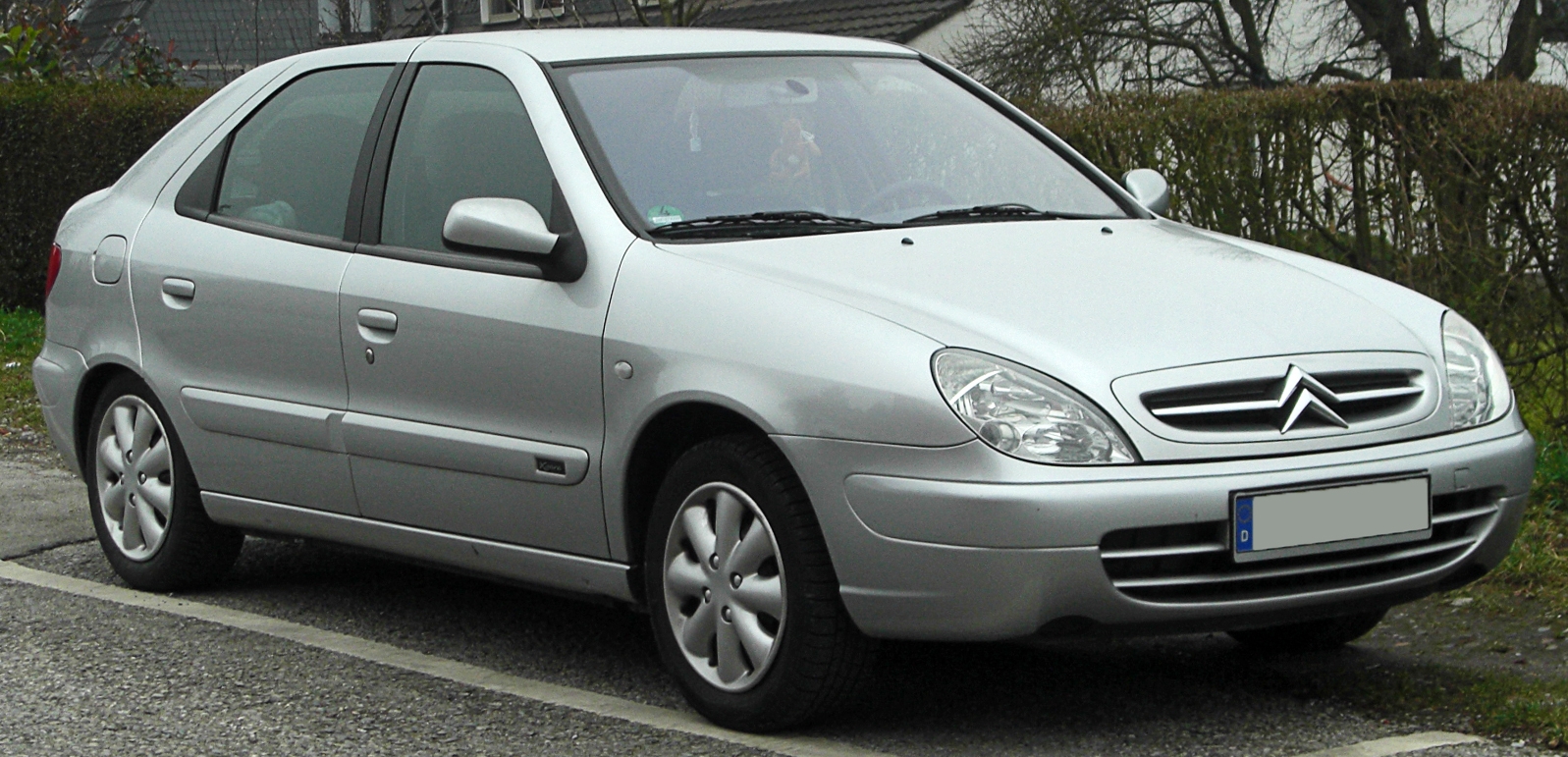
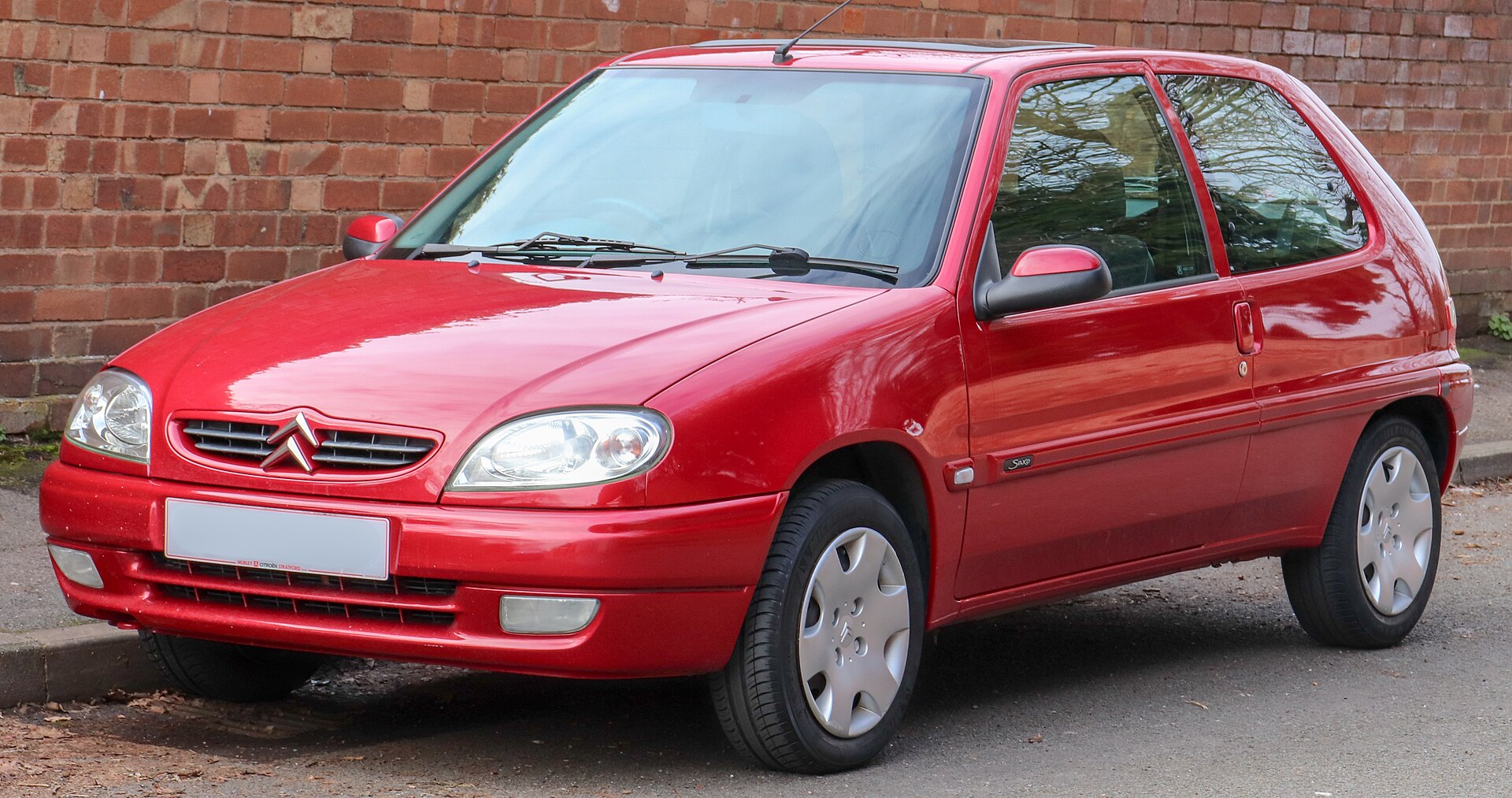
The Citroën Saxo is the supermini Citroën built from 1996 to 2003, with the last cars sold in Germany in early 2004, as the successor to the AX. It shared its platform and running gear with the Peugeot 106 but had its own body and interior, came with three or five doors and is best remembered for the 88 kW (120 hp) VTS, which reached 205 km/h. The C2 and C3 replaced it.
In short
- B-segment hatchback with three or five doors, designed by Donato Coco; built in Aulnay-sous-Bois (France) and Mangualde (Portugal).
- Petrol engines from 954 cc and 37 kW (50 hp) to the 1.6 16V VTS with 88 kW (120 hp); a 1.5 diesel with 43 kW (58 hp).
- Facelift in September 1999 with new headlamps, bonnet and grille.
- Euro NCAP 2000: two stars, with poor results in the frontal and side tests.
Safety
-
Euro NCAP 2000
Older protocol · Full Euro NCAP result
Stars from different years and organisations are not directly comparable: test protocols change every few years.
Citroën Saxo at a glance
| Item | Citroën Saxo |
|---|---|
| Segment | supermini (B-segment) |
| Production | 1996-2003 (German sales to March 2004) |
| Body styles | 3-door and 5-door hatchback |
| Platform | shared with Citroën AX and Peugeot 106; front engine, front-wheel drive |
| Plants | Aulnay-sous-Bois (France), Mangualde (Portugal) |
| Other names | Citroën Chanson in Japan (1997-1999), as Honda had registered the Saxo name |
| Predecessor / successor | Citroën AX / Citroën C2 (3-door) and C3 (5-door) |
The Saxo sits in our Citroën catalogue between the AX and the C2 and C3. Its interior and body panels were different from the Peugeot 106, but most of what you cannot see is shared.
Generations and versions
The Saxo had one generation. The Mark II facelift of September 1999 brought new headlights, a new bonnet and grille, and multipoint fuel injection on the 1.1-litre engine.
| Generation | Code | Years | Body styles | Engines | Power (kW / hp) |
|---|---|---|---|---|---|
| Saxo (Mk I) | - | 1996-1999 | 3-door, 5-door | 1.0, 1.1, 1.4, 1.6 petrol; 1.5 diesel; electric | 37-88 kW (50-120 hp); electric 20 kW peak |
| Saxo (Mk II, facelift) | - | 1999-2003/04 | 3-door, 5-door | 1.0, 1.1, 1.4, 1.6 petrol; 1.5 diesel; electric | 37-88 kW (50-120 hp) |
The sporty versions changed with the facelift. The VTR used an eight-valve 1.6 with 66 kW (90 hp) from 1997 to 1999 and 72 kW (98 hp) from 1999 to 2003; the VTS used the only 16-valve engine in the range throughout. The West Coast, later renamed Furio, combined sporty looks with the 1.4 eight-valve engine, which was cheaper to insure than the 1.6.

Engines, transmissions and performance
All Saxo engines were naturally aspirated four-cylinders from PSA's TU family. Apart from the VTS, they had a single overhead camshaft.
| Engine | Code | Displacement | Power | Torque |
|---|---|---|---|---|
| 1.0 petrol | TU9 | 954 cc | 37 kW (50 hp) | 73 Nm |
| 1.1 petrol | TU1 | 1,124 cc | 44 kW (60 hp) | 89 Nm |
| 1.4 petrol | TU3 | 1,360 cc | 55 kW (75 hp) | 121 Nm |
| 1.6 8V petrol | TU5 | 1,587 cc | 66 kW (90 hp) | 135 Nm |
| 1.6 8V petrol (later VTR) | TU5 | 1,587 cc | 72 kW (98 hp) | 135 Nm |
| 1.6 16V petrol (VTS) | TU5 | 1,587 cc | 88 kW (120 hp) | 145 Nm |
| 1.5 diesel | TUD5 | 1,527 cc | 43 kW (58 hp) | 117 Nm |
| Version | Engine | 0-100 km/h | Top speed |
|---|---|---|---|
| West Coast / Furio | 1.4 8V, 55 kW | 11.2 s | 175 km/h |
| VTR Mk I (1997-1999) | 1.6 8V, 66 kW | 10.0 s | 187 km/h |
| VTR Mk II (1999-2003) | 1.6 8V, 72 kW | 9.4 s | 193 km/h |
| VTS 16V | 1.6 16V, 88 kW | 0-60 mph in 7.8 s | 205 km/h |
| 1.1 Tonic (Germany) | 1.1, 44 kW | 15.3 s | 164 km/h |
German figures are slightly different: ADAC lists the facelifted VTS 16V at 87 kW (118 PS) and the diesel at 40-42 kW (54-57 PS). A five-speed manual gearbox was standard, and the 1.4 could be ordered with an automatic. The Mk II VTS was marginally heavier than the Mk I, and slightly slower.
Saxo Électrique
Citroën also built 2,174 Saxo Électrique cars together with Heuliez. A Leroy Somer DC motor gave 11 kW (15 hp) continuously and 20 kW (26 hp) at peak, fed by 20 liquid-cooled SAFT STM5 batteries of 6 V and 100 Ah. Citroën quoted a range of about 80 km and a top speed of 91 km/h.

Dimensions, space and boot
| Parameter | Metric | Imperial |
|---|---|---|
| Length (VTS) | 3,718 mm (3,737 mm) | 146.4 in (147.1 in) |
| Width (VTS) | 1,595 mm (1,620 mm) | 62.8 in (63.8 in) |
| Height | 1,360-1,379 mm | 53.5-54.3 in |
| Wheelbase | 2,385 mm | 93.9 in |
| Kerb weight | 805-935 kg | 1,775-2,061 lb |
| Boot (seats up / folded) | 280 / 953 l | 9.9 / 33.7 cu ft |
| Fuel tank | 45 l | 9.9 imp gal |
The boot and tank figures come from the ADAC data for the facelifted three-door 1.1, which weighs 880 kg. The VTS is the heaviest Saxo. The drag coefficient is Cd 0.34.
Fuel economy and running costs
The 1.1 uses 6.1 l/100 km combined (NEDC) and emits 145 g/km of CO2 according to ADAC. The difference in fuel use between the engines was small; for many owners the bigger cost was insurance, which is why the 1.4 Furio was popular as a cheaper-to-insure alternative to the VTR and VTS. The fuel cost calculator shows what a given consumption costs per year.
In Germany the facelifted Saxo cost from EUR 8,535 for the 1.1 Tonic three-door (ADAC list price, 2003) to EUR 18,175 for the 1.6 16V VTS (1999-2004).
Trims and equipment
German trims after the facelift were X, SX, Chrono, Tonic and Furio, plus the VTS. Right-hand-drive Saxos never had air conditioning, because the blower motor sat where the evaporator would have to go. Basic equipment was simple: the 2000 Euro NCAP test car had a driver's airbag, front belt pretensioners and load limiters.

Safety
Euro NCAP tested the Saxo in September 2000 and gave it two stars for adult occupant protection, with 13 points. In the frontal test the structure became unstable and a door opened; the dummy's head slid off the airbag and nearly hit the steering wheel, and chest loads were high. In the side test the door struck the dummy hard. The Peugeot 106 was tested at the same time with similarly poor results. Compare modern superminis in our safety section.

Reliability and known issues
We have no sourced data on recurring faults of the Saxo, so none are listed here. Its engines and running gear are shared with the Peugeot 106 and other PSA models of the period, which helps with parts supply. On sporty versions, check for signs of hard use and modifications, since the VTR and VTS were widely used in club motorsport.
The Saxo in motorsport
The Saxo Kit Car ran in the S1600 and Kit Car classes of the World Rally Championship from 1997 to 2007 and entered the Nürburgring 24 Hours every year in the same period. By 2025 Saxos had collected more than 700 podiums and 200 wins. The Junior Saloon Car Championship has been based on the Saxo since 2014, after the SAXMAX series of 2006-2014.
Rivals
The Saxo competed with the Peugeot 106, its platform twin, and with superminis such as the Renault Clio, Ford Fiesta, Volkswagen Polo, Fiat Punto and Opel Corsa.
| Model | Engines | Power (hp) | Boot (l) | Price from (EUR) |
|---|---|---|---|---|
| Citroën Saxo (facelift) | 1.0-1.6 petrol, 1.5 diesel | 37-88 kW (50-120 hp) | 280 | 8,535 (Germany, 2003) |
| Peugeot 106 | same TU petrol and TUD diesel family | - | - | - |
| Renault Clio II | petrol, diesel | - | - | - |
| Volkswagen Polo III | petrol, diesel | - | - | - |
Use our comparison tool for side-by-side figures.
Photo gallery


Citroen Saxo in our rankings
- No. 545 of 1082 · Longest-running car nameplates (8 years · top 54%)
- No. 92 of 141 · Most powerful hatchbacks (88 kW · top 66%)
- No. 55 of 70 · Most powerful French cars (88 kW · top 79%)
- No. 887 of 1011 · Most powerful cars (88 kW · top 89%)
In production longer than 46% of ranked nameplates in the 1CARS catalog (No. 545 of 1082).
FAQ
When was the Citroën Saxo made?
From 1996 to 2003. In Germany the ADAC lists the last versions until March 2004. The C2 and C3 replaced it.
Is the Saxo the same as the Peugeot 106?
They share the platform and running gear, as did the earlier Citroën AX. The body panels and interior are different.
How fast is the Saxo VTS?
The VTS 16V has 88 kW (120 hp), reaches 205 km/h and does 0-60 mph in 7.8 seconds.
How safe is the Citroën Saxo?
Not very by modern standards: Euro NCAP gave it two stars for adult occupant protection in 2000.
Was there an electric Citroën Saxo?
Yes. The Saxo Électrique was built with Heuliez; 2,174 were made, with a range of about 80 km.
Data sources
Data checked by an editor against the sources below.