 Citroen C1
All generations, specs and history
Published Sources (2) Report an error
By Felix Hartmann, Automotive Technology & EV Contributor
- Built
- 2005–2022
- Generations
- 2 · B-Zero to AB40
- Top power
- 60 kW (82 PS)
- Euro NCAP
- 4 stars · B-Zero
Timeline
C1 generations
Click a generation for its own page


- C1 B-Zero 2005–2014 · Hatchback · 41–51 kW (56–69 PS)
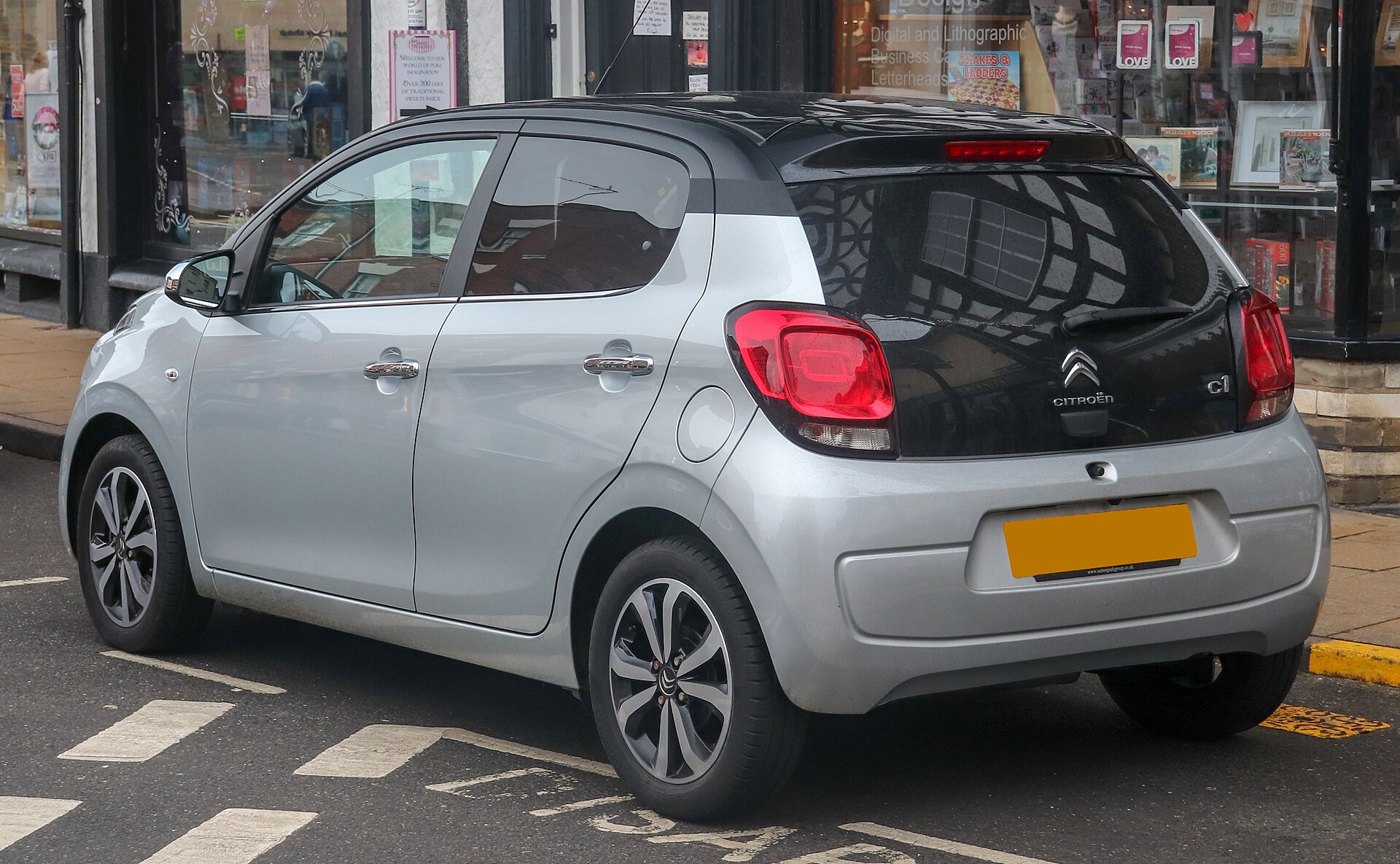
- C1 AB40 2014–2022 · Hatchback, Convertible · 51–60 kW (69–82 PS)
Newest first · 2 generations since 2005
-
2014
-
2005
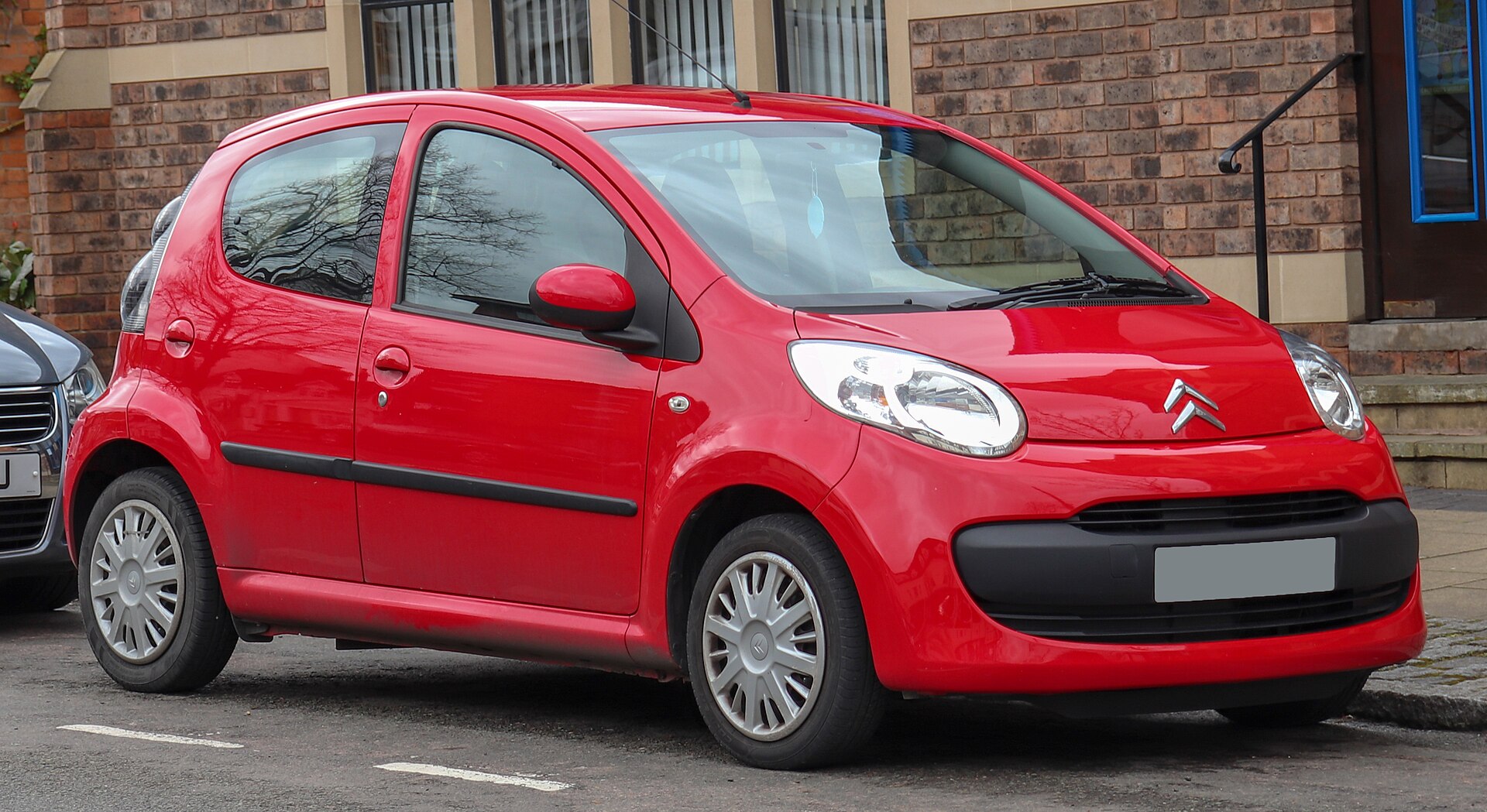
All generations by year: C1 AB40 (2014–2022) · C1 B-Zero (2005–2014)
Which one is mine?
Pick the year of first registration to see which generation it is.
Check by VINWhich one to buy
Our verdict · Felix Hartmann
- For the lowest price: a C1 II with the VTi 68 or VTi 72 and a manual gearbox.
- For a little more pace: the 1.2 PureTech 82, sold in Germany from 2014 to 2018.
- For open-air driving: the Airscape with its folding canvas roof.
- For safety: a second-generation car, which kept four Euro NCAP stars in 2014; the first generation fell to three stars in the 2012 retest.
The Citroën C1 is a four-seat A-segment city car that Citroën sold from June 2005 until early 2022. It came from the TPCA joint venture with Toyota in Kolín, Czech Republic, and shared its body, engines and assembly line with the Peugeot 107/108 and the Toyota Aygo. Two generations were built, both with a one-litre three-cylinder petrol engine as the core of the range.
In short
- Two generations: C1 I (2005-2014) and C1 II (2014-2022), three- and five-door hatchbacks, built in Kolín alongside the Peugeot and Toyota twins.
- Engines from 41 kW (56 PS) in the 1.4 HDi diesel to 60 kW (82 PS) in the 1.2 PureTech; most cars have the 1.0 VTi with 51-53 kW (69-72 PS).
- Euro NCAP: four stars in 2005, three stars for the retested facelift in 2012 and four stars for the second generation in 2014.
- In Germany the last C1 VTi 72 Start cost EUR 9,990 in 2020-2021 (ADAC list price); production ended at the start of 2022 with no direct successor.
Specs by version
Engines
| Version | Engine | Power | Torque | Gearbox | Drive | Production years |
|---|---|---|---|---|---|---|
| AB40 · 2014–2022 | ||||||
| AB40 · 1.0 VTi 68 | 1.0 l · 3 cyl · Petrol 1KR-FE | 51 kW 69 PS68 hp | 95 Nm70 lb-ft | 5-sp Manual | Front-wheel drive | 2014–2018 |
| AB40 · 1.0 VTi 72 | 1.0 l · 3 cyl · Petrol 1KR-B52 | 53 kW 72 PS71 hp | 93 Nm69 lb-ft | 5-sp Manual | Front-wheel drive | 2018–2022 |
| AB40 · 1.2 PureTech 82 | 1.2 l · 3 cyl · Petrol EB2-F | 60 kW 82 PS80 hp | 117 Nm86 lb-ft | 5-sp Manual | Front-wheel drive | 2014–2018 |
Performance
Show all 3 versions
| Version | 0–100 km/h | Top speed |
|---|---|---|
| AB40 · 2014–2022 | ||
| AB40 · 1.0 VTi 68 | 13.0 s 0–62 mph | 160 km/h99 mph |
| AB40 · 1.0 VTi 72 | 12.6 s 0–62 mph | 160 km/h99 mph |
| AB40 · 1.2 PureTech 82 | 11.0 s 0–62 mph | 171 km/h106 mph |
Dimensions and weight
Show all 3 versions
| Version | Length | Wheelbase | Boot | Fuel tank |
|---|---|---|---|---|
| AB40 · 2014–2022 | ||||
| AB40 · 1.0 VTi 68 | 3,466 mm136.5 in | 2,340 mm92.1 in | 196 l6.9 cu ft | 35 l9.2 gal US |
| AB40 · 1.0 VTi 72 | 3,466 mm136.5 in | 2,340 mm92.1 in | - | - |
| AB40 · 1.2 PureTech 82 | 3,466 mm136.5 in | 2,340 mm92.1 in | - | - |
Verified Manufacturer and type-approval data from our catalog · Sources and methodology
Safety
-
B-Zero · Euro NCAP 2005
Older protocol · Full Euro NCAP result
Stars from different years and organisations are not directly comparable: test protocols change every few years.
Citroën C1 at a glance
| Specification | Citroën C1 |
|---|---|
| Segment | A-segment city car |
| Body styles | three- and five-door hatchback; Airscape with folding canvas roof (C1 II) |
| Production | June 2005 - January 2022 |
| Plant | TPCA (Toyota Peugeot Citroën Automobile), Kolín, Czech Republic |
| Sister models | Peugeot 107 (2005-2014), Peugeot 108 (2014-2021), Toyota Aygo |
| Engines | 1.0 petrol three-cylinder, 1.2 PureTech petrol, 1.4 HDi diesel |
| Power range | 41-60 kW (56-82 PS) |
| Gearboxes | five-speed manual, five-speed automated manual (SensoDrive, later ETG5) |
| Successor | none in the A-segment; Citroën points buyers to the C3 and the Ami |
The C1 was Citroën's entry model for 17 years. It is listed with the rest of the range in our Citroën catalogue.
Generations
| Generation | Code | Years | Body styles | Engines | Power (hp / kW) |
|---|---|---|---|---|---|
| C1 I | B-Zero project | 2005-2014 | 3-door, 5-door hatchback | 1.0 petrol, 1.4 HDi diesel | 41-51 kW (56-69 PS) |
| C1 II | AB40 platform family | 2014-2022 | 3-door, 5-door hatchback, Airscape | 1.0 VTi, 1.2 PureTech | 51-60 kW (69-82 PS) |
C1 I (2005-2014): the B-Zero city car
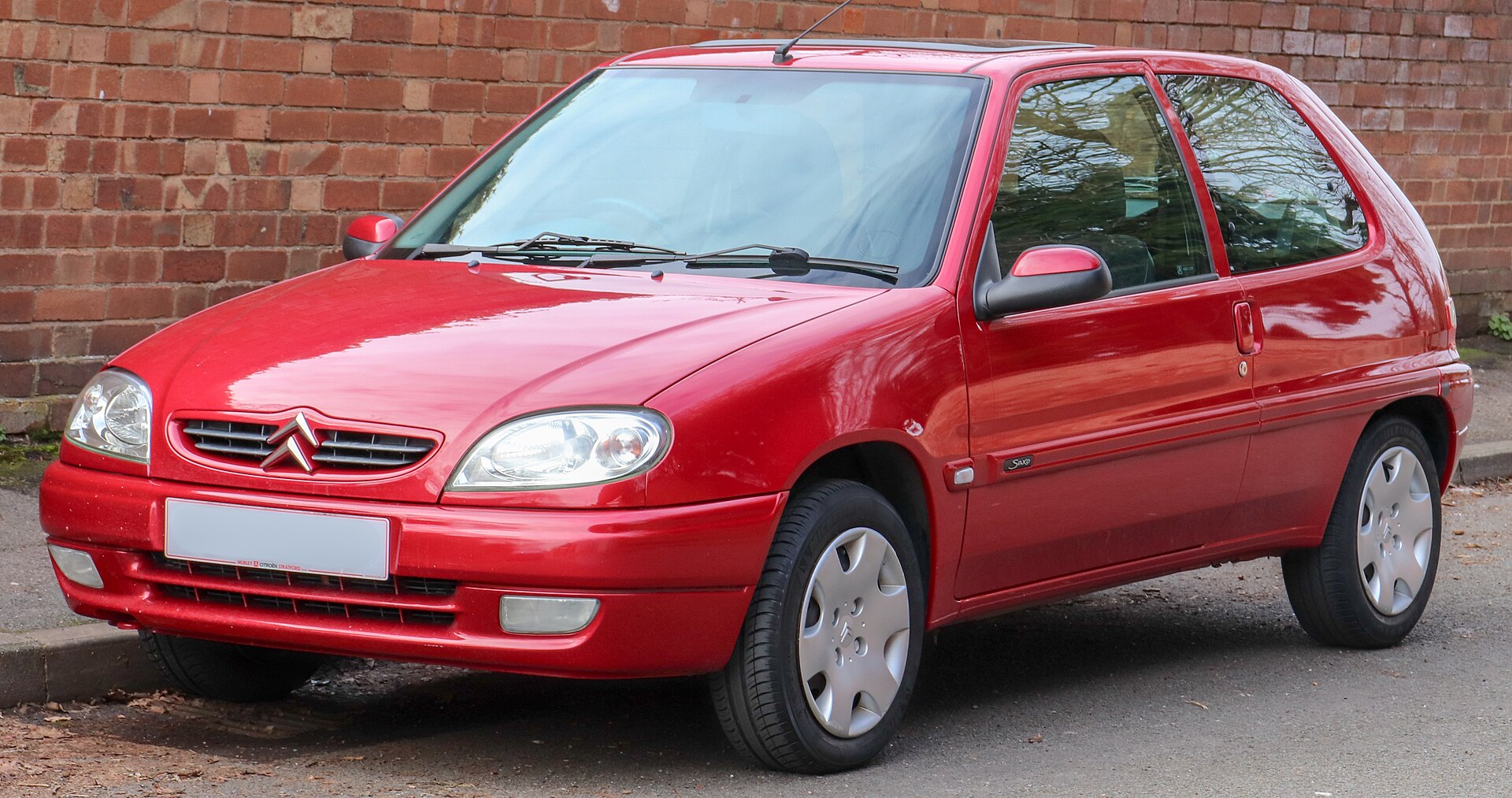
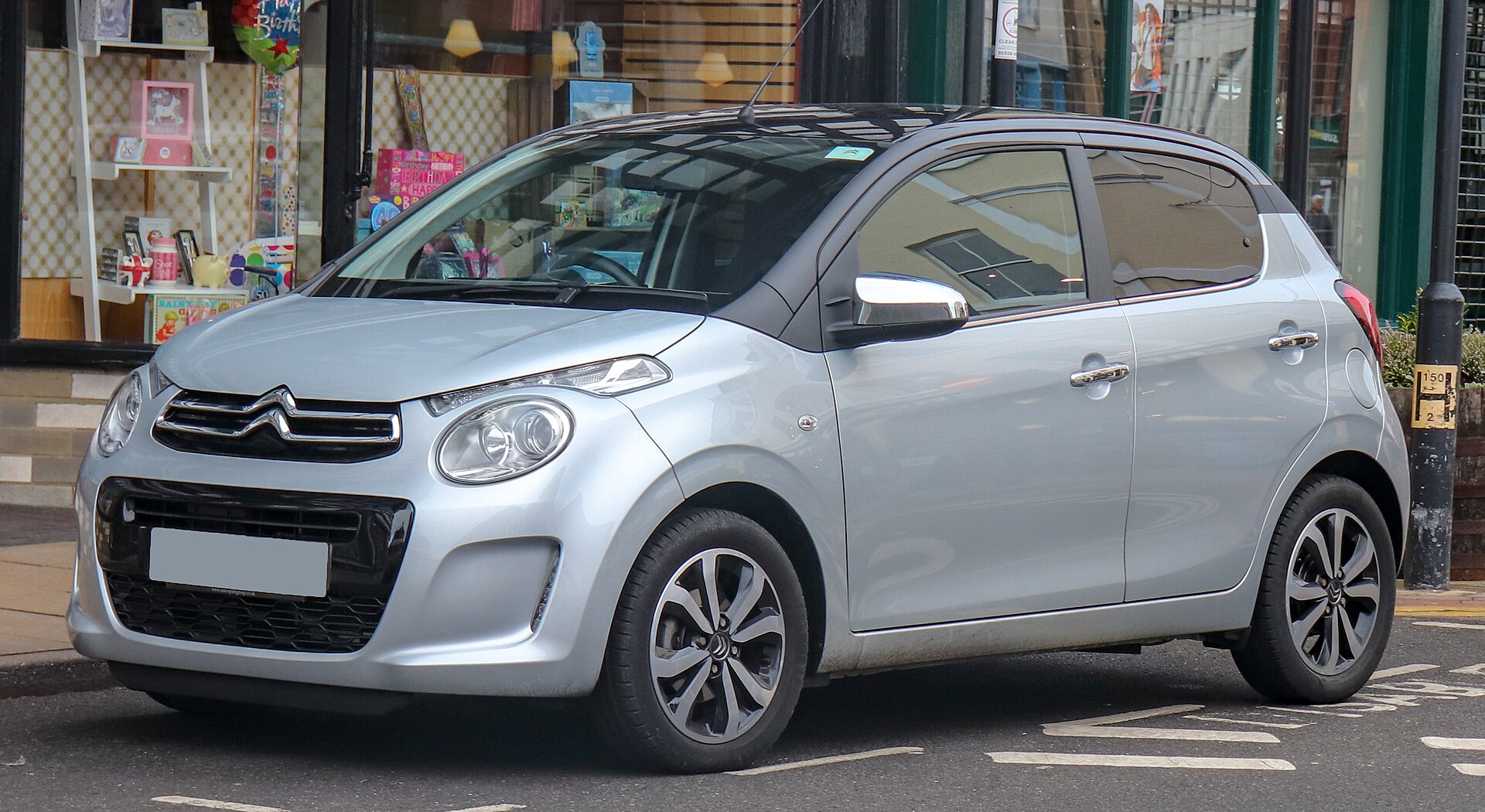
Citroën and Toyota developed the first C1 under the B-Zero project, and the three cars from Kolín differed mainly in their front ends, rear lights and badges. The one-box shape was drawn by Donato Coco. Launch trims were Vibe, Rhythm and Code; UK special editions included the Cool, the Airplay and the launch-period Splash.
The car was updated twice. In January 2009 the C1, 107 and Aygo got a new front end, a revised clutch and new trim names (VT and VTR). The second update in March 2012 brought a revised bumper and bonnet, LED daytime running lights, a new steering wheel and lower fuel consumption, plus trims such as VTR+, Platinum, Edition and Connexion.
The first C1 sold well. Wikipedia's sales table shows 17,949 European registrations in 2005, a peak of 118,702 in 2009 and still 35,897 in 2021, its last full year. Less common offshoots include the C1 ev'ie electric conversion sold in the UK by the Electric Car Corporation from 2009 to 2012, a van version called Entreprise for Portugal and Greece, and Franco Sbarro's GT-C1 concept.


C1 II (2014-2022): ETG gearbox and Airscape
The second generation was unveiled at the Geneva Motor Show in March 2014 and was again built at TPCA with the Peugeot 108 and the second Toyota Aygo. It is slightly longer at 3,466 mm, with the same 2,340 mm wheelbase. The Airscape version kept the steel door frames but added a folding canvas roof, in three- and five-door form.
Trims were Touch, Feel, Flair and Shine at first; Sense and Shine replaced Feel and Flair in 2020. Special editions included Elle, JCC+ with designer Jean-Charles de Castelbajac, Furio, Urban Ride and Origins.
Toyota and PSA had planned a third generation on Toyota's TNGA-B platform for 2021, but the plan was cancelled. TPCA announced the end of the C1 and the 108 for 2021, and the last cars were built in January 2022. Wikipedia counts about 1.2 million C1s across both generations. At Kolín, Toyota continued with the Aygo X crossover.


Engines, gearboxes and performance
| Engine | Generation | Years | Power | Torque | 0-100 km/h | Top speed |
|---|---|---|---|---|---|---|
| 1.0 petrol, 998 cc, 3 cyl. | C1 I | 2005-2014 | 51 kW (69 PS) | 93 Nm | 12.3 s | 158 km/h |
| 1.4 HDi diesel, 1,398 cc, 4 cyl. | C1 I | 2005-2010 | 41 kW (56 PS) | 130 Nm | 14.8 s | 154 km/h |
| 1.0 VTi 68 (1KR-FE) | C1 II | 2014-2018 | 51 kW (69 PS) | 95 Nm | 13.0 s | 160 km/h |
| 1.2 PureTech 82 (EB2-F) | C1 II | 2014-2018 | 60 kW (82 PS) | 117 Nm | 11.0 s | 171 km/h |
| 1.0 VTi 72 (1KR-B52) | C1 II | 2018-2022 | 53 kW (72 PS) | 93 Nm | 12.6 s | 160 km/h |
The 1.0 three-cylinder is a Toyota engine; the 1.2 PureTech and the 1.4 HDi diesel came from PSA. In the first generation the alternative to the five-speed manual was an automated manual called SensoDrive; the second generation used a five-speed automated manual known as ETG5. Both change gear with a single clutch and are slower and jerkier than a conventional automatic.
ADAC lists the PureTech 82 in Germany from July 2014 to April 2018, after which the range was reduced to the VTi 72. Power values are given as kW first; our power converter translates them into hp or PS.
Dimensions, space and boot
| Parameter | Metric | Imperial |
|---|---|---|
| Length (C1 I) | 3,435 mm | 135.2 in |
| Width (C1 I, without mirrors) | 1,630 mm | 64.2 in |
| Length (C1 II) | 3,466 mm | 136.5 in |
| Wheelbase (both) | 2,340 mm | 92.1 in |
| Boot (C1 II, seats up) | 196 l | 6.9 cu ft |
| Fuel tank (C1 II) | 35 l | 7.7 UK gal |
| Weight (C1 II 1.0 VTi, Parkers) | 840 kg | 1,852 lb |
The C1 seats four. The short body makes it easy to park, but the boot is small even by city-car standards, and the three-door has long doors that can be awkward in tight spaces. The Airscape roof does not reduce boot space because it folds onto the roof itself.
Fuel economy and running costs
Official figures were low for a petrol car without hybrid help. Wikipedia lists 4.3 l/100 km and 99-109 g/km of CO2 for the first-generation 1.0 and 4.0 l/100 km for the 1.4 HDi. In the second generation the VTi 68 was rated at 4.1 l/100 km and 90 g/km, and the VTi 72 at 3.8 l/100 km and 86 g/km (NEDC-era figures). Parkers lists 95 g/km for a 1.0 VTi Flair five-door. Real-world consumption is usually higher, so the fuel cost calculator is a better guide to what a C1 costs to run with your own mileage.
New prices stayed low. ADAC lists the 2014 C1 VTi 68 Start three-door at EUR 8,890 in Germany (2014) and the VTi 72 Start three-door at EUR 9,990 (2020-2021). The best-equipped five-door VTi 72 Shine cost EUR 14,800 in 2020-2021.
Trims and equipment
The German price list shows how the range was built up: Start was the bare entry version, Live and Feel added comfort equipment, and Shine was the top trim, with Selection, Furio, Elle, Origins, Urban Ride, JCC+ and Millenium as special editions. In 2019-2021 the step from a VTi 72 Start to a Shine three-door was EUR 4,110 in Germany (ADAC, 2020). The first generation's 2012 update added LED daytime running lights and a new steering wheel, and the second generation offered a touchscreen on higher trims. The Airscape roof was available on several trims.
Safety
| Test | Year | Result |
|---|---|---|
| Euro NCAP, C1 I | 2005 | four stars |
| Euro NCAP, C1 I facelift (retest) | 2012 | three stars; adult 68%, child 73%, pedestrian 53%, safety assist 71% |
| Euro NCAP, C1 II | 2014 | four stars; adult 80%, child 80%, pedestrian 62%, safety assist 56% |
The first C1 scored four stars in 2005. When the 2012 facelift was tested under the tougher protocol, the C1, 107 and Aygo dropped to three stars. The second generation returned to four stars in 2014, with the weakest score in safety assist because autonomous emergency braking was not standard. More results are in our safety ratings section.
Reliability and known issues
The C1 has a simple layout: a naturally aspirated three-cylinder, a conventional manual gearbox in most cars and little electronic equipment. The automated manual gearboxes shift slowly by design, so they feel jerky to drivers used to a torque-converter automatic. We have not found a sourced pattern of recurring faults, so we do not list any here. A service history and a test drive of ETG cars are the main checks for a used C1.
Rivals
| Model | Engines | Power (hp) | Boot (l) | Price from (EUR) |
|---|---|---|---|---|
| Citroën C1 II | 1.0 VTi, 1.2 PureTech | 51-60 kW (69-82 PS) | 196 | 9,990 (Germany, 2020) |
| Peugeot 108 | same as C1 | same as C1 | same body | - |
| Toyota Aygo (2014-2022) | 1.0 three-cylinder | 51-53 kW | same body | - |
| Volkswagen up! | 1.0 petrol, e-up! | 44-85 kW (60-116 PS) | - | - |
The 108 and the Aygo are the same car with different styling; the Aygo had its own front end. The Volkswagen up! and its SEAT and Škoda twins were the main alternatives from a different maker.
Photo gallery

Citroen C1: first vs latest generation
| Spec | C1 B-Zero | C1 AB40 | Change |
|---|---|---|---|
| Years | 2005–2014 | 2014–2022 | 9 years apart |
| Most powerful version | 51 kW (69 PS) | 60 kW (82 PS) | +9 kW (+18%) |
Oldest and newest generation in the 1cars catalog. Power is the strongest version of each; other rows are shown only when both generations have the figure.
Citroen C1 in our rankings
- No. 4 of 93 · Smallest hatchbacks (3,466 mm)
- No. 6 of 531 · Smallest cars (3,466 mm)
- No. 253 of 1082 · Longest-running car nameplates (17 years · top 25%)
- No. 51 of 71 · Fastest hatchbacks (171 km/h · top 74%)
- No. 55 of 73 · Quickest hatchbacks, 0–100 (11.0 s · top 79%)
- No. 316 of 376 · Fastest cars (171 km/h · top 85%)
Shorter than 98% of ranked cars in the 1CARS catalog (No. 6 of 531).
FAQ
How many generations of the Citroën C1 are there?
Two: the first generation from 2005 to 2014 and the second from 2014 until production ended in January 2022.
Where was the Citroën C1 built?
At the TPCA plant in Kolín, Czech Republic, on the same line as the Peugeot 107/108 and the Toyota Aygo.
Is the Citroën C1 the same as the Toyota Aygo?
Mechanically, yes. All three cars share the platform, body structure and most engines; they differ in front and rear styling, interior details and equipment.
Which engine is best in the C1?
The 1.0 three-cylinder is the most common and the most economical; the 1.2 PureTech 82 of 2014-2018 is quicker, reaching 100 km/h in 11.0 seconds.
What replaced the Citroën C1?
Nothing directly. Citroën left the A-segment; Wikipedia lists the Ami electric quadricycle and the larger C3 as successors.
Data sources
Data checked by an editor against the sources below.
- Wikipedia - Citroën C1
- ADAC - 2generation