 Dodge Viper
All generations, specs and history
Published Sources (5) Report an error
By Sarah Whitmore, Senior Automotive Writer
- Built
- 1992–2017
- Generations
- 5 · SR I to VX I
- Top power
- 481 kW (654 PS)
Timeline
Viper generations
Click a generation for its own page
- Viper SR I 1992–1995 · Roadster · 298 kW (405 PS)
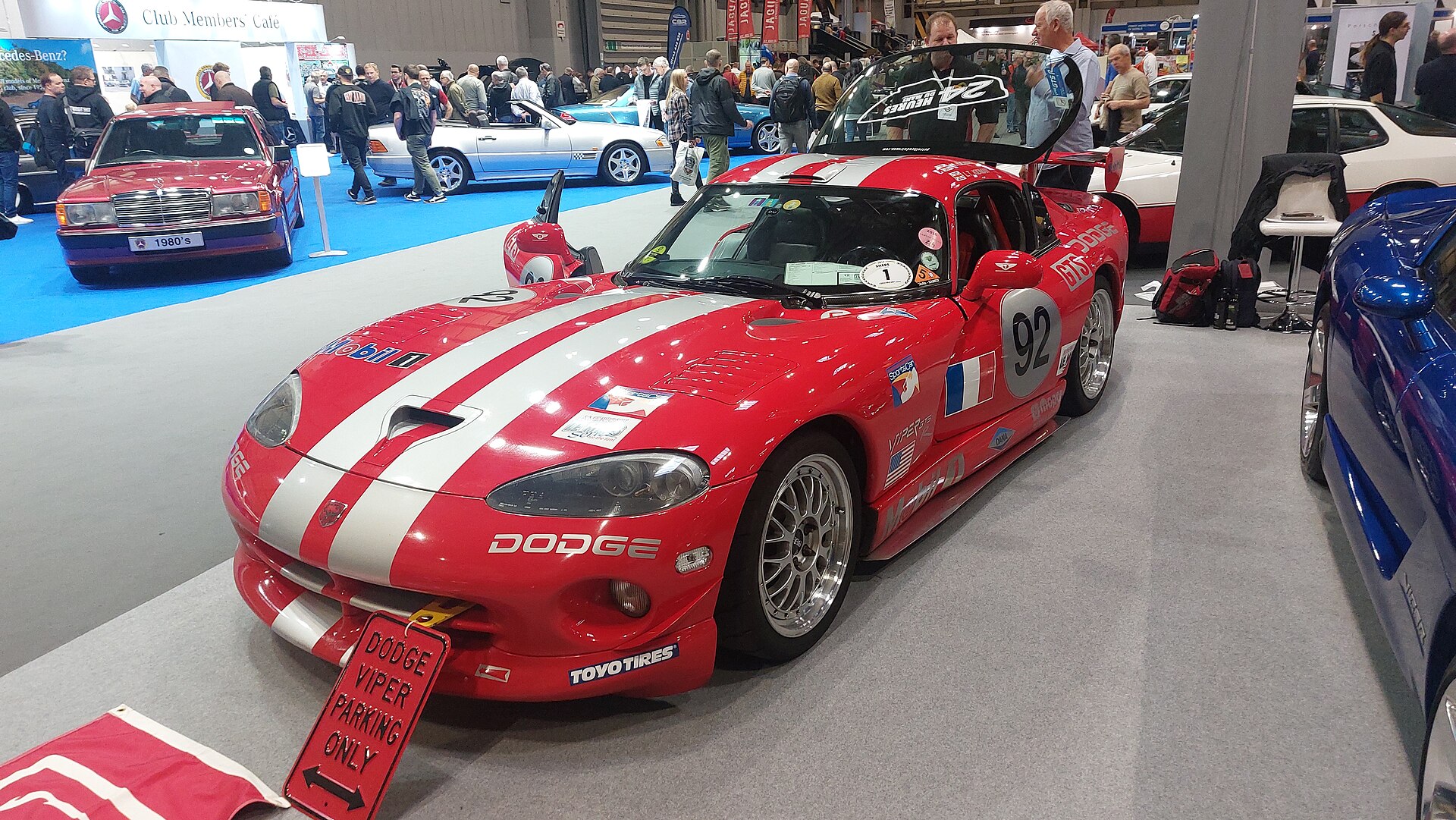
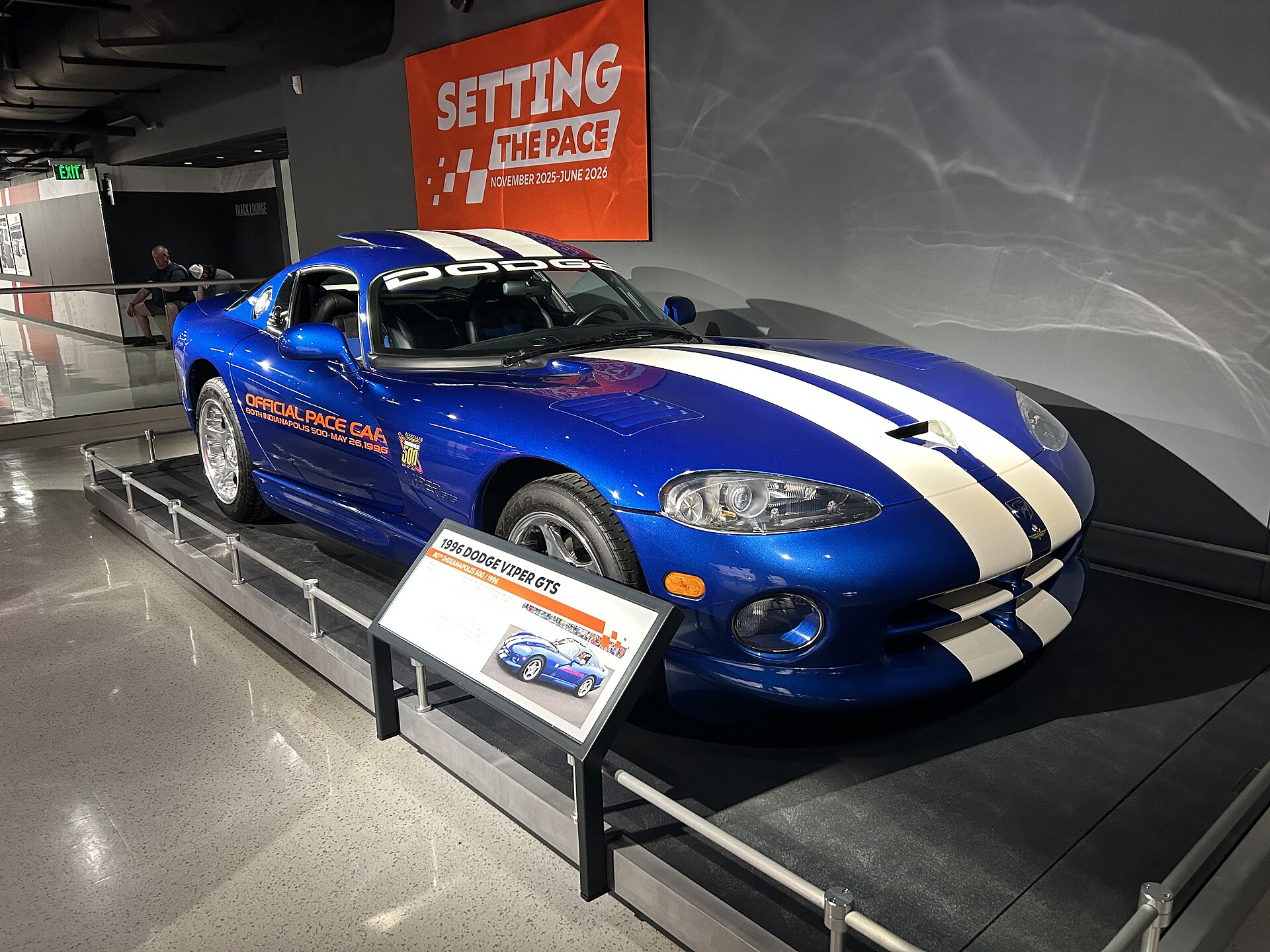
- Viper SR II 1996–2002 · Coupe, Roadster · 309–336 kW (420–457 PS)
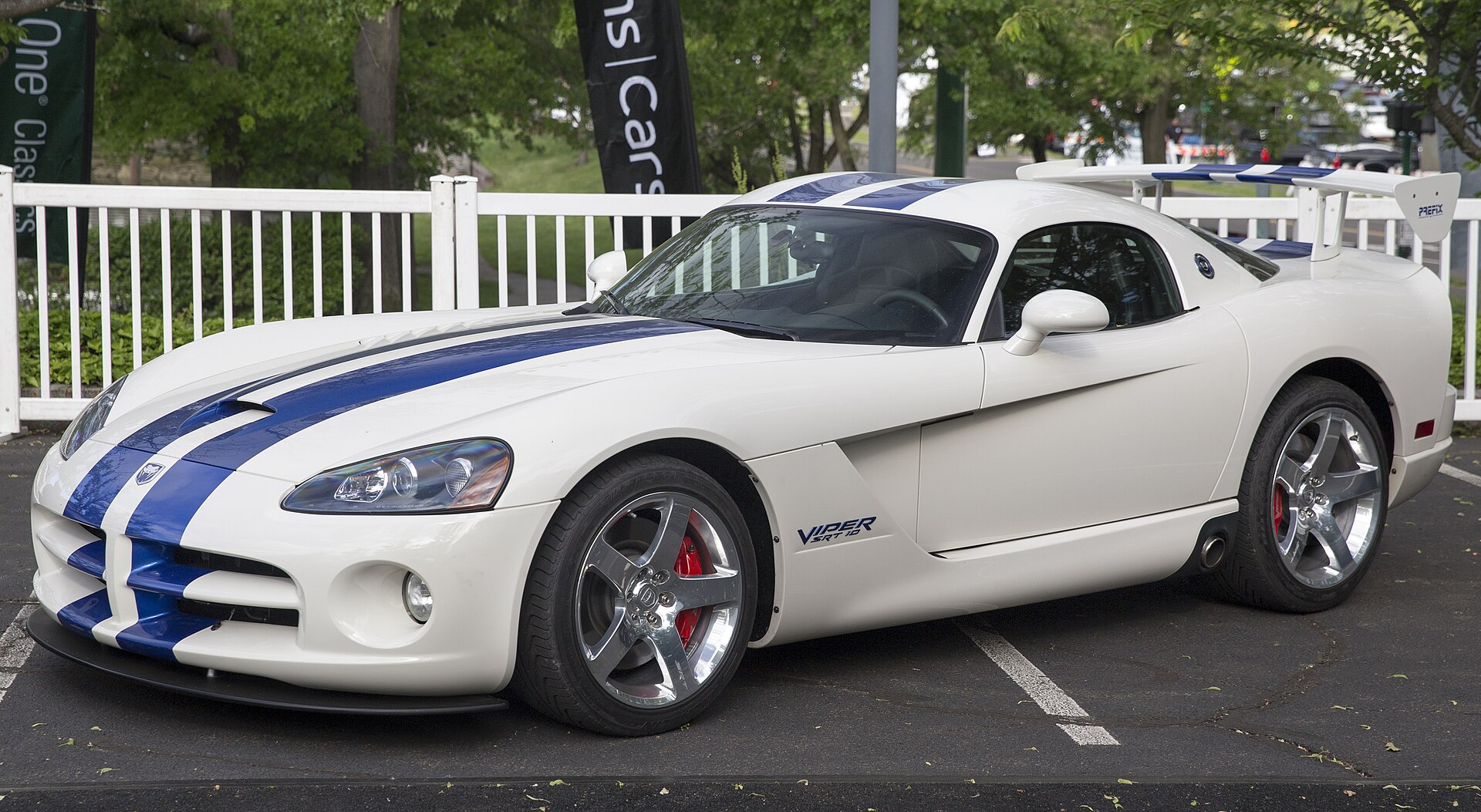
- Viper ZB I 2003–2006 · Coupe, Roadster · 373–380 kW (507–517 PS)
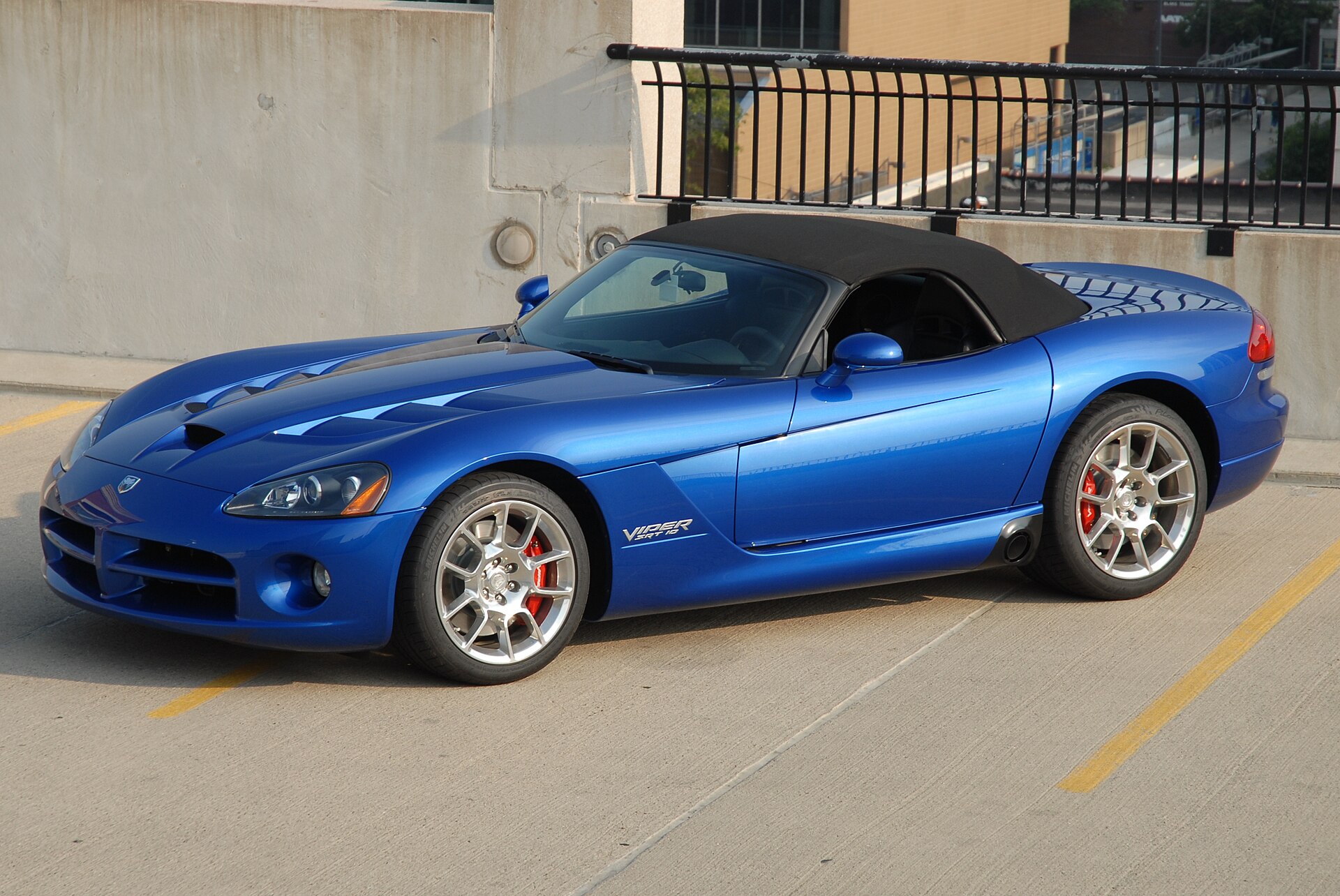
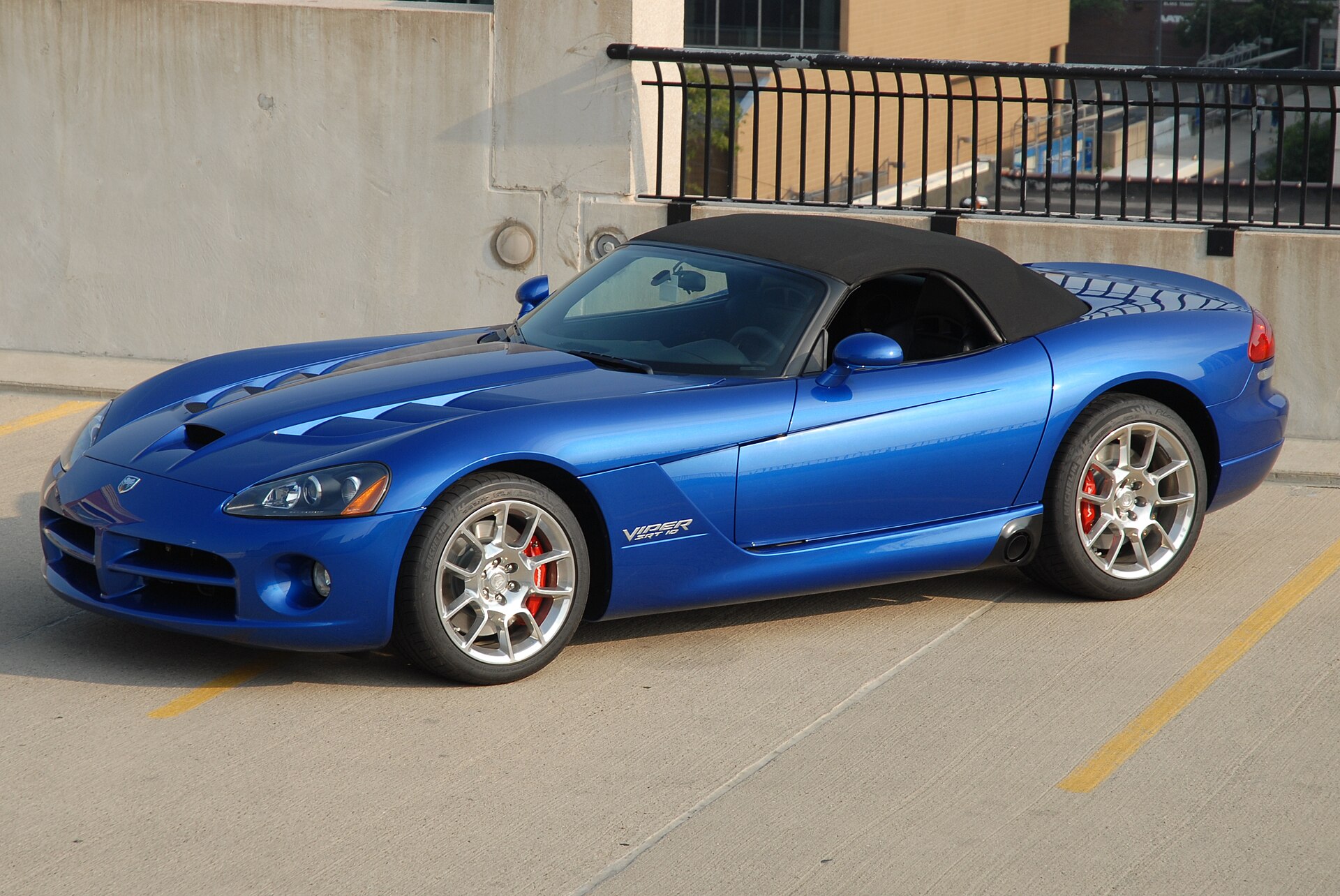
- Viper ZB II 2008–2010 · Coupe, Roadster · 447 kW (608 PS)
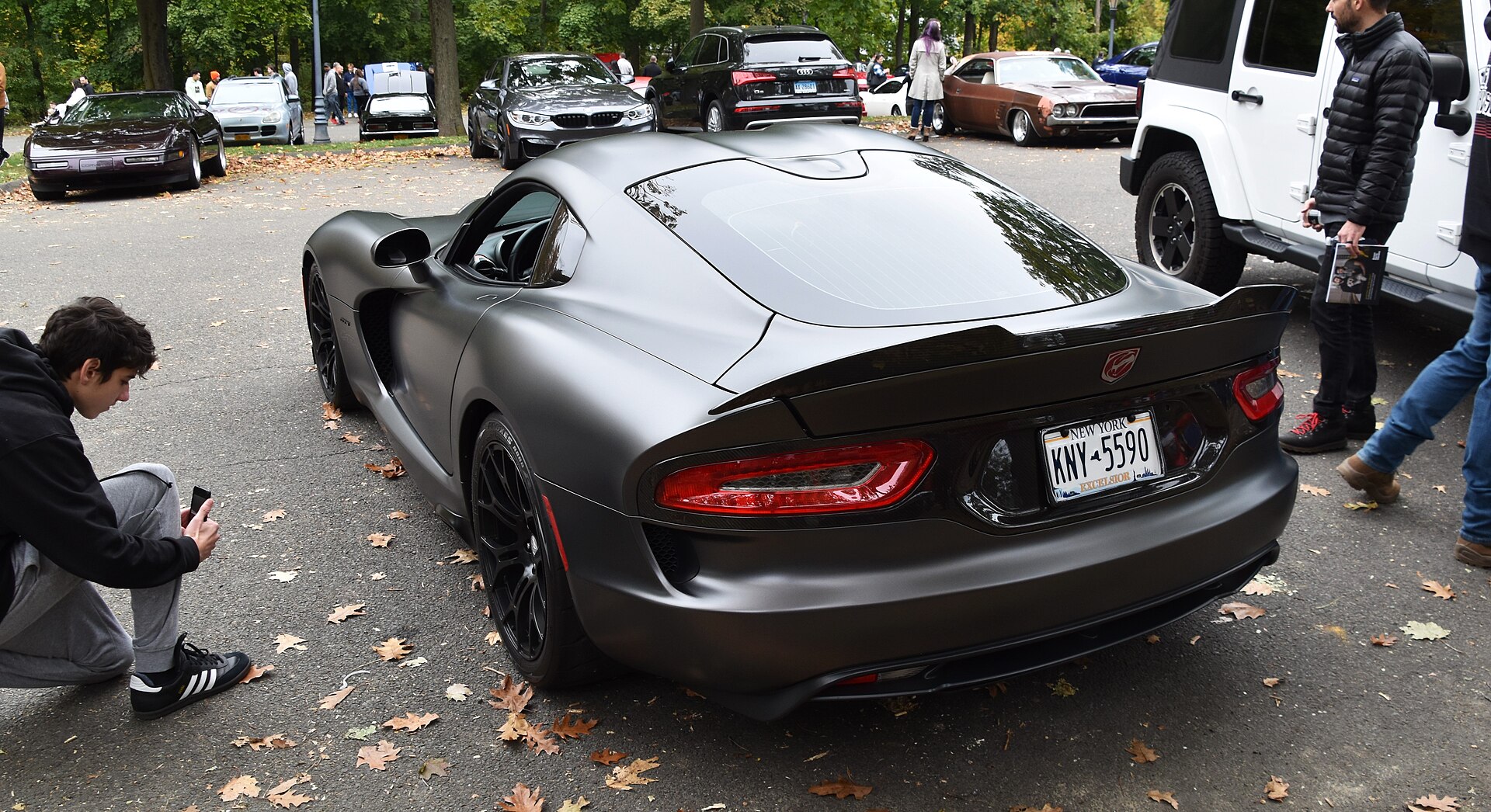
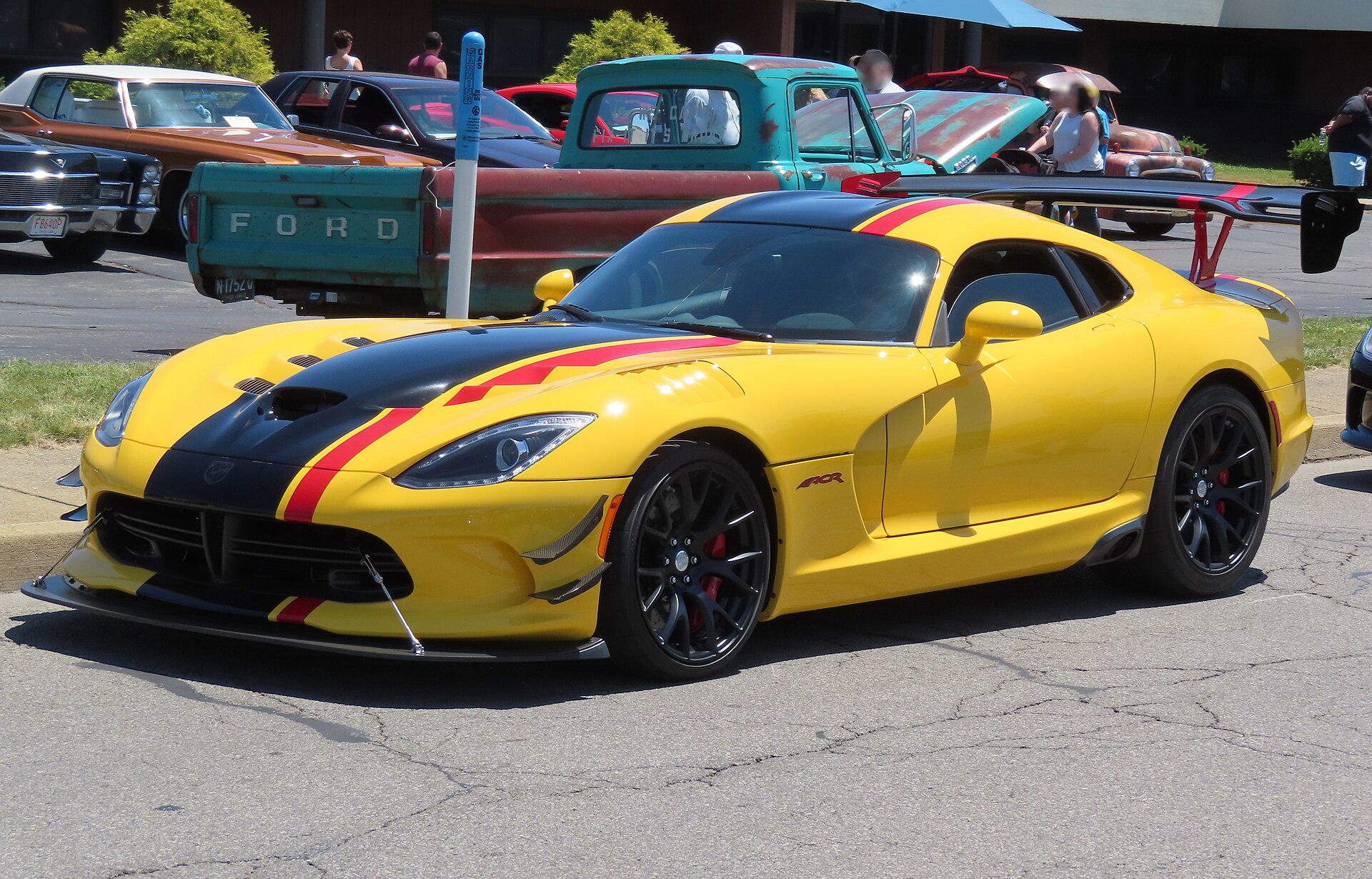
- Viper VX I 2013–2017 · Coupe · 477–481 kW (649–654 PS)
Newest first · 5 generations since 1992
-
2013
-
2008
-
2003
-
1996
-
1992
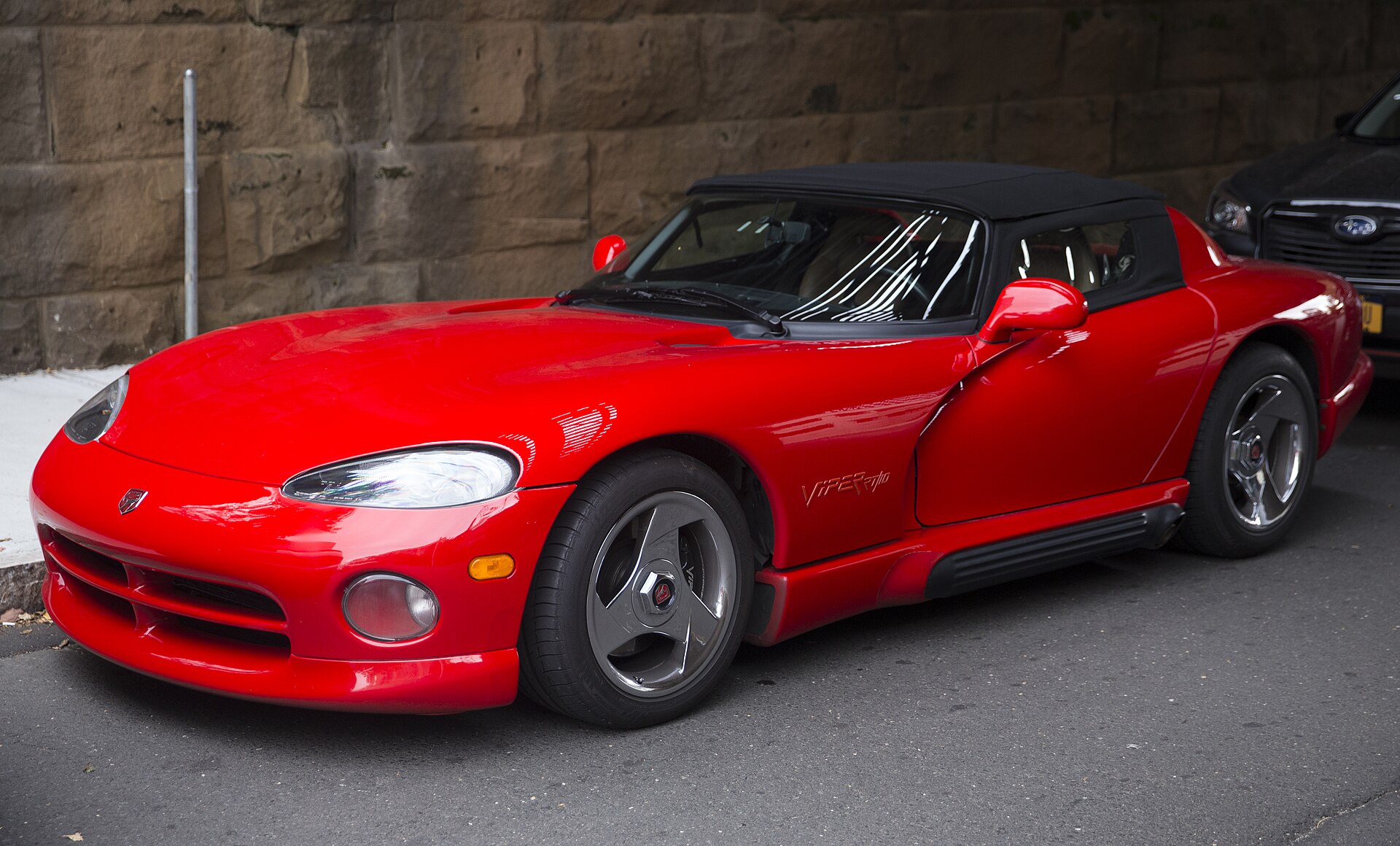


All generations by year: Viper VX I (2013–2017) · Viper ZB II (2008–2010) · Viper ZB I (2003–2006) · Viper SR II (1996–2002) · Viper SR I (1992–1995)
Which one is mine?
Pick the year of first registration to see which generation it is.
Check by VINWhich Viper to choose
Our verdict · Sarah Whitmore
- For the raw original: the SR I RT/10 of 1992–1995 — no ABS, no airbags and a canvas roof.
- For a closed car with more equipment: the SR II GTS coupé; anti-lock brakes arrived in 2001.
- For the most power without electronics: the ZB II SRT-10 of 2008–2010 with 447 kW.
- For modern safety systems: the VX I, the only Viper with stability control.
- For track days: an ACR from any generation; the late cars are covered on the ACR page.
The Viper meets its closest rival in our Corvette vs Viper comparison; other front-engined sports cars of the same era appear in our Corvette history and in the supercars section, and all versions are listed in the Dodge catalogue.
The Dodge Viper was a front-engined, rear-wheel-drive two-seater with a V10 engine, built by Chrysler and later Fiat Chrysler Automobiles in Detroit from 1992 to 2017. Over five generations the engine grew from 8.0 to 8.4 litres and power from 298 kW to 481 kW, while every car kept a six-speed manual gearbox. Wikipedia counts 31,989 Vipers, and early cars sold in Europe wore the Chrysler Viper name.
In short
- The concept appeared at the 1989 Detroit show; sales began in January 1992 with the RT/10 roadster at US$52,000.
- Five generations: SR I (1992–1995), SR II (1996–2002), ZB I (2003–2006), ZB II (2008–2010) and VX I (2013–2017).
- Power rose from 298 kW (400 hp) to 447 kW (600 hp) in 2008 and to 481 kW (645 hp) from 2015.
- Production ended in August 2017 at the Conner Avenue plant; the car did not meet the US side-curtain airbag standard FMVSS 226.
Size at a glance
Dodge Viper ZB I
The Dodge Viper VX I is 18 mm wider and 20 mm taller than the Dodge Viper ZB I.
| Dimensions | Dodge Viper VX I | Dodge Viper ZB I | Difference |
|---|---|---|---|
| Length | 4,460 mm175.6 in | 4,460 mm175.6 in | Same |
| Width | 1,940 mm76.4 in | 1,922 mm75.7 in | +18 mm+0.7 in |
| Height | 1,250 mm49.2 in | 1,230 mm48.4 in | +20 mm+0.8 in |
| Wheelbase | 2,510 mm98.8 in | 2,510 mm98.8 in | Same |
Specs by version
Engines
| Version | Engine | Power | Torque | Gearbox | Drive | Production years |
|---|---|---|---|---|---|---|
| SR I · 1992–1995 | ||||||
| SR I · RT/10 8.0 V10 | 8.0 l · 10 cyl · Petrol 7,990 cc | 298 kW 405 PS400 hp | 630 Nm465 lb-ft | 6-sp Manual | Rear-wheel drive | 1992–1995 |
| SR II · 1996–2002 | ||||||
| SR II · RT/10 8.0 V10 | 8.0 l · 10 cyl · Petrol 7,990 cc | 309 kW 420 PS414 hp | 662 Nm488 lb-ft | 6-sp Manual | Rear-wheel drive | 1996–2002 |
| SR II · GTS 8.0 V10 | 8.0 l · 10 cyl · Petrol 7,990 cc | 336 kW 457 PS451 hp | 664 Nm490 lb-ft | 6-sp Manual | Rear-wheel drive | 1996–2002 |
| SR II · GTS GT2 Champion Edition 8.0 V10 | 8.0 l · 10 cyl · Petrol 7,990 cc | 343 kW 466 PS460 hp | 678 Nm500 lb-ft | 6-sp Manual | Rear-wheel drive | 1998 |
| SR II · GTS ACR 8.0 V10 | 8.0 l · 10 cyl · Petrol 7,990 cc | 343 kW 466 PS460 hp | — | 6-sp Manual | Rear-wheel drive | 1999 |
| ZB I · 2003–2006 | ||||||
| ZB I · SRT-10 8.3 V10 | 8.3 l · 10 cyl · Petrol 8,285 cc | 373 kW 507 PS500 hp | 712 Nm525 lb-ft | 6-sp Manual | Rear-wheel drive | 2003–2006 |
| ZB I · SRT-10 Coupe 8.3 V10 | 8.3 l · 10 cyl · Petrol 8,285 cc | 380 kW 517 PS510 hp | 725 Nm535 lb-ft | 6-sp Manual | Rear-wheel drive | 2006 |
| ZB II · 2008–2010 | ||||||
| ZB II · SRT-10 8.4 V10 | 8.4 l · 10 cyl · Petrol 8,382 cc | 447 kW 608 PS599 hp | 759 Nm560 lb-ft | 6-sp Manual | Rear-wheel drive | 2008–2010 |
| VX I · 2013–2017 | ||||||
| VX I · 8.4 L 10 cyl Manual 6-spd · 2017 (EPA) | 8.4 l · 10 cyl 8,400 cc | — | — | 6-sp Manual | Rear-wheel drive | 2017 |
| VX I · 8.4 V10 | 8.4 l · 10 cyl · Petrol 8,382 cc | 477 kW 649 PS640 hp | 813 Nm600 lb-ft | 6-sp Manual | Rear-wheel drive | 2013–2014 |
| VX I · 8.4 V10 | 8.4 l · 10 cyl · Petrol 8,382 cc | 481 kW 654 PS645 hp | 813 Nm600 lb-ft | 6-sp Manual | Rear-wheel drive | 2015–2017 |
Performance
Show all 2 versions
| Version | 0–100 km/h | Top speed | Fuel consumption |
|---|---|---|---|
| SR I · 1992–1995 | |||
| SR I · RT/10 8.0 V10 | 4.2 s 0–62 mph | 266 km/h165 mph | — |
| VX I · 2013–2017 | |||
| VX I · 8.4 L 10 cyl Manual 6-spd · 2017 (EPA) | — | — | 16.8 l/100 km14.0 mpg US · 16.8 mpg UK |
Dimensions and weight
Show all 3 versions
| Version | Length | Width | Height | Wheelbase | Kerb weight |
|---|---|---|---|---|---|
| SR I · 1992–1995 | |||||
| SR I · RT/10 8.0 V10 | — | — | — | — | 1,490 kg3,285 lb |
| ZB I · 2003–2006 | |||||
| ZB I · SRT-10 8.3 V10 | 4,460 mm175.6 in | 1,922 mm75.7 in | 1,230 mm48.4 in | 2,510 mm98.8 in | 1,530 kg3,373 lb |
| VX I · 2013–2017 | |||||
| VX I · 8.4 V10 | 4,460 mm175.6 in | 1,940 mm76.4 in | 1,250 mm49.2 in | 2,510 mm98.8 in | — |
Verified Manufacturer and type-approval data from our catalog · Sources and methodology
Dodge Viper at a glance
| Parameter | Value |
|---|---|
| Production | January 1992 – August 2017, with a break between July 2010 and the 2013 model year |
| Plants | New Mack Avenue Assembly (1991–1995), Conner Avenue Assembly, Detroit (October 1995–2017) |
| Bodies | RT/10 and SRT-10 roadster; GTS and SRT-10 coupé; VX I as a coupé only |
| Engine | naturally aspirated V10, 7,990 cc (8.0 l) to 8,382 cc (8.4 l) |
| Power / torque | 298–481 kW (400–645 hp) / 630–813 Nm |
| Gearbox / drive | six-speed manual (T56, Tremec TR6060 from 2008) / rear wheels |
| Kerb weight | 1,490 kg (RT/10 of 1992) |
| Built | 31,989 (Wikipedia EN) |
| Related pages | GTS-R race car, ACR track version |
History: a modern Cobra from Chrysler
The idea came from Chrysler executive Bob Lutz, who asked designer Tom Gale for a modern version of the Shelby Cobra. Work started at Chrysler's Advanced Design Studios in late 1988, and the concept car appeared at Detroit's North American International Auto Show in 1989. In March 1989 chief engineer Roy Sjoberg formed "Team Viper" with 85 engineers.
Lamborghini, then owned by Chrysler, cast a prototype aluminium engine block in May 1989, and the V10 was ready in February 1990. Lee Iacocca approved production in May 1990; the project needed about US$70 million. Carroll Shelby drove a pre-production car as pace car of the 1991 Indianapolis 500, journalists drove it in November 1991 and retail sales started in January 1992. The companies behind it are covered in our Dodge brand story and our Chrysler Corporation history.

Generations and specifications
| Generation | Model years | Bodies | Engine | Power | Torque |
|---|---|---|---|---|---|
| SR I | 1992–1995 | RT/10 roadster | 7,990 cc V10 | 298 kW (400 hp) | 630 Nm |
| SR II | 1996–2002 | RT/10, GTS coupé | 7,990 cc V10 | 309 kW (415 hp); GTS 336 kW (450 hp) | 662–664 Nm |
| ZB I | 2003–2006 | SRT-10 roadster, coupé from 2006 | 8,285 cc V10 | 373 kW (500 hp); coupé 380 kW (510 hp) | 712–725 Nm |
| ZB II | 2008–2010 | SRT-10 roadster and coupé, ACR | 8,382 cc V10 | 447 kW (600 hp) | 759 Nm |
| VX I | 2013–2017 | coupé, GTS, ACR | 8,382 cc V10 | 477 kW (640 hp); 481 kW (645 hp) from 2015 | 813 Nm |
From the first RT/10 to the 2015 car, output rose by 183 kW, or about 61 percent, while displacement grew by only 392 cc. Torque went up by 183 Nm, about 29 percent. The layout never changed: a long bonnet over a front-mid-mounted V10, two seats and drive to the rear wheels through a manual gearbox. Our power converter turns these figures into PS.
The first car was deliberately basic. It had no anti-lock brakes, no traction control and no airbags, and there were no exterior door handles or key cylinders. The roof was canvas with zip-out vinyl windows, and air conditioning became an option only for 1994–95. The RT/10 weighed 1,490 kg, reached 100 km/h in 4.2 seconds and 160 km/h in 9.2 seconds, and covered the quarter mile in 12.6 seconds. Wikipedia DE gives its top speed as 264 km/h.
SR II: the GTS coupé, airbags and the first ACR
The second generation added the GTS coupé for 1996. It had 336 kW (450 hp), and airbags, air conditioning and electric windows came as standard. The side exhausts of the roadster moved to twin pipes at the rear, and aluminium parts saved 27 kg. Second-generation airbags followed in 1998 and anti-lock brakes in 2001.
Two editions marked the racing success of the coupé. The GT2 Champion Edition of 1998 was limited to 100 cars with 343 kW (460 hp) and cost US$85,200; autoevolution dates the first one to July 1998. The ACR name started on the 1999 GTS, again with 343 kW. By the end of 1998 Chrysler had sold 8,468 Vipers worldwide, 1,802 of them coupés, according to Wikipedia DE.

ZB I and ZB II: SRT-10 and the 8.4-litre V10
The SRT-10 roadster of the 2003 model year was a new design with an 8.3-litre engine of 373 kW (500 hp) and 712 Nm, and it was about 36 kg lighter than the car it replaced. The SRT-10 coupé, revealed in Detroit in 2005, added 380 kW (510 hp) and 725 Nm from 2006. A Mamba edition of 200 cars cost about US$3,000 extra in 2004.
For 2008 the V10 grew to 8.4 litres. It produced 447 kW (600 hp) and 759 Nm, a Tremec TR6060 gearbox replaced the T56, and a new electrical system arrived with a 180-amp alternator. Wikipedia DE quotes 3.7 seconds from 0 to 100 km/h and 326 km/h. The ZB II ACR lapped the Nürburgring Nordschleife in 7 minutes 12.13 seconds on 14 September 2011, the sixth-fastest street-legal time then. The track-only ACR-X of 2010 cost US$110,000, about €83,000 at the exchange rate of that year. Germany registered 188 Vipers from 2002 to 2010, and the last ZB II, finished in gold, left the line on 1 July 2010.

VX I: the last Viper, 2013–2017
After a two-year pause the fifth generation arrived for the 2013 model year, at first badged as the SRT Viper. The 8.4-litre V10 now made 477 kW (640 hp) and 813 Nm, rising to 481 kW (645 hp) from 2015. The body used carbon fibre and aluminium with a drag coefficient of 0.364. For the first time a Viper had electronic stability control, traction control and four-channel anti-lock brakes. Wikipedia EN gives a 0–100 km/h time of 3.5 seconds and 332 km/h; Wikipedia DE gives 330 km/h.
Sales were weak. Chrysler cut production by a third in October 2013, stopped the line for more than two months in April 2014 and reduced the price of unsold 2014 cars by US$15,000. About 760 were sold in 2014. The last and fastest track version, the 2016–2017 ACR, has its own Viper ACR page; an ACR with the Extreme Aero package ran 7 minutes 1.67 seconds at the Nürburgring in October 2015, an unofficial time.
In July 2017 FCA said it would shut the Conner Avenue plant. Wikipedia EN dates the closure to 31 August 2017 and Wikipedia DE gives 17 August 2017 as the last day of production. Fiat Chrysler first pointed to poor sales, while Wikipedia EN adds that the car could not meet FMVSS 226, the US rule that requires side-curtain airbags.

Racing record
A privately entered RT/10 finished 12th overall at Le Mans in 1994. The factory-backed GTS-R then took the GTS class at Le Mans three times, from 1998 to 2000, and took an outright win at the 2000 Daytona 24 Hours; its story is on our Viper GTS-R page. Wikipedia counts 445 races, 162 wins and 47 championships for the GTS-R, and 62 championships for Vipers of all kinds. The fifth generation won the GTLM drivers' and teams' titles of the 2014 United SportsCar Championship with Kuno Wittmer.
Photo gallery


Dodge Viper evolution in numbers
Did you know?
- The Dodge Viper ran for 25 years, from 1992 to 2017, over 5 generations in our catalog.
- The longest-running generation is the Viper SR II (1996–2002): 6 years.
- The biggest jump in power came with the Viper ZB II: up to 447 kW (608 PS), 67 kW more than the Viper ZB I.
Most powerful version, kW
Figures from the 1cars catalog: power is the strongest version of each generation; generations without the figure are left out.
Dodge Viper: first vs latest generation
| Spec | Viper SR I | Viper VX I | Change |
|---|---|---|---|
| Years | 1992–1995 | 2013–2017 | 21 years apart |
| Most powerful version | 298 kW (405 PS) | 481 kW (654 PS) | +183 kW (+61%) |
Oldest and newest generation in the 1cars catalog. Power is the strongest version of each; other rows are shown only when both generations have the figure.
Image credits · Photos from Wikimedia Commons under free licences
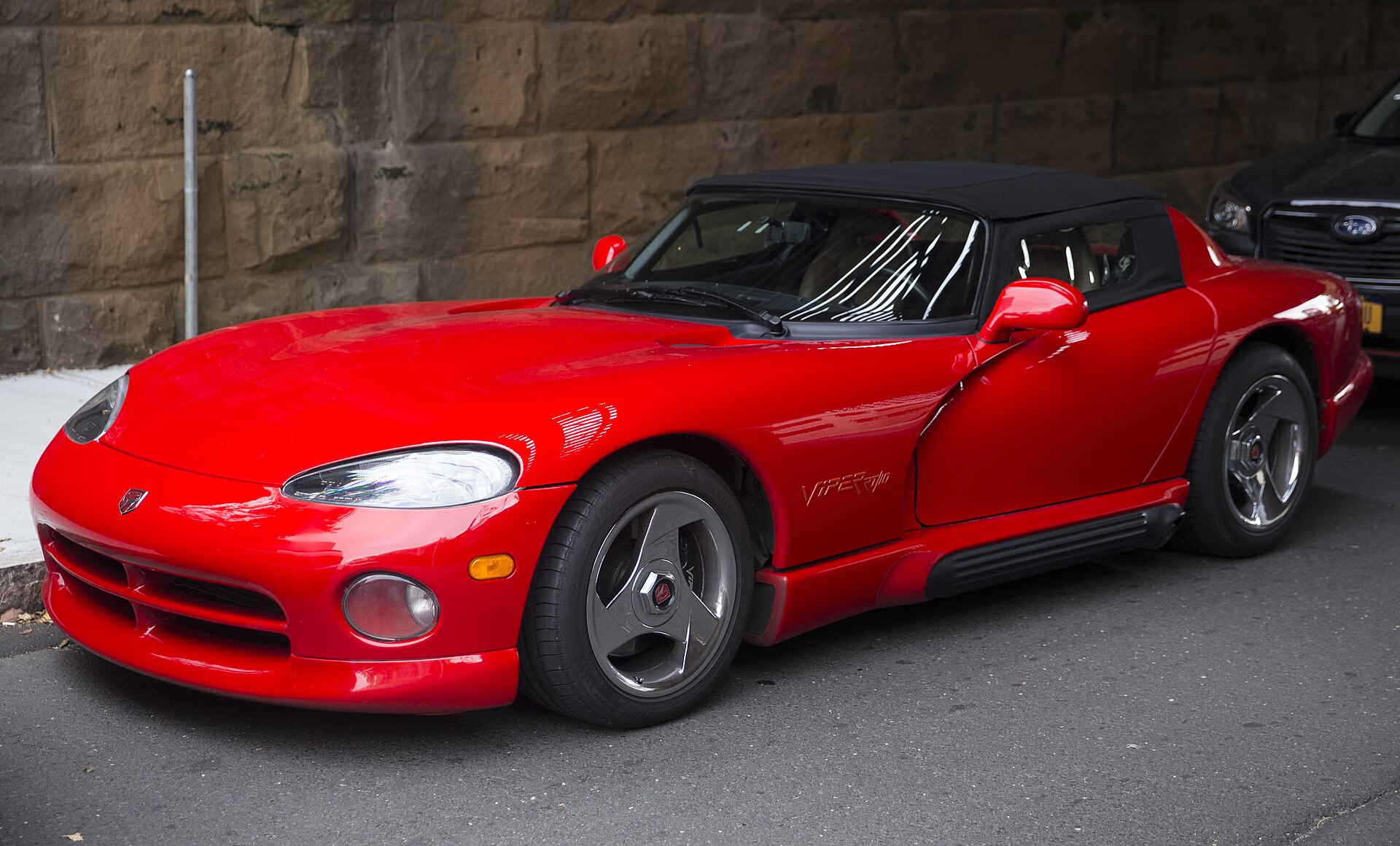
- Dodge Viper SR I · Photo: Mr.choppers / Wikimedia Commons, CC BY-SA 3.0
- Dodge Viper ZB II · Photo: Viperengineer at English Wikipedia / Wikimedia Commons, Public domain
Popular comparisons
Dodge Viper in our rankings
- No. 1 of 173 · Biggest engines: coupes (8,400 cc)
- No. 1 of 49 · Biggest engines: convertibles and roadsters (8,285 cc)
- No. 1 of 557 · Biggest engines: cars (8,400 cc)
- No. 3 of 17 · Quickest cars of the 1990s, 0–100 (4.2 s)
- No. 4 of 18 · Quickest American cars, 0–100 (4.2 s)
- No. 5 of 27 · Widest convertibles and roadsters (1,922 mm)
Bigger engine than 99% of ranked cars in the 1CARS catalog (No. 1 of 557).
Dodge Viper photos 6
FAQ
How much power does a Dodge Viper have?
From 298 kW (400 hp) in the 1992 RT/10 to 481 kW (645 hp) in the 2015–2017 car; the 8.4-litre engine of 2008 made 447 kW (600 hp).
How many Vipers were built?
Wikipedia EN gives 31,989 cars over 26 years, built at New Mack Avenue and from October 1995 at Conner Avenue in Detroit.
Why was the Viper discontinued?
Fiat Chrysler first cited weak sales; Wikipedia EN adds that the car did not meet the US side-curtain airbag rule FMVSS 226. Production ended in August 2017.
Was the Viper sold in Europe?
Yes. Early cars were sold as the Chrysler Viper, and Germany registered 188 Vipers between 2002 and 2010.
Did Lamborghini design the Viper engine?
No, but Lamborghini, then part of Chrysler, cast the prototype aluminium V10 block in May 1989.
Data sources
Data checked by an editor against the sources below.
- Wikipedia — Dodge Viper
- Autoevolution — Viper
- Wikipedia — Dodge Viper (ZB I)
- Wikipedia — Dodge Viper (VX I)
- US EPA fueleconomy.gov — 37801.shtml