
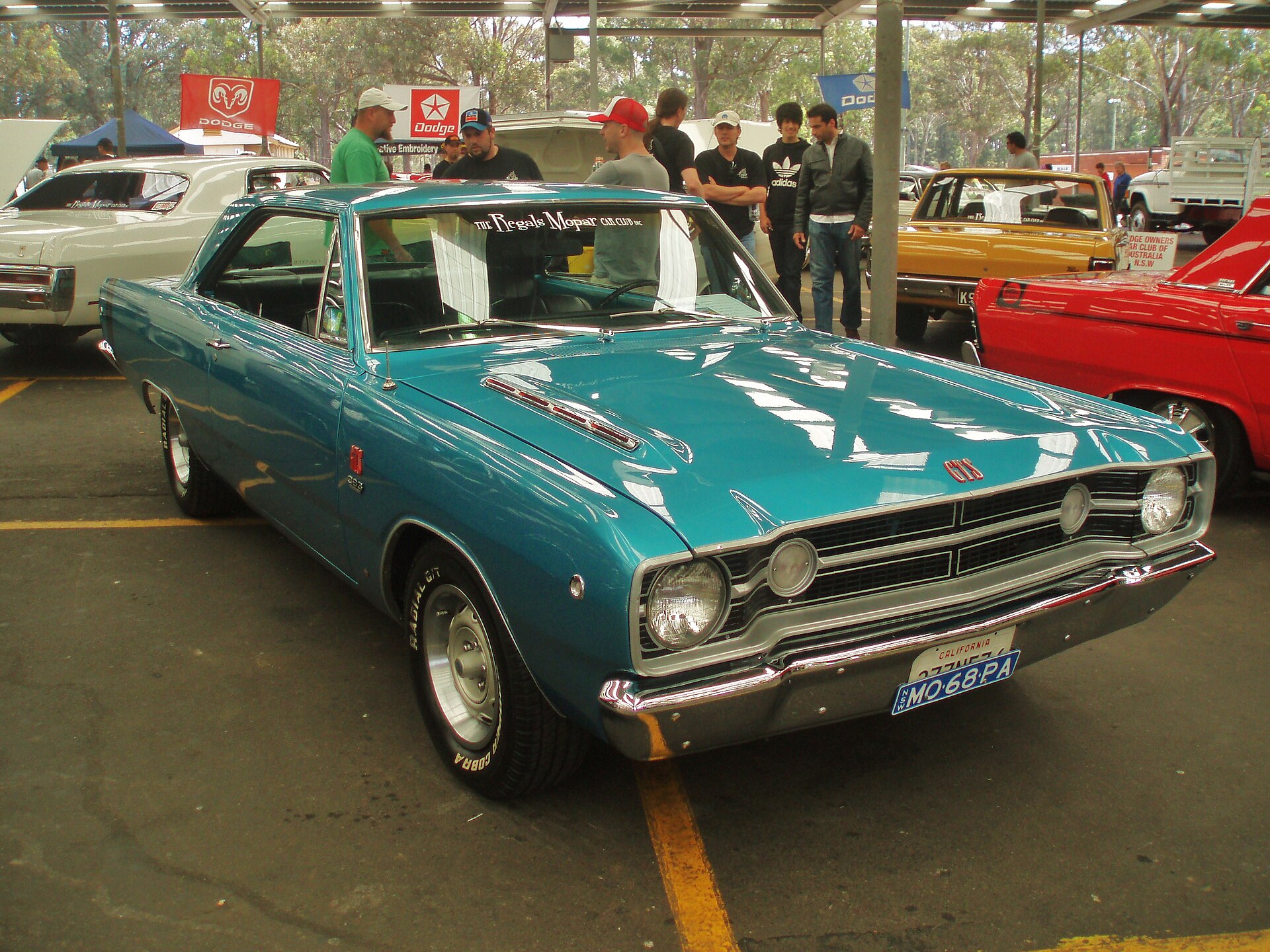
 Dodge Dart GTS
Specs, engines and history
Published Sources (3) Report an error
By Felix Hartmann, Automotive Technology & EV Contributor
- Built
- 1968–1969
- Top power
- 246 kW (334 PS)
The Dodge Dart GTS was the performance flagship of the compact Dart for the 1968 and 1969 model years, introduced in the autumn of 1967. It came with the new 5.6 L (340 cu in) V8 rated at 205 kW (275 hp, SAE gross) as standard, and buyers could order the 6.3 L (383 cu in) big-block instead. Dodge built 8,745 GTS cars for 1968 and 6,702 for 1969.
In short
- Two-door hardtop or convertible on the Chrysler A-body, sold for the 1968 and 1969 model years only.
- 340 V8 with 205 kW (275 hp) and 461 Nm (340 lb-ft); optional 383 with 224 kW (300 hp) in 1968 and 246 kW (330 hp) in 1969.
- Hot Rod ran a 340 automatic through the quarter mile in 14.38 seconds at 97 mph in April 1968.
- The same body carried about 80 Hemi drag cars (LO23) in 1968 and roughly 600 cars with the 440 in 1969.
Specs by version
| Version | Engine | Power | Torque | Drive | Production years |
|---|---|---|---|---|---|
| 340 4-barrel V8 (SAE gross) | 5.6 l · 8 cyl · Petrol 5,572 cc | 205 kW 279 PS275 hp | 461 Nm340 lb-ft | Rear-wheel drive | 1968–1969 |
| 383 4-barrel V8 (SAE gross) | 6.3 l · 8 cyl · Petrol 6,276 cc | 224 kW 305 PS300 hp | - | Rear-wheel drive | 1968 |
| 383 4-barrel V8 (SAE gross) | 6.3 l · 8 cyl · Petrol 6,276 cc | 246 kW 334 PS330 hp | - | Rear-wheel drive | 1969 |
Verified Manufacturer and type-approval data from our catalog · Sources and methodology
Dart GTS at a glance
| Specification | Dodge Dart GTS |
|---|---|
| Model years | 1968-1969 (on sale from late 1967) |
| Built | 8,745 (1968), 6,702 (1969) |
| Body | two-door hardtop, convertible |
| Platform | Chrysler A-body |
| Standard engine | 5.6 L (340 cu in) V8, four-barrel, 10.5:1 compression |
| Power and torque | 205 kW (275 hp, SAE gross) at 5,000 rpm; 461 Nm (340 lb-ft) at 3,200 rpm |
| Optional engine | 6.3 L (383 cu in) V8: 224 kW (300 hp) in 1968, 246 kW (330 hp) in 1969 |
| Gearboxes | three-speed manual, four-speed manual with Hurst linkage, TorqueFlite automatic |
| Rear axle | 3.23:1 standard, 3.55:1 and 3.91:1 optional |
| Weight | 1,390-1,456 kg (3,065-3,210 lb) |
| Quarter mile | 14.38 s at 97 mph (Hot Rod, 340 with TorqueFlite) |
| Price new | US$3,189 to US$3,419, depending on body and year |
How the GT became the GTS
Dodge redesigned the Dart for 1967 with a new A-body shell, wide enough to take a big-block V8. For 1968 the top model became the GTS, a separate model with its own engine: the new 340 small-block. The GTS name sat above the GT, and the extra S marked the car as part of the performance range Dodge was about to market as the Scat Pack.
The GTS had a bonnet with two power bulges and simulated intake ports, GTS emblems, dual exhaust with chrome tips and a heavy-duty Rallye suspension. It ran on 14 x 5.5 in wheels with E70-14 Red Streak tyres. Hardtops had vinyl bucket seats as standard; on the convertible they were optional. A body-length stripe was standard, and the bumblebee stripe around the tail was a no-cost alternative. The wider history of the compact is covered in the Dodge Dart hub.
340 or 383: two different GTS cars
The 340 was the engine that defined the GTS. With 10.5:1 compression and a four-barrel carburettor it gave 205 kW (275 hp) at 5,000 rpm and 461 Nm (340 lb-ft) at 3,200 rpm. In 1968 cars with the four-speed got a more aggressive camshaft than automatic cars, the only year the manual had the bigger cam. Hot Rod saw a racing case for the smaller engine in April 1968: "The engine's smaller, but that could prove an advantage for drag racing classes."
The 383 cost only US$35.40 more than the 340, but in the Dart it carried a slightly lower rating than the same engine in Dodge's bigger cars. It also added weight over the front wheels: 40 kg (89 lb) with the four-speed and 62 kg (136 lb) with the automatic. Dodge fitted thicker torsion bars to 383 cars, 0.94 in against 0.88 in for the 340, and period testers still found the 383 car less willing to corner. For 1969 the 383 rose from 224 kW (300 hp) to 246 kW (330 hp).
| Engine | Years | Power (SAE gross) | Torque | Notes |
|---|---|---|---|---|
| 340 V8, four-barrel | 1968-1969 | 205 kW (275 hp) | 461 Nm (340 lb-ft) | standard; bigger cam with the 1968 four-speed |
| 383 V8, four-barrel | 1968 | 224 kW (300 hp) | not quoted in the sources used | US$35.40 over the 340 |
| 383 V8, four-barrel | 1969 | 246 kW (330 hp) | not quoted in the sources used | 30 hp more than in 1968 |
On the strip the two engines were close. Magazine tests of the period put a TorqueFlite 383 at 14.3 seconds over the quarter mile and a four-speed 340 at 14.4 seconds.
GTS production, 1968 and 1969
The first GTS year was also its best. Dodge built 8,295 hardtops and 450 convertibles for 1968. For 1969 the car got a new grille, parking lamps and trim, redesigned bonnet ports and a single wide bumblebee stripe edged with pinstripes, which replaced the earlier pair of tail stripes; the body-length stripe was dropped.
| Model year | Hardtops | Convertibles | Total |
|---|---|---|---|
| 1968 | 8,295 | 450 | 8,745 |
| 1969 | 6,285 | 417 | 6,702 |
The fall in 1969 had one main cause: the cheaper Dart Swinger 340, which used the same 340 engine in a plainer hardtop and sold more than 16,000 units that year. Dodge dropped the GTS after 1969, and the Swinger 340 carried the small-block into 1970.

Hemi and 440 Darts: the factory drag cars
The GTS body also became the base for Chrysler's lightest drag cars. In 1968 Hurst prepared about 80 Darts with the 426 Hemi for Super Stock racing, coded LO23 and sold with a disclaimer that they carried no warranty. The Hemi had 10.25:1 compression and was rated at 317 kW (425 hp) at 5,000 rpm and 664 Nm (490 lb-ft) at 4,000 rpm. Hurst fitted glass-fibre front wings and bonnet, lightweight doors and two bucket seats, and removed the rear seat, carpet, radio, heater and armrests. The cars weighed about 1,361 kg (3,000 lb), used a four-speed with a Dana 60 axle and 4.88:1 gears or a TorqueFlite with 4.86:1 gears, and ran the quarter mile in 10 to 11 seconds.
The 440 followed. Hurst built a pilot run of about fifty 440 Darts in 1968, and in 1969 the 440 became a limited GTS option. Chrysler engineer Larry Shepard later said that more than 600 440 Darts were built, "basically the same as the 383 GTS, except for the engine." Production figures for these cars vary between sources.

Dart GTS today: what to check
Auction records show GTS hardtops with VINs that begin LS23 and convertibles with LS27; the fifth character is the engine code, H on a documented 383 car. Many Dart GT and Swinger hardtops have since received GTS badges, stripes and a 340, so the VIN, fender tag and any surviving broadcast sheet should be read together. A 440 or Hemi claim needs full paperwork, because both swaps are common.
With only 867 convertibles built in two years, an open GTS is the rare body. Rivals worth comparing are the Plymouth Barracuda, which shared the A-body and the 340, and the Chevrolet Nova SS. Dodge's other 1968-1969 models have their own entries in the Dodge catalogue, while the American muscle car guide explains where a compact with a 383 fitted in the class.
Dodge Dart GTS in our rankings
- No. 91 of 646 · Biggest engines: cars (6,276 cc · top 15%)
- No. 61 of 191 · Biggest engines: coupes (6,276 cc · top 32%)
- No. 43 of 103 · Most powerful cars of the 1960s (246 kW · top 42%)
- No. 428 of 1023 · Most powerful cars (246 kW · top 43%)
- No. 227 of 496 · Most torque: cars (461 Nm · top 46%)
- No. 106 of 179 · Most powerful American cars (246 kW · top 60%)
Bigger engine than 85% of ranked cars in the 1CARS catalog (No. 91 of 646).
FAQ
What engine did the Dodge Dart GTS have?
The standard engine was the 5.6 L (340 cu in) V8 with 205 kW (275 hp, SAE gross). The 6.3 L (383 cu in) V8 was optional, rated at 224 kW (300 hp) in 1968 and 246 kW (330 hp) in 1969, and a few 1969 cars had the 440.
How many Dart GTS cars were made?
Dodge built 8,745 for 1968 (8,295 hardtops and 450 convertibles) and 6,702 for 1969 (6,285 hardtops and 417 convertibles), 15,447 in total.
Was there a Hemi Dart GTS?
Yes, in a sense. About 80 Hemi Darts coded LO23 were built in 1968 by Hurst for drag racing. They were stripped lightweight cars, sold without a warranty and built for racing rather than road use.
Which is faster, the 340 or the 383 Dart GTS?
Period tests put them close: about 14.4 seconds for a four-speed 340 and 14.3 seconds for an automatic 383 over the quarter mile. The 340 was lighter at the front and handled better.
Data sources
Data checked by an editor against the sources below.
- Wikipedia - Dodge Dart
- Streetmusclemag
- Oldcarsweekly - Vintage Muscle 1968 Dodge Dart Gts


