 Dodge Challenger
All generations, specs and history
Published Sources (6) Report an error
By Sarah Whitmore, Senior Automotive Writer
- Built
- 1970–2023
- Generations
- 3
- Top power
- 764 kW (1,039 PS)
Timeline
Challenger generations
Click a generation for its own page
- Challenger I 1969–1974 · Coupe, Convertible · 108–317 kW (147–431 PS)
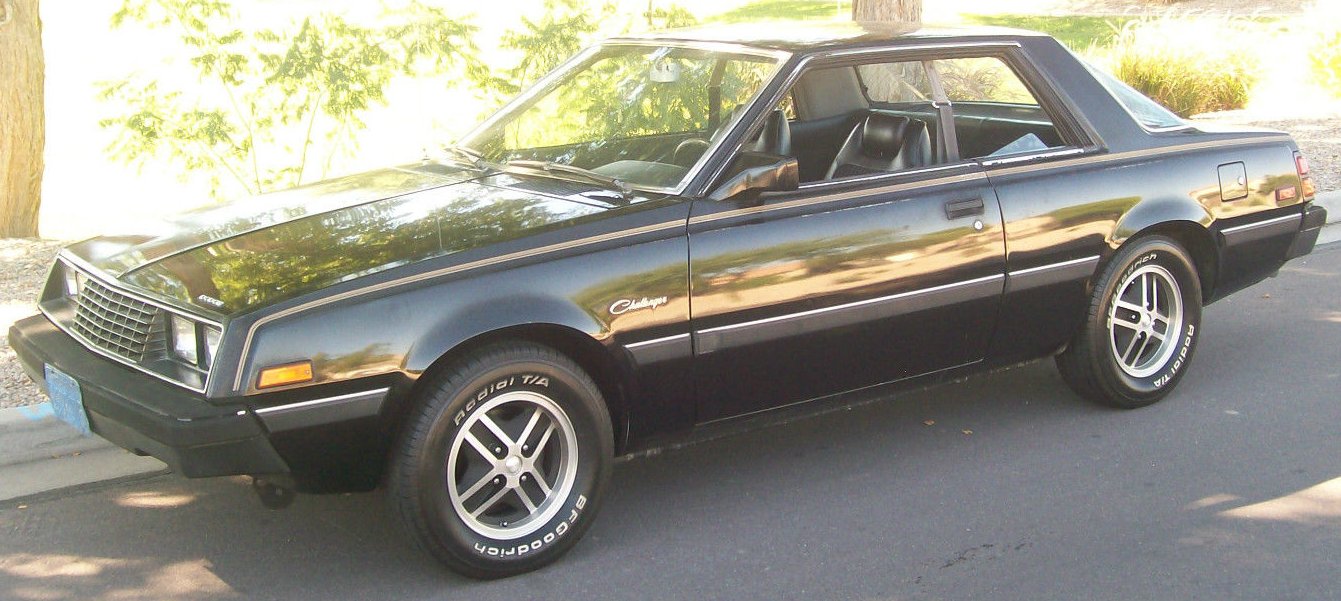
- Challenger II 1978–1983 · Coupe
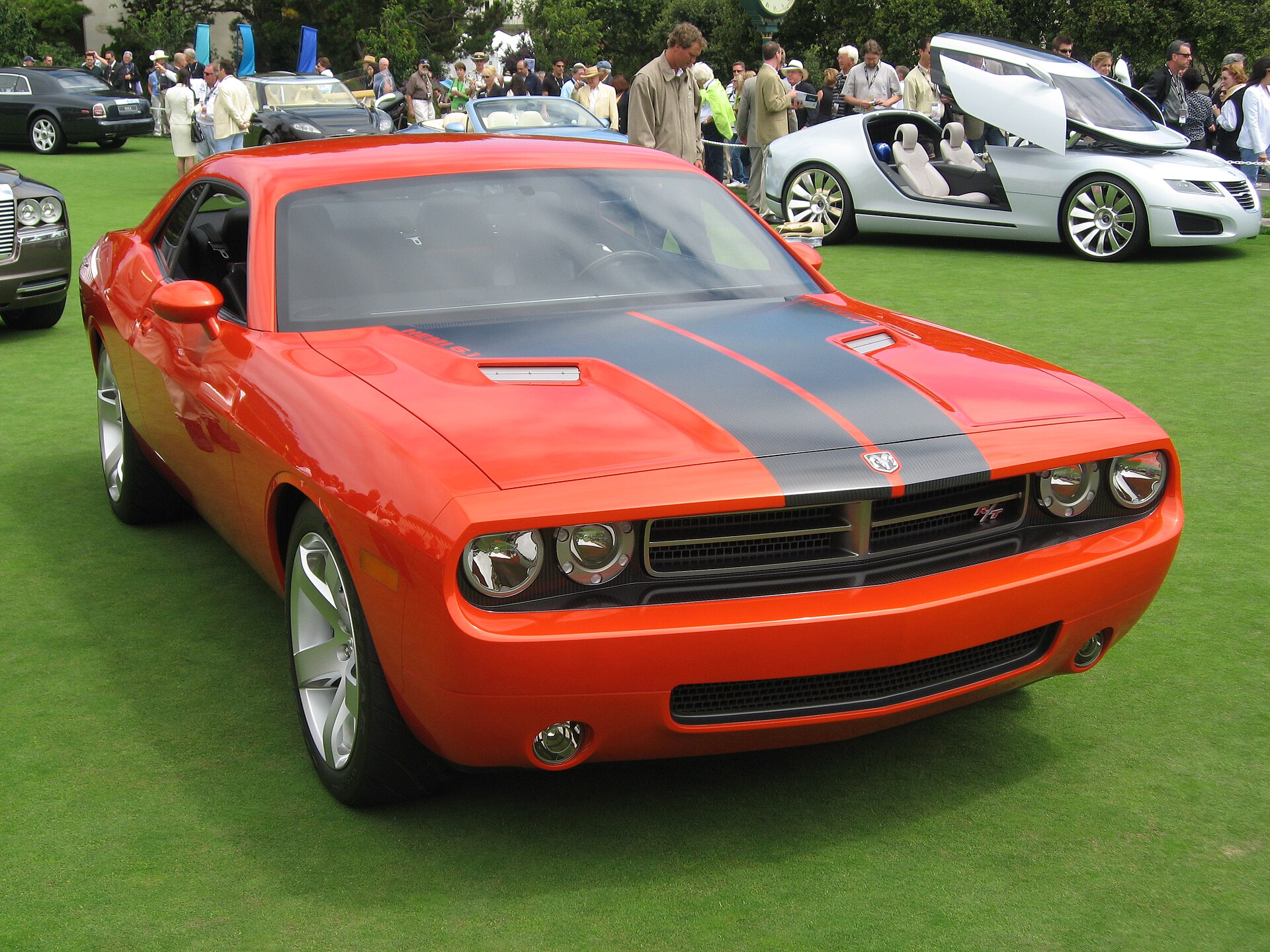
- Challenger LC 2008–2023 · Coupe · 186–764 kW (253–1,039 PS)
Newest first · 3 generations since 1969
-
2008
-
1978
-
1969
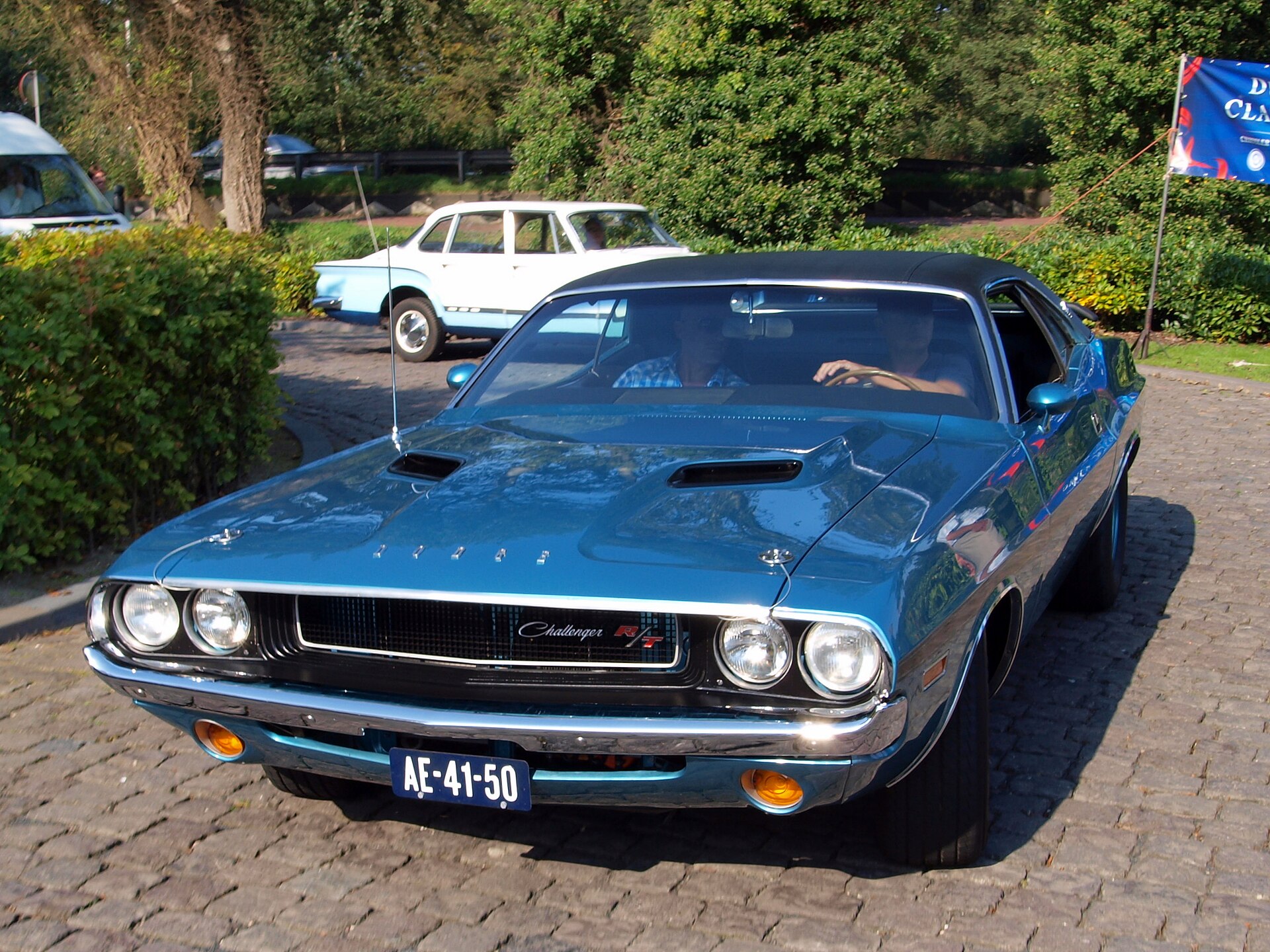


All generations by year: Challenger LC (2008–2023) · Challenger II (1978–1983) · Challenger I (1969–1974)
Which one is mine?
Pick the year of first registration to see which generation it is.
- LC 2008–2023
- Challenger II 1978–1983
- Challenger I 1969–1974
The Dodge Challenger is Dodge's pony car, built in two very different periods. The first car of 1970–1974 shared Chrysler's E-body with the Plymouth Barracuda and could be ordered with every big engine Chrysler made, up to the 426 Hemi. After a Mitsubishi-built coupé of the same name, the Challenger returned in 2008 as a retro-styled two-door and ended in December 2023 with the 764 kW Demon 170.
In short
- First generation 1970–1974 on the E-body, designed by Carl Cameron; 165,437 built.
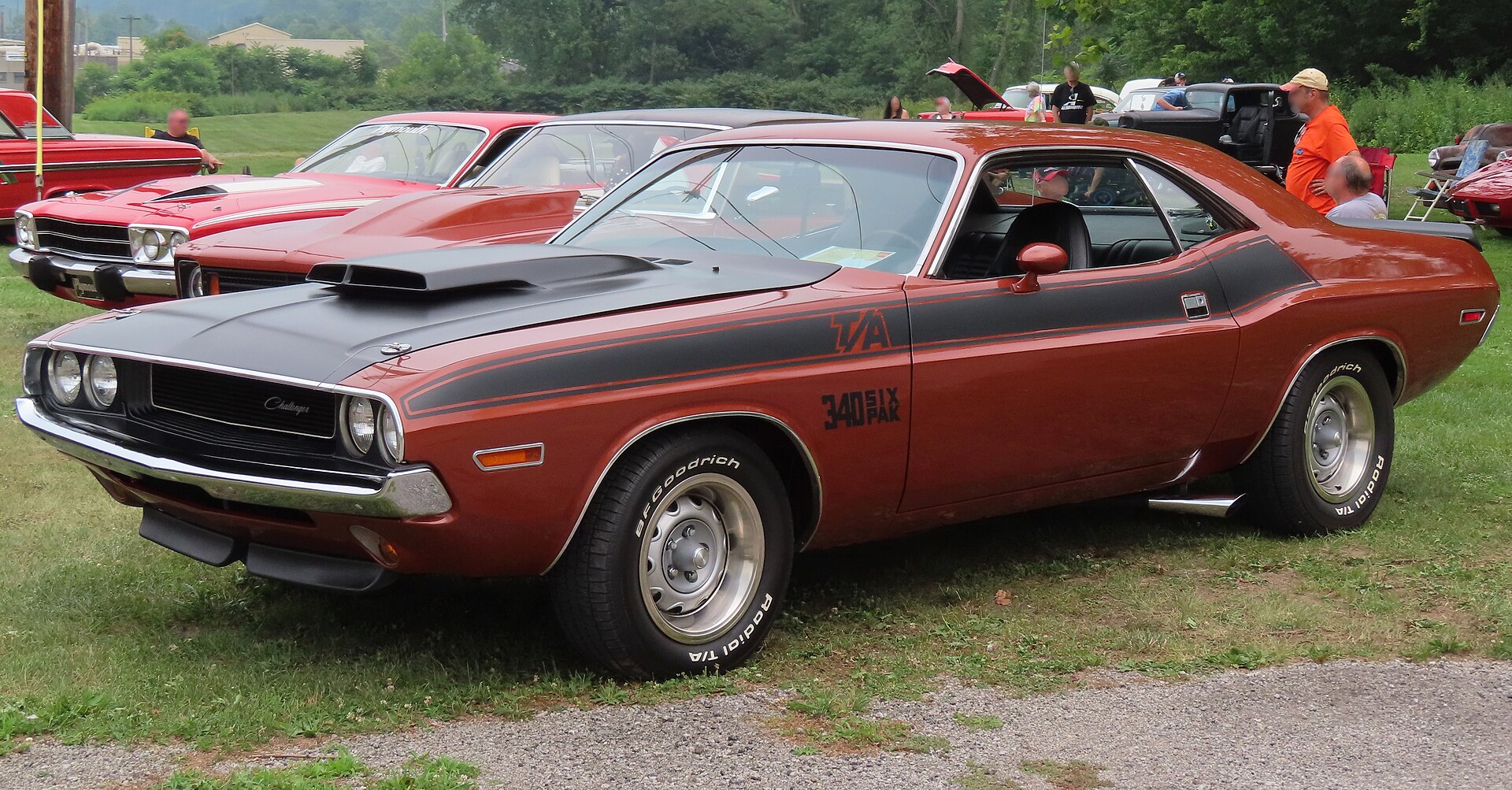
- Top engine of 1970: the 426 Hemi with 317 kW (425 hp, SAE gross); the T/A had a 340 Six Pack for the Trans-Am series.
- Third generation 2008–2023 on the LC platform, a shorter version of the LX, built in Brampton, Ontario.
- SRT Hellcat with 527 kW (707 hp), Demon with up to 626 kW (840 hp), Demon 170 with 764 kW (1,025 hp).
Specs by version
Engines
| Version | Engine | Gearbox | Drive | Production years |
|---|---|---|---|---|
| LC · 2008–2023 | ||||
| LC · 3.6 L 6 cyl Automatic 8-spd · 2023 (EPA) | 3.6 l · 6 cyl 3,600 cc | 8-sp Automatic | Rear-wheel drive | 2023 |
| LC · 3.6 L 6 cyl Automatic 8-spd · 2022 (EPA) | 3.6 l · 6 cyl 3,600 cc | 8-sp Automatic | Rear-wheel drive | 2022 |
| LC · 3.6 L 6 cyl Automatic 8-spd · 2021 (EPA) | 3.6 l · 6 cyl 3,600 cc | 8-sp Automatic | Rear-wheel drive | 2021 |
| LC · 3.6 L 6 cyl Automatic 8-spd · 2020 (EPA) | 3.6 l · 6 cyl 3,600 cc | 8-sp Automatic | Rear-wheel drive | 2020 |
| LC · 3.6 L 6 cyl Automatic 8-spd · 2019 (EPA) | 3.6 l · 6 cyl 3,600 cc | 8-sp Automatic | Rear-wheel drive | 2019 |
| LC · 3.6 L 6 cyl Automatic 8-spd · 2018 (EPA) | 3.6 l · 6 cyl 3,600 cc | 8-sp Automatic | Rear-wheel drive | 2018 |
| LC · 3.6 L 6 cyl Automatic 8-spd · 2017 (EPA) | 3.6 l · 6 cyl 3,600 cc | 8-sp Automatic | Rear-wheel drive | 2017 |
| LC · 3.6 L 6 cyl Automatic 8-spd · 2016 (EPA) | 3.6 l · 6 cyl 3,600 cc | 8-sp Automatic | Rear-wheel drive | 2016 |
| LC · 5.7 L 8 cyl Automatic 8-spd · 2023 (EPA) | 5.7 l · 8 cyl 5,700 cc | 8-sp Automatic | Rear-wheel drive | 2023 |
| LC · 5.7 L 8 cyl Manual 6-spd · 2023 (EPA) | 5.7 l · 8 cyl 5,700 cc | 6-sp Manual | Rear-wheel drive | 2023 |
| LC · 5.7 L 8 cyl Automatic 8-spd · 2022 (EPA) | 5.7 l · 8 cyl 5,700 cc | 8-sp Automatic | Rear-wheel drive | 2022 |
| LC · 5.7 L 8 cyl Manual 6-spd · 2022 (EPA) | 5.7 l · 8 cyl 5,700 cc | 6-sp Manual | Rear-wheel drive | 2022 |
| LC · 5.7 L 8 cyl Automatic 8-spd · 2021 (EPA) | 5.7 l · 8 cyl 5,700 cc | 8-sp Automatic | Rear-wheel drive | 2021 |
| LC · 5.7 L 8 cyl Manual 6-spd · 2021 (EPA) | 5.7 l · 8 cyl 5,700 cc | 6-sp Manual | Rear-wheel drive | 2021 |
| LC · 5.7 L 8 cyl Automatic 8-spd · 2020 (EPA) | 5.7 l · 8 cyl 5,700 cc | 8-sp Automatic | Rear-wheel drive | 2020 |
| LC · 5.7 L 8 cyl Manual 6-spd · 2020 (EPA) | 5.7 l · 8 cyl 5,700 cc | 6-sp Manual | Rear-wheel drive | 2020 |
| LC · 5.7 L 8 cyl Automatic 8-spd · 2019 (EPA) | 5.7 l · 8 cyl 5,700 cc | 8-sp Automatic | Rear-wheel drive | 2019 |
| LC · 5.7 L 8 cyl Manual 6-spd · 2019 (EPA) | 5.7 l · 8 cyl 5,700 cc | 6-sp Manual | Rear-wheel drive | 2019 |
| LC · 5.7 L 8 cyl Automatic 8-spd · 2018 (EPA) | 5.7 l · 8 cyl 5,700 cc | 8-sp Automatic | Rear-wheel drive | 2018 |
| LC · 5.7 L 8 cyl Manual 6-spd · 2018 (EPA) | 5.7 l · 8 cyl 5,700 cc | 6-sp Manual | Rear-wheel drive | 2018 |
| LC · 5.7 L 8 cyl Automatic 8-spd · 2017 (EPA) | 5.7 l · 8 cyl 5,700 cc | 8-sp Automatic | Rear-wheel drive | 2017 |
| LC · 5.7 L 8 cyl Manual 6-spd · 2017 (EPA) | 5.7 l · 8 cyl 5,700 cc | 6-sp Manual | Rear-wheel drive | 2017 |
| LC · 5.7 L 8 cyl Automatic 8-spd · 2016 (EPA) | 5.7 l · 8 cyl 5,700 cc | 8-sp Automatic | Rear-wheel drive | 2016 |
| LC · 5.7 L 8 cyl Manual 6-spd · 2016 (EPA) | 5.7 l · 8 cyl 5,700 cc | 6-sp Manual | Rear-wheel drive | 2016 |
| LC · 6.4 L 8 cyl Automatic 8-spd · 2023 (EPA) | 6.4 l · 8 cyl 6,400 cc | 8-sp Automatic | Rear-wheel drive | 2023 |
| LC · 6.4 L 8 cyl Manual 6-spd · 2023 (EPA) | 6.4 l · 8 cyl 6,400 cc | 6-sp Manual | Rear-wheel drive | 2023 |
| LC · 6.4 L 8 cyl Automatic 8-spd · 2022 (EPA) | 6.4 l · 8 cyl 6,400 cc | 8-sp Automatic | Rear-wheel drive | 2022 |
| LC · 6.4 L 8 cyl Manual 6-spd · 2022 (EPA) | 6.4 l · 8 cyl 6,400 cc | 6-sp Manual | Rear-wheel drive | 2022 |
| LC · 6.4 L 8 cyl Automatic 8-spd · 2021 (EPA) | 6.4 l · 8 cyl 6,400 cc | 8-sp Automatic | Rear-wheel drive | 2021 |
| LC · 6.4 L 8 cyl Manual 6-spd · 2021 (EPA) | 6.4 l · 8 cyl 6,400 cc | 6-sp Manual | Rear-wheel drive | 2021 |
| LC · 6.4 L 8 cyl Automatic 8-spd · 2020 (EPA) | 6.4 l · 8 cyl 6,400 cc | 8-sp Automatic | Rear-wheel drive | 2020 |
| LC · 6.4 L 8 cyl Manual 6-spd · 2020 (EPA) | 6.4 l · 8 cyl 6,400 cc | 6-sp Manual | Rear-wheel drive | 2020 |
| LC · 6.4 L 8 cyl Automatic 8-spd · 2019 (EPA) | 6.4 l · 8 cyl 6,400 cc | 8-sp Automatic | Rear-wheel drive | 2019 |
| LC · 6.4 L 8 cyl Manual 6-spd · 2019 (EPA) | 6.4 l · 8 cyl 6,400 cc | 6-sp Manual | Rear-wheel drive | 2019 |
| LC · 6.4 L 8 cyl Automatic 8-spd · 2018 (EPA) | 6.4 l · 8 cyl 6,400 cc | 8-sp Automatic | Rear-wheel drive | 2018 |
| LC · 6.4 L 8 cyl Manual 6-spd · 2018 (EPA) | 6.4 l · 8 cyl 6,400 cc | 6-sp Manual | Rear-wheel drive | 2018 |
| LC · 6.4 L 8 cyl Automatic 8-spd · 2017 (EPA) | 6.4 l · 8 cyl 6,400 cc | 8-sp Automatic | Rear-wheel drive | 2017 |
| LC · 6.4 L 8 cyl Manual 6-spd · 2017 (EPA) | 6.4 l · 8 cyl 6,400 cc | 6-sp Manual | Rear-wheel drive | 2017 |
| LC · 6.4 L 8 cyl Automatic 8-spd · 2016 (EPA) | 6.4 l · 8 cyl 6,400 cc | 8-sp Automatic | Rear-wheel drive | 2016 |
| LC · 6.4 L 8 cyl Manual 6-spd · 2016 (EPA) | 6.4 l · 8 cyl 6,400 cc | 6-sp Manual | Rear-wheel drive | 2016 |
Performance
Show all 40 versions
| Version | Fuel consumption |
|---|---|
| LC · 2008–2023 | |
| LC · 3.6 L 6 cyl Automatic 8-spd · 2023 (EPA) | 10.2 l/100 km23.1 mpg US · 27.7 mpg UK |
| LC · 3.6 L 6 cyl Automatic 8-spd · 2022 (EPA) | 10.2 l/100 km23.1 mpg US · 27.7 mpg UK |
| LC · 3.6 L 6 cyl Automatic 8-spd · 2021 (EPA) | 10.2 l/100 km23.1 mpg US · 27.7 mpg UK |
| LC · 3.6 L 6 cyl Automatic 8-spd · 2020 (EPA) | 10.2 l/100 km23.1 mpg US · 27.7 mpg UK |
| LC · 3.6 L 6 cyl Automatic 8-spd · 2019 (EPA) | 10.2 l/100 km23.1 mpg US · 27.7 mpg UK |
| LC · 3.6 L 6 cyl Automatic 8-spd · 2018 (EPA) | 10.2 l/100 km23.1 mpg US · 27.7 mpg UK |
| LC · 3.6 L 6 cyl Automatic 8-spd · 2017 (EPA) | 10.2 l/100 km23.1 mpg US · 27.7 mpg UK |
| LC · 3.6 L 6 cyl Automatic 8-spd · 2016 (EPA) | 10.2 l/100 km23.1 mpg US · 27.7 mpg UK |
| LC · 5.7 L 8 cyl Automatic 8-spd · 2023 (EPA) | 12.4 l/100 km19.0 mpg US · 22.8 mpg UK |
| LC · 5.7 L 8 cyl Manual 6-spd · 2023 (EPA) | 13.1 l/100 km18.0 mpg US · 21.6 mpg UK |
| LC · 5.7 L 8 cyl Automatic 8-spd · 2022 (EPA) | 12.4 l/100 km19.0 mpg US · 22.8 mpg UK |
| LC · 5.7 L 8 cyl Manual 6-spd · 2022 (EPA) | 13.1 l/100 km18.0 mpg US · 21.6 mpg UK |
| LC · 5.7 L 8 cyl Automatic 8-spd · 2021 (EPA) | 12.4 l/100 km19.0 mpg US · 22.8 mpg UK |
| LC · 5.7 L 8 cyl Manual 6-spd · 2021 (EPA) | 13.1 l/100 km18.0 mpg US · 21.6 mpg UK |
| LC · 5.7 L 8 cyl Automatic 8-spd · 2020 (EPA) | 12.4 l/100 km19.0 mpg US · 22.8 mpg UK |
| LC · 5.7 L 8 cyl Manual 6-spd · 2020 (EPA) | 13.1 l/100 km18.0 mpg US · 21.6 mpg UK |
| LC · 5.7 L 8 cyl Automatic 8-spd · 2019 (EPA) | 12.4 l/100 km19.0 mpg US · 22.8 mpg UK |
| LC · 5.7 L 8 cyl Manual 6-spd · 2019 (EPA) | 13.1 l/100 km18.0 mpg US · 21.6 mpg UK |
| LC · 5.7 L 8 cyl Automatic 8-spd · 2018 (EPA) | 12.4 l/100 km19.0 mpg US · 22.8 mpg UK |
| LC · 5.7 L 8 cyl Manual 6-spd · 2018 (EPA) | 13.1 l/100 km18.0 mpg US · 21.6 mpg UK |
| LC · 5.7 L 8 cyl Automatic 8-spd · 2017 (EPA) | 12.4 l/100 km19.0 mpg US · 22.8 mpg UK |
| LC · 5.7 L 8 cyl Manual 6-spd · 2017 (EPA) | 13.1 l/100 km18.0 mpg US · 21.6 mpg UK |
| LC · 5.7 L 8 cyl Automatic 8-spd · 2016 (EPA) | 12.4 l/100 km19.0 mpg US · 22.8 mpg UK |
| LC · 5.7 L 8 cyl Manual 6-spd · 2016 (EPA) | 13.1 l/100 km18.0 mpg US · 21.6 mpg UK |
| LC · 6.4 L 8 cyl Automatic 8-spd · 2023 (EPA) | 13.1 l/100 km18.0 mpg US · 21.6 mpg UK |
| LC · 6.4 L 8 cyl Manual 6-spd · 2023 (EPA) | 13.8 l/100 km17.0 mpg US · 20.5 mpg UK |
| LC · 6.4 L 8 cyl Automatic 8-spd · 2022 (EPA) | 13.1 l/100 km18.0 mpg US · 21.6 mpg UK |
| LC · 6.4 L 8 cyl Manual 6-spd · 2022 (EPA) | 13.8 l/100 km17.0 mpg US · 20.5 mpg UK |
| LC · 6.4 L 8 cyl Automatic 8-spd · 2021 (EPA) | 13.1 l/100 km18.0 mpg US · 21.6 mpg UK |
| LC · 6.4 L 8 cyl Manual 6-spd · 2021 (EPA) | 13.8 l/100 km17.0 mpg US · 20.5 mpg UK |
| LC · 6.4 L 8 cyl Automatic 8-spd · 2020 (EPA) | 13.1 l/100 km18.0 mpg US · 21.6 mpg UK |
| LC · 6.4 L 8 cyl Manual 6-spd · 2020 (EPA) | 13.8 l/100 km17.0 mpg US · 20.5 mpg UK |
| LC · 6.4 L 8 cyl Automatic 8-spd · 2019 (EPA) | 13.1 l/100 km18.0 mpg US · 21.6 mpg UK |
| LC · 6.4 L 8 cyl Manual 6-spd · 2019 (EPA) | 13.8 l/100 km17.0 mpg US · 20.5 mpg UK |
| LC · 6.4 L 8 cyl Automatic 8-spd · 2018 (EPA) | 13.1 l/100 km18.0 mpg US · 21.6 mpg UK |
| LC · 6.4 L 8 cyl Manual 6-spd · 2018 (EPA) | 13.8 l/100 km17.0 mpg US · 20.5 mpg UK |
| LC · 6.4 L 8 cyl Automatic 8-spd · 2017 (EPA) | 13.1 l/100 km18.0 mpg US · 21.6 mpg UK |
| LC · 6.4 L 8 cyl Manual 6-spd · 2017 (EPA) | 13.8 l/100 km17.0 mpg US · 20.5 mpg UK |
| LC · 6.4 L 8 cyl Automatic 8-spd · 2016 (EPA) | 13.1 l/100 km18.0 mpg US · 21.6 mpg UK |
| LC · 6.4 L 8 cyl Manual 6-spd · 2016 (EPA) | 13.8 l/100 km17.0 mpg US · 20.5 mpg UK |
Verified Manufacturer and type-approval data from our catalog · Sources and methodology
Safety
-
LC · NHTSA 2023
US NCAP (NHTSA)
Stars from different years and organisations are not directly comparable: test protocols change every few years.
Dodge Challenger at a glance
| Specification | Dodge Challenger |
|---|---|
| Production | 1969–1974 (model years 1970–1974); 1978–1983; 2008–2023 |
| Built | 165,437 (first generation) |
| Platforms | Chrysler E-body; Mitsubishi Galant Lambda (Sapporo); LC (shortened LX) |
| Body | two-door hardtop; convertible 1970–1971; two-door coupé |
| Drive | rear-wheel drive; all-wheel drive GT from 2017 |
| Classic engines | 225 slant-six to 426 Hemi V8, 108–317 kW (145–425 hp, SAE gross) |
| Modern engines | 3.5 and 3.6 V6, 5.7, 6.4 and supercharged 6.2-litre Hemi V8 |
| Most powerful | SRT Demon 170 (2023), 764 kW (1,025 hp) |
| Designer | Carl Cameron |
| Successor | Dodge Charger two-door (2024) |
Every Challenger generation is listed in our Dodge catalogue. The car's place among its rivals is shown in the American muscle car guide.
The first generation (1970–1974)
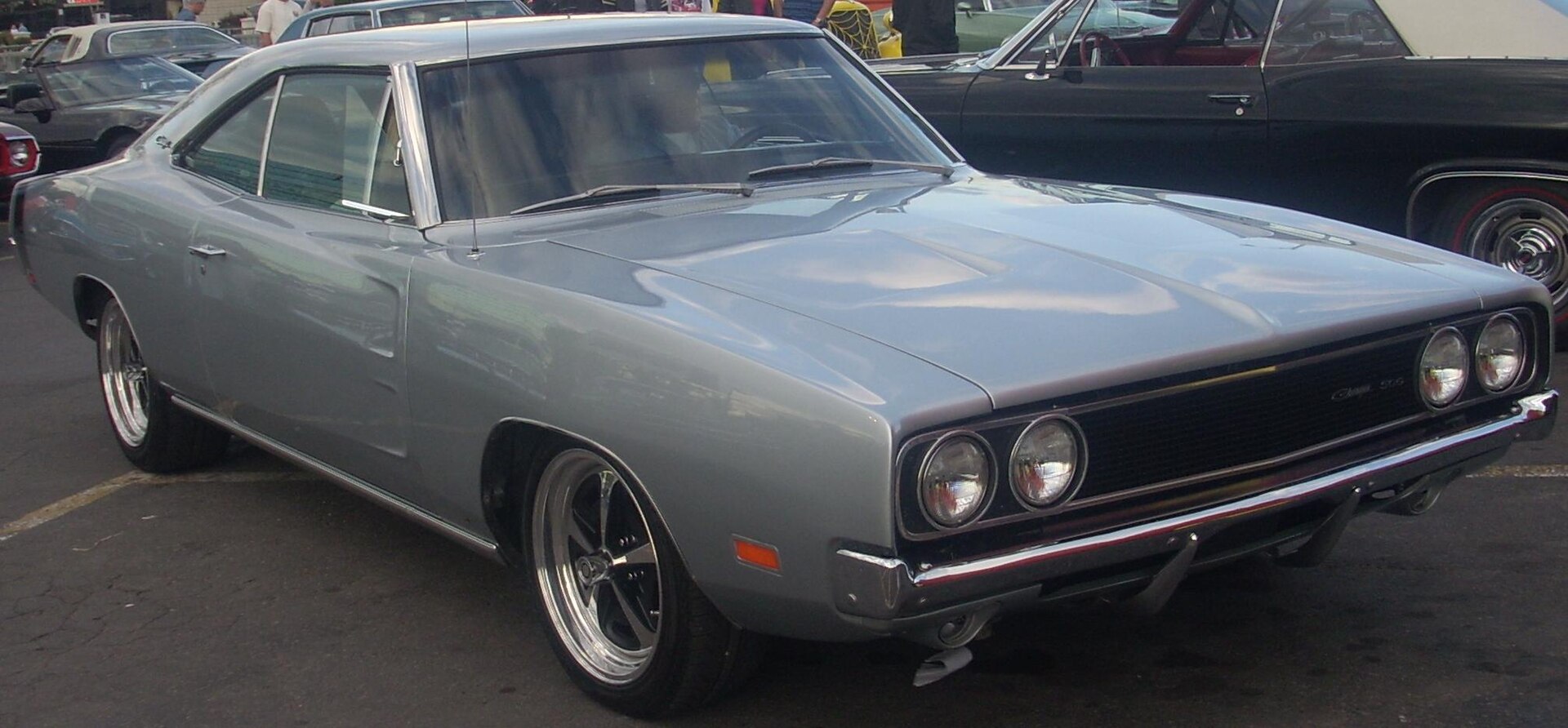
Dodge arrived late in the pony car class. The Challenger went on sale for the 1970 model year, more than five years after the Ford Mustang. It shared major components with the Plymouth Barracuda but had its own body by Carl Cameron, who had also designed the exterior of the 1966 Charger.
Buyers could choose a hardtop or a convertible and the R/T performance model; the SE (Special Edition) and the T/A were offered for 1970 only. The first year was the best by far: 76,935 cars. Sales then fell sharply, with 26,299 in 1971 and 22,919 in 1972. The 1973 model recovered to 27,930, and production stopped in the middle of the 1974 model year after 11,354 more. In total 165,437 first-generation Challengers were built.
The trim list changed almost every year. A plainer Deputy joined in the middle of 1970, a Coupe model appeared for 1971, and the Rallye of 1972 took over from the R/T as the sporty version. The convertible was offered only in 1970 and 1971; a few late-1971 convertibles already had the 1972 front end.

Engines: from slant-six to Hemi
The engine list of 1970 shows how wide the range was. The base 225 slant-six had 108 kW (145 hp), and the 318 V8 172 kW (230 hp). Then came the 340 V8 with 205 kW (275 hp) and the 383 in two- and four-barrel versions. As the R/T's standard engine, the 383 Magnum was rated at 250 kW (335 hp).
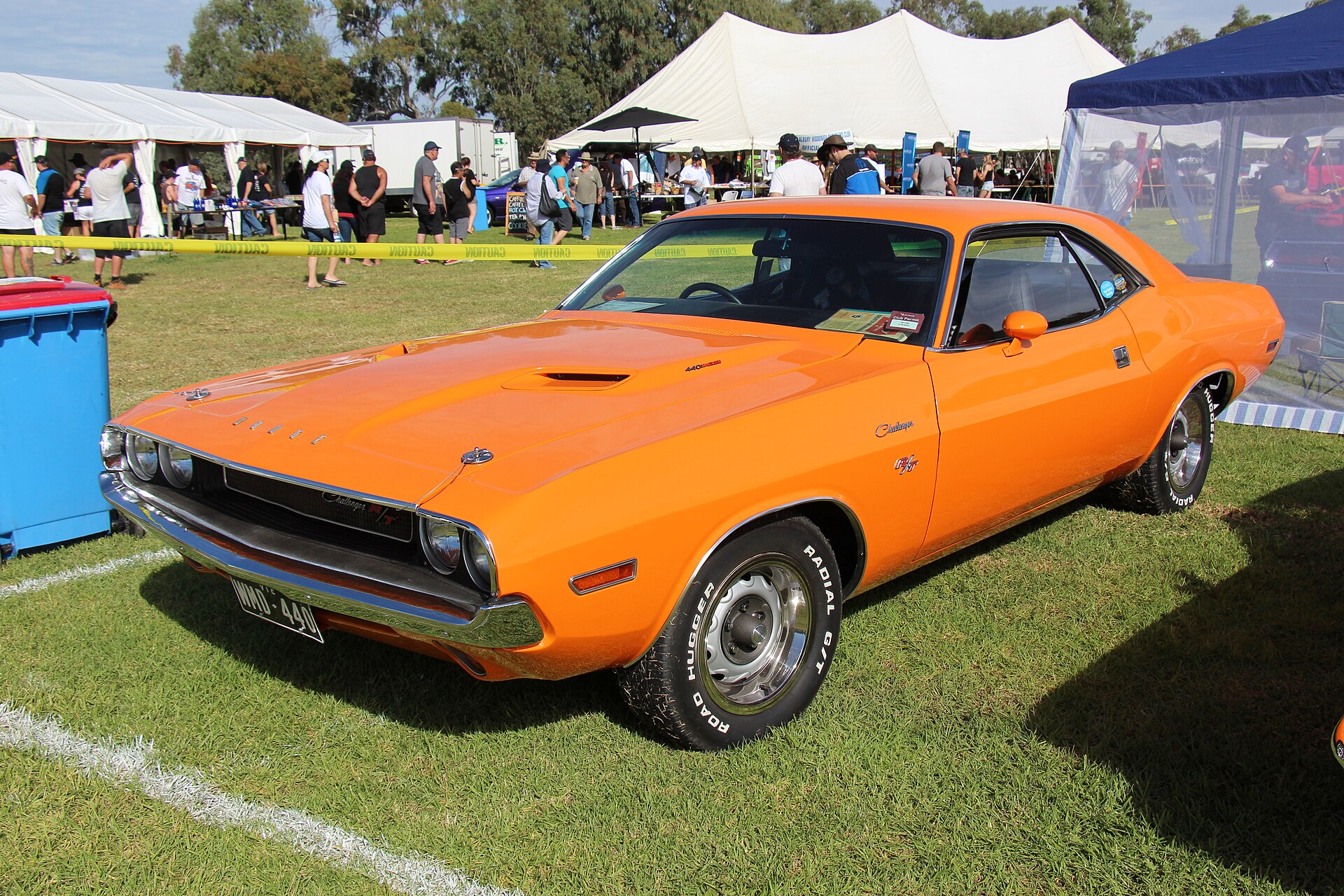
The R/T could also be ordered with three big-block options. The 440 Magnum had 280 kW (375 hp), the 440 Six Pack with three two-barrel carburettors 291 kW (390 hp), and the 426 Hemi 317 kW (425 hp). All of these are SAE gross figures. For 1971 Dodge published both ratings: the Hemi was listed at 317 kW (425 hp) gross and 261 kW (350 hp) net, the 440 Six Pack at 287 kW (385 hp) gross and 254 kW (340 hp) net.
For 1972 everything changed. The big-block engines, the convertible and the R/T disappeared; a Rallye model took its place. Ratings moved to SAE net, and the engines were detuned to run on lead-free petrol. The 340 was then listed at 179 kW (240 hp) net, and the last cars of 1974 had a 360 V8 with 183 kW (245 hp).

Trans-Am racing
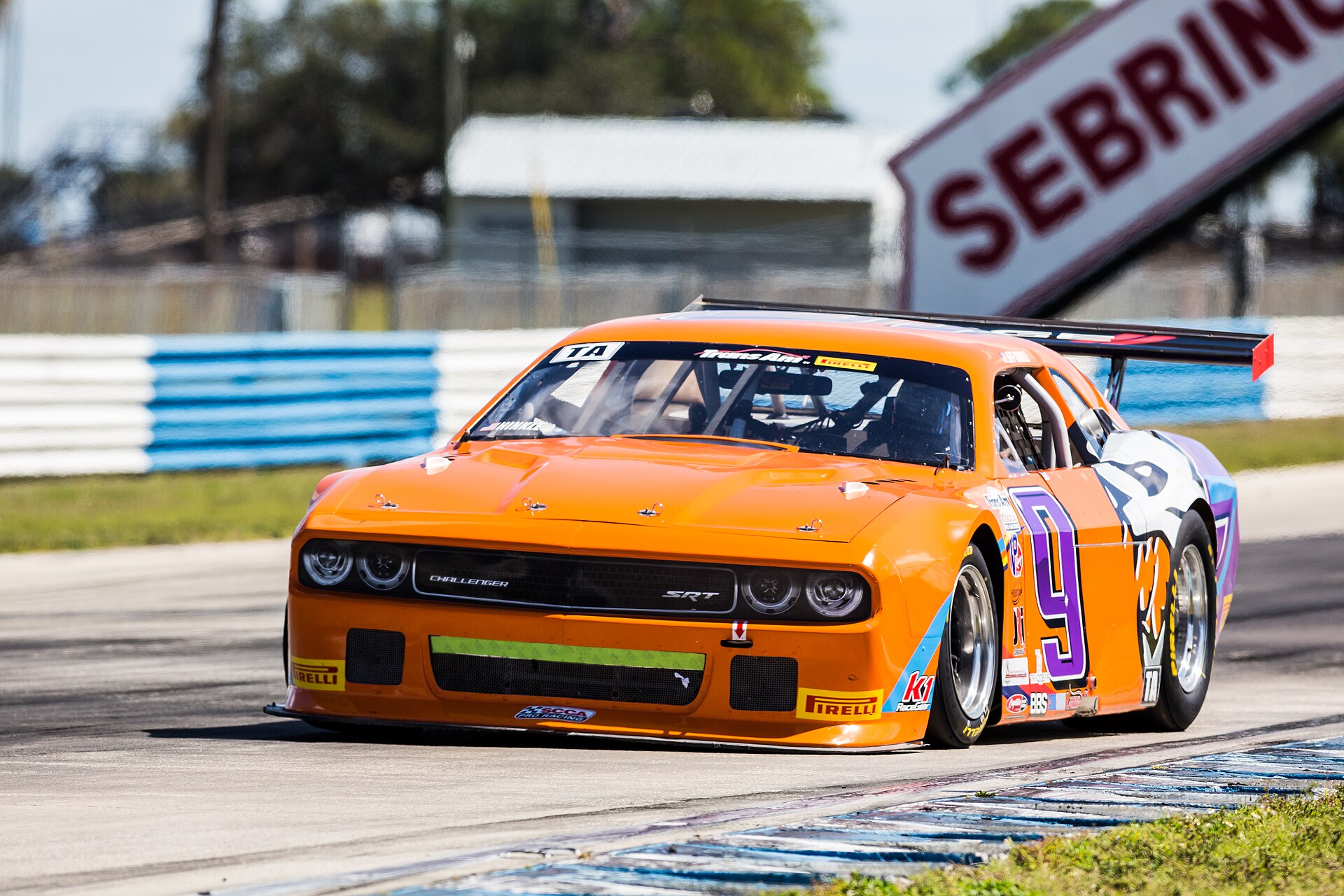
The Challenger T/A existed because of the SCCA Trans-Am series. Its 340 Six Pack was rated at 216 kW (290 hp), only 11 kW (15 hp) more than the standard 340. Wikipedia gives two production figures: 2,399 in the text and 2,539 in the production table.
Dodge entered two factory-backed cars in 1970, prepared by Ray Caldwell's Autodynamics. Sam Posey drove the No. 77 car in a bright "sub-lime" colour, and Tony Adamowicz drove the second car. Dodge left the series at the end of the season.

The second generation (1978–1983)
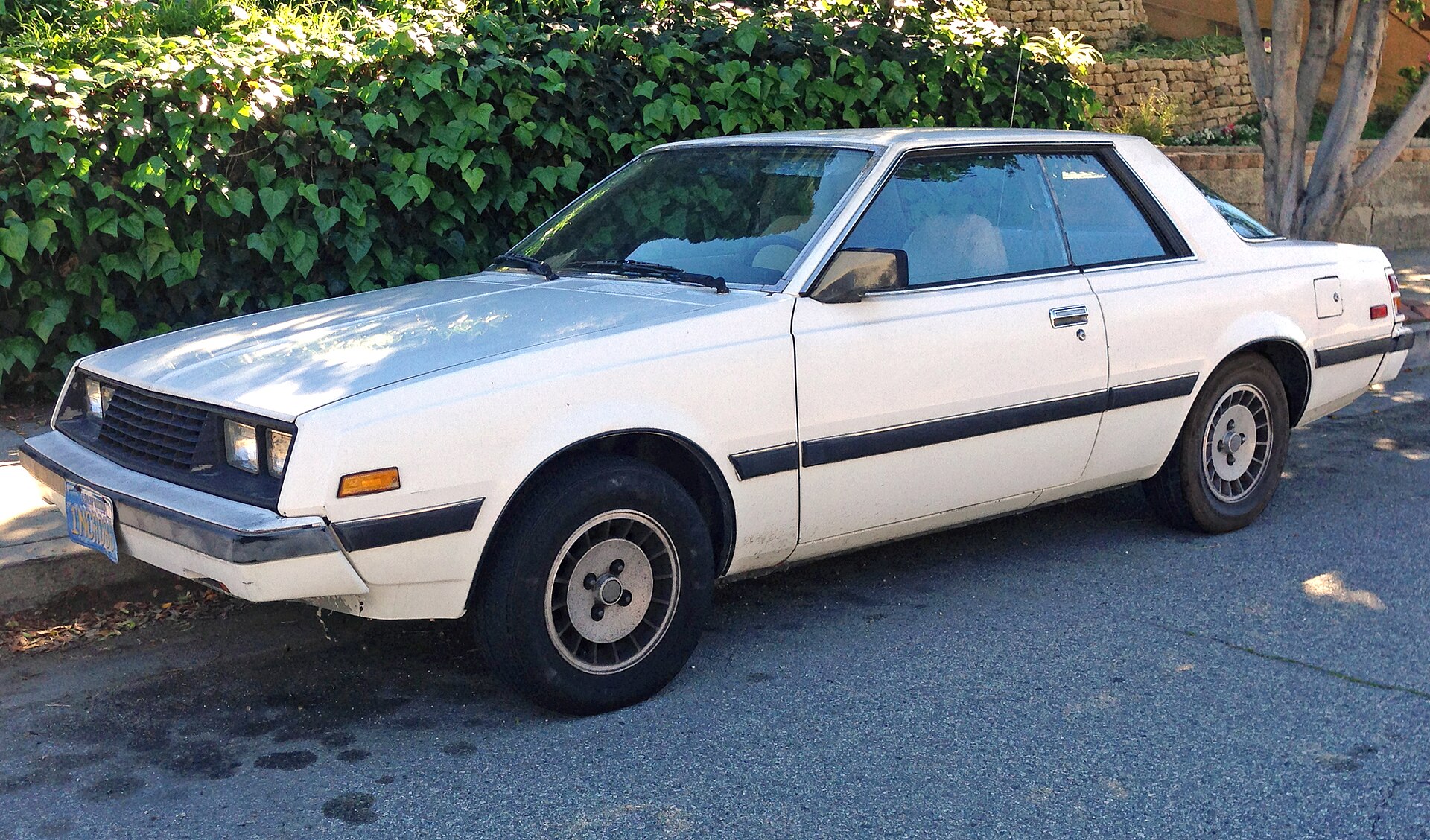
From 1978 to 1983 the Challenger name was used on a rebadged Mitsubishi Galant Lambda coupé, also sold as the Sapporo. It had no technical connection to the original and is not counted as a muscle car.
The third generation (2008–2023)
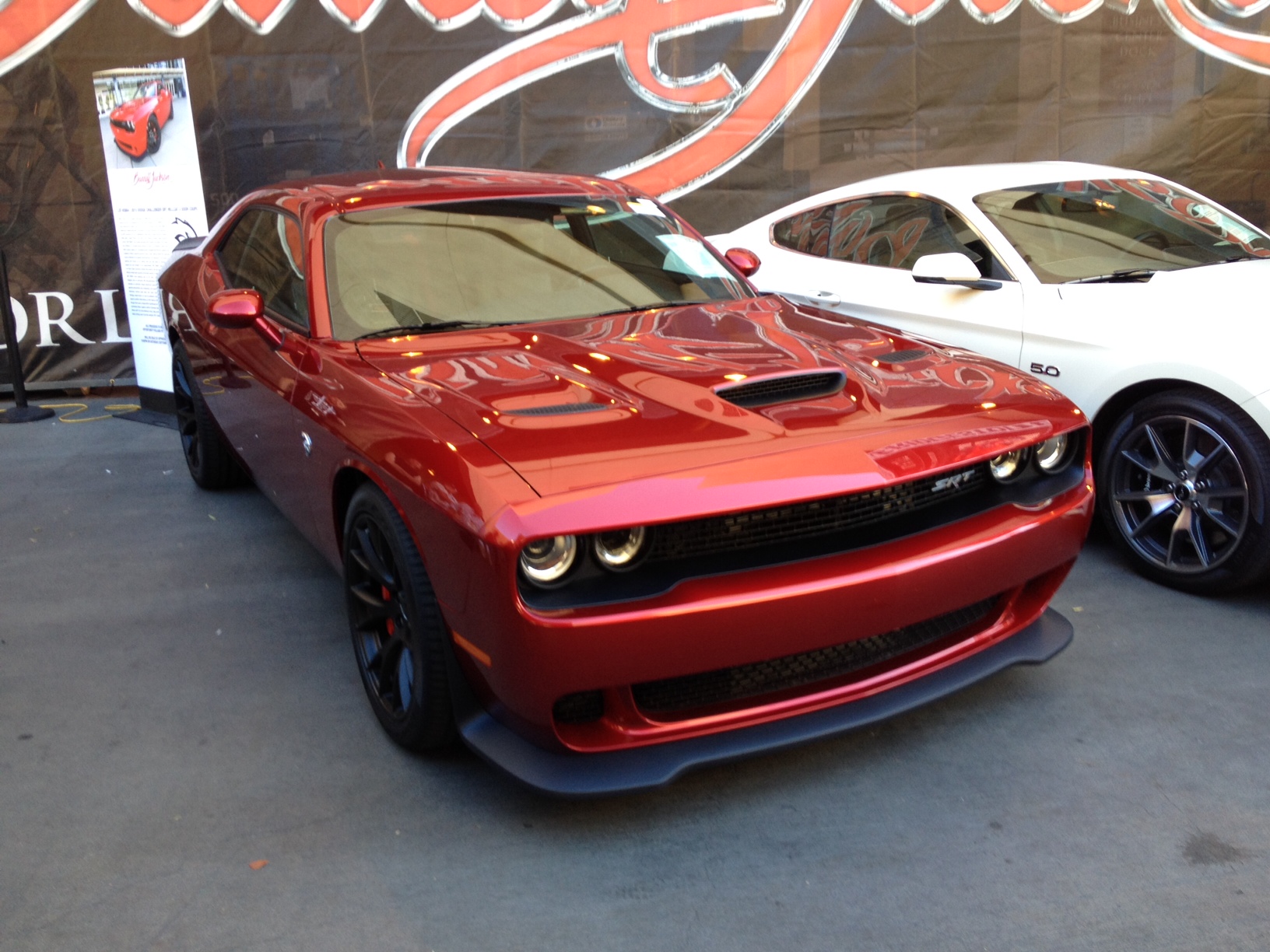
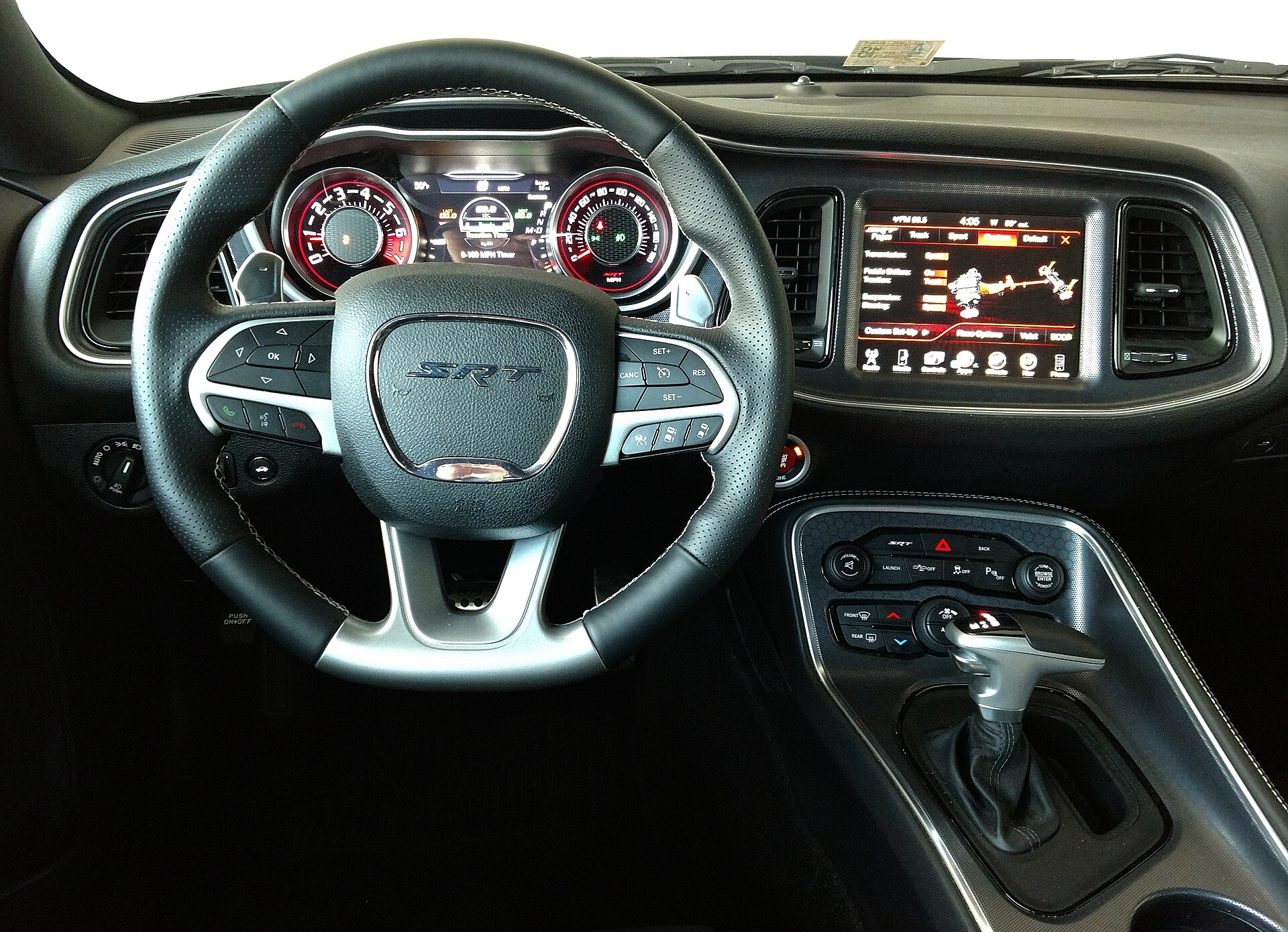
The modern Challenger was previewed by a concept car at the 2006 North American International Auto Show. Production began in 2008 in Brampton, Ontario, on the LC platform, a shorter version of the LX platform of the Charger sedan. All 7,119 cars of the 2008 model year were SRT8s with a 6.1-litre Hemi V8 rated at 317 kW (425 hp).
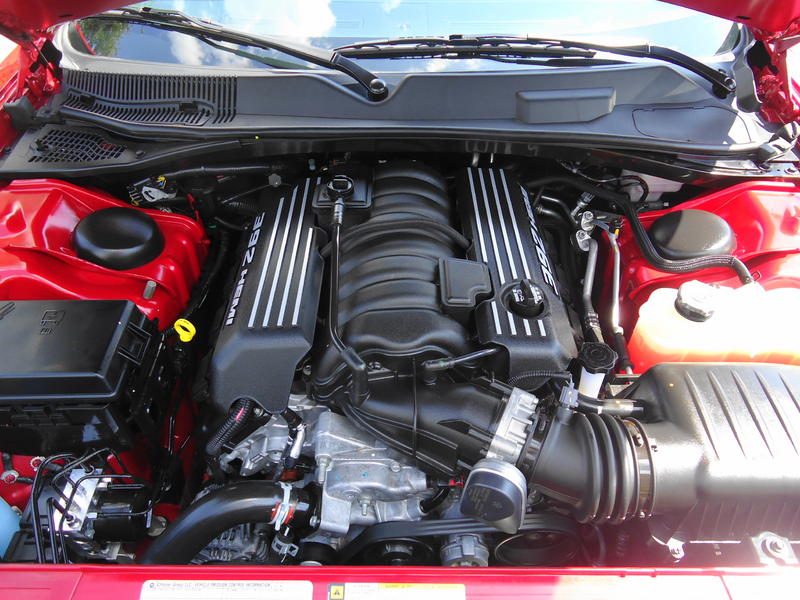
From 2009 the range widened. The SXT had a 3.5-litre V6 with 186 kW (250 hp), replaced in 2011 by the 3.6-litre Pentastar with 227 kW (305 hp). The R/T used a 5.7-litre Hemi with 277 kW (372 hp) with the automatic or 280 kW (375 hp) with the six-speed manual. The 2011 SRT8 392 brought a 6.4-litre Hemi with 350 kW (470 hp) and 637 Nm. After the 2015 facelift it gave 362 kW (485 hp) and 644 Nm. In 2017 the GT added all-wheel drive with the V6 and an eight-speed automatic.


Hellcat, Demon and Demon 170
The 2015 SRT Hellcat put a supercharged 6.2-litre V8 with 527 kW (707 hp) and 881 Nm into the Challenger. The Hellcat Redeye later raised this to 594 kW (797 hp), and the 2020 SRT Super Stock to 602 kW (807 hp).
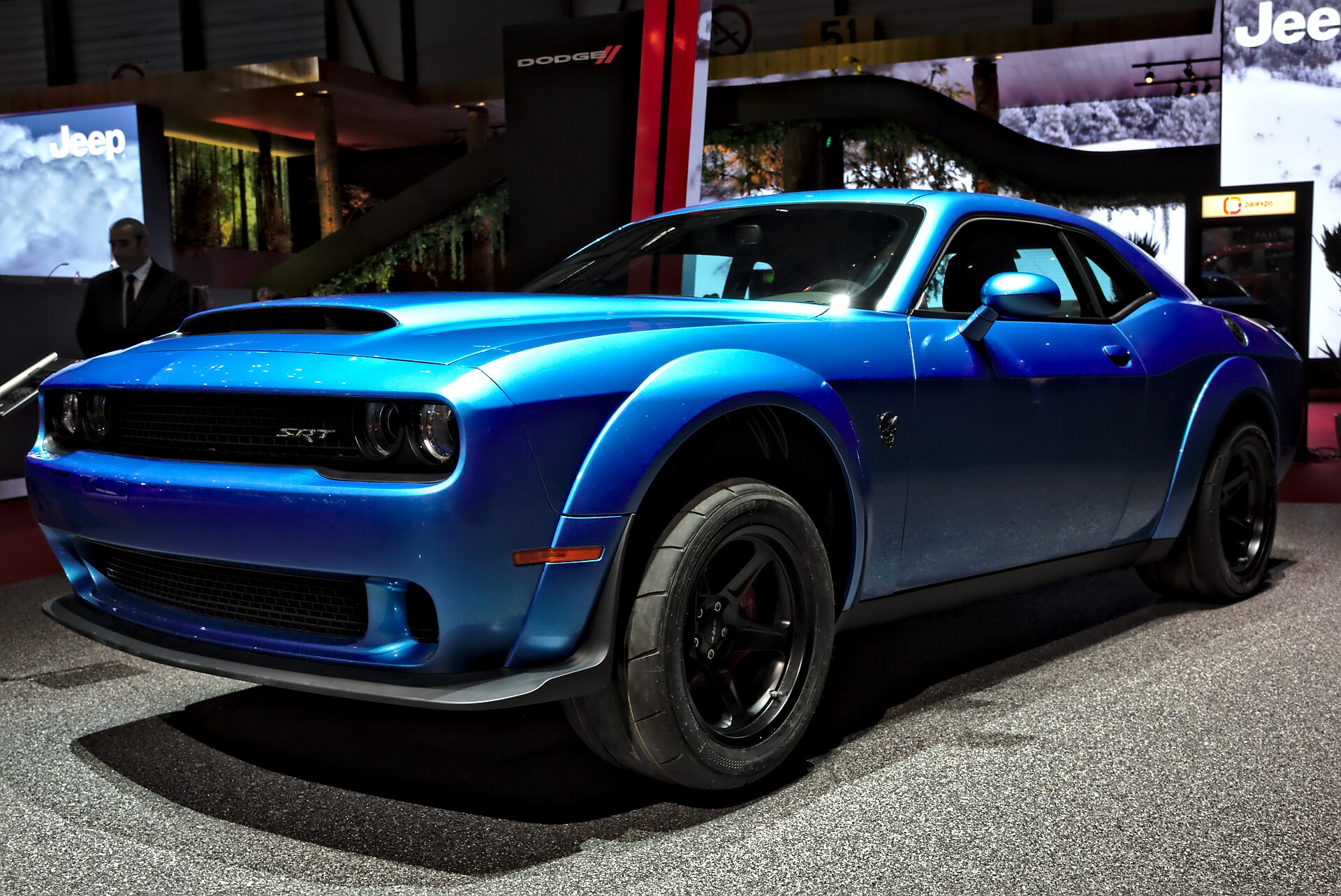
The 2018 SRT Demon was built for the drag strip: 602 kW (808 hp) on 91-octane fuel and 626 kW (840 hp) on fuel of 100 octane or more. Production was limited to 3,300 cars. Read more in our article on the Challenger SRT Demon.
The last word was the SRT Demon 170 of 2023 with 764 kW (1,025 hp) and 1,281 Nm. Dodge planned 3,000 cars for the United States and 300 for Canada. Stellantis had announced in November 2021 that 2023 would be the final model year, and Dodge introduced seven "Last Call" special models in August 2022. The final Challenger, a Pitch-Black Demon 170, was built on 22 December 2023. Wikipedia's sales table gives 806,925 third-generation cars sold, with 2018 the best year at 70,139.

Which Challenger to look at
Among classics, the 1970 R/T with the 440 Six Pack or the Hemi and the 1970 T/A are the cars most people look for. The convertible was offered only for 1970 and 1971. For the modern car, the R/T Scat Pack with the 6.4-litre Hemi is the middle ground, and the Hellcat and Demon models are the extreme end. Power figures can be compared with other cars in our car rankings.
Photo gallery


Dodge Challenger evolution in numbers
Did you know?
- Our catalog covers 3 generations of the Dodge Challenger, from 1969 to 2023.
- The longest-running generation is the Challenger LC (2008–2023): 15 years.
Dodge Challenger: first vs latest generation
| Spec | Challenger I | Challenger LC | Change |
|---|---|---|---|
| Years | 1969–1974 | 2008–2023 | 39 years apart |
| Most powerful version | 317 kW (431 PS) | 764 kW (1,039 PS) | +447 kW (+141%) |
Oldest and newest generation in the 1cars catalog. Power is the strongest version of each; other rows are shown only when both generations have the figure.
Image credits · Photos from Wikimedia Commons under free licences
- Dodge Challenger I · Photo: AlfvanBeem / Wikimedia Commons, CC0
- Dodge Challenger II · Photo: GalantFan / Wikimedia Commons, CC BY-SA 4.0
Dodge Challenger in our rankings
- No. 4 of 154 · Most powerful American cars (764 kW)
- No. 8 of 51 · Most economical coupes (10.2 l/100 km)
- No. 27 of 859 · Most powerful cars (764 kW · top 4%)
- No. 24 of 313 · Most powerful coupes (764 kW · top 8%)
- No. 67 of 557 · Biggest engines: cars (6,400 cc · top 13%)
- No. 46 of 173 · Biggest engines: coupes (6,400 cc · top 28%)
More powerful than 96% of ranked American cars in the 1CARS catalog (No. 4 of 154).
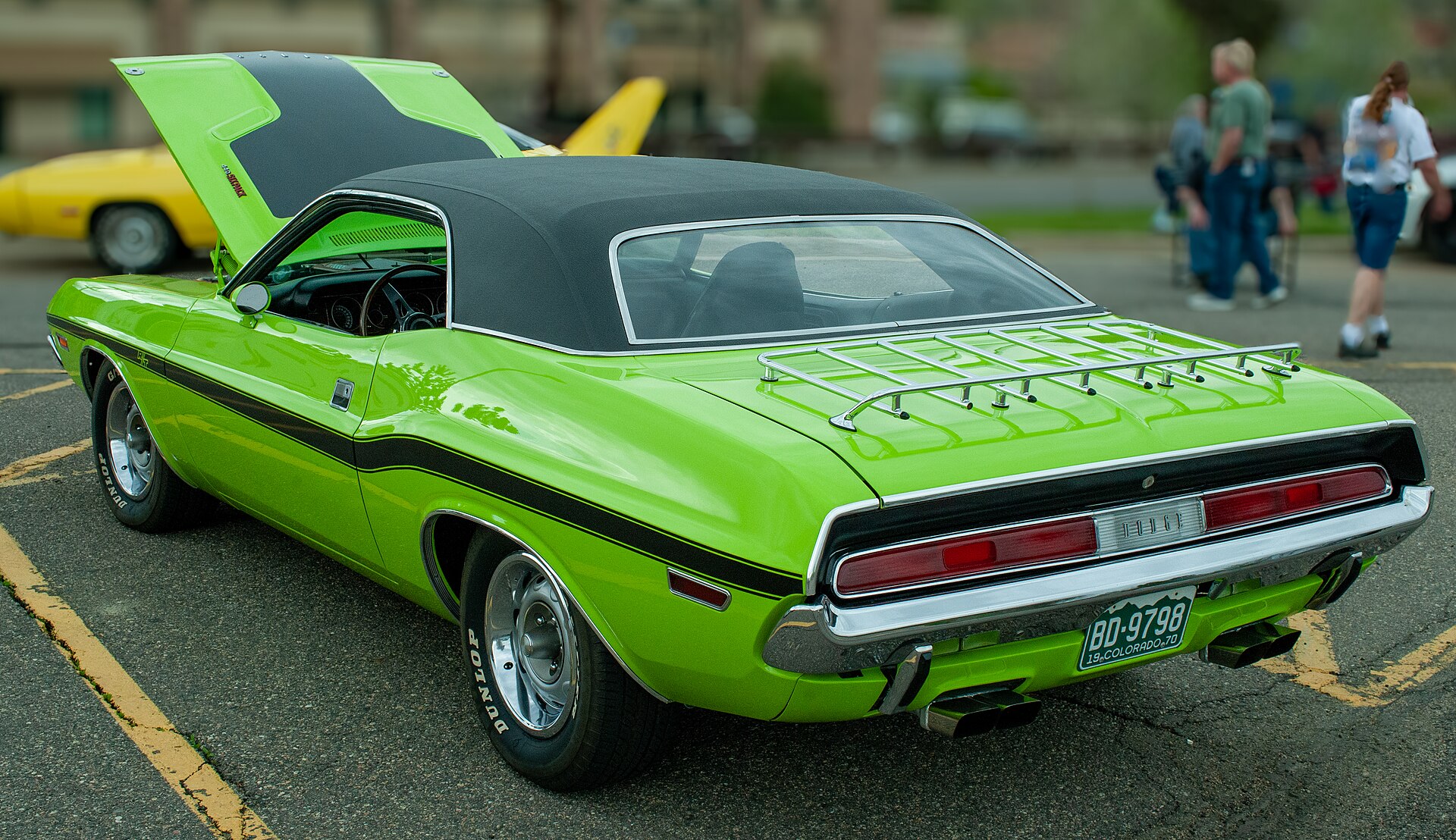
Dodge Challenger photos 7
FAQ
How many first-generation Challengers were built?
165,437 in the 1970–1974 model years; the first year alone accounts for 76,935 cars.
Is the Dodge Challenger a muscle car or a pony car?
It was designed as a pony car on the E-body. The V8 versions, especially the R/T and the modern SRT models, are counted as muscle cars.
What was the most powerful Challenger?
The 2023 SRT Demon 170 with 764 kW (1,025 hp).
When did Challenger production end?
On 22 December 2023 in Brampton, Ontario. The 2024 two-door Charger replaces it.
Data sources
Data checked by an editor against the sources below.
- Wikipedia — Dodge Challenger
- Wikipedia — Dodge Challenger (1970)
- Wikipedia — Dodge Challenger (2008)
- US EPA fueleconomy.gov — 46264.shtml
- US EPA fueleconomy.gov — 46265.shtml
- NHTSA 5-Star Safety Ratings (US NCAP) — U.S. Government work, public domain