 Dodge Charger
All generations, specs and history
Published Sources (6) Report an error
By Felix Hartmann, Automotive Technology & EV Contributor
- Built
- 1966–present
- Generations
- 8
- Top power
- 602 kW (818 PS)
Timeline
Charger generations
Click a generation for its own page
- Charger I 1966–1967 · Coupe · 317 kW (431 PS)
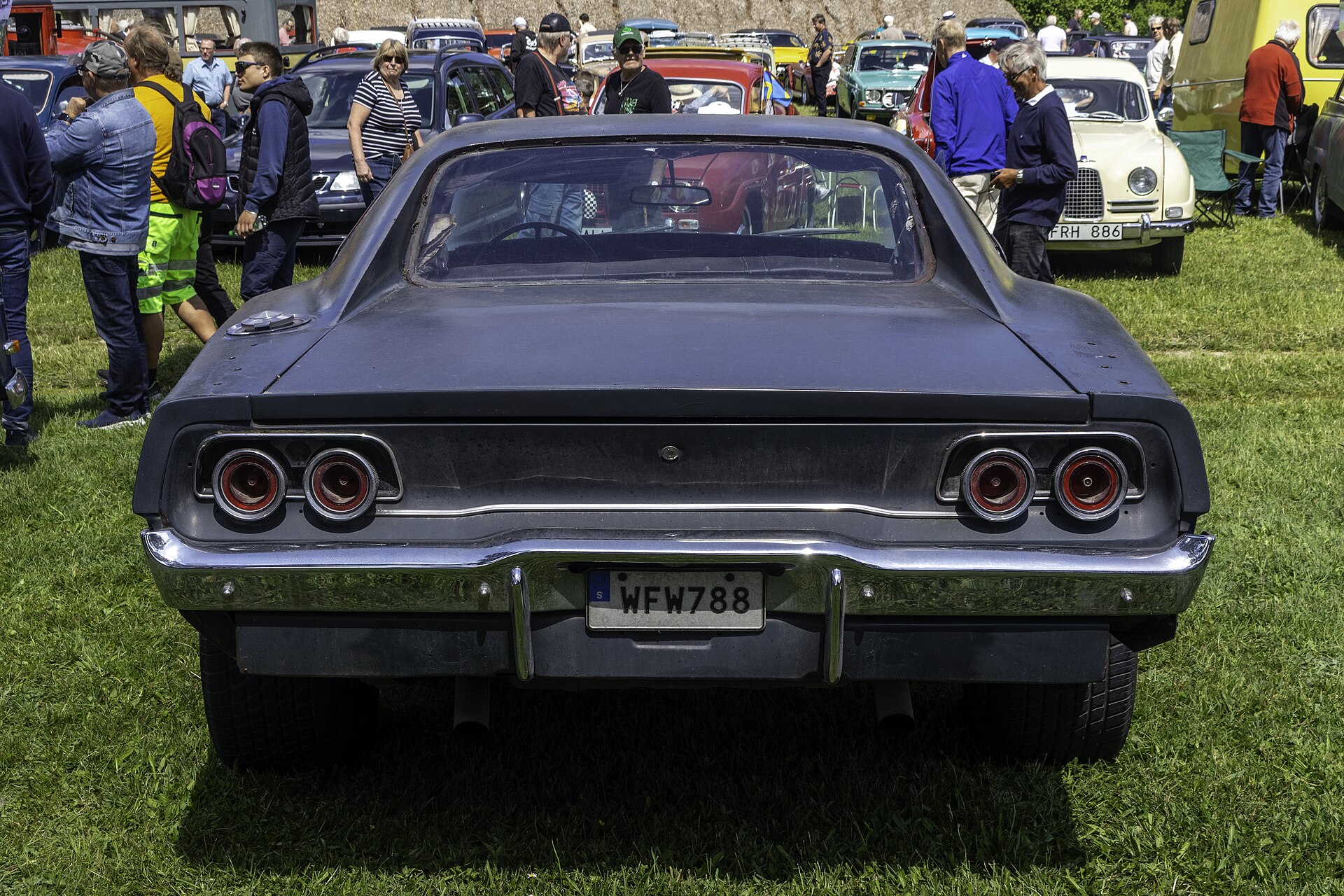
- Charger II 1968–1970 · Coupe · 317 kW (431 PS)
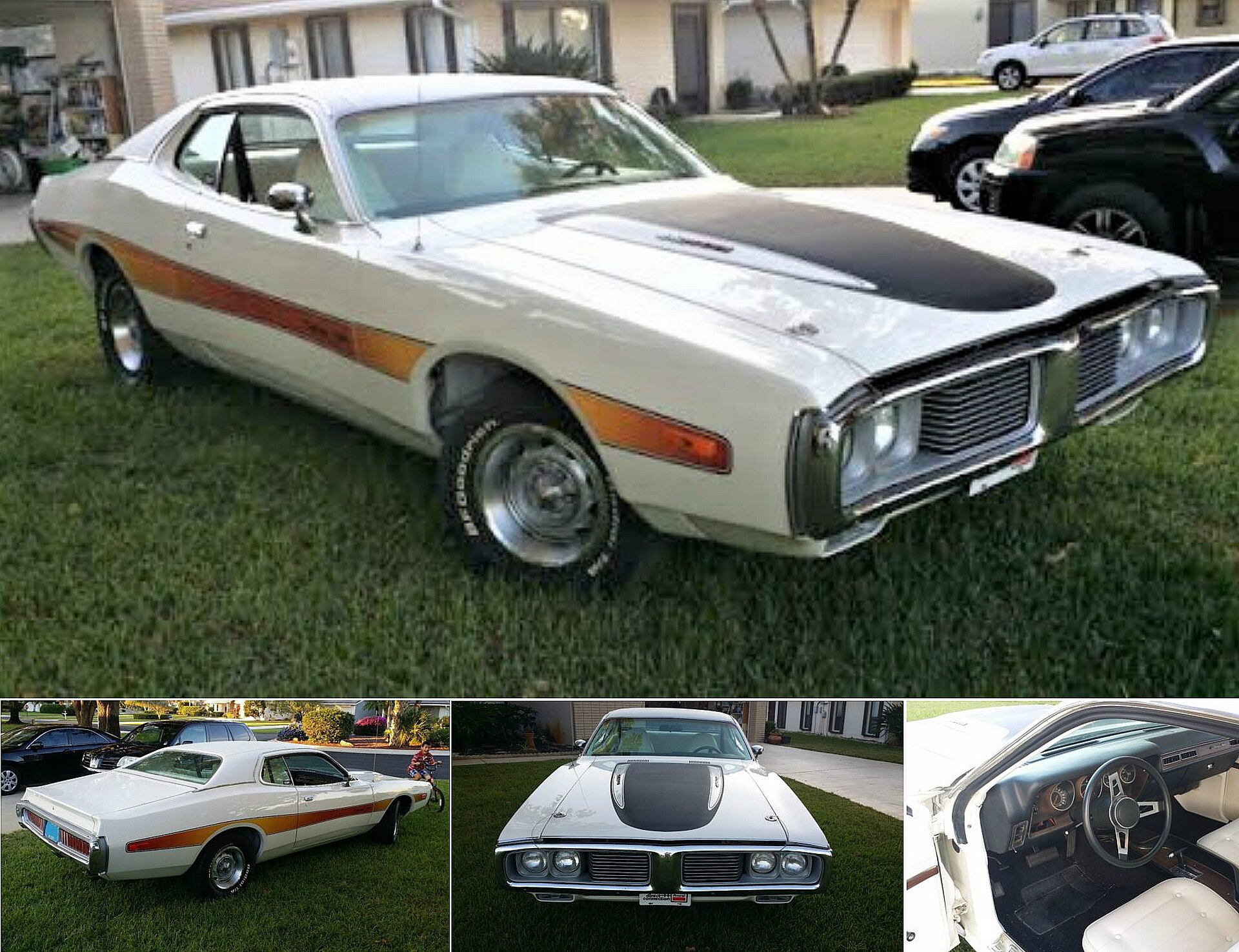
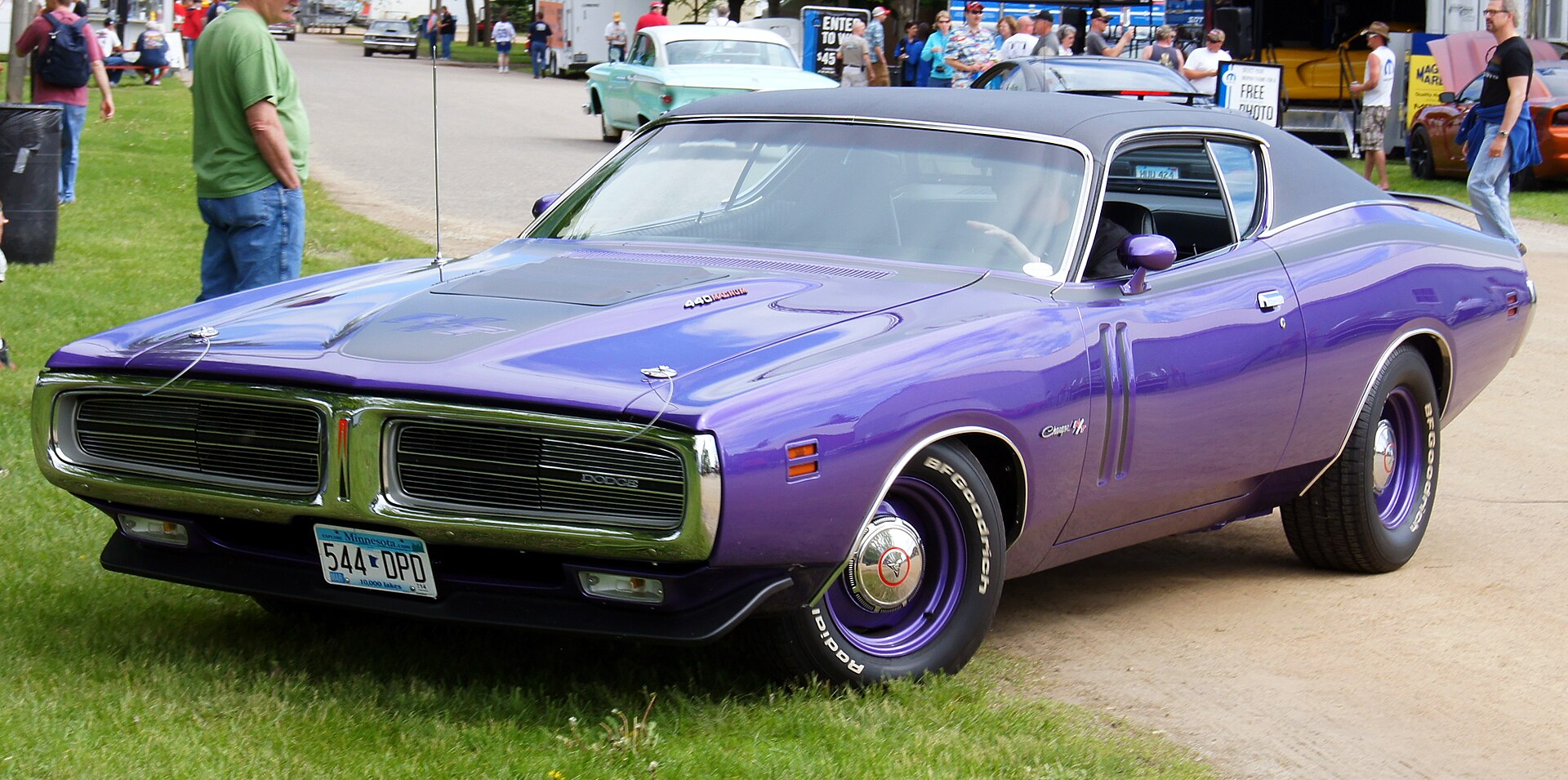
- Charger III 1971–1974 · Coupe · 317 kW (431 PS)
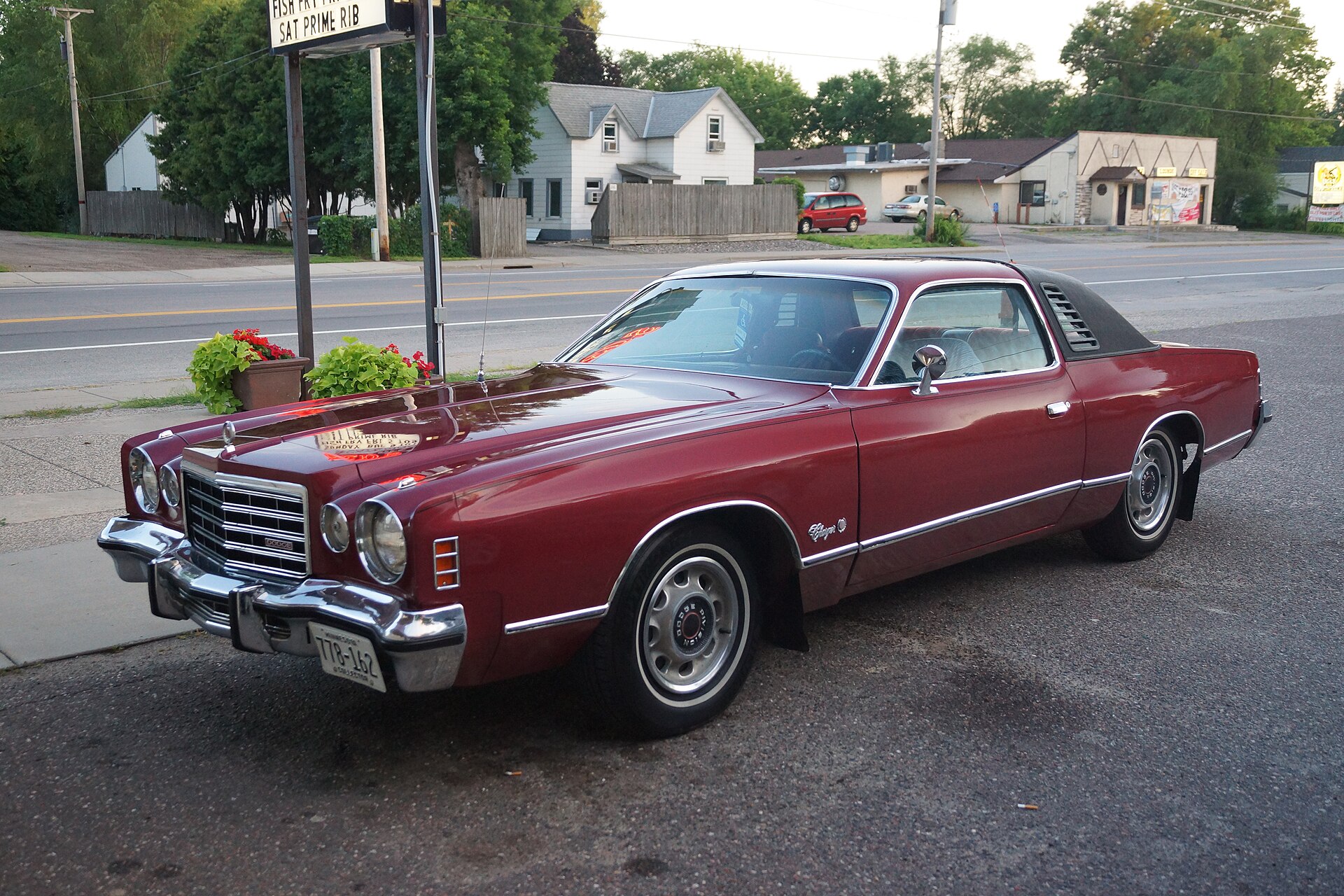
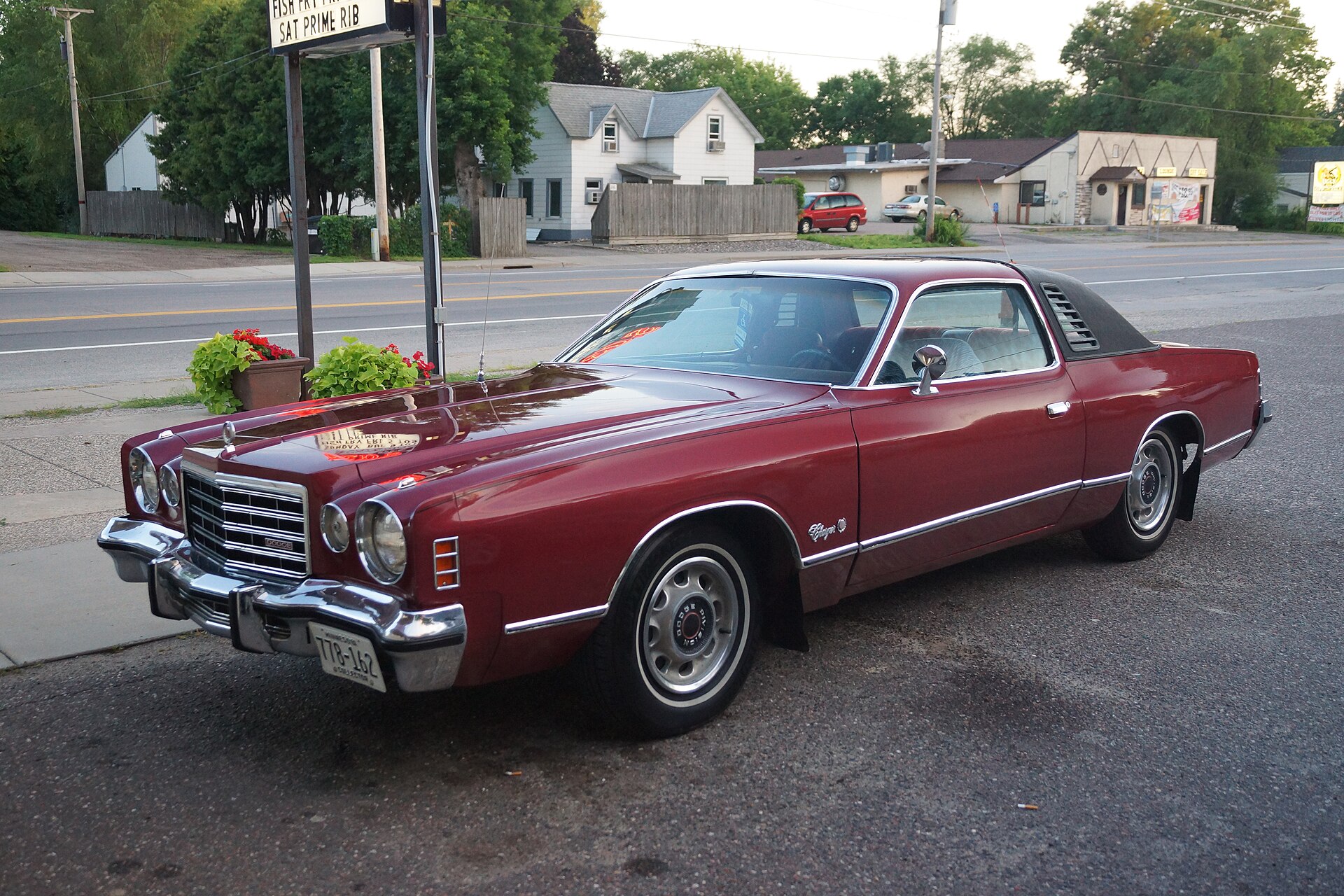
- Charger IV 1976–1978 · Coupe
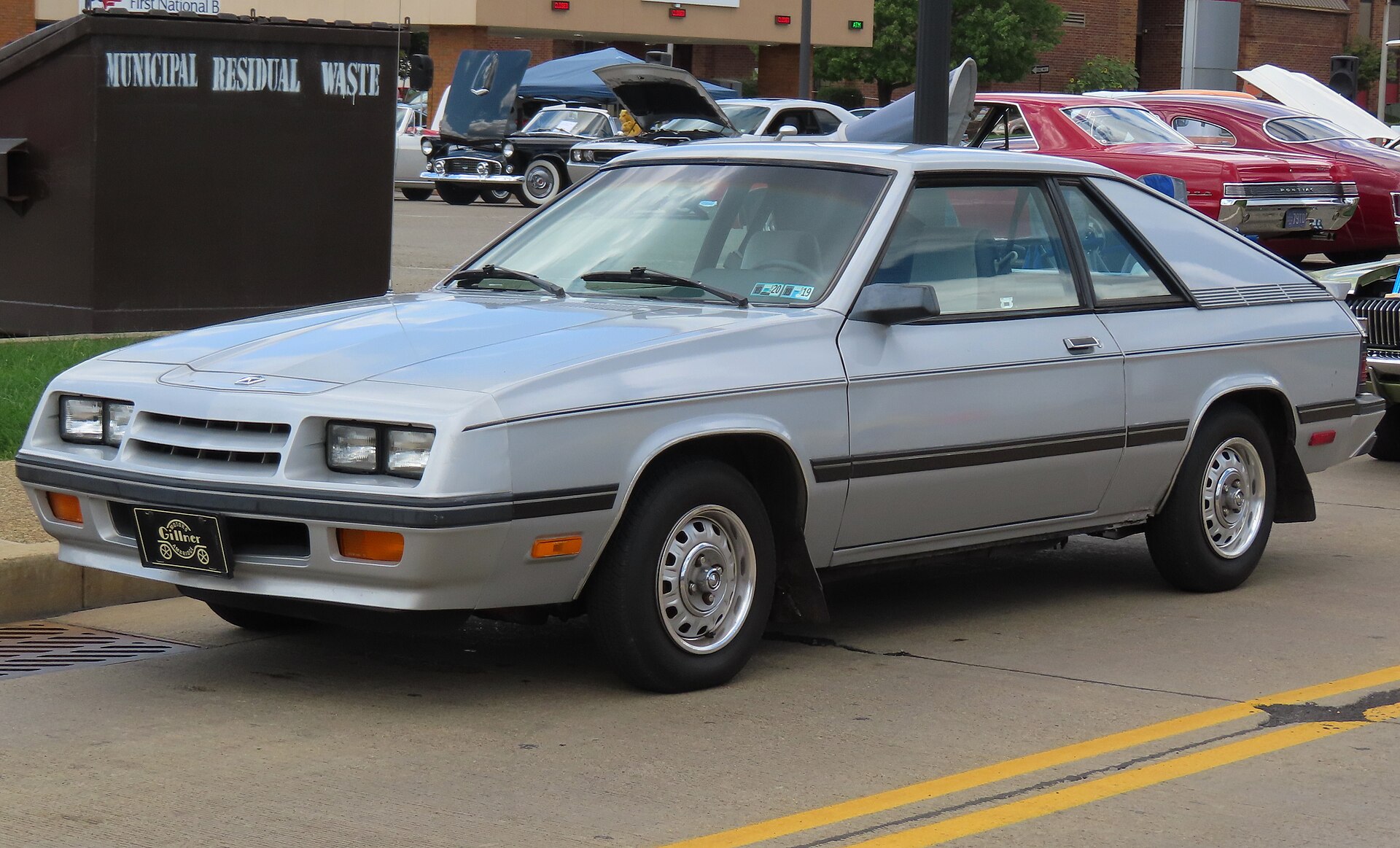
- Charger V 1981–1987 · Hatchback · 52–130 kW (71–177 PS)
- Charger LX 2006–2010 · Sedan · 133–317 kW (181–431 PS)
- Charger LD 2011–2023 · Sedan · 218–602 kW (296–818 PS)
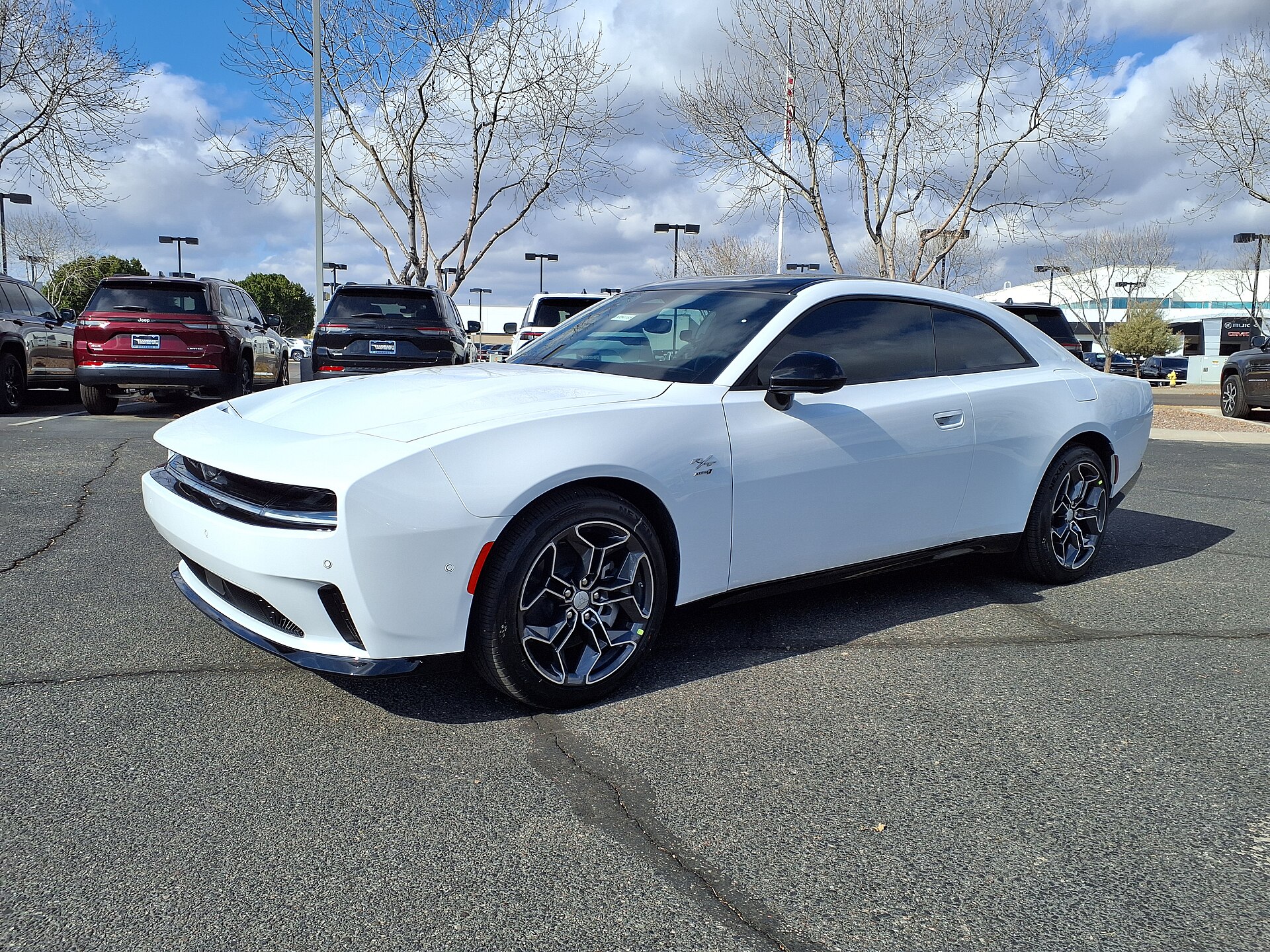
- Charger VIII Current 2024–now · Liftback · 313–500 kW (426–680 PS)
Newest first · 8 generations since 1966
-
2024
-
2011
-
2006
-
1981
-
1976
-
1971
-
1968
-
1966


All generations by year: Charger VIII (2024–now) · Charger LD (2011–2023) · Charger LX (2006–2010) · Charger V (1981–1987) · Charger IV (1976–1978) · Charger III (1971–1974) · Charger II (1968–1970) · Charger I (1966–1967)
Which one is mine?
Pick the year of first registration to see which generation it is.
- Charger VIII 2024–present
- LD 2011–2023
- LX 2006–2010
- Charger V 1981–1987
- Charger IV 1976–1978
- Charger III 1971–1974
- Charger II 1968–1970
- Charger I 1966–1967
The Dodge Charger is the nameplate that has covered almost every idea of an American performance car. It began in 1966 as a Hemi-powered fastback on the mid-size B-body and became a television star as the 1968–1970 coupé. In 2006 it returned as a four-door sedan with Hemi V8s. The current car, built in Windsor, Ontario, comes as a two-door or four-door and as the first electric Charger.
In short
- Introduced in the 1966 model year as a fastback on the Coronet's B-body, shown on 1 January 1966 during the Rose Bowl broadcast.
- The 426 Hemi gave 317 kW (425 hp, SAE gross); the 1968 R/T had the 440 Magnum as standard.
- The 1969 Charger Daytona with its nose cone and rear wing was built for stock car racing; 503 were made for the United States.
- The 2015 SRT Hellcat had 527 kW (707 hp); the 2024 electric Charger Daytona Scat Pack has 500 kW (670 hp).
Running cost
Fuel · Charger LD 3.6 L 6 cyl Automatic 8-spd · 2019 (EPA)
about 2,700 EUR fuel a year at 15,000 km
10.2 l/100 km · petrol at 1.75 EUR/l · change mileage, fuel price or version
Specs by version
Engines
| Version | Engine | Gearbox | Drive | Production years |
|---|---|---|---|---|
| LD · 2011–2023 | ||||
| LD · 3.6 L 6 cyl Automatic 8-spd · 2023 (EPA) | 3.6 l · 6 cyl 3,600 cc | 8-sp Automatic | Rear-wheel drive | 2023 |
| LD · 3.6 L 6 cyl Automatic 8-spd · 2022 (EPA) | 3.6 l · 6 cyl 3,600 cc | 8-sp Automatic | Rear-wheel drive | 2022 |
| LD · 3.6 L 6 cyl Automatic 8-spd · 2021 (EPA) | 3.6 l · 6 cyl 3,600 cc | 8-sp Automatic | Rear-wheel drive | 2021 |
| LD · 3.6 L 6 cyl Automatic 8-spd · 2020 (EPA) | 3.6 l · 6 cyl 3,600 cc | 8-sp Automatic | Rear-wheel drive | 2020 |
| LD · 3.6 L 6 cyl Automatic 8-spd · 2019 (EPA) | 3.6 l · 6 cyl 3,600 cc | 8-sp Automatic | Rear-wheel drive | 2019 |
| LD · 3.6 L 6 cyl Automatic 8-spd · 2019 (EPA) | 3.6 l · 6 cyl · Petrol 3,600 cc | 8-sp Automatic | Rear-wheel drive | 2019 |
| LD · 5.7 L 8 cyl Automatic 8-spd · 2023 (EPA) | 5.7 l · 8 cyl 5,700 cc | 8-sp Automatic | Rear-wheel drive | 2023 |
| LD · 5.7 L 8 cyl Automatic 8-spd · 2022 (EPA) | 5.7 l · 8 cyl 5,700 cc | 8-sp Automatic | Rear-wheel drive | 2022 |
| LD · 5.7 L 8 cyl Automatic 8-spd · 2021 (EPA) | 5.7 l · 8 cyl 5,700 cc | 8-sp Automatic | Rear-wheel drive | 2021 |
| LD · 5.7 L 8 cyl Automatic 8-spd · 2020 (EPA) | 5.7 l · 8 cyl 5,700 cc | 8-sp Automatic | Rear-wheel drive | 2020 |
| LD · 5.7 L 8 cyl Automatic 8-spd · 2019 (EPA) | 5.7 l · 8 cyl 5,700 cc | 8-sp Automatic | Rear-wheel drive | 2019 |
| LD · 6.4 L 8 cyl Automatic 8-spd · 2023 (EPA) | 6.4 l · 8 cyl 6,400 cc | 8-sp Automatic | Rear-wheel drive | 2023 |
| LD · 6.4 L 8 cyl Automatic 8-spd · 2022 (EPA) | 6.4 l · 8 cyl 6,400 cc | 8-sp Automatic | Rear-wheel drive | 2022 |
| LD · 6.4 L 8 cyl Automatic 8-spd · 2021 (EPA) | 6.4 l · 8 cyl 6,400 cc | 8-sp Automatic | Rear-wheel drive | 2021 |
| LD · 6.4 L 8 cyl Automatic 8-spd · 2020 (EPA) | 6.4 l · 8 cyl 6,400 cc | 8-sp Automatic | Rear-wheel drive | 2020 |
| LD · 6.4 L 8 cyl Automatic 8-spd · 2019 (EPA) | 6.4 l · 8 cyl 6,400 cc | 8-sp Automatic | Rear-wheel drive | 2019 |
Performance
Show all 16 versions
| Version | Fuel consumption |
|---|---|
| LD · 2011–2023 | |
| LD · 3.6 L 6 cyl Automatic 8-spd · 2023 (EPA) | 10.2 l/100 km23.1 mpg US · 27.7 mpg UK |
| LD · 3.6 L 6 cyl Automatic 8-spd · 2022 (EPA) | 10.2 l/100 km23.1 mpg US · 27.7 mpg UK |
| LD · 3.6 L 6 cyl Automatic 8-spd · 2021 (EPA) | 10.2 l/100 km23.1 mpg US · 27.7 mpg UK |
| LD · 3.6 L 6 cyl Automatic 8-spd · 2020 (EPA) | 10.2 l/100 km23.1 mpg US · 27.7 mpg UK |
| LD · 3.6 L 6 cyl Automatic 8-spd · 2019 (EPA) | 10.2 l/100 km23.1 mpg US · 27.7 mpg UK |
| LD · 3.6 L 6 cyl Automatic 8-spd · 2019 (EPA) | 10.2 l/100 km23.1 mpg US · 27.7 mpg UK |
| LD · 5.7 L 8 cyl Automatic 8-spd · 2023 (EPA) | 12.4 l/100 km19.0 mpg US · 22.8 mpg UK |
| LD · 5.7 L 8 cyl Automatic 8-spd · 2022 (EPA) | 12.4 l/100 km19.0 mpg US · 22.8 mpg UK |
| LD · 5.7 L 8 cyl Automatic 8-spd · 2021 (EPA) | 12.4 l/100 km19.0 mpg US · 22.8 mpg UK |
| LD · 5.7 L 8 cyl Automatic 8-spd · 2020 (EPA) | 12.4 l/100 km19.0 mpg US · 22.8 mpg UK |
| LD · 5.7 L 8 cyl Automatic 8-spd · 2019 (EPA) | 12.4 l/100 km19.0 mpg US · 22.8 mpg UK |
| LD · 6.4 L 8 cyl Automatic 8-spd · 2023 (EPA) | 13.1 l/100 km18.0 mpg US · 21.6 mpg UK |
| LD · 6.4 L 8 cyl Automatic 8-spd · 2022 (EPA) | 13.1 l/100 km18.0 mpg US · 21.6 mpg UK |
| LD · 6.4 L 8 cyl Automatic 8-spd · 2021 (EPA) | 13.1 l/100 km18.0 mpg US · 21.6 mpg UK |
| LD · 6.4 L 8 cyl Automatic 8-spd · 2020 (EPA) | 13.1 l/100 km18.0 mpg US · 21.6 mpg UK |
| LD · 6.4 L 8 cyl Automatic 8-spd · 2019 (EPA) | 13.1 l/100 km18.0 mpg US · 21.6 mpg UK |
Verified Manufacturer and type-approval data from our catalog · Sources and methodology
Safety
-
LD · NHTSA 2023
US NCAP (NHTSA)
Stars from different years and organisations are not directly comparable: test protocols change every few years.
Dodge Charger at a glance
| Specification | Dodge Charger |
|---|---|
| Production | 1966–1978, 1981–1987, from 2005 (2006 model year) |
| Generations | eight |
| Body | fastback and hardtop coupé (1966–1978); hatchback (1981–1987); four-door sedan (2006–2023); two-door and four-door liftback (from 2024) |
| Platforms | B-body; L-body; LX and LD; STLA Large |
| Drive | rear-wheel drive; front-wheel drive in the 1980s; all-wheel drive for some sedans and the electric car |
| Classic top engine | 426 Hemi V8, 317 kW (425 hp, SAE gross) |
| Most powerful | 2022 Jailbreak Edition, 602 kW (807 hp) |
| Plants | Brampton, Ontario (2006–2023); Windsor, Ontario (from 2024) |
The Charger appears in our Dodge catalogue with all its generations, and the American muscle car guide shows where it ranks among its rivals.
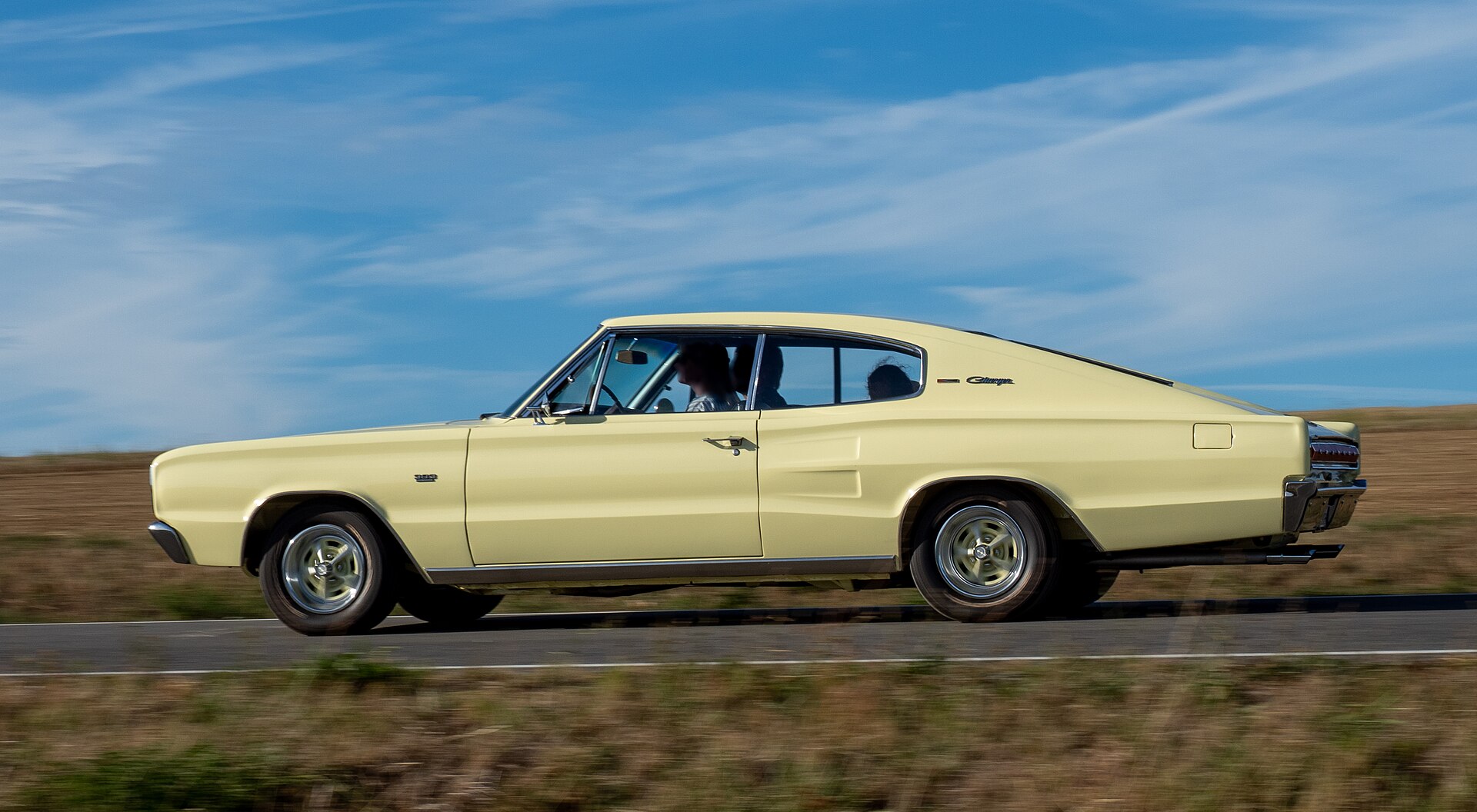
The fastback of 1966
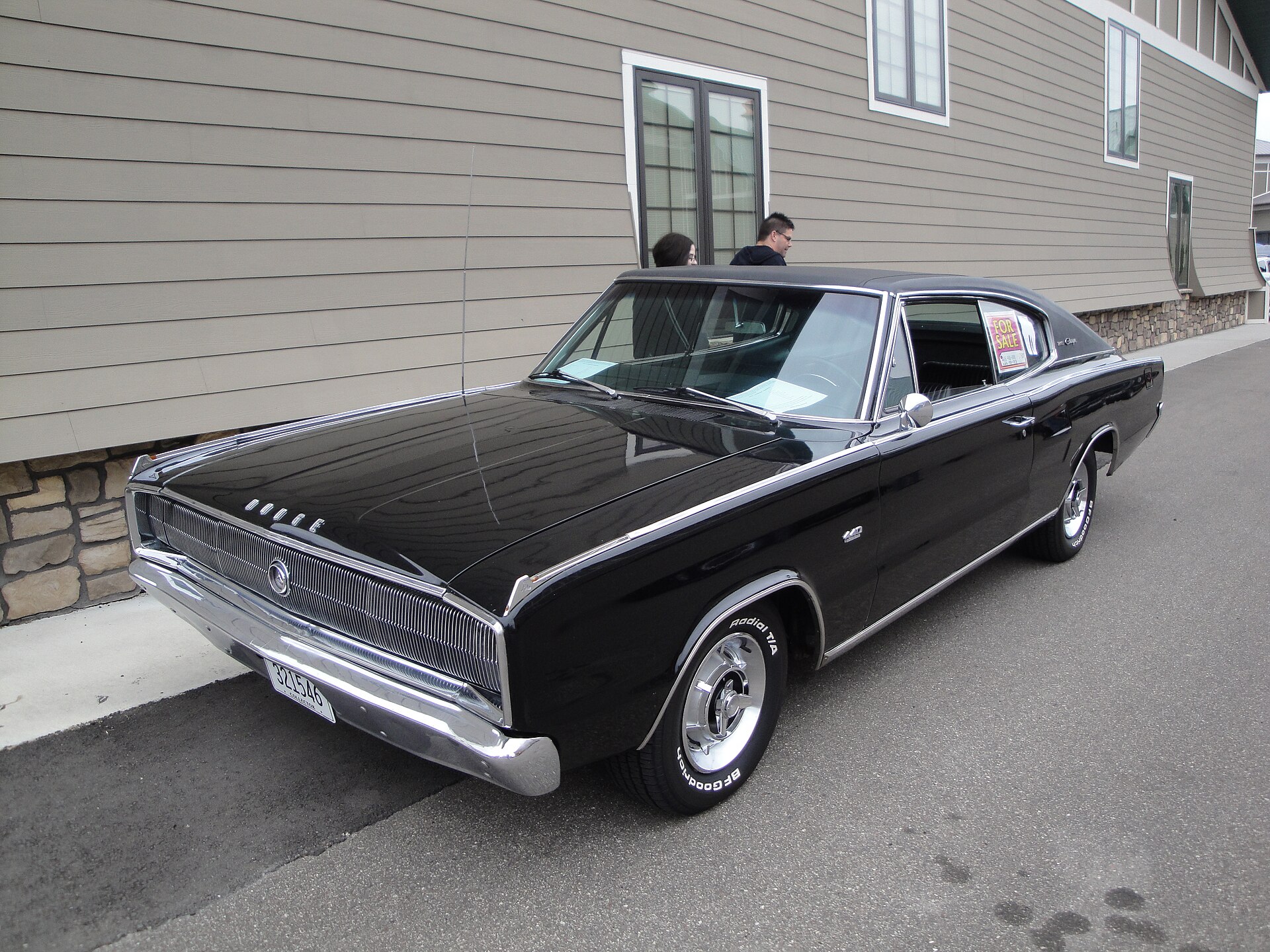
The name first appeared on a 1964 show car, and the Charger II concept of 1965 already looked like the production model. The 1966 Charger arrived in the middle of the model year. It used the chassis and much of the front body of the two-door Coronet, combined with a fastback roof in the style of AMC's 1965 Marlin.
Dodge aimed it at more mature buyers than the pony cars. Four V8 engines were offered: 318, 361, 383 and the 426 Street Hemi. Only 468 of the 37,344 Chargers built for 1966 had the Hemi. In 1967 sales fell to 15,788 cars. That year the 440 V8 was rated at 280 kW (375 hp) and the Hemi at 317 kW (425 hp), and only 118 Chargers received the Hemi.

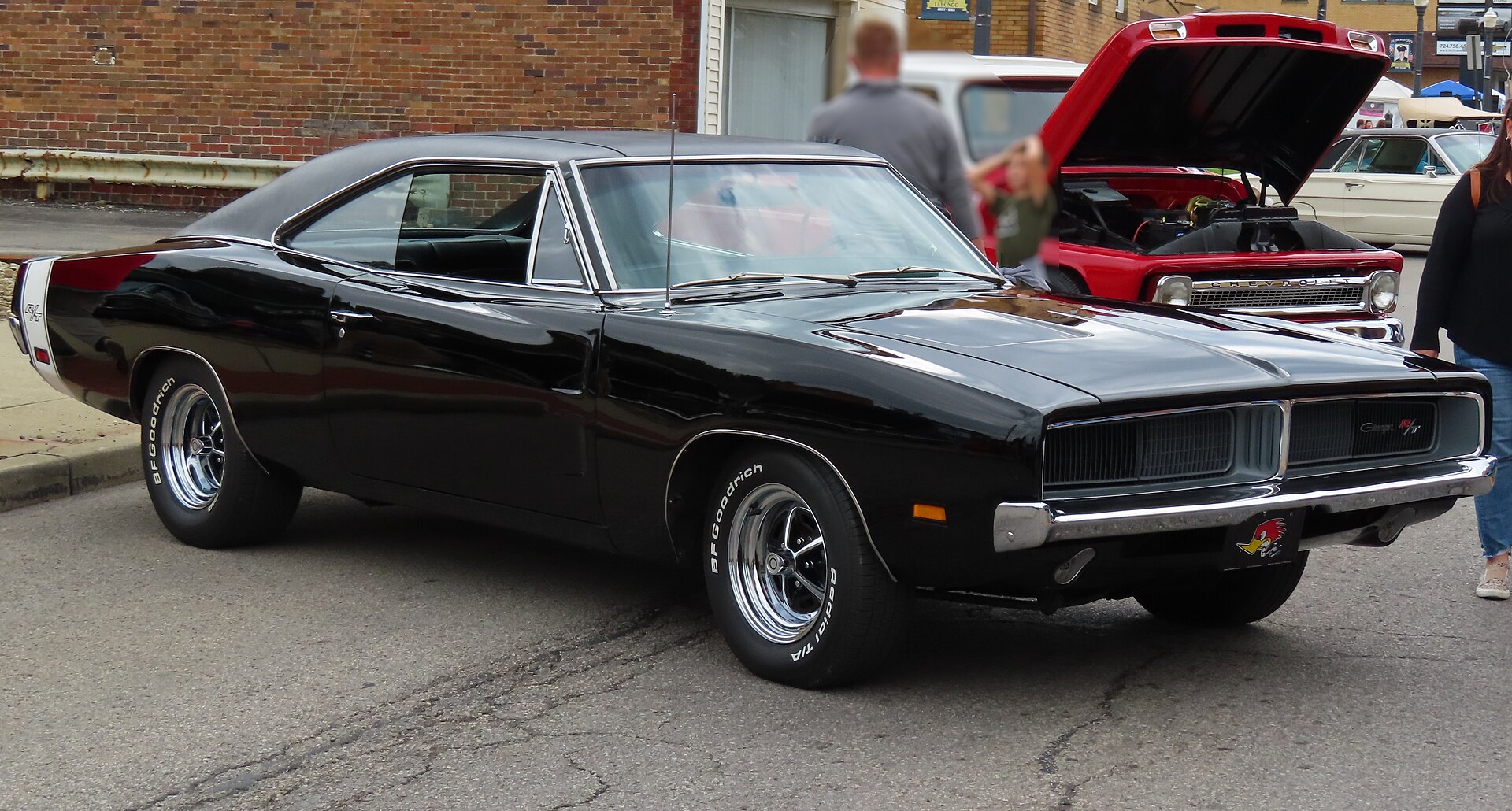
The 1968 "coke bottle" Charger
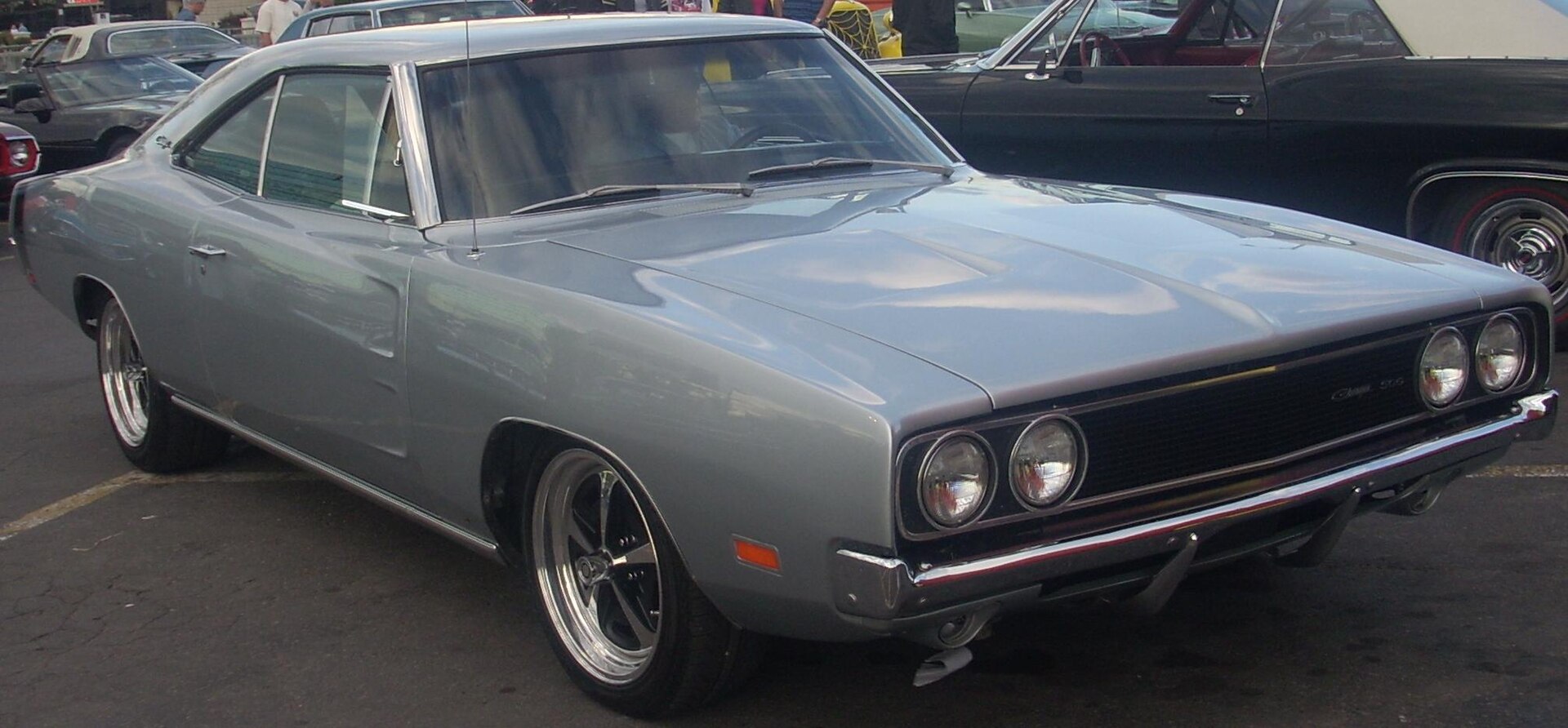
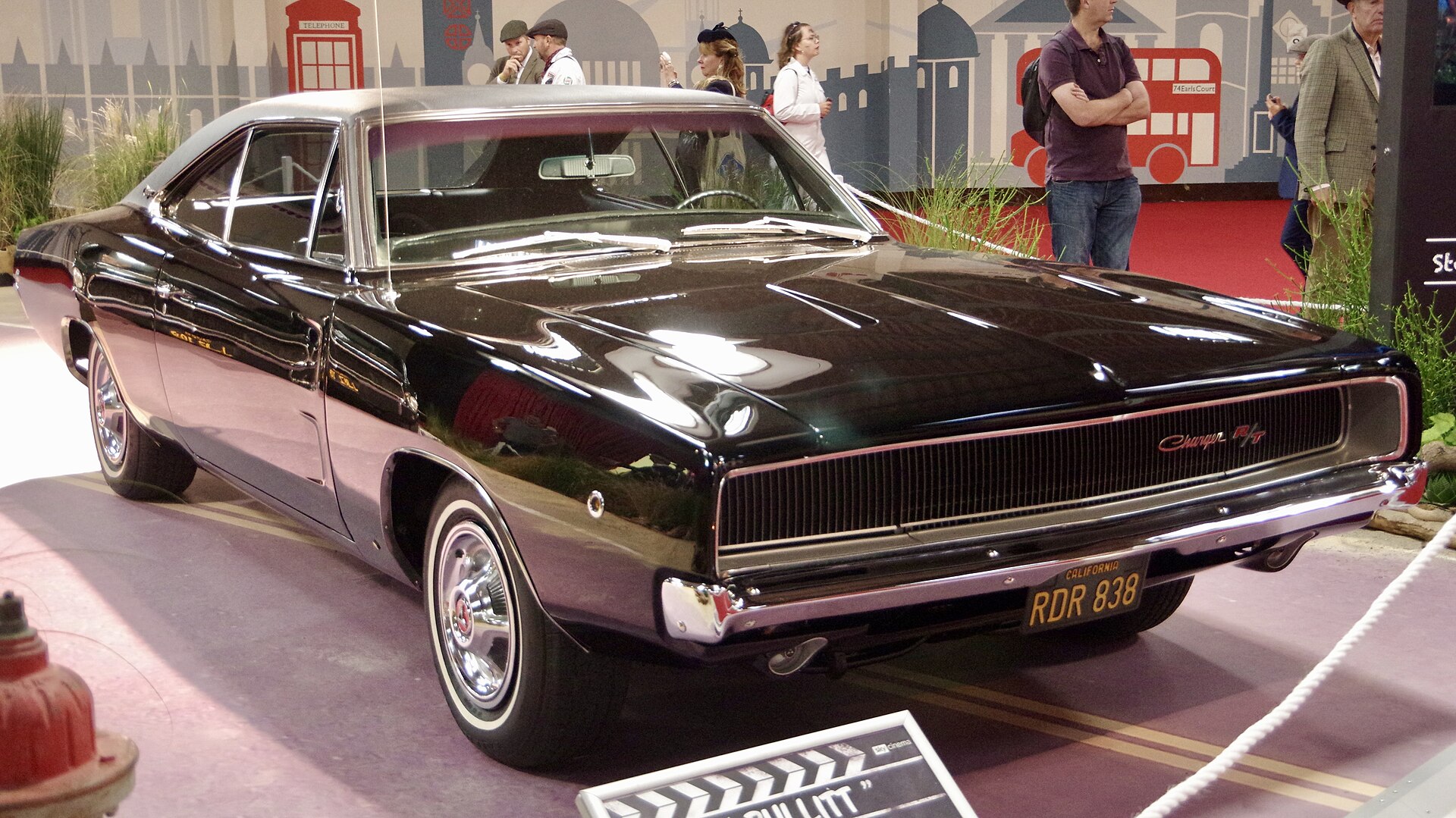
The redesign for 1968 created the shape most people picture today. Richard Sias is credited with the coke-bottle body, and Harvey J. Winn designed the front and rear sheet metal. Dodge had planned about 35,000 cars, but 96,100 were built.
The new R/T model came with the 440 Magnum as standard, and the Hemi remained the top option. About 89,199 Chargers followed in 1969. For 1970 the range gained a 440 Six Pack with three two-barrel carburettors, rated at 291 kW (390 hp). The same year brought new wraparound bumpers and electric headlight doors.
The second-generation car also became famous outside motor sport. In the television series The Dukes of Hazzard, a Charger called the General Lee made the 1968–1970 body familiar to a wide audience. A 1969 model is covered in our separate article on the 1969 Dodge Charger.


Charger 500 and Daytona
For stock car racing, Dodge needed a more aerodynamic body. The first answer was the Charger 500, introduced in September 1968; 392 were built, 67 of them with the Hemi.
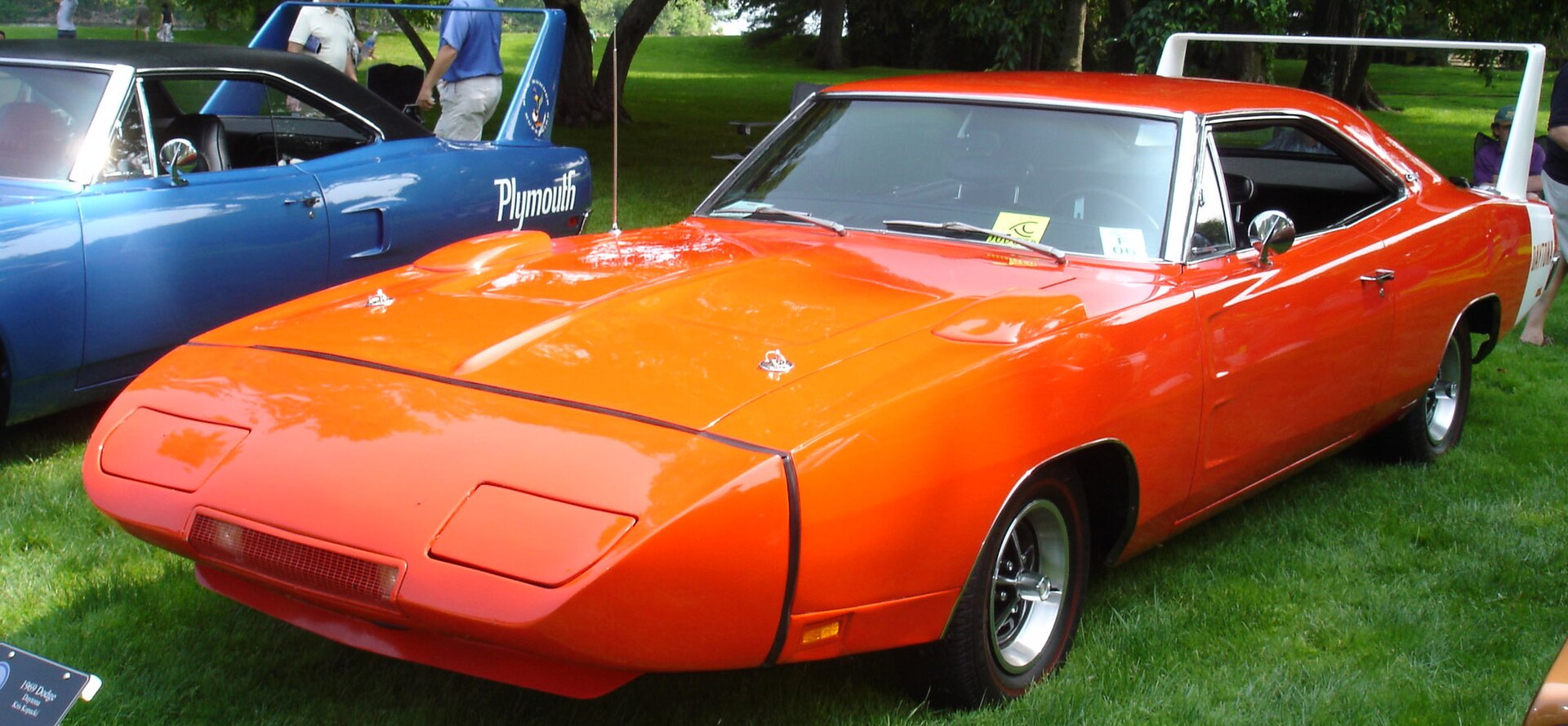
The Charger Daytona followed on 13 April 1969. An 18-inch nose cone and a 23-inch rear wing changed its profile completely. Dodge built 503 cars for the United States and another 40 for Canada; 70 of the US cars had the Hemi. The standard 440 Magnum gave 280 kW (375 hp) and 651 Nm, the Hemi 317 kW (425 hp) and 664 Nm.
In engineering tests on 20 July 1969 the Daytona reached 205 mph. In 1970 Buddy Baker drove it past 200 mph, and Bobby Isaac won the NASCAR championship in a Charger. Read more in our article on the 1969 Charger Daytona.

Third generation and the end of the B-body era
The 1971 Charger received new "fuselage" sheet metal and a split grille. For this one year the Super Bee became part of the Charger range. Only 63 Hemi R/Ts were built in 1971 — the last production cars with the 426 Hemi — next to 2,659 R/Ts with other engines.
From 1972 power was quoted in SAE net. The 440 was listed at 209 kW (280 hp) net, against 261 kW (350 hp) gross the year before. Sales still rose: 1973 brought about 108,000 cars, the best year of this generation. On the track, Richard Petty won 35 NASCAR races with the 1971–1974 body between 1972 and 1977.
For 1975 the Charger became a personal luxury coupé that shared its body with the Chrysler Cordoba. From 1981 to 1987 the name was used on a front-wheel-drive hatchback on the L-body, which also had a Shelby version. Neither car belongs to the muscle car story.
The four-door Charger (2006–2023)
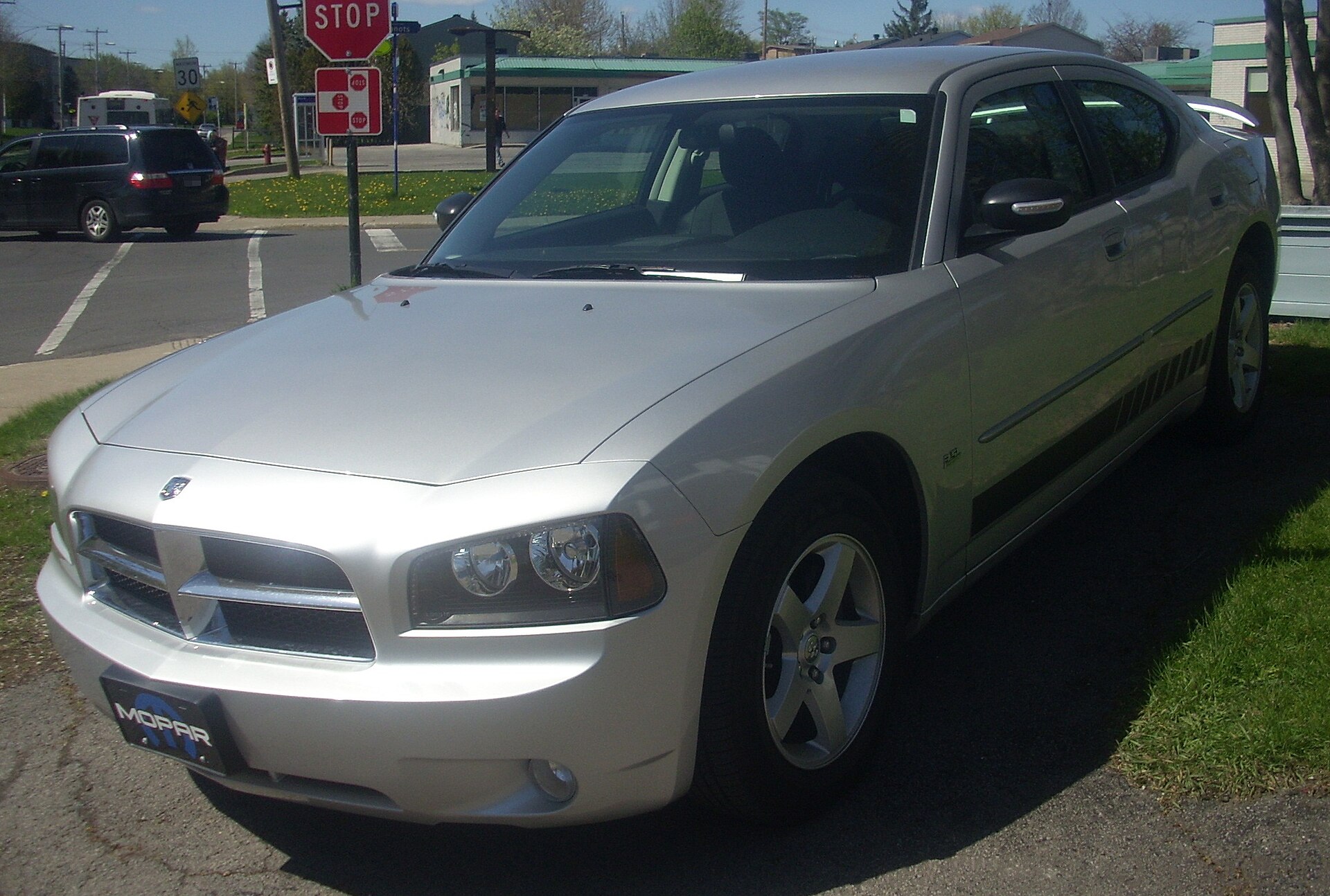
Dodge brought the name back for the 2006 model year on the rear-wheel-drive LX platform — as a four-door sedan. The R/T had a 5.7-litre Hemi V8 with 254 kW (340 hp), later 274 kW (368 hp). The SRT8 used a 6.1-litre Hemi with 317 kW (425 hp) and 569 Nm, and it reached 60 mph in 4.8 seconds in tests.
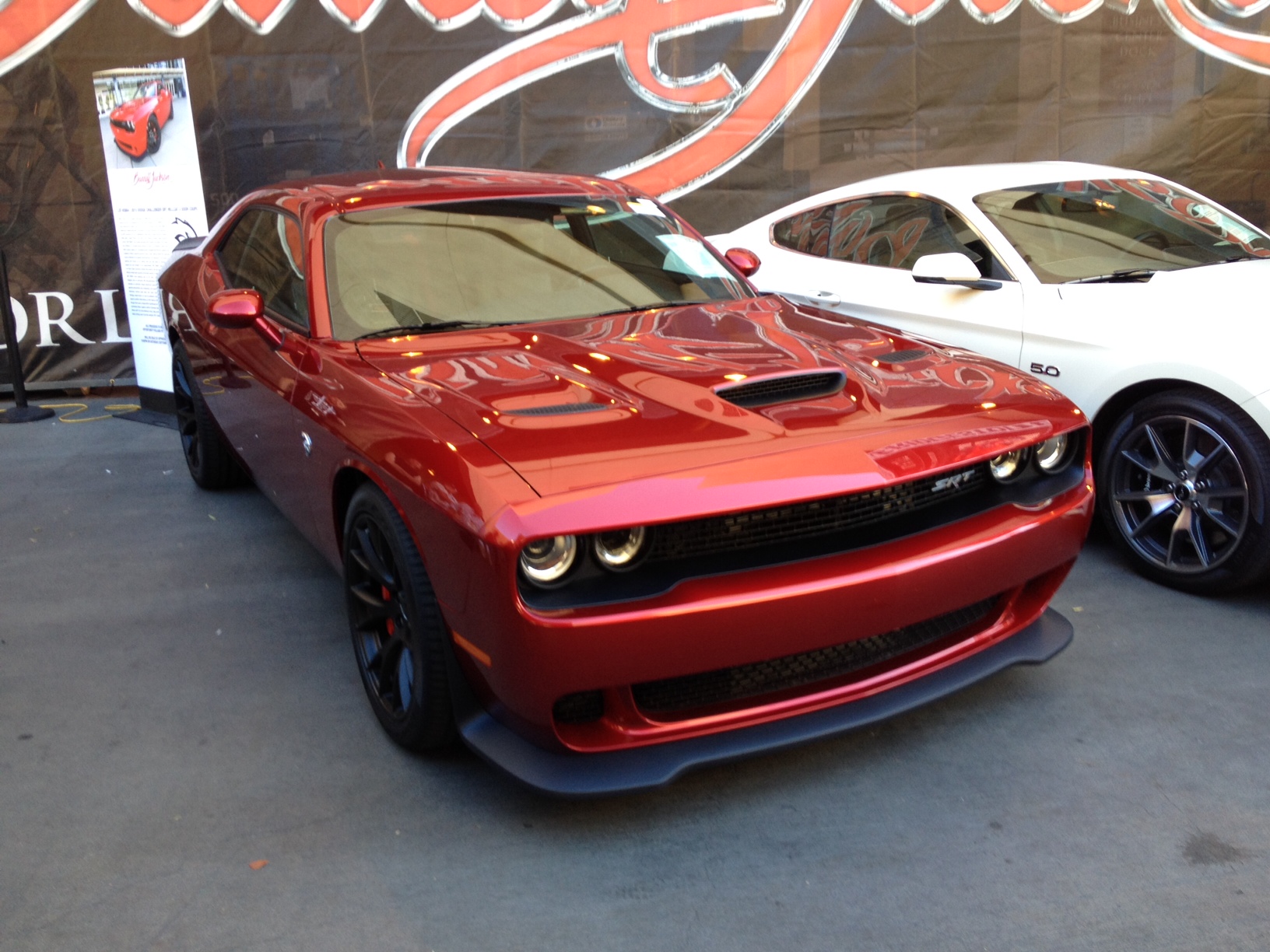
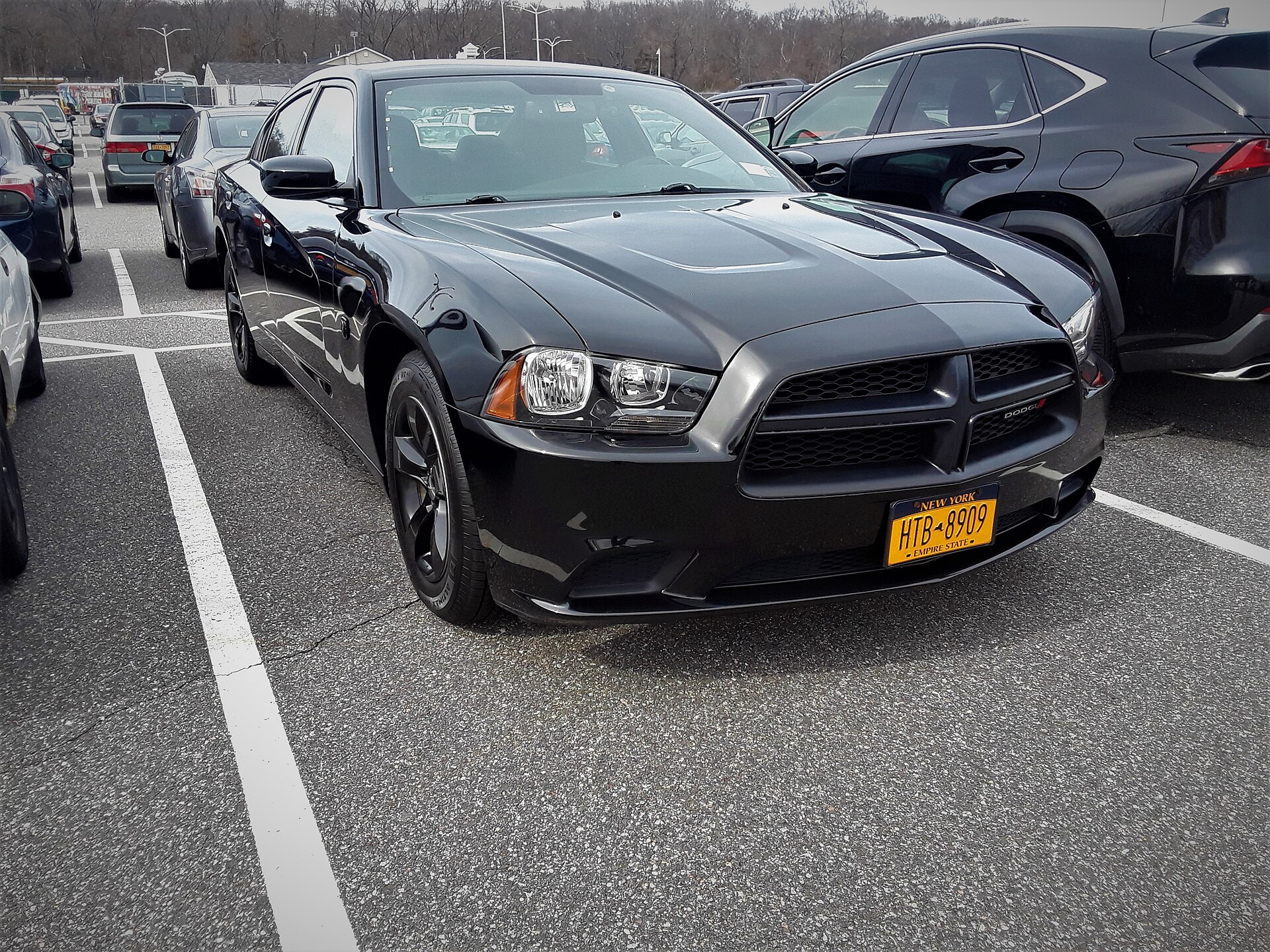
The seventh generation (LD) followed in 2011. The 6.4-litre Hemi is quoted at 350 kW (470 hp) or 362 kW (485 hp), depending on the year and the source. The 2015 SRT Hellcat had a supercharged 6.2-litre V8 with 527 kW (707 hp) and 881 Nm. Car and Driver measured 0–60 mph in 3.4 seconds, and the car averaged 204.55 mph in a two-way top-speed run. The 2021 Hellcat Redeye had 594 kW (797 hp), and the 2022 Jailbreak Edition 602 kW (807 hp).
Production in Brampton ended with the 2023 model year, and with it the 5.7, 6.4 and 6.2-litre Hemi V8s. Our article on the Charger SRT Hellcat covers that version in detail.
The 2024 Charger: electric and six-cylinder
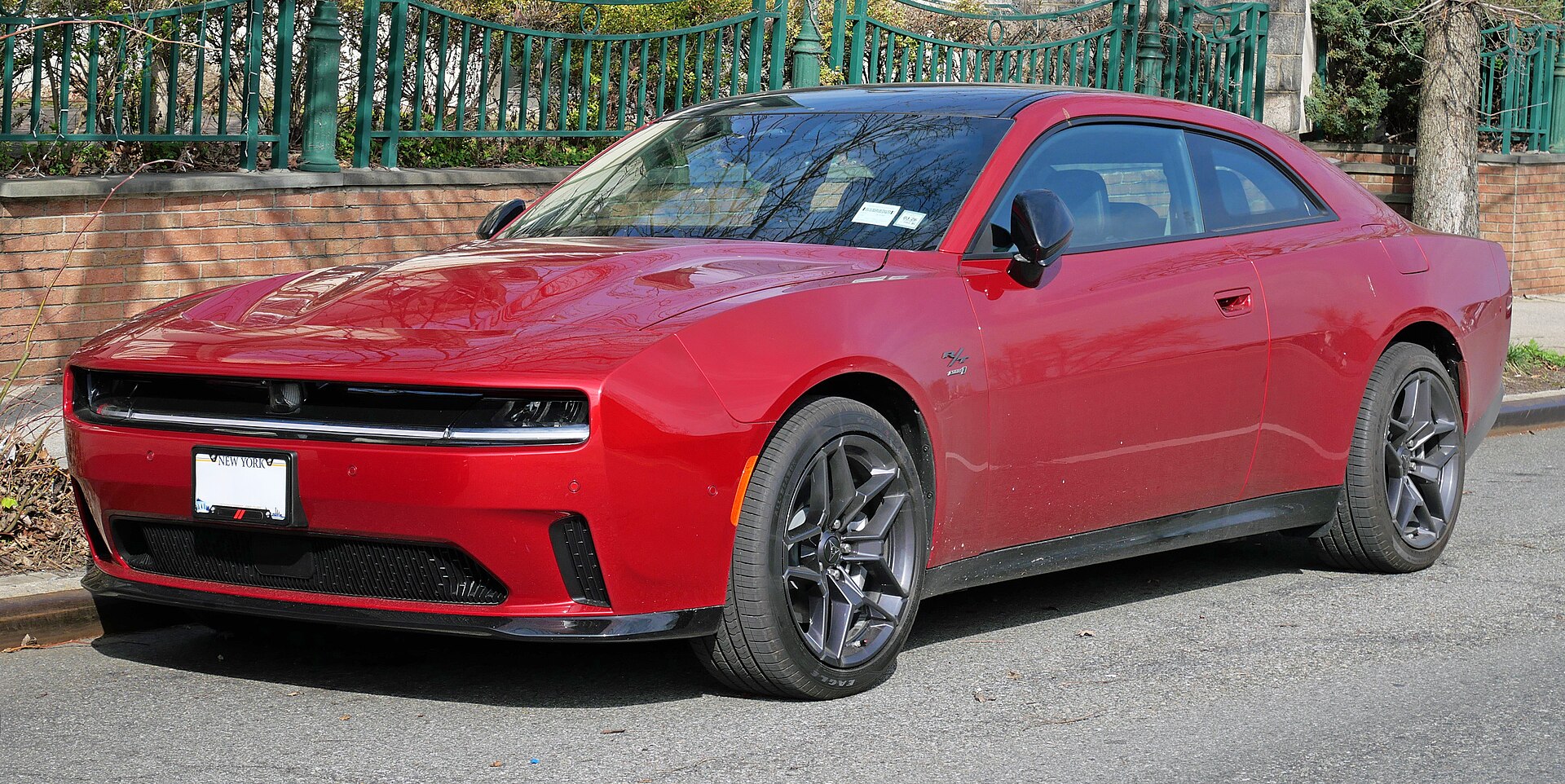
The eighth generation was previewed by the Charger Daytona SRT concept on 17 August 2022 and shown in production form on 5 March 2024. It uses the STLA Large platform and is built in Windsor, Ontario, as a two-door or four-door liftback. The two-door also replaces the Challenger.
The electric Charger Daytona came first, with all-wheel drive and a 100.5 kWh battery. The R/T has 370 kW (496 hp) and a range of 510 km; the Scat Pack has 500 kW (670 hp) and 418 km. Its Fratzonic exhaust system produces up to 126 dB. The petrol Sixpack followed in December 2025 with a 3.0-litre twin-turbo Hurricane straight-six. It gives 313 kW (420 hp) and 635 Nm as the R/T and 410 kW (550 hp) as the Scat Pack.

Which Charger to look at
Classic collectors focus on the 1968–1970 R/T and the Daytona; Hemi cars are the rarest. The 1971 R/T is the last chance for a factory Hemi. For a daily driver with V8 power, the LD sedan with the 6.4-litre Hemi is the core choice, while the Hellcat versions are the extreme end. The 2024 car is the first Charger without a V8 at all. Power figures of all generations can be compared in our car rankings.
Photo gallery


Dodge Charger evolution in numbers
Did you know?
- The Dodge Charger has been around for 60 years: 8 generations in our catalog since 1966.
- The longest-running generation is the Charger LD (2011–2023): 12 years.
- The biggest jump in power came with the Charger LD: up to 602 kW (818 PS), 285 kW more than the Charger LX.
- The most powerful Dodge Charger is not the newest: the Charger LD (2011–2023) offered up to 602 kW (818 PS), the Charger VIII up to 500 kW (680 PS).
Most powerful version, kW
Figures from the 1cars catalog: power is the strongest version of each generation; generations without the figure are left out.
Dodge Charger: first vs latest generation
| Spec | Charger I | Charger VIII | Change |
|---|---|---|---|
| Years | 1966–1967 | 2024–present | 58 years apart |
| Most powerful version | 317 kW (431 PS) | 500 kW (680 PS) | +183 kW (+58%) |
Oldest and newest generation in the 1cars catalog. Power is the strongest version of each; other rows are shown only when both generations have the figure.
Image credits · Photos from Wikimedia Commons under free licences
- Dodge Charger I · Photo: Ermell / Wikimedia Commons, CC BY-SA 4.0
- Dodge Charger II · Photo: Bene Riobó / Wikimedia Commons, CC BY-SA 4.0
- Dodge Charger III · Photo: George / Wikimedia Commons, CC BY-SA 2.0
- Dodge Charger IV · Photo: Greg Gjerdingen from Willmar, USA / Wikimedia Commons, CC BY 2.0
- Dodge Charger V · Photo: MercurySable99 / Wikimedia Commons, CC BY-SA 4.0
- Dodge Charger LX · Photo: Bull-Doser / Wikimedia Commons, Public domain
- Dodge Charger LD · Photo: BigNigFries / Wikimedia Commons, CC BY-SA 4.0
- Dodge Charger VIII · Photo: Kevauto / Wikimedia Commons, CC BY-SA 4.0
Dodge Charger in our rankings
- No. 3 of 106 · Most powerful hatchbacks (500 kW)
- No. 3 of 88 · Most powerful cars of the 1970s (317 kW)
- No. 5 of 149 · Most powerful sedans (602 kW)
- No. 8 of 94 · Most powerful cars of the 1960s (317 kW)
- No. 49 of 859 · Most powerful cars (602 kW · top 6%)
- No. 19 of 345 · Cars with the most generations (8 generations · top 6%)
More powerful than 97% of ranked hatchbacks in the 1CARS catalog (No. 3 of 106).
Dodge Charger photos 6
FAQ
When was the first Dodge Charger made?
The production Charger was introduced in the 1966 model year as a fastback based on the Coronet. A show car with the name had appeared in 1964.
How many Charger Daytonas were built?
Dodge built 503 Charger Daytonas for the United States in 1969 and 40 more for Canada; 70 of the US cars had the 426 Hemi.
Why does the modern Charger have four doors?
When the name returned for 2006, Dodge used it for a sedan on the LX platform. The two-door coupé role went to the Challenger from 2008.
What is the most powerful Charger?
The 2022 Jailbreak Edition with 602 kW (807 hp). Among electric versions, the Charger Daytona Scat Pack has 500 kW (670 hp).
Data sources
Data checked by an editor against the sources below.
- Wikipedia — Dodge Charger
- Wikipedia — Dodge Charger (2024)
- Wikipedia — Dodge Charger (1966)
- Wikipedia — Dodge Charger (B body)
- Wikipedia — Dodge Charger (L body)
- NHTSA 5-Star Safety Ratings (US NCAP) — U.S. Government work, public domain