
Chevrolet Corvette vs Dodge Viper: V8 against V10
Updated Report an error By Oleksandr Hnatiuk

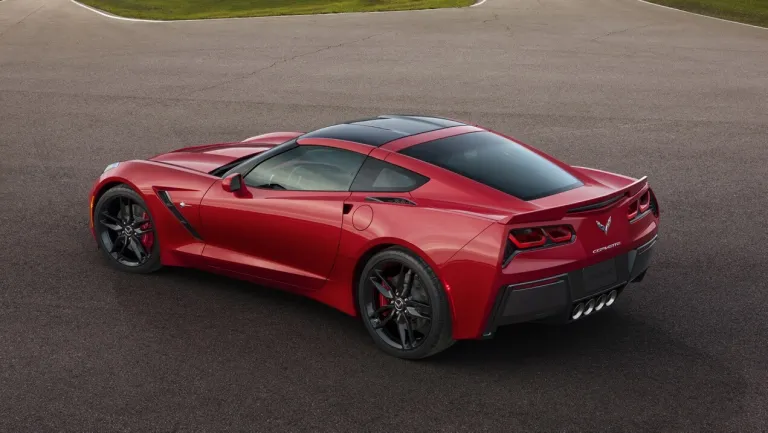
Chevrolet · 2013–2019
Corvette C7
Price from €79,500 (2014)
- Power
- 485 kW659 PS
- Top speed
- 298 km/h
- Kerb mass
- 1,598 kg
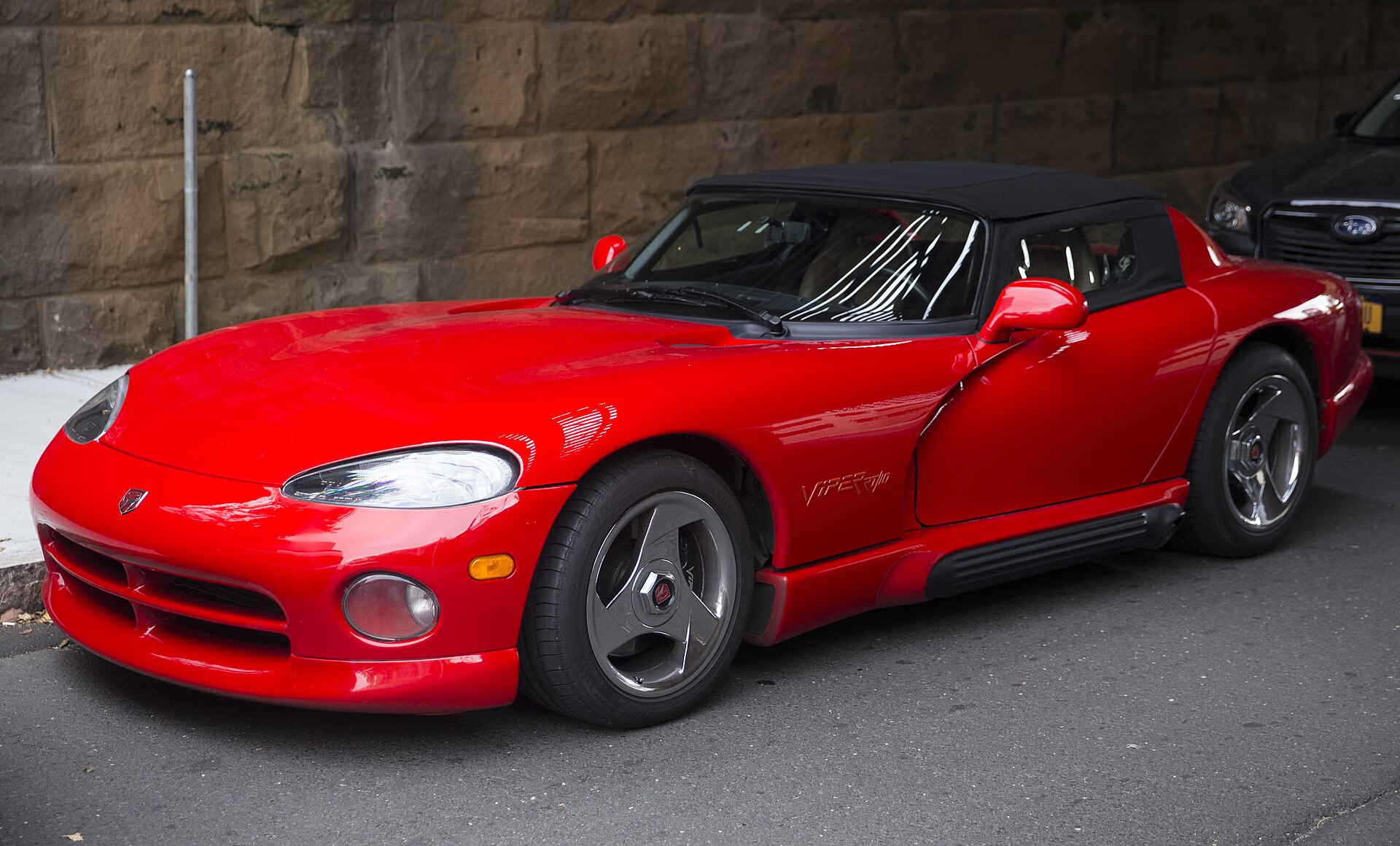
Dodge · 2013–2017
Viper VX I
- Power
- 481 kW654 PS
- Top speed
- —
- Kerb mass
- —
At a glance
Who suits what, worked out from the catalog figures of the versions above.
Categories won: Corvette C7 2 Viper VX I 0
- City Corvette C7 Width: 1,877 mm vs 1,940 mm
- Off-road Corvette C7 Drive and body: Rear-wheel drive · Coupe vs Rear-wheel drive · Coupe
Verdict Opinion
The Viper is the purer and rarer car: 31,989 were built in 26 years, every one with a V10 and a manual gearbox. That makes a well-kept example a collector's piece, particularly the early RT/10 and the late ACR. Its weak points are the spartan early cars and the lack of stability control before 2013.
The Corvette is the more usable and far more common car: Chevrolet built 189,507 C7s alone, it offered automatic gearboxes and a removable roof panel, and it is still in production, since 2020 with its engine behind the driver. For a car to drive often, the Corvette wins; for a car to keep, the Viper has the stronger case.
— Oleksandr Hnatiuk
For a quarter of a century America had two front-engined supercars. The Corvette came from Bowling Green, Kentucky, and has been in production since 1953. The Viper was Chrysler's answer to the question of what a modern Shelby Cobra would look like: shown as a concept in Detroit in 1989, sold from January 1992 and built in Detroit until August 2017.
Their rivalry can be followed generation by generation, from the first V10 roadster against the Lotus-engined ZR-1 to the last Viper against the supercharged C7 Z06. The story of the Chevrolet side is told in our history of the Chevrolet Corvette; the last front-engined Corvette has its own C7 guide.
Chevrolet Corvette vs Dodge Viper: generation against generation
1992: RT/10 against ZR-1
The first Viper RT/10 had an 8.0-litre V10 with 298 kW (400 hp), a six-speed manual and almost nothing else: no ABS, no airbags, no exterior door handles. Chevrolet's top car was the C4 ZR-1 with the Lotus-designed LT5, rated at 280 kW and from 1993 at 302 kW. The Viper weighed 1,490 kg and cost US$52,000 in 1992; in 1990 a ZR-1 set a 24-hour world record at an average of more than 283 km/h.
2003: SRT-10 against Z06
The second-generation Viper roadster gave way to the SRT-10 with an 8.3-litre engine and 373 kW. Its Chevrolet rival, the C5 Z06 of 2001–2004, had only 302 kW but weighed 1,414 kg, 58 kg less than a standard C5 coupé.
2008–2010: the horsepower race
For 2008 the Viper V10 grew to 8.4 litres and 447 kW (600 hp). A year later the C6 ZR1 arrived, its supercharged 6.2-litre LS9 rated at 476 kW (638 hp) with 819 Nm. That put the Corvette 29 kW ahead of the 8.4-litre Viper.
2013–2017: the final round
The fifth and last Viper, the VX I, produced 477 kW and, from 2015, 481 kW (645 hp) with 813 Nm. The C7 Z06 of 2015 matched it with 485 kW (650 hp) and 881 Nm from the supercharged LT4, and the 2019 ZR1 went further with 563 kW. The C7 Z06 weighs 1,598 kg in our catalogue, or about 3.3 kg per kW by our calculation.
Le Mans and Daytona
Both won their class at Le Mans. The factory-backed Viper GTS-R took the GTS class three times from 1998 to 2000 and won the Daytona 24 Hours outright in 2000; its story is on our Viper GTS-R page. Chevrolet's C5-R took a one-two in the same Le Mans class in 2001, 2002 and 2004.
Size and weight
Side view to scale, all cars from the front bumper.
| Corvette C7 | Viper VX I | |
|---|---|---|
| Length | 4,493 mm176.9 in | 4,460 mm175.6 in † −33 mm −1.3 in −0.7% |
| Width | 1,877 mm73.9 in | 1,940 mm76.4 in † +63 mm +2.5 in +3.4% |
| Height | 1,234 mm48.6 in | 1,250 mm49.2 in † +16 mm +0.6 in +1.3% |
| Wheelbase | 2,710 mm106.7 in | 2,510 mm98.8 in † −200 mm −7.9 in −7.4% |
| Fits a standard garage? | Tight | Too wide |
Difference vs Corvette C7 (±). Garage check: a standard single garage takes a car up to about 5.0 m (16 ft 5 in) long and 1.9 m (6 ft 3 in) wide (width as listed in the catalog; some makers include the mirrors). Leave about 0.6 m (2 ft) to open the doors. † from another version of this generation.
Full specifications
| Chevrolet Corvette | Dodge Viper | |
|---|---|---|
| General | ||
| Version | Corvette C7 · Z06 LT4 6.2 V8 supercharged · petrol · 485 kW (659 PS) | Viper VX I · 8.4 V10 · petrol · 481 kW (654 PS) |
| Production years | 2013–2019 | 2013–2017 |
| Body | Coupe | Coupe |
| Class | Sports car | No data |
| Country | United States | United States |
| Performance | ||
| Power Why it matters: More power means stronger acceleration and easier overtaking, especially with a full load. | 485 kW (659 PS) 650 hp | 481 kW (654 PS) 645 hp |
| Power, all versions | 110–932 kW (150–1,267 PS) 148–1,250 hp | 298–481 kW (405–654 PS) 400–645 hp |
| Torque Why it matters: Torque is the pulling force you feel when accelerating from low revs, towing or climbing hills. | 881 Nm 650 lb-ft Better | 813 Nm 600 lb-ft |
| Top speed Why it matters: Top speed hints at how relaxed the car is at motorway speeds, even if you never reach it. | 298 km/h 185 mph | No data |
| Power per tonne | 304 kW/t 369 hp/ton calculated | No data |
| Engine and transmission | ||
| Fuel | Petrol | Petrol |
| Engine | 6,200 cc · 8 cyl 6.2 l | 8,382 cc · 10 cyl 8.4 l |
| Engine code | LT4 | No data |
| Gearbox | No data | 6-speed manual |
| Drive | Rear-wheel drive | Rear-wheel drive |
| Dimensions and weight | ||
| Length | 4,493 mm 176.9 in | 4,460 mm 175.6 in † |
| Width | 1,877 mm 73.9 in | 1,940 mm 76.4 in † |
| Height | 1,234 mm 48.6 in | 1,250 mm 49.2 in † |
| Wheelbase | 2,710 mm 106.7 in | 2,510 mm 98.8 in † |
| Kerb weight Why it matters: A lighter car is usually more agile and uses less energy. | 1,598 kg 3,523 lb | No data |
| Price | ||
| Price | from €79,500 (2014) | No data |
These cars do not differ in the data we have.
Equal rows hidden (4): Body, Country, Fuel, Drive.
Better marks the stronger figure — only for measurable specs (power, torque, 0–100 km/h, consumption, boot, weight).
† from another version of this generation.
In plain words
Chevrolet Corvette has more power: 485 kW (659 PS) against 481 kW (654 PS) for Dodge Viper. Chevrolet Corvette is 33 mm longer than Dodge Viper (4,493 mm vs 4,460 mm). Chevrolet Corvette is the older design (from 1953); Dodge Viper arrived in 1992. Chevrolet Corvette is still in production; Dodge Viper is not. On the catalog figures, the Chevrolet Corvette is the pick for city and off-road. Our catalog has no kerb mass for the Dodge Viper yet, so some checks above leave it out.
Which one to choose
Choose the Chevrolet Corvette if you want a car for regular use, a choice of automatic gearboxes, a removable roof panel, or a current mid-engined C8 from a dealer.
Choose the Dodge Viper if you want a V10 and a manual gearbox, appreciate a raw driving experience, or are looking for a limited-production American car that will not be built again.
Both are part of our supercars section.
Frequently asked questions
Which is faster, the Corvette or the Viper?
It depends on the generation. The last Viper had 481 kW, the C7 Z06 485 kW and the C7 ZR1 563 kW. Today's mid-engined Corvette ZR1 has 793 kW, far beyond any Viper.
Why was the Dodge Viper discontinued?
Production ended in August 2017. Fiat Chrysler pointed to weak sales; in addition, the car did not comply with FMVSS 226, the US rule on side-curtain airbags.
Did the Viper ever have an automatic gearbox?
No. Every Viper from 1992 to 2017 used a six-speed manual.
How many Vipers were built?
Wikipedia counts 31,989 Vipers. Chevrolet built 189,507 C7 Corvettes alone between 2013 and 2019.