 Toyota Land Cruiser 300
Specs, engines and history
Published Sources (4) Report an error
By Felix Hartmann, Automotive Technology & EV Contributor
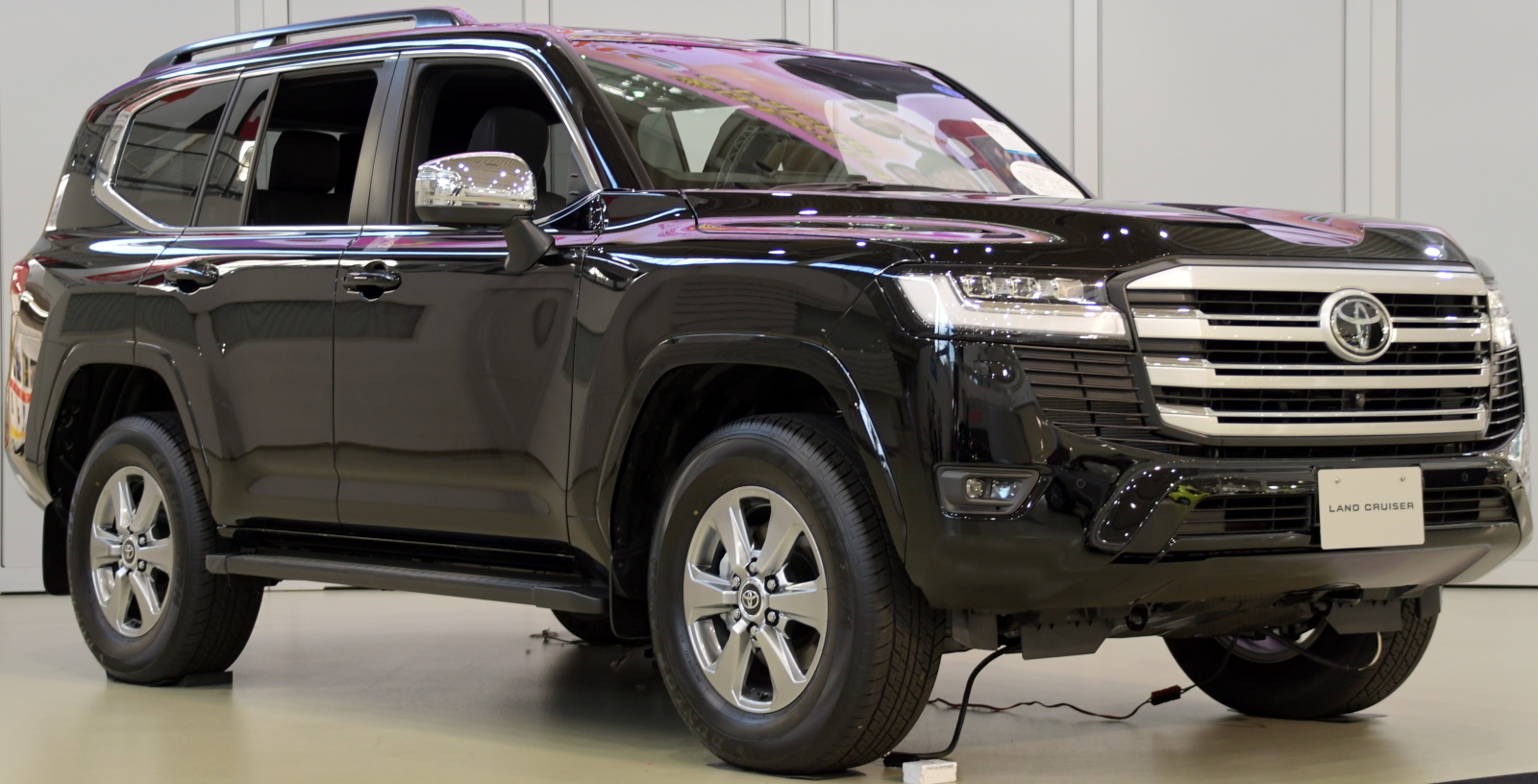
- Built
- 2021–present
- Top power
- 341 kW (464 PS)
Which Land Cruiser 300 to choose
Our verdict · Felix Hartmann
The diesel is the logical choice for long distances, remote areas and towing: it has the most torque, a combined consumption of 8.9 l/100 km on the Australian ADR cycle and 110 litres of fuel on board. The petrol V6 and the hybrid suit buyers who want the most power and drive mainly on sealed roads, accepting higher fuel use. The GR Sport is the version for serious off-road driving, thanks to its front and rear differential locks and E-KDSS. Buyers comparing it with other big 4x4s can use our comparison page.
The Toyota Land Cruiser 300, code J300, is the large body-on-frame station wagon at the top of the Land Cruiser family. Revealed on 10 June 2021 and on sale from mid-2021, it replaced the Land Cruiser 200 of 2007 and swapped that model's V8 engines for twin-turbo V6s on the new GA-F ladder frame. A petrol-electric hybrid followed later. The 300 Series is sold in markets such as the Middle East, Africa, Australia and Japan, but not in the United States and Canada.
In short
- Revealed on 10 June 2021; sales began in the UAE and Kuwait on 20 June 2021 and in Japan on 2 August 2021.
- GA-F ladder frame; Toyota quotes a weight saving of up to 200 kg over the 200 Series, and the engine sits 28 mm lower and 70 mm further back.
- Engines: 3.3 twin-turbo diesel V6 with 227 kW (309 PS) and 700 Nm, 3.5 twin-turbo petrol V6 with 305 kW (415 PS) and 650 Nm, both with a 10-speed automatic.
- Hybrid version with 341 kW and 790 Nm; braked towing capacity 3,500 kg for the diesel in Australia.
Size at a glance
| Dimensions | Toyota Land Cruiser 300 J300 |
|---|---|
| Length | 4,980 mm196.1 in |
| Width | 1,980 mm78.0 in |
| Height | 1,950 mm76.8 in |
| Wheelbase | 2,850 mm112.2 in |
Running cost
Fuel · Land Cruiser 300 J300 3.3 V6 twin-turbo diesel (F33A-FTV)
about 2,200 EUR fuel a year at 15,000 km
8.9 l/100 km · diesel at 1.65 EUR/l · change mileage, fuel price or version
Specs by version
Engines
| Version | Engine | Power | Torque | Gearbox | Drive |
|---|---|---|---|---|---|
| Hybrid · 1 version | |||||
| 3.5 V6 twin-turbo hybrid (i-FORCE MAX) | 6 cyl · Hybrid V35A-FTS | 341 kW 464 PS457 hp | 790 Nm583 lb-ft | 10-sp Automatic | Four-wheel drive (4×4) |
| Diesel · 1 version | |||||
| 3.3 V6 twin-turbo diesel (F33A-FTV) | 6 cyl · Diesel F33A-FTV | 227 kW 309 PS304 hp | 700 Nm516 lb-ft | 10-sp Automatic | Four-wheel drive (4×4) |
| Petrol · 2 versions | |||||
| 4.0 V6 (1GR-FE) | 6 cyl · Petrol 1GR-FE | 201 kW 273 PS270 hp | - | 6-sp Automatic | Four-wheel drive (4×4) |
| 3.5 V6 twin-turbo petrol (V35A-FTS) | 6 cyl · Petrol V35A-FTS | 305 kW 415 PS409 hp | 650 Nm479 lb-ft | 10-sp Automatic | Four-wheel drive (4×4) |
Performance
Show all 2 versions
| Version | Fuel consumption |
|---|---|
| Diesel · 1 version | |
| 3.3 V6 twin-turbo diesel (F33A-FTV) | 8.9 l/100 km26.4 mpg US · 31.7 mpg UK |
| Petrol · 1 version | |
| 3.5 V6 twin-turbo petrol (V35A-FTS) | 12.1 l/100 km19.4 mpg US · 23.3 mpg UK |
Dimensions and weight
Verified Manufacturer and type-approval data from our catalog · Sources and methodology
Land Cruiser 300 at a glance
| Specification | Toyota Land Cruiser 300 (J300) |
|---|---|
| Production | since 2021 |
| Platform | GA-F (TNGA-F) ladder frame |
| Body | five-door station wagon, five or seven seats |
| Engines | 3.3 V6 twin-turbo diesel, 3.5 V6 twin-turbo petrol, 3.5 V6 hybrid; 4.0 V6 in some markets |
| Power | 201–341 kW |
| Gearbox | 10-speed automatic (six-speed with the 4.0 V6) |
| Drive | four-wheel drive with low range |
| Length | 4,980–5,015 mm (Australian models) |
| Wheelbase | 2,850 mm |
| Kerb weight | 2,495–2,630 kg (Australian diesel models) |
| Predecessor | Land Cruiser 200 (J200, 2007–2021) |
| Chief engineer | Takami Yokoo |
The 300 Series is listed in the Toyota catalogue next to its predecessor, the Land Cruiser 200.
Seventy years of the Land Cruiser name
Toyota dates the Land Cruiser line to the BJ, which went on sale in August 1951. By the 300 Series launch in 2021, its 70th anniversary year, about 10.4 million Land Cruisers had been sold in 170 countries and regions, and annual sales exceeded 300,000 vehicles. The family now includes the large station wagon, the smaller 250 Series and the long-running 70 Series work vehicles.
For the 300 Series Toyota named two development goals: to keep the reliability, durability and off-road ability the name is known for, and to make long drives on any road less tiring. Test drivers included Toyota's own staff and participants of the Dakar Rally.
A new frame under a familiar shape
The 300 Series uses the GA-F platform, Toyota's body-on-frame version of its TNGA architecture, with a new, stiffer ladder frame. Toyota says the vehicle lost about 200 kg compared with its predecessor; the South African site Cars.co.za reported up to 200 kg for petrol models and about 100 kg for diesels. To lower the centre of gravity, the engine was moved 28 mm down and 70 mm towards the rear.
Toyota kept the length, width, wheelbase and the approach and departure angles of the 200 Series, so the 300 has the same footprint. Toyota Australia's specification sheet gives these figures:
| Dimension | Land Cruiser 300 (Australia, 2022) |
|---|---|
| Length | 4,980 mm; Sahara ZX 5,015 mm; GR Sport 4,995 mm |
| Width | 1,980 mm; GR Sport 1,990 mm; GX 2,000 mm with snorkel |
| Height | 1,950 mm |
| Wheelbase | 2,850 mm |
| Kerb weight | 2,495–2,630 kg |
| Gross vehicle mass | 3,280 kg |
| Braked towing | 3,500 kg |
| Fuel tanks | 80 l main plus 30 l sub-tank |
Our size comparison tool puts these figures next to a European SUV or a garage.

Engines and gearbox
The V8 engines of the 200 Series were replaced by twin-turbo V6s. Both main engines drive through the new Direct Shift-10AT 10-speed automatic and a transfer case with low range.
| Engine | Code | Power | Torque | Combined consumption |
|---|---|---|---|---|
| 3.3 V6 twin-turbo diesel | F33A-FTV | 227 kW (309 PS) at 4,000 rpm | 700 Nm at 1,600–2,600 rpm | 8.9 l/100 km (Australia) |
| 3.5 V6 twin-turbo petrol | V35A-FTS | 305 kW (415 PS) | 650 Nm | 12.1 l/100 km (South Africa) |
| 3.5 V6 twin-turbo hybrid | V35A-FTS + motor | 341 kW system | 790 Nm system | - |
| 4.0 V6 petrol (some markets) | 1GR-FE | 201 kW | - | - |
Toyota estimated that the new engines cut annual CO2 emissions of its global Land Cruiser fleet by about 10 % compared with the previous model. Wikipedia calls the petrol engine a 3.4-litre, while Toyota names it a 3.5. The naturally aspirated 4.0-litre V6 with a six-speed automatic was carried over from the previous model for some markets.

The hybrid version
The hybrid first appeared in the United Arab Emirates with a redesigned front bumper and grille. It combines the twin-turbo petrol V6 with an electric motor and is marketed in Australia as i-FORCE MAX. Toyota Australia quotes 341 kW and 790 Nm for the Sahara ZX and GR Sport grades, 36 kW more than the petrol V6 alone. The other Australian grades keep the diesel, which is rated to tow 3,500 kg braked.

Off-road hardware and GR Sport
The 300 Series keeps a separate frame and four-wheel drive with a low-range transfer case. Cars.co.za and Wikipedia give an approach angle of 32 degrees, a departure angle of 26.5 degrees and 230 mm of ground clearance. Multi-Terrain Select and a camera-based Multi-Terrain Monitor are part of the off-road equipment.
E-KDSS, Toyota's electronic kinetic dynamic suspension system, can disconnect the anti-roll bars off-road to increase wheel articulation. The GR Sport is 5 mm shorter than the standard car and adds front and rear differential locks, while the standard models have a lockable centre differential.

Equipment and safety systems
Toyota fitted the latest version of Toyota Safety Sense. Its pre-collision system detects pedestrians by day and by night and cyclists by day, and a Parking Support Brake is new. On South African launch models every version had stability and traction control, hill-start assist, trailer sway control, Downhill Assist Control, Crawl Control and LED headlights; the ZX added a 12.3-inch screen, a 14-speaker JBL system, heated and ventilated front and second-row seats and a panoramic camera.
No crash-test rating from Euro NCAP or ANCAP was available for this article. Toyota does not sell the 300 Series in the United States and Canada; there, the Lexus LX remains the large Toyota-group SUV, and the smaller Land Cruiser 250 took over part of the role from 2024.

Prices at launch
Dated launch prices are available from South Africa, one of the first markets. Cars.co.za published these prices in July 2021:
| Version | Engine | Price (South Africa, July 2021) |
|---|---|---|
| GX-R | 3.3 diesel | R1,283,200 |
| ZX | 3.3 diesel | R1,765,500 |
| ZX | 3.5 petrol | R1,797,100 |
| GR-S | 3.3 diesel | R1,811,900 |
| GR-S | 3.5 petrol | R1,842,900 |
All versions came with a three-year or 100,000 km warranty and a service plan for nine services or 90,000 km.
Land Cruiser 300 vs Land Cruiser 200
The 200 Series of 2007–2021 used V8 engines, among them a 4.5-litre twin-turbo diesel with 200 kW. The 300 keeps the exterior size and the separate frame but adds about 27 kW and 50 Nm in its diesel version, a 10-speed automatic, a lower engine position and the GR Sport off-road version. 1cars also covered the Heritage Edition of the Land Cruiser 200, and the Lexus LX is the luxury model that Toyota sells in North America instead of the 300.

Photo gallery

Popular comparisons
Toyota Land Cruiser 300 in our rankings
- No. 8 of 88 · Most powerful Japanese cars (341 kW)
- No. 15 of 146 · Longest SUVs and crossovers (4,980 mm · top 11%)
- No. 16 of 143 · Most powerful diesel cars (227 kW · top 12%)
- No. 50 of 420 · Longest cars (4,980 mm · top 12%)
- No. 14 of 118 · Most torque: SUVs and crossovers (790 Nm · top 13%)
- No. 11 of 81 · Most torque: diesel cars (700 Nm · top 14%)
More powerful than 90% of ranked Japanese cars in the 1CARS catalog (No. 8 of 88).
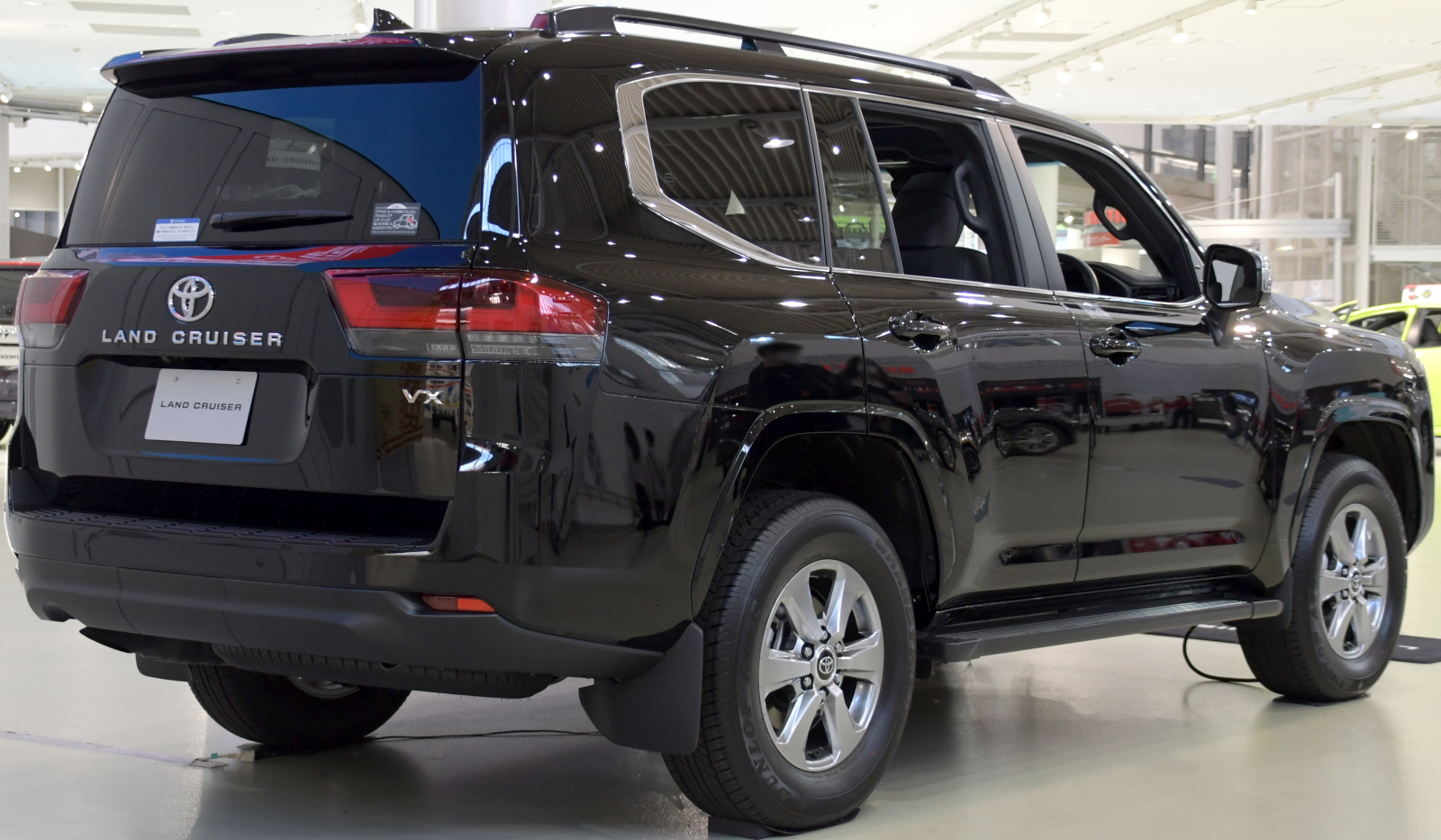
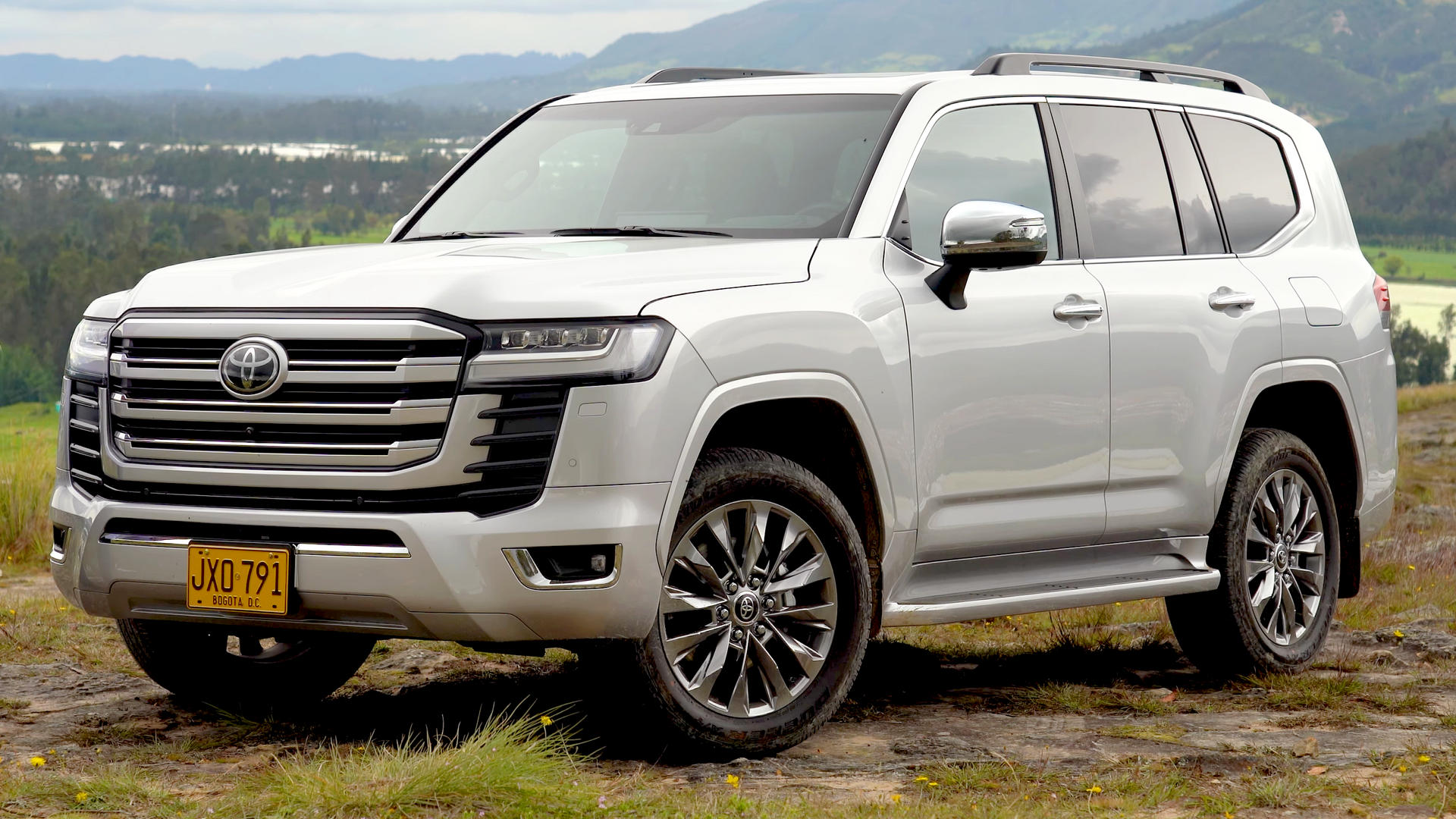
Toyota Land Cruiser 300 photos 6
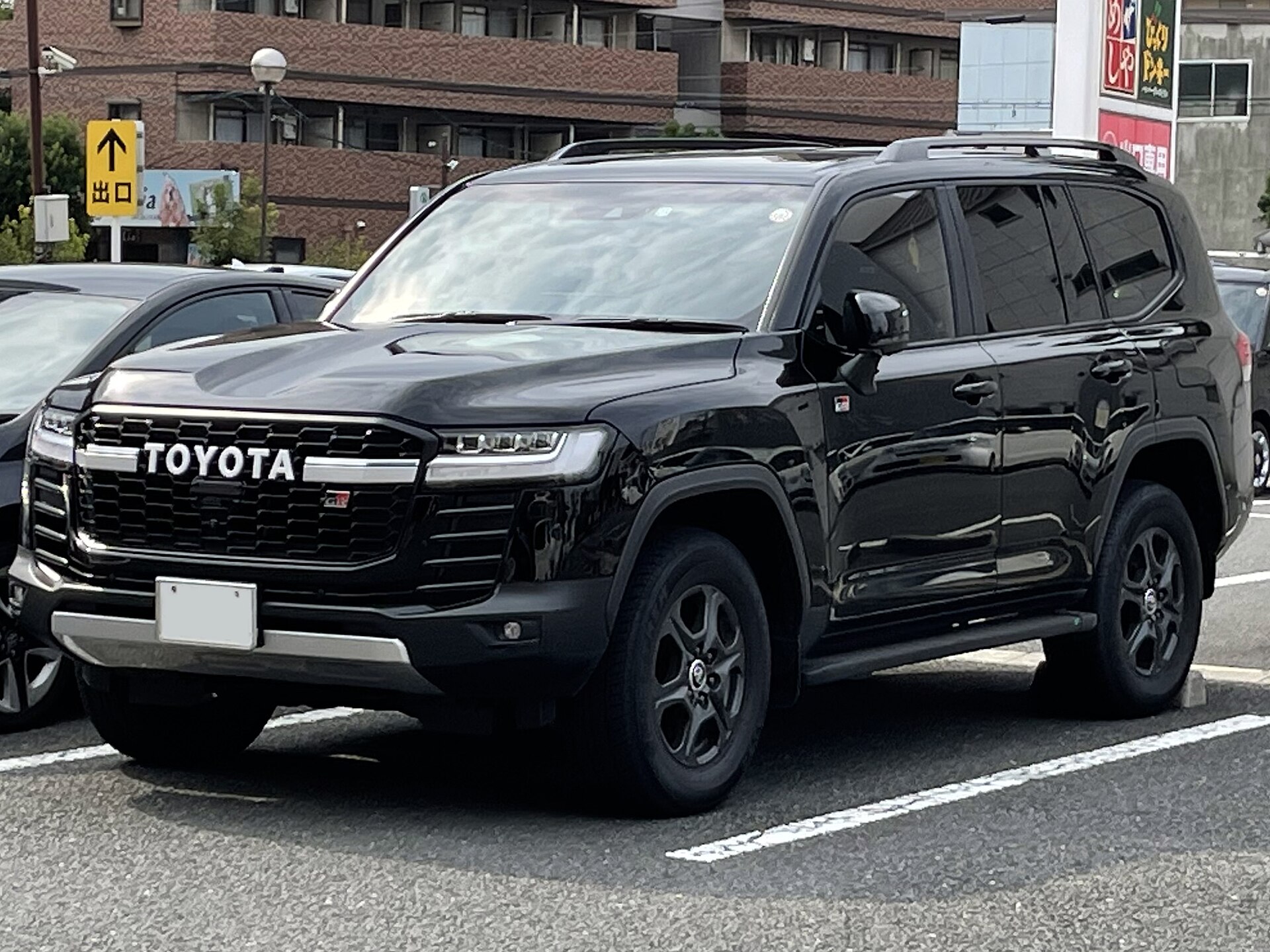
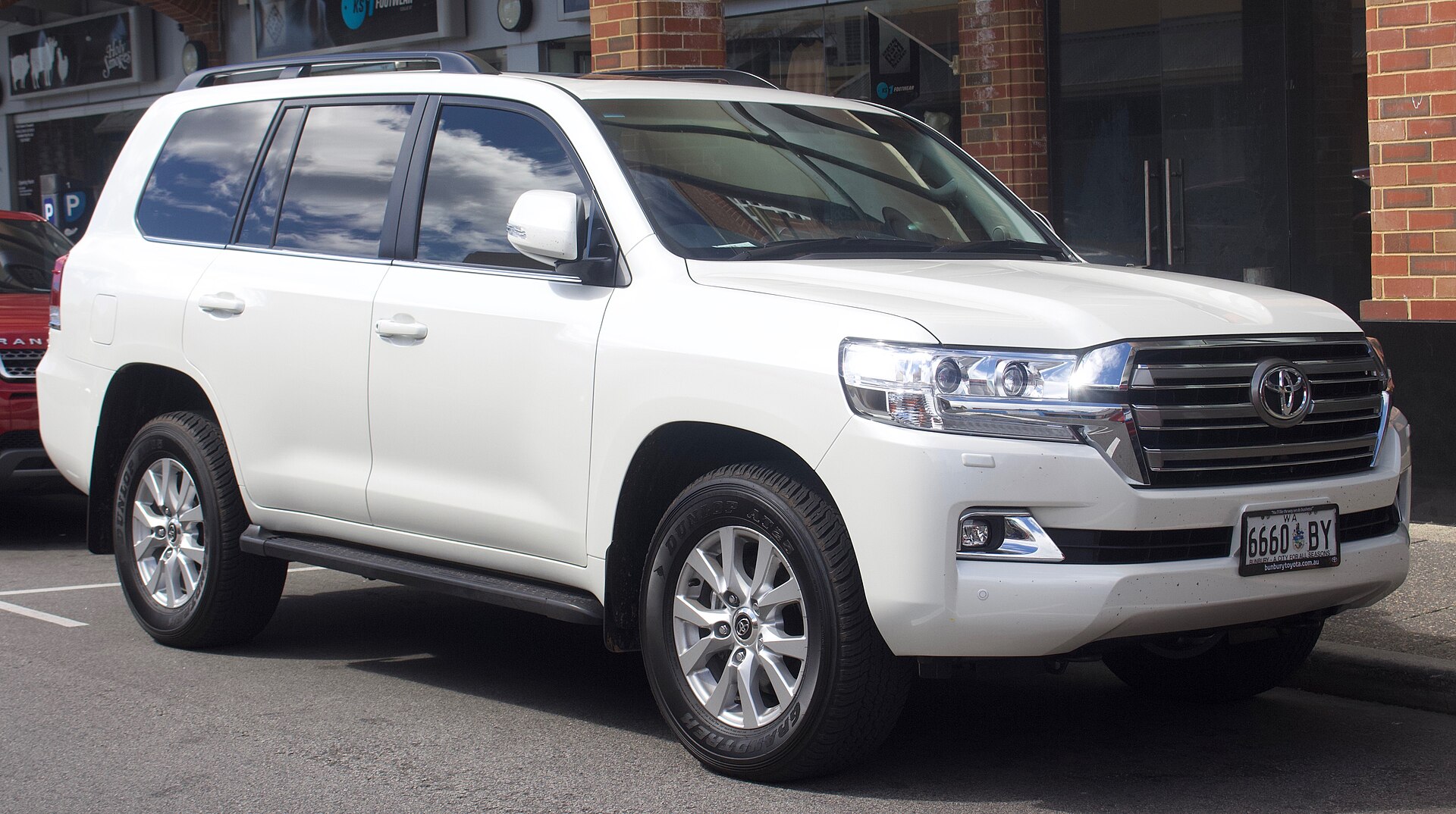
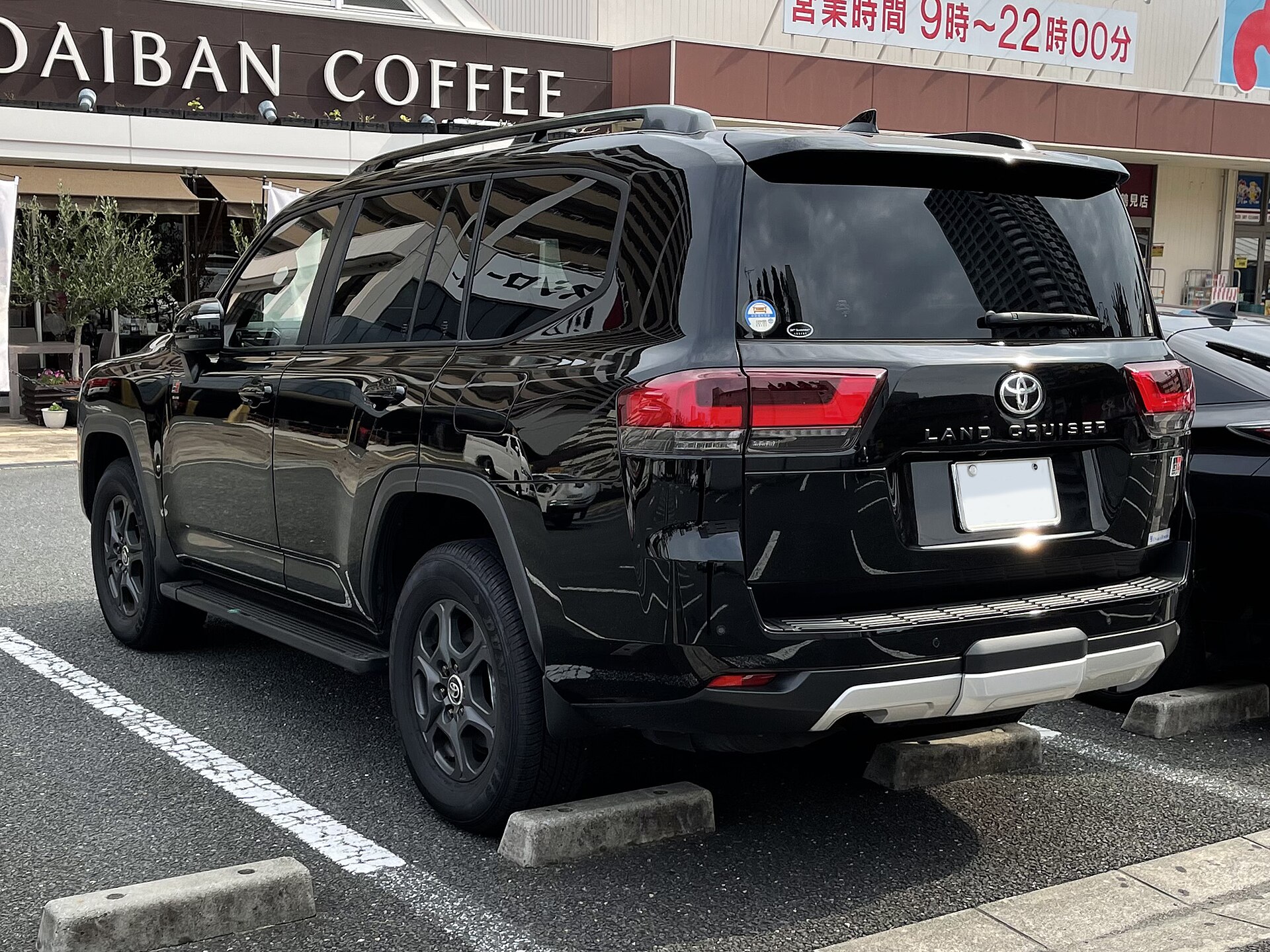
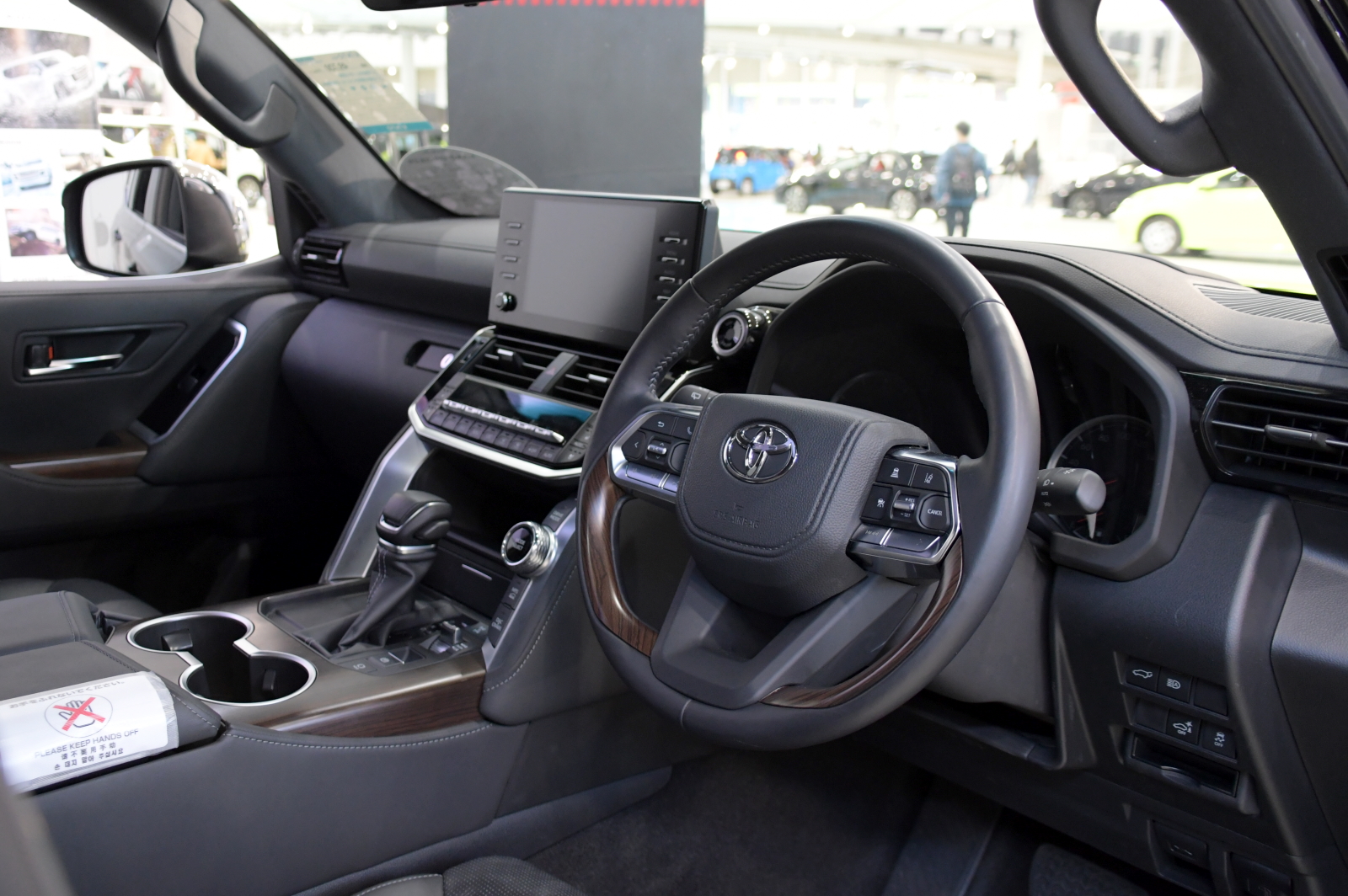
FAQ
When did the Toyota Land Cruiser 300 come out?
Toyota revealed it on 10 June 2021. The first markets, the UAE and Kuwait, started sales on 20 June 2021, followed by South Africa in July, Japan on 2 August and Australia in October 2021.
Does the Land Cruiser 300 have a V8?
No. It uses a 3.3-litre twin-turbo diesel V6 with 227 kW and a 3.5-litre twin-turbo petrol V6 with 305 kW; the hybrid uses the petrol V6 with an electric motor.
How much can the Land Cruiser 300 tow?
Toyota Australia rates the diesel at 3,500 kg braked and 750 kg unbraked.
Is the Land Cruiser 300 sold in the USA?
No. North American buyers are offered the Lexus LX and, since 2024, the smaller Land Cruiser 250 instead.
What is the difference between the Land Cruiser 300 and 250?
The 300 is the large flagship station wagon with twin-turbo V6 engines. The 250 is a slightly smaller model of the same family.
Data sources
Data checked by an editor against the sources below.
- Wikipedia - Toyota Land Cruiser (J300)
- Com - 2022 LC300 Spec Sheet
- Co
- Com - Landcruiser 300