 Ferrari 365
All generations, specs and history
Published Sources (1) Report an error
By Felix Hartmann, Automotive Technology & EV Contributor
- Built
- 1966–1971
- Generations
- 3
- Top power
- 235 kW (320 PS)
Timeline
365 generations
Click a generation for its own page
GT 2+2 and GTC / GTS overlapped in 1968–1971, so GTC / GTS sits on a second lane
- 365 California 1966–1967 · Coupe · 235 kW (320 PS)
- 365 GT 2+2 1967–1971 · Coupe
- 365 GTC / GTS 1968–1970 · Coupe · 235 kW (320 PS)
Newest first · 3 generations since 1966
-
1968
-
1967
-
1966


All generations by year: 365 GTC / GTS (1968–1970) · 365 GT 2+2 (1967–1971) · 365 California (1966–1967)
Which one is mine?
Pick the year of first registration to see which generation it is.
- 365 GTC / GTS 1968–1970
- 365 GT 2+2 1967–1971
- 365 California 1966–1967
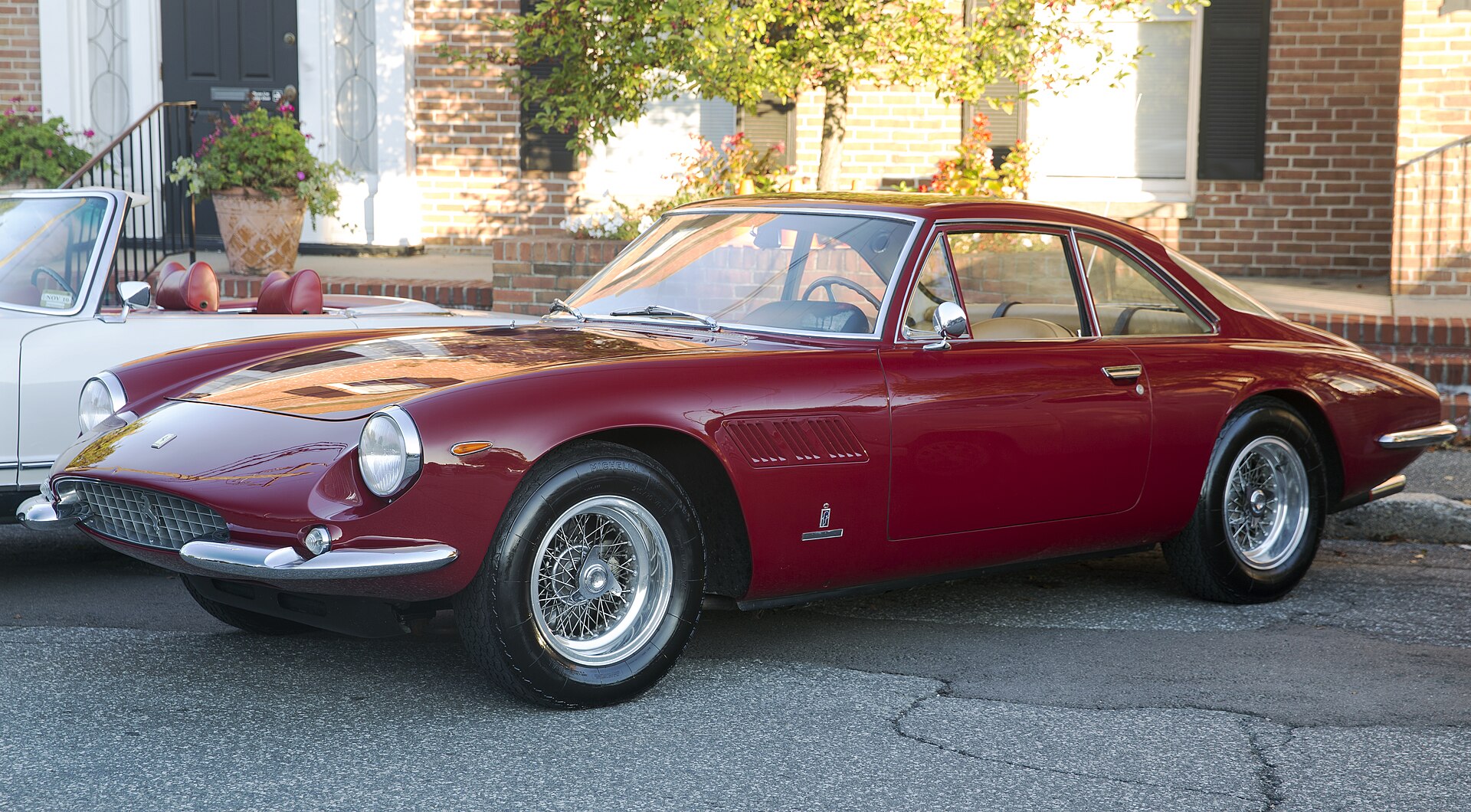
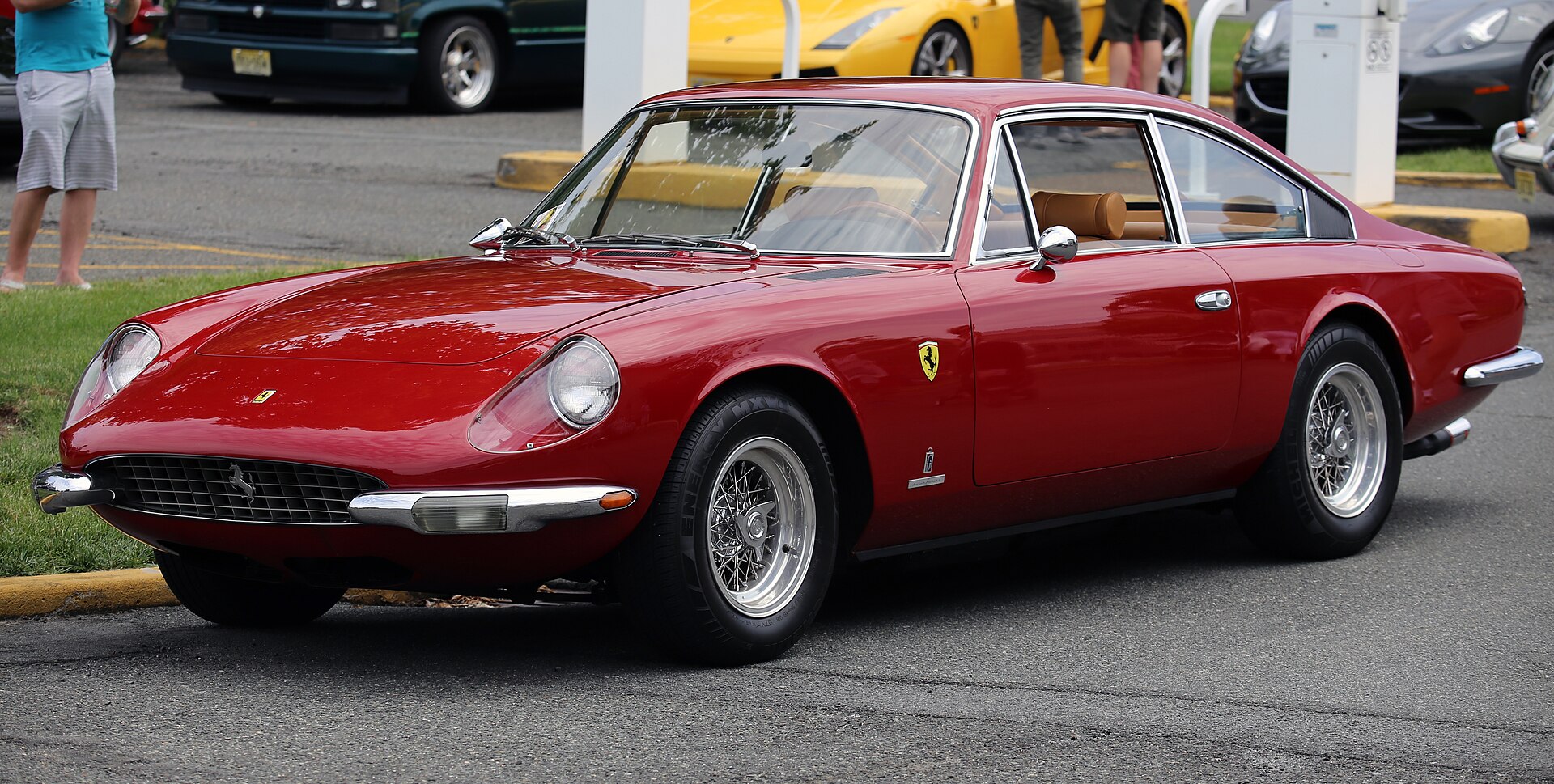
The Ferrari 365 is a family of front-engined V12 grand tourers that Ferrari built from 1966 to 1971. All of them use a 4.4-litre version of the Colombo V12, developed from the 4.0-litre engine of the 330 series. The family includes the very rare 365 California cabriolet, the four-seat 365 GT 2+2, the 365 GTC coupé and the open 365 GTS. The 365 GT 2+2 became the company's best-selling model of its time.
In short
- Built from 1966 to 1971 as successors to the 330 models; bodies by Pininfarina.
- 4,390 cc Colombo V12 (81 mm bore) with 235 kW (320 PS).
- 365 California: 14 cars; 365 GT 2+2: about 800; 365 GTC: 168; 365 GTS: 20.
- The GTC has a transaxle for a 50:50 weight distribution and independent rear suspension.
Ferrari 365 at a glance
| Model | Years | Body | Built |
|---|---|---|---|
| 365 California | 1966–1967 | Pininfarina cabriolet | 14 |
| 365 GT 2+2 | from 1967, about four years | four-seat coupé | about 800 |
| 365 GTC | 1968–1970 | two-seat coupé | 168 |
| 365 GTS | 1968–1970 | two-seat spider | 20 |
| Specification | Ferrari 365 |
|---|---|
| Engine | 4,390 cc Colombo V12 |
| Power | 235 kW (320 PS); GTC at 6,600 rpm |
| Carburettors | three Weber (GTC: three twin-choke Weber 40 DFI) |
| Layout | front engine, rear-wheel drive |
All Ferrari models of the period are in the Ferrari catalogue.
The 4.4-litre Colombo V12
The 365 engine is a development of the 4.0-litre V12 of the Ferrari 330. Its bore was enlarged to 81 mm, which gives 4,390 cc. In road tune it produces 235 kW (320 PS). In the 365 GTC, the engine is the Tipo 245/C with three twin-choke Weber 40 DFI carburettors and reaches its peak at 6,600 rpm. That was a clear gain over the 330 GTC, which Wikipedia lists at 224 kW (300 hp).
The 365 California (1966–1967)
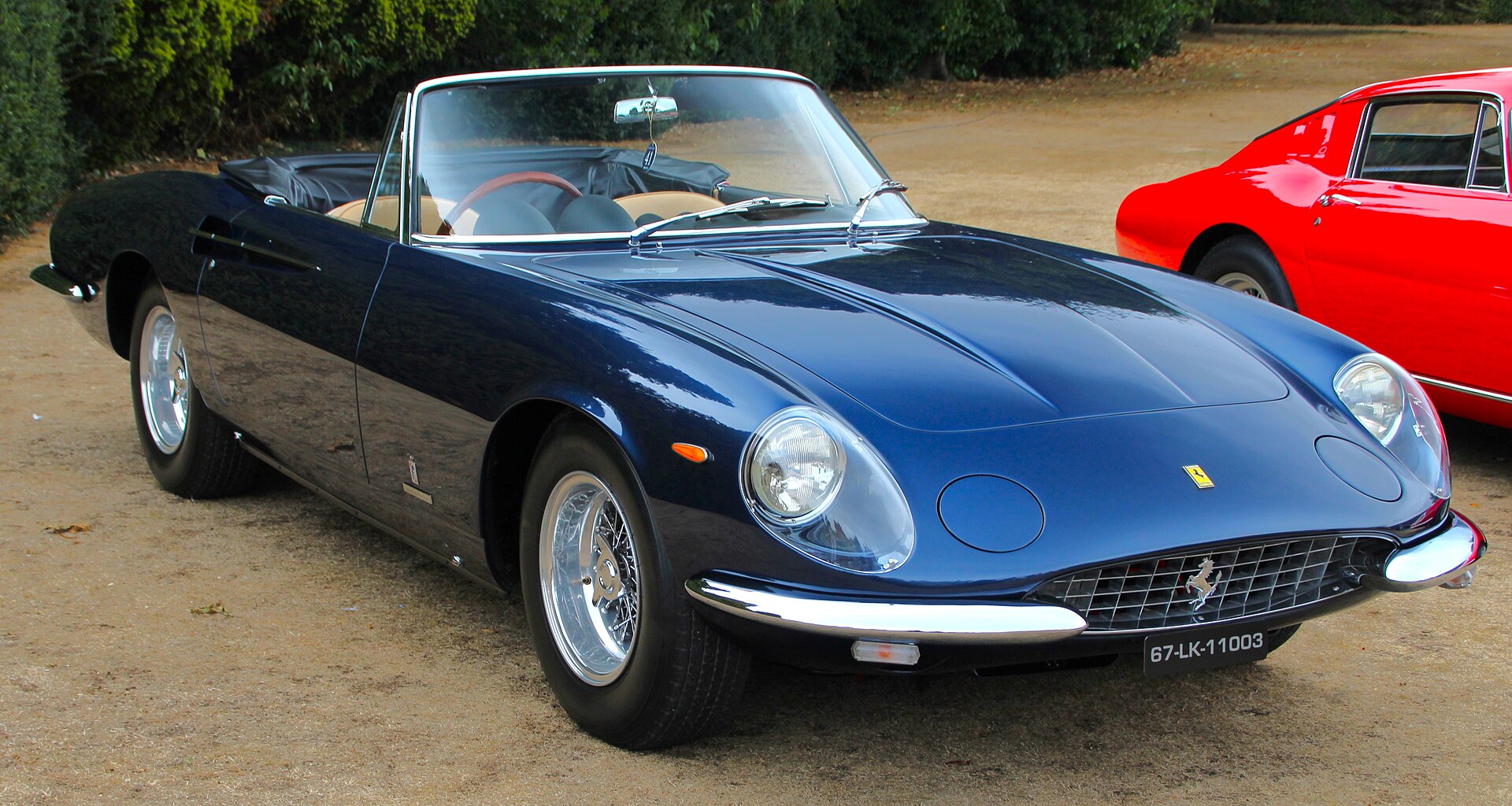
The 365 California was shown at the Geneva motor show in 1966. It is a large Pininfarina cabriolet, and only 14 were built, two of them with right-hand drive. The chassis were sent to Pininfarina's plant at Grugliasco to be bodied and trimmed, then returned to Ferrari. The prototype used a 330 GT 2+2 chassis of type 571, while production cars had the type 598 chassis.
Wikipedia records that a well-preserved example was sold on 28 June 2005 for €736,000.
The 365 GT 2+2: Ferrari's best-seller
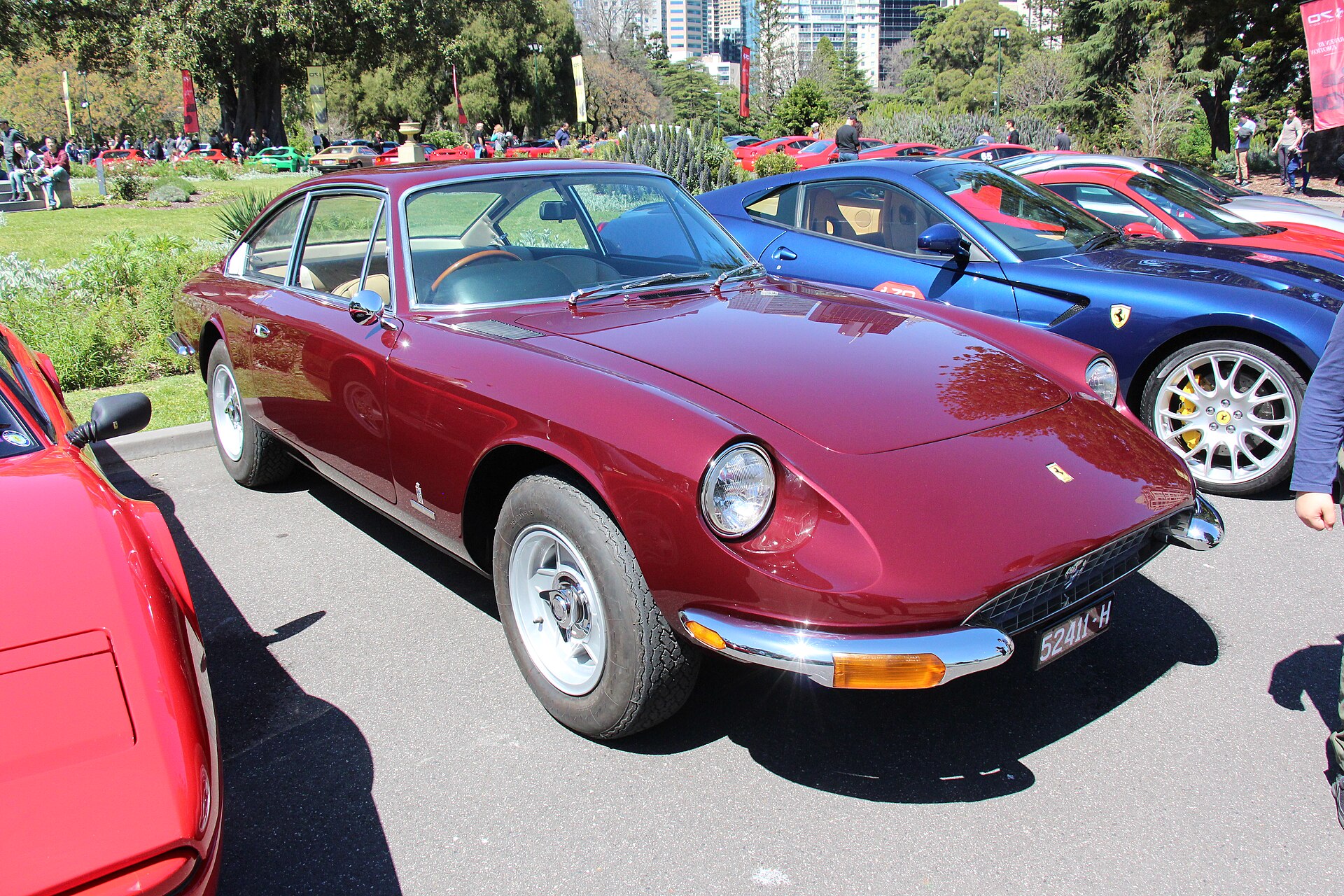
The 365 GT 2+2 replaced the 330 GT 2+2 in 1967 and was built for about four years. About 800 cars were made, 52 of them with right-hand drive, and Wikipedia describes it as the company's top-selling model.
The car was well equipped. It has leather seats, power steering, power brakes and electric windows, and air conditioning was available as an option. Unlike the 330 GT 2+2, which had a live rear axle on leaf springs, the 365 GT 2+2 has independent rear suspension.


The 365 GTC and 365 GTS (1968–1970)
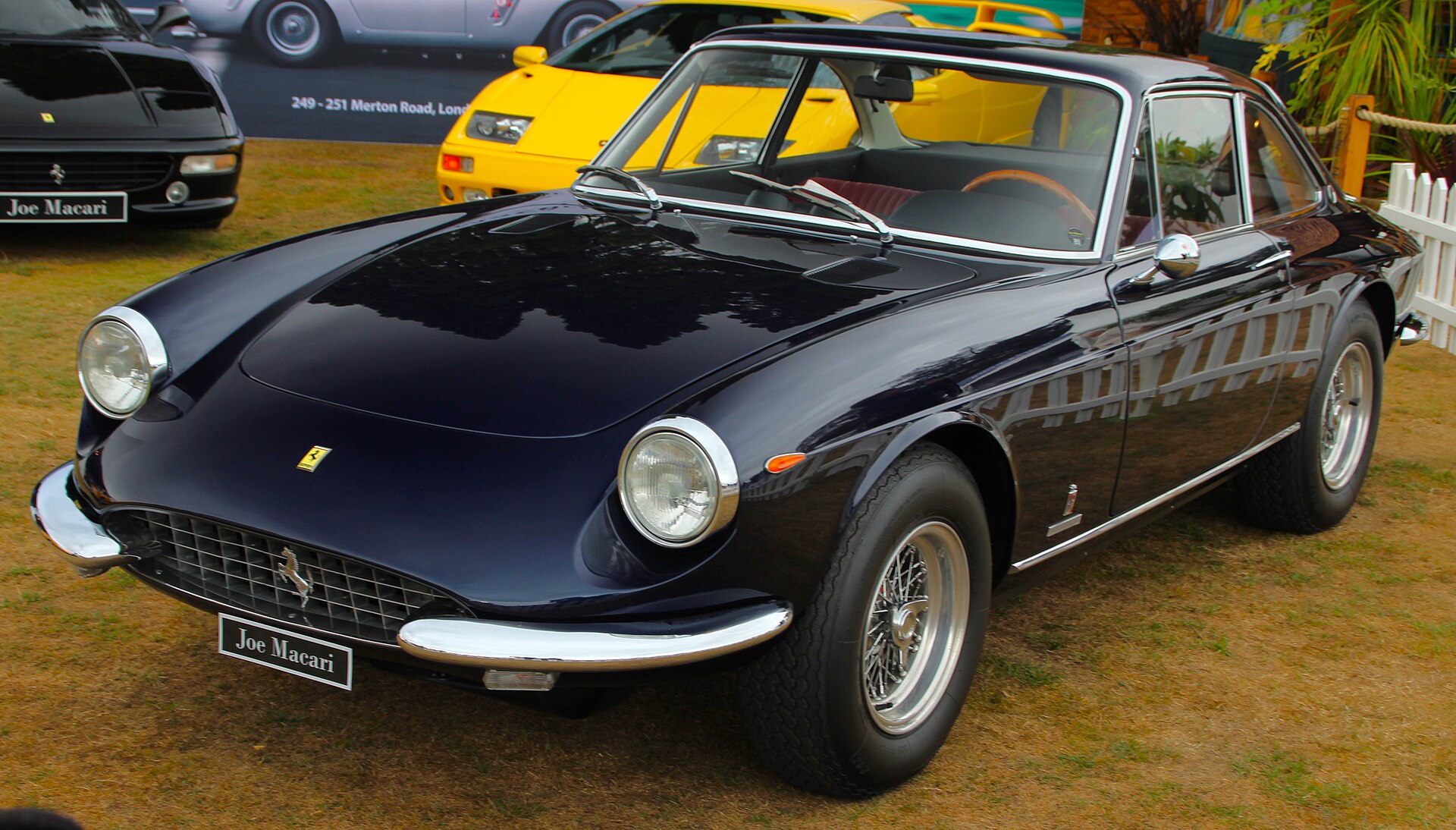
In 1968 the 365 GTC coupé and the 365 GTS spider replaced the 330 GTC and 330 GTS. They are two-seaters with the 235 kW (320 PS) engine. The gearbox is combined with the final drive in a transaxle at the rear, which gives a 50:50 weight distribution. The rear suspension is independent, with coil springs and wishbones, and the servo-assisted disc brakes on all four wheels have split circuits.
The GTC was built until 1970 in 168 examples, 22 of them with right-hand drive. The open GTS is much rarer: only 20 were made. The GTC was followed by the 365 GTC/4, while the role of the open two-seater passed to the Daytona Spider, based on the 365 GTB/4.
| Specification | 365 GTC | 365 GTS |
|---|---|---|
| Body | coupé | spider |
| Engine | Tipo 245/C 4.4 V12 | 4.4 V12 |
| Power | 235 kW (320 PS) at 6,600 rpm | 235 kW (320 PS) |
| Weight distribution | 50:50 (transaxle) | 50:50 (transaxle) |
| Built | 168 | 20 |
Predecessors: the 330 series
The 365 models replaced Ferrari's 330 family, and comparing them shows what changed. All 330 road cars used a 4.0-litre V12 with 220 kW (300 PS).
| 330 model | Years | Built | Replaced by |
|---|---|---|---|
| 330 America | 1963 | 50 | 330 GT 2+2 |
| 330 GT 2+2 | 1964–1967 | 1,099 (infobox) | 365 GT 2+2 (1967) |
| 330 GTC | 1966–1968 | about 598 | 365 GTC (1968) |
| 330 GTS | 1966–1968 | about 100 | 365 GTS (1968) |
The 330 GT 2+2 was first shown at the Brussels motor show in January 1964. Its Series I had four headlights and a four-speed gearbox with overdrive; the Series II of 1965 had two headlights, a five-speed gearbox, alloy wheels and optional air conditioning and power steering. The 330 GTC was introduced at Geneva in March 1966 and the open GTS at Paris in October 1966. Both shared the short wheelbase and independent rear suspension of the 275. Production of the 330 series ended in 1968, when the 365 models took over.
Legacy
The 365 family linked the 330 series of the mid-1960s with the later 365 GTB/4 Daytona and 365 GTC/4. Its most important member in terms of numbers was the 365 GT 2+2, which brought four-seat comfort and power-assisted controls to a large V12 Ferrari. The 365 name continued into the 1970s, for example on the 365 GT4 2+2. More about the company is in our history of Ferrari.

Photo gallery

Ferrari 365: first vs latest generation
| Spec | 365 California | 365 GTC / GTS | Change |
|---|---|---|---|
| Years | 1966–1967 | 1968–1970 | 2 years apart |
| Most powerful version | 235 kW (320 PS) | 235 kW (320 PS) | same (0%) |
Oldest and newest generation in the 1cars catalog. Power is the strongest version of each; other rows are shown only when both generations have the figure.
Image credits · Photos from Wikimedia Commons under free licences
- Ferrari 365 California · Photo: MrWalkr / Wikimedia Commons, CC BY-SA 4.0
- Ferrari 365 GT 2+2 · Photo: Sicnag / Wikimedia Commons, CC BY 2.0
- Ferrari 365 GTC / GTS · Photo: MrWalkr / Wikimedia Commons, CC BY-SA 4.0
Ferrari 365 in our rankings
- No. 41 of 94 · Most powerful cars of the 1960s (235 kW · top 46%)
- No. 399 of 859 · Most powerful cars (235 kW · top 47%)
- No. 79 of 127 · Most powerful Italian cars (235 kW · top 63%)
- No. 147 of 345 · Cars with the most generations (3 generations · top 68%)
- No. 216 of 313 · Most powerful coupes (235 kW · top 70%)
- No. 635 of 912 · Longest-running car nameplates (5 years · top 77%)
More powerful than 54% of ranked cars of the 1960s in the 1CARS catalog (No. 41 of 94).
FAQ
Which cars belong to the Ferrari 365 family of 1966–1971?
The 365 California cabriolet, the 365 GT 2+2, the 365 GTC coupé and the 365 GTS spider.
How powerful is the Ferrari 365 V12?
The 4,390 cc Colombo V12 produces 235 kW (320 PS).
How many Ferrari 365 GT 2+2s were built?
About 800, including 52 with right-hand drive. It was Ferrari's best-selling model of its time.
How rare is the Ferrari 365 California?
Very rare: only 14 were built in 1966 and 1967, two of them with right-hand drive.
What did the Ferrari 365 replace?
The 330 series: the 365 GT 2+2 replaced the 330 GT 2+2 in 1967, and the 365 GTC and GTS replaced the 330 GTC and GTS in 1968.
Data sources
Data checked by an editor against the sources below.