 Aston Martin V8 Vantage
Specs, engines and history
Published Sources (1) Report an error
By Felix Hartmann, Automotive Technology & EV Contributor
- Built
- 1977–1989
- Top power
- 336 kW (457 PS)
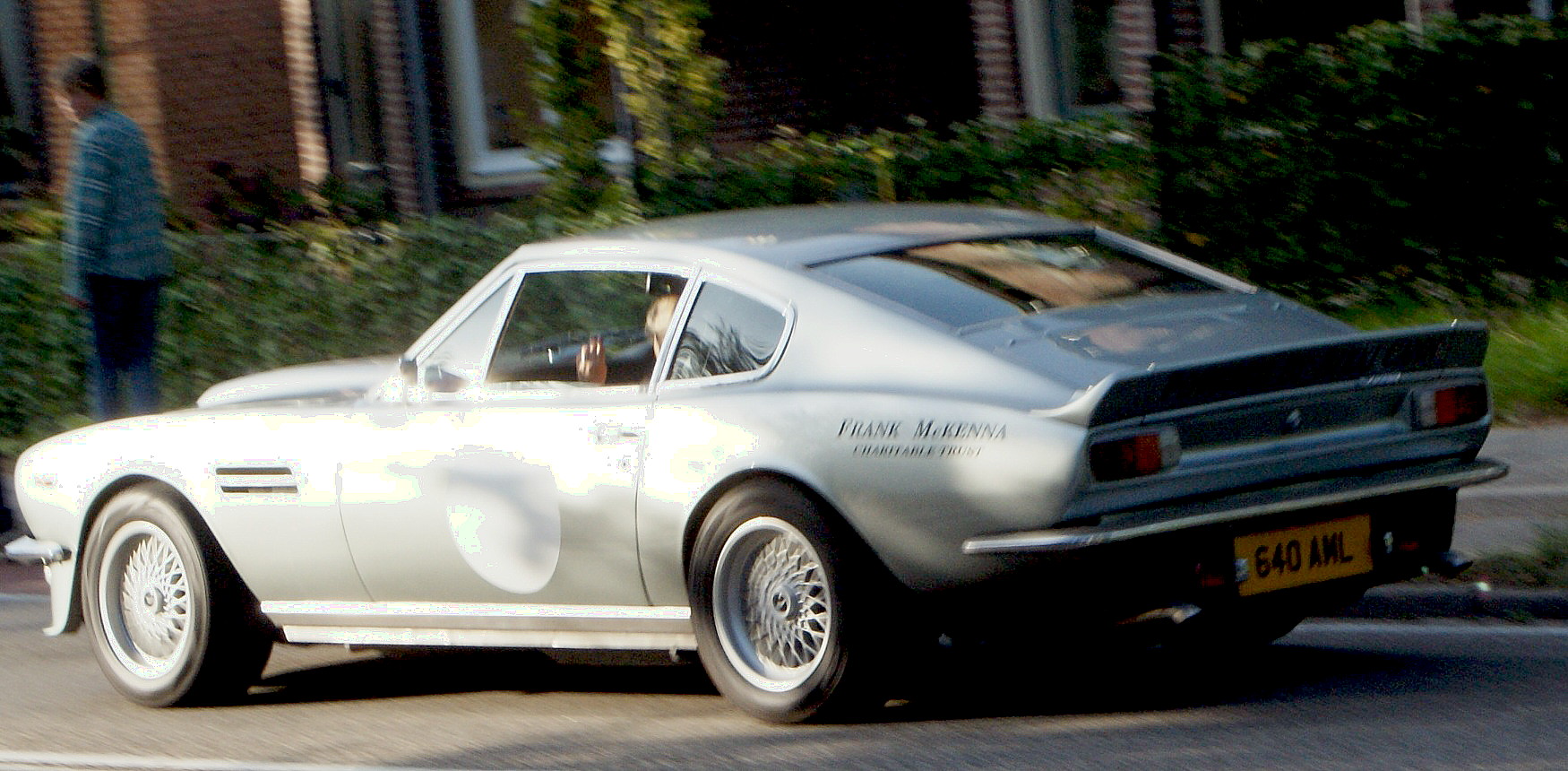
The Aston Martin V8 Vantage is the high-performance version of the Aston Martin V8 that was built at Newport Pagnell from 1977 to 1989. At its launch it was called "Britain's first supercar": with a tuned 5.3-litre V8 it could reach about 270 km/h and accelerated faster than the Ferrari Daytona. Over twelve years it grew into a family that included the X-Pack, the open Vantage Volante and the V8 Vantage Zagato, and it gave James Bond his car in The Living Daylights.
In short
- Built 1977–1989 at Newport Pagnell; 534 cars according to Wikipedia: 342 saloons and 192 Volantes.
- 5.3-litre V8 with four Weber carburettors: about 283 kW (380 bhp) and 550 Nm in the first series, 301 kW (403 bhp) in the X-Pack, 322 kW (432 bhp) with the big-bore option.
- Motor's test in April 1981 recorded 270 km/h; the Guinness Book of Records listed it as the world's fastest independently road-tested production car.
- Designed by William Towns; succeeded by the Virage and its Vantage version.
Aston Martin V8 Vantage at a glance
| Specification | Aston Martin V8 Vantage |
|---|---|
| Production | 1977–1989, Newport Pagnell (England) |
| Cars built | 534 (342 saloons, 192 Volantes) |
| Body | two-door four-seat coupé; Volante convertible |
| Designer | William Towns |
| Engine | 5.3-litre V8, four overhead camshafts, front-mounted |
| Power | 283 kW (380 bhp) to 322 kW (432 bhp) |
| Torque | 550 Nm at 4,500 rpm (first series) |
| Top speed | 270 km/h (Motor, 1981) |
| Predecessor / successor | DBS / Virage and Vantage |
The V8 Vantage was the fastest member of the V8 family that had started with the DBS of the late 1960s. All models are listed in the Aston Martin catalogue, and the history of the company is told in our Aston Martin history.
Development and launch
The Vantage was based on the Aston Martin V8 saloon, the car that had grown out of the DBS. Its body was designed by William Towns. For the Vantage, Aston Martin modified the 5.3-litre V8 with high-performance camshafts, a higher compression ratio, larger inlet valves and bigger carburettors on new manifolds.
When it was presented in 1977, the Vantage was hailed as "Britain's first supercar". The Goodwood buyer's guide notes that at its launch the car outperformed contemporary models from Ferrari, Porsche and Lamborghini, and that it was conceived as a faster, more focused alternative to the regular V8, which remained on sale alongside it. Its top speed was about 270 km/h, and it reached 60 mph in 5.3 seconds - a tenth of a second quicker than the Ferrari Daytona. The engine was shared with the Lagonda saloon, Aston Martin's sister brand.

Engine and performance
| Version | Years | Induction | Power |
|---|---|---|---|
| Series 1 | 1977–1978 | four Weber 48 IDF carburettors | about 283 kW (380 bhp) at 5,800 rpm, 550 Nm at 4,500 rpm |
| "Oscar India" | from late 1978 | Weber carburettors | 291 kW (390 bhp) |
| X-Pack ("580") | 1986–1989 | Weber carburettors, Cosworth pistons | 301 kW (403 bhp) |
| X-Pack, big-bore option | 1986–1989 | 50 mm carburettors, straight-through exhaust | 322 kW (432 bhp) |
The "Oscar India" update of late 1978 raised the output to 291 kW (390 bhp). In its test of April 1981, the magazine Motor recorded 0–60 mph in 5.2 seconds and a top speed of 270 km/h. These figures earned the V8 Vantage a place in the Guinness Book of Records as the fastest production car tested independently on the road.
The last big step was the X-Pack of 1986, also known as the "580". It used Cosworth pistons and cylinder heads derived from the Nimrod racing programme and produced 301 kW (403 bhp); 16-inch wheels were fitted. Aston Martin Works Service also offered a version with bigger carburettors and a straight-through exhaust for 322 kW (432 bhp), and a 6.3-litre engine with 336 kW (450 bhp). Some independent specialists even built 7.0-litre conversions.

Gearbox, weight and driving
Most V8 Vantages have a five-speed ZF manual gearbox; according to the Goodwood buyer's guide, a three-speed automatic in a Vantage may point to a non-original or altered car. The guide gives the kerb weight as 1,990 kg - close to two tonnes - and lists the standard engine at 291 kW (396 PS) at 5,800 rpm and 550 Nm at 4,500 rpm, which it describes as about 40 per cent more power and 10 per cent more torque than the regular V8. The engine is an evolution of Tadek Marek's all-aluminium twin-cam V8.
On the road the Vantage feels heavy and powerful, but more refined than its muscular looks suggest. The steering is quick and precise for a car of its age, the brakes are good for the period, and the V8 combines strong low-speed torque with a powerful top end. The rear seats are cramped, but the car works both on country roads and on long journeys.
The guide also explains some of the nicknames. Early cars are sometimes called "bolt-in/flip-tail" because of their improvised grille blanking plate and rear spoiler; the "Oscar India" cars from 1978 look more refined; BBS wheels arrived in 1983; and the earlier and later engine stages are often known as V540 and V580. The last cars used Ronal wheels with improved springs and dampers.
What to check when buying
Under the aluminium body is a steel chassis that can corrode. The sills are a known weak point, and the bulkheads, the boot floor and the outriggers also need checking - the removable sill plates are the first place to look. Vague steering often means worn suspension parts, and the bushes need regular replacement. The engine is durable with proper care, but leaks, contaminated coolant, low oil pressure and unusual noises are warning signs; services are due about every 8,000 km and the major service includes adjustment of the cam chains. Because some regular V8 saloons have been converted to look like Vantages, buyers should confirm that a car is genuine before paying the higher price that a real Vantage or X-Pack commands.
Production and versions
Wikipedia divides the coupés into two series. The first series consisted of 38 cars, plus 13 "cosmetic" cars for the United States. The second series accounted for 304 coupés, including 137 X-Packs. "Cosmetic" Vantages were built for markets such as the United States, Switzerland and Japan, where emissions rules required fuel injection instead of the Weber carburettors. There were 14 such Series 2 coupés and 56 Volantes. The Goodwood guide describes these cars as effectively re-bodied regular V8s, some of them right-hand-drive cars for Japan. Counting the last Zagato-bodied cars, production of the Vantage family continued into 1990.
Vantage Volante and the Prince of Wales cars
Six open cars with the Vantage engine and running gear were built to special order before the Vantage Volante became a regular model in 1986. The production car had a deeper front spoiler, wider wheel arches, extended side skirts and a rear spoiler. 166 were built, and the last left the factory in December 1989.
In 1987 Charles, then Prince of Wales, took delivery of a Vantage Volante and asked for it without the wider arches, the front air dam and the side skirts. About 26 more cars were built to this "Prince of Wales" specification. Including them, Wikipedia counts 192 Vantage Volantes.

V8 Vantage Zagato
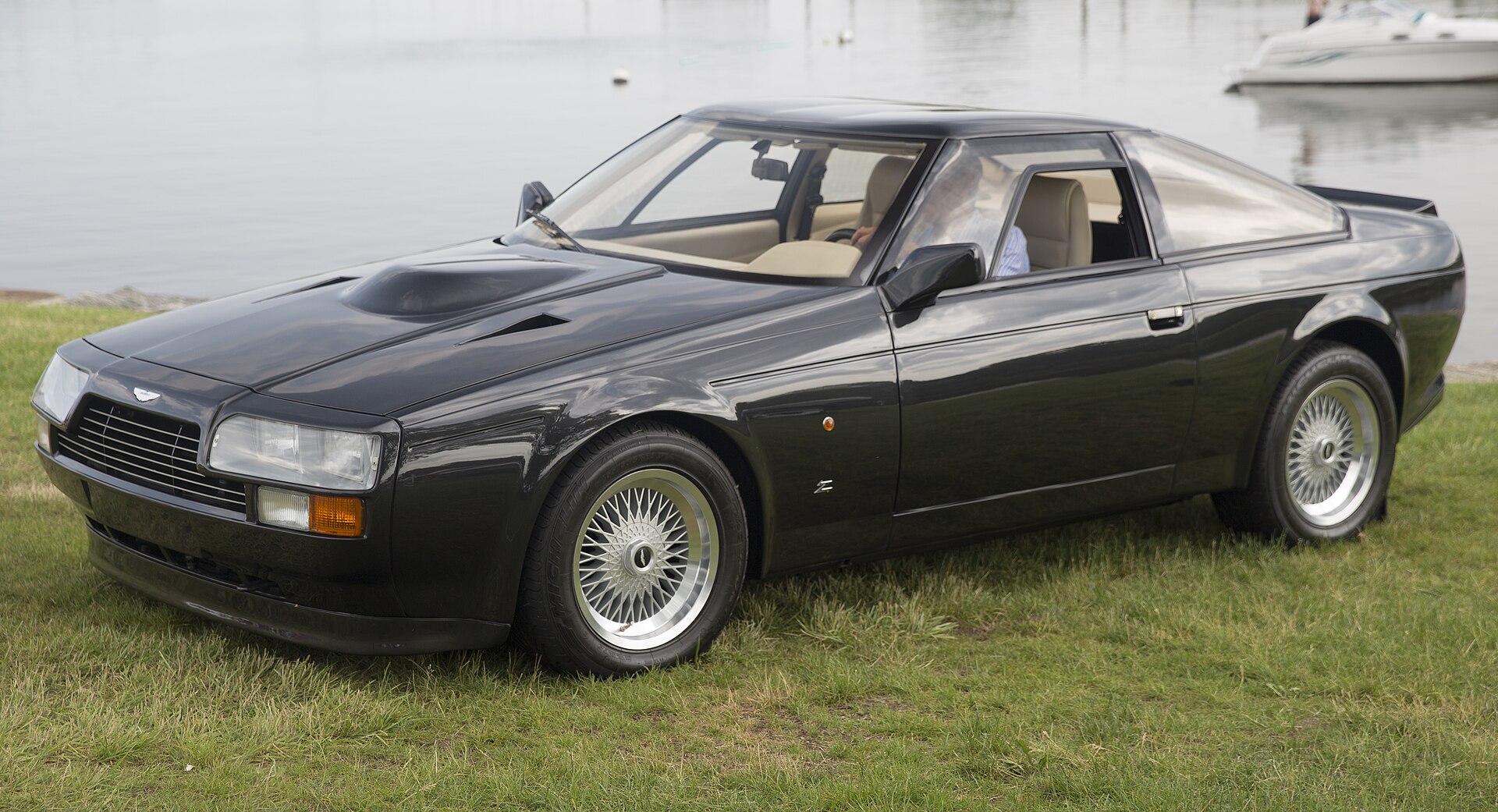
At the Geneva Motor Show in 1986 Aston Martin presented the V8 Vantage Zagato, an angular modern interpretation of the DB4 GT Zagato of the early 1960s. It used the 322 kW (432 bhp) engine with twin-choke Weber carburettors. Between 1986 and 1990 Zagato built 52 coupés and 37 convertibles.
The Bond car
In The Living Daylights (1987), Timothy Dalton's James Bond drives a V8 Volante registered B549 WUU, lent by Aston Martin Lagonda's chairman Victor Gauntlett. In the film Q Branch fits a winter hard top and gadgets including a head-up display, a police-band radio, tyre spikes, retractable outriggers and a self-destruct system. The car returned in No Time to Die, and the registration B549 WUU appeared on the rear wing of Pierre Gasly's Red Bull Formula 1 car at the 2019 British Grand Prix.
Legacy
The V8 Vantage made Aston Martin a maker of one of the fastest production cars of its time. Its name returned on the Virage-based Vantage of 1993 and on later Aston Martins. For a later Aston Martin with the same name, see the Aston Martin Vantage.
Photo gallery

Aston Martin V8 Vantage in our rankings
- No. 227 of 859 · Most powerful cars (336 kW · top 28%)
- No. 297 of 912 · Longest-running car nameplates (12 years · top 35%)
- No. 125 of 313 · Most powerful coupes (336 kW · top 41%)
- No. 52 of 109 · Most powerful British cars (336 kW · top 48%)
More powerful than 72% of ranked cars in the 1CARS catalog (No. 227 of 859).
FAQ
Why was the V8 Vantage called "Britain's first supercar"?
At its 1977 launch it could reach about 270 km/h and accelerated faster than the Ferrari Daytona.
How many Aston Martin V8 Vantages were built?
534 from 1977 to 1989: 342 saloons and 192 Volantes, according to Wikipedia.
What is the V8 Vantage X-Pack?
The 1986–1989 version with Cosworth pistons and Nimrod-derived cylinder heads, producing 301 kW (403 bhp).
Which Bond film features the V8 Vantage family?
The Living Daylights (1987), in which Bond drives a V8 Volante registered B549 WUU.
What should buyers check on a V8 Vantage?
Above all corrosion of the steel chassis under the aluminium body, especially the sills, plus the service history of the engine and whether the car is a genuine Vantage rather than a converted V8.
Data sources
Data checked by an editor against the sources below.