 Aston Martin DB AR1
Specs, engines and history
Published Sources (2) Report an error
By Felix Hartmann, Automotive Technology & EV Contributor
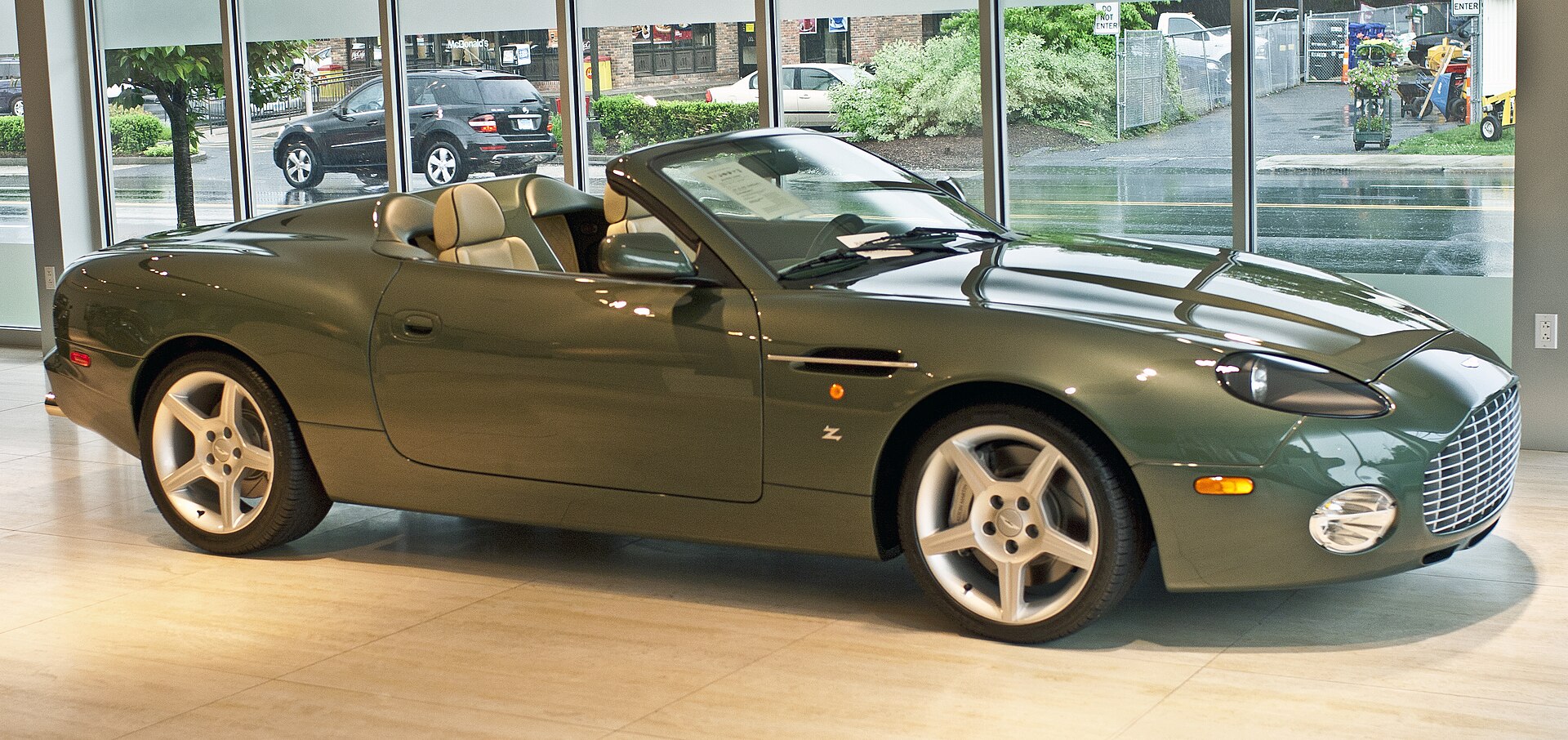
The Aston Martin DB AR1 is an open two-seat roadster that Aston Martin and the Italian coachbuilder Zagato created for the American market. Its name stands for "American Roadster 1". Unveiled at the Los Angeles motor show in January 2003 and built on the DB7 Vantage Volante, it has no roof at all and was sold only in the United States. Aston Martin built 99 cars for customers and one more for its own collection.
In short
- Revealed at the Los Angeles motor show in January 2003; 99 cars for sale plus one for the factory collection.
- Body by Zagato in collaboration with Henrik Fisker, on the full-length chassis of the DB7 Vantage Volante.
- 5.9-litre 48-valve V12 with 324 kW (441 PS) at 6,000 rpm and 556 Nm at 5,000 rpm; six-speed manual gearbox.
- Top speed 298 km/h; no roof, intended for sunny US states.
At a glance: Aston Martin DB AR1
| Specification | Aston Martin DB AR1 |
|---|---|
| Production | 2003 (deliveries 2003–2004) |
| Cars built | 99 for sale + 1 for the factory collection |
| Body | two-seat roadster without a roof, by Zagato |
| Base | DB7 Vantage Volante |
| Engine | 5.9-litre V12, 48 valves |
| Power | 324 kW (441 PS) at 6,000 rpm |
| Torque | 556 Nm at 5,000 rpm |
| Gearbox | six-speed manual |
| Top speed | 298 km/h |
| Market | United States only |
The DB AR1 is based on the Aston Martin DB7. The full range is in the Aston Martin catalogue.
The DB7 Zagato family
At the beginning of the 2000s Aston Martin and Zagato, whose collaboration goes back to the DB4 GT Zagato, built two limited models on the basis of the DB7 Vantage: a closed coupé, the DB7 Zagato, and the open DB AR1. The coupé used a shortened chassis, while the DB AR1 uses the full-length chassis of the DB7 Vantage Volante.
The closed DB7 Zagato came first. It was introduced at the Pebble Beach Concours d'Elegance in August 2002 and shown at the Paris motor show that October. Its steel body was developed by Andrea Zagato and Henrik Fisker and has Zagato's typical "double-bubble" roofline. The coupé sits on a shortened chassis - the wheelbase is 60 mm shorter and the overall length 211 mm shorter than the standard DB7 - and weighs about 59 kg less. With the same 324 kW (441 PS) and 556 Nm as the later roadster, it reached 299 km/h. Like the DB AR1, it was built as 99 cars for sale plus one for the Aston Martin museum, and all were sold.
The DB AR1 was presented at the Los Angeles motor show in January 2003, and its name explains its purpose: "American Roadster 1". It was sold only in the United States, the market after which it was named.

Design by Zagato and Fisker
The body was designed by Zagato together with Henrik Fisker. It resembles the Zagato coupé but has no roof of any kind - the car was intended for the sunny states of the US. One owner, Robert Stockman, later asked Zagato to build a small folding "shelter" that hides behind the seats when not in use.


Engine and performance
The engine is the 5.9-litre, 48-valve V12 of the DB7 Vantage, tuned in the DB AR1 to 324 kW (441 PS) at 6,000 rpm and 556 Nm at 5,000 rpm. It drives the rear wheels through a six-speed manual gearbox. The top speed is 298 km/h.
| Version | Power | Torque | Top speed |
|---|---|---|---|
| DB7 V12 Vantage (base car) | 313 kW (426 PS) at 6,000 rpm | 542 Nm at 5,000 rpm | 296–299 km/h |
| DB AR1 (2003) | 324 kW (441 PS) at 6,000 rpm | 556 Nm at 5,000 rpm | 298 km/h |
Compared with the standard DB7 V12 Vantage, the DB AR1 has 11 kW (15 PS) more and 14 Nm more torque.
The DB7 underneath
The DB AR1 is built on the DB7, the model that carried Aston Martin from 1994 to 2004. The DB7 was produced from September 1994 to December 2004, and with more than 7,000 cars it was the most-produced Aston Martin up to that time. It was replaced by the DB9 in 2004. The original DB7 was designed by Ian Callum and Keith Helfet. The V12 Vantage coupé, on which both Zagato cars draw, weighs about 1,800 kg and reaches 100 km/h in 5.0 seconds with the manual gearbox or 5.1 seconds with the automatic.
The direct technical base of the AR1 is the DB7 V12 Vantage Volante, built from 1999 to 2003. In standard form its 5.9-litre V12 produced 313 kW (426 PS) and 542 Nm, with a six-speed manual or a five-speed automatic gearbox, and its top speed was limited to 266 km/h. The DB AR1 keeps the full-length chassis of this convertible but has more power, only the manual gearbox and no roof.
Legacy
With 99 customer cars, the DB AR1 was a very small series. It belongs to the long series of Aston Martin cars bodied by Zagato, which continued later with the V12 Zagato of 2011, of which 61 road cars were built, and the DBS GT Zagato of 2019, sold only as part of a pair with a DB4 GT Zagato continuation car. More of the brand's background is in our Aston Martin history.
Aston Martin DB AR1 in our rankings
FAQ
What does DB AR1 stand for?
"AR1" means American Roadster 1. The car was designed for and sold only in the United States.
How many DB AR1s were built?
Aston Martin built 99 cars for customers and one more for its own factory collection.
Does the DB AR1 have a roof?
No. It was built without a roof for sunny US states. One owner later had Zagato make a small folding shelter that stows behind the seats.
What engine does the DB AR1 have?
The 5.9-litre V12 of the DB7 Vantage, with 324 kW (441 PS) and 556 Nm.
Who designed the DB AR1?
The body was designed by Zagato in collaboration with Henrik Fisker.
Data sources
Data checked by an editor against the sources below.
- Wikipedia - Aston Martin DB AR1
- Wikipedia - Aston Martin DB7