 Aston Martin DB2
Specs, engines and history
Published Sources (1) Report an error
By Felix Hartmann, Automotive Technology & EV Contributor
- Built
- 1950–1953
- Top power
- 93 kW (126 PS)
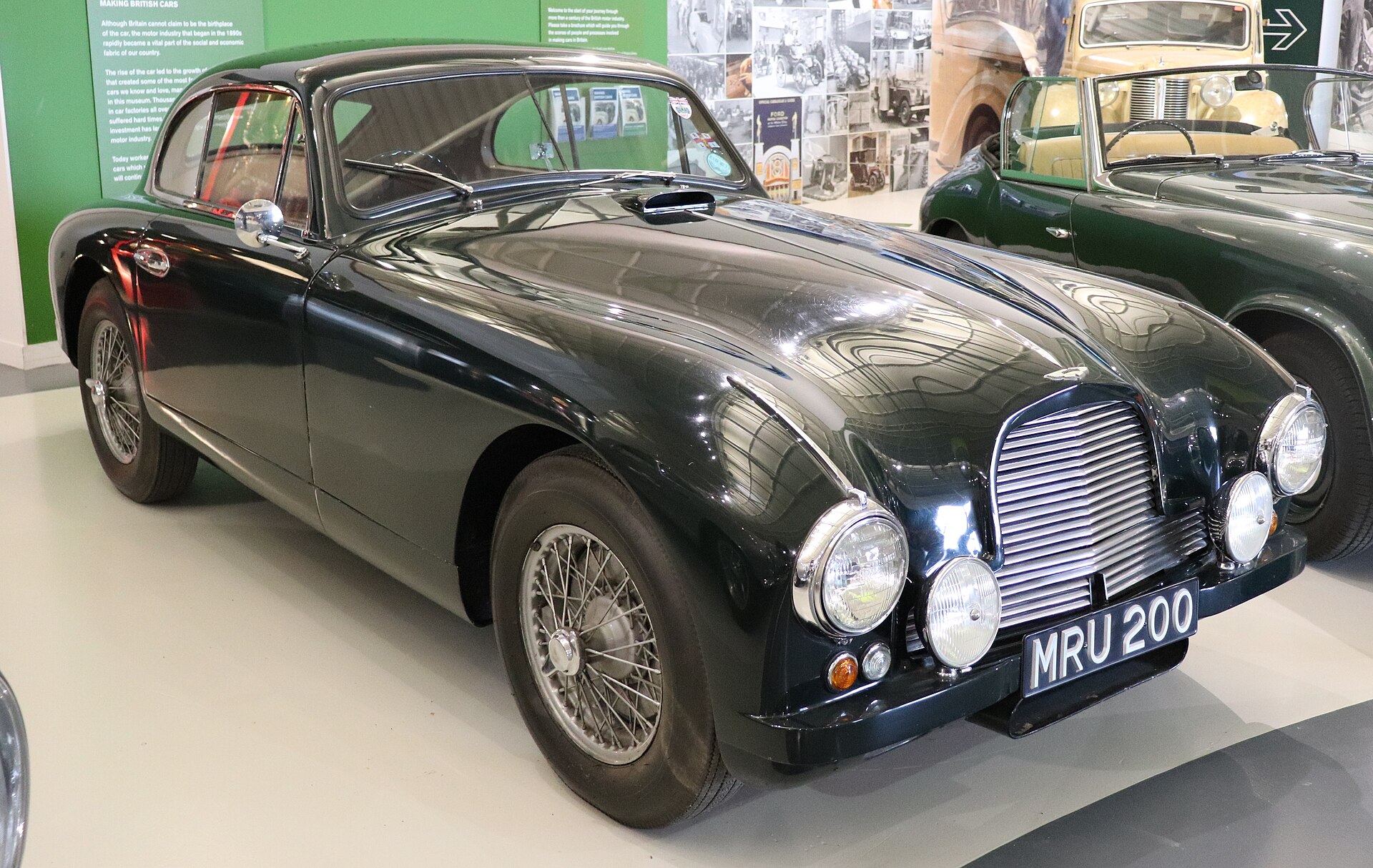
The Aston Martin DB2 is the two-seat sports coupé and drophead coupé that Aston Martin built from 1950 to 1953. It was the first Aston Martin to use the 2.6-litre twin-cam straight-six from Lagonda, the company that David Brown had bought together with Aston Martin in 1947, and it laid the foundations of the "DB" grand tourers that followed. Before going on sale it proved itself in racing, and 411 cars were built.
In short
- Shown at the New York motor show in April 1950; built from May 1950 to April 1953; 411 cars, including at least 102 drophead coupés.
- 2,580 cc twin-cam straight-six designed under W. O. Bentley: about 78 kW (105 hp) as standard, 93 kW (125 hp) with the Vantage option.
- Tubular chassis by Claude Hill and fastback body by Frank Feeley.
- The Motor measured 187.3 km/h in 1950; at Le Mans DB2s finished fifth and sixth in 1950 and third and fifth in 1951.
At a glance: Aston Martin DB2
| Specification | Aston Martin DB2 |
|---|---|
| Production | May 1950 – April 1953 |
| Cars built | 411 (at least 102 drophead coupés) |
| Body | two-seat fixed-head coupé ("sports saloon") and drophead coupé |
| Engine | Lagonda 2,580 cc straight-six, two overhead camshafts |
| Power | about 78 kW (105 hp); Vantage 93 kW (125 hp) |
| Chassis | shortened tube frame of the 2-Litre Sports |
| Dimensions | 4,130 mm long, 1,700 mm wide, 1,360 mm high, 2,500 mm wheelbase |
| Top speed | 187.3 km/h (The Motor, 1950) |
| Predecessor / successor | 2-Litre Sports ("DB1") / DB2/4 |
The DB2 was followed by the Aston Martin DB2/4, and its racing work led to cars such as the Aston Martin DB3S. The whole range is in the Aston Martin catalogue.
David Brown, Lagonda and the new engine
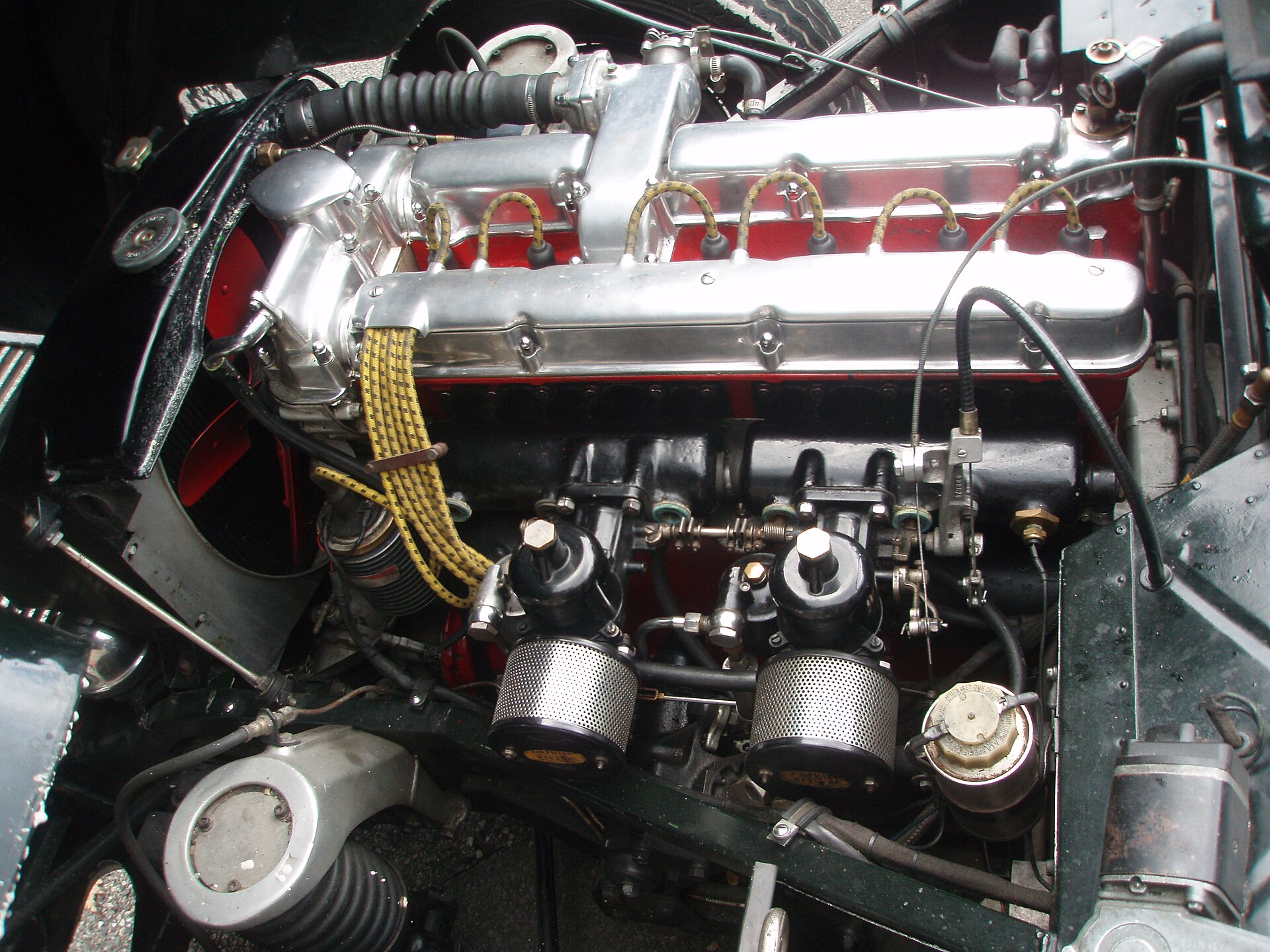
In 1947 the industrialist David Brown bought Aston Martin and merged it with Lagonda to form Aston Martin Lagonda Ltd. The main attraction of Lagonda was its new engine: a twin-overhead-camshaft straight-six whose design had been supervised by W. O. Bentley, with most of the detail work done by William Watson, formerly of Invicta.
The DB2 combined this engine with a shortened version of the tubular chassis that Claude Hill had designed for the 2-Litre Sports, the car later known as the DB1. The new car carried Brown's initials, DB.
Prototypes and Le Mans
Aston Martin tested the new design in racing before it went on sale. At Le Mans in 1949 three pre-production cars were entered. The Lagonda-engined car, driven by Leslie Johnson, retired after six laps when a water pump failed. One of the two-litre cars crashed while running without brakes, and its driver Pierre Maréchal was fatally injured. The other two-litre car, driven by Arthur Jones and Nick Haines, finished seventh. At the Spa 24 Hours the same year, the larger-engined car of Johnson and Charles Brackenbury finished third.
In 1950 all the factory cars at Le Mans used the Lagonda engine. George Abecassis and Lance Macklin finished fifth and Brackenbury and Reg Parnell sixth, giving Aston Martin first and second in the three-litre class. In December 1950 Briggs Cunningham finished second in class at Sebring. In 1951 Macklin and Eric Thompson finished third overall at Le Mans, with Abecassis and Brian Shawe-Taylor fifth.
David Brown kept the fourth and last prototype, built in 1949, for his personal use.


Design and body
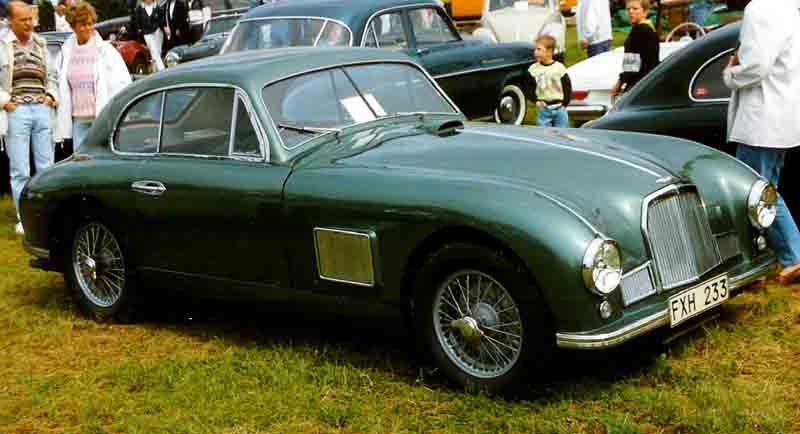
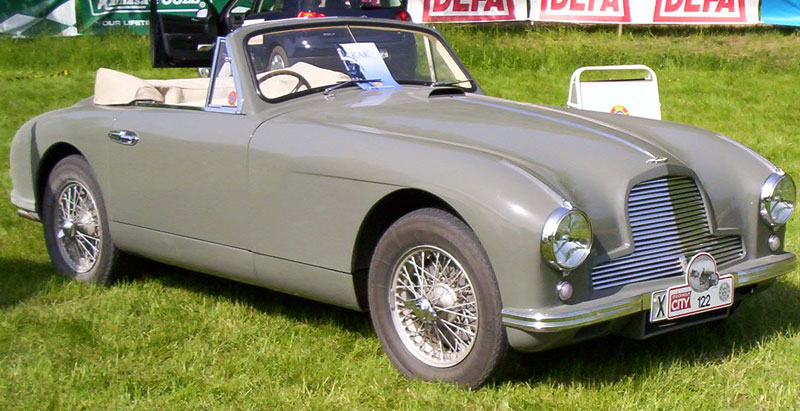
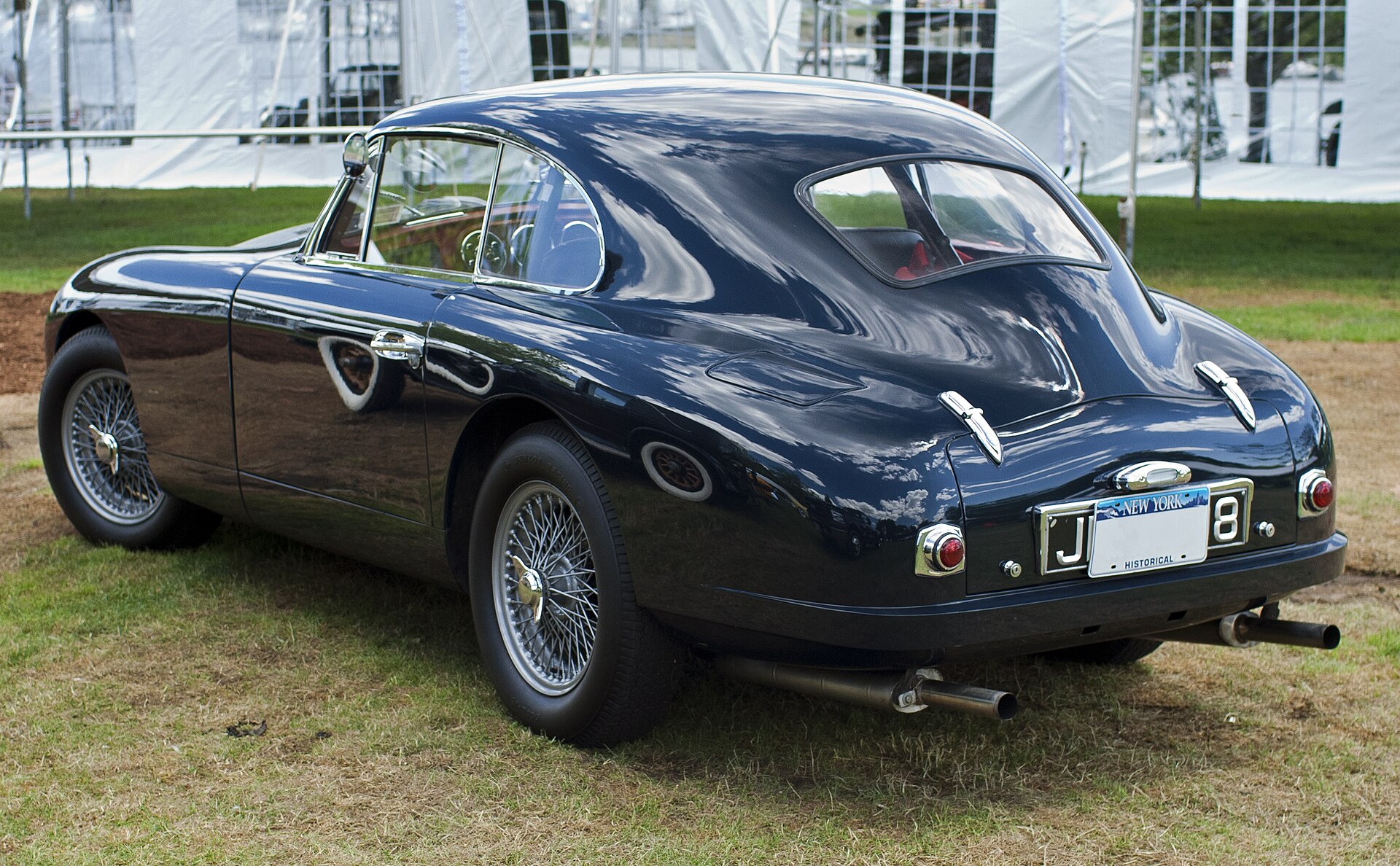
The body was designed by Frank Feeley as a compact fastback coupé, marketed as a "sports saloon". It is 4,130 mm long on a 2,500 mm wheelbase. The first 49 cars had a three-piece chrome grille and vents in the front wings; later cars received a one-piece grille with horizontal slats and no side vents.

The Lagonda engine
The engine displaces 2,580 cc, with a bore and stroke of 78 × 90 mm, and has two overhead camshafts. With twin SU carburettors it produced about 78 kW (105 hp).
| Version | Engine | Power | Notes |
|---|---|---|---|
| DB2 (1950) | 2,580 cc straight-six, twin SU carburettors | about 78 kW (105 hp) | standard specification |
| DB2 Vantage (from April 1950) | 2,580 cc, larger carburettors, new inlet camshaft, 8.16:1 pistons | about 93 kW (125 hp) | needed higher-octane fuel |
In its 1950 road test of a closed coupé, The Motor recorded a top speed of 187.3 km/h and fuel consumption of about 14 l/100 km. The Autocar test car of the same year ran with a 6.5:1 compression ratio on 72-octane fuel without knocking.

Drophead coupé and Vantage
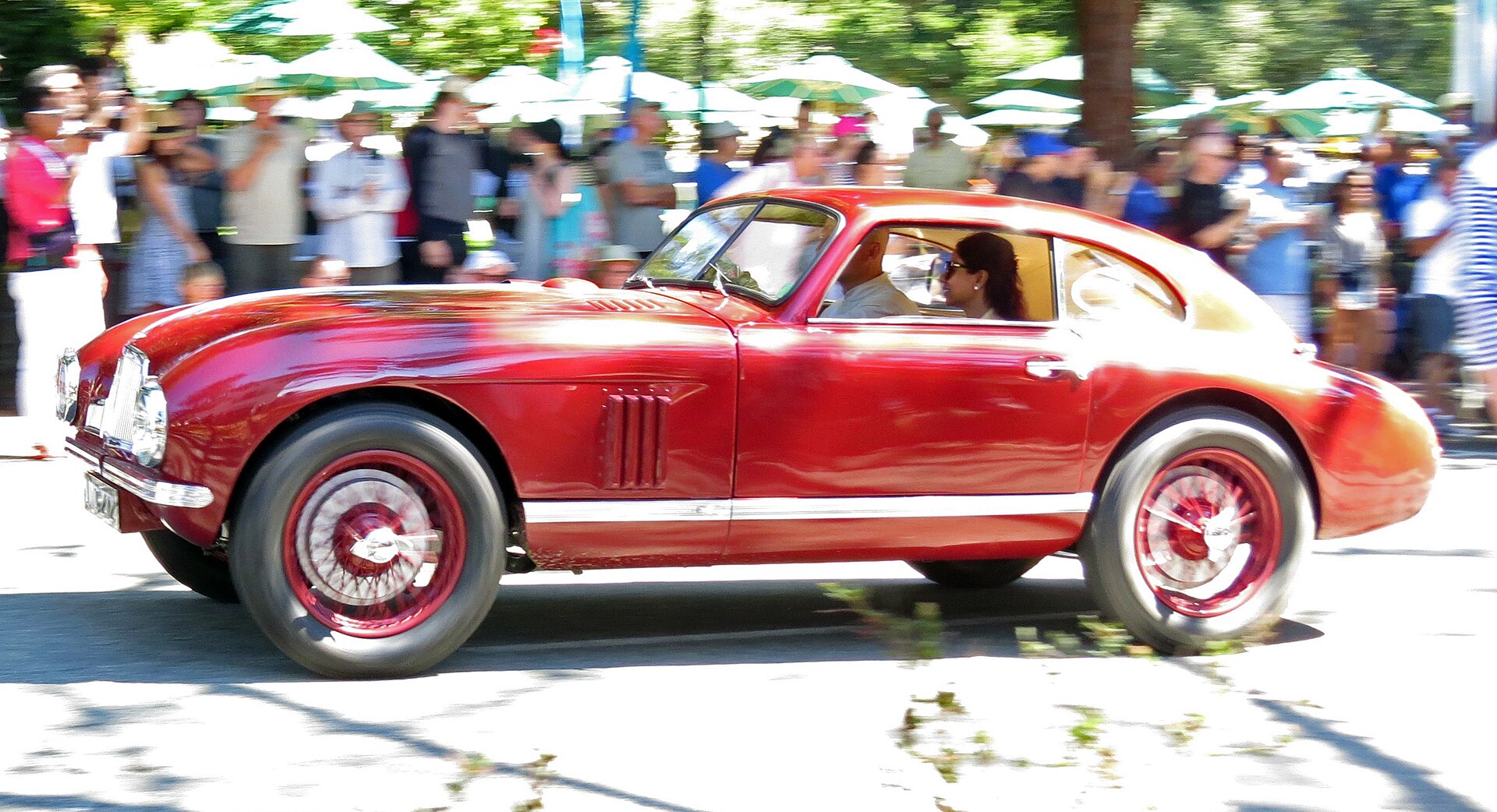
Later in 1950 Aston Martin added a drophead coupé with a folding roof. At least 102 were built, about a quarter of all DB2 sales.
The Vantage option, offered from April 1950, raised the output to about 93 kW (125 hp) with larger carburettors, a different inlet camshaft and higher-compression pistons. The higher compression required better fuel than was widely available in Britain under post-war restrictions. The first DB2 Vantage, chassis LML/50/21, went to Briggs Cunningham, who raced it in the United States.

Legacy
Production ended in April 1953, and the DB2 was followed by the DB2/4. It was the first of the David Brown-era cars to combine the Lagonda twin-cam six, a tubular chassis and a fastback body, and its Le Mans results came before most customers had even seen the car. More about the brand is in our history of Aston Martin.
Photo gallery

Aston Martin DB2 in our rankings
- No. 733 of 859 · Most powerful cars (93 kW · top 86%)
- No. 758 of 912 · Longest-running car nameplates (3 years · top 89%)
- No. 101 of 109 · Most powerful British cars (93 kW · top 94%)
- No. 301 of 313 · Most powerful coupes (93 kW · top 97%)
More powerful than 14% of ranked cars in the 1CARS catalog (No. 733 of 859).
Aston Martin DB2 photos 6
FAQ
How many Aston Martin DB2s were built?
411 cars between May 1950 and April 1953, including at least 102 drophead coupés.
What engine does the DB2 have?
The 2.6-litre twin-cam straight-six designed at Lagonda under W. O. Bentley, with about 78 kW (105 hp), or about 93 kW (125 hp) in Vantage form.
What does DB stand for?
The initials of David Brown, who bought Aston Martin and Lagonda in 1947.
How fast is the Aston Martin DB2?
The Motor measured a top speed of 187.3 km/h in its 1950 road test.
Did the DB2 race?
Yes. Factory cars finished fifth and sixth at Le Mans in 1950, winning the three-litre class, and third and fifth overall in 1951.
Data sources
Data checked by an editor against the sources below.