 Aston Martin Vantage (1993)
Specs, engines and history
Published Sources (1) Report an error
By Felix Hartmann, Automotive Technology & EV Contributor
- Built
- 1993–2000
- Top power
- 450 kW (612 PS)
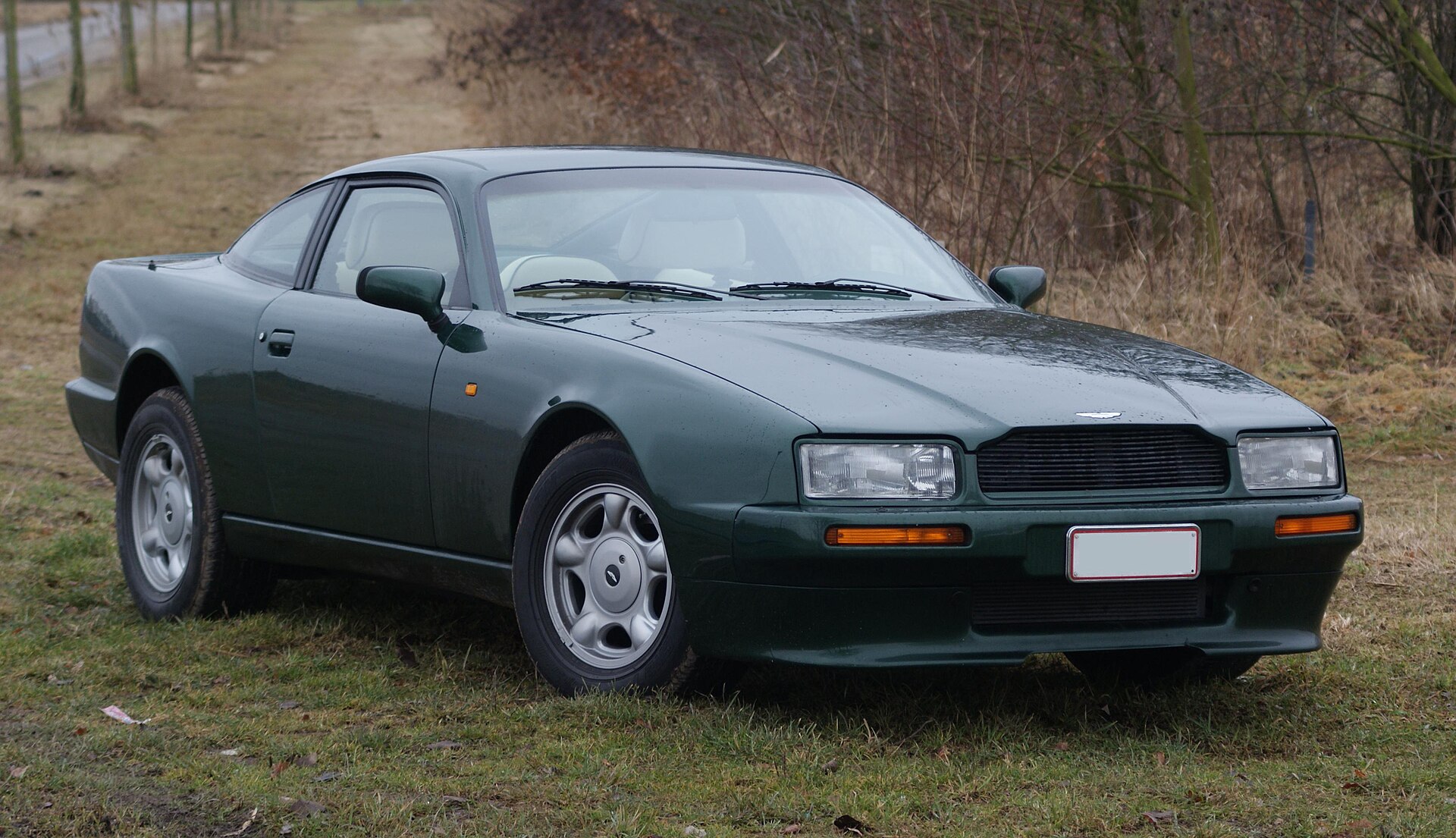
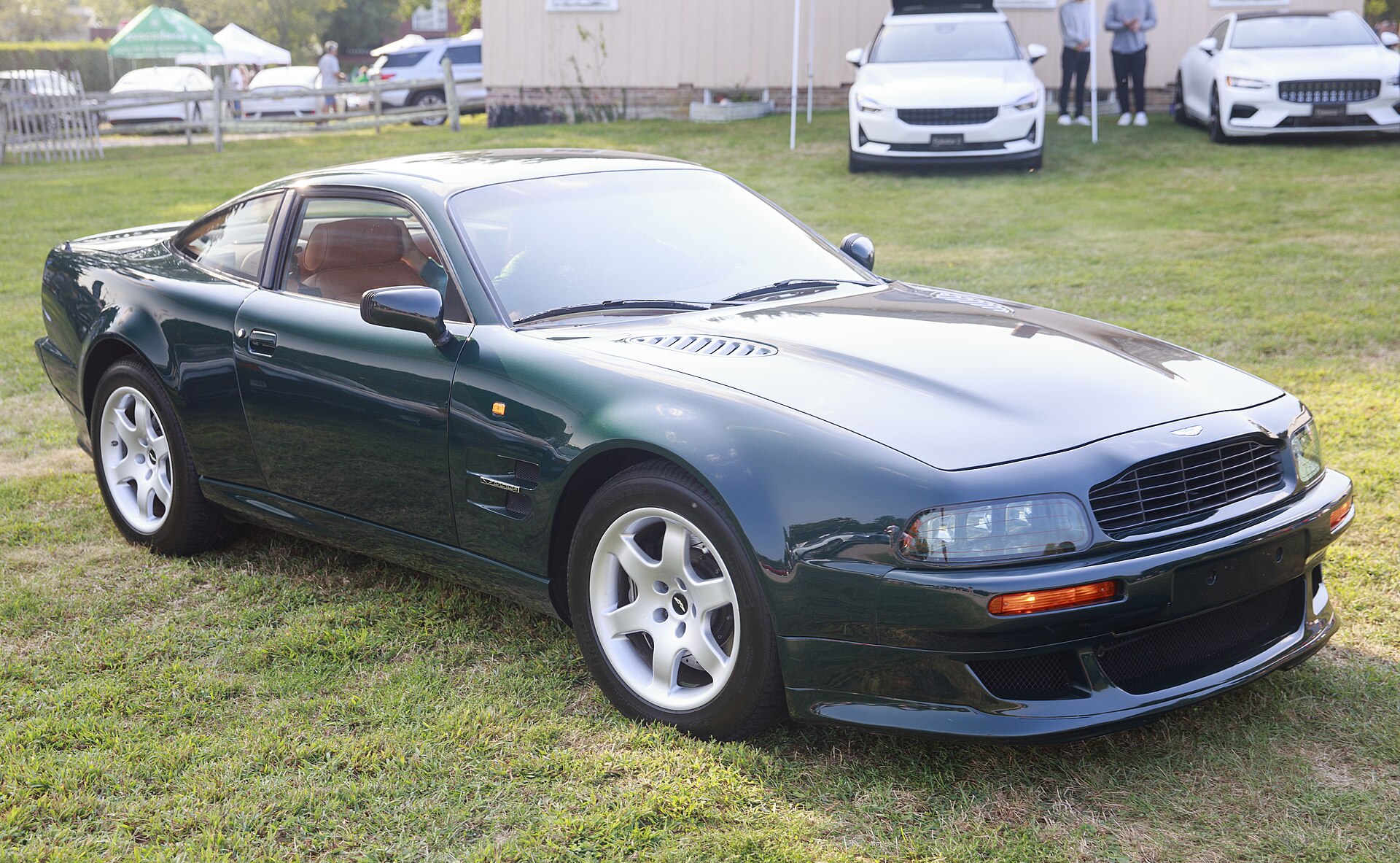
The Aston Martin Vantage of 1993 is a hand-built high-performance coupé that Aston Martin made at Newport Pagnell from 1993 to 2000. It was derived from the Virage, but its twin-supercharged 5.3-litre V8 delivered 410 kW (558 PS), and the car kept only the roof, the doors and the mirrors of its parent. It was later offered with the V600 upgrade and ended as the V8 Vantage Le Mans. evo calls these cars the last coachbuilt Aston Martins from Newport Pagnell.
In short
- First shown at the Birmingham motor show in September 1992; built from 1993 to 2000 at Newport Pagnell.
- Wikipedia counts 280 coupés; evo gives 239 cars, of which about 80 were later upgraded to V600 specification; plus 40 Le Mans cars.
- 5,341 cc V8 with two Eaton superchargers: 410 kW (558 PS) and 752 Nm; 447 kW (608 PS) and 813 Nm as the V600.
- Six-speed manual gearbox, automatic optional; 362 mm front brake discs; weight 1,990 kg (evo); top speed 300 km/h.
Aston Martin Vantage (1993) at a glance
| Specification | Aston Martin Vantage (V550) |
|---|---|
| Production | 1993–2000, Newport Pagnell (England) |
| Cars built | 280 coupés (Wikipedia); 239 (evo); 40 Le Mans; nine Volantes |
| Body | two-door 2+2 coupé, aluminium panels shaped by hand |
| Styling | John Heffernan and Ken Greenley |
| Engine | 5,341 cc V8, two Eaton superchargers, front-mounted |
| Power | 410 kW (558 PS); V600 447 kW (608 PS) at 6,200 rpm |
| Torque | 752 Nm at 4,000 rpm; V600 813 Nm at 4,400 rpm |
| Gearbox | six-speed manual; automatic available |
| Weight | 1,990 kg (evo) |
| Top speed | 300 km/h |
| Predecessor / successor | Virage / V12 Vanquish |
The supercharged car shared its name with the V8 Vantage of 1977, but under the skin it was a Virage. All models of the marque are listed in the Aston Martin catalogue. Its V12 successor is described in our Aston Martin Vanquish article, and the brand's long story is in our Aston Martin history.
A new body on the Virage
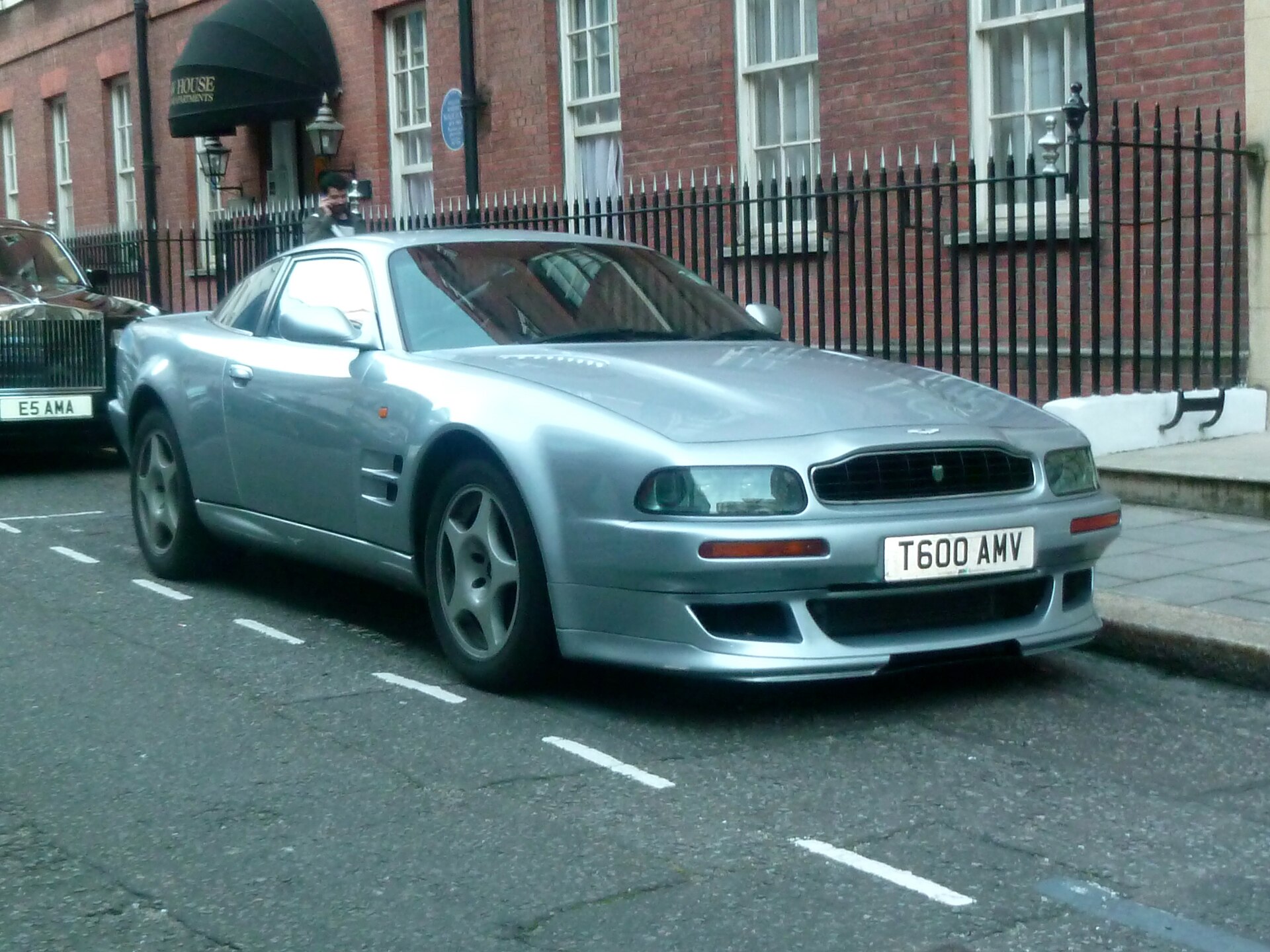
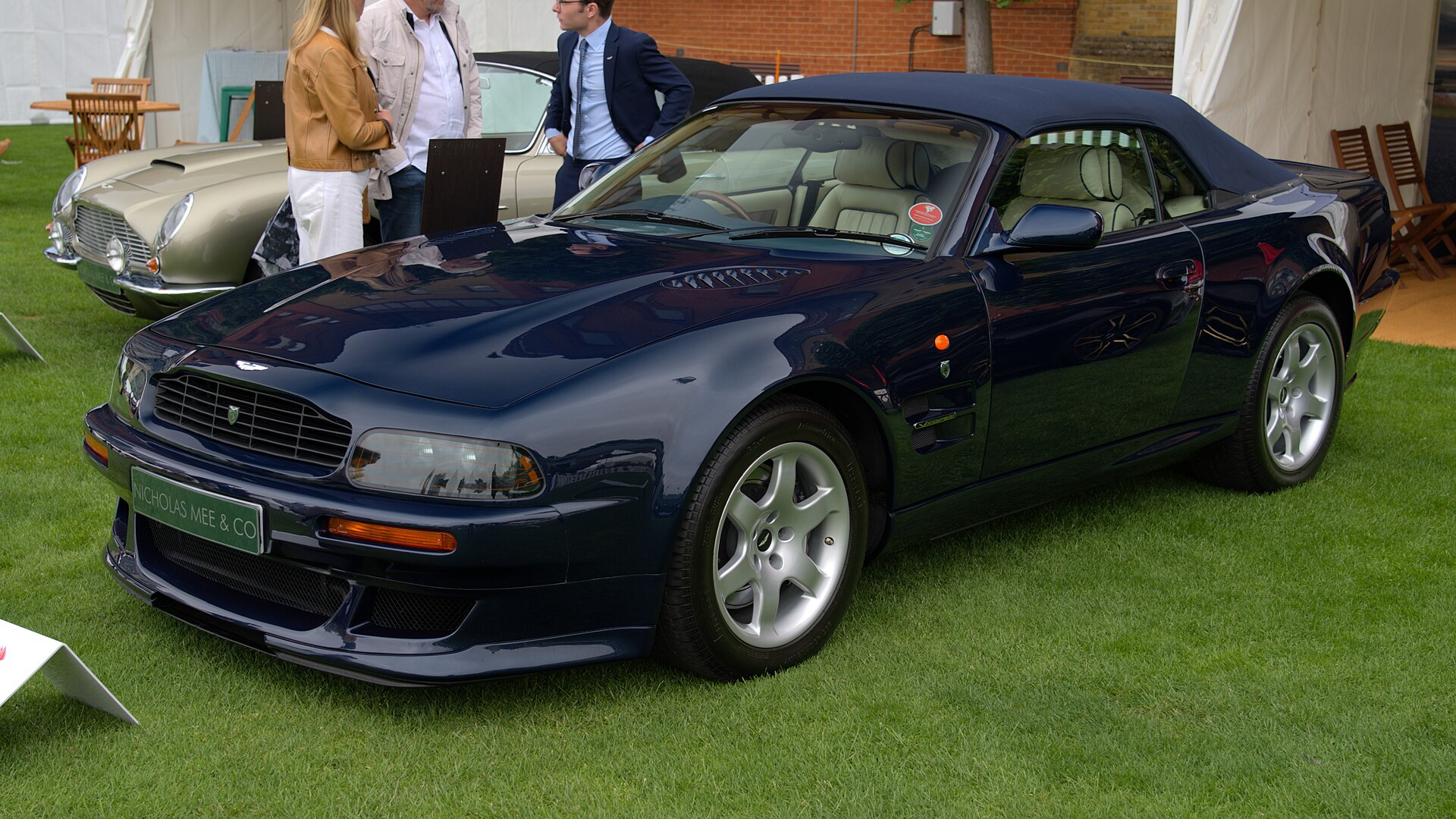
The Vantage made its debut at the Birmingham motor show in September 1992, and production began the following year. The base was the Virage of 1989, yet very little was carried over. Wikipedia lists only the roof, the doors and the wing mirrors as common parts, and the mirrors were later replaced by units from the Jaguar XK8 and XKR.
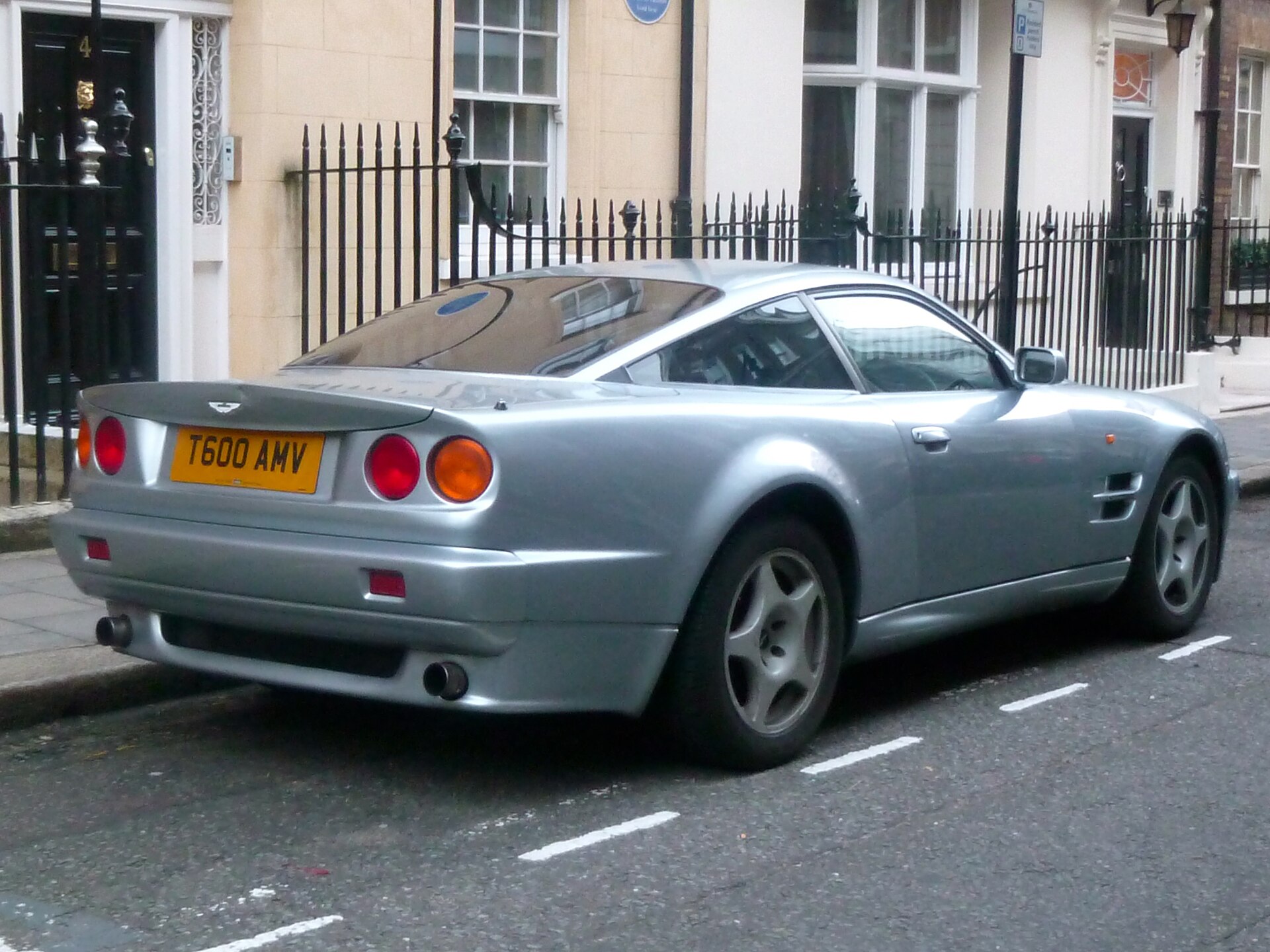
The new body is wider and lower than the Virage and has four round tail lights. The rear suspension and the interior electronics were also new. evo credits the styling to John Heffernan and Ken Greenley.
The panels were made the traditional way. According to evo, each started as a flat sheet of thin aluminium, which craftsmen "wheeled, hammered, dollied and planished" into shape. The cabin was trimmed in hide and burr walnut veneer. Shallow side windows, a tall dashboard and a rising instrument binnacle make it feel snug.

The twin-supercharged V8
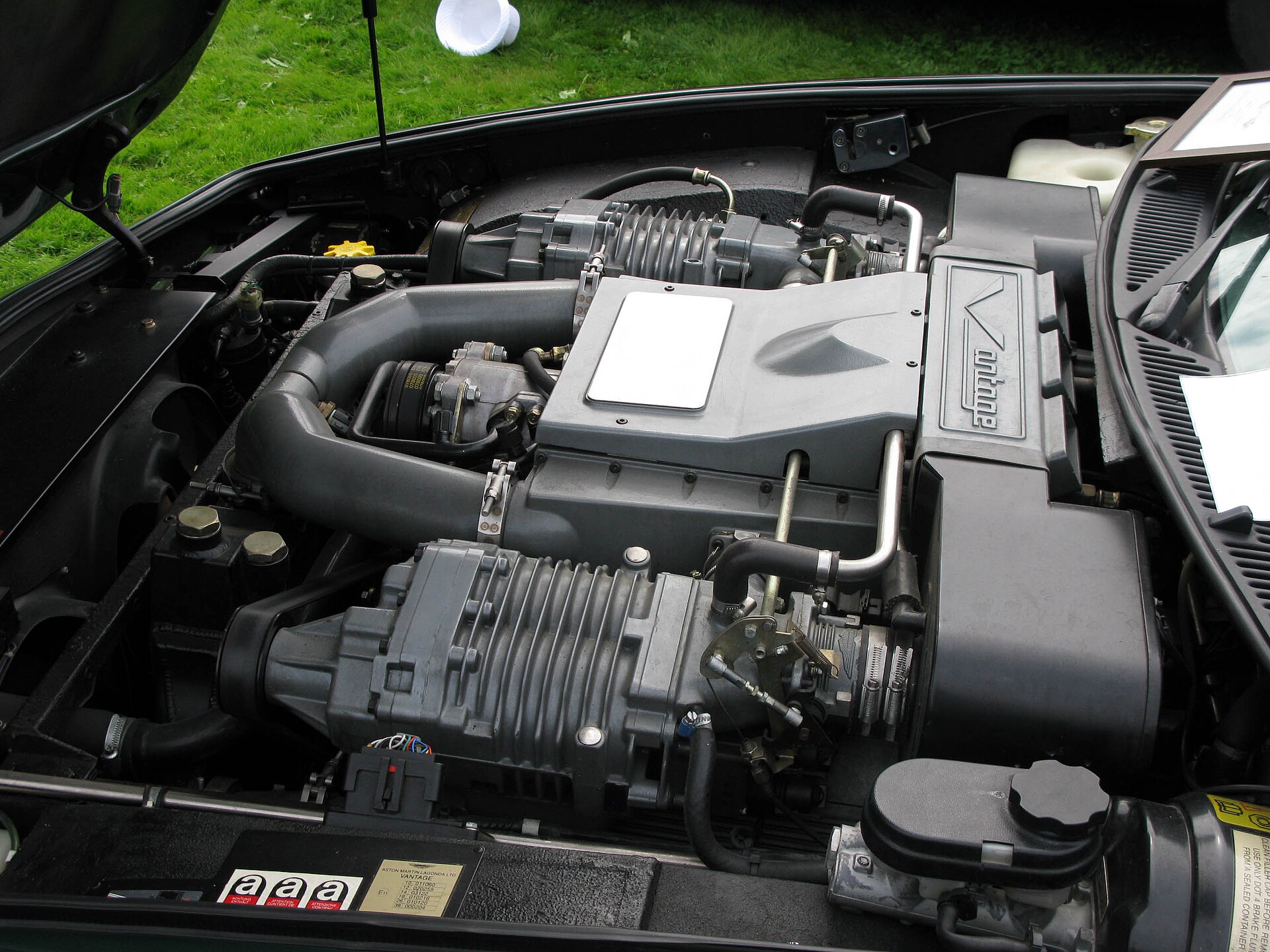
The engine is a development of Aston Martin's 5.3-litre V8 that displaces 5,341 cc. One Eaton supercharger is fitted to each cylinder bank. Every engine was assembled by hand at Newport Pagnell, and each carries a plaque with the name of the man who built it.
| Version | Years | Power | Torque |
|---|---|---|---|
| Vantage (V550) | 1993–2000 | 410 kW (558 PS) | 752 Nm at 4,000 rpm |
| V600 upgrade | from 1998 | 447 kW (608 PS) at 6,200 rpm | 813 Nm at 4,400 rpm |
| V8 Vantage Le Mans | 1999–2000 | 450 kW (612 PS) | 820 Nm |
evo quotes the standard engine at 410 kW (550 bhp) at 6,500 rpm and 550 lb ft. The power went through a six-speed manual gearbox, with an automatic available. Later, Aston Martin made the Vantage's six-speed gearbox an option on the Virage as well.
A popular modification blanked off sixth gear and changed the final drive ratio, which turned the gearbox into a close-ratio five-speed. At launch the front brakes, with 362 mm ventilated discs and AP Racing calipers, were the largest fitted to any road car, according to evo.

Performance and weight
| Figure | Vantage (V550) |
|---|---|
| 0–60 mph | 4.6 s (contemporary road tests) |
| 0–100 mph | 10.1 s (contemporary road tests) |
| Top speed | 300 km/h |
| Weight | 1,990 kg (evo) |
| Rear tyres | 285/45 ZR18 Goodyear Eagle GS-D |
The weight was considerable even for a large grand tourer, but the supercharged V8 gave it about 206 kW per tonne, or 281 bhp per ton in evo's figures. The 18-inch wheels were part of the new design.
V600 upgrade and Vantage Le Mans
From 1998 owners could send their cars to Aston Martin Works Service for the V600 conversion. It raised power to 447 kW (608 PS) at 6,200 rpm and torque to 813 Nm at 4,400 rpm. evo estimates that about 80 cars received it.
The final version was the V8 Vantage Le Mans. Its prototype was unveiled in Geneva in 1999, four decades after Aston Martin had won Le Mans, and the run was limited to 40 cars. Output was 450 kW (612 PS) with 820 Nm, and Aston Martin claimed 320 km/h and 3.9 seconds from rest to 100 km/h. evo says that most of these cars had the V600 engine together with Works brake and chassis upgrades.
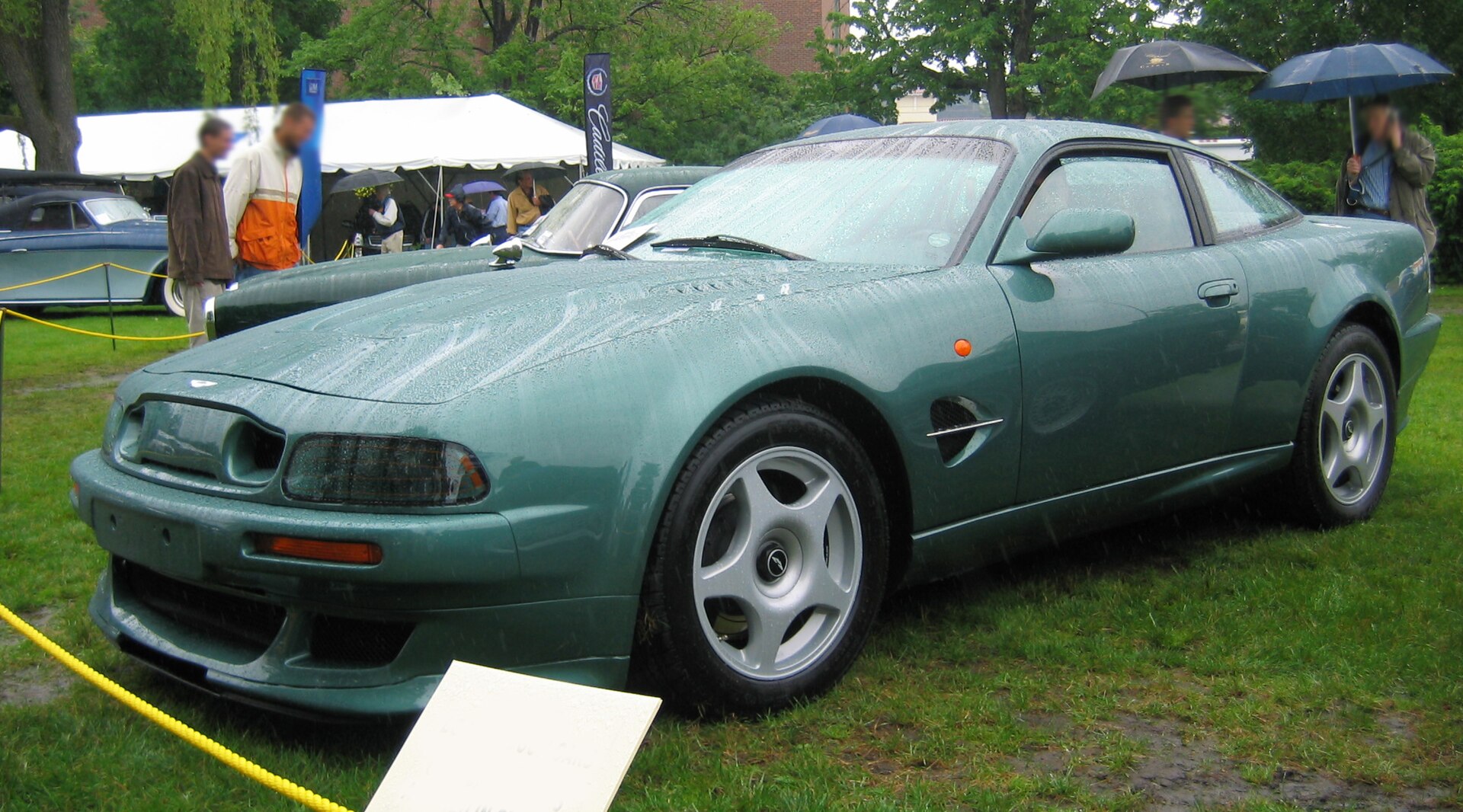
The Le Mans can be recognised by its blanked-out grille, modified side vents with DBR1-style strakes, a larger front spoiler and a rear skirt. Koni dampers, stiffer anti-roll bars and Dymag magnesium wheels were fitted. Inside there is a large rev counter, titanium-finished details, Connolly leather and Wilton wool carpets. Each car was built to special order, with a plate bearing the first owner's name.


The Vantage Volante
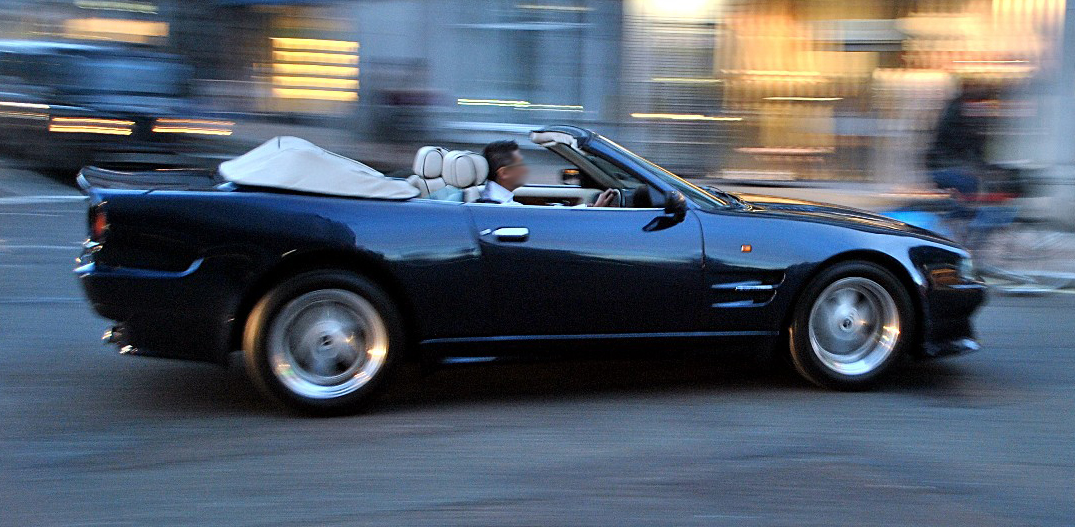
An open Vantage was never a regular catalogue model. Wikipedia lists eight short-wheelbase Volantes and one long-wheelbase Volante, built by Works Service in 2000 as bespoke Special Edition cars.

On the road
evo drove a V550 decades after its launch. Its tester found light but quick steering, keen turn-in and a car that balances well between front and rear, although body roll is considerable by modern standards. The secondary ride is slightly brittle over sharp potholes, and the throttle can be jerky at low speed. The rear tyres break traction easily in corners, and the magazine warns that a wet road demands extra care.

The end of the line
New European rules on emissions and safety led Aston Martin to end production of the V8 Vantage line in 2000. The company's next flagship, the Vanquish, used a V12. The Vantage therefore closed both the era of the hand-built Newport Pagnell V8s and of the coachbuilt bodies made there.
Photo gallery

Aston Martin Vantage (1993) in our rankings
- No. 135 of 859 · Most powerful cars (450 kW · top 17%)
- No. 93 of 313 · Most powerful coupes (450 kW · top 31%)
- No. 35 of 109 · Most powerful British cars (450 kW · top 33%)
- No. 502 of 912 · Longest-running car nameplates (7 years · top 60%)
More powerful than 83% of ranked cars in the 1CARS catalog (No. 135 of 859).
Aston Martin Vantage (1993) photos 6
FAQ
How much power does the 1993 Aston Martin Vantage have?
The twin-supercharged 5.3-litre V8 produces 410 kW (558 PS) and 752 Nm. The V600 upgrade raised this to 447 kW (608 PS) and 813 Nm.
How many were built?
Wikipedia counts 280 coupés. evo gives 239 cars built from 1993 to 1999, about 80 of which were converted to V600, followed by 40 Le Mans cars.
How fast is the Vantage V550?
It reaches 300 km/h according to Wikipedia. Magazine tests of the time timed it at 4.6 seconds from 0 to 60 mph.
What is the V8 Vantage Le Mans?
A limited edition of 40 cars that closed production in 2000. It celebrated the 1959 Le Mans victory and produced 450 kW (612 PS).
Data sources
Data checked by an editor against the sources below.