 Ferrari Testarossa
All generations, specs and history
Published Sources (1) Report an error
By Felix Hartmann, Automotive Technology & EV Contributor
- Built
- 1984–1996
- Generations
- 3
- Top power
- 324 kW (441 PS)
Timeline
Testarossa generations
Click a generation for its own page
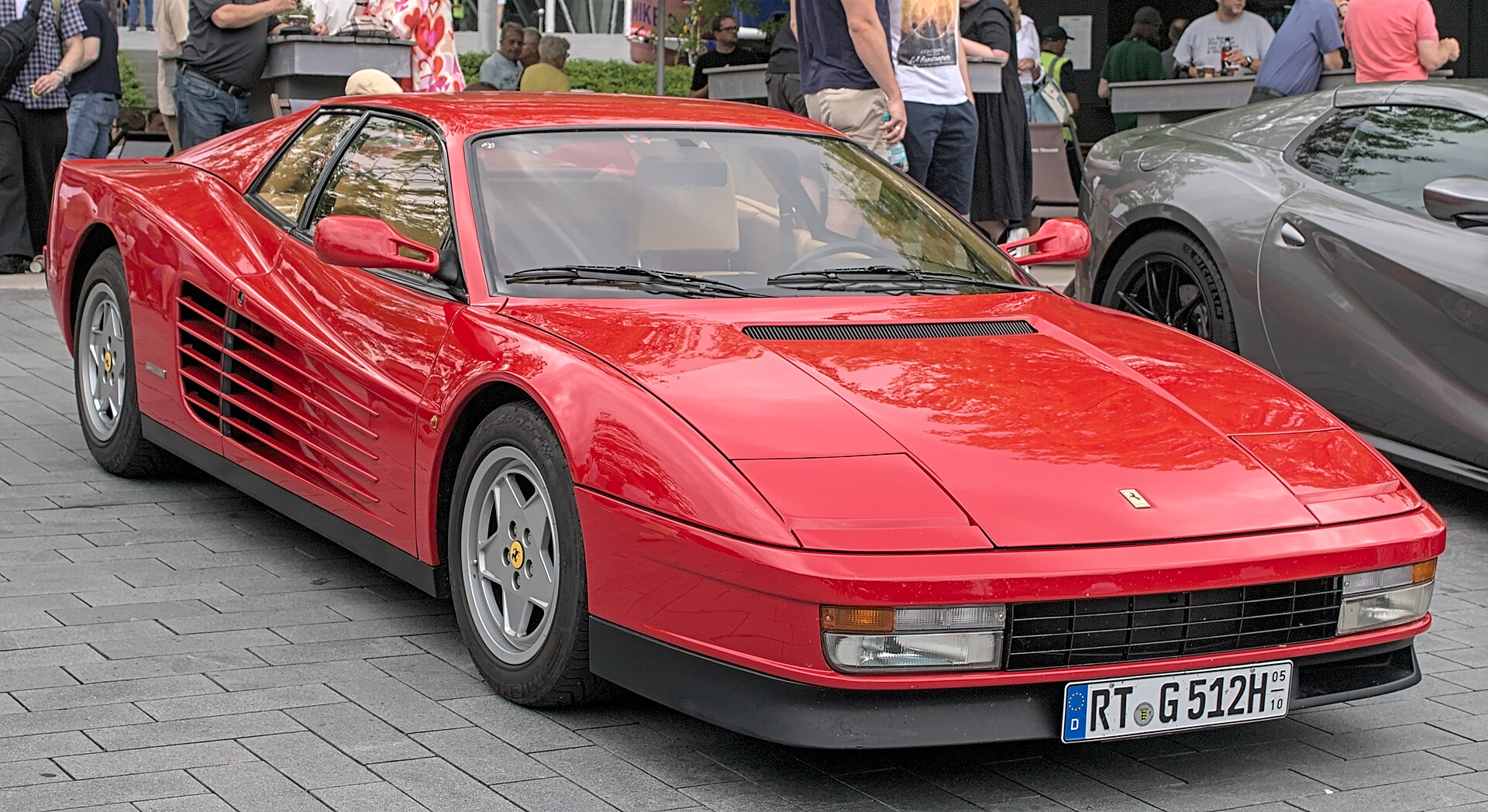
- Testarossa F110 1984–1991 · Coupe · 283–287 kW (385–390 PS)
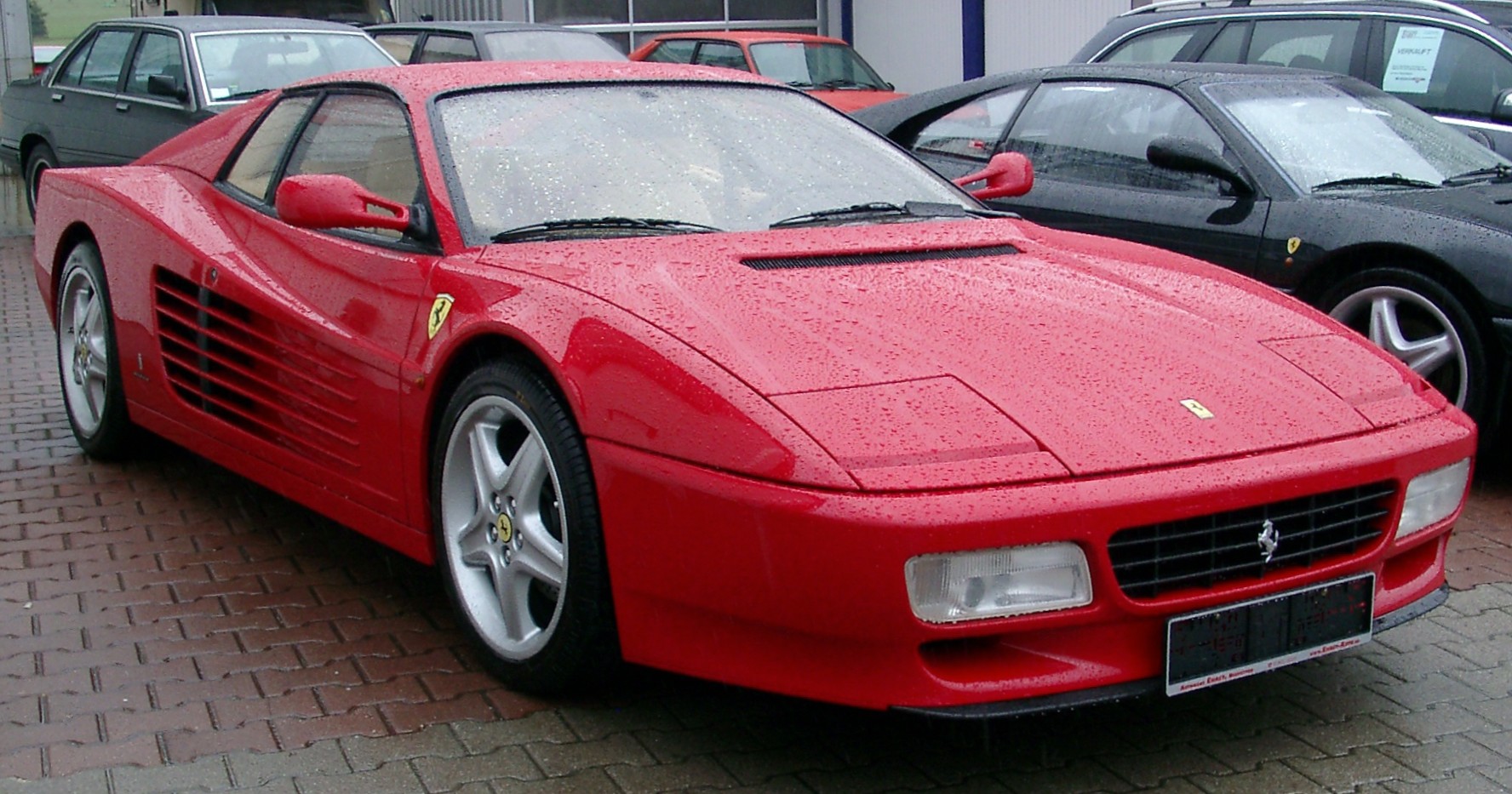
- 512 TR 1992–1994 · Coupe · 315 kW (428 PS)
- F512 M 1994–1996 · Coupe · 324 kW (441 PS)
Newest first · 3 generations since 1984
- 1994 F512 M 1994–1996 · Coupe · 324 kW (441 PS)
-
1992
-
1984
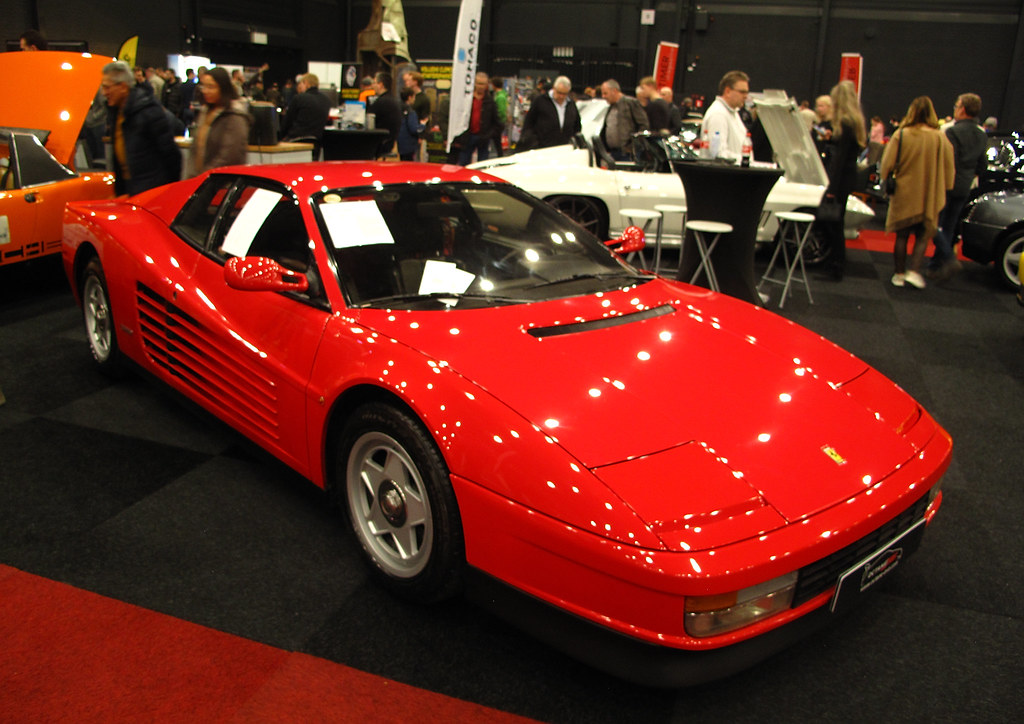


All generations by year: F512 M (1994–1996) · 512 TR (1992–1994) · Testarossa F110 (1984–1991)
Which one is mine?
Pick the year of first registration to see which generation it is.
- F512 M 1994–1996
- 512 TR 1992–1994
- F110 1984–1991
The Ferrari Testarossa is the mid-engined, twelve-cylinder sports car that Ferrari built in Maranello from 1984 to 1996, first as the Testarossa and later as the 512 TR and F512 M. It replaced the 512 BBi and kept its flat-12 engine. Side strakes, the TV series Miami Vice and the arcade game Out Run made it one of the defining cars of the 1980s. With 9,939 cars built including the later versions, it was also one of the most-produced Ferraris of its time.
In short
- Premiered at the Paris motor show in October 1984; Testarossa 1984–1991, 512 TR 1992–1994, F512 M 1994–1996.
- 4,943 cc flat-12 with four valves per cylinder: 287 kW (390 PS) at 6,300 rpm and 490 Nm in the European original, up to 324 kW (441 PS) in the F512 M.
- Five-speed manual gearbox, rear-wheel drive, twin rear radiators fed through the famous side strakes.
- 0–100 km/h in 5.8 seconds for the original and 4.7 seconds for the F512 M; 9,939 cars in total.
Ferrari Testarossa at a glance
| Specification | Ferrari Testarossa (1984) |
|---|---|
| Production | 1984–1996 including 512 TR and F512 M, Maranello (Italy) |
| Cars built | 9,939 (all versions); F512 M: 501 |
| Body | two-seat berlinetta; mid-engine, rear-wheel drive |
| Engine | Tipo F113 4,943 cc flat-12, DOHC, 48 valves, dry sump |
| Power | 287 kW (390 PS) at 6,300 rpm (Europe); 283 kW (385 PS) early US cars |
| Torque | 490 Nm at 4,500 rpm |
| Gearbox | five-speed manual, rear-mounted |
| Dimensions | width 1,976 mm, wheelbase 2,550 mm |
| Predecessor / successor | 512 BBi / 550 Maranello |
The Testarossa competed directly with the Lamborghini Countach, the other twelve-cylinder poster car of the decade. All Ferrari models are listed in the Ferrari catalogue.
History and the name
The Testarossa, type F110, was conceived to fix the weak points of the 512 BBi of 1981. In the Berlinetta Boxer, coolant pipes ran from a radiator in the nose to the engine behind the cabin and heated the interior, and there was little room for luggage. The new car moved the radiators to the rear, grew wider and gained a longer wheelbase, which made space for a carpeted luggage compartment under the front bonnet and some room behind the seats.
The car was presented at the Paris motor show in October 1984. Its name recalls the 1957 250 Testa Rossa, the sports racing car that won the World Sportscar Championship. "Testa rossa" means "red head" in Italian and refers to the red-painted cam covers that both engines shared.
The original model was built until 1991. For the 1992 model year Ferrari introduced the heavily revised 512 TR at the Los Angeles motor show, and in October 1994 the final F512 M appeared at the Paris motor show. Including all versions, almost 10,000 cars were made — 9,939 according to Wikipedia. The 550 Maranello of 1996 replaced the line, moving the twelve-cylinder engine back to the front.
Design: side strakes and radiators
The body was designed at Pininfarina by a team led by Leonardo Fioravanti, with Ian Cameron, Guido Campoli, Diego Ottina and Emanuele Nicosia; the first sketches came from Nicosia. Fioravanti, trained in aerodynamics, set out the basic layout.
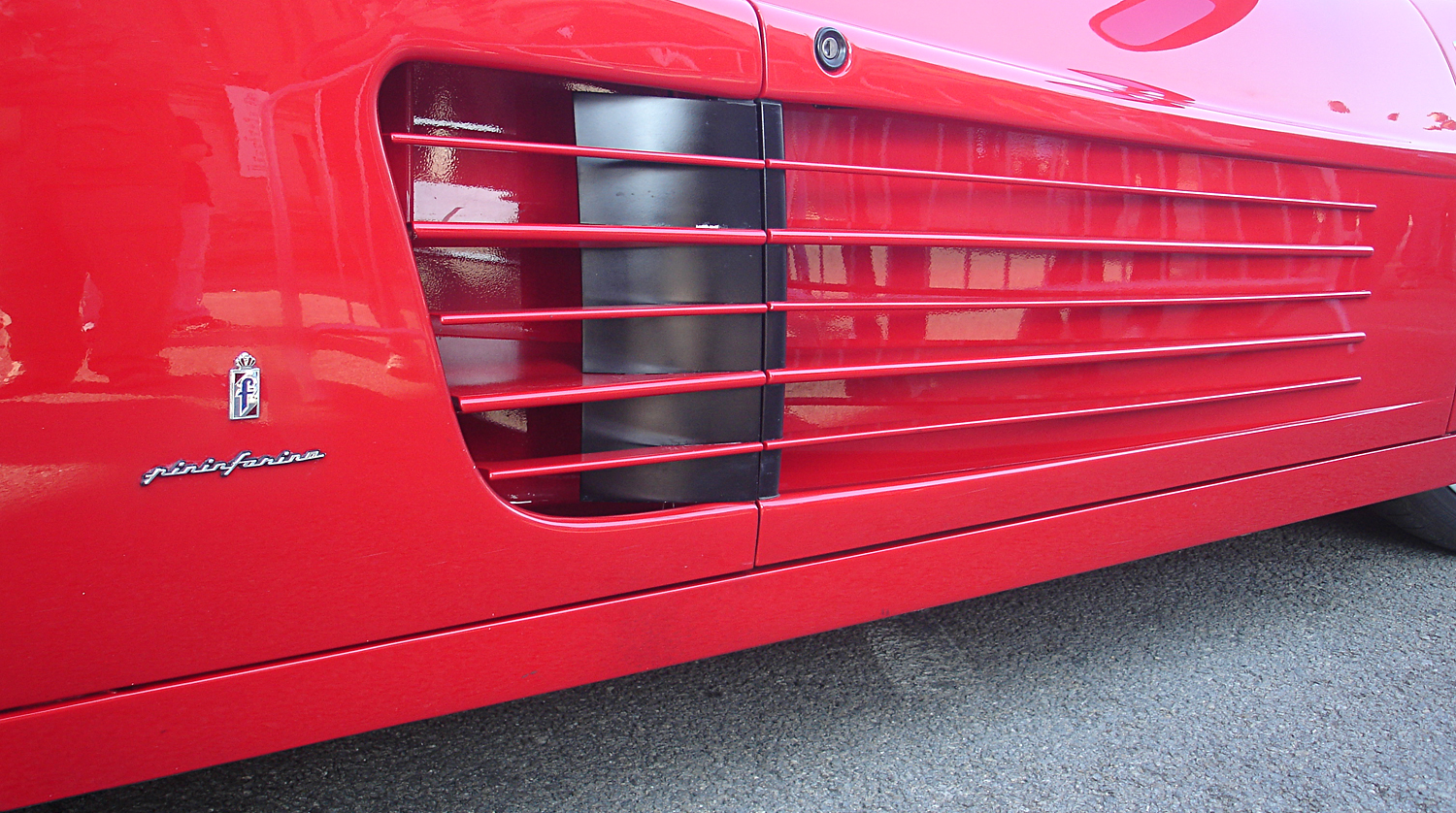
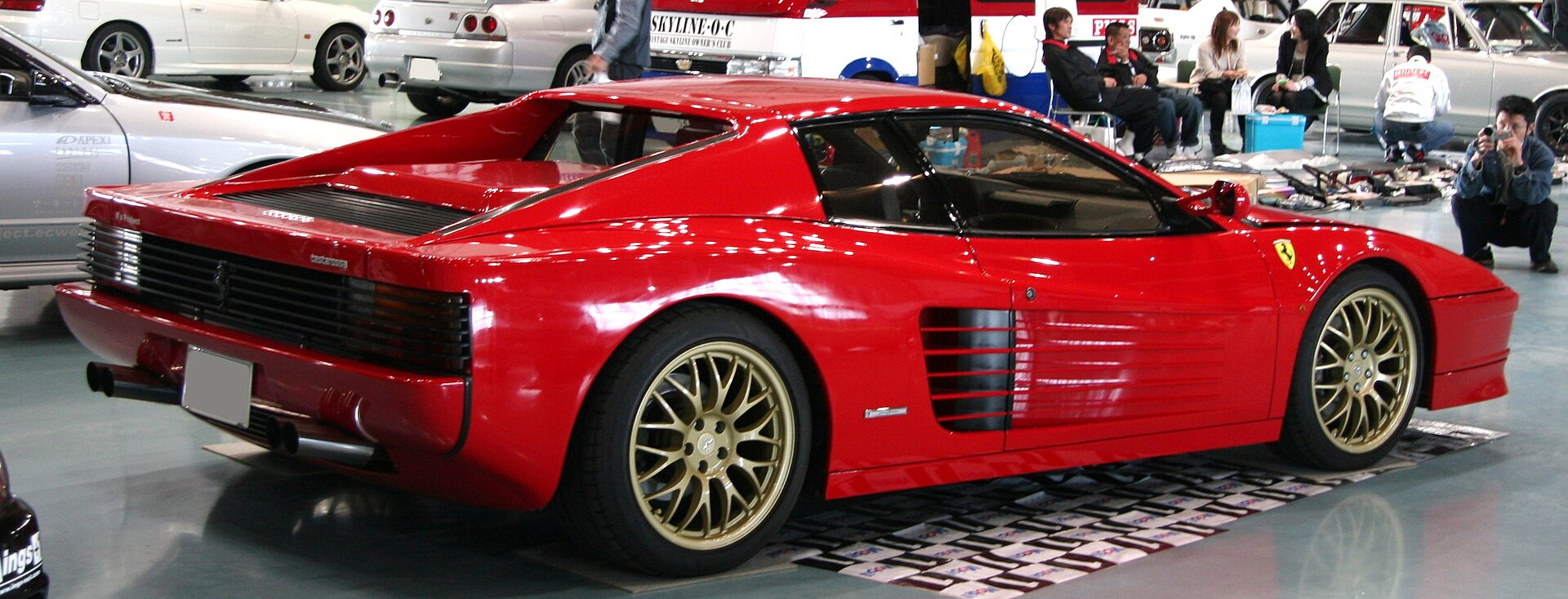
The twin radiators sit at the rear, just ahead of the rear wheels, and are fed by long air intakes in the doors and rear wings. In several countries the rules did not allow such large open intakes, so the designers covered them with horizontal strakes — nicknamed "cheese graters" or "egg slicers". The strakes became the car's signature. Hot air leaves through vents in the engine lid and the tail. Because of the side radiators, the Testarossa is wider at the rear than at the front, which helps its stability.
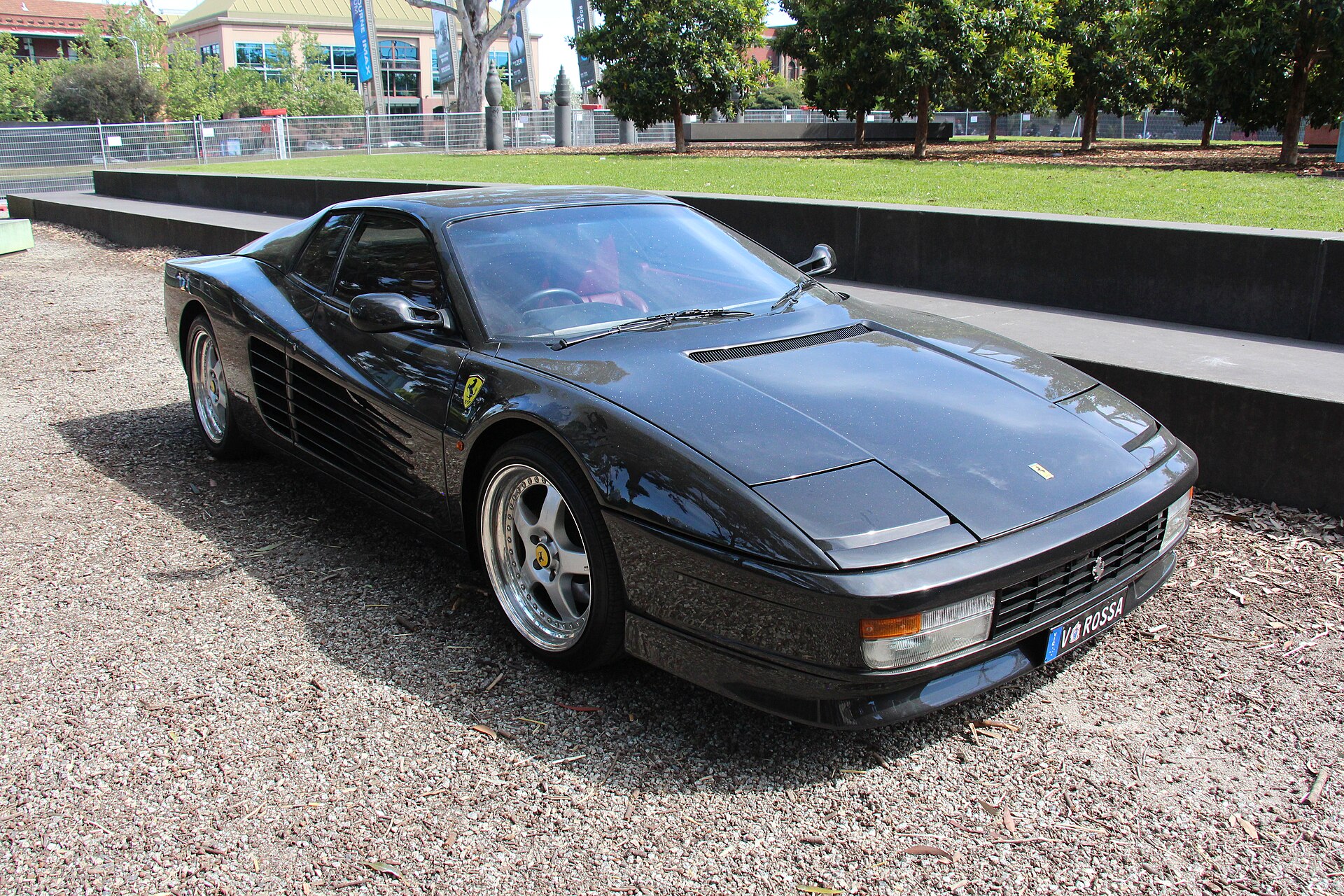
The drag coefficient of 0.36 compared well with the 0.42 of the Lamborghini Countach, and the car needed no rear spoiler. Early cars had a single mirror mounted high on the driver's door; US cars received a lower mirror for the 1987 model year, soon joined by one on the passenger side. The shape was controversial at first, as it broke with the rounded lines of the Berlinetta Boxer.

Engine and performance
The Tipo F113 flat-12 has a capacity of 4,943 cc, double overhead camshafts with four valves per cylinder, dry-sump lubrication and a compression ratio of 9.3:1. It is mounted lengthwise behind the cabin and drives the rear wheels through a five-speed manual gearbox placed at the rear. The weight distribution of the original car is 40% front and 60% rear.
| Version | Years | Power | Torque | 0–100 km/h |
|---|---|---|---|---|
| Testarossa (Europe) | 1984–1989 | 287 kW (390 PS) at 6,300 rpm | 480–490 Nm | 5.8 s |
| Testarossa (USA) | 1984–1989 | 283 kW (385 PS) | 480 Nm | 6.1 s |
| Testarossa (catalyst, Europe) | 1986–1989 | 272 kW (370 PS) | 451 Nm | 5.8 s |
| Testarossa (catalyst) | 1989–1991 | 280 kW (381 PS) | 470 Nm | 5.7 s |
| 512 TR | 1992–1994 | 315 kW (428 PS) at 6,750 rpm | 491 Nm at 5,500 rpm | 4.8 s |
| F512 M | 1994–1996 | 324 kW (441 PS) at 6,750 rpm | 500 Nm at 5,500 rpm | 4.7 s |
Wikipedia estimates the top speed of the original Testarossa at 290 km/h, with a standing kilometre in 23.8 seconds. The 512 TR reached 313.8 km/h and the F512 M 315 km/h.

Chassis and cabin
The Testarossa uses double-wishbone suspension at both ends, with coil springs, two telescopic dampers per side at the rear and an anti-roll bar. The whole engine, gearbox and rear suspension could be removed from below as one unit for servicing. Brake discs measure 309 mm at the front and 310 mm at the rear. Early cars had single-nut knock-off magnesium wheels with 415 mm Michelin TRX tyres. For the 1986 model year Ferrari switched to 16-inch wheels, 8 inches wide at the front and 10 inches at the rear. In the middle of the 1988 model year the suspension was revised and the wheels changed to the usual Ferrari five-bolt fixing.
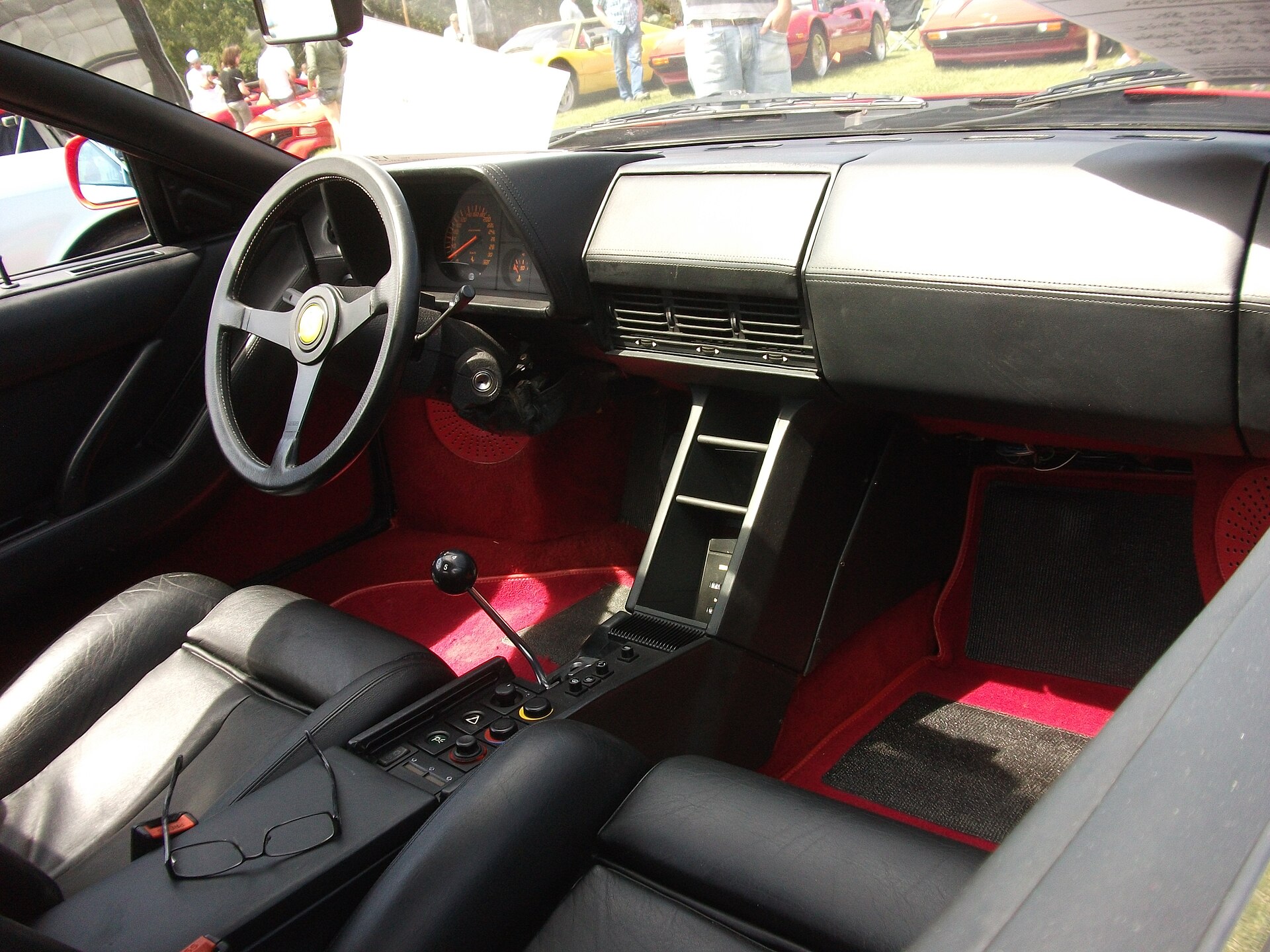
Inside, the Testarossa offered more space and comfort than the Berlinetta Boxer, and the cabin was no longer heated by the cooling system. It was a big, wide car, and some magazines of the time preferred rivals in comparison tests, including the Lamborghini Countach and fast saloons such as the BMW M5. It nevertheless appeared on the cover of Road & Track ten times between December 1984 and July 1989.

The 512 TR and F512 M
512 TR (1992–1994). The 512 TR was effectively a new car. The engine gained Nikasil cylinder liners, a new intake system, Bosch engine management, larger intake valves and a revised exhaust, and its compression ratio rose to 10:1. The engine and gearbox were mounted lower to improve the centre of gravity, and the car got a single-plate clutch, faster steering, larger cross-drilled front discs (315 mm) and 18-inch wheels. Pietro Camardella at Pininfarina reworked the body in line with the smaller 348, with a new nose, engine cover and spoilers. Inside, the centre console was separated from the dashboard.
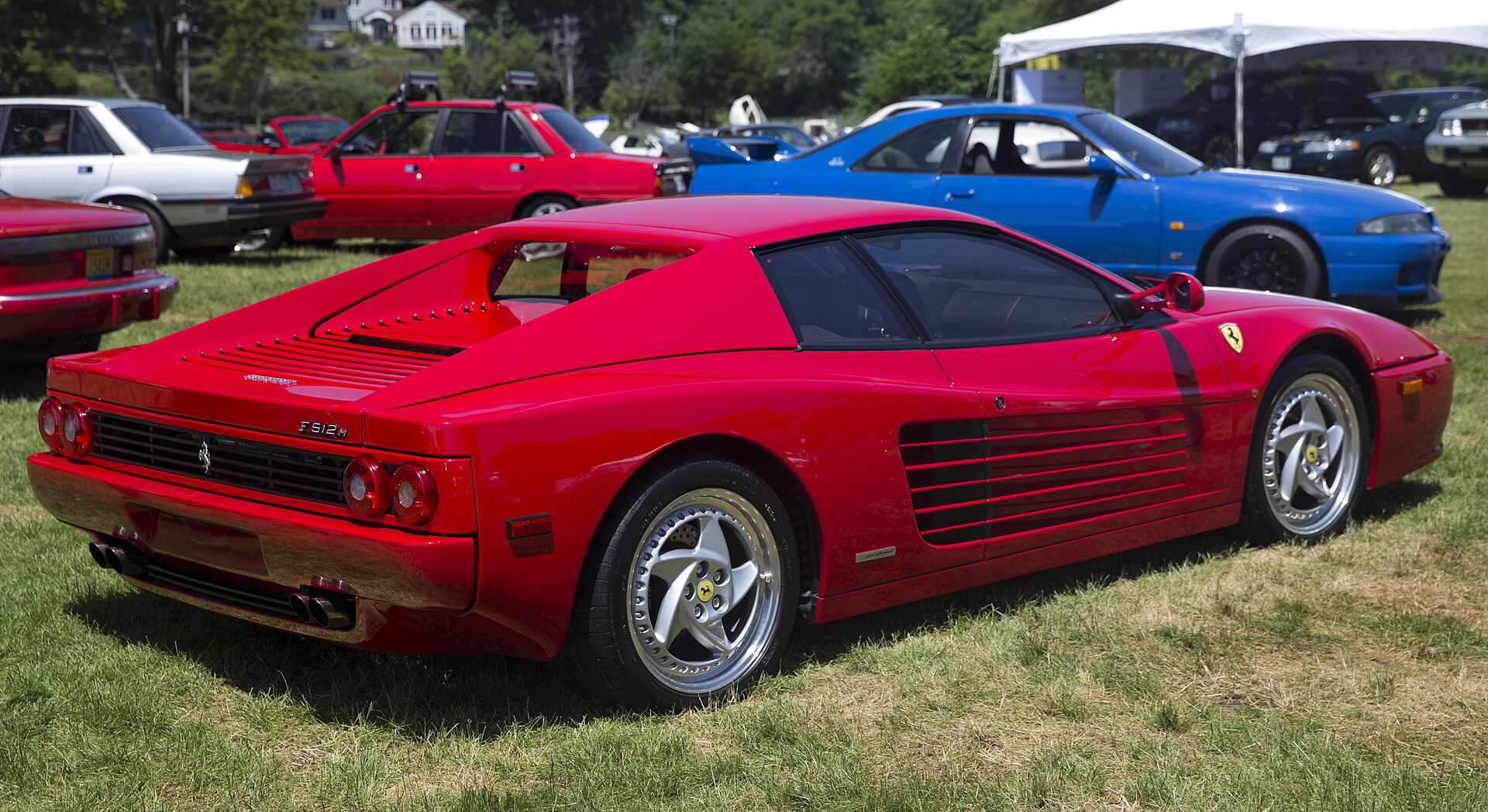
F512 M (1994–1996). The final version, where "M" stands for "modificata", dropped the TR letters. The engine received titanium connecting rods and a lighter crankshaft (together 7.26 kg lighter), a compression ratio of 10.4:1 and a rev limit of 7,500 rpm. Pop-up headlights gave way to two fixed square lamps, the tail lights became round and the bonnet got twin NACA ducts. Carbon-fibre racing seats were available at no extra cost. Only 501 F512 Ms were built, 75 of them for North America and 75 with right-hand drive. It was the last Ferrari with a flat-12 engine.

Specials and one-offs
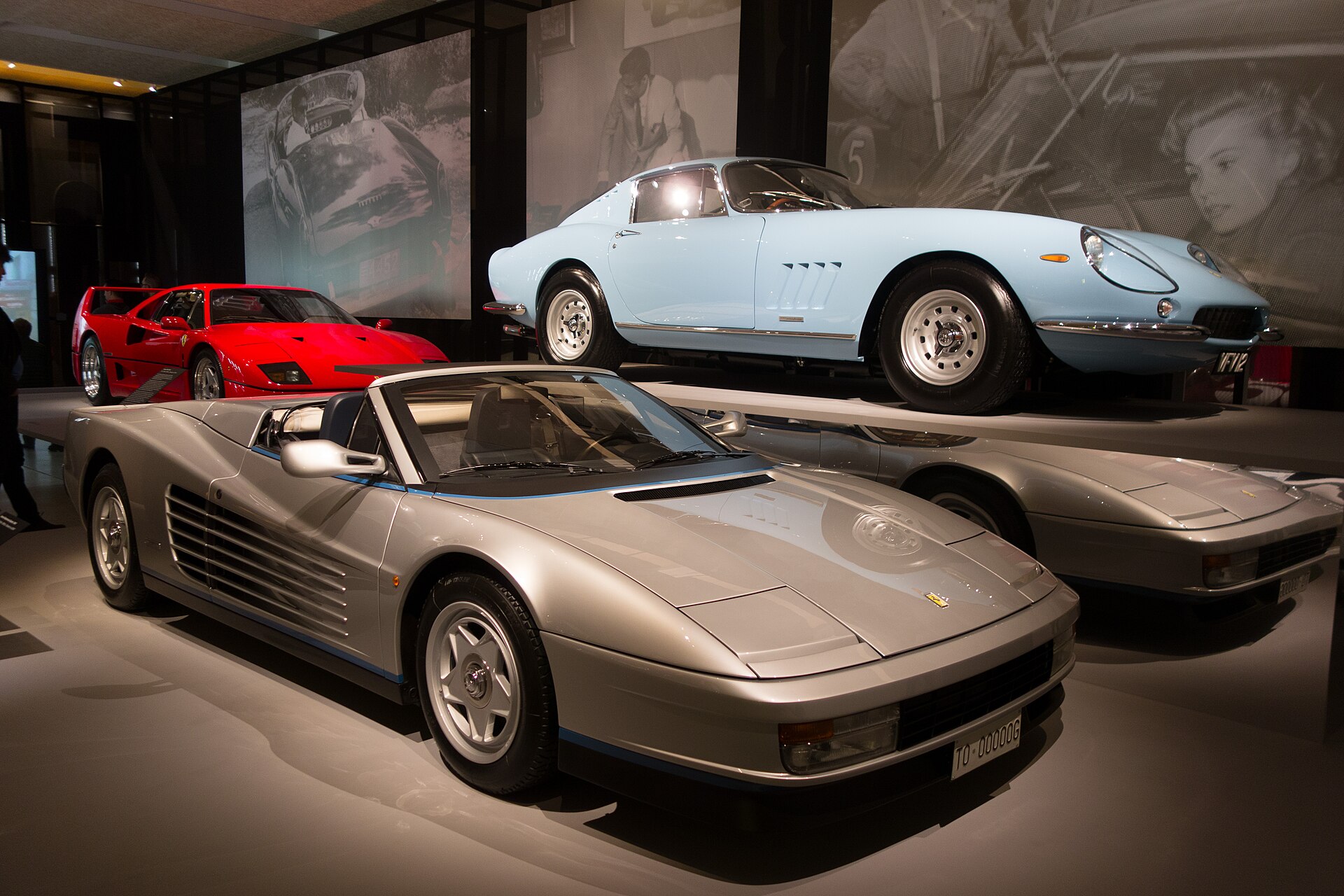
In 1986 Fiat chairman Gianni Agnelli ordered a one-off Testarossa Spider to mark his twenty years as chairman. It was painted silver, because "Ag" — the chemical symbol of silver — are the first letters of his name. It had a white soft top. Because of an old leg injury, Agnelli asked for a gearbox that could switch between automatic and manual operation. Ferrari declined to build the Spider as a series model. Several coachbuilders and tuners, including Pininfarina and Koenig Specials, later converted customer cars into spiders.
Other specials used the Testarossa as a base. Pininfarina built the Mythos concept, and Luigi Colani's Testa d'Oro set a class speed record of 351 km/h in 1991. Small series such as the F90 and the FX were made for the Sultan of Brunei.
Legacy
The Testarossa became a symbol of the 1980s. Miami Vice used it from the third season, and Enzo Ferrari, a fan of the series, gave Don Johnson a new 1989 Testarossa. A red convertible starred in Sega's Out Run, and a long list of famous owners did the rest. Its side strakes were copied by aftermarket body kits for everything from sports cars to motorcycles.
For Ferrari, it was the last of the mid-engined twelve-cylinder flagships before the 550 Maranello moved the engine to the front. Decades later Ferrari revived the name for the 849 Testarossa, a plug-in hybrid with a twin-turbo V8 and three electric motors producing 772 kW (1,050 PS). The company's background is told in our history of Ferrari.
Photo gallery


Ferrari Testarossa evolution in numbers
Did you know?
- The Ferrari Testarossa ran for 12 years, from 1984 to 1996, over 3 generations in our catalog.
- The longest-running generation is the Testarossa F110 (1984–1991): 7 years.
- The biggest jump in power came with the 512 TR: up to 315 kW (428 PS), 28 kW more than the Testarossa F110.
Most powerful version, kW
Figures from the 1cars catalog: power is the strongest version of each generation; generations without the figure are left out.
Ferrari Testarossa: first vs latest generation
| Spec | Testarossa F110 | F512 M | Change |
|---|---|---|---|
| Years | 1984–1991 | 1994–1996 | 10 years apart |
| Most powerful version | 287 kW (390 PS) | 324 kW (441 PS) | +37 kW (+13%) |
Oldest and newest generation in the 1cars catalog. Power is the strongest version of each; other rows are shown only when both generations have the figure.
Image credits · Photos from Wikimedia Commons under free licences
- Ferrari Testarossa F110 · Photo: Rutger van der Maar / Flickr, CC BY 2.0
- Ferrari 512 TR · Photo: Rudolf Stricker / Wikimedia Commons, CC BY-SA 3.0
Ferrari Testarossa in our rankings
- No. 9 of 91 · Most powerful cars of the 1990s (324 kW)
- No. 245 of 859 · Most powerful cars (324 kW · top 29%)
- No. 298 of 912 · Longest-running car nameplates (12 years · top 35%)
- No. 136 of 313 · Most powerful coupes (324 kW · top 44%)
- No. 55 of 127 · Most powerful Italian cars (324 kW · top 45%)
- No. 157 of 345 · Cars with the most generations (3 generations · top 68%)
More powerful than 90% of ranked cars of the 1990s in the 1CARS catalog (No. 9 of 91).
Ferrari Testarossa photos 6
FAQ
What does "Testarossa" mean?
It means "red head" in Italian and refers to the red-painted cam covers of the flat-12 engine, as on the 250 Testa Rossa racing car of 1957.
How many Ferrari Testarossas were built?
9,939 cars including the 512 TR and F512 M, according to Wikipedia; 501 of them were F512 Ms.
How powerful is the Testarossa?
The European original has 287 kW (390 PS) at 6,300 rpm and 490 Nm. The 512 TR has 315 kW (428 PS) and the F512 M 324 kW (441 PS).
Why does the Testarossa have side strakes?
They cover the large air intakes for the two rear radiators, which several countries did not allow to be left fully open.
Was the Testarossa a Spider?
Only one official Testarossa Spider was built, for Gianni Agnelli in 1986. Other open cars are conversions by coachbuilders and tuners.
Data sources
Data checked by an editor against the sources below.