 Aston Martin DB11
Specs, engines and history
Published Sources (1) Report an error
By Felix Hartmann, Automotive Technology & EV Contributor
- Built
- 2016–2023
- Top power
- 470 kW (639 PS)
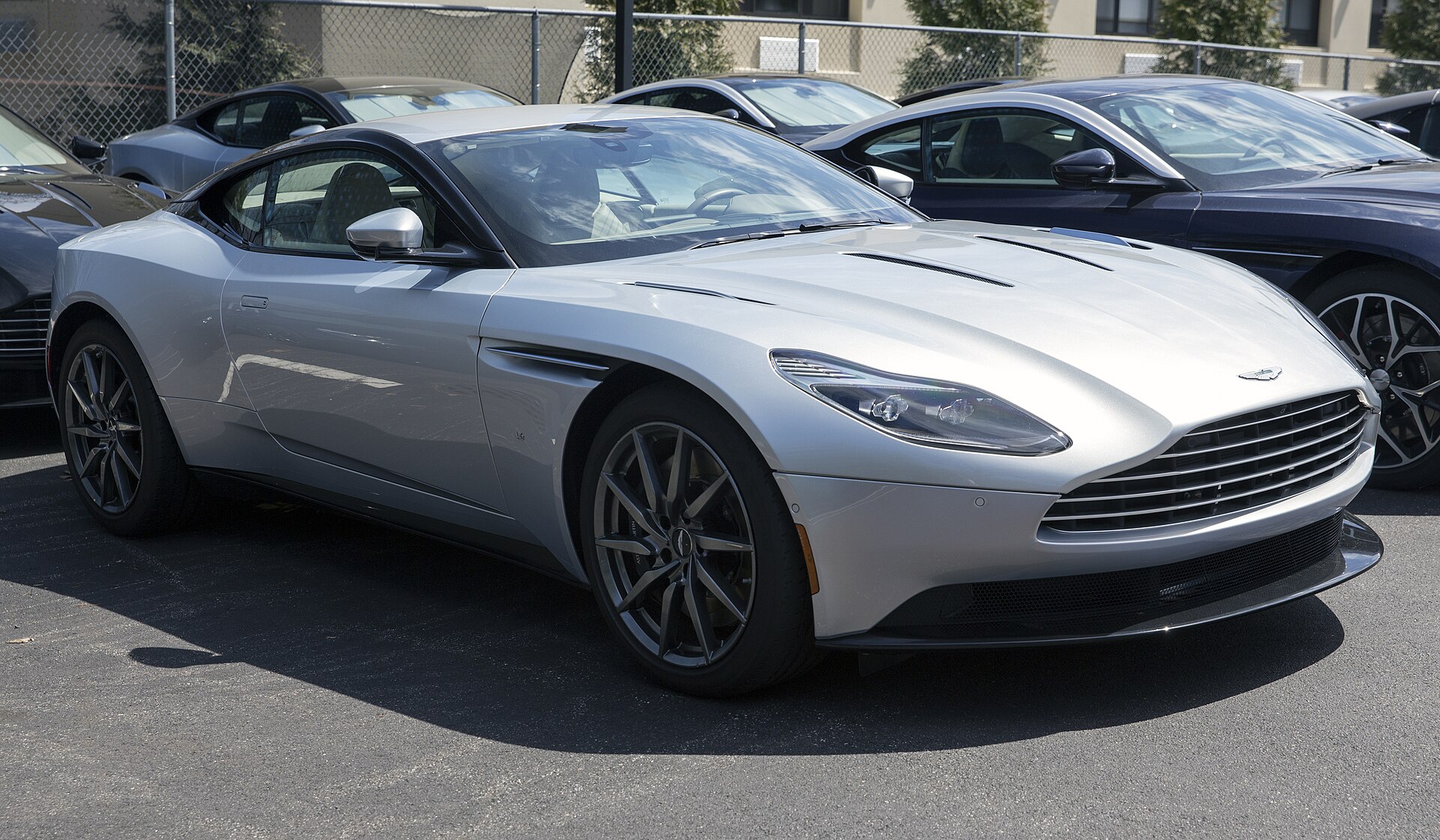
The Aston Martin DB11 is the front-engined grand tourer that replaced the DB9 and was built at Gaydon, Warwickshire, from September 2016 to June 2023. It was the first new model of Aston Martin's "second-century plan", offered as a 2+2 coupé and, from 2017, as the Volante convertible. Customers could choose a 5.2-litre twin-turbo V12 developed by Aston Martin or a 4.0-litre twin-turbo V8 supplied by Mercedes-AMG. In 2023 the DB12 took its place.
In short
- Built 2016–2023 at Gaydon (United Kingdom), designed under Marek Reichman; model code AM5.
- 5,204 cc twin-turbo V12: 447 kW (608 PS) and 700 Nm at launch, 470 kW (639 PS) in the DB11 AMR from 2018.
- 4.0-litre Mercedes-AMG twin-turbo V8: 375 kW (510 PS) and 675 Nm from 2017, 393 kW (535 PS) after the 2021 update.
- Eight-speed ZF automatic at the rear, bonded aluminium structure, kerb weight 1,760–1,875 kg depending on version.
Aston Martin DB11 at a glance
| Specification | Aston Martin DB11 |
|---|---|
| Production | September 2016 – June 2023, Gaydon (United Kingdom) |
| Cars built | no official total; close to 4,200 V12 cars sold by May 2018 (Aston Martin) |
| Body | two-door 2+2 coupé, Volante convertible; front mid-engine, rear-wheel drive |
| Engines | 5.2-litre AE31 twin-turbo V12; 4.0-litre Mercedes-AMG M177 twin-turbo V8 |
| Power | V12: 447 kW (608 PS); V12 AMR: 470 kW (639 PS); V8: 375 kW (510 PS), later 393 kW (535 PS) |
| Torque | V12: 700 Nm; V8: 675 Nm |
| Gearbox | eight-speed ZF 8HP automatic, rear-mounted |
| Kerb weight | 1,875 kg (V12 coupé), 1,760 kg (V8 coupé), 1,870 kg (Volante) |
| Predecessor / successor | DB9 / DB12 |
The DB11 belongs to the DB line of grand tourers that runs from the post-war DB2 to today's cars; all generations are listed in the Aston Martin catalogue, and the story of the company is told in our history of Aston Martin.
History and development
Aston Martin confirmed in 2015 that the successor of the DB9 would be called DB11. The DB9 had been in production since 2004 and about 16,500 had been built when it ended in July 2016. It had also been the first car on the VH (vertical–horizontal) aluminium platform, which later carried the Vantage, DBS, Rapide and Vanquish. After twelve years the company needed a clean start, and the DB11 became the first model of the "second-century plan" announced by chief executive Andy Palmer.
The car was revealed at the Geneva motor show in March 2016. Its design was led by Marek Reichman, Aston Martin's design director since 2005. Official production began at Gaydon on 28 September 2016, and Palmer personally inspected the first 1,000 cars before they were delivered. According to Aston Martin, each DB11 took around 250 hours to build.
The range grew quickly. The V8 coupé arrived in June 2017, the Volante convertible in October 2017, and in May 2018 the DB11 AMR replaced the original V12 coupé as the flagship. In July 2021 the V8 received more power and the V12 model lost the AMR name again. Production at Gaydon stopped at the end of June 2023; its successor, the DB12, had been unveiled in May 2023.
For the earlier DB generation see our article on the Aston Martin DB9; a shorter piece on the DB11 itself is Aston Martin DB11's new life.
Design and AeroBlade
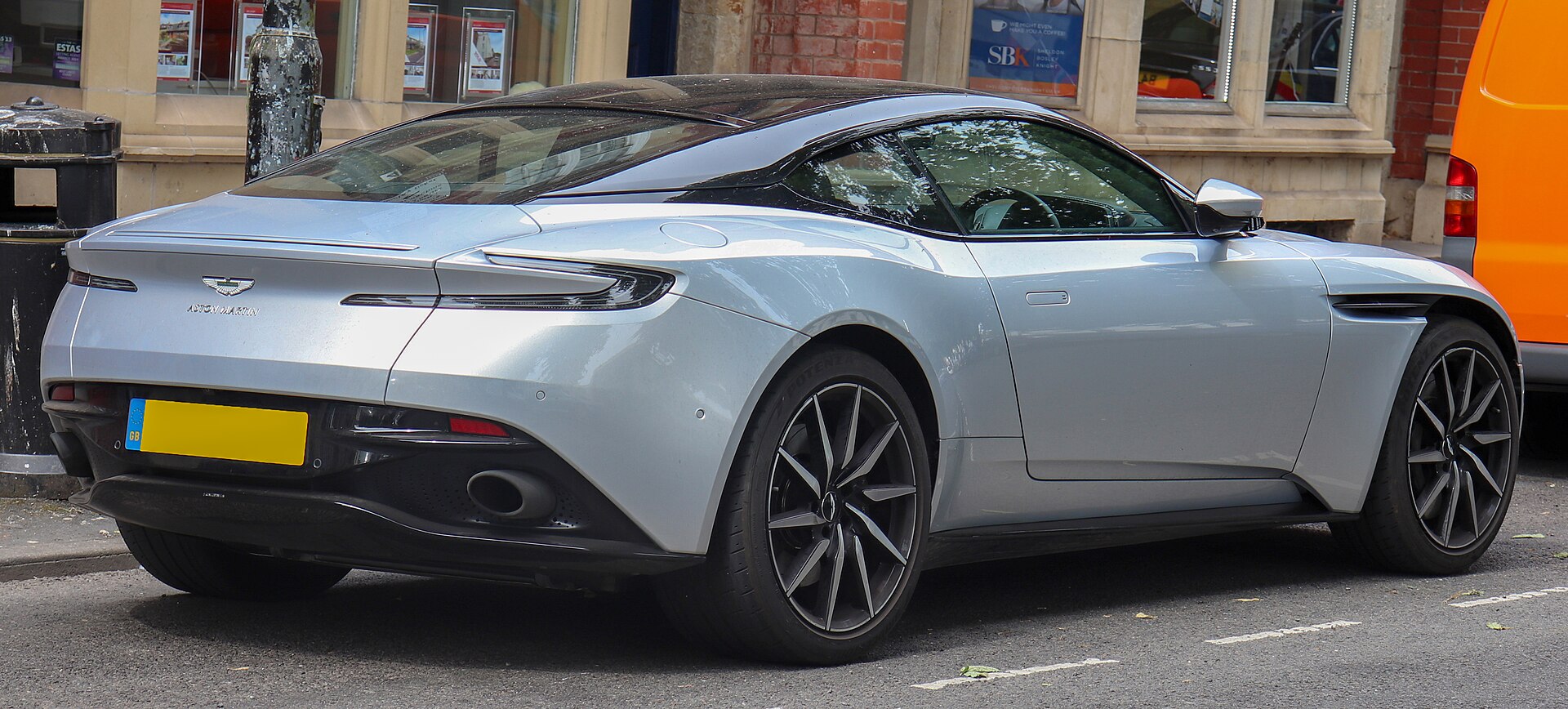
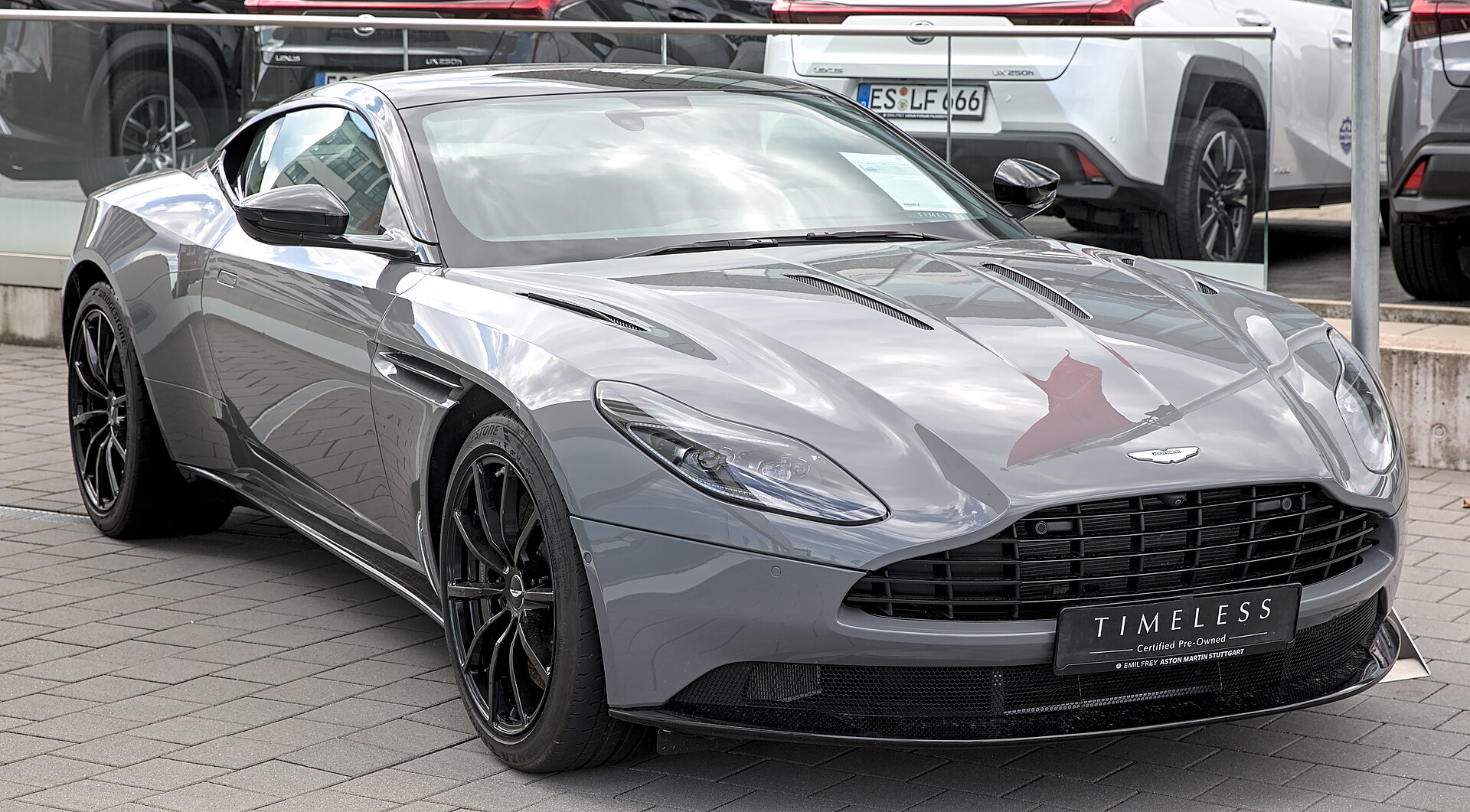
The DB11 keeps the long bonnet, short rear overhang and large grille of earlier DB models, but it uses new surfaces and a single-piece aluminium clamshell bonnet. The body panels are aluminium and composite. Instead of a large fixed rear wing, the designers used an idea called AeroBlade. Air enters intakes at the base of the C-pillars, runs through ducts inside the bodywork and leaves through a slot in the boot lid. The jet of air acts like a virtual spoiler and reduces lift at the rear without spoiling the profile. A small active spoiler rises from the boot lid at speed to make the system more effective.
At the front, a large splitter, a flat underbody and a rear diffuser complete the aerodynamic package. The doors are swan-hinged, rising slightly as they open, as on earlier Aston Martins. Autocar noted that the sills are slimmer than in the DB9, which makes it easier to get in and out.
The DB11 won the 2017 Golden Steering Wheel award as the most beautiful car of the year.

Engines and performance
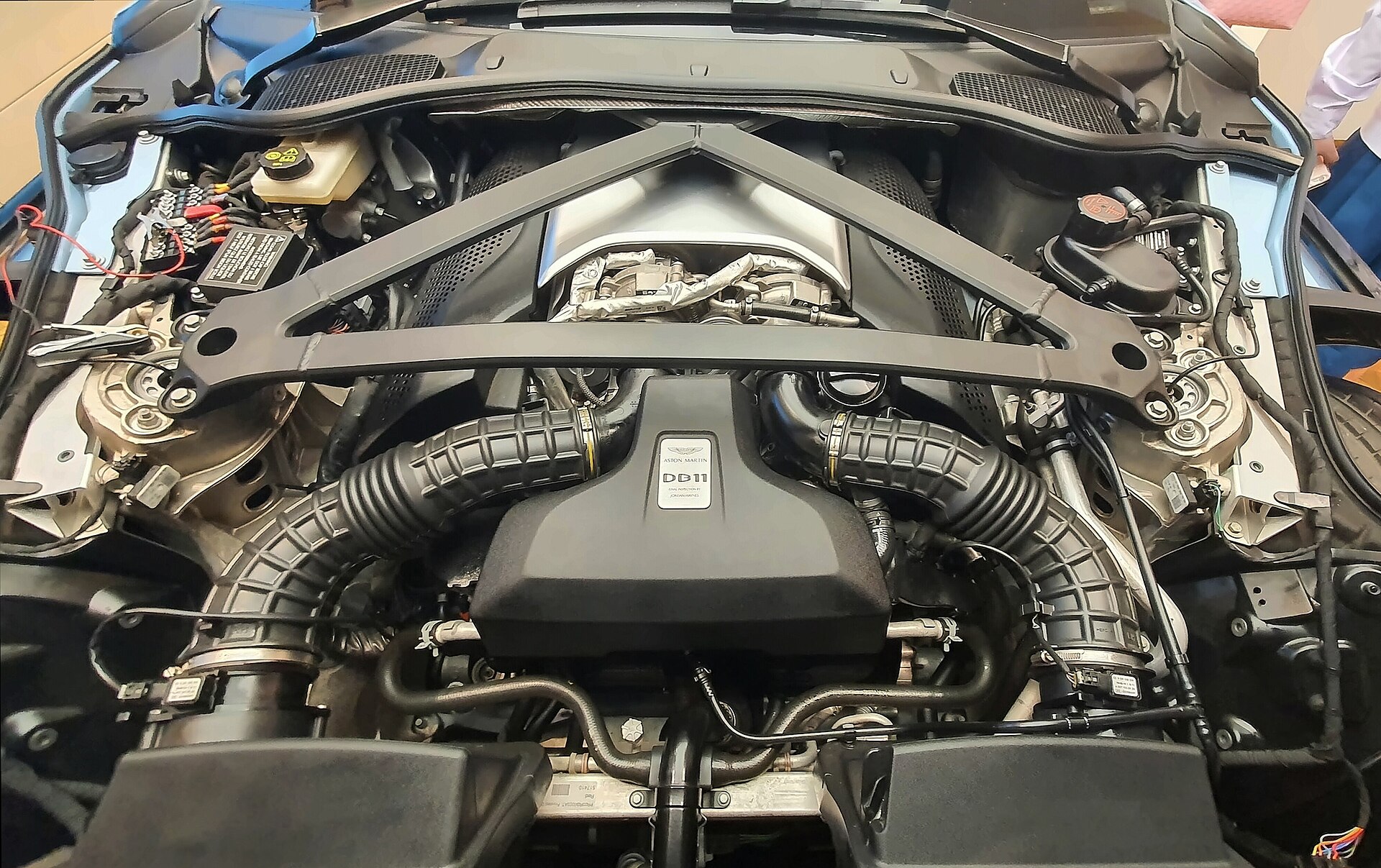
The original DB11 used a new 5,204 cc twin-turbo V12. Development started in summer 2012; the first engine ran in October 2012 and production approval followed in January 2013. It produces 447 kW (608 PS) at 6,500 rpm and 700 Nm from 1,500 to 5,000 rpm. Unusually for a new engine of its time, it uses port fuel injection rather than direct injection; Aston Martin cited particulate emissions as the reason.
In June 2017 Aston Martin added an entry model with the 4.0-litre twin-turbo V8 from Mercedes-AMG (engine code M177), the result of the technical partnership between the two companies. The V8 car is 115 kg lighter than the V12 and has a slightly more rear-biased weight distribution of 49:51. In 2021 the V8 was raised from 375 kW (510 PS) to 393 kW (535 PS).
All versions use a ZF eight-speed automatic gearbox mounted at the rear axle (transaxle layout), which helps give the V12 coupé a weight distribution of 51:49.
| Version | Years | Power | Torque | Top speed |
|---|---|---|---|---|
| DB11 V12 | 2016–2018 | 447 kW (608 PS) at 6,500 rpm | 700 Nm at 1,500–5,000 rpm | 320 km/h |
| DB11 V8 | 2017–2021 | 375 kW (510 PS) | 675 Nm | 301 km/h |
| DB11 AMR (V12) | 2018–2021 | 470 kW (639 PS) at 6,500 rpm | 700 Nm from 1,500 rpm | 334 km/h |
| DB11 V8 (update) | 2021–2023 | 393 kW (535 PS) | 675 Nm | 309 km/h |
| DB11 Volante (V8) | 2017–2023 | as V8 coupé | as V8 coupé | 301 km/h |
Aston Martin quoted 0–100 km/h in 3.7 seconds for the DB11 AMR, 0.2 seconds quicker than the V12 coupé it replaced. The AMR engine revs to 7,200 rpm and has a compression ratio of 9.3:1.


Chassis and cabin
The DB11 sits on a new bonded aluminium structure that is lighter and stiffer than the DB9's. It later served as the base for the 2018 Vantage and the DBS Superleggera. Suspension uses double wishbones with coil springs and anti-roll bars. The driver chooses between three modes - normal, Sport and Sport+ - which change the engine, gearbox and chassis settings together.
The AMR press data give the main dimensions: 4,750 mm long, 1,950 mm wide without mirrors, 1,290 mm high, on a 2,805 mm wheelbase, with a 78-litre fuel tank. The AMR runs on 20-inch wheels with 255/40 tyres at the front and 295/35 at the rear, and has 400 mm front brake discs with six-piston calipers.
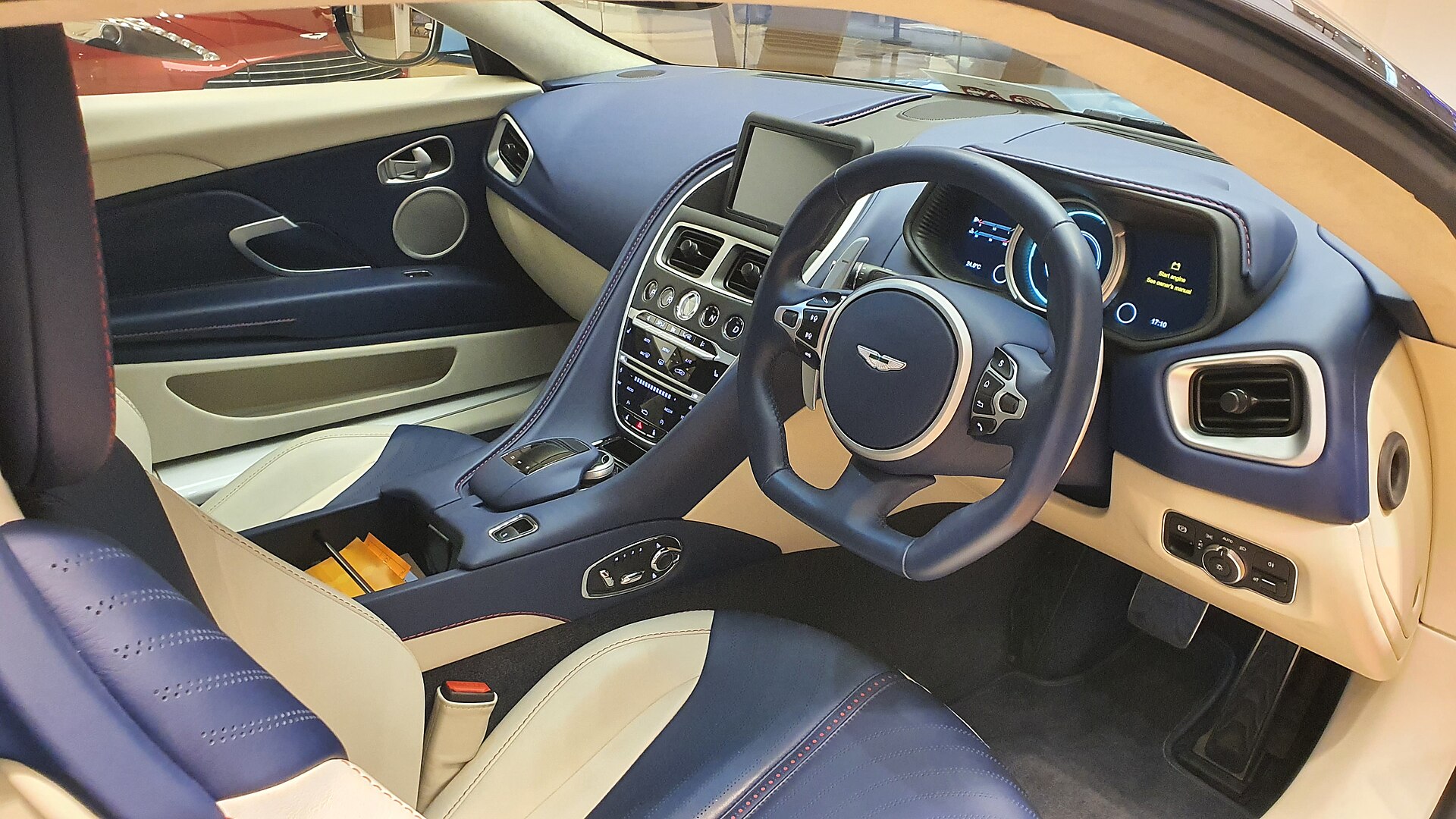
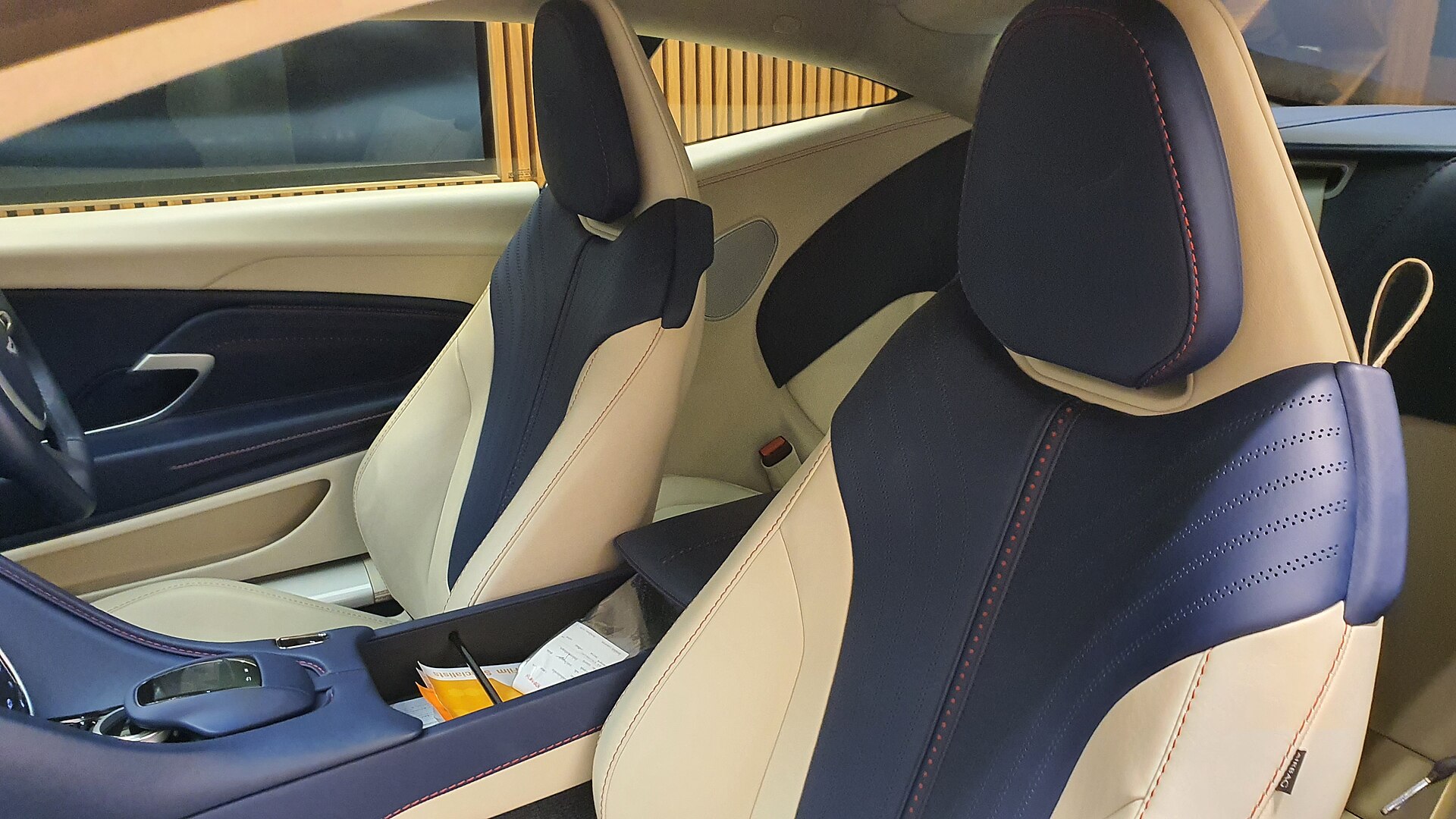
Inside, the DB11 is a true 2+2 with two small rear seats and a 270-litre boot. An 8-inch screen in the centre of the dashboard runs the infotainment system,. The standard 400-watt sound system could be upgraded to a 700-watt unit or to a 1,000-watt Bang & Olufsen system. Car magazine criticised the infotainment and some interior details of the AMR, while praising its looks and its pace.

DB11 V8, Volante and AMR
DB11 V8. Introduced in June 2017 as the new entry point, with a kerb weight of 1,760 kg - 115 kg less than the V12 coupé. In 2021 it gained 18 kW, and its top speed rose from 301 to 309 km/h.
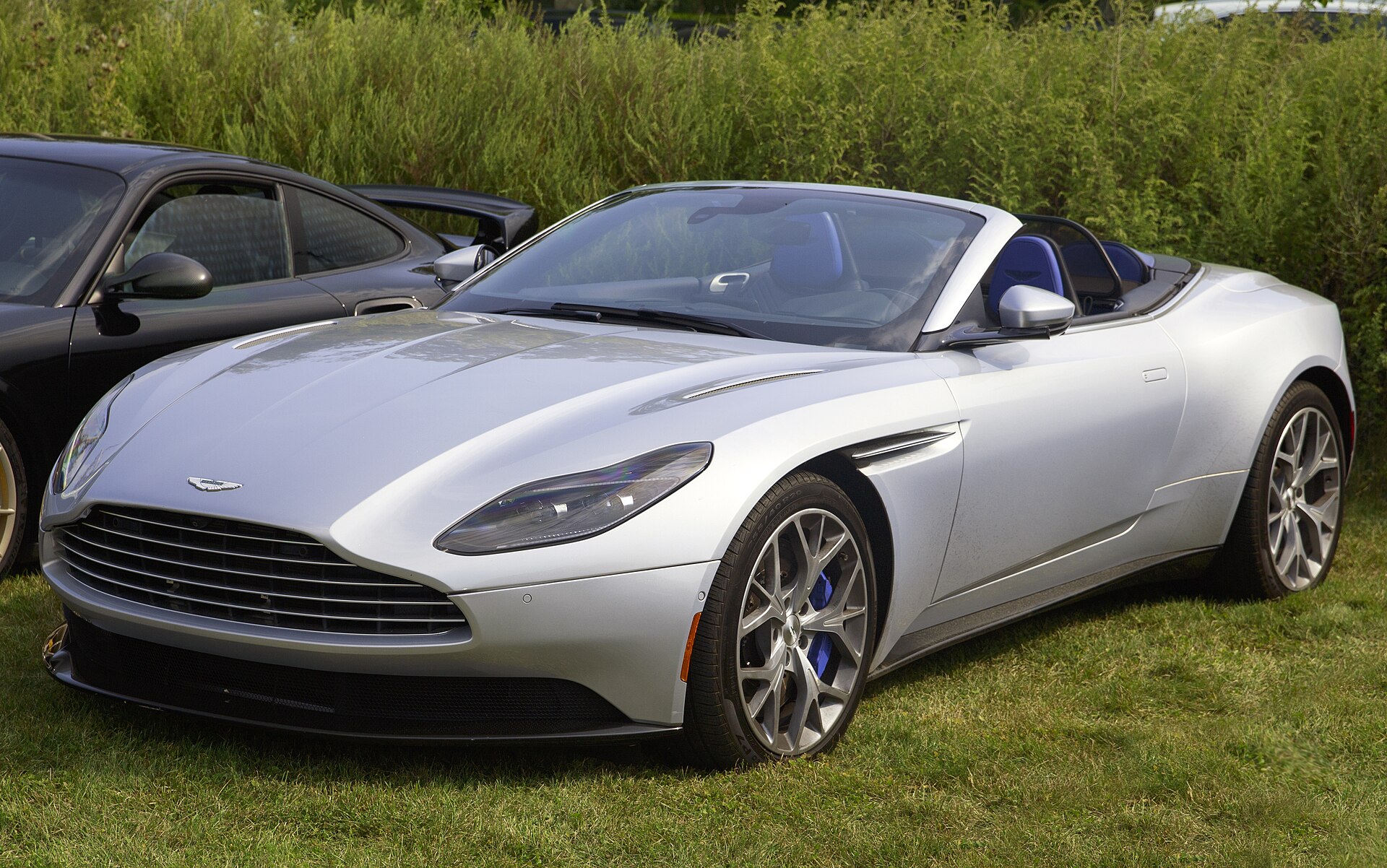
DB11 Volante. The convertible was introduced in October 2017 and was offered only with the V8. The roof mechanism and extra reinforcement add about 110 kg, giving a kerb weight of 1,870 kg and a weight distribution of 47:53.
DB11 AMR. Announced on 11 May 2018 at the Nürburgring, when Aston Martin opened its AMR Performance Centre there, it replaced the V12 coupé. Changes included more power, a new gearbox calibration, firmer rear suspension, a louder exhaust in Sport mode and lighter forged 20-inch wheels. Chassis work was led by chief engineer Matt Becker. In Germany the DB11 AMR was priced at €218,595 at its launch in 2018. A launch edition of 100 cars was painted Stirling Green with lime accents. From 2021 the car was sold again simply as the DB11 V12.

Reception and legacy
Reviews were largely positive. Jeremy Clarkson in The Sunday Times called the DB11 "phenomenally good", and Top Gear saw it as a solid start for the new range and a car suited to everyday use. By May 2018 Aston Martin said it had sold close to 4,200 V12 DB11s, which made the car an important part of the company's return to growth.
The DB11 also changed the brand technically. It introduced the bonded aluminium architecture, the twin-turbo V12 and the V8 engines supplied by Mercedes-AMG - all used by later models such as the Vantage and the DBS Superleggera. Its successor, the DB12, was unveiled in May 2023. For a closer relative, see the Aston Martin Vantage, or compare it with other supercars on 1CARS.
Photo gallery


Aston Martin DB11 in our rankings
- No. 115 of 859 · Most powerful cars (470 kW · top 14%)
- No. 26 of 109 · Most powerful British cars (470 kW · top 24%)
- No. 84 of 313 · Most powerful coupes (470 kW · top 27%)
- No. 524 of 912 · Longest-running car nameplates (7 years · top 60%)
More powerful than 86% of ranked cars in the 1CARS catalog (No. 115 of 859).
Aston Martin DB11 photos 6
FAQ
When was the Aston Martin DB11 made?
The DB11 was shown in March 2016 at Geneva. Production at Gaydon ran from 28 September 2016 to the end of June 2023, when the DB12 replaced it.
What engines does the DB11 have?
A 5.2-litre twin-turbo V12 with 447 kW (608 PS), or 470 kW (639 PS) in the AMR, and a 4.0-litre twin-turbo V8 from Mercedes-AMG with 375 kW (510 PS), raised to 393 kW (535 PS) in 2021.
How fast is the DB11 AMR?
Aston Martin quotes 0–100 km/h in 3.7 seconds and a top speed of 334 km/h.
What is the AeroBlade?
A system of ducts that takes air in at the C-pillars and blows it out through a slot in the boot lid. It works as a virtual rear spoiler and reduces lift without a fixed wing.
Is the DB11 a four-seater?
It is a 2+2: two full seats in front and two small rear seats, suitable for children or short trips.
Data sources
Data checked by an editor against the sources below.