 Aston Martin DB5
Specs, engines and history
Published Sources (1) Report an error
By Felix Hartmann, Automotive Technology & EV Contributor
- Built
- 1963–1965
- Top power
- 242 kW (329 PS)
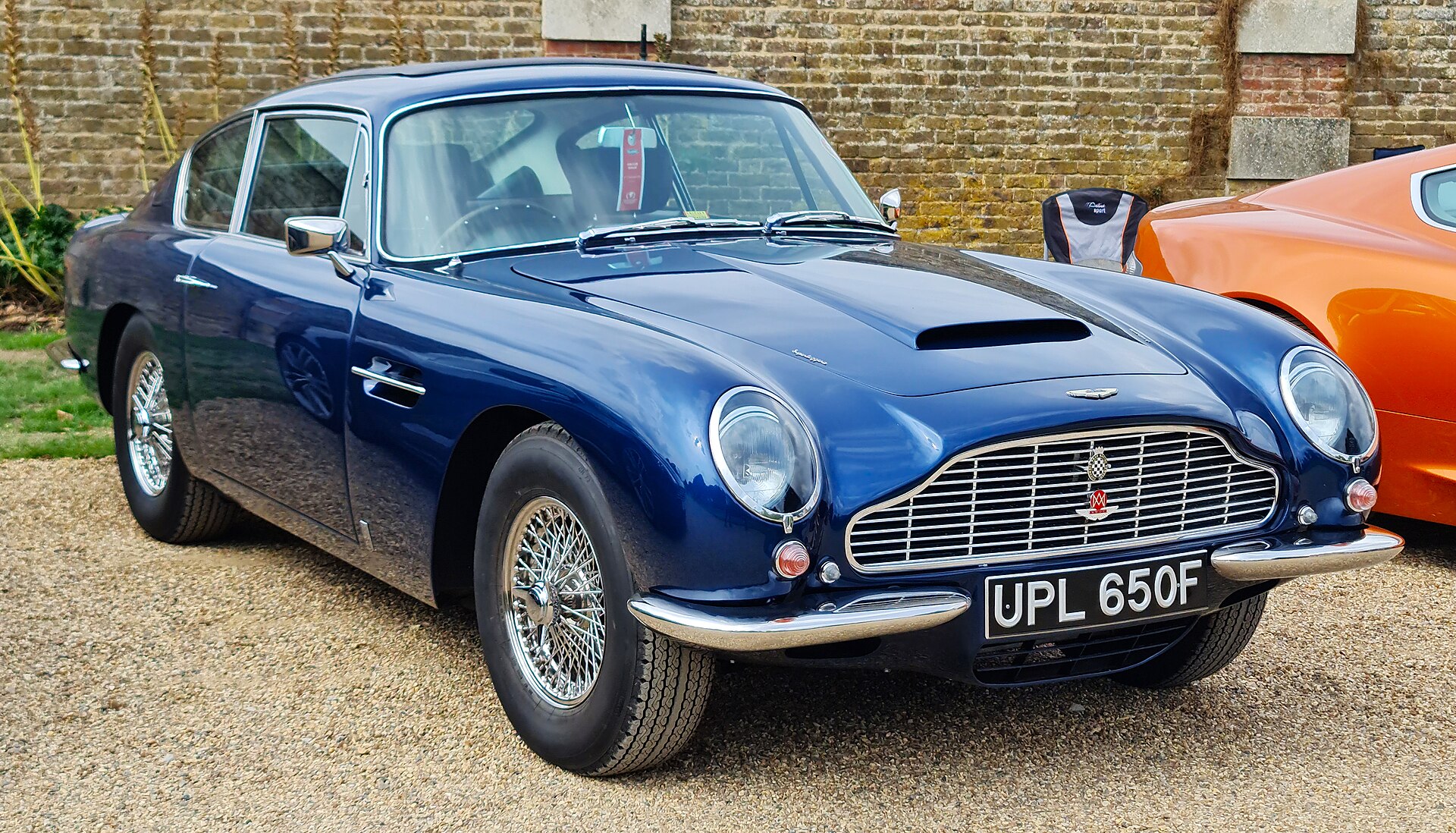
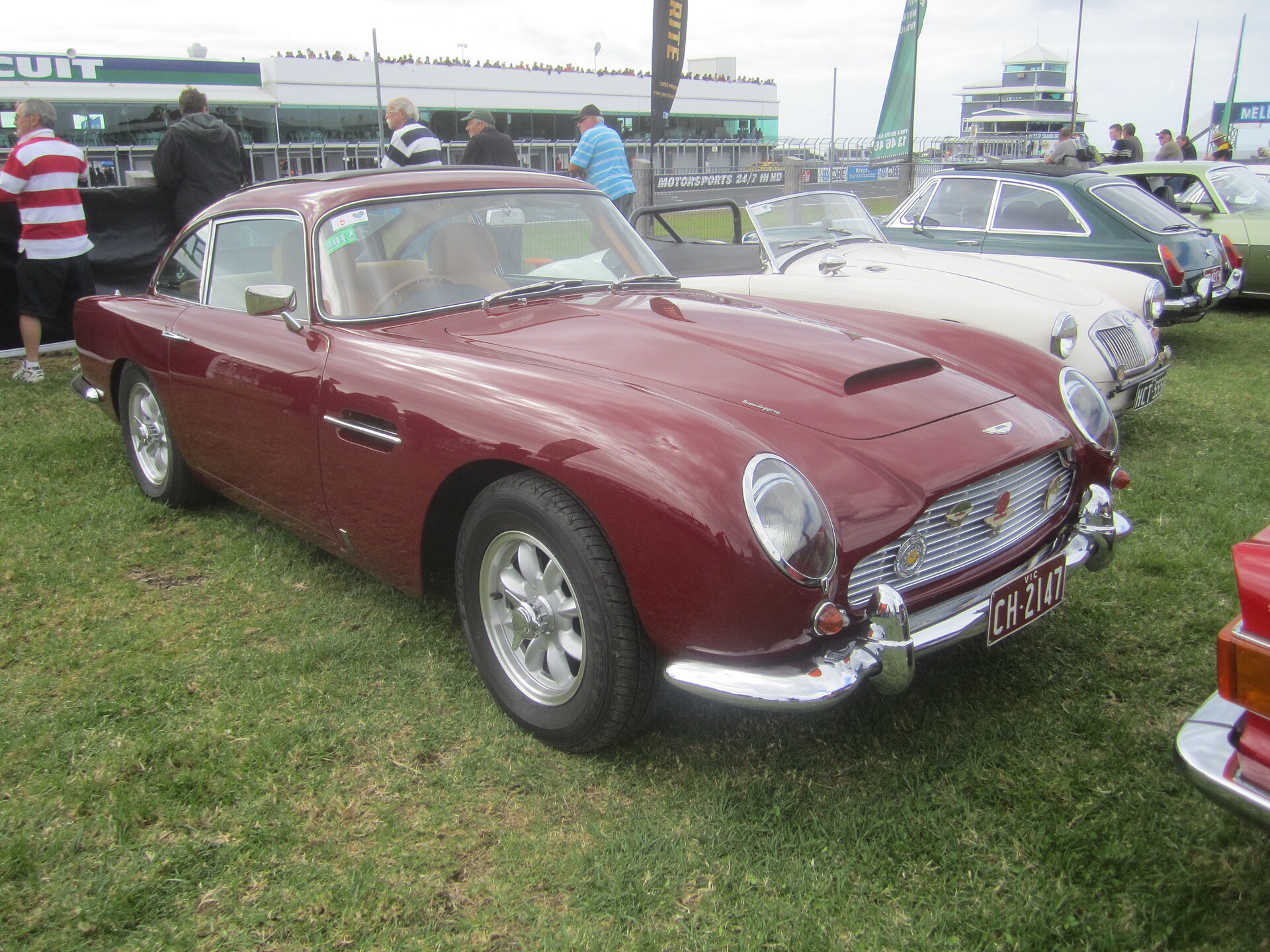
The Aston Martin DB5 is a front-engined grand tourer built at Newport Pagnell, England, from 1963 to 1965. It was the last step of the DB4 line, with a larger 4.0-litre straight-six and more equipment, and it replaced the DB4 before giving way to the DB6. Its role as James Bond's car in Goldfinger (1964) made it the best-known Aston Martin of all and one of the most recognisable cars in film history.
In short
- Built 1963–1965 at Newport Pagnell: 1,059 cars in total according to Wikipedia, including 123 convertibles and 65 Vantage coupés.
- 3,995 cc all-aluminium straight-six with three SU carburettors: 210 kW (286 PS) and 390 Nm; the Vantage version with three Weber carburettors made 242 kW (330 PS).
- Aluminium body built to Carrozzeria Touring's Superleggera method; design credited to Federico Formenti at Touring.
- Autocar recorded a top speed of 233 km/h in its 1964 road test; 25 "Goldfinger" continuation cars followed in 2020.
Aston Martin DB5 at a glance
| Specification | Aston Martin DB5 |
|---|---|
| Production | 1963–1965, Newport Pagnell (England) |
| Cars built | 1,059 (Wikipedia); 25 continuation cars in 2020 |
| Body | 2+2 saloon (coupé), convertible, shooting brake |
| Engine | 3,995 cc straight-six, twin overhead camshafts, front-mounted |
| Power | 210 kW (286 PS) at 5,500 rpm; Vantage 242 kW (330 PS) |
| Torque | 390 Nm |
| Gearbox | four-speed manual with overdrive, later five-speed ZF manual; Borg-Warner automatic optional |
| Weight | 1,502 kg |
| Dimensions | 4,570 mm long, 1,680 mm wide, 2,489 mm wheelbase |
| Predecessor / successor | DB4 / DB6 |
The DB5 belongs to the line of "DB" cars named after Sir David Brown, the industrialist who bought Aston Martin in 1947 and merged it with Lagonda. The story of the company before and after him is told in our Aston Martin history, and all models are listed in the Aston Martin catalogue.
Development: from the DB4 to the DB5
The DB5 was not a clean-sheet design. It grew out of the final DB4 Series V, which already had the longer body that people now associate with the DB5. The most important change was under the bonnet. The 4.0-litre version of the twin-cam straight-six had first been offered in the DB4 Vantage from March 1962; with the launch of the DB5 in September 1963 it became the standard engine.
Aston Martin also used the change of name to raise the level of equipment. Reclining seats, wool pile carpets, electric windows, twin fuel tanks, chrome wire wheels, an oil cooler, full leather trim and even a fire extinguisher were standard. Such a list was unusual for a sports car of the early 1960s, and it underlined the position of the DB5 as a fast, comfortable car for long distances rather than a stripped racing car.
The car was built by hand at Newport Pagnell in Buckinghamshire, the factory that remained Aston Martin's home until production moved to Gaydon in 2007. Production of the DB5 ran for only about two years before the DB6, with a longer wheelbase and a cut-off "Kamm" tail, took its place in 1965.
Design and construction
The shape of the DB5 came from Carrozzeria Touring of Milan, and Wikipedia credits the design to Federico Formenti. Touring's Superleggera ("super light") method was used: a framework of small-diameter tubes carried thin alloy body panels, and the whole structure was mounted on a steel platform chassis. On the DB5 the body panels were made of a magnesium alloy.
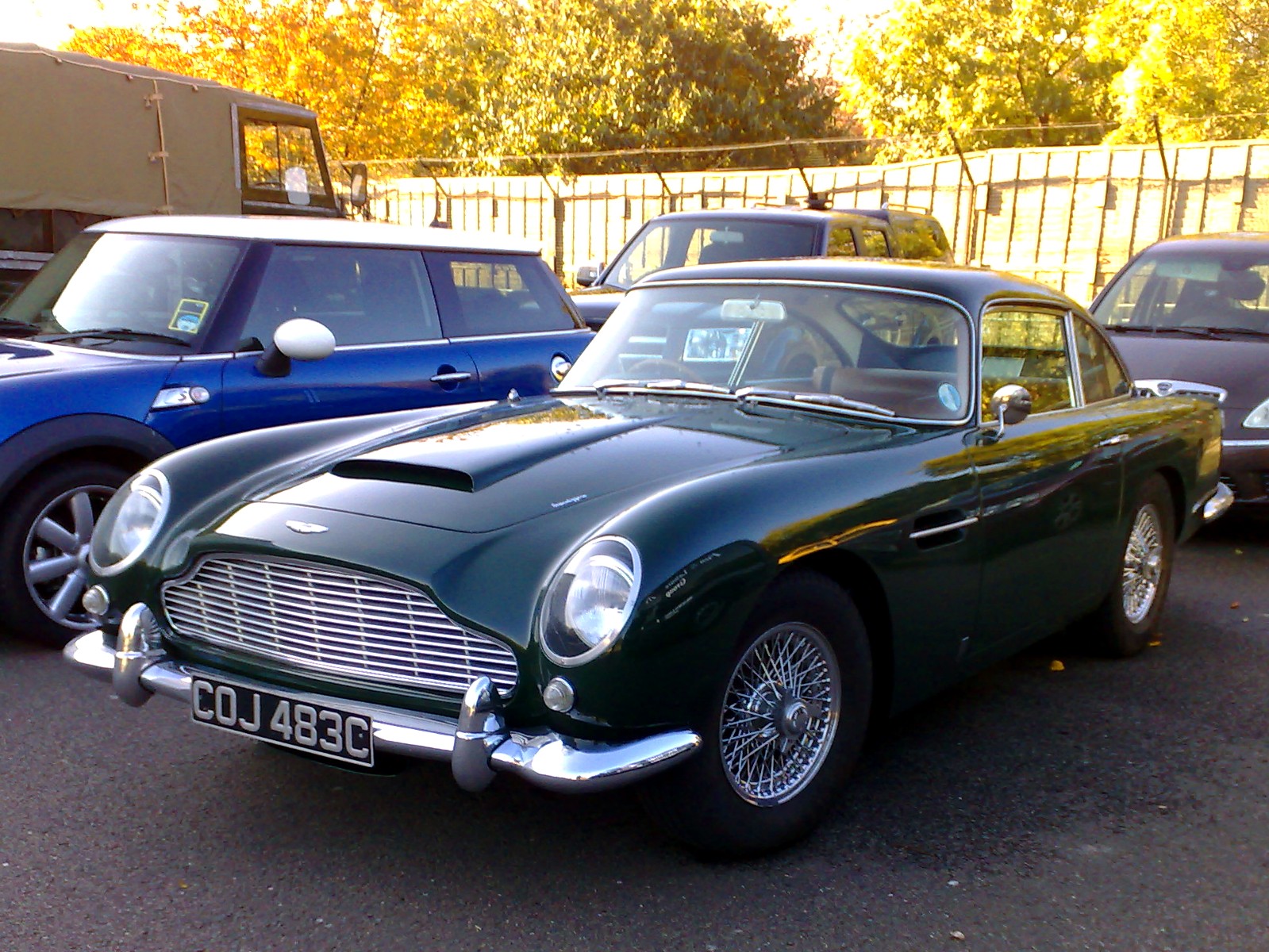
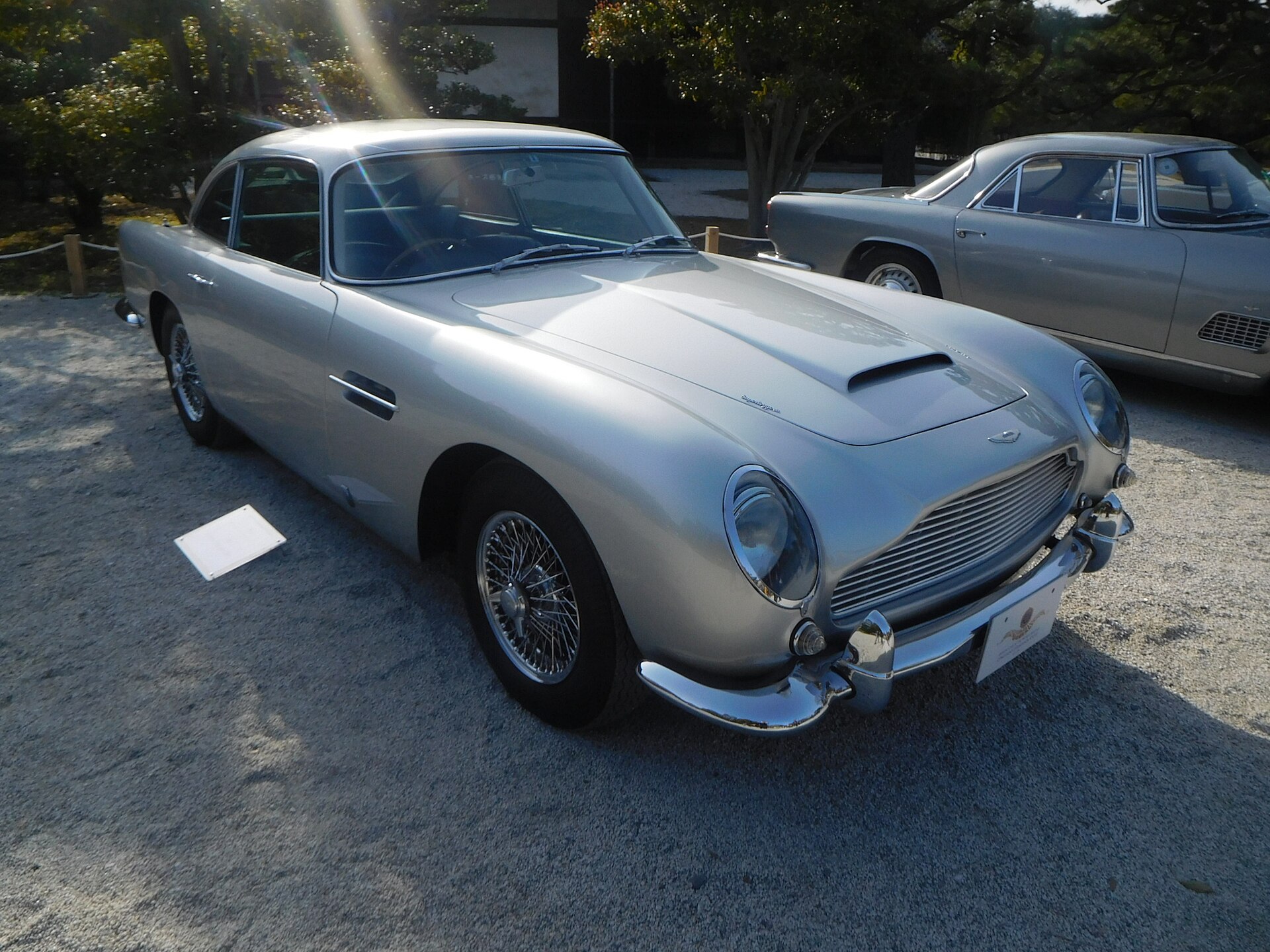
From the outside the DB5 is hard to tell apart from a late DB4 with covered headlights. The proportions are classic for a front-engined grand tourer: a long bonnet with an air scoop, a short tail and a fastback roofline over the 2+2 cabin. The kerb weight of about 1,502 kg was not light by modern standards, but it was reasonable for a four-litre touring car with this level of equipment.
The chassis kept the layout of the DB4. At the front there was independent suspension with coil springs; at the rear, a live axle located by radius arms and a Watt's linkage. Disc brakes were fitted at all four wheels. Steering was by rack and pinion without power assistance. The same basic specification was reproduced for the 2020 continuation cars, which shows how closely the DB5 is still tied to its original engineering.

Engine and performance
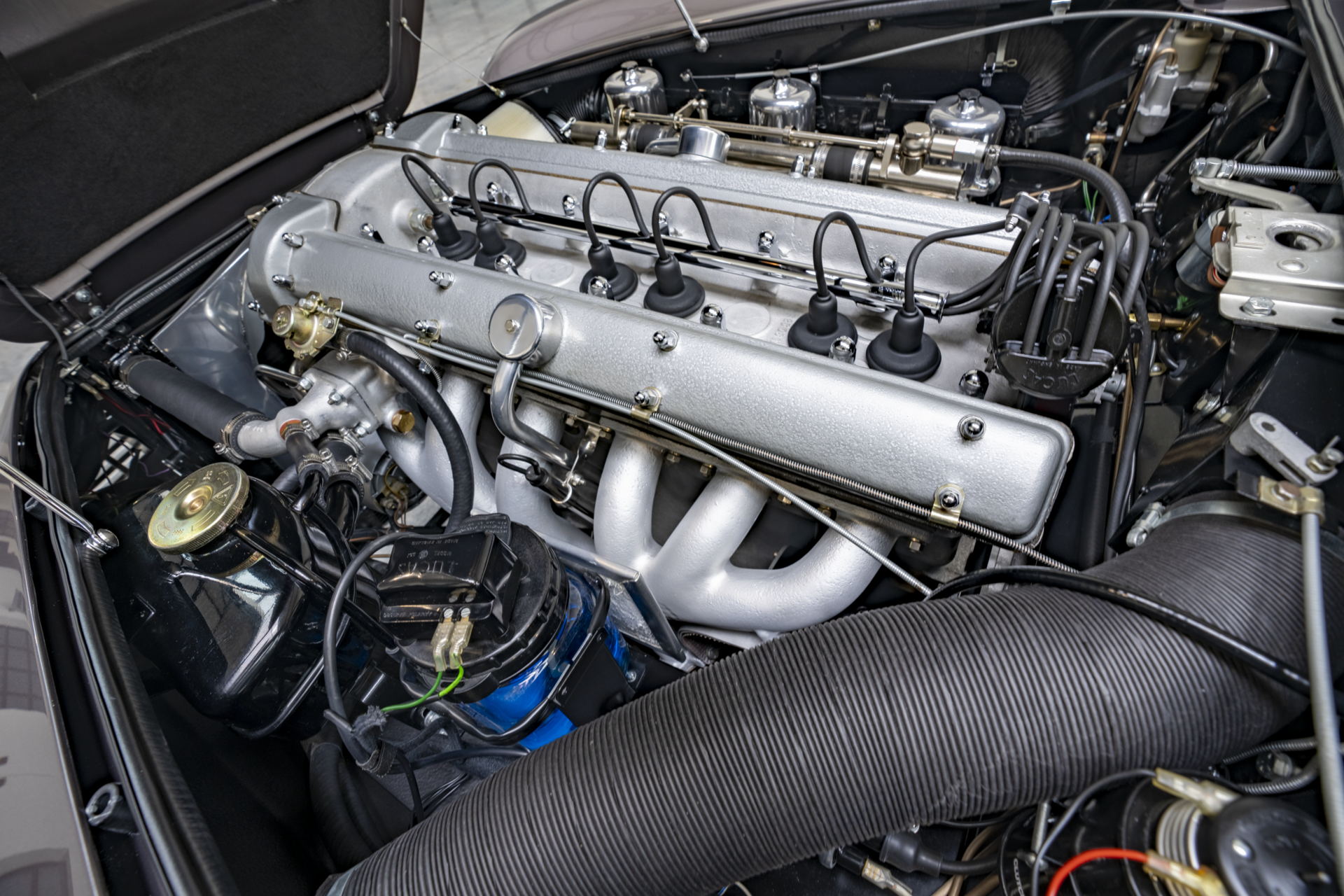
The engine is a twin-cam, all-aluminium straight-six with a bore of 96 mm and a stroke of 92 mm, giving 3,995 cc. In standard form it breathed through three SU carburettors. The Vantage engine, introduced in 1964, had three Weber carburettors and revised camshaft profiles.
| Version | Carburettors | Power | Notes |
|---|---|---|---|
| DB5 (1963–1965) | three SU | 210 kW (286 PS) at 5,500 rpm | gross rating; Wikipedia also lists a net 157 kW (213 PS) |
| DB5 Vantage (1964–1965) | three Weber | 242 kW (330 PS) at 5,500 rpm | 65 coupés; 12 convertibles also had the Vantage engine |
| Goldfinger Continuation (2020) | three SU | about 216 kW (294 PS) | five-speed ZF manual, limited-slip differential |
Torque of the standard engine is given as 390 Nm. In its road test of 18 September 1964, Autocar recorded a top speed of 233 km/h and 0–60 mph in about 8 seconds. These figures put the DB5 among the fastest four-seat cars of its time.
The first cars used a four-speed manual gearbox with optional overdrive. It was later replaced by a stronger five-speed ZF gearbox, although some early cars kept the older unit. A three-speed Borg-Warner automatic was available as an option and was changed to a newer Borg-Warner Model 8 shortly before the DB6 arrived.

Convertible, Volante and shooting brake
Most DB5s were closed saloons, but there were three other body styles.
| Variant | Years | Number built | Notes |
|---|---|---|---|
| Convertible | 1963–1965 | 123 | bodies by Touring; only 19 left-hand drive; steel hard top was a rare option |
| Short-chassis Volante | October 1965 – October 1966 | 37 | built on the last DB5 chassis; DB6 bumpers and Triumph TR4 rear lights |
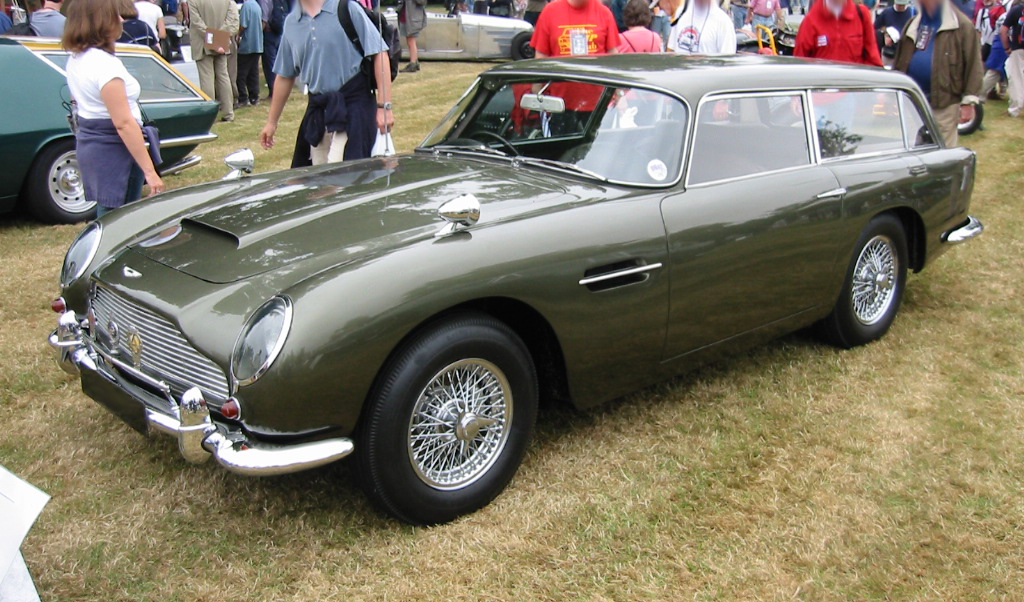
| Shooting brake | 1964–1965 | about a dozen | a prototype for David Brown, then conversions by Harold Radford |
The convertible did not use the name "Volante" at first. The name appeared only with the short-chassis cars built from the remaining DB5 chassis after the DB6 had replaced the saloon. These 37 cars were the first Aston Martins called Volante, a name the company still uses for its open models.
The shooting brake started with a single car made for David Brown himself. Others followed when customers asked for the same body, and the coachbuilder Harold Radford converted completed saloons. Wikipedia gives a total of 12 Radford conversions plus the prototype; other counts differ slightly.

The James Bond car
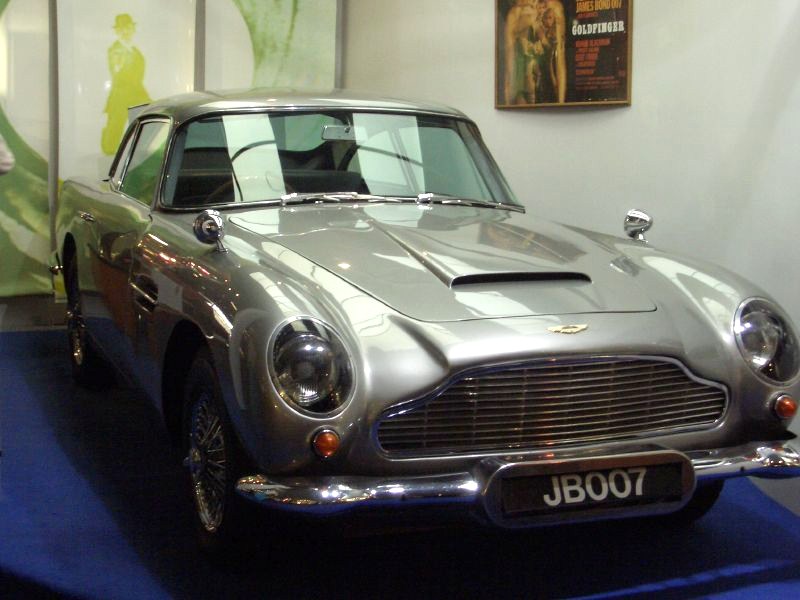
In Ian Fleming's novel Goldfinger, James Bond drives a DB Mark III. For the 1964 film, special effects expert John Stears persuaded Aston Martin to provide the DB5 prototype, and the car was fitted with machine guns, revolving number plates, a bullet shield, and tyre slashers. Four cars were used for the film: two for filming and two for promotion.
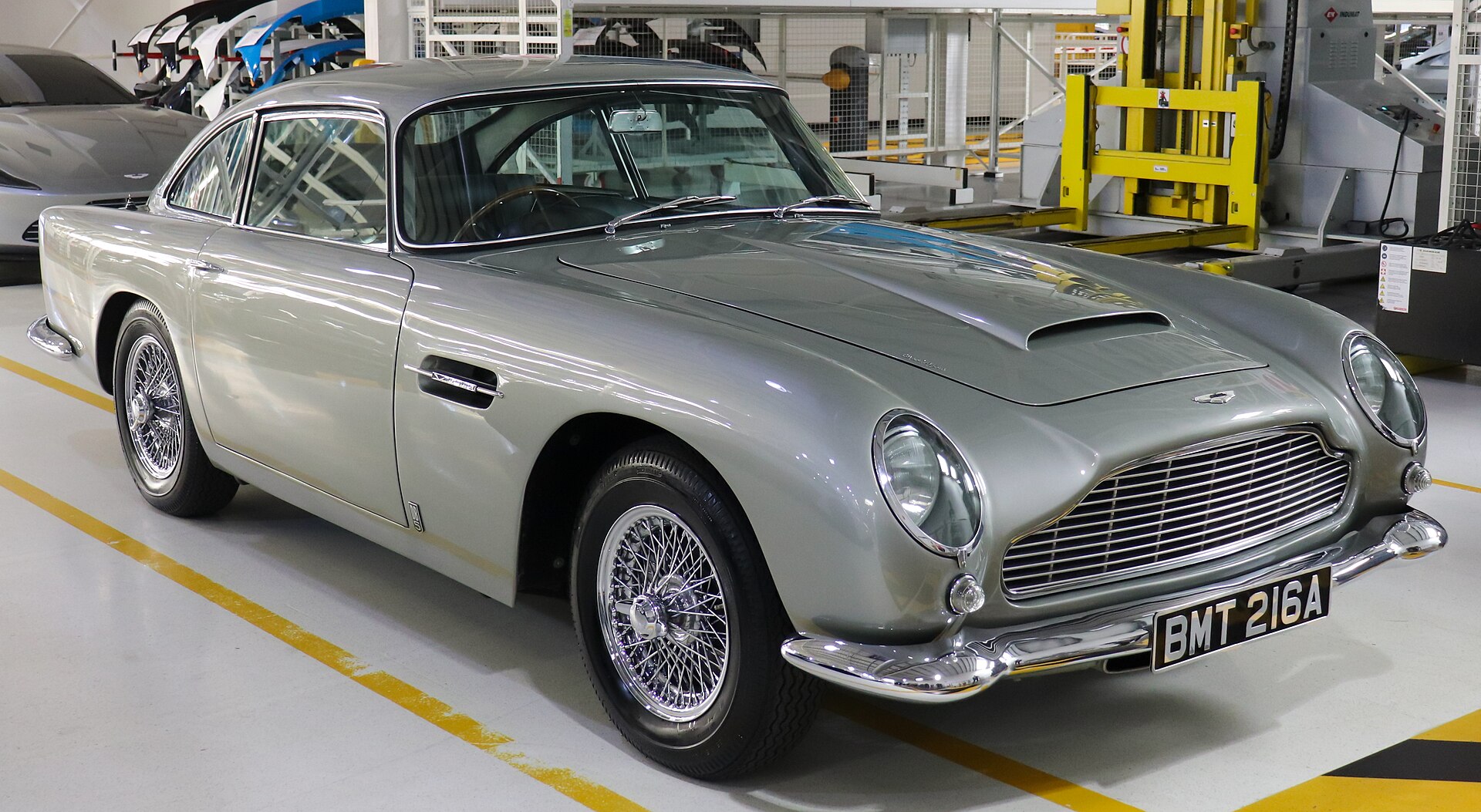
The DB5 returned with the registration BMT 216A in Thunderball (1965). A different DB5, registered BMT 214A, appeared in GoldenEye (1995) and briefly in Tomorrow Never Dies (1997). In Casino Royale (2006) Bond wins a left-hand-drive DB5 in a card game. In Skyfall (2012) the car was destroyed in the finale, with a one-third scale model used for the explosion shots; it was rebuilt for Spectre (2015) and appeared again in No Time to Die (2021), for which eight replica stunt cars were built.
The films turned the DB5 into a cultural object as much as a car. The Corgi Toys model of the Bond car became the best-selling toy of 1964, and in 2013 the car appeared on a Royal Mail stamp in the "British Auto Legends" series.

The Goldfinger Continuation cars
In 2020 the DB5 went back into production for a short run. Aston Martin and EON Productions, the producer of the Bond films, built 25 "DB5 Goldfinger Continuation" cars at the old Newport Pagnell factory, now a heritage and restoration centre. The company announced on 6 July 2020 that the first customer car had been completed; it took around 4,500 hours to build.
The continuation cars use aluminium body panels over a mild steel chassis, a 4.0-litre straight-six with three SU carburettors and a five-speed ZF manual gearbox. The only colour offered was Silver Birch, as on the film car. Gadgets designed by special effects supervisor Chris Corbould include revolving number plates, a smoke screen, a simulated oil slick, simulated machine guns and a bullet-resistant rear shield. The cars are not road legal, and the gadgets that may be fitted depend on local law.

Legacy
The DB5 was in production for only two years, and in engineering terms it was an evolution of the DB4. Its importance comes from the combination of a strong, well-equipped grand tourer and a film role that made it known far beyond the circle of car fans. Aston Martin has used the link with Bond for decades, and the DB5 remains the car most people picture when they hear the name.
The DB5 also marks a turning point in the company's line. The DB6 that followed was longer and more practical, and the next big change came with the V8 cars of the late 1960s. For later grand tourers from Newport Pagnell and Gaydon, see the Aston Martin DB7 and the Aston Martin DB9.
Photo gallery


Aston Martin DB5 in our rankings
- No. 38 of 94 · Most powerful cars of the 1960s (242 kW · top 42%)
- No. 382 of 859 · Most powerful cars (242 kW · top 46%)
- No. 64 of 109 · Most powerful British cars (242 kW · top 61%)
- No. 208 of 313 · Most powerful coupes (242 kW · top 68%)
- No. 821 of 912 · Longest-running car nameplates (2 years · top 96%)
More powerful than 58% of ranked cars of the 1960s in the 1CARS catalog (No. 38 of 94).
Aston Martin DB5 photos 6
FAQ
How many Aston Martin DB5s were built?
Wikipedia gives 1,059 cars for 1963–1965, including 123 convertibles and 65 Vantage coupés. Aston Martin's own 2020 release says fewer than 900 saloons were built. A further 25 continuation cars were made in 2020.
What engine does the DB5 have?
A 3,995 cc twin-cam straight-six with 210 kW (286 PS); the Vantage version with Weber carburettors made 242 kW (330 PS).
How fast is the Aston Martin DB5?
Autocar measured a top speed of 233 km/h in its 1964 road test.
Which Bond films feature the DB5?
Goldfinger, Thunderball, GoldenEye, Tomorrow Never Dies, Casino Royale, Skyfall, Spectre and No Time to Die.
What replaced the DB5?
The DB6, introduced in 1965, with a longer wheelbase and a cut-off tail.
Data sources
Data checked by an editor against the sources below.