 Toyota Land Cruiser Prado
All generations, specs and history
Published Sources (1) Report an error
By Felix Hartmann, Automotive Technology & EV Contributor
- Built
- 1990–present
- Generations
- 5 · J70 to J250
Timeline
Land Cruiser Prado generations
Click a generation for its own page
- Land Cruiser Prado J70 1990–1996 · SUV
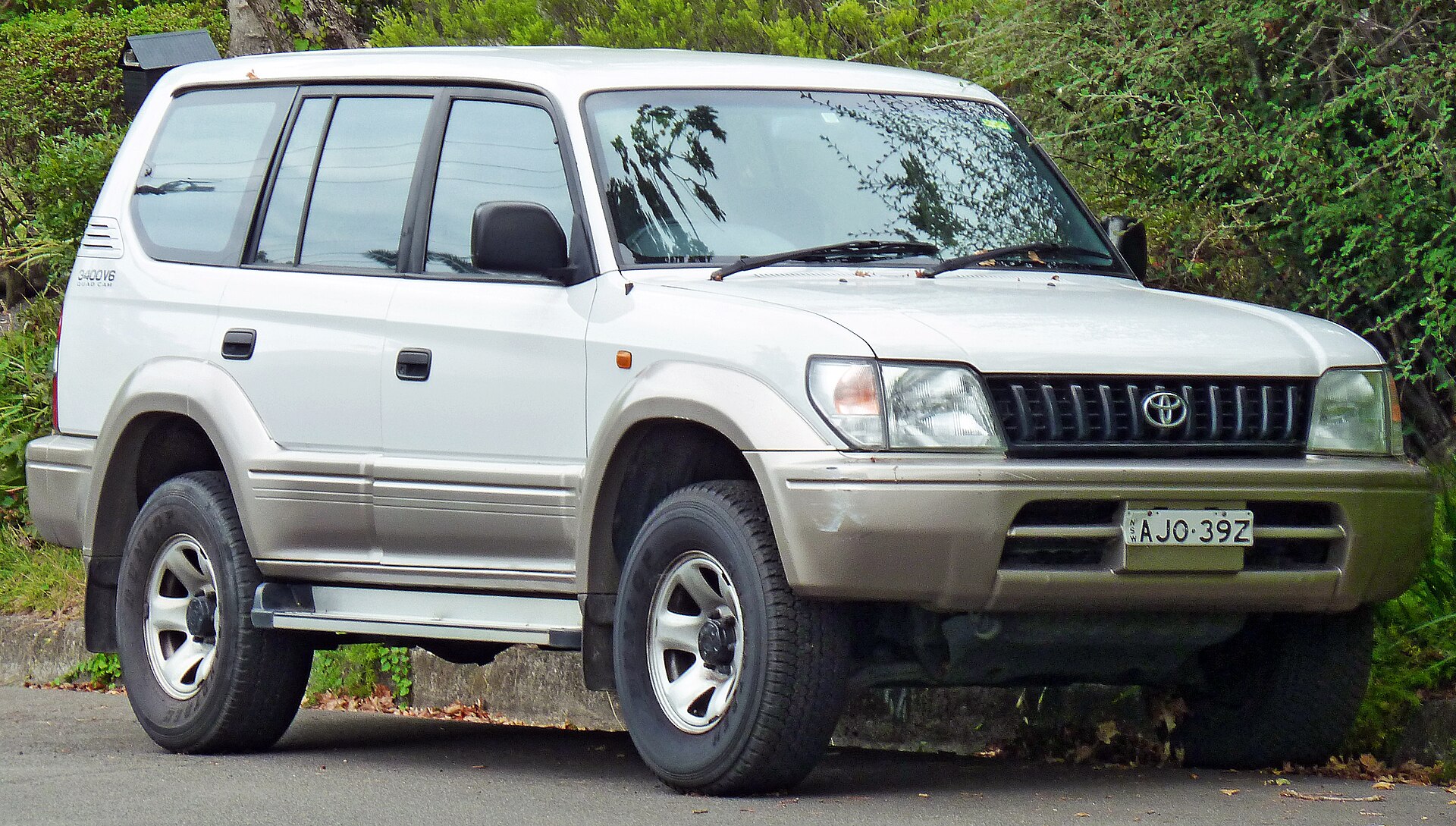
- Land Cruiser Prado J90 1996–2002 · SUV
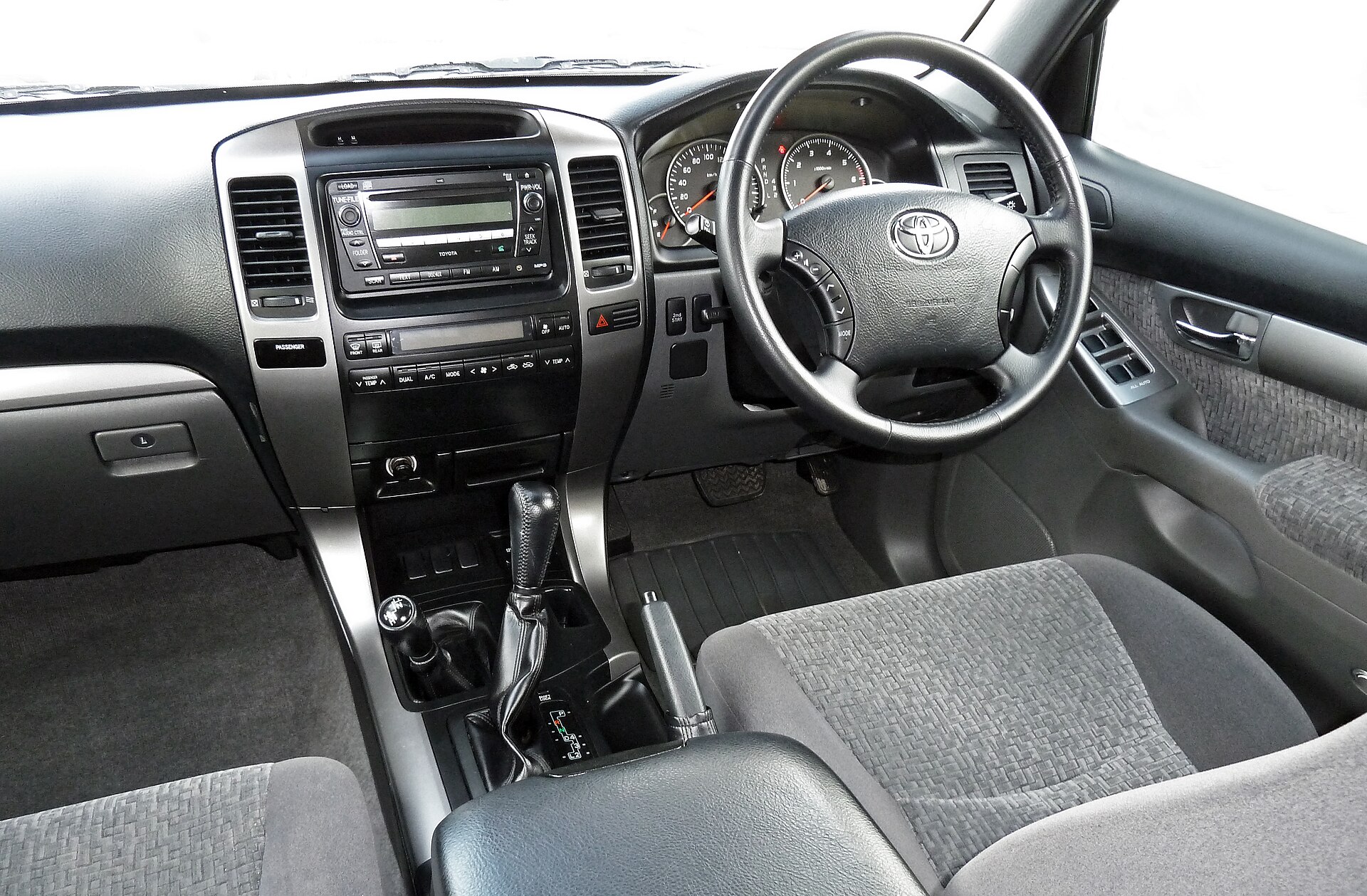
- Land Cruiser Prado J120 2002–2009 · SUV
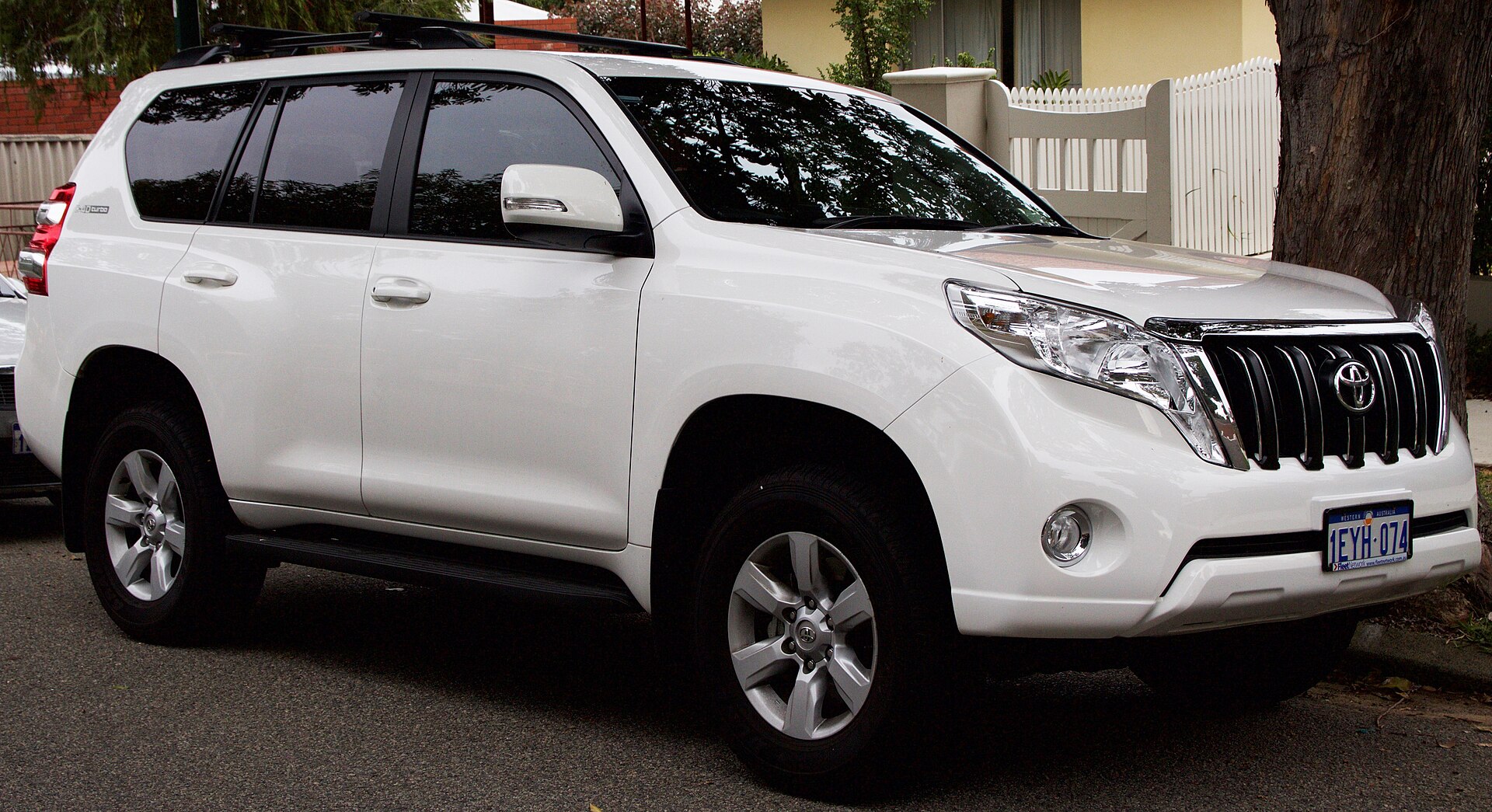
- Land Cruiser Prado J150 2009–2024 · SUV
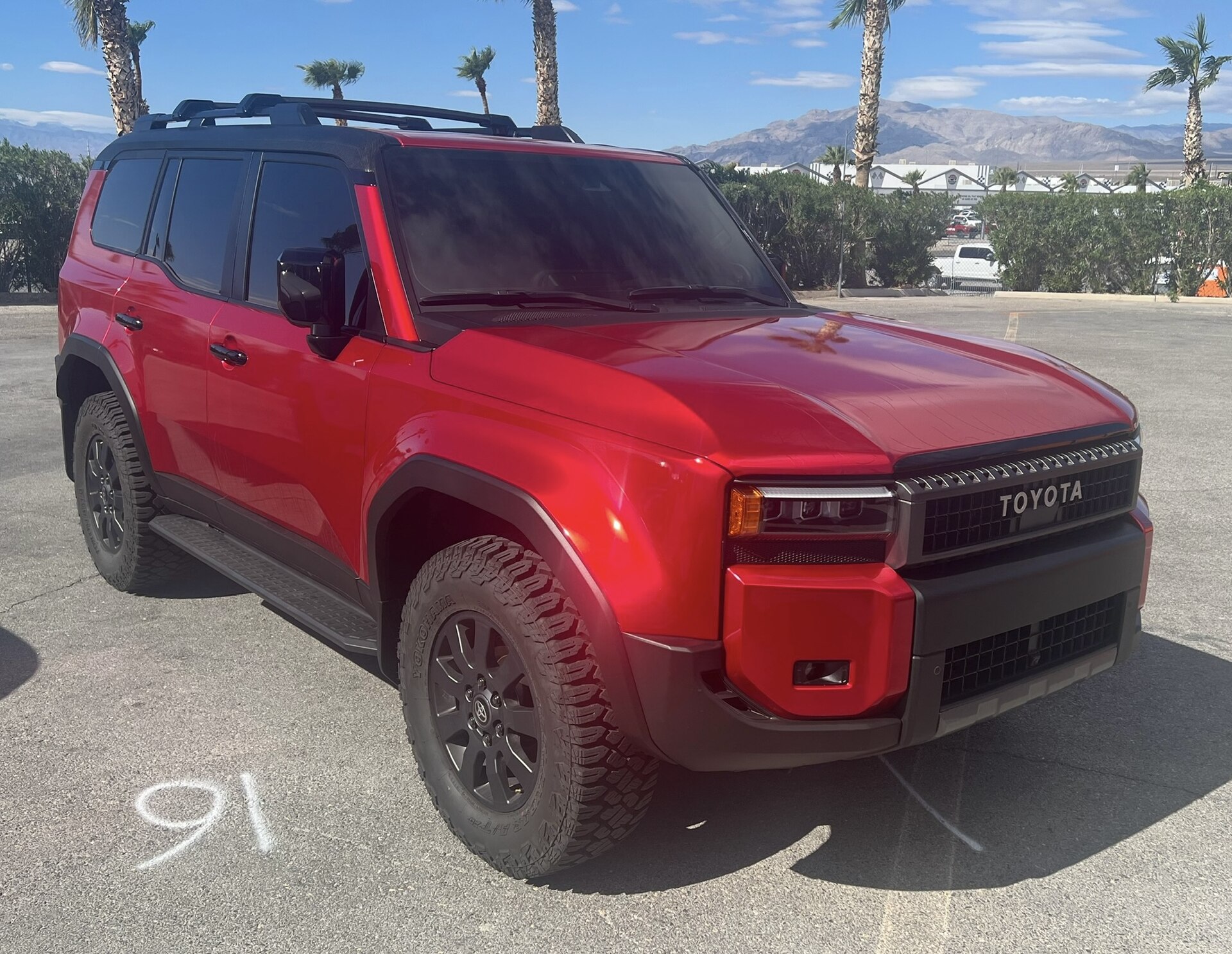
- Land Cruiser Prado J250 Current 2024–now · SUV
Newest first · 5 generations since 1990
-
2024
-
2009
-
2002
-
1996
-
1990
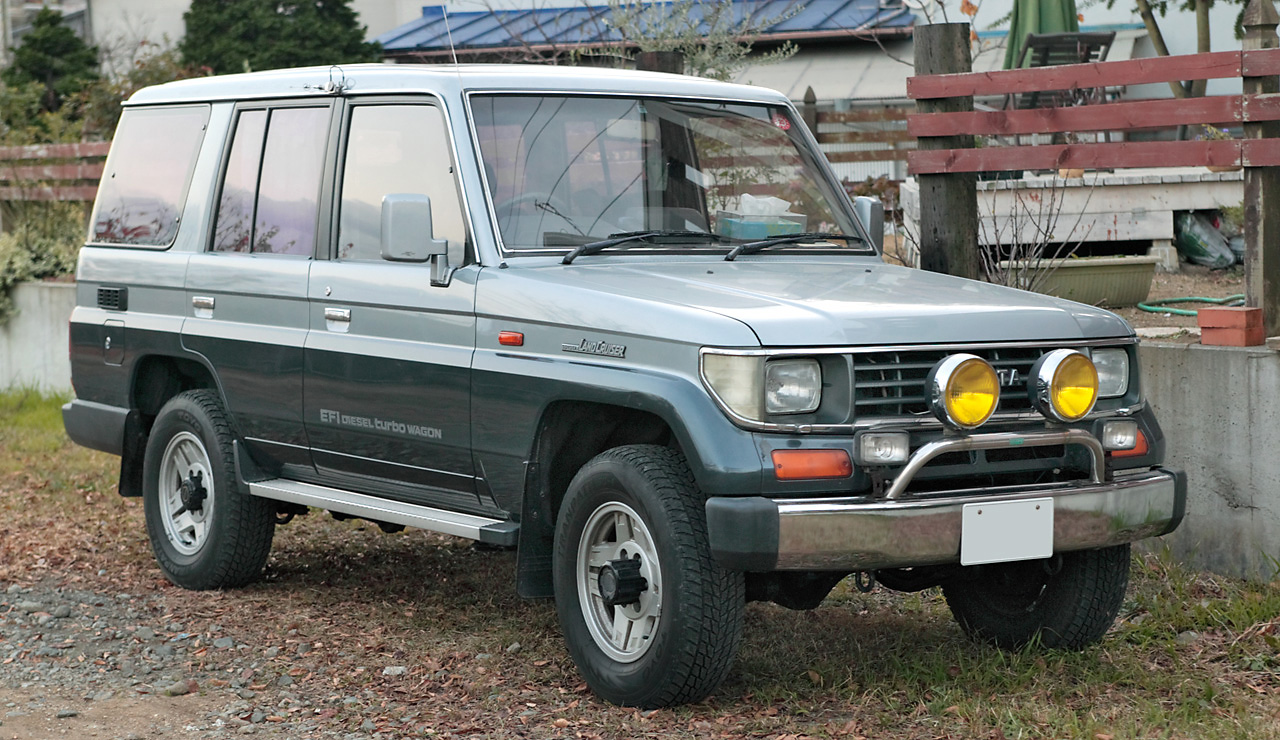


All generations by year: Land Cruiser Prado J250 (2024–now) · Land Cruiser Prado J150 (2009–2024) · Land Cruiser Prado J120 (2002–2009) · Land Cruiser Prado J90 (1996–2002) · Land Cruiser Prado J70 (1990–1996)
Which one is mine?
Pick the year of first registration to see which generation it is.
- J250 2024–present
- J150 2009–2024
- J120 2002–2009
- J90 1996–2002
- J70 1990–1996
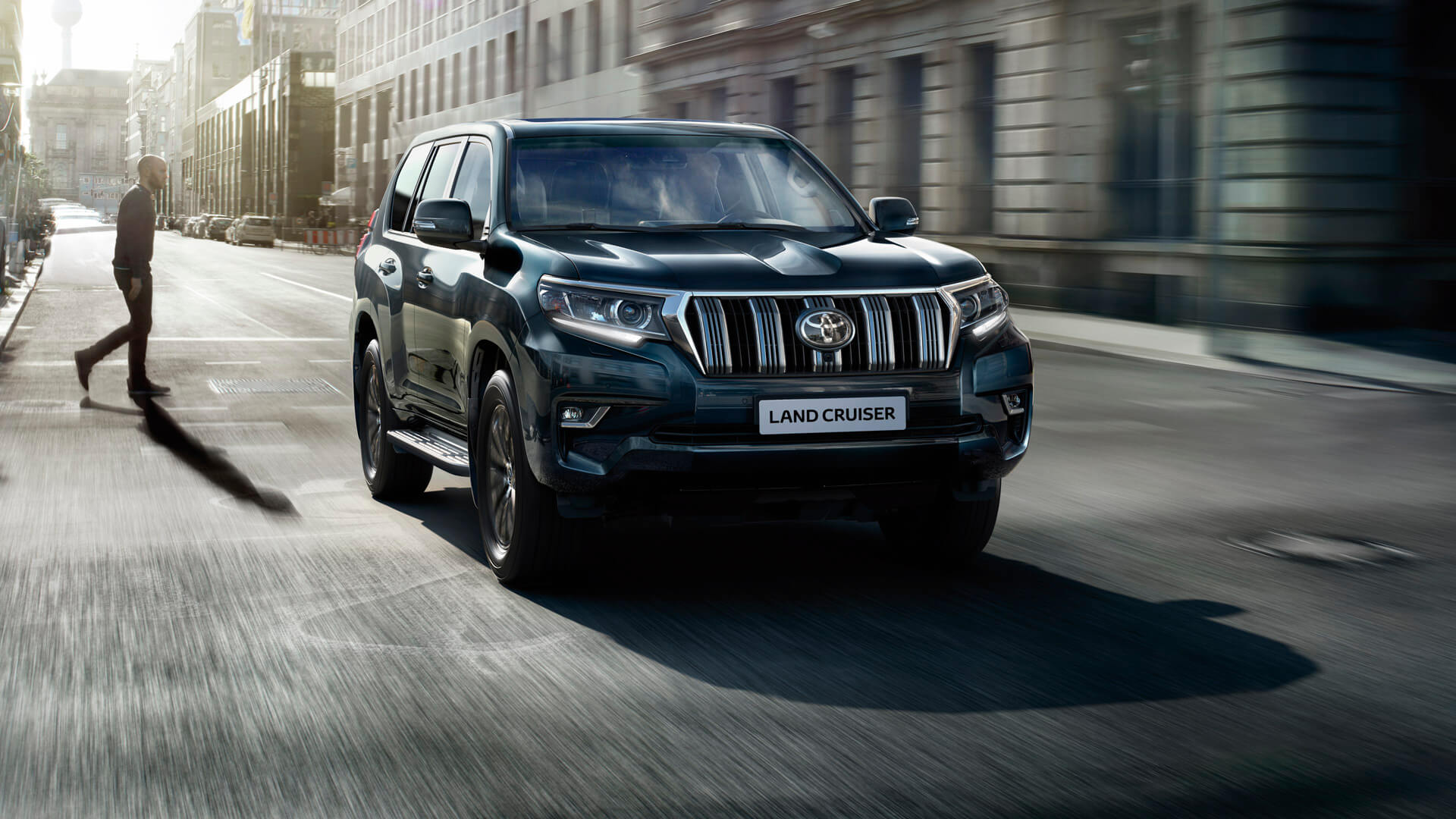
The Toyota Land Cruiser Prado is a mid-size off-roader built to classic principles: a ladder frame, a rigid rear axle and full-time four-wheel drive. It is known for its reliability, a good level of comfort and excellent off-road ability, and it is offered with three or five doors. The Prado grew out of the light-duty Land Cruiser of 1984; the Prado name arrived in April 1990, followed by the J90 in May 1996, the J120 in 2002 and the J150 in September 2009. The J150, facelifted several times and last updated in 2020, is the focus of this article. Its successor, the J250, was revealed in August 2023.
In short
- Generations: J70 Prado (1990), J90 (1996), J120 (2002), J150 (2009) and J250 (2023).
- J150 engines: 2.7 petrol with 120 kW (163 PS), 4.0 V6 petrol, and 2.8 diesel with 130–150 kW (177–204 PS).
- Full-time four-wheel drive with a Torsen centre differential, a low range and a locking centre differential.
- Five or seven seats, 215 mm of ground clearance and up to 1,934 litres of luggage space.
Toyota Land Cruiser Prado at a glance
The Prado is a body-on-frame SUV with a longitudinal front engine, independent front suspension and a coil-sprung rigid rear axle. It sits below the full-size Land Cruiser in Toyota's range. More Toyota models are listed in our Toyota catalogue, and its bigger brother is reviewed in our Toyota Land Cruiser article.
Land Cruiser Prado generations
| Generation | Years | Bodies | Main engines |
|---|---|---|---|
| J70 Prado | 1990–1996 | 3 and 5 doors | 2.4 petrol; 2.4, 2.8 and 3.0 diesel |
| J90 | 1996–2002 | 3 and 5 doors | 2.7 and 3.4 V6 petrol; 3.0 diesels, up to 136 kW (185 PS) |
| J120 | 2002–2009 | 3 and 5 doors | 2.7 and 4.0 V6 petrol; 3.0 diesels |
| J150 | 2009 until replaced by the J250 | 5 doors (3 doors in some markets) | 2.7, 4.0 and 3.5 petrol; 3.0 and 2.8 diesel |
| J250 | 2023 onwards | 5 doors | 2.4 turbo and 2.7 petrol, 2.8 diesel, hybrid in some markets |
The J90's rounded styling was not universally liked by traditional buyers. The J120 became a common sight in many countries, and the J150 was facelifted in 2013, again in September 2017, when Toyota Safety Sense became standard, and in August 2020, when the diesel was uprated and a 9-inch touchscreen with Apple CarPlay and Android Auto arrived.
J150 after the updates
Exterior
The J150 looks good from every angle and became more masculine, stylish and modern with each update. It does not rely on chrome or decoration — its sheer size gives it presence. The updated headlights required a new front bumper and wings. The bonnet now sits parallel to the road and has two strip-like ridges running from the windscreen to the grille, which was enlarged but kept its nearly rectangular shape. Depending on version, the headlights use xenon or LED technology. The bumper carries integrated fog lights, a central intake and plenty of stepped, aggressive surfaces.
The side has large rectangular windows with thin chrome surrounds and gloss-black pillars, gently sculpted doors and slightly flared wheel arches with 17- or 18-inch multi-spoke wheels. Chrome side steps help shorter passengers get in, roof rails are fitted, and the chrome mirrors have integrated indicators. Ground clearance is 215 mm. The rear changed less: the side-hinged tailgate starts with a prominent spoiler with brake-light repeaters, followed by a large window, chrome trim and a number-plate recess, with large LED tail lights at the corners. The bumper acts mainly as a step, and the exhaust, towing eyes and spare wheel are under the body.
Interior
The updated J150 has a more modern infotainment system and improved, hard-wearing materials, and it seats five or seven. Toyota kept many analogue elements, but leather, decorative trim and polished aluminium are available. The driver faces a comfortable four-spoke multifunction steering wheel and an instrument cluster with two analogue dials and a 4.2-inch trip-computer display; everything is easy to read, and visibility is good. The uncluttered centre console has air vents at the top, an 8- or 9-inch touchscreen, the controls for comfort systems and two cupholders in an unusual central position, flowing into a tunnel with the gear lever and parking brake. A large armrest doubles as the lid of a cooled compartment.
The front seats are very comfortable, with widely spaced side bolsters, soft padding and a wide adjustment range, and buttons near the gear lever select the drive modes when adaptive dampers are fitted. Second- and third-row passengers can have built-in video screens, their own climate settings and easy access to storage and charging ports, and the well-shaped rear bench has a comfortable backrest angle. Luggage space in the five-seat version is 621 litres, rising to 1,934 litres with the second row folded, according to published figures. The side-hinged tailgate has an opening window for small items.
Engines and transmissions (J150)
| Engine | Power (kW / PS) | Torque | Gearbox |
|---|---|---|---|
| 2.7 2TR-FE petrol, four-cylinder | 120 kW / 163 PS | 246 Nm | 5- or 6-speed manual, automatic |
| 4.0 1GR-FE petrol V6 | 183 kW / 249 PS (in some markets) | 381 Nm | 5- or 6-speed automatic |
| 2.8 1GD-FTV diesel (2015–2020) | 130 kW / 177 PS | 450 Nm | 6-speed manual or automatic |
| 2.8 1GD-FTV diesel (from 2020) | 150 kW / 204 PS | 500 Nm | 6-speed automatic |
The 2.7 has multi-point injection and variable valve timing; the 4.0 V6 has 24 valves and variable timing on both intake and exhaust. Some markets received a 3.5-litre V6 with 206 kW (280 PS) from 2015. The 2.8 diesel, which replaced the 3.0 in June 2015, has a variable-geometry turbocharger, common-rail injection and an intercooler. According to published figures, the V6 uses 10.8–11.7 l/100 km and the diesel about 7.4 l/100 km; 0–100 km/h takes 9.7–12.7 seconds and top speed is 160–175 km/h.
All versions have full-time four-wheel drive with an asymmetric Torsen centre differential that can be locked, a low-range transfer case and H4F, H4L and L4L positions. According to published figures, torque is split 40/60 between the axles by default and can vary from 28/72 to 58/42. Approach, ramp-over and departure angles are 31, 22 and 25 degrees, and the Prado can wade through 700 mm of water without preparation.
Chassis
The Prado is built on a steel ladder frame, with double-wishbone independent front suspension and a coil-sprung rigid rear axle. Richer versions add adaptive dampers, rear air suspension and the Kinetic Dynamic Suspension System (KDSS), which disconnects the anti-roll bars off-road for more wheel travel and stiffens them on the road to reduce body roll and nose-dive under braking. Despite its size, the Prado is easy to drive. All four brakes are ventilated discs, with ABS and EBD. The Multi-Terrain Select system adjusts traction control to the surface, and drive modes — Normal, Eco, Sport, Sport S and Sport S+ — alter the gearbox, steering and, where fitted, the adaptive suspension.
Safety and equipment
Safety equipment includes blind-spot monitoring, rear cross-traffic alert, a four-camera surround view, ABS with EBD, active front head restraints, ISOFIX anchors and up to ten airbags, with Toyota Safety Sense standard from 2017. Base versions have a manual gearbox, four airbags, hill-start assist, air conditioning, power windows and mirrors, cloth seats, 17-inch steel wheels, a limited-slip differential, halogen headlights, fog lights and LED tail lights. Higher trims add a third row, the 4.0 V6, LED headlights with washers, a sunroof, leather, power seats, heated front and second-row seats, ventilated front seats, keyless entry, three-zone climate control, a JBL audio system, four cameras, all the off-road functions and adaptive suspension.
Key specifications (J150, five-door)
| Parameter | Value |
|---|---|
| Length | 4,825–4,995 mm |
| Wheelbase | 2,790 mm |
| Ground clearance | 215 mm |
| Seats | 5 or 7 |
| Luggage space | 621–1,934 l |
| Fuel tanks | up to 150 l (dual-tank versions) |
| Approach / ramp / departure angles | 31° / 22° / 25° |
Strengths and weaknesses
Owners praise the Prado's off-road ability, high ground clearance, spacious cabin and robust construction — it is a true full-time four-wheel-drive body-on-frame vehicle that still handles well. Drawbacks include a high price, high fuel consumption, expensive servicing, some dated equipment and sparse base versions. Rivals include the Mitsubishi Pajero, Nissan Pathfinder, Land Rover Discovery, Jeep Grand Cherokee and Volkswagen Touareg.
Toyota Land Cruiser Prado evolution in numbers
Did you know?
- The Toyota Land Cruiser Prado has been around for 36 years: 5 generations in our catalog since 1990.
- The longest-running generation is the Land Cruiser Prado J150 (2009–2024): 15 years.
Image credits · Photos from Wikimedia Commons under free licences
- Toyota Land Cruiser Prado J70 · Photo: 天然ガス / Wikimedia Commons, CC BY-SA 3.0
- Toyota Land Cruiser Prado J90 · Photo: OSX / Wikimedia Commons, Public domain
- Toyota Land Cruiser Prado J120 · Photo: OSX / Wikimedia Commons, Public domain
- Toyota Land Cruiser Prado J150 · Photo: EurovisionNim / Wikimedia Commons, CC BY-SA 4.0
- Toyota Land Cruiser Prado J250 · Photo: TaurusEmerald / Wikimedia Commons, CC BY-SA 4.0
Toyota Land Cruiser Prado in our rankings
- No. 42 of 912 · Longest-running car nameplates (36 years · top 5%)
- No. 34 of 305 · Oldest car models still on sale (36 years · top 12%)
- No. 65 of 345 · Cars with the most generations (5 generations · top 25%)
In production longer than 95% of ranked nameplates in the 1CARS catalog (No. 42 of 912).
FAQ
What does J150 mean?
It is Toyota's internal code for the fourth Prado generation, launched in 2009.
What engines does the Toyota Land Cruiser Prado J150 have?
A 2.7 petrol with 120 kW (163 PS), a 4.0 V6 petrol, a 3.5 V6 in some markets, and 3.0 and 2.8 diesels; the 2.8 produces 150 kW (204 PS) from 2020.
Does the Land Cruiser Prado have permanent four-wheel drive?
Yes, full-time four-wheel drive with a lockable Torsen centre differential and a low range.
What replaced the Prado J150?
The J250 generation, revealed in August 2023.
Data sources
Data checked by an editor against the sources below.