 Toyota Sienna
All generations, specs and history
Published Sources (2) Report an error
By Felix Hartmann, Automotive Technology & EV Contributor
- Built
- 1997–present
- Generations
- 4
Timeline
Sienna generations
Click a generation for its own page


- Sienna I 1997–2003 · Minivan / MPV
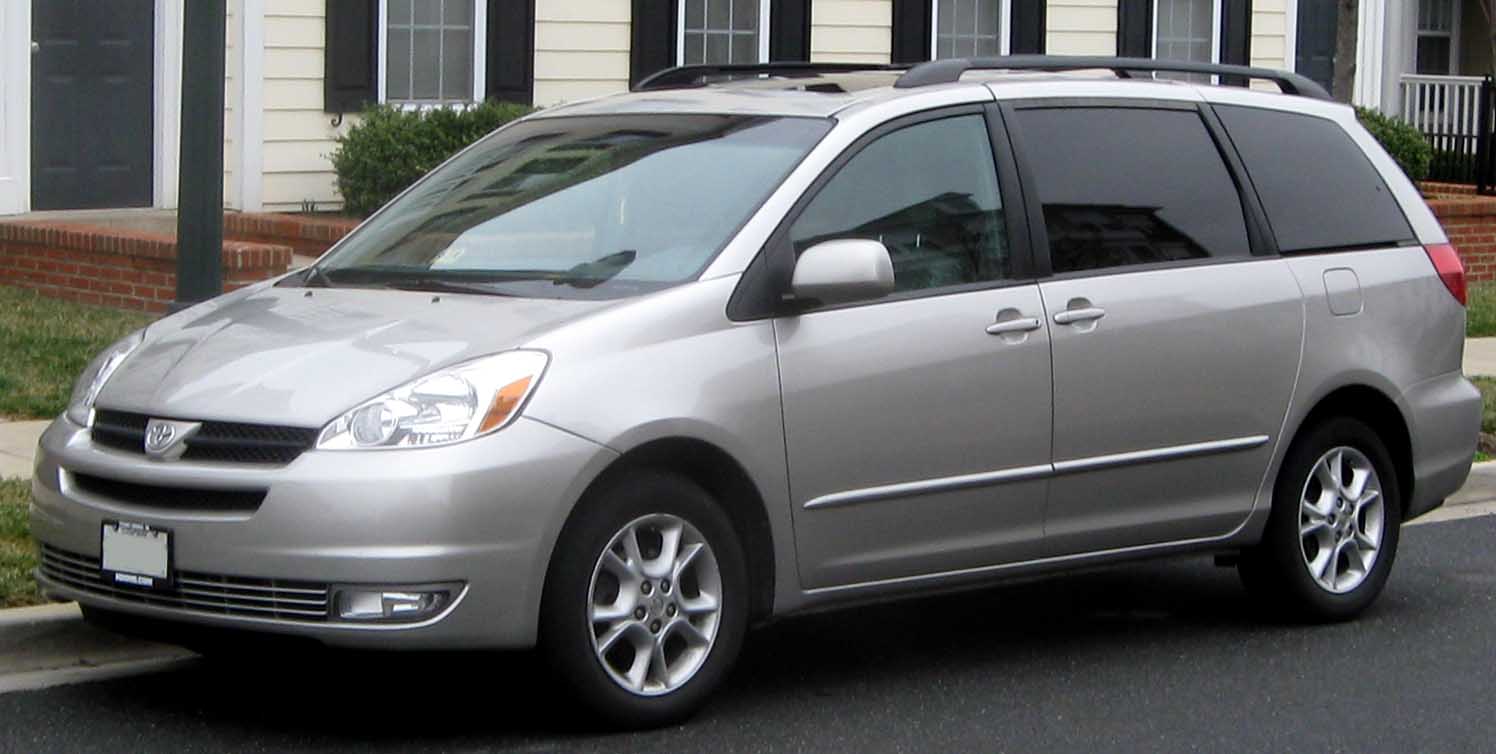
- Sienna II 2003–2010 · Minivan / MPV
- Sienna XL30 2010–2020 · Minivan / MPV
- Sienna XL40 Current 2020–now · Minivan / MPV
Newest first · 4 generations since 1997
-
2020
-
2010
-
2003
-
1997
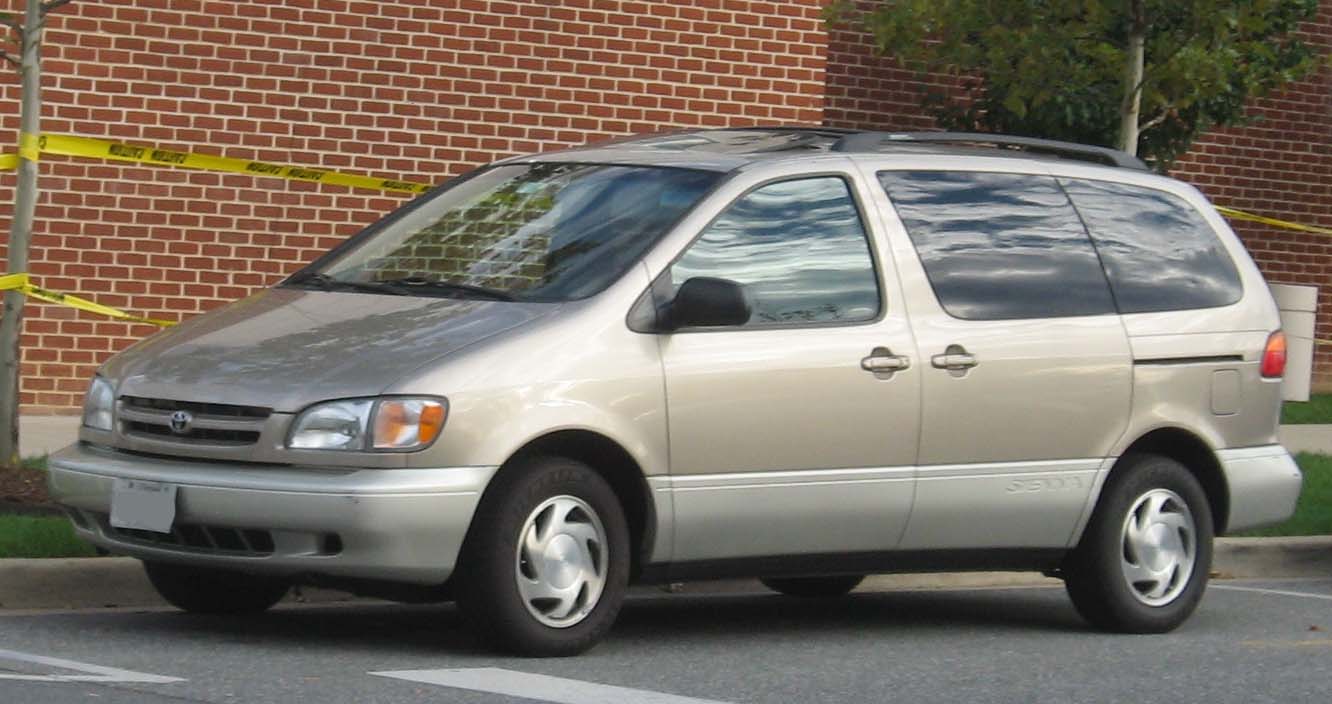
All generations by year: Sienna XL40 (2020–now) · Sienna XL30 (2010–2020) · Sienna II (2003–2010) · Sienna I (1997–2003)
Which one is mine?
Pick the year of first registration to see which generation it is.
Check by VINThe Toyota Sienna is a large front- or all-wheel-drive minivan developed mainly for the North American market. Over a long history it has stood out for its styling, a high-quality and roomy cabin, great versatility and powerful engineering. Four generations have been built. The first was unveiled at the Detroit motor show in January 1997 as the replacement for the Toyota Previa, and the fourth was officially unveiled in 2020. This article focuses on the popular third generation and the changes brought by the fourth.
In short
- Four generations since 1997; the third generation (XL30) was last updated in April 2016.
- Third generation: 2.7 four-cylinder with 139 kW (187 hp) or 3.5 V6 with 221 kW (296 hp), six- or eight-speed automatics, optional AWD.
- Fourth generation: hybrid only, 2.5 four-cylinder with electric motors and 183 kW (246 hp) combined, optional electric AWD.
- Seven or eight seats and up to 4,250 litres of cargo space.
Safety
-
XL30 · NHTSA 2019
US NCAP (NHTSA)
Stars from different years and organisations are not directly comparable: test protocols change every few years.
Toyota Sienna at a glance
The Sienna is a monocoque minivan with sliding side doors, a front-mounted engine and front-wheel drive as standard. More Toyota models are listed in our Toyota catalogue.
Third generation: XL30
Exterior
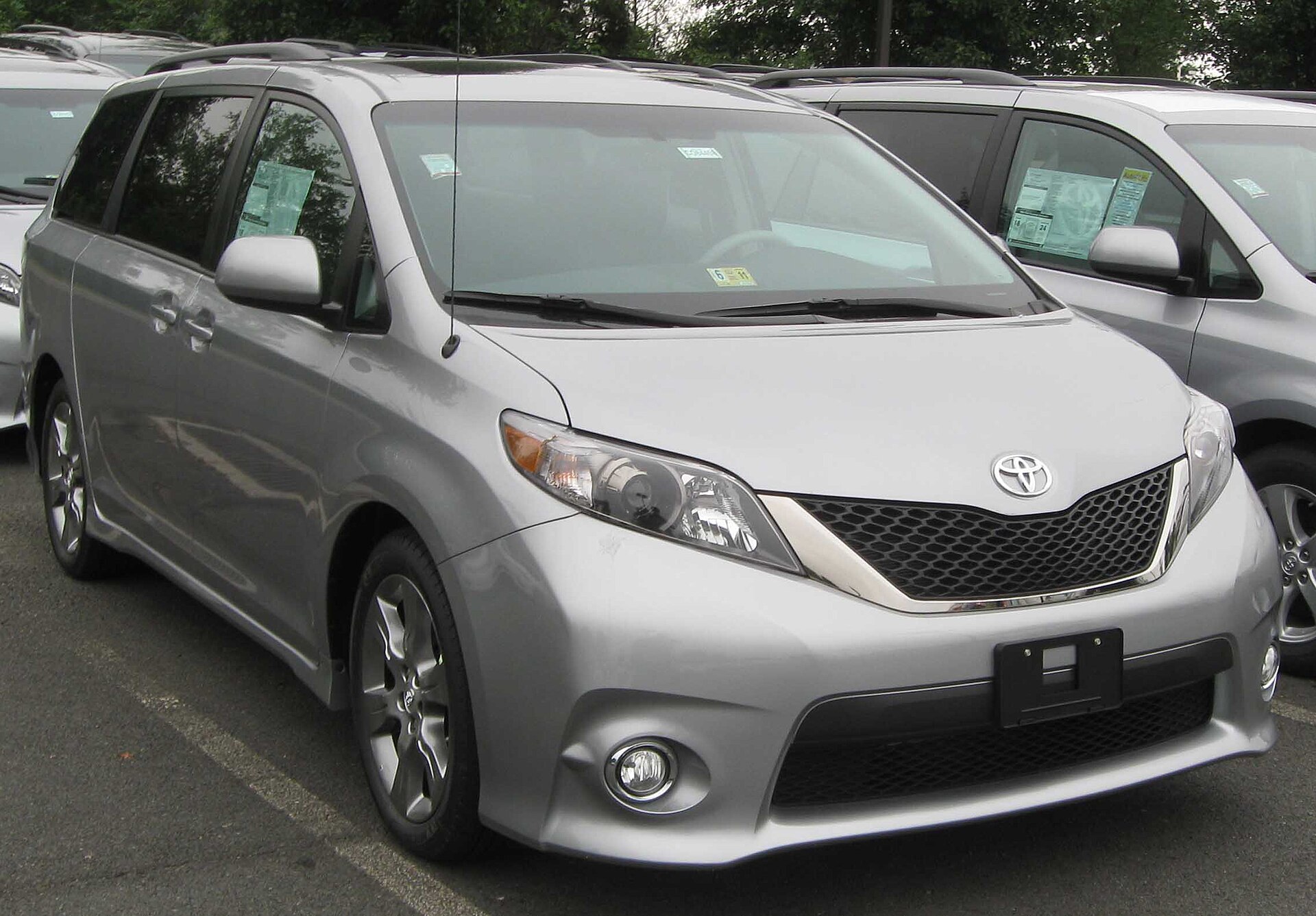
The third-generation Sienna was updated several times, most recently in April 2016, when Toyota substantially improved its looks, interior and technology. The update turned a family car into one with an aggressive character, and the high driving position gives an excellent view through the windscreen. The short front now has a heavily sculpted bonnet that slopes slightly towards the road, sharp new headlights with thin LED strips and a slim multi-section upper grille. The main air intake sits lower in the bumper, in a huge trapezoidal grille, flanked by two small brake-cooling openings with fog lamps.
The side gained larger wheel arches, sculpted doors and sporty side skirts, making it clear that the Sienna is not just for school runs. Window trim and small details were also revised. Wheels are 18 inches, or 19 inches on more expensive versions, and ground clearance is 165–170 mm depending on version. At the rear, unusual proportions and the bumper's shape give an almost SUV-like look; the near-vertical tailgate has large stylish lights and a wide spoiler with a third brake light, and the redesigned lower bodywork looks more muscular.
Interior
The update raised the level of equipment and comfort for both passengers and driver, with a first-class infotainment system and good leather and fabric trim. A 7-inch screen at the top of the console controls the infotainment system. Below it is a panel with the gear selector, drive settings, climate knobs and seat-heating controls. The centre tunnel has no controls but plenty of useful storage, cupholders and an armrest. Every seat in the facelifted Sienna has a side airbag.
The driver faces a three-spoke multifunction steering wheel trimmed in quality leather. The instruments combine a rev counter and speedometer with a 4.2-inch trip computer in the centre. The Sienna seats seven or eight, all on soft, leather-trimmed, heated and adjustable seats (though the adjustment ranges are small), comfortable even on long trips. The third row splits 60/40 and folds away, and the front passenger seat folds to form a table. With all seats in use the luggage area holds 1,105 litres, 2,465 litres with the third row folded and 4,250 litres with all rear seats removed.
Engines and chassis
| Engine | Power (kW / hp) | Torque |
|---|---|---|
| 2.7 1AR-FE four-cylinder, 16 valves, multi-point injection | 139 kW / 187 hp | 252 Nm |
| 3.5 2GR V6, VVT-i on intake and exhaust, direct injection | 221 kW / 296 hp | 357 Nm |
Combined consumption ranges from 11.2 to 13.1 l/100 km depending on configuration; Toyota did not publish acceleration figures. The engines are paired with six- or eight-speed automatics. Drive goes to the front wheels, and more expensive versions offer all-wheel drive with a multi-plate clutch that engages the rear axle automatically.
The XL30 is built on the front-wheel-drive Toyota K platform with a high proportion of high-strength steel. Suspension uses MacPherson struts at the front and a semi-independent trailing-arm rear. Steering is rack-and-pinion with electric assistance, and the brakes are discs all round — 328 mm ventilated at the front and 310 mm at the rear — with ABS, EBD, brake assist and VSC.
Safety and equipment
Safety features include a rear camera, dynamic cruise control, an immobiliser, eight airbags as standard, the Star Safety System, Smart Stop Technology, blind-spot monitoring, Driver Easy Speak and a pre-collision system. Even the base version has three-zone climate control, a four-speaker audio system, ABS, EBD, ESP and VSC, keyless entry, an infotainment system, power steering and cruise control; more expensive versions add 19-inch wheels, a more advanced infotainment system, leather trim and a premium audio system.
Fourth generation (2020 onwards)
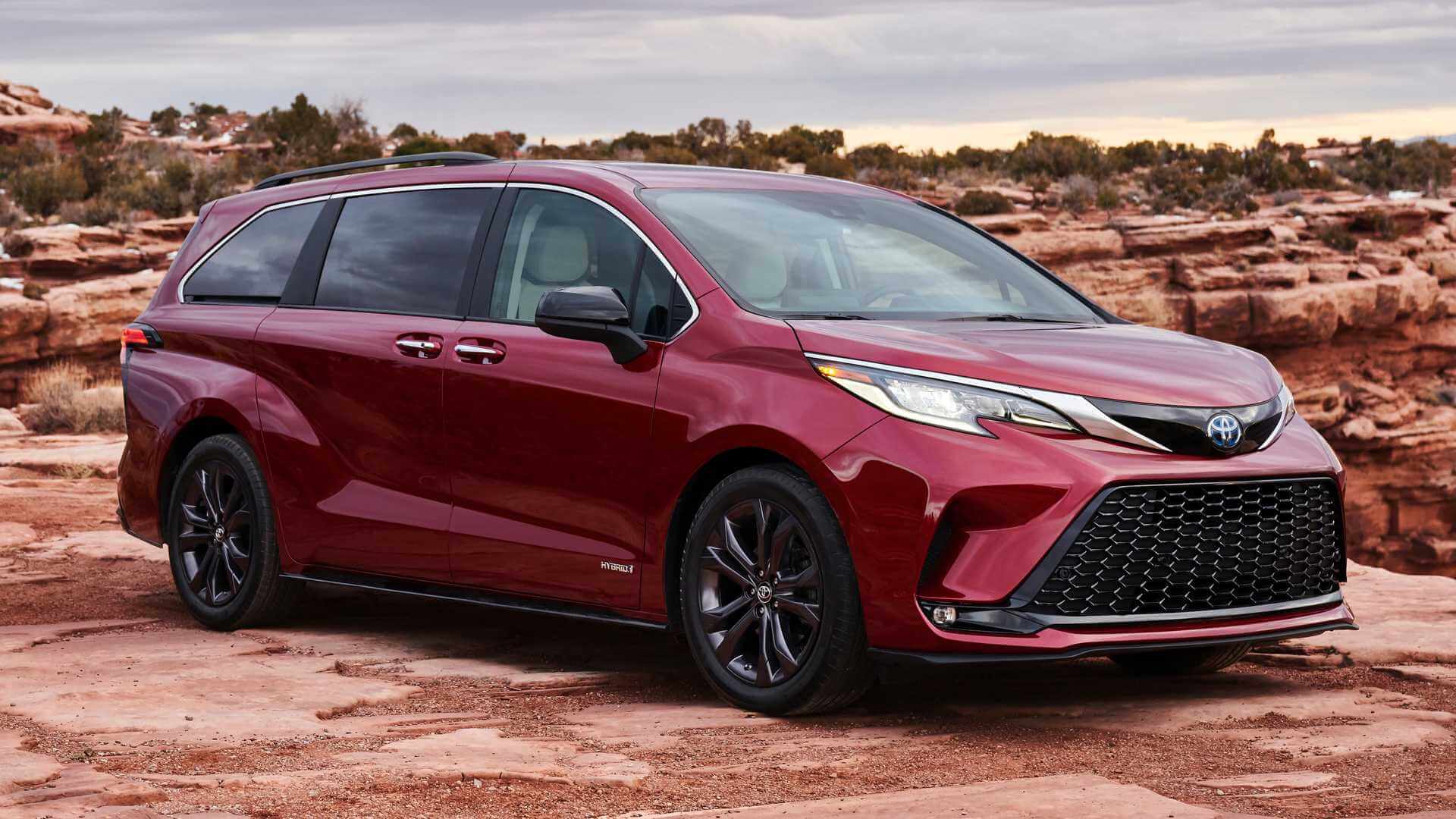
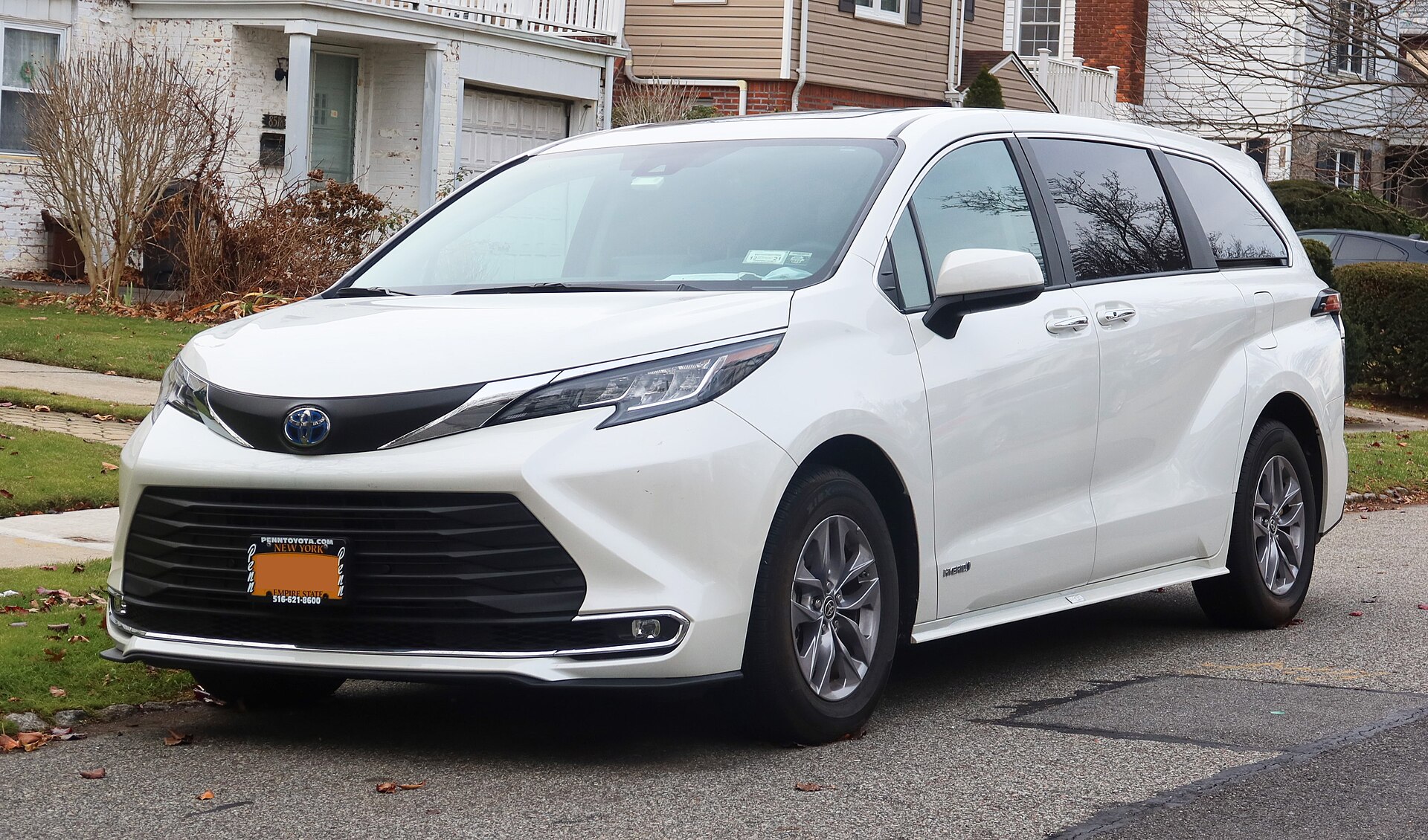
The fourth Sienna, presented in 2020, was styled by Toyota's American design team. Technically it follows the latest Toyota Highlander, using the new GA-K platform, and it brings a new look, a roomier cabin, richer equipment and a hybrid powertrain as the only option.
Exterior
The new platform changed the design approach: square shapes gave way to flowing surfaces and a sharper, more dynamic look that hardly fits the usual idea of a minivan. The designers took inspiration from the Japanese Shinkansen high-speed train, which explains the narrow headlights stretched along the sides as if pressed back by the wind. A very large grille looks sporty, with compact fog lamps at the sides. Strong shoulders, muscular wheel-arch haunches, a flat roof with rails and a spoiler, plastic cladding and double window pillars define the profile. The sporty XSE has 20-inch alloys; other versions have 18-inch wheels. The car grew in every dimension, and the wheelbase is 60 mm longer. At the rear, unusual creases and fang-like light graphics frame the model name, a gloss-black insert sits in the bumper (more elaborate on the XSE) and the exhaust is hidden under the boot floor.
Interior
Two layouts are offered. Base versions have eight seats, with a removable centre seat in the second row; higher versions have seven, with Super Long Slide captain's chairs offering long fore-aft travel, extendable ottomans, good side support and heating. A three-spoke multifunction wheel faces instruments with a 7-inch display showing hybrid system information. The dashboard is completely new, with a monumental three-tier centre console with a touchscreen and gear selector, and a large two-level tunnel between the front seats. The 9-inch infotainment screen now stands on its own. Toyota Audio, Audio Plus and Premium Audio systems are offered, the latter with dynamic navigation and JBL sound; Android Auto, Apple CarPlay and Amazon Alexa are supported. Materials are of luxury quality, with leather and imitation wood.
Notable options include four-zone climate control, a 10-inch head-up display, a digital rear-view mirror, electric steering-column adjustment, the Bird's Eye View camera system and power sliding doors and tailgate with kick-to-open, as well as a fridge, a vacuum cleaner and a 1,500 W inverter. Rear passengers can have an entertainment system with two 11.6-inch screens, HDMI input, a remote and wireless headphones, plus seven USB ports and up to 18 cupholders. Driver Easy Speak lets the driver talk to passengers in the rear through the audio system speakers. The luggage area holds 1,100 litres, 2,465 litres with the third row folded and 4,250 litres with the second row removed as well.
Hybrid powertrain
The V6 was dropped. The only powertrain is a hybrid with a naturally aspirated 2.5-litre four-cylinder producing 141 kW (189 hp), an electric motor on the front axle and an electronic CVT, for a combined 183 kW (246 hp) and about 7.1 l/100 km for front-wheel-drive versions. All-wheel drive adds a second electric motor on the rear axle. No version can be charged from a socket. Four driving modes are available — EV, Eco, Normal and Sport — and Predictive Efficient Drive learns regularly driven routes to optimise the balance between the petrol engine and electric motors.
Safety
The fourth generation has automatic emergency braking with pedestrian detection, full-speed adaptive cruise control, lane departure warning, lane keeping assistance, automatic high beam, road-sign assist and ten airbags as standard.
Key specifications
| Parameter | Third generation (XL30) | Fourth generation |
|---|---|---|
| Platform | Toyota K | GA-K |
| Powertrain | 2.7 I4 or 3.5 V6 | 2.5 I4 hybrid |
| Power (kW / hp) | 139–221 kW / 187–296 hp | 183 kW / 246 hp (combined) |
| Gearbox | 6- or 8-speed automatic | Electronic CVT |
| Drive | Front or AWD (multi-plate clutch) | Front or electric AWD |
| Seats | 7 or 8 | 7 or 8 |
| Cargo space | 1,105 / 2,465 / 4,250 l | 1,100 / 2,465 / 4,250 l |
Rivals
Minivans compete with fast-growing crossover sales, and the Sienna faces strong rivals, including the Honda Odyssey, Chrysler Pacifica and Kia Sedona (Carnival).
Toyota Sienna evolution in numbers
Did you know?
- The Toyota Sienna has been around for 29 years: 4 generations in our catalog since 1997.
- The longest-running generation is the Sienna XL30 (2010–2020): 10 years.
Image credits · Photos from Wikimedia Commons under free licences
- Toyota Sienna I · Photo: IFCAR / Wikimedia Commons, Public domain
- Toyota Sienna II · Photo: IFCAR / Wikimedia Commons, Public domain
- Toyota Sienna XL30 · Photo: IFCAR / Wikimedia Commons, Public domain
- Toyota Sienna XL40 · Photo: Kevauto / Wikimedia Commons, CC BY-SA 4.0
Toyota Sienna in our rankings
- No. 75 of 912 · Longest-running car nameplates (29 years · top 9%)
- No. 59 of 305 · Oldest car models still on sale (29 years · top 20%)
- No. 114 of 345 · Cars with the most generations (4 generations · top 41%)
In production longer than 91% of ranked nameplates in the 1CARS catalog (No. 75 of 912).
FAQ
Which car did the Toyota Sienna replace?
The Toyota Previa; the first Sienna was unveiled in Detroit in January 1997.
Is the new Toyota Sienna a hybrid?
Yes. The fourth generation is hybrid only, with a 2.5-litre engine and electric motors producing a combined 183 kW (246 hp).
Does the Toyota Sienna have all-wheel drive?
The third generation offers AWD with a multi-plate clutch; the fourth generation uses an extra electric motor on the rear axle.
How many seats does the Toyota Sienna have?
Seven or eight, depending on version.
How much cargo space does the Toyota Sienna have?
About 1,100 litres behind the third row and up to 4,250 litres with the rear seats out of the way.
Data sources
Data checked by an editor against the sources below.
- Wikipedia — Toyota Sienna
- NHTSA 5-Star Safety Ratings (US NCAP) — U.S. Government work, public domain