 Mercury Cougar
All generations, specs and history
Published Sources (6) Report an error
By Sarah Whitmore, Senior Automotive Writer
- Built
- 1967–2002
- Generations
- 8
- Top power
- 291 kW (396 PS)
Timeline
Cougar generations
Click a generation for its own page
- Cougar I 1967–1970 · Coupe, Convertible · 149–291 kW (203–396 PS)
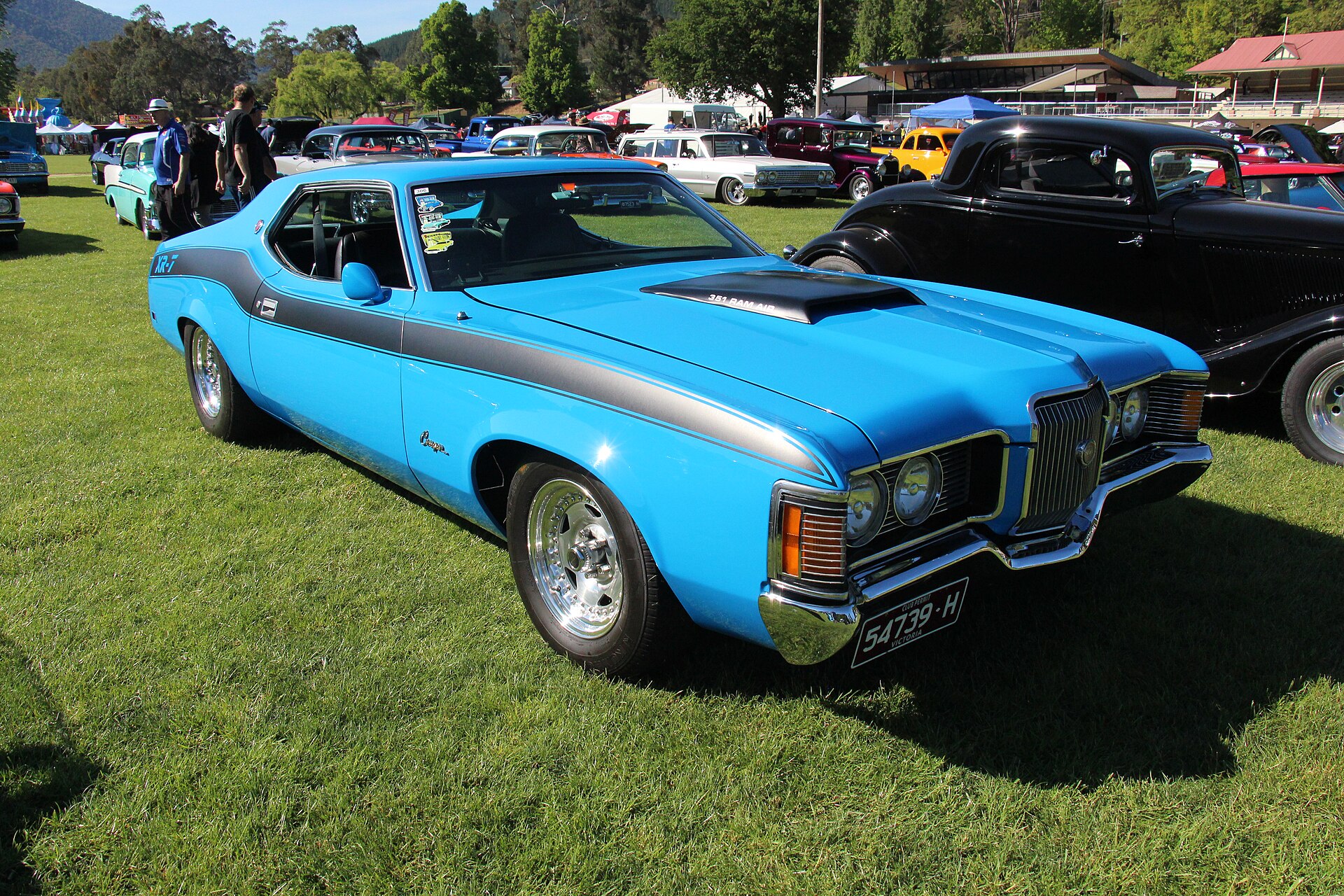
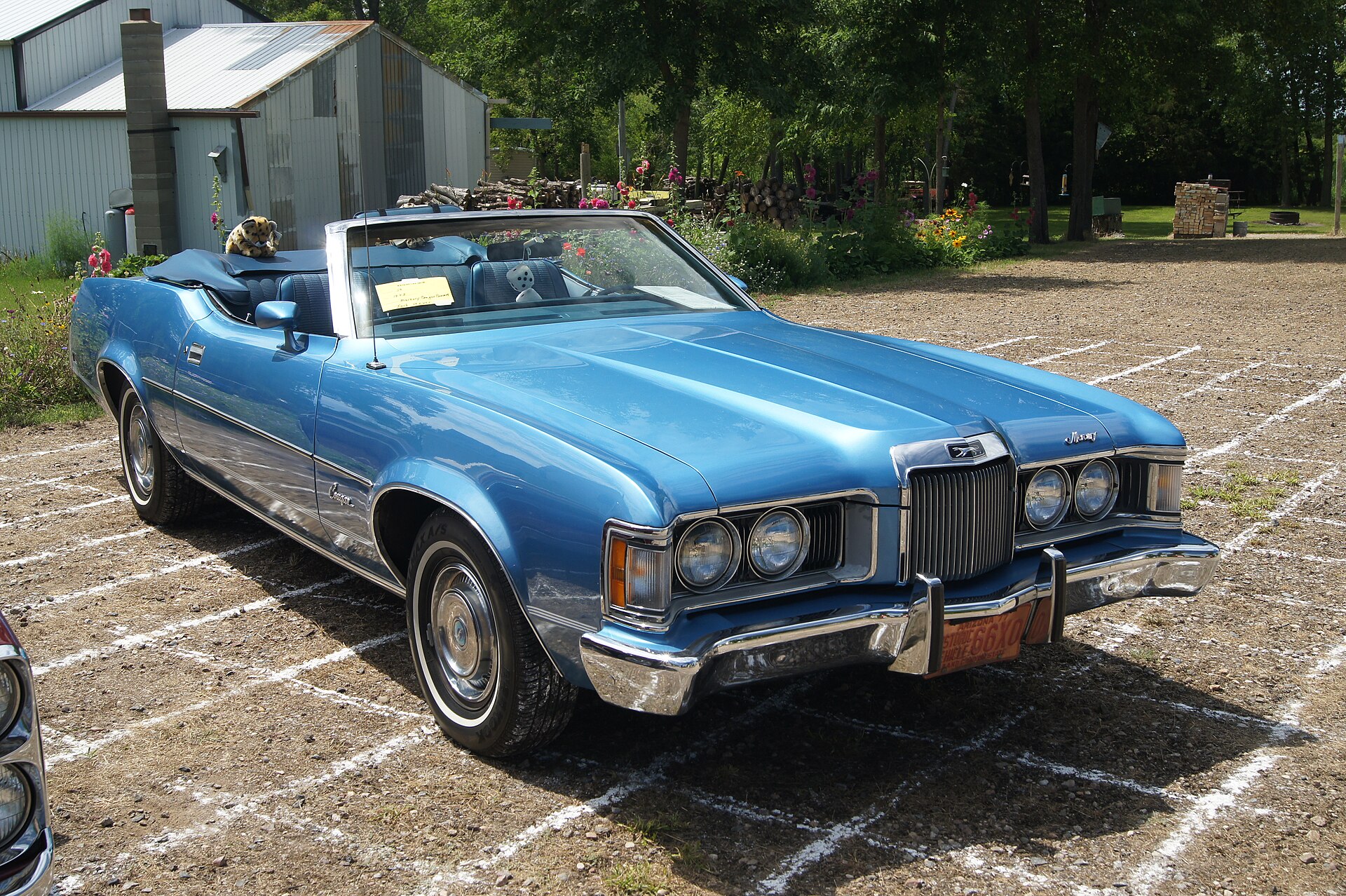
- Cougar II 1971–1973 · Coupe, Convertible · 276 kW (375 PS)
- Cougar III 1974–1976 · Coupe
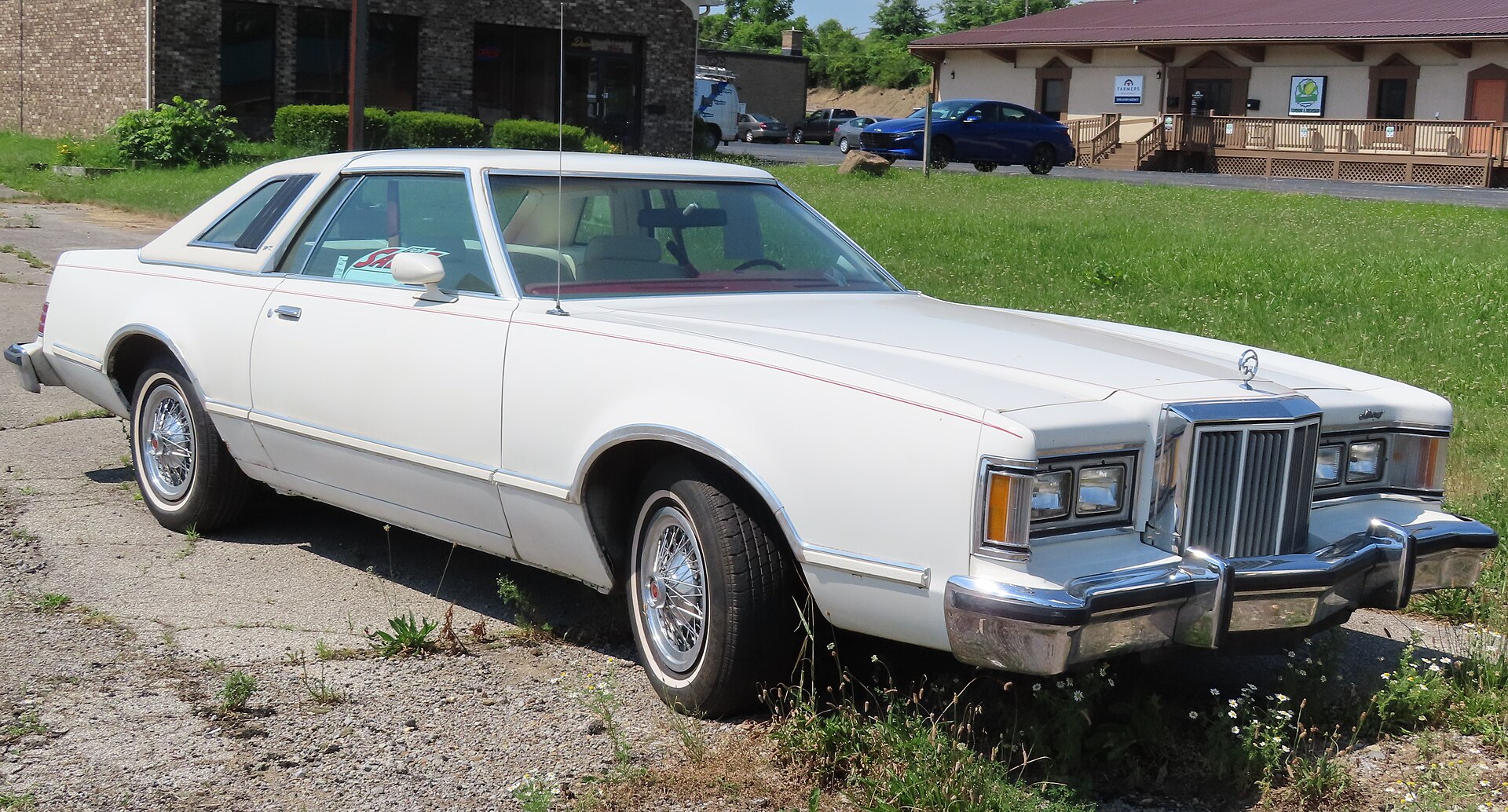
- Cougar IV 1977–1979 · Sedan, Station wagon · 129 kW (175 PS)
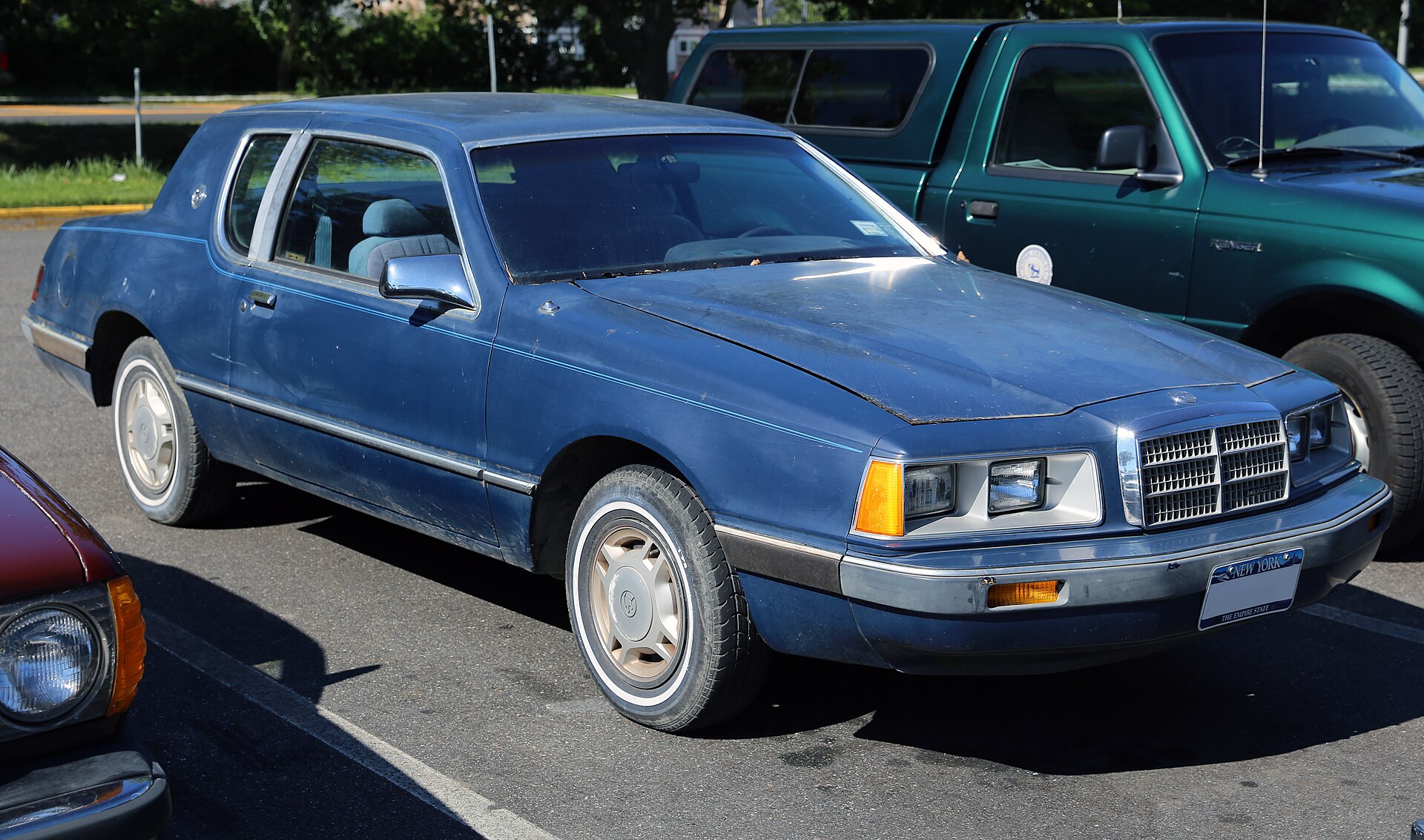
- Cougar V 1980–1982 · Sedan, Station wagon
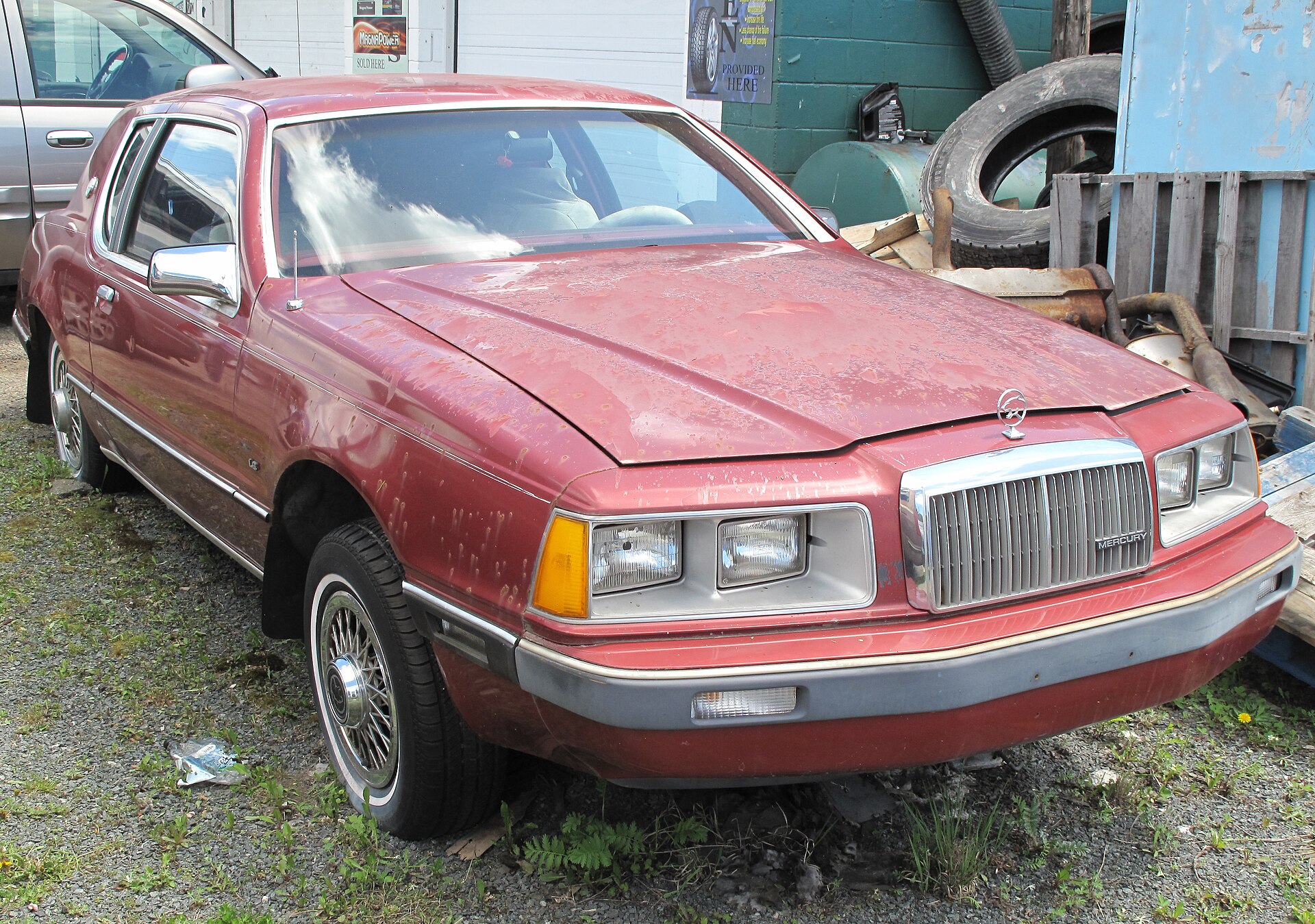
- Cougar VI 1983–1988 · Coupe · 116 kW (158 PS)
- Cougar VII 1989–1997 · Coupe · 157 kW (213 PS)
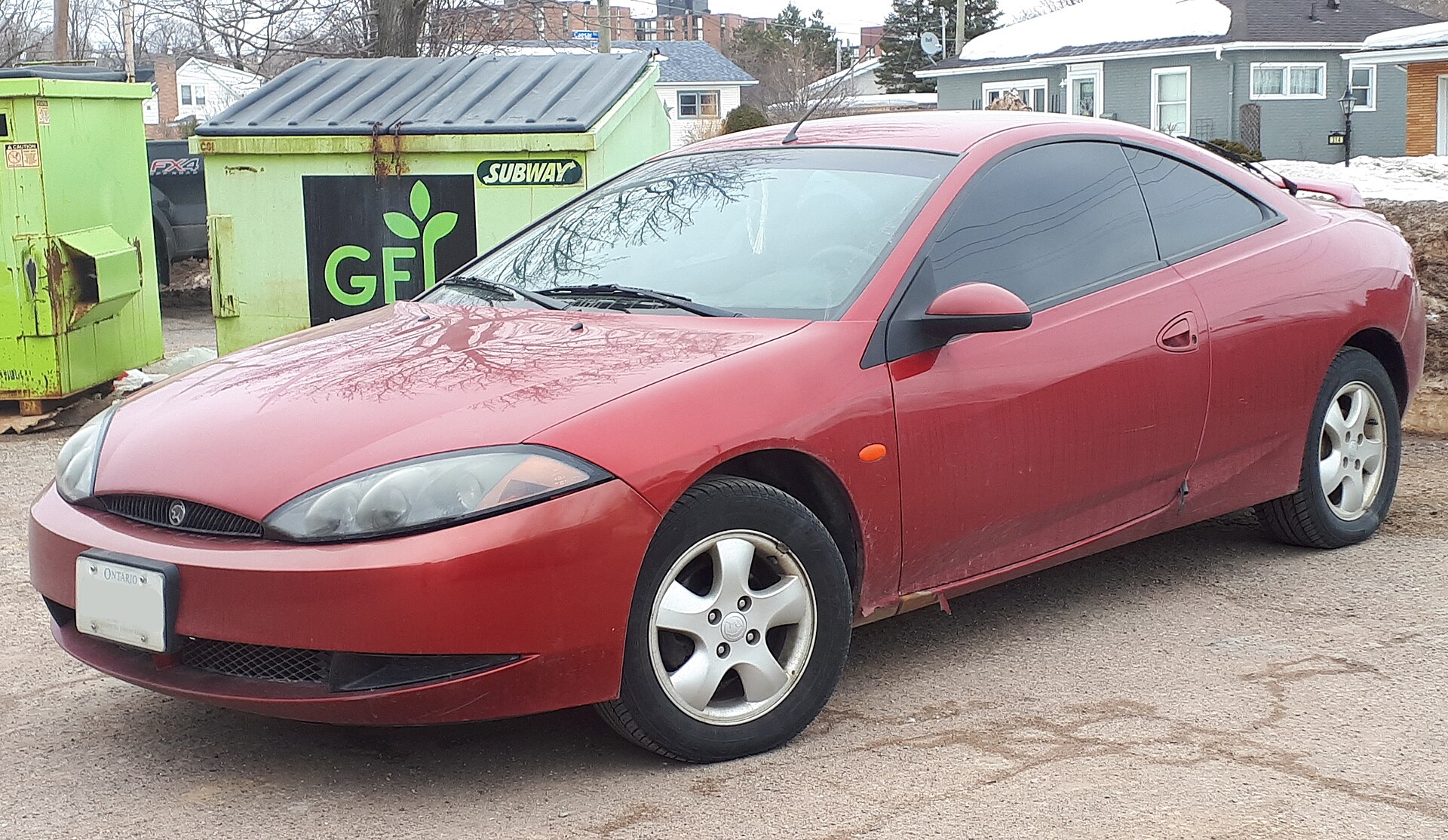
- Cougar VIII 1998–2002 · Coupe · 93–127 kW (126–173 PS)
Newest first · 8 generations since 1967
-
1998

-
1989
-
1983
-
1980
-
1977
-
1974
-
1971
-
1967
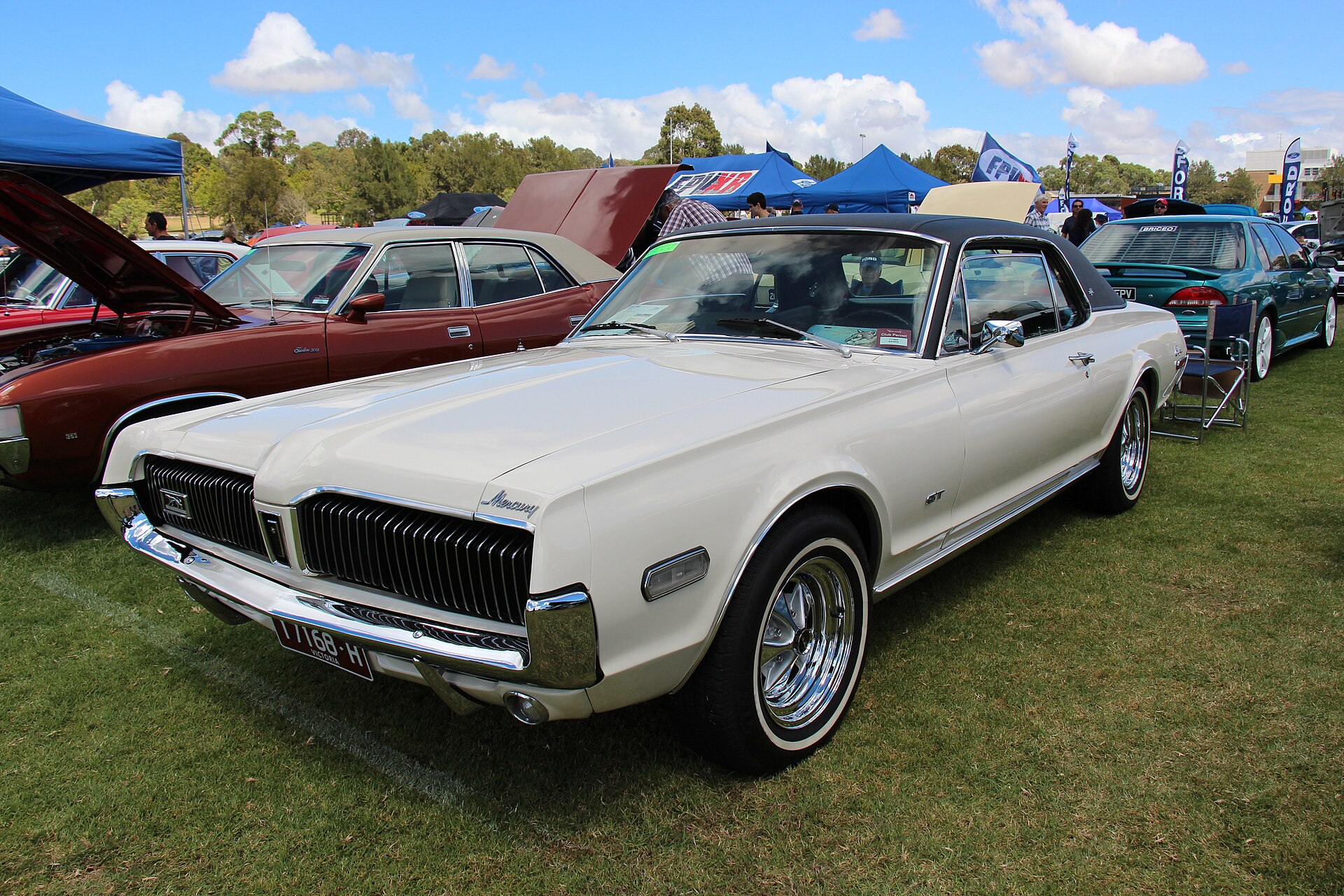


All generations by year: Cougar VIII (1998–2002) · Cougar VII (1989–1997) · Cougar VI (1983–1988) · Cougar V (1980–1982) · Cougar IV (1977–1979) · Cougar III (1974–1976) · Cougar II (1971–1973) · Cougar I (1967–1970)
Which one is mine?
Pick the year of first registration to see which generation it is.
- Cougar VIII 1998–2002
- Cougar VII 1989–1997
- Cougar VI 1983–1988
- Cougar V 1980–1982
- Cougar IV 1977–1979
- Cougar III 1974–1976
- Cougar II 1971–1973
- Cougar I 1967–1970
The Mercury Cougar was Mercury's best-selling car: a two-door built for 36 model years, from 1967 to 2002, in eight generations. It began as an upmarket pony car on the Ford Mustang platform, grew into a personal luxury coupé shared with the Thunderbird, and ended as a front-wheel-drive hatchback sold in Europe as the Ford Cougar. Wikipedia puts total production at 2,972,784 cars.
In short
- Eight generations: Mustang-based pony car (1967–1973), Torino-based coupé (1974–1979), Fox and MN12 coupés shared with the Thunderbird (1980–1997) and a front-drive hatchback (1999–2002).
- The muscle-car years are 1967–1973: the GT, the 1968 GT-E with the 427 V8 of 291 kW (390 hp, SAE gross) and the 1969–1970 Eliminator.
- The 1967 Cougar is the only Mercury ever named Motor Trend Car of the Year.
- No Cougar was built for the 1998 model year; the last one left the line on 9 August 2002.
Specs by version
Engines
| Version | Engine | Gearbox | Drive | Production years |
|---|---|---|---|---|
| Cougar VII · 3.8 L 6 cyl Automatic 4-spd · 1997 (EPA) | 3.8 l · 6 cyl 3,800 cc | 4-sp Automatic | Rear-wheel drive | 1997 |
| Cougar VII · 3.8 L 6 cyl Automatic 4-spd · 1996 (EPA) | 3.8 l · 6 cyl 3,800 cc | 4-sp Automatic | Rear-wheel drive | 1996 |
| Cougar VII · 3.8 L 6 cyl Automatic 4-spd · 1995 (EPA) | 3.8 l · 6 cyl 3,800 cc | 4-sp Automatic | Rear-wheel drive | 1995 |
| Cougar VII · 4.6 L 8 cyl Automatic 4-spd · 1997 (EPA) | 4.6 l · 8 cyl 4,600 cc | 4-sp Automatic | Rear-wheel drive | 1997 |
| Cougar VII · 4.6 L 8 cyl Automatic 4-spd · 1996 (EPA) | 4.6 l · 8 cyl 4,600 cc | 4-sp Automatic | Rear-wheel drive | 1996 |
| Cougar VII · 4.6 L 8 cyl Automatic 4-spd · 1995 (EPA) | 4.6 l · 8 cyl 4,600 cc | 4-sp Automatic | Rear-wheel drive | 1995 |
| Cougar VIII · 2 L 4 cyl Manual 5-spd · 2002 (EPA) | 2.0 l · 4 cyl 2,000 cc | 5-sp Manual | Front-wheel drive | 2002 |
| Cougar VIII · 2 L 4 cyl Manual 5-spd · 2001 (EPA) | 2.0 l · 4 cyl 2,000 cc | 5-sp Manual | Front-wheel drive | 2001 |
| Cougar VIII · 2 L 4 cyl Manual 5-spd · 2000 (EPA) | 2.0 l · 4 cyl 2,000 cc | 5-sp Manual | Front-wheel drive | 2000 |
| Cougar VIII · 2 L 4 cyl Automatic 4-spd · 1999 (EPA) | 2.0 l · 4 cyl 2,000 cc | 4-sp Automatic | Front-wheel drive | 1999 |
| Cougar VIII · 2 L 4 cyl Manual 5-spd · 1999 (EPA) | 2.0 l · 4 cyl 2,000 cc | 5-sp Manual | Front-wheel drive | 1999 |
| Cougar VIII · 2.5 L 6 cyl Automatic 4-spd · 2002 (EPA) | 2.5 l · 6 cyl 2,500 cc | 4-sp Automatic | Front-wheel drive | 2002 |
| Cougar VIII · 2.5 L 6 cyl Manual 5-spd · 2002 (EPA) | 2.5 l · 6 cyl 2,500 cc | 5-sp Manual | Front-wheel drive | 2002 |
| Cougar VIII · 2.5 L 6 cyl Automatic 4-spd · 2001 (EPA) | 2.5 l · 6 cyl 2,500 cc | 4-sp Automatic | Front-wheel drive | 2001 |
| Cougar VIII · 2.5 L 6 cyl Manual 5-spd · 2001 (EPA) | 2.5 l · 6 cyl 2,500 cc | 5-sp Manual | Front-wheel drive | 2001 |
| Cougar VIII · 2.5 L 6 cyl Automatic 4-spd · 2000 (EPA) | 2.5 l · 6 cyl 2,500 cc | 4-sp Automatic | Front-wheel drive | 2000 |
| Cougar VIII · 2.5 L 6 cyl Manual 5-spd · 2000 (EPA) | 2.5 l · 6 cyl 2,500 cc | 5-sp Manual | Front-wheel drive | 2000 |
| Cougar VIII · 2.5 L 6 cyl Automatic 4-spd · 1999 (EPA) | 2.5 l · 6 cyl 2,500 cc | 4-sp Automatic | Front-wheel drive | 1999 |
| Cougar VIII · 2.5 L 6 cyl Manual 5-spd · 1999 (EPA) | 2.5 l · 6 cyl 2,500 cc | 5-sp Manual | Front-wheel drive | 1999 |
| Cougar VIII · 2.0 96 kW (131 PS) Coupe | 2.0 l · Petrol 2,000 cc | — | — | — |
| Cougar VIII · 2.5 127 kW (173 PS) Coupe | 2.5 l 2,500 cc | — | — | — |
Performance
Show all 19 versions
| Version | Fuel consumption |
|---|---|
| Cougar VII · 3.8 L 6 cyl Automatic 4-spd · 1997 (EPA) | 12.4 l/100 km19.0 mpg US · 22.8 mpg UK |
| Cougar VII · 3.8 L 6 cyl Automatic 4-spd · 1996 (EPA) | 12.4 l/100 km19.0 mpg US · 22.8 mpg UK |
| Cougar VII · 3.8 L 6 cyl Automatic 4-spd · 1995 (EPA) | 12.4 l/100 km19.0 mpg US · 22.8 mpg UK |
| Cougar VII · 4.6 L 8 cyl Automatic 4-spd · 1997 (EPA) | 13.1 l/100 km18.0 mpg US · 21.6 mpg UK |
| Cougar VII · 4.6 L 8 cyl Automatic 4-spd · 1996 (EPA) | 13.1 l/100 km18.0 mpg US · 21.6 mpg UK |
| Cougar VII · 4.6 L 8 cyl Automatic 4-spd · 1995 (EPA) | 13.1 l/100 km18.0 mpg US · 21.6 mpg UK |
| Cougar VIII · 2 L 4 cyl Manual 5-spd · 2002 (EPA) | 9.8 l/100 km24.0 mpg US · 28.8 mpg UK |
| Cougar VIII · 2 L 4 cyl Manual 5-spd · 2001 (EPA) | 9.8 l/100 km24.0 mpg US · 28.8 mpg UK |
| Cougar VIII · 2 L 4 cyl Manual 5-spd · 2000 (EPA) | 9.4 l/100 km25.0 mpg US · 30.1 mpg UK |
| Cougar VIII · 2 L 4 cyl Automatic 4-spd · 1999 (EPA) | 10.2 l/100 km23.1 mpg US · 27.7 mpg UK |
| Cougar VIII · 2 L 4 cyl Manual 5-spd · 1999 (EPA) | 9.4 l/100 km25.0 mpg US · 30.1 mpg UK |
| Cougar VIII · 2.5 L 6 cyl Automatic 4-spd · 2002 (EPA) | 11.2 l/100 km21.0 mpg US · 25.2 mpg UK |
| Cougar VIII · 2.5 L 6 cyl Manual 5-spd · 2002 (EPA) | 11.2 l/100 km21.0 mpg US · 25.2 mpg UK |
| Cougar VIII · 2.5 L 6 cyl Automatic 4-spd · 2001 (EPA) | 11.2 l/100 km21.0 mpg US · 25.2 mpg UK |
| Cougar VIII · 2.5 L 6 cyl Manual 5-spd · 2001 (EPA) | 11.2 l/100 km21.0 mpg US · 25.2 mpg UK |
| Cougar VIII · 2.5 L 6 cyl Automatic 4-spd · 2000 (EPA) | 11.2 l/100 km21.0 mpg US · 25.2 mpg UK |
| Cougar VIII · 2.5 L 6 cyl Manual 5-spd · 2000 (EPA) | 11.2 l/100 km21.0 mpg US · 25.2 mpg UK |
| Cougar VIII · 2.5 L 6 cyl Automatic 4-spd · 1999 (EPA) | 11.2 l/100 km21.0 mpg US · 25.2 mpg UK |
| Cougar VIII · 2.5 L 6 cyl Manual 5-spd · 1999 (EPA) | 11.8 l/100 km19.9 mpg US · 23.9 mpg UK |
Verified Manufacturer and type-approval data from our catalog · Sources and methodology
Mercury Cougar at a glance
| Specification | Mercury Cougar |
|---|---|
| Production | 1967–1997 and 1999–2002 model years |
| Total built | 2,972,784 (Wikipedia) |
| Generations | 8 |
| Bodies | two-door hardtop and convertible, coupé, four-door sedan and estate (1977–1982), three-door hatchback (1999–2002) |
| Platforms | Ford T-7 (Mustang), Torino/Montego, Fox, MN12, CDW27 |
| Drive | rear-wheel drive to 1997, front-wheel drive from 1999 |
| Strongest engine | 427 V8 with 291 kW (390 hp, SAE gross), 1968 GT-E |
| Smallest engine | 2.0-litre Zetec four with 93 kW (125 hp), 1999–2002 |
| Award | Motor Trend Car of the Year 1967 |
| Last car built | 9 August 2002 |
Generations of the Cougar
| Generation | Model years | Platform | Body | Built |
|---|---|---|---|---|
| First | 1967–1970 | Mustang (T-7), 2,819 mm wheelbase | hardtop, convertible from 1969 | 437,025 |
| Second | 1971–1973 | Mustang, 2,847 mm | hardtop, convertible | 177,194 |
| Third | 1974–1976 | Montego/Torino, 2,896 mm | coupé | 238,422 |
| Fourth | 1977–1979 | Torino, 2,896 mm (coupé) | coupé, sedan, estate | 580,245 |
| Fifth | 1980–1982 | Fox | XR-7 coupé; Cougar sedan, coupé and estate | 222,773 |
| Sixth | 1983–1988 | Fox, 2,642 mm | coupé | 679,759 |
| Seventh | 1989–1997 | MN12, 2,870 mm | coupé | 566,328 |
| Eighth | 1999–2002 | CDW27 (Contour/Mondeo), front drive | three-door hatchback | 176,588 |
The production totals are sums of the yearly figures in Wikipedia. Added up, they come to about 3.08 million, more than the overall total the same source gives, so the generation numbers should be read as approximate.
1967–1970: the pony car with a razor grille
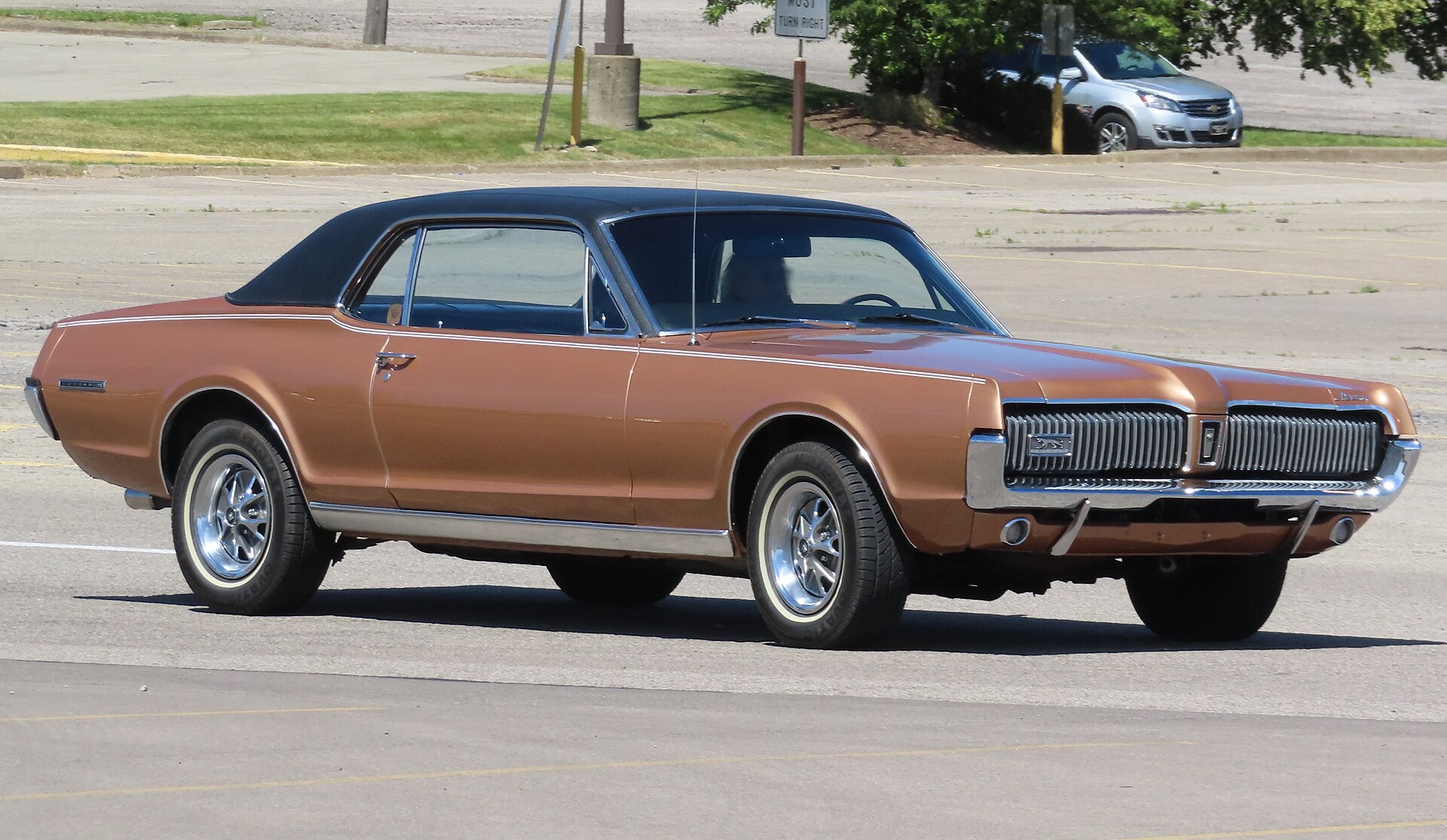
Lincoln-Mercury presented the Cougar on 30 September 1966 as a more refined alternative to the Mustang. It used the Mustang's unibody chassis, known internally as T-7, but its wheelbase was three inches longer, at 111 inches (2,819 mm), and the body was its own. Hidden headlamps behind vacuum-operated doors, a first for Lincoln-Mercury, sat in a split grille that earned the nickname "electric shaver". At the rear, sequential turn signals were standard.
The base hardtop cost US$2,854 in 1967, US$284 above the comparable Mustang. Early in 1967 the range gained the more luxurious XR-7, and a GT option brought the 390 V8. Production started at 150,893 cars in the first year, then fell to 113,720, 100,069 and 72,343 in the next three.
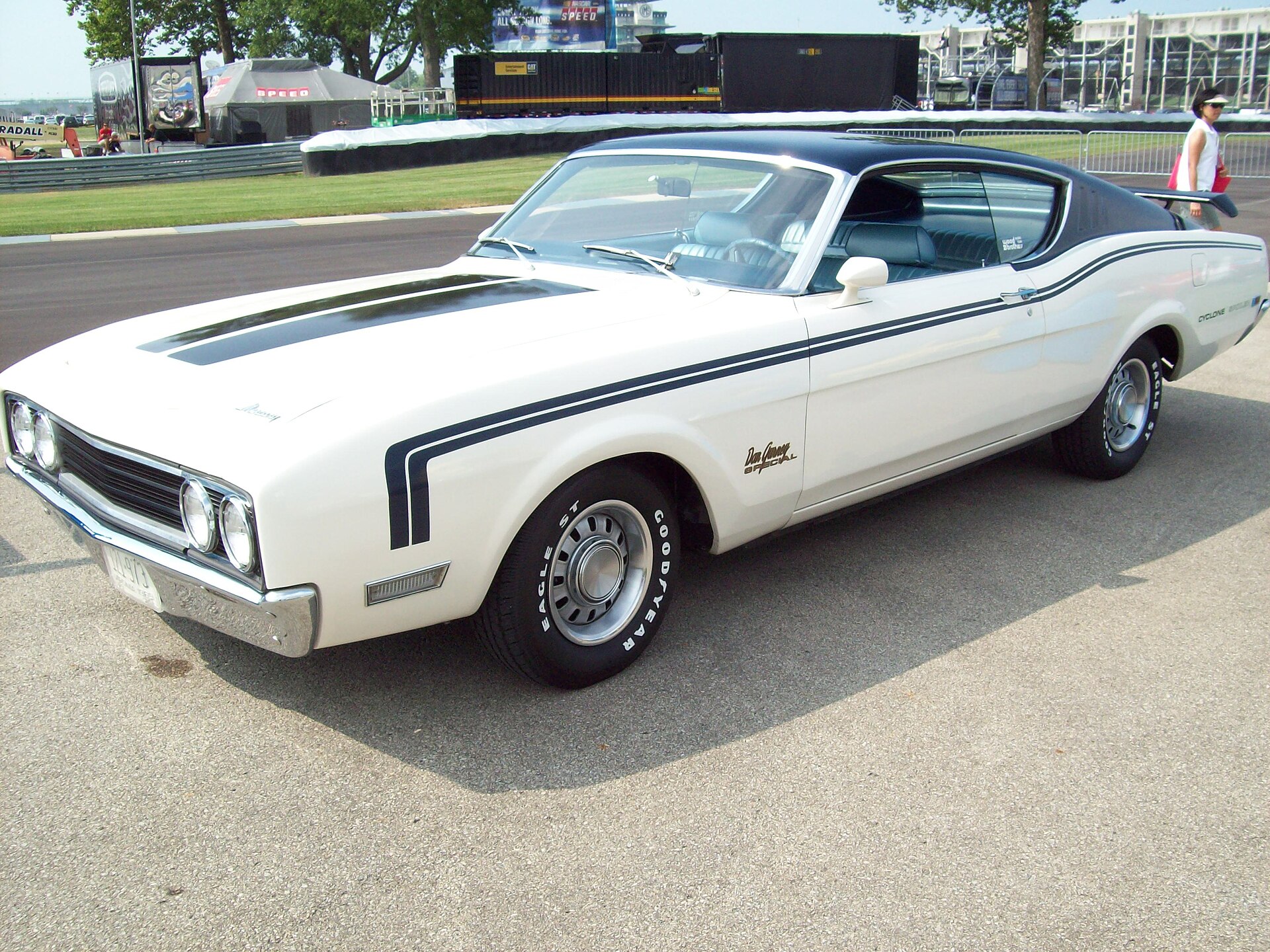
Engines grew quickly. The 1967 Cougar had a 289 V8 with 149 kW (200 hp) or 168 kW (225 hp) and the GT's 390 "Marauder" with 239 kW (320 hp). For 1968 Mercury added the GT-E with the 427 V8, rated at 291 kW (390 hp), and later the 428 Cobra Jet with Ram Air at 250 kW (335 hp). The 1969 car was longer, gained a convertible and swapped the straight sides for curved "Coke-bottle" flanks with concave tail-lamps.
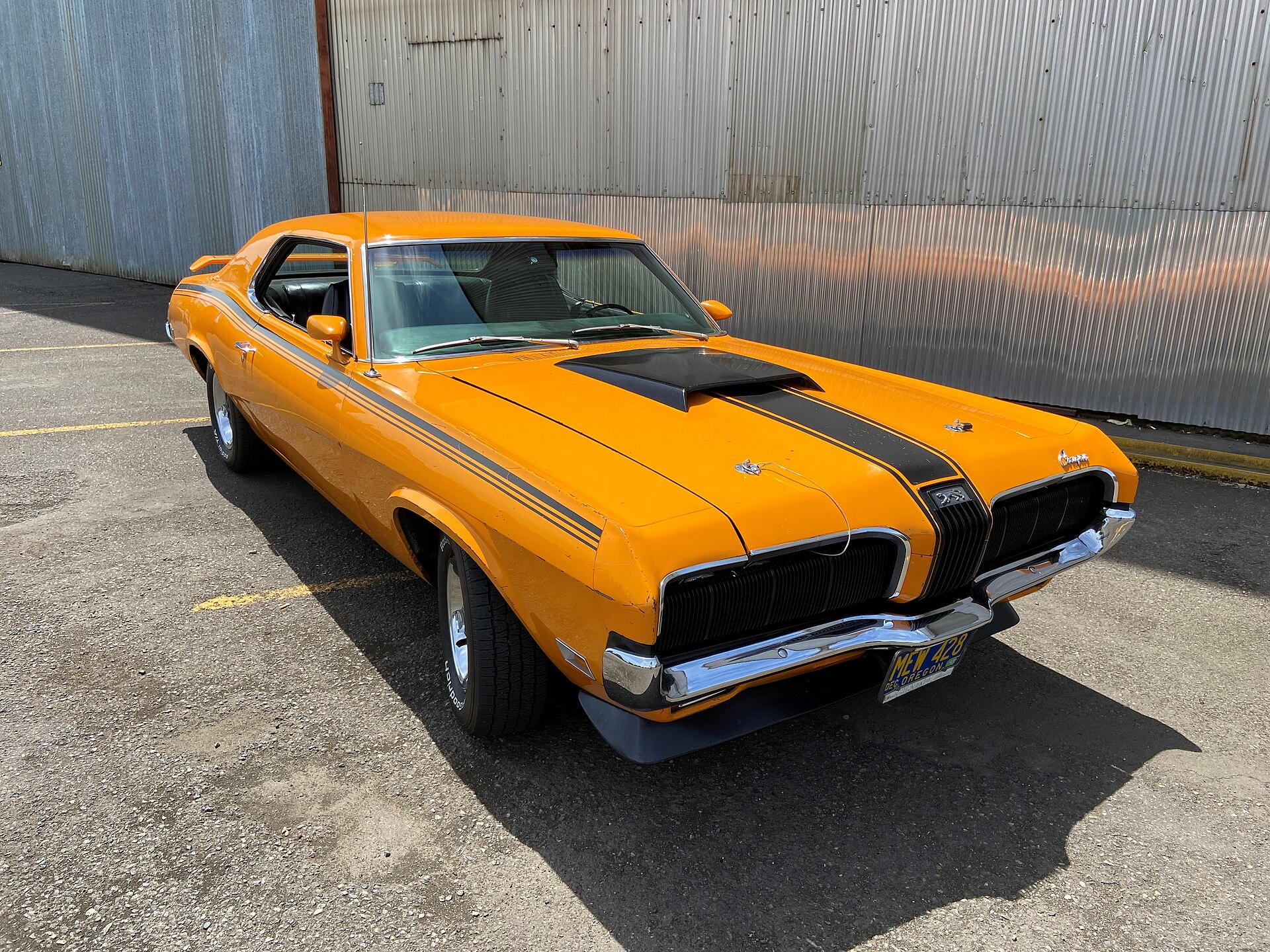
Halfway through 1969 the Eliminator took over as the performance model. It offered everything from the 351 Windsor to the 428 Cobra Jet and the Boss 302, and its full story is told in our article on the Mercury Cougar Eliminator.


Racing, specials and a Bond film
Bud Moore ran factory-supported Cougars in the 1967 Trans-Am series with drivers such as Dan Gurney, Parnelli Jones and Peter Revson, and Mercury finished two points behind Ford in the makes' title. For 1968 Moore moved his cars to the Grand American series, where Tiny Lund became champion. Road-car specials followed the racing: the Dan Gurney Special of 1967–1968 and the XR7-G, of which Shelby converted 619 in 1968.
A red 1969 XR-7 convertible appears in the James Bond film "On Her Majesty's Secret Service".
1971–1973: bigger, and the last convertibles
The second Cougar kept the Mustang base but grew to a 112.1-inch (2,847 mm) wheelbase, with the front track widened from 58.1 to 61.5 inches to make room for big-block engines. The styling turned to heavy "flying buttress" C-pillars and exposed quad headlamps. The Eliminator was dropped; the GT option lasted until 1972.
| Engine | Model year | Power |
|---|---|---|
| 351 Cleveland V8, two-barrel | 1971 | 179 kW (240 hp, gross) |
| 351 Cleveland V8, four-barrel | 1971 | 213 kW (285 hp, gross) |
| 429 Cobra Jet V8 | 1971 only | 276 kW (370 hp, gross) |
| 351 V8, two-barrel | 1972 | 124 kW (166 hp, net) |
| 351 Cobra Jet V8 | 1972 | 195 kW (262 hp, net) |
| 351 Cobra Jet V8 | 1973 | 197 kW (264 hp, net) |
The table shows why 1971 and 1972 figures cannot be compared directly: from the 1972 model year American makers quoted SAE net power instead of SAE gross. For 1973 a 5-mph front bumper added about three inches of length, the three-speed manual was dropped and the convertible was in its last season. Production was 62,864, 53,702 and 60,628 in the three years.

1974–1979: the personal luxury Cougar
For 1974 the Cougar moved to the mid-size Montego/Torino chassis with a 114-inch (2,896 mm) wheelbase and, for the first time, a separate body and frame. It shared its body with the Ford Elite and came only as an XR-7 coupé with an automatic gearbox, opera windows, a vinyl roof and a "prowling cat" bonnet ornament. Engines ran from the 351 to the 400 and 460 V8s. Buyers liked the change: sales rose by about half compared with the 1971–1973 cars.
In 1977 the Cougar name spread to a whole mid-size range. Coupés, four-door sedans and estates now carried it, while the XR-7 stayed the personal luxury model. The engine list shows how far performance had fallen:
| Engine | Power (SAE net) |
|---|---|
| 302 V8 | 100 kW (134 hp) |
| 351 Windsor V8 | 111 kW (149 hp) |
| 351M V8 | 120 kW (161 hp) |
| 400 V8 | 129 kW (173 hp) |
This was the Cougar's best-selling period. Mercury built 194,823 in 1977, 213,270 in 1978 and 172,152 in 1979, most of them XR-7s.

1980–1988: Fox platform and wind-tunnel styling
The 1980 XR-7 moved to the Fox platform shared with the Thunderbird. It was 15 inches shorter, four inches narrower and about 900 lb lighter than before, with a 4.2-litre V8 as standard. Critics found that the old formal styling did not scale down well, and that the car looked too much like its Ford twin. A smaller Cougar sedan, coupé and estate with four- and six-cylinder engines filled out the range from 1981.
The 1983 Cougar was a clean break. Its drag coefficient dropped from 0.50 to 0.40, and to 0.36 after the 1987 update. From 1984 to 1986 the XR7 had a 2.3-litre turbocharged four with 108 kW (145 hp) with the automatic or 116 kW (155 hp) with the manual. The 4.9-litre V8, sold as the 5.0, gained sequential fuel injection and 112 kW (150 hp) for 1986 and replaced the turbo in the XR7 for 1987. Mercury marked the Cougar's 20th birthday with 5,002 Anniversary cars in Cabernet Red. With 679,759 cars, this was the most successful generation.
The Fox platform also carried the Ford Mustang of the same years, and the Cougar's closest relative is described in our guide to the Ford Thunderbird generations.

1989–1997: the MN12 coupé
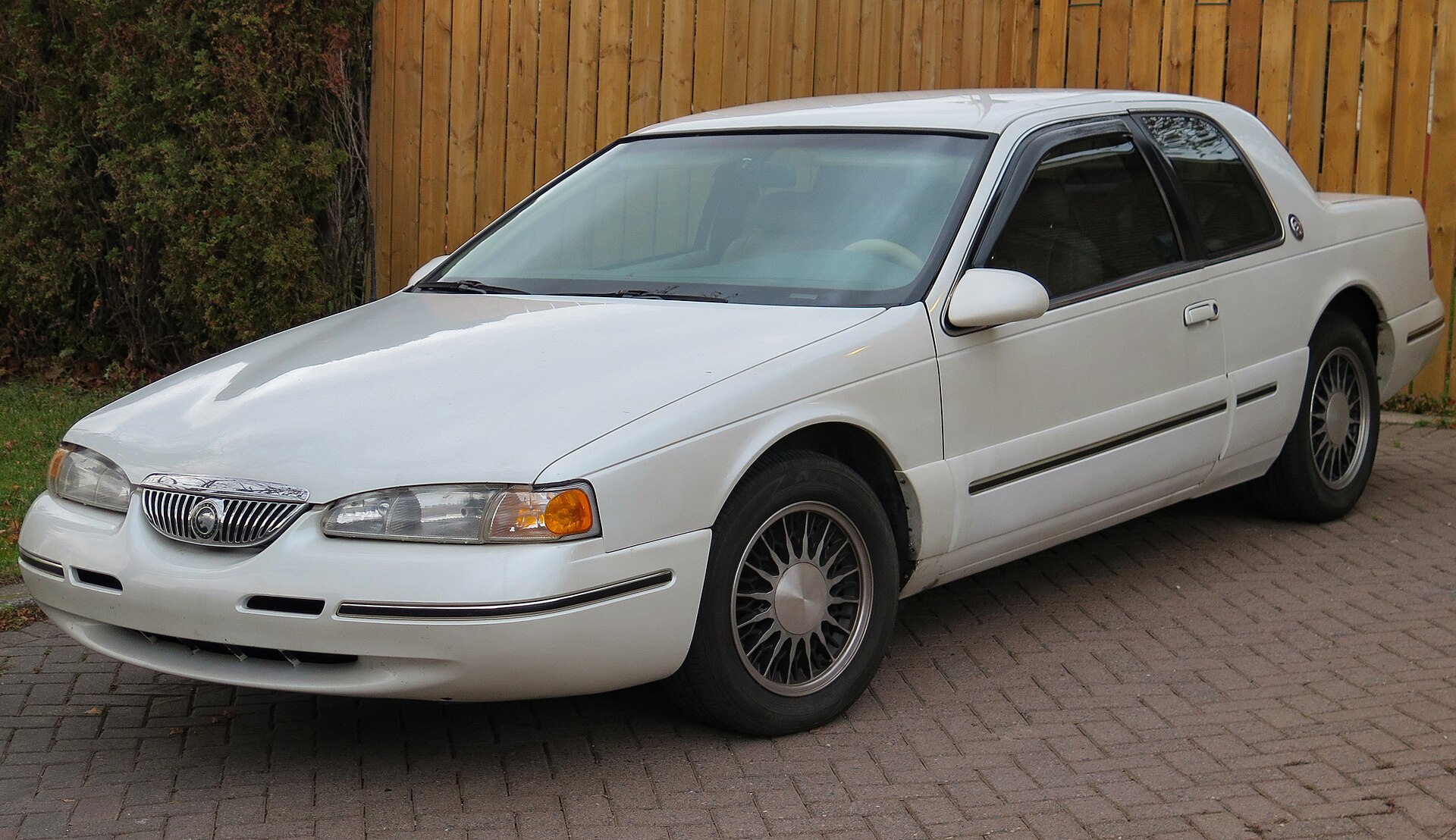
The seventh Cougar went on sale on 26 December 1988 on the new MN12 platform, with a 113-inch (2,870 mm) wheelbase and independent suspension at all four wheels. The XR7 used a supercharged 3.8-litre V6 with 157 kW (210 hp) and a five-speed manual option in 1989 and 1990; from 1991 it switched to the 5.0 V8 with 149 kW (200 hp), and from 1994 to the 4.6-litre SOHC V8 with 153 kW (205 hp).
Racing returned too: Lincoln-Mercury won the IMSA GTO championship with Cougars in 1989 and 1990. Sales fell from 97,246 in 1989 to 35,267 in 1997, and the last rear-wheel-drive Cougar was built in late August 1997.

1999–2002: the front-wheel-drive hatchback
After a year's break the Cougar came back for 1999 as a three-door hatchback, first shown at the 1998 Los Angeles Auto Show. It had been planned as the next Ford Probe and used the CDW27 platform of the Contour and Mystique, with front-wheel drive and a choice of a 2.0-litre Zetec four, 93 kW (125 hp), or a 2.5-litre Duratec V6, 127 kW (170 hp). Europe and Australia bought it as the Ford Cougar.
Sales started at 88,288 in 1999 and dropped to 18,321 in 2002, the final year. This generation has its own page: our article on the front-wheel-drive Mercury Cougar covers its engines, equipment and the European Ford version.

Which Cougar is a muscle car?
On 1CARS the Cougar of 1967–1973 is listed with the American muscle cars: a pony car on the Mustang platform with big-block V8 options. The later cars are personal luxury coupés and are not counted. Among the early cars, these are the ones collectors look for:
- 1967 GT and XR-7 GT: the 390 V8 with 239 kW (320 hp) in the first-year body.
- 1968 GT-E: the 427 V8, the most powerful Cougar ever offered.
- 1969–1970 Eliminator: spoilers, scoop and engines up to the 428 Cobra Jet.
- 1971 XR-7 with the 429 Cobra Jet: the last big-block Cougar, offered for one year.
The Mercury catalogue lists every Cougar generation with its versions, the brand's story is told in our history of Mercury, and the power tables in our car rankings show where the Cougar's figures sit among other cars.
Photo gallery

Mercury Cougar evolution in numbers
Did you know?
- The Mercury Cougar ran for 35 years, from 1967 to 2002, over 8 generations in our catalog.
- The longest-running generation is the Cougar VII (1989–1997): 8 years.
- The biggest jump in power came with the Cougar VII: up to 157 kW (213 PS), 41 kW more than the Cougar VI.
- The most powerful Mercury Cougar is not the newest: the Cougar I (1967–1970) offered up to 291 kW (396 PS), the Cougar VIII up to 127 kW (173 PS).
Most powerful version, kW
Figures from the 1cars catalog: power is the strongest version of each generation; generations without the figure are left out.
Mercury Cougar: first vs latest generation
| Spec | Cougar I | Cougar VIII | Change |
|---|---|---|---|
| Years | 1967–1970 | 1998–2002 | 31 years apart |
| Most powerful version | 291 kW (396 PS) | 127 kW (173 PS) | −164 kW (−56%) |
Oldest and newest generation in the 1cars catalog. Power is the strongest version of each; other rows are shown only when both generations have the figure.
Image credits · Photos from Wikimedia Commons under free licences
- Mercury Cougar IV · Photo: MercurySable99 / Wikimedia Commons, CC BY-SA 4.0
- Mercury Cougar VI · Photo: Elise240SX / Wikimedia Commons, CC BY-SA 4.0
Mercury Cougar in our rankings
- No. 5 of 51 · Most economical coupes (9.4 l/100 km)
- No. 43 of 912 · Longest-running car nameplates (35 years · top 5%)
- No. 11 of 345 · Cars with the most generations (8 generations · top 6%)
- No. 19 of 88 · Most powerful cars of the 1970s (276 kW · top 22%)
- No. 164 of 557 · Biggest engines: cars (4,600 cc · top 30%)
- No. 302 of 859 · Most powerful cars (291 kW · top 36%)
In production longer than 95% of ranked nameplates in the 1CARS catalog (No. 43 of 912).
Mercury Cougar photos 7
FAQ
What years was the Mercury Cougar made?
From the 1967 to the 1997 model year, and again from 1999 to 2002. There was no 1998 Cougar.
Is the Mercury Cougar a Mustang?
The first two generations, 1967–1973, used the Mustang's platform with a longer wheelbase and their own body. Later Cougars shared their platform with the Torino, the Thunderbird and, finally, the Ford Contour.
What is the most powerful Mercury Cougar?
The 1968 GT-E with the 427 V8, rated at 291 kW (390 hp, SAE gross). Among the later cars, the 1989–1990 XR7 had 157 kW (210 hp) from its supercharged V6.
How many Mercury Cougars were built?
Wikipedia gives 2,972,784 in total, which makes the Cougar the best-selling Mercury.
Why was the last Cougar front-wheel drive?
The 1999–2002 car was developed as the next Ford Probe and was moved to Mercury when the Probe was cancelled, so it used the front-drive platform of the Contour and Mystique.
Data sources
Data checked by an editor against the sources below.
- 1cars archive: Mercury Cougar: The Front-Wheel-Drive Coupé Sold as Ford in Europe
- Wikipedia — Mercury Cougar
- US EPA fueleconomy.gov — 17579.shtml
- US EPA fueleconomy.gov — 17578.shtml
- US EPA fueleconomy.gov — 17580.shtml
- US EPA fueleconomy.gov — 16653.shtml