 Ford Thunderbird
All generations, specs and history
Published Sources (5) Report an error
By Sarah Whitmore, Senior Automotive Writer
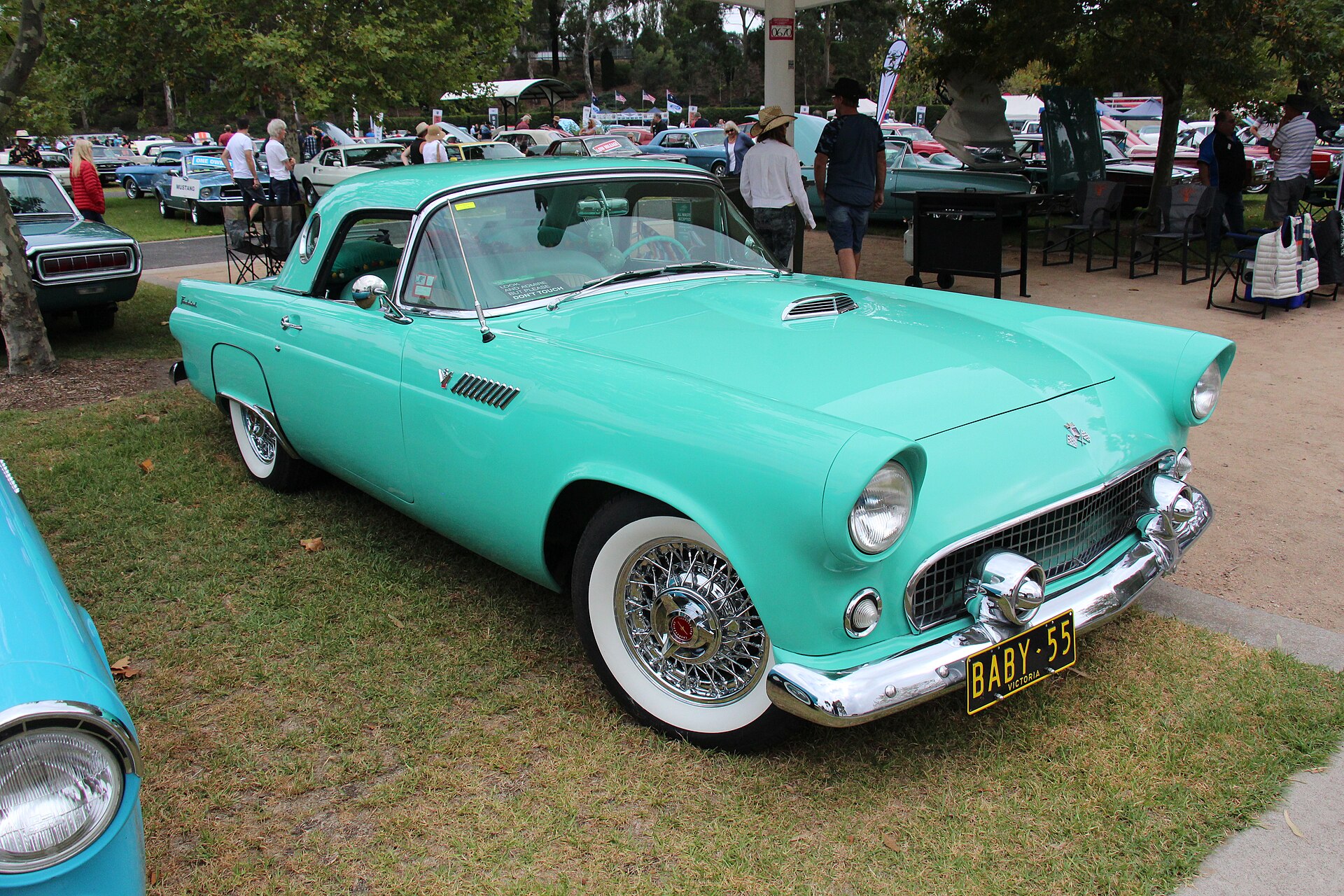
- Built
- 1955–2005
- Generations
- 11
- Top power
- 268 kW (364 PS)
Timeline
Thunderbird generations
Click a generation for its own page
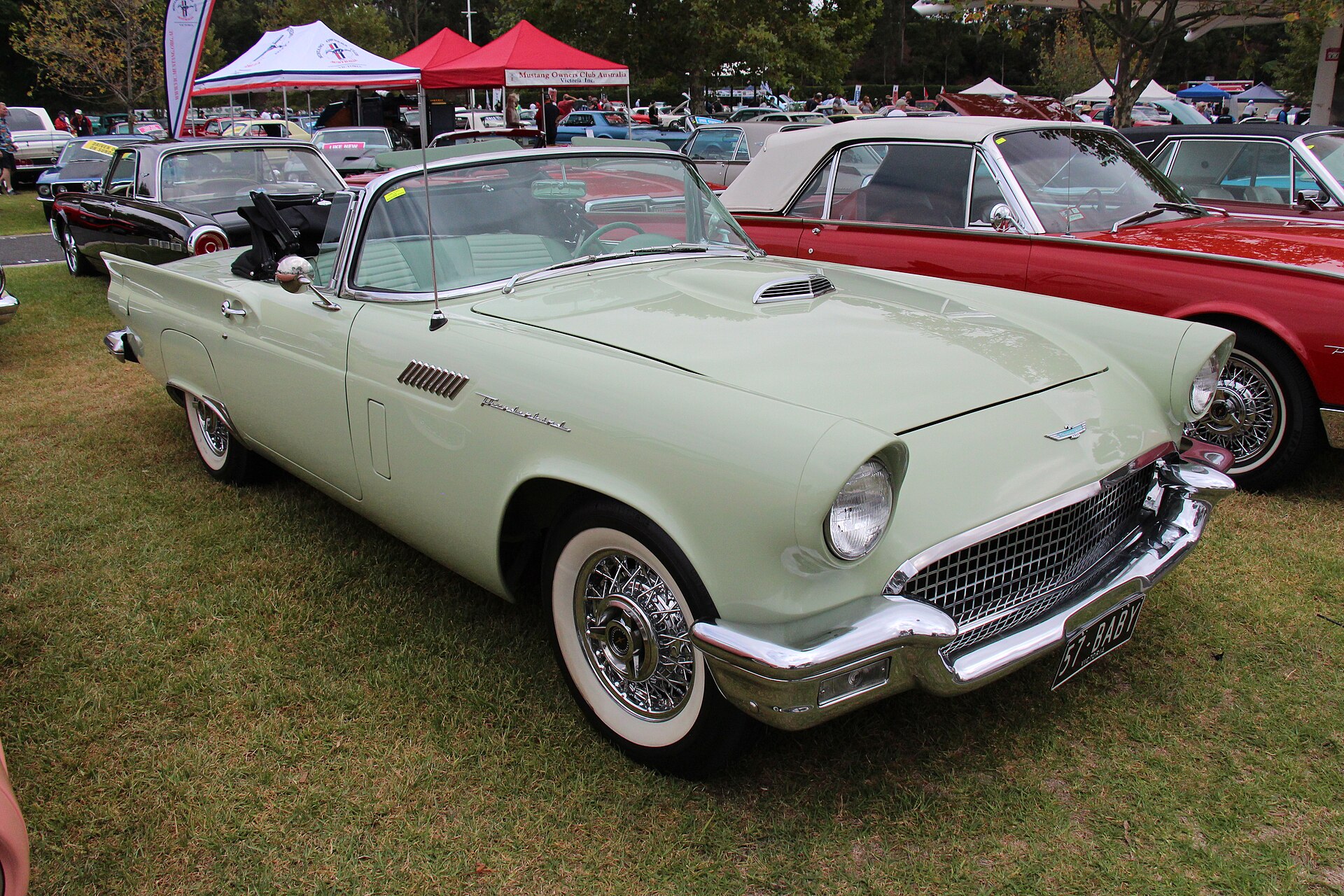
- Thunderbird I 1955–1957 · Convertible · 144–224 kW (196–305 PS)
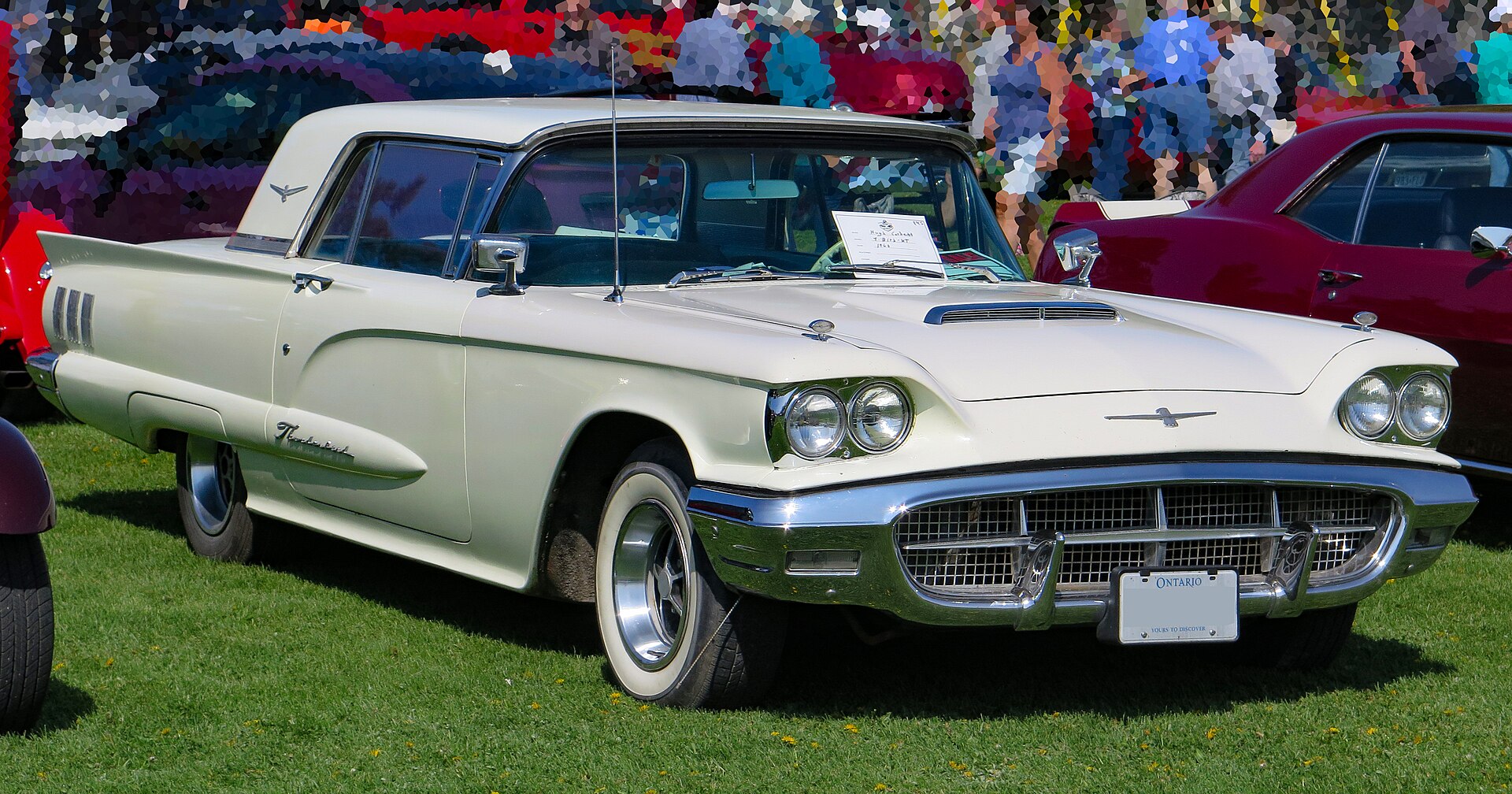
- Thunderbird II 1958–1960 · Coupe, Convertible · 224–261 kW (305–355 PS)
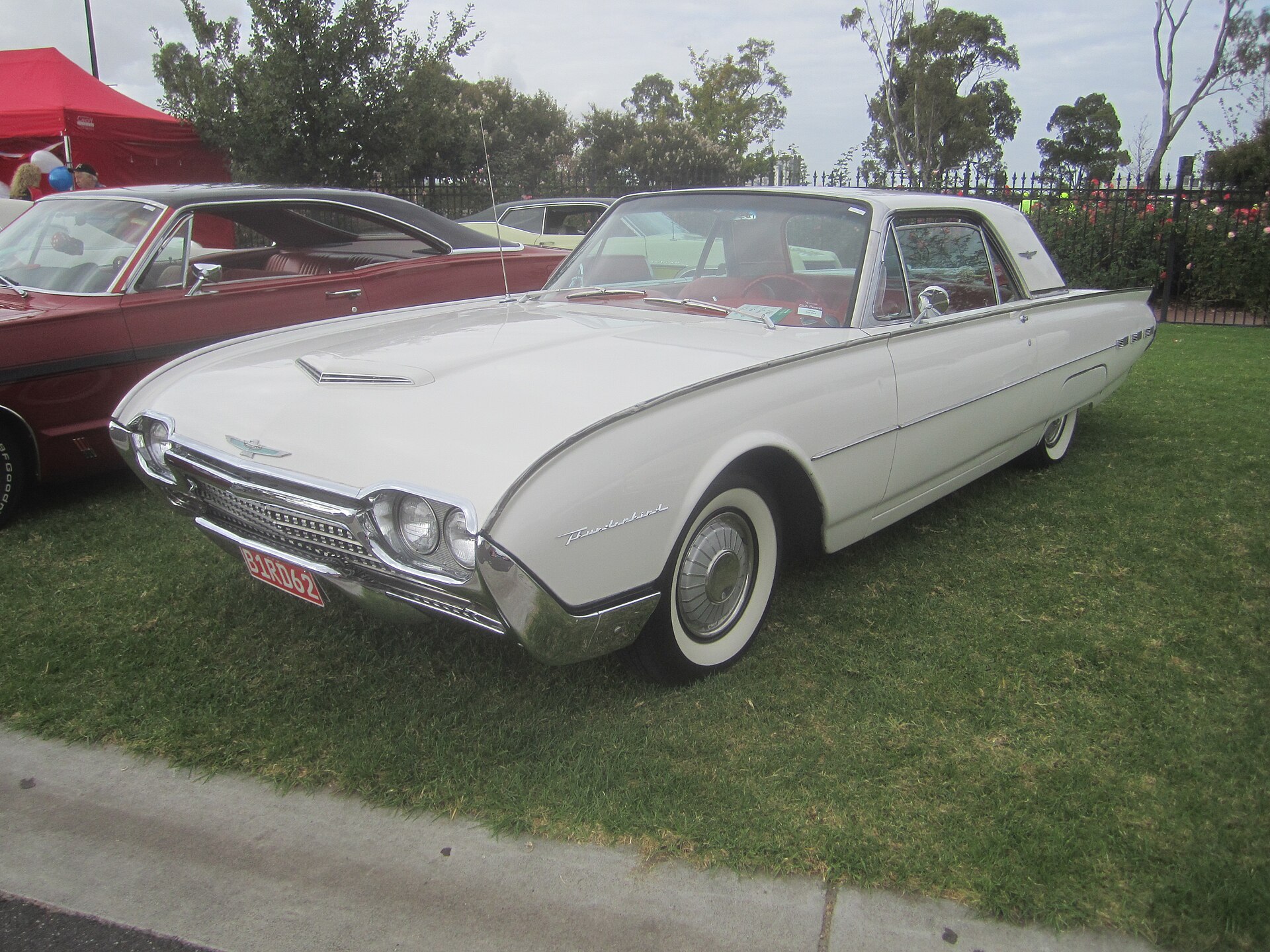
- Thunderbird III 1961–1963 · Coupe, Convertible · 224–254 kW (305–345 PS)
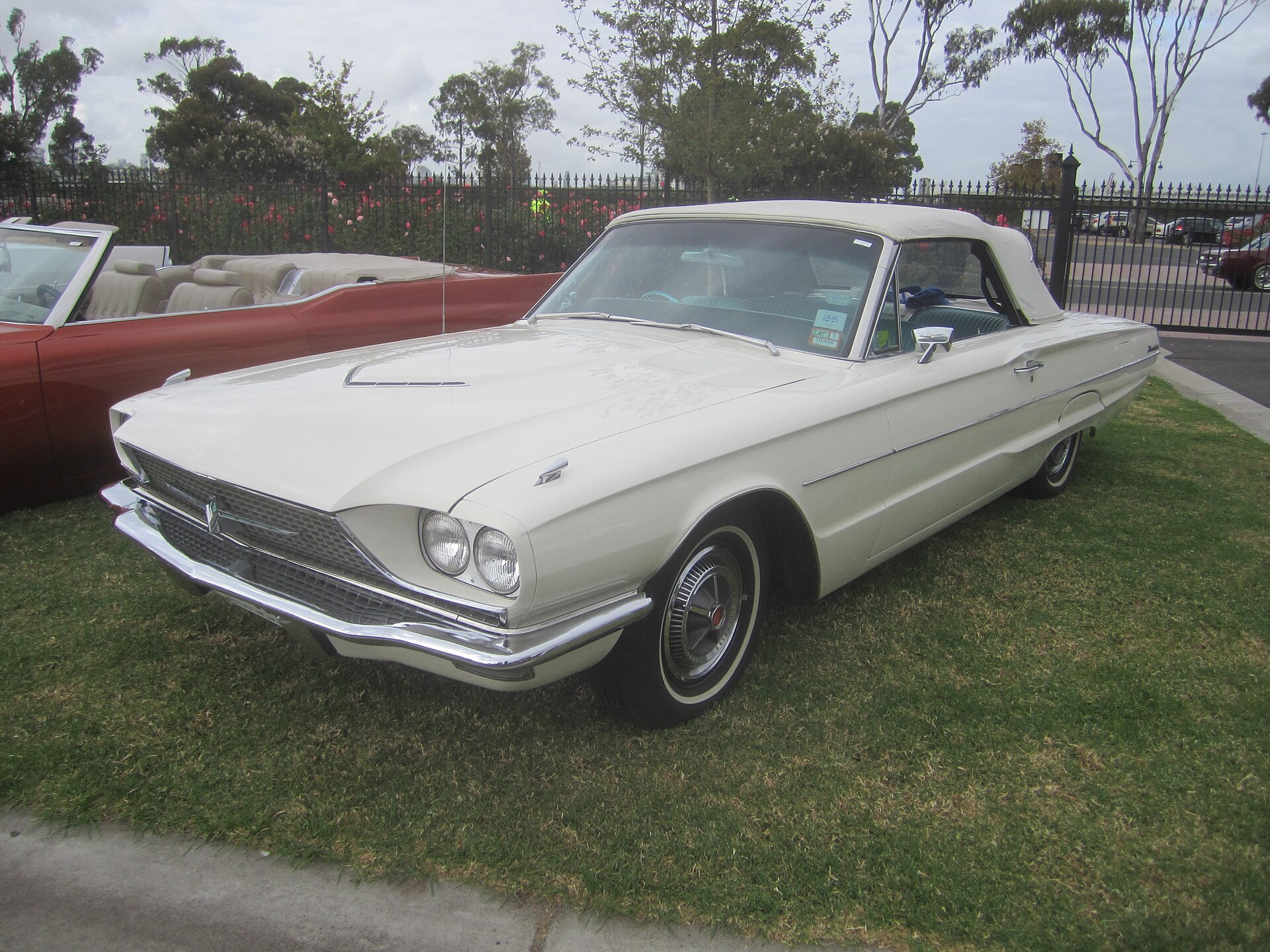
- Thunderbird IV 1964–1966 · Coupe, Convertible · 224–257 kW (305–349 PS)
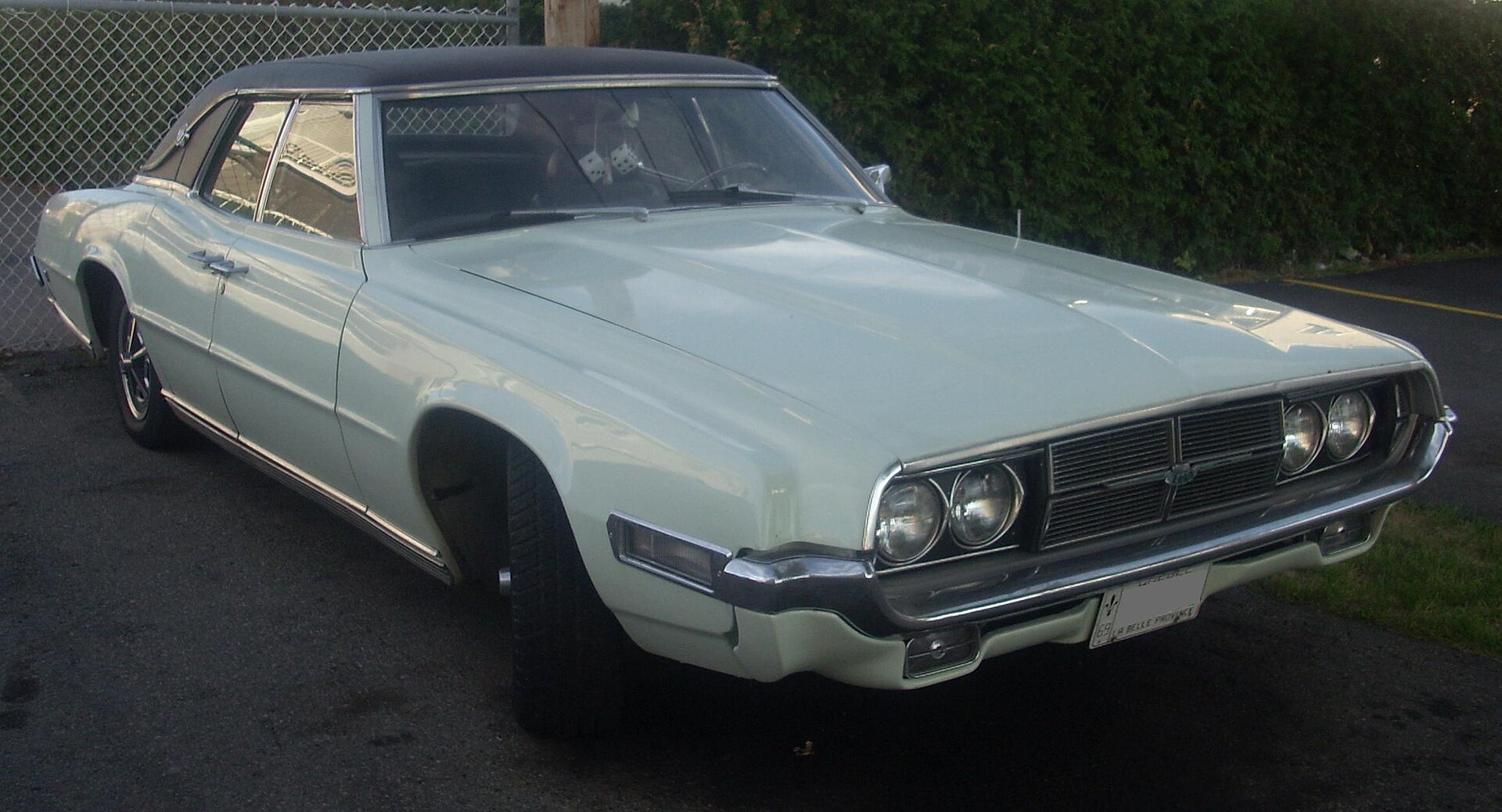
- Thunderbird V 1967–1971 · Sedan, Coupe · 268 kW (364 PS)
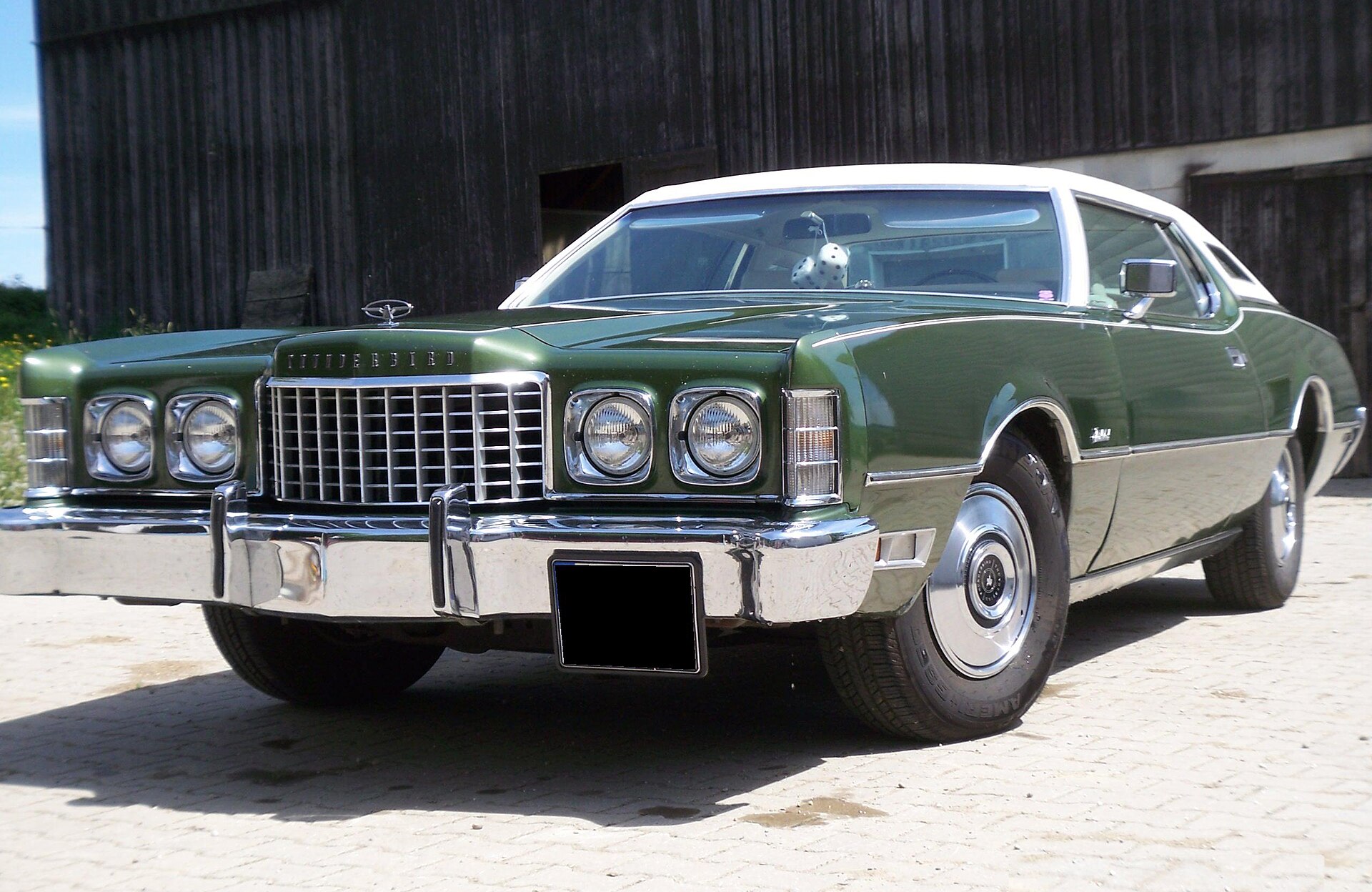
- Thunderbird VI 1972–1976 · Coupe · 155–157 kW (211–213 PS)
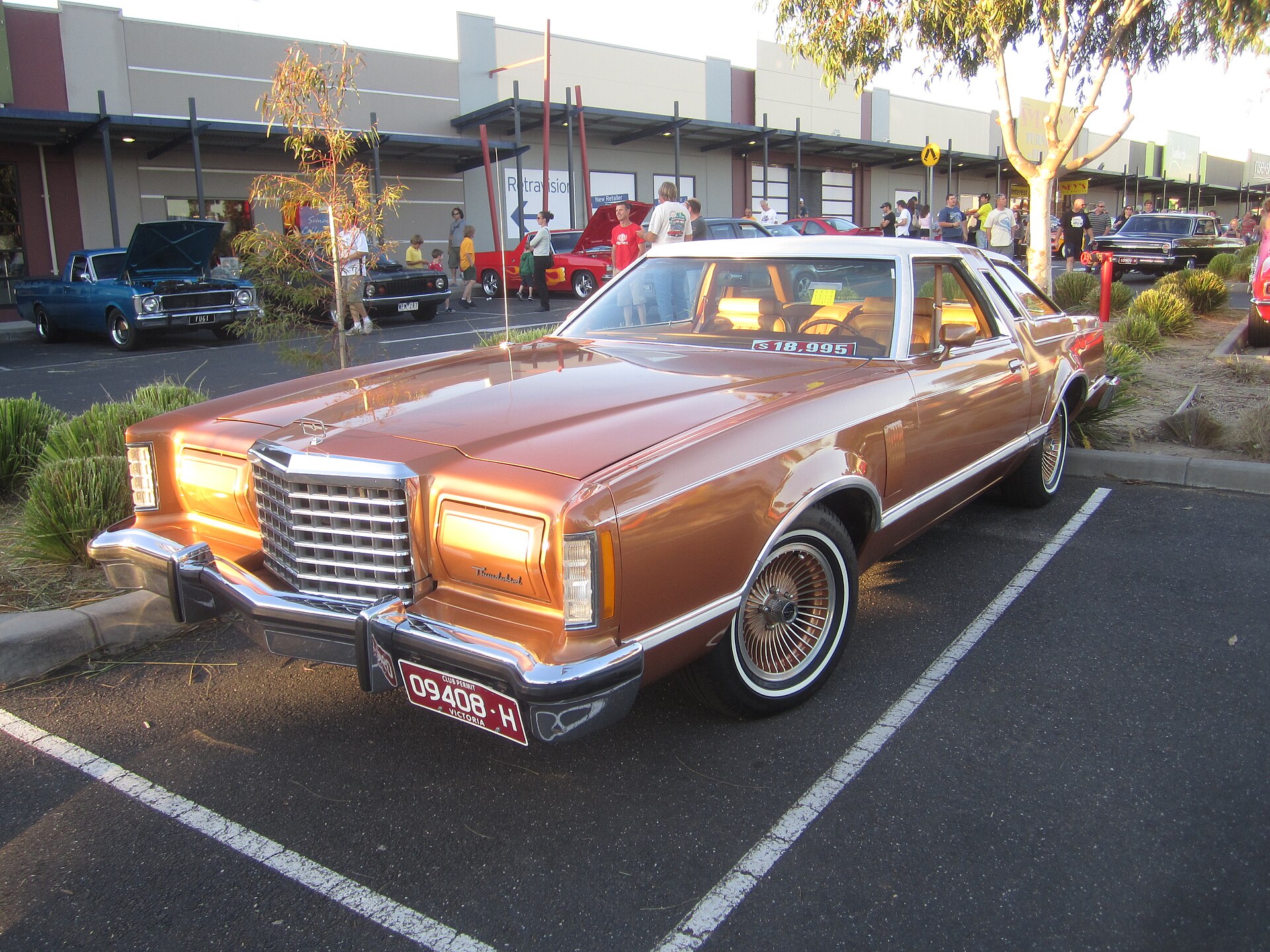
- Thunderbird VII 1977–1979 · Coupe · 99–129 kW (135–175 PS)
- Thunderbird VIII 1980–1982 · Coupe · 84–98 kW (114–133 PS)
- Thunderbird IX 1983–1988 · Coupe · 89–142 kW (121–193 PS)
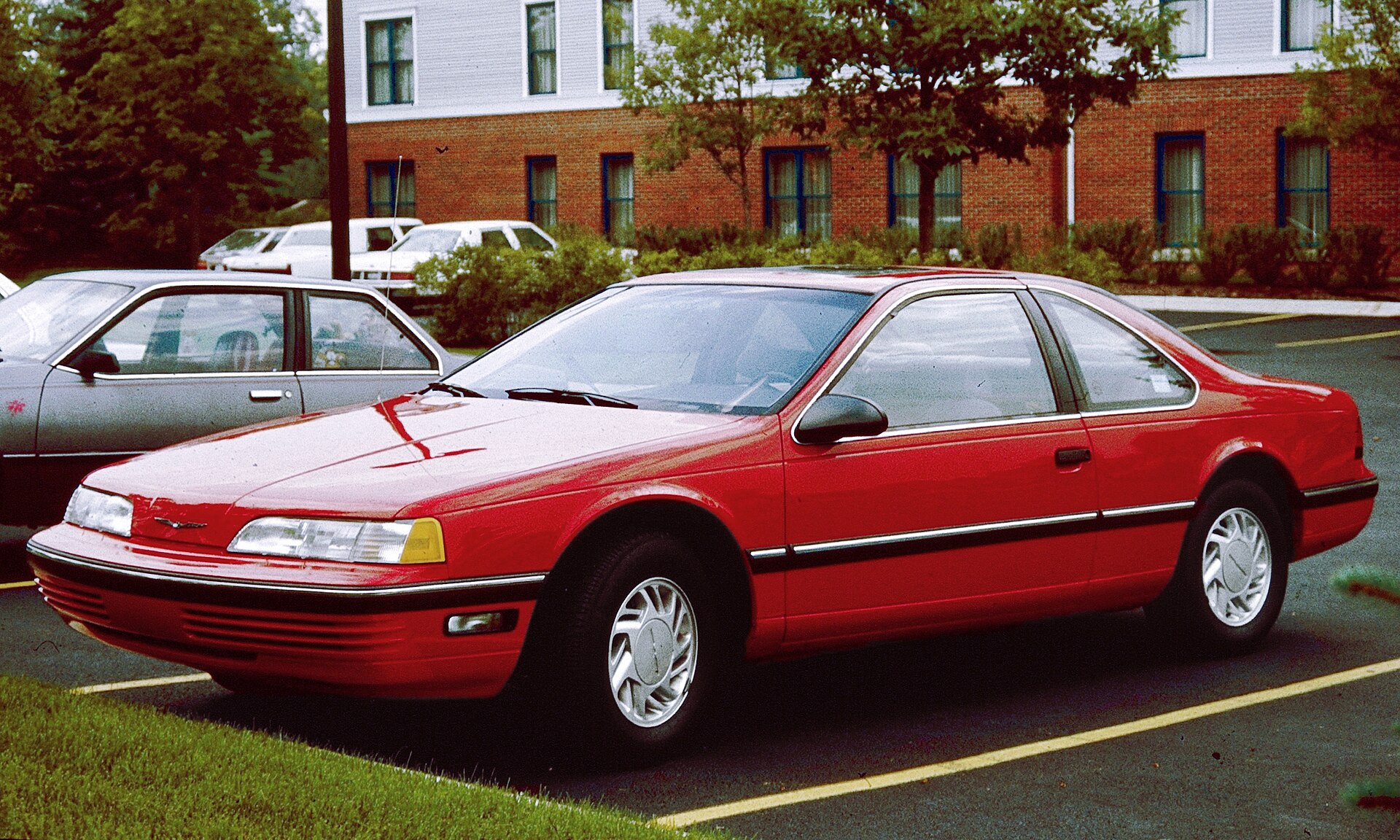
- Thunderbird X 1989–1997 · Coupe · 104–157 kW (141–213 PS)
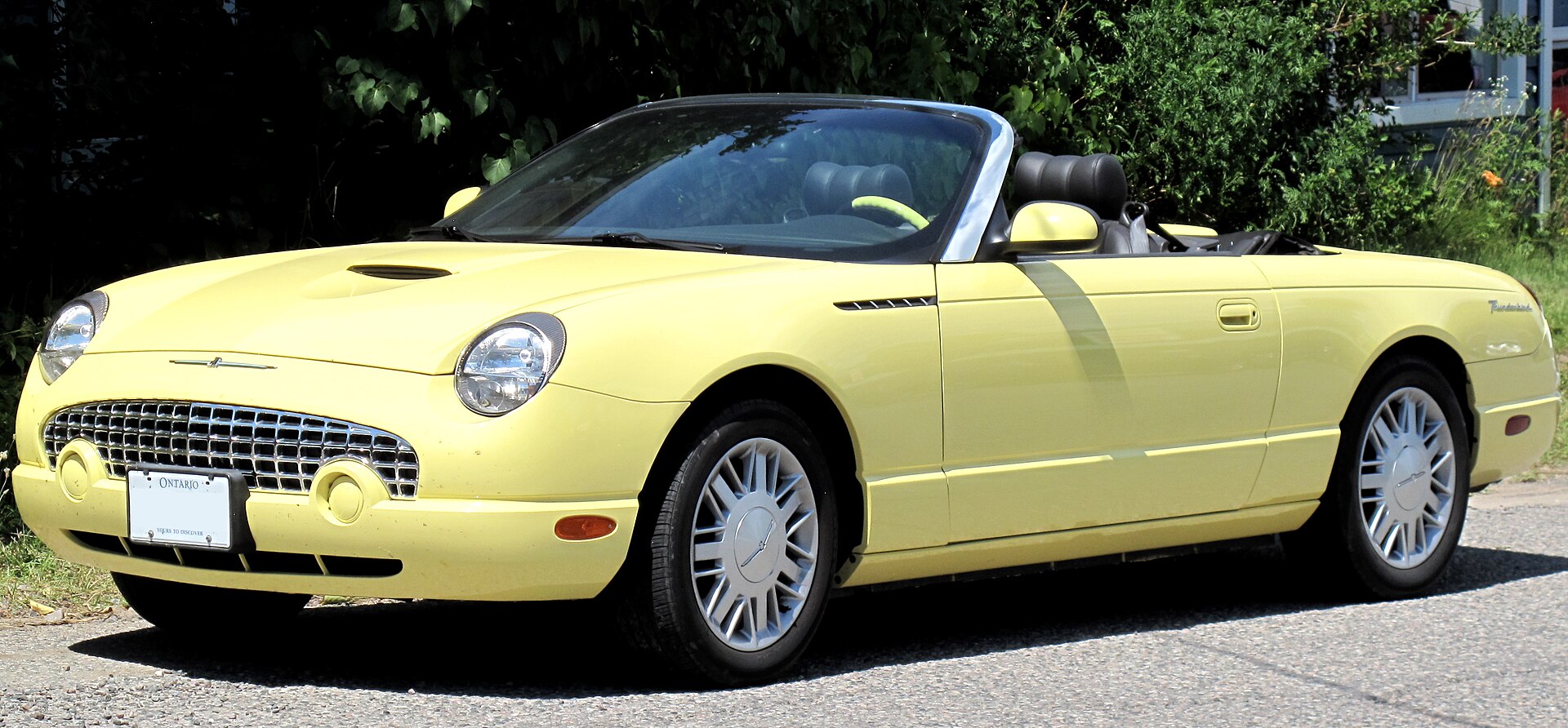
- Thunderbird XI 2002–2005 · Convertible · 188–209 kW (256–284 PS)
Newest first · 11 generations since 1955
-
2002
-
1989
-
1983
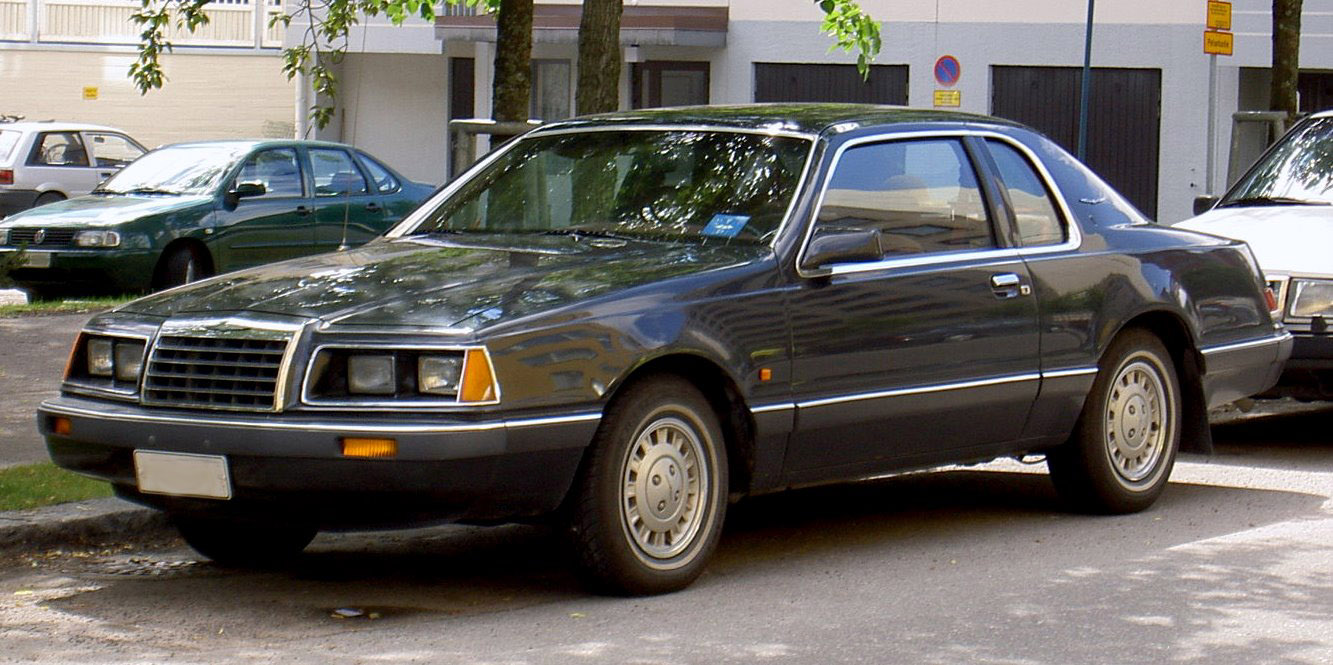
- 1980 VIII 1980–1982 · Coupe · 84–98 kW (114–133 PS)
-
1977
-
1972
-
1967
-
1964
-
1961
-
1958
-
1955


All generations by year: Thunderbird XI (2002–2005) · Thunderbird X (1989–1997) · Thunderbird IX (1983–1988) · Thunderbird VIII (1980–1982) · Thunderbird VII (1977–1979) · Thunderbird VI (1972–1976) · Thunderbird V (1967–1971) · Thunderbird IV (1964–1966) · Thunderbird III (1961–1963) · Thunderbird II (1958–1960) · Thunderbird I (1955–1957)
Which one is mine?
Pick the year of first registration to see which generation it is.
- Thunderbird XI 2002–2005
- Thunderbird X 1989–1997
- Thunderbird IX 1983–1988
- Thunderbird VIII 1980–1982
- Thunderbird VII 1977–1979
- Thunderbird VI 1972–1976
- Thunderbird V 1967–1971
- Thunderbird IV 1964–1966
- Thunderbird III 1961–1963
- Thunderbird II 1958–1960
- Thunderbird I 1955–1957
Which Thunderbird to choose
Our verdict · Sarah Whitmore
- For collectors: a 1955–1957 two-seater; the 1957 F-code supercharged car is the rarest and most valuable.
- For four-seat touring with style: a 1961–1966 hardtop or convertible, with the 390 V8 and, from 1965, front disc brakes.
- For 1980s performance: a 1987–1988 Turbo Coupe with the intercooled engine, or a 1989–1995 Super Coupe.
- For a modern classic: a 2002–2005 convertible, the youngest and easiest Thunderbird to live with, built in only 55,137 examples.
The 1957 racing special has its own page, the Thunderbird Special Supercharged 312. Other models of the period are listed in the Ford catalogue and in our 1950s classics guide.
The Ford Thunderbird was built from the 1955 to the 1997 model years and again from 2002 to 2005, eleven generations in all. It began as a two-seat V8 convertible answering the Chevrolet Corvette, grew into a four-seater in 1958 that created the American "personal luxury car" class, and ended as a retro two-seater with a Jaguar-designed V8. English Wikipedia counts more than 4.4 million Thunderbirds.
In short
- Production from October 1954 to September 1997 and from June 2001 to 1 July 2005 (model years 1955–1997 and 2002–2005).
- Engines from a 3.3-litre six and 2.3-litre turbo four to the 7.5-litre 460 V8; outputs from about 84 kW to 268 kW.
- Best years: 1977–1979, with over 955,000 cars on the Torino-based body.
- Motor Trend Car of the Year for 1958; Bill Elliott (1988) and Alan Kulwicki (1992) won NASCAR championships in Thunderbirds.
Size at a glance
Ford Thunderbird X
The Ford Thunderbird XI is 356 mm shorter and 11 mm lower than the Ford Thunderbird X.
| Dimensions | Ford Thunderbird XI | Ford Thunderbird X | Difference |
|---|---|---|---|
| Length | 4,732 mm186.3 in | 5,088 mm200.3 in | −356 mm−14.0 in |
| Width | 1,829 mm72.0 in | — | — |
| Height | 1,323 mm52.1 in | 1,334 mm52.5 in | −11 mm−0.4 in |
| Wheelbase | 2,720 mm107.1 in | 2,870 mm113.0 in | −150 mm−5.9 in |
Specs by version
Engines
| Version | Engine | Power | Gearbox | Drive | Production years |
|---|---|---|---|---|---|
| Thunderbird I · 292 Y-block V8 | 4.8 l · 8 cyl · Petrol 4,785 cc | 144 kW 196 PS193 hp | — | Rear-wheel drive | 1955 |
| Thunderbird I · 312 V8 | 5.1 l · 8 cyl · Petrol 5,113 cc | 160 kW 218 PS215 hp | — | Rear-wheel drive | 1956–1957 |
| Thunderbird I · 312 V8 Paxton supercharged (F-code) | 5.1 l · 8 cyl · Petrol 5,113 cc | 224 kW 305 PS300 hp | — | Rear-wheel drive | 1957 |
| Thunderbird II · 352 FE V8 | 5.8 l · 8 cyl · Petrol 5,766 cc | 224 kW 305 PS300 hp | — | Rear-wheel drive | 1958–1960 |
| Thunderbird II · 430 MEL V8 | 7.0 l · 8 cyl · Petrol 7,045 cc | 261 kW 355 PS350 hp | — | Rear-wheel drive | 1959–1960 |
| Thunderbird III · 390 FE V8 | 6.4 l · 8 cyl · Petrol 6,384 cc | 224 kW 305 PS300 hp | 3-sp Automatic | Rear-wheel drive | 1961–1963 |
| Thunderbird III · 390 FE V8 three 2-bbl (M-code) | 6.4 l · 8 cyl · Petrol 6,384 cc | 254 kW 345 PS341 hp | 3-sp Automatic | Rear-wheel drive | 1962–1963 |
| Thunderbird IV · 390 FE V8 | 6.4 l · 8 cyl · Petrol 6,384 cc | 224 kW 305 PS300 hp | — | Rear-wheel drive | 1964–1966 |
| Thunderbird IV · 428 FE V8 | 7.0 l · 8 cyl · Petrol 7,014 cc | 257 kW 349 PS345 hp | — | Rear-wheel drive | 1966 |
| Thunderbird V · 429 Thunder Jet V8 | 7.0 l · 8 cyl · Petrol 7,030 cc | 268 kW 364 PS359 hp | — | Rear-wheel drive | 1968–1971 |
| Thunderbird VI · 460 V8 (net) | 7.5 l · 8 cyl · Petrol 7,536 cc | 155 kW 211 PS208 hp | 3-sp Automatic | Rear-wheel drive | 1972–1976 |
| Thunderbird VI · 429 V8 (net) | 7.0 l · 8 cyl · Petrol 7,033 cc | 157 kW 213 PS211 hp | 3-sp Automatic | Rear-wheel drive | 1972–1973 |
| Thunderbird VIII · 3.8 V6 | 3.8 l · 6 cyl · Petrol 3,797 cc | 84 kW 114 PS113 hp | — | Rear-wheel drive | 1982 |
| Thunderbird VIII · 4.2 V8 (255 cu in) | 4.2 l · 8 cyl · Petrol 4,195 cc | 86 kW 117 PS115 hp | 4-sp Automatic | Rear-wheel drive | 1980–1982 |
| Thunderbird VIII · 5.0 V8 (302 cu in) | 4.9 l · 8 cyl · Petrol 4,942 cc | 98 kW 133 PS131 hp | — | Rear-wheel drive | 1980–1981 |
| Thunderbird IX · 3.8 V6 | 3.8 l · 6 cyl · Petrol 3,797 cc | 89 kW 121 PS119 hp | — | Rear-wheel drive | 1983–1987 |
| Thunderbird IX · Turbo Coupe 2.3 turbo | 2.3 l · 4 cyl · Petrol 2,301 cc | 106 kW 144 PS142 hp | — | Rear-wheel drive | 1983–1984 |
| Thunderbird IX · Turbo Coupe 2.3 turbo intercooled | 2.3 l · 4 cyl · Petrol 2,301 cc | 142 kW 193 PS190 hp | 5-sp Manual | Rear-wheel drive | 1987–1988 |
| Thunderbird X · 3.8 V6 | 3.8 l · 6 cyl · Petrol 3,797 cc | 104 kW 141 PS139 hp | — | Rear-wheel drive | 1989–1997 |
| Thunderbird X · 4.6 Modular V8 | 4.6 l · 8 cyl · Petrol 4,601 cc | 153 kW 208 PS205 hp | — | Rear-wheel drive | 1994–1997 |
| Thunderbird X · Super Coupe 3.8 supercharged V6 | 3.8 l · 6 cyl · Petrol 3,797 cc | 157 kW 213 PS211 hp | — | Rear-wheel drive | 1989–1995 |
| Thunderbird XI · 3.9 L 8 cyl Automatic (S5) · 2005 (EPA) | 3.9 l · 8 cyl 3,900 cc | — | 5-sp Automatic | Rear-wheel drive | 2005 |
| Thunderbird XI · 3.9 L 8 cyl Automatic 5-spd · 2005 (EPA) | 3.9 l · 8 cyl 3,900 cc | — | 5-sp Automatic | Rear-wheel drive | 2005 |
| Thunderbird XI · 3.9 L 8 cyl Automatic (S5) · 2004 (EPA) | 3.9 l · 8 cyl 3,900 cc | — | 5-sp Automatic | Rear-wheel drive | 2004 |
| Thunderbird XI · 3.9 L 8 cyl Automatic 5-spd · 2004 (EPA) | 3.9 l · 8 cyl 3,900 cc | — | 5-sp Automatic | Rear-wheel drive | 2004 |
| Thunderbird XI · 3.9 L 8 cyl Automatic 5-spd · 2003 (EPA) | 3.9 l · 8 cyl 3,900 cc | — | 5-sp Automatic | Rear-wheel drive | 2003 |
| Thunderbird XI · 3.9 L 8 cyl Automatic 5-spd · 2003 (EPA) | 3.9 l · 8 cyl 3,900 cc | — | 5-sp Automatic | Rear-wheel drive | 2003 |
| Thunderbird XI · 3.9 L 8 cyl Automatic 5-spd · 2002 (EPA) | 3.9 l · 8 cyl 3,900 cc | — | 5-sp Automatic | Rear-wheel drive | 2002 |
| Thunderbird XI · 3.9 AJ-30 V8 | 3.9 l · 8 cyl · Petrol 3,934 cc | 188 kW 256 PS252 hp | 5-sp Automatic | Rear-wheel drive | 2002 |
| Thunderbird XI · 3.9 AJ35 V8 | 3.9 l · 8 cyl · Petrol 3,934 cc | 209 kW 284 PS280 hp | 5-sp Automatic | Rear-wheel drive | 2003–2005 |
Performance
Show all 8 versions
| Version | Fuel consumption |
|---|---|
| Thunderbird IX · Turbo Coupe 2.3 turbo intercooled | — |
| Thunderbird XI · 3.9 L 8 cyl Automatic (S5) · 2005 (EPA) | 13.1 l/100 km18.0 mpg US · 21.6 mpg UK |
| Thunderbird XI · 3.9 L 8 cyl Automatic 5-spd · 2005 (EPA) | 13.1 l/100 km18.0 mpg US · 21.6 mpg UK |
| Thunderbird XI · 3.9 L 8 cyl Automatic (S5) · 2004 (EPA) | 13.1 l/100 km18.0 mpg US · 21.6 mpg UK |
| Thunderbird XI · 3.9 L 8 cyl Automatic 5-spd · 2004 (EPA) | 13.1 l/100 km18.0 mpg US · 21.6 mpg UK |
| Thunderbird XI · 3.9 L 8 cyl Automatic 5-spd · 2003 (EPA) | 13.1 l/100 km18.0 mpg US · 21.6 mpg UK |
| Thunderbird XI · 3.9 L 8 cyl Automatic 5-spd · 2003 (EPA) | 13.1 l/100 km18.0 mpg US · 21.6 mpg UK |
| Thunderbird XI · 3.9 L 8 cyl Automatic 5-spd · 2002 (EPA) | 13.8 l/100 km17.0 mpg US · 20.5 mpg UK |
Dimensions and weight
Show all 19 versions
| Version | Length | Width | Height | Wheelbase |
|---|---|---|---|---|
| Thunderbird I · 292 Y-block V8 | 4,453 mm175.3 in | 1,786 mm70.3 in | — | 2,591 mm102.0 in |
| Thunderbird I · 312 V8 | — | 1,786 mm70.3 in | — | 2,591 mm102.0 in |
| Thunderbird I · 312 V8 Paxton supercharged (F-code) | — | 1,786 mm70.3 in | — | 2,591 mm102.0 in |
| Thunderbird II · 352 FE V8 | 5,217 mm205.4 in | 1,956 mm77.0 in | — | 2,845 mm112.0 in |
| Thunderbird II · 430 MEL V8 | 5,217 mm205.4 in | 1,956 mm77.0 in | — | 2,845 mm112.0 in |
| Thunderbird III · 390 FE V8 | 5,207 mm205.0 in | 1,928 mm75.9 in | — | 2,875 mm113.2 in |
| Thunderbird III · 390 FE V8 three 2-bbl (M-code) | 5,207 mm205.0 in | 1,928 mm75.9 in | — | 2,875 mm113.2 in |
| Thunderbird VI · 460 V8 (net) | 5,715 mm225.0 in | 2,024 mm79.7 in | — | 3,058 mm120.4 in |
| Thunderbird VI · 429 V8 (net) | 5,715 mm225.0 in | 2,024 mm79.7 in | — | 3,058 mm120.4 in |
| Thunderbird VIII · 3.8 V6 | 5,090 mm200.4 in | 1,880 mm74.0 in | 1,350 mm53.1 in | 2,750 mm108.3 in |
| Thunderbird VIII · 4.2 V8 (255 cu in) | 5,090 mm200.4 in | 1,880 mm74.0 in | 1,350 mm53.1 in | 2,750 mm108.3 in |
| Thunderbird VIII · 5.0 V8 (302 cu in) | 5,090 mm200.4 in | 1,880 mm74.0 in | 1,350 mm53.1 in | 2,750 mm108.3 in |
| Thunderbird IX · 3.8 V6 | — | 1,806 mm71.1 in | — | 2,647 mm104.2 in |
| Thunderbird IX · Turbo Coupe 2.3 turbo | 5,019 mm197.6 in | 1,806 mm71.1 in | 1,351 mm53.2 in | 2,647 mm104.2 in |
| Thunderbird IX · Turbo Coupe 2.3 turbo intercooled | 5,133 mm202.1 in | 1,806 mm71.1 in | 1,356 mm53.4 in | 2,647 mm104.2 in |
| Thunderbird X · 3.8 V6 | — | — | — | 2,870 mm113.0 in |
| Thunderbird X · 4.6 Modular V8 | 5,088 mm200.3 in | — | 1,334 mm52.5 in | 2,870 mm113.0 in |
| Thunderbird X · Super Coupe 3.8 supercharged V6 | — | — | — | 2,870 mm113.0 in |
| Thunderbird XI · 3.9 AJ-30 V8 | 4,732 mm186.3 in | 1,829 mm72.0 in | 1,323 mm52.1 in | 2,720 mm107.1 in |
Verified Manufacturer and type-approval data from our catalog · Sources and methodology
Ford Thunderbird at a glance
| Parameter | Value |
|---|---|
| Production | model years 1955–1997, 2002–2005 |
| Generations | 11 |
| Built | more than 4.4 million (Wikipedia EN) |
| Layout | front engine, rear-wheel drive |
| Bodies | two-seat convertible, coupé/hardtop, convertible, four-door hardtop and sedan |
| Engines | 3.3 l six, 2.3 l turbo four, 3.8 l V6 (also supercharged), V8 from 4.2 to 7.5 l, 3.9 l Jaguar V8 |
| Power range | about 84 kW (112 hp) to 268 kW (360 hp gross) |
| Base price 1955 | $2,944 |
| Base price 2005 | $38,355 |
| Assembly ended | 1 July 2005 |
Generations at a glance
| Gen | Model years | Body / platform | Key engines | Built |
|---|---|---|---|---|
| 1 | 1955–1957 | two-seat convertible, detachable hardtop | 292 and 312 V8 | 53,166 |
| 2 | 1958–1960 | four-seat unibody hardtop and convertible | 352 and 430 V8 | about 198,000 |
| 3 | 1961–1963 | "bullet" body, Sports Roadster from 1962 | 390 V8 | 215,762 |
| 4 | 1964–1966 | squared-off body, landau roof | 390 and 428 V8 | 236,513 |
| 5 | 1967–1971 | body-on-frame coupé and four-door | 390, 428, 429 V8 | 278,533 |
| 6 | 1972–1976 | large coupé shared with Lincoln Mark | 429 and 460 V8 | about 299,000 |
| 7 | 1977–1979 | Torino / LTD II platform | 302, 351, 400 V8 | about 955,000 |
| 8 | 1980–1982 | Fox platform | 4.2 and 5.0 V8, 3.3 six, 3.8 V6 | about 288,600 |
| 9 | 1983–1988 | aerodynamic Fox body | 3.8 V6, 5.0 V8, 2.3 turbo | 883,026 |
| 10 | 1989–1997 | MN12, independent rear suspension | 3.8 V6, SC, 5.0 and 4.6 V8 | 887,876 |
| 11 | 2002–2005 | DEW platform, retro convertible | 3.9 Jaguar AJ V8 | 55,137 |
Production figures are the model-year totals from German Wikipedia's tables.
The two-seat original (1955–1957)
Ford unveiled the Thunderbird on 20 February 1954, about a month after Chevrolet had shown its Corvette prototype. Instead of a raw sports car, Ford marketed a "personal car of distinction" built around comfort: a folding fabric top and a detachable fibreglass hardtop, all on a shortened Ford frame with a 102-inch (2,591 mm) wheelbase.
The strategy worked. In 1955 Ford sold 16,155 Thunderbirds against about 700 Corvettes, at a 1955 base price of $2,944; according to MuscleCarClub that was only $35 more than a 1955 V8 Corvette. Power came from the 292 cu in Y-block V8 (144–148 kW, 193–198 hp), joined in 1956 by the 312 with 160 kW (215 hp) in manual cars. For 1957 Ford offered the "E" engine with two four-barrel carburettors and the rare "F" version with a Paxton supercharger and 224 kW (300 hp). That year brought a record 21,380 sales.


Four seats and a new segment (1958–1966)
For 1958 the Thunderbird became a four-seat unibody car on a 113-inch wheelbase, about 360 kg (800 lb) heavier than before. Sales more than doubled: 37,892 in the shortened first year, 67,456 in 1959 and about 92,800 in 1960. The car took Motor Trend's 1958 award as the best new car, and English Wikipedia credits it with starting the personal luxury segment, where comfort mattered more than handling. Engines were the 352 FE V8 (224 kW, 300 hp) and, from 1959, the 430 MEL V8 with 261 kW (350 hp).
The third generation (1961–1963) wore a pointed "bullet" body and used the 390 FE V8. For 1962 Ford added a Landau roof option and the Sports Roadster, whose fibreglass tonneau covered the rear seats; a 254 kW (340 hp) version of the 390 with three two-barrel carburettors was optional. The fourth generation (1964–1966) had squarer lines and, from 1965, sequential rear indicators and standard front disc brakes. The 428 V8 with 257 kW (345 hp) topped the range in 1966, the last year of the convertible.

Glamour Birds, Big Birds and the sales peak (1967–1979)
The 1967 car returned to a separate frame and dropped the convertible, adding a four-door hardtop with rear-hinged back doors instead. English Wikipedia calls this series the "Glamour Birds". The four-door lasted until 1971; the 429 Thunder Jet V8 (268 kW, 360 hp gross) appeared in 1968.
The "Big Birds" of 1972–1976 shared their assembly line with the Lincoln Continental Mark series. They rode on a 120.4-inch wheelbase and weighed about 2,005 kg (4,420 lb), and length grew from 214 to 225 inches by 1974. Net ratings arrived just as emissions rules tightened: German Wikipedia lists 157 kW (214 PS) for the 429 and 155 kW (211 PS) for the 460 in 1973. Sales peaked above 87,000 that year.
The seventh generation then reversed course. Built on the platform of the Ford Torino and LTD II, the 1977 car was about 410 kg (900 lb) lighter and much cheaper, with a 1977 base price of $5,063 against $7,790 a year earlier. More than 955,000 were sold in three years, the best run in the car's history. A 1978 Diamond Jubilee Edition almost doubled the base price, to nearly $12,000. Sister models from the same base are described on our Ford Gran Torino page.
Fox platform, Aero Bird and Super Coupe (1980–1997)
The 1980 Thunderbird moved to the compact Fox platform shared with the Fairmont, losing 5.6 inches of wheelbase and 17.3 inches of length. Engines shrank too: a 4.2-litre V8 with 86–91 kW (115–122 hp), a 5.0 V8 with 98 kW (131 hp), from 1981 a 3.3-litre six and from 1982 a 3.8-litre V6 with 84 kW (112 hp). Sales fell to 288,638 over three years.
The 1983 redesign, still on the Fox base, brought a smooth aerodynamic body and the first turbocharged Thunderbird. The Turbo Coupe's 2.3-litre four made 106 kW (142 hp) in 1983, 116 kW (155 hp) by 1985 and 142 kW (190 hp) with an intercooler from 1987. A Thunderbird of this generation set the stock-car lap record at Talladega at 212.809 mph (342.5 km/h).
For 1989 the MN12 platform added nine inches of wheelbase and independent suspension at all four wheels. The 3.8-litre V6 gave 104 kW (140 hp), while the Super Coupe's supercharged and intercooled V6 made 157 kW (210 hp). A 5.0 V8 returned for 1991, replaced for 1994 by the 4.6-litre Modular V8 with 153 kW (208 PS). Production stopped in September 1997.
The retro two-seater (2002–2005)
After a gap of four model years, the Thunderbird came back as a two-seat convertible with styling drawn from the 1955–57 cars. It used the DEW platform of the Lincoln LS and a Jaguar-designed 3.9-litre AJ-30 V8 with 188 kW (252 hp) and 362 Nm (267 lb-ft). From 2003 the AJ35 version gave 209 kW (280 hp) and 388 Nm. A five-speed automatic was the only gearbox. Sales started strongly at 19,085 in 2002 and fell to 9,548 in 2005. The last car left the line on 1 July 2005.
Engines by generation
| Generation | Engine | Power | Rating |
|---|---|---|---|
| 1955 | 292 cu in (4.8 l) Y-block V8 | 144–148 kW (193–198 hp) | gross |
| 1956–1957 | 312 cu in (5.1 l) V8 | 160–183 kW (215–245 hp) | gross |
| 1957 | 312 V8 with Paxton supercharger | 224 kW (300 hp) | gross |
| 1958–1960 | 352 cu in (5.8 l) FE V8 | 224 kW (300 hp) | gross |
| 1959–1960 | 430 cu in (7.0 l) MEL V8 | 261 kW (350 hp) | gross |
| 1961–1966 | 390 cu in (6.4 l) FE V8 | 224–254 kW (300–340 hp) | gross |
| 1966 | 428 cu in (7.0 l) FE V8 | 257 kW (345 hp) | gross |
| 1968–1971 | 429 cu in (7.0 l) Thunder Jet V8 | 268 kW (360 hp) | gross |
| 1973 | 460 cu in (7.5 l) V8 | 155 kW (211 PS) | net |
| 1980–1982 | 4.2 l / 5.0 l V8 | 86–98 kW (115–131 hp) | net |
| 1983–1988 | 2.3 l turbo four (Turbo Coupe) | 106–142 kW (142–190 hp) | net |
| 1989–1995 | 3.8 l supercharged V6 (Super Coupe) | 157 kW (210 hp) | net |
| 1994–1997 | 4.6 l Modular V8 | 153 kW (208 PS) | net |
| 2002–2005 | 3.9 l Jaguar AJ V8 | 188–209 kW (252–280 hp) | net |
Gross ratings before 1972 run higher than the net figures used later, so the two halves of the table are not directly comparable. Our car comparison tool helps line up Thunderbirds with rivals of the same years.

Photo gallery

Ford Thunderbird evolution in numbers
Did you know?
- The Ford Thunderbird ran for 50 years, from 1955 to 2005, over 11 generations in our catalog.
- The longest-running generation is the Thunderbird X (1989–1997): 8 years.
- The biggest jump in power came with the Thunderbird XI: up to 209 kW (284 PS), 52 kW more than the Thunderbird X.
- The most powerful Ford Thunderbird is not the newest: the Thunderbird V (1967–1971) offered up to 268 kW (364 PS), the Thunderbird XI up to 209 kW (284 PS).
Most powerful version, kW
Length, mm
Figures from the 1cars catalog: power is the strongest version of each generation; generations without the figure are left out.
Ford Thunderbird: first vs latest generation
| Spec | Thunderbird I | Thunderbird XI | Change |
|---|---|---|---|
| Years | 1955–1957 | 2002–2005 | 47 years apart |
| Most powerful version | 224 kW (305 PS) | 209 kW (284 PS) | −15 kW (−7%) |
| Length | 4,453 mm | 4,732 mm | +279 mm |
| Width | 1,786 mm | 1,829 mm | +43 mm |
| Wheelbase | 2,591 mm | 2,720 mm | +129 mm |
Oldest and newest generation in the 1cars catalog. Power is the strongest version of each; other rows are shown only when both generations have the figure.
Image credits · Photos from Wikimedia Commons under free licences
- Ford Thunderbird III · Photo: Sicnag / Wikimedia Commons, CC BY 2.0
- Ford Thunderbird IV · Photo: Sicnag / Wikimedia Commons, CC BY 2.0
- Ford Thunderbird V · Photo: Bull-Doser / Wikimedia Commons, Public domain
- Ford Thunderbird VI · Photo: Thunderbird73 / Wikimedia Commons, CC0
- Ford Thunderbird VII · Photo: Sicnag / Wikimedia Commons, CC BY 2.0
- Ford Thunderbird IX · Photo: M62 / Wikimedia Commons, CC BY-SA 3.0
- Ford Thunderbird X · Photo: Charles01 / Wikimedia Commons, Public domain
- Ford Thunderbird XI · Photo: Elise240SX / Wikimedia Commons, CC BY-SA 4.0
Popular comparisons
Ford Thunderbird in our rankings
- No. 2 of 89 · Longest coupes (5,715 mm)
- No. 2 of 30 · Longest convertibles and roadsters (4,732 mm)
- No. 2 of 345 · Cars with the most generations (11 generations)
- No. 4 of 420 · Longest cars (5,715 mm)
- No. 6 of 24 · Heaviest convertibles and roadsters (1,712 kg)
- No. 8 of 18 · Most torque: convertibles and roadsters (597 Nm)
Longer than 99% of ranked cars in the 1CARS catalog (No. 4 of 420).
FAQ
How many generations of the Ford Thunderbird are there?
Eleven: 1955–57, 1958–60, 1961–63, 1964–66, 1967–71, 1972–76, 1977–79, 1980–82, 1983–88, 1989–97 and 2002–05.
Why was the Thunderbird made a four-seater?
For 1958 Ford gave the car a back seat to widen its appeal. Sales of 37,892 in 1958 and about 92,800 in 1960 compared with 21,380 for the best two-seater year, and the four-seater also took Motor Trend's top award for 1958.
What is the most powerful Thunderbird?
By gross rating, the 1968–1971 cars with the 429 Thunder Jet V8 at 268 kW (360 hp). Among net-rated cars, the 2003–2005 Jaguar-engined model leads with 209 kW (280 hp).
How much did a Ford Thunderbird cost new?
The 1955 two-seater started at $2,944. The base price passed $7,000 in 1974, and the 2002 retro convertible started at $34,965, all in US dollars of the time.
When did Ford stop making the Thunderbird?
The last car was built on 1 July 2005, after the 2005 model year of the retro two-seat convertible.
Data sources
Data checked by an editor against the sources below.
- Wikipedia — Ford Thunderbird
- US EPA fueleconomy.gov — 20477.shtml
- US EPA fueleconomy.gov — 20476.shtml
- US EPA fueleconomy.gov — 19355.shtml
- US EPA fueleconomy.gov — 19354.shtml