Tata: India's Car Maker From Locomotives to Electric SUVs
Tata is the car brand of Tata Motors Passenger Vehicles, part of India's Tata Group, based in Mumbai. The company was founded in 1945 as TELCO to build locomotives, made trucks with Daimler-Benz from 1954 and entered the passenger car market only in 1991 with the Tata Sierra. Since then it has produced the Indica, the Nano "people's car", the Nexon, the first car sold in India to reach five Global NCAP stars for adult protection, and the Nexon EV, India's best-selling electric car of 2020, and since 2008 it has owned Jaguar Land Rover.
Key takeaways
- Founded on 1 September 1945 by JRD Tata as Tata Engineering & Locomotive Co. (TELCO); renamed Tata Motors in 1962.
- First passenger vehicle: the Tata Sierra of 1991; the Indica of 1998 received 115,000 orders within a week.
- The company bought Jaguar Land Rover from Ford in June 2008.
- In 2025 it was India's third-largest car maker by sales, behind Maruti Suzuki and Mahindra.
Tata at a glance
| Fact | Value |
|---|---|
| Founded | 1 September 1945, as TELCO |
| Founder | JRD Tata |
| Headquarters | Mumbai |
| Company today | Tata Motors Passenger Vehicles (since the 2025 demerger) |
| Plants | Pune and Sanand (cars), Ranjangaon (Nexon, with FCA India) |
| Subsidiaries | Jaguar Land Rover, Tata Passenger Electric Mobility |
| Chairman | N. Chandrasekaran (since 2017) |
| Best-known cars | Sierra, Sumo, Indica, Nano, Nexon, Punch, Harrier, Safari |
Origins: TELCO and the Daimler trucks
The company was founded on 1 September 1945 by JRD Tata as the Tata Engineering & Locomotive Company (TELCO) to make locomotives. Its road vehicle business began in 1954 with a joint venture with Daimler-Benz to build Daimler lorries at Jamshedpur; the first goods chassis, rated at 3 to 5 tonnes, was finished by November 1954. TELCO became Tata Motors Limited in 1962. Trucks and buses remained the core of the business for decades, with models such as the 407 light truck of 1986, of which more than 500,000 were sold.

Sierra, Sumo and the Indica
The company entered the passenger vehicle market in 1991 with the Sierra, a multi-utility vehicle. The Estate, a station wagon based on the TataMobile light commercial vehicle, followed in 1992, and the Sumo of 1994 is described as India's first sport utility vehicle. After India's economic liberalisation of 1991, Mercedes-Benz also worked with TELCO to build the W124 E-Class in India.
The breakthrough was the Indica, launched on 30 December 1998. Wikipedia describes it as the first fully indigenous Indian passenger car. Its exterior was styled under contract by the Italian firm I.DE.A Institute together with the company's own designers, and its 1.4-litre petrol and diesel engines were developed in-house. The company received 115,000 orders within a week of its unveiling. Sales peaked at 144,690 in 2006–2007, and more than 910,000 had been built by August 2008. From 2003 the car was also sold in Britain as the MG Rover CityRover, until Rover collapsed in April 2005. The Indica was discontinued in April 2018. In 1999 the company considered selling its car business to Ford, but decided against it after a meeting with Bill Ford in Detroit.


The Nano and Jaguar Land Rover
In January 2008 the company presented the Nano, a very small car that chairman Ratan Tata called a "people's car". His aim was to move families from motorbikes and scooters, on which whole families often ride together in bad weather, into an affordable car. Production was first planned in Singur, West Bengal, but protests by local farmers against the land acquisition delayed the project. In October 2008 production was moved to Sanand in Gujarat. The first cars were delivered in July 2009. The Nano had a 624 cc two-cylinder engine with 28 kW (38 PS). Sales peaked at 74,527 in 2011–2012 and then fell; in 2014 Global NCAP gave the Indian-market Nano zero stars, and production stopped in May 2018.
In the same year, during the financial crisis, the group bought Jaguar and Land Rover from Ford. Its offer was US$2.3 billion in 2008, and Jaguar Land Rover has been a wholly owned subsidiary since June 2008. Bill Ford reportedly told the buyers: "You are doing us a big favour by buying JLR." In 2019 the company wrote down the value of JLR by US$3.9 billion, mainly because of a fall in sales in China. In July 2023 it announced a battery factory in Bridgwater, Somerset, its first outside India. Earlier, in 2004, it had bought the truck business of Daewoo in South Korea.
The Nexon and electric cars
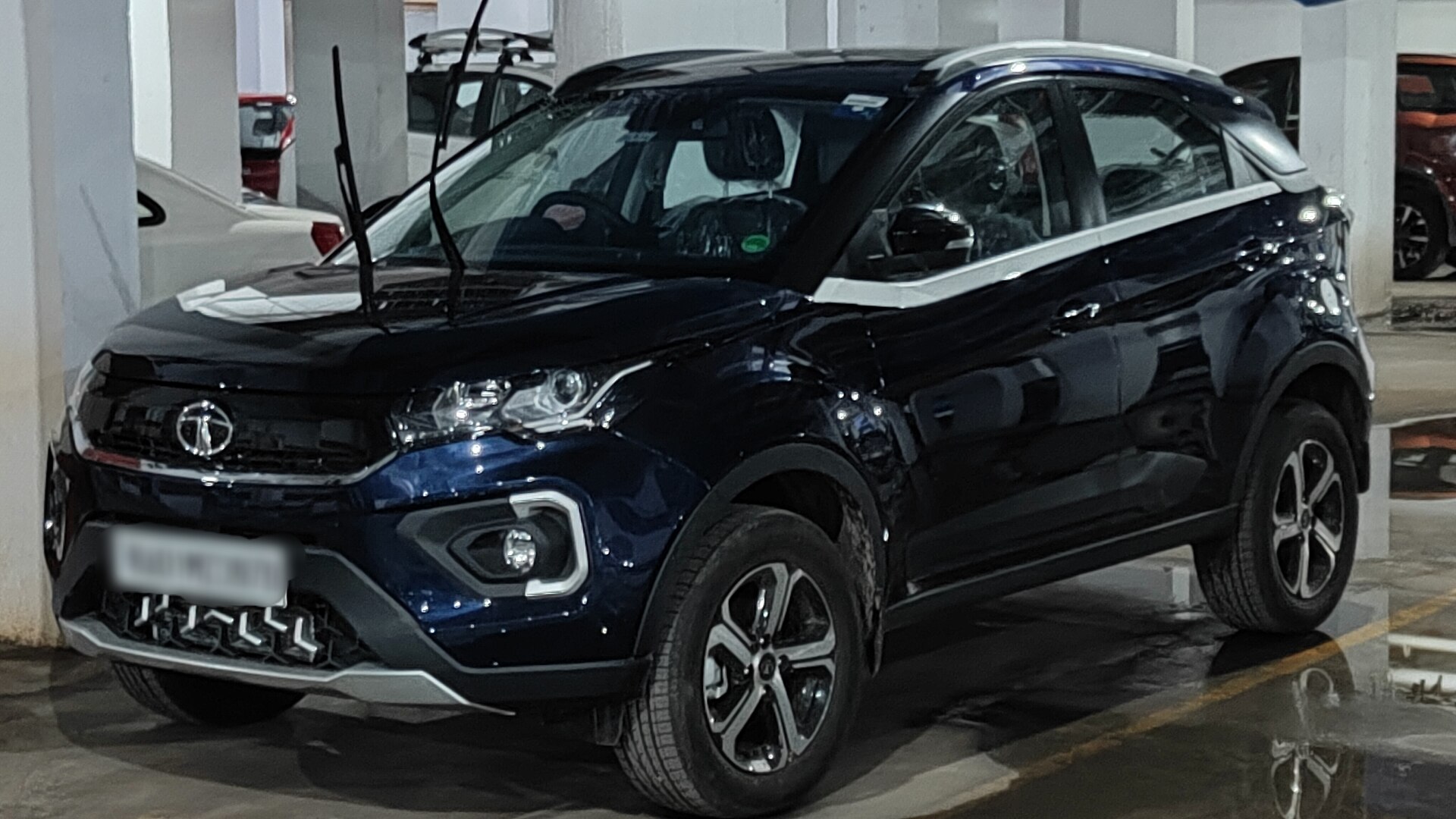
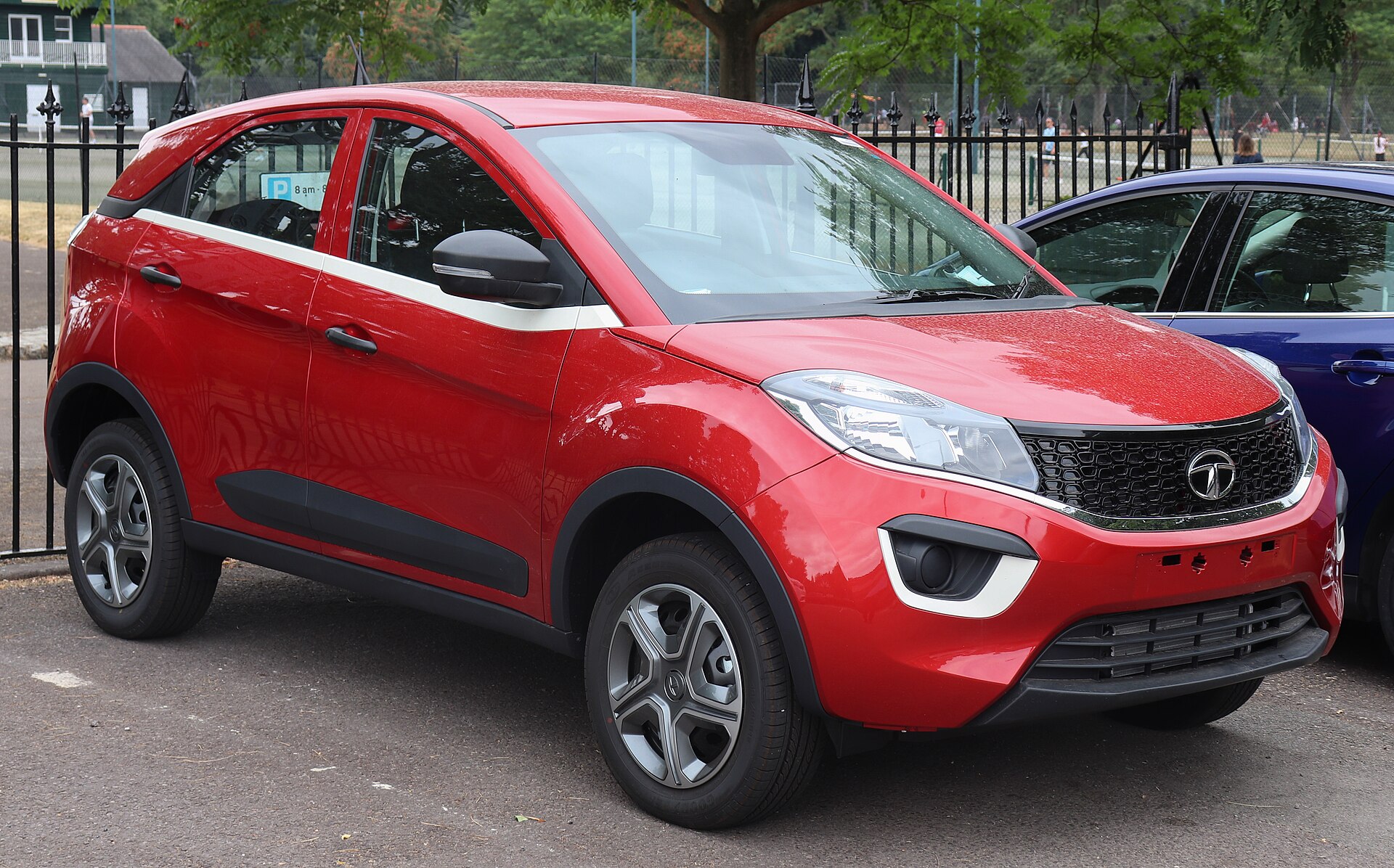
The Tata Nexon, a compact SUV built at Ranjangaon near Pune from July 2017 and on sale from September 2017, changed the brand's reputation for safety. In December 2018 it became the first car sold in India to achieve the maximum five-star Global NCAP rating for adult protection, and the 2024 facelift received five stars for both adults and children. Its 1.2-litre Revotron petrol engine has produced 88 kW (120 PS) since the 2020 facelift. By March 2025 the company had built 800,000 Nexons. Other safe cars sold in Europe are compared in the safest cars list.
The Nexon EV, revealed on 19 December 2019 with a 30.2 kWh battery and 95 kW (129 PS), was India's best-selling electric vehicle in 2020. In October 2021 the investment firm TPG put US$1 billion into the company's electric vehicle subsidiary, Tata Passenger Electric Mobility. Electric versions of more models followed, and in May 2022 the company bought Ford India's plant at Sanand.
The company today
The range of the 2020s includes the Tiago, Altroz, Tigor, Punch, Nexon, Curvv, Harrier, Safari and Sierra, many of them also available as electric cars. The Curvv coupé-SUV and its electric version Curvv.ev arrived in 2024. In 2025 the company was India's third-largest car maker by sales, behind Maruti Suzuki and Mahindra and ahead of Hyundai. The demerger announced in March 2024 took effect on 1 October 2025: the passenger car company became Tata Motors Passenger Vehicles, while the truck and bus business kept the name Tata Motors. N. Chandrasekaran has chaired the company since 2017; Ratan Tata was chairman in 1991–2012 and 2016–2017. All models in the catalogue are listed under Tata, and the British brands it owns under Jaguar and Land Rover.
Tata timeline
| Year | Event |
|---|---|
| 1945 | TELCO founded by JRD Tata (1 September) |
| 1954 | Joint venture with Daimler-Benz for trucks |
| 1962 | Renamed Tata Motors |
| 1991 | Tata Sierra, the first passenger vehicle |
| 1994 | Tata Sumo |
| 1998 | Tata Indica (30 December) |
| 2004 | Daewoo's truck business bought |
| 2008 | Nano presented; Jaguar Land Rover bought from Ford |
| 2009 | First Nano deliveries |
| 2017 | Nexon launched |
| 2018 | Nexon earns five Global NCAP stars; Nano and Indica end |
| 2019 | Nexon EV revealed |
| 2022 | Ford's Sanand plant bought |
| 2024 | Curvv and Curvv.ev |
| 2025 | Demerger: Tata Motors Passenger Vehicles |
Landmark Tata models
| Model | Years | Why it matters |
|---|---|---|
| Sierra | 1991 | Tata's first passenger vehicle |
| Sumo | 1994 | Described as India's first sport utility vehicle |
| Indica | 1998–2018 | Indian-developed car, 115,000 orders in a week |
| Nano | 2009–2018 | Ratan Tata's "people's car" |
| Nexon | 2017–present | First car in India with five Global NCAP adult stars |
| Nexon EV | 2020–present | India's best-selling electric car in 2020 |
Photo gallery

FAQ
Who owns Tata Motors?
Tata Motors Passenger Vehicles is part of the Tata Group and is listed on the Indian stock exchanges. It owns Jaguar Land Rover.
Does Tata own Jaguar and Land Rover?
Yes. The company bought Jaguar Land Rover from Ford in 2008, and JLR has been a wholly owned subsidiary since June 2008.
What was the first Tata car?
The Sierra multi-utility vehicle of 1991. The Indica of 1998 is described as the first fully indigenous Indian passenger car.
Why did the Tata Nano fail?
Sales peaked at 74,527 in 2011–2012 and then fell sharply. The car scored zero stars in Global NCAP's 2014 test, and production stopped in May 2018.
Is the Tata Nexon safe?
In December 2018 the Nexon became the first car sold in India to receive five Global NCAP stars for adult protection, and the 2024 facelift scored five stars for adults and children.
Sources
- Wikipedia - Tata Motors Passenger Vehicles (accessed 24 Oct 2026)
- Wikipedia - Tata Motors (accessed 24 Oct 2026)
- Wikipedia - Tata Indica (accessed 24 Oct 2026)
- Wikipedia - Tata Nano (accessed 24 Oct 2026)
- Wikipedia - Tata Nexon (accessed 24 Oct 2026)
Found a mistake? Report an error