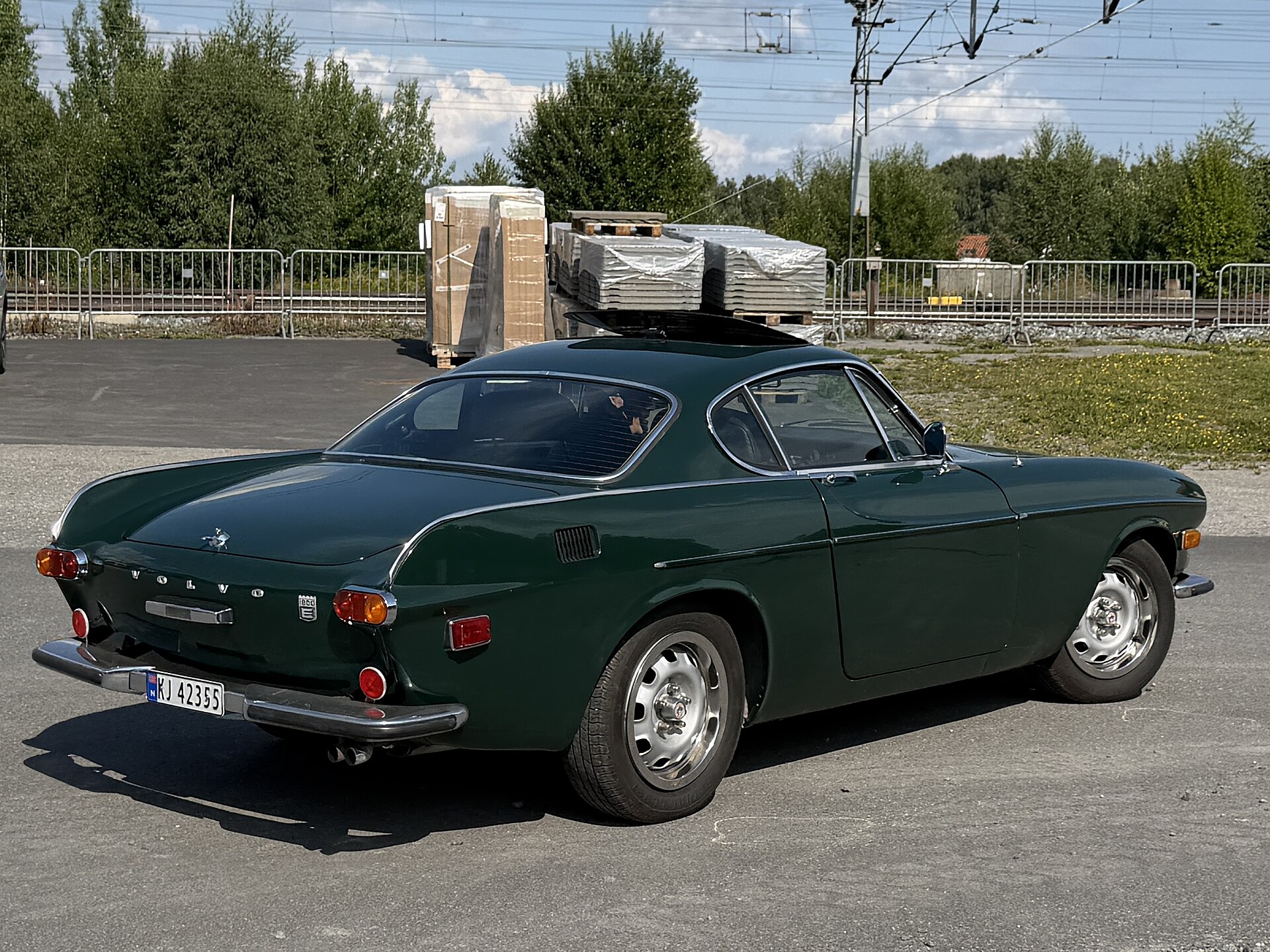
 Volvo Amazon
Specs, engines and history
Published Sources (1) Report an error
By Felix Hartmann, Automotive Technology & EV Contributor
- Built
- 1956–1970
- Top power
- 63 kW (86 PS)
Which Amazon to choose
Our verdict · Felix Hartmann
- For the original: an early four-door 121 or 122S of the 120 series.
- For driving: a two-door 122S or 123GT with the B18 engine and an overdrive gearbox (M41).
- For practicality: a 220 estate of 1962–1969, 4,490 mm long and the rarest of the three bodies with 73,220 built.
- For the last development: a 1969–1970 car with the 1,986 cc B20.
- For an automatic: a car from 1964 onwards with the Borg-Warner BW35 three-speed automatic.
The model code tells the version: 120 series for the four-door saloon, 130 for the two-door and 220 for the estate.
Today's Volvo models are in the Volvo catalogue, and more cars of the period under 1960s classics.
The Volvo Amazon is the mid-size Volvo built from 1956 to 1970 as a four-door saloon (120 series), a two-door saloon (130 series) and an estate (220 series). Styled by Jan Wilsgaard and powered by the B16, B18 and B20 four-cylinder engines, it was the car with which Volvo made front seat belts standard on every car in 1959. It later became the first series-production car with three-point front belts as standard. Volvo built 667,791 Amazons, about 60% of them for export.
In short
- Built 1956–1970 in Gothenburg (Lundby, then Torslanda) and assembled in Belgium, Canada, Chile and South Africa.
- 667,791 cars: 359,917 two-door saloons, 234,653 four-door saloons and 73,220 estates.
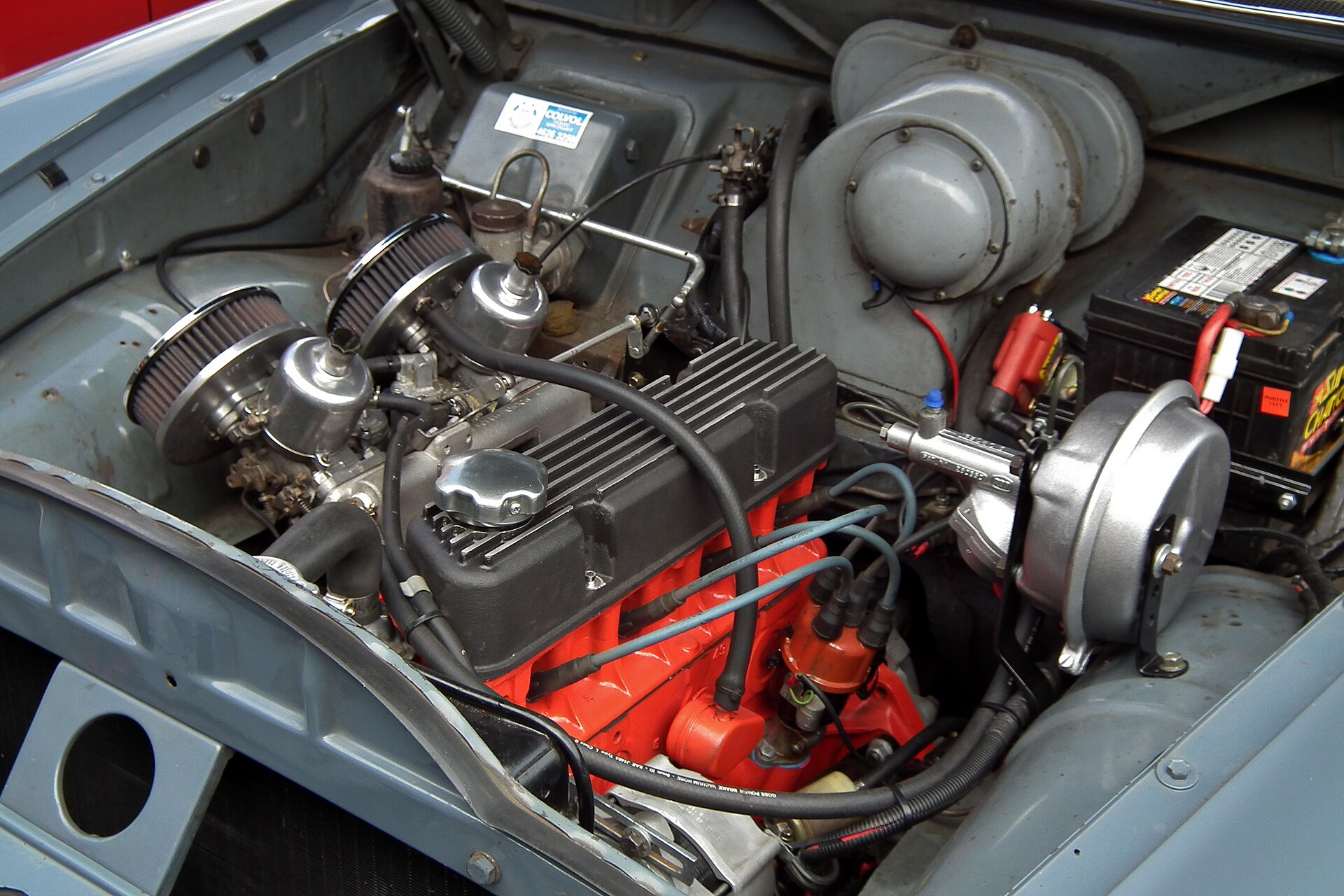
- Engines: B16 1,583 cc (49 kW / 66 bhp in the 121), B18 1,778 cc from 1962 (63 kW / 85 bhp in the 122S), B20 1,986 cc from 1969.
- Front seat belts standard from 1959; the first series-production car with three-point front belts as standard.
Specs by version
Engines
| Version | Engine | Power | Drive | Production years |
|---|---|---|---|---|
| 220 estate (B18) | 1.8 l · 4 cyl · Petrol B18 | — | Rear-wheel drive | 1962–1969 |
| B20 (1986 cc) | 2.0 l · 4 cyl · Petrol B20 | — | Rear-wheel drive | 1969–1970 |
| 121 (B16) | 1.6 l · 4 cyl · Petrol B16 | 49 kW 67 PS66 hp | Rear-wheel drive | 1956 |
| 122S (B18) | 1.8 l · 4 cyl · Petrol B18 | 63 kW 86 PS84 hp | Rear-wheel drive | 1962 |
Dimensions and weight
Verified Manufacturer and type-approval data from our catalog · Sources and methodology
Volvo Amazon at a glance
| Parameter | Value |
|---|---|
| Maker | Volvo Cars |
| Production | 1956 – 3 July 1970 in Sweden (last car assembled in Durban on 18 December 1970) |
| Built | 667,791 |
| Body styles | four-door saloon (120), two-door saloon (130), five-door estate (220) |
| Engines | B16 1,583 cc, B18 1,778 cc, B20 1,986 cc OHV inline-four |
| Power | 49 kW (66 bhp) 121 to 63 kW (85 bhp) 122S |
| Gearboxes | 3- and 4-speed manual, with or without overdrive; 3-speed automatic from 1964 |
| Designer | Jan Wilsgaard |
| Successor | Volvo 140 series |
Development and production history
Jan Wilsgaard designed the car. His styling was influenced by a Kaiser he saw in Gothenburg harbour, and English Wikipedia notes that it resembles American cars of the early 1950s. At launch the name was spelled "Amason". The German motorcycle maker Kreidler had already registered "Amazone", so Volvo could use the name only in Sweden. Elsewhere the cars were sold as the 121 or 122, and internally the series was called the 120.
The four-door saloon came first, and Volvo built it until 1967. In 1962 Volvo added the two-door saloon (130 series) and the estate (220 series), and the same year the 1,778 cc B18 engine replaced the original B16 in the more powerful versions. In 1964 production started at the new Torslanda plant next to the original Lundby factory in Gothenburg, and the Borg-Warner automatic became available. The 123GT followed in 1967 with a high-compression B18 from the P1800, and in 1969 the B18 was enlarged to the 1,986 cc B20.
With the arrival of its successor, the 140 series, the Amazon was phased out: the four-door ended in 1967, the estate in 1969, and in 1970 only the two-door remained. The last Swedish Amazon left the line on 3 July 1970. The very last car, number 359918, came from Durban, South Africa, on 18 December 1970.
| Year | Event |
|---|---|
| 1956 | Four-door saloon (120 series) introduced |
| 1959 | Front seat belts standard on all Amazons, including export cars |
| 1961 | M31 three-speed gearbox with overdrive offered for one year |
| 1962 | Two-door (130) and estate (220); B18 engine; 122S |
| 1964 | Torslanda plant opens; Borg-Warner BW35 automatic |
| 1967 | 123GT; last four-door saloons |
| 1969 | B20 engine; last estates |
| 3 July 1970 | Last Amazon built in Sweden |
| 18 December 1970 | Final car assembled in Durban |

Safety: the seat-belt pioneer
The Amazon is remembered above all for its seat belts. In 1959 Volvo made front seat belts standard on every Amazon, including export models, which English Wikipedia describes as a first for a car manufacturer. The Amazon later became the first series-production car with three-point front seat belts as standard equipment. Volvo's later safety work is part of our history of Volvo.
Design and engineering
The Amazon rides on a 2,590 mm wheelbase. The saloons are 4,395–4,450 mm long and the estate 4,490 mm; all are 1,620 mm wide and 1,505 mm high, and kerb weight is about 1,100 kg.

Engines and gearboxes
| Engine | Years | Displacement | Version | Power |
|---|---|---|---|---|
| B16 | from 1956 | 1,583 cc | 121, single carburettor | 49 kW (66 bhp) |
| B18 | from 1962 | 1,778 cc | 122S, two carburettors | 63 kW (85 bhp) |
| B18 high compression | from 1967 | 1,778 cc | 123GT, from the P1800 | — |
| B20 | from 1969 | 1,986 cc | enlarged B18 | — |
| Gearbox | Type | Notes |
|---|---|---|
| H6, M30 | 3-speed manual | — |
| M31 | 3-speed manual with overdrive | 1961 only |
| M40 | 4-speed manual | — |
| M41 | 4-speed manual with overdrive | — |
| Borg-Warner BW35 | 3-speed automatic | from 1964 |
The same B18 and B20 engine family powered the Volvo P1800 sports car, which was built on Amazon mechanicals. Our power converter gives the bhp figures in kW and PS.
Volvo Amazon specifications
| Parameter | Metric | Imperial |
|---|---|---|
| Wheelbase | 2,590 mm | 102.0 in |
| Length (saloon) | 4,395–4,450 mm | 173.0–175.2 in |
| Length (estate) | 4,490 mm | 176.8 in |
| Width | 1,620 mm | 63.8 in |
| Height | 1,505 mm | 59.3 in |
| Kerb weight | about 1,100 kg | about 2,400 lb |
| Engines | 1,583–1,986 cc OHV I4 | 96.6–121.2 cu in |
| Power | 49–63 kW (121, 122S) | 66–85 bhp |
Variants and production
| Variant | Years | Body | Built |
|---|---|---|---|
| 120 series (121, 122S) | 1956–1967 | four-door saloon | 234,653 |
| 130 series | 1962–1970 | two-door saloon | 359,917 |
| 220 series | 1962–1969 | five-door estate | 73,220 |
| 123GT | from 1967 | two-door saloon with P1800 engine | — |
English Wikipedia's notes also give 234,209 four-door saloons and 73,196 estates; the main figures are used here. Two-door cars made up 54% of all Amazons although they arrived six years after the four-door, and the estate, built for only seven years, accounted for 11%.

The Amazon in numbers
Spread over the fifteen calendar years from 1956 to 1970, the 667,791 cars correspond to an average of about 44,500 a year. With about 60% exported, roughly 400,000 Amazons were sold outside Sweden. The step from the single-carburettor B16 of the 121 to the twin-carburettor B18 of the 122S raised power from 49 to 63 kW, or by about 29%.
With a kerb weight of about 1,100 kg, the 122S had about 17 kg per kilowatt against about 22 kg for the 121. The P1800 sports car used the same engine family, but Volvo built only 47,492 of them. The Amazon outsold it about fourteen times over. Our power-to-weight calculator compares these ratios with any other car.
Assembly around the world
Besides Lundby and Torslanda in Gothenburg, the Amazon was assembled at Ghent in Belgium, Halifax in Canada, Arica in Chile and Durban in South Africa. Volvo exported about 60% of all cars. The Durban plant built the last car of all, in December 1970, five months after Swedish production had ended.

Legacy
The Amazon links Volvo's early post-war cars with its modern reputation. It was the car on which front seat belts became standard on every car in 1959, the first series-production car with three-point front belts as standard, and the basis for the P1800's mechanicals. Its long life also shows how Volvo developed a design step by step. Over fifteen years the company offered three engines, five manual gearboxes and an automatic, with the same three body styles from 1962 onwards. The two-door 130 series, introduced last, outlived the others and was the version that ended production in 1970.
Photo gallery

Volvo Amazon in our rankings
- No. 5 of 16 · Smallest station wagons (4,490 mm)
- No. 257 of 912 · Longest-running car nameplates (14 years · top 30%)
- No. 189 of 420 · Smallest cars (4,490 mm · top 45%)
- No. 248 of 420 · Longest cars (4,490 mm · top 60%)
- No. 90 of 131 · Biggest engines: sedans (1,986 cc · top 69%)
- No. 415 of 557 · Biggest engines: cars (1,986 cc · top 75%)
In production longer than 70% of ranked nameplates in the 1CARS catalog (No. 257 of 912).
FAQ
When was the Volvo Amazon produced?
From 1956 to 1970. The last Swedish car was built on 3 July 1970, and the final car was assembled in Durban on 18 December 1970.
How many Volvo Amazons were built?
667,791: 359,917 two-door saloons, 234,653 four-door saloons and 73,220 estates.
What engine does the Volvo Amazon have?
A four-cylinder OHV engine. The 121 has the 1,583 cc B16 with 49 kW (66 bhp), the 122S the 1,778 cc B18 with 63 kW (85 bhp), and from 1969 Volvo used the 1,986 cc B20.
Why is it called Amazon?
Volvo named it "Amason", but Kreidler had registered "Amazone", so the name could be used only in Sweden; elsewhere the car was the 121 or 122.
Was the Volvo Amazon the first car with three-point seat belts?
English Wikipedia says it became the first series-production car with three-point front seat belts as standard, after Volvo had made front belts standard on all Amazons in 1959.
Data sources
Data checked by an editor against the sources below.