 Volvo P1800
Specs, engines and history
Published Sources (1) Report an error
By Felix Hartmann, Automotive Technology & EV Contributor
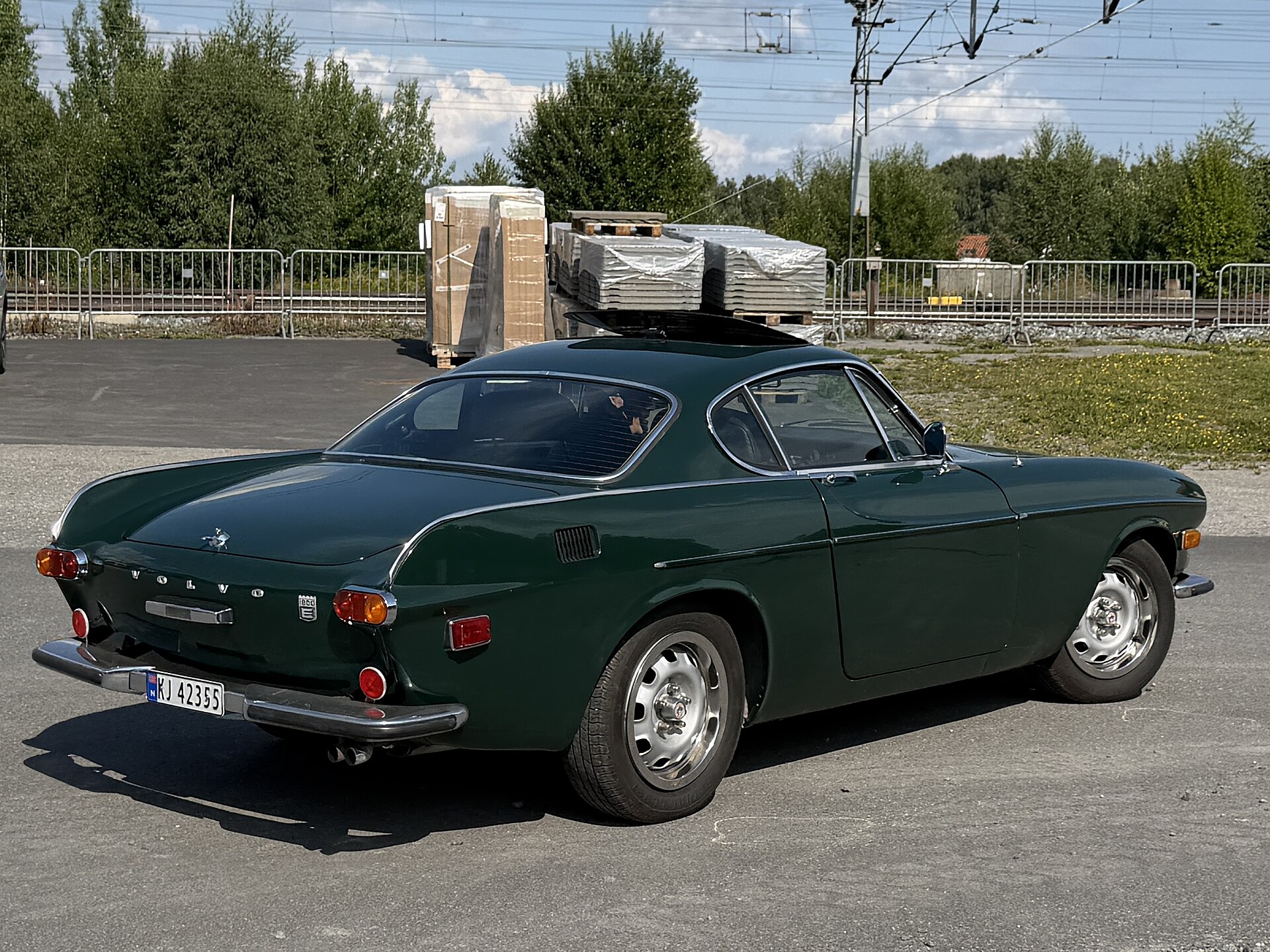
- Built
- 1961–1973
- Top power
- 97 kW (132 PS)
Which P1800 to choose
Our verdict · Felix Hartmann
- For history: an early Jensen-built P1800 of 1961–1963, of which about 6,000 were made.
- For long-distance touring: an 1800S with the M41 gearbox and overdrive, the type of car that covered 3 million miles.
- For performance: an 1800E with fuel injection, 97 kW (130 bhp) and disc brakes all round.
- For practicality: an 1800ES shooting brake with the glass tailgate, built only in 1972–1973.
Today's Volvo models are in the Volvo catalogue, and other cars of the period are under 1960s classics.
The Volvo P1800 is the two-seat sports coupé that Volvo built from 1961 to 1973, first by Jensen Motors in England and then in Gothenburg, with a final shooting-brake version called the 1800ES. It used the robust B18 and B20 four-cylinder engines of the Amazon saloon, gained fame as Simon Templar's car in the television series The Saint. One privately owned 1800S, Irv Gordon's car of 1966, passed 3 million miles.
In short
- 1961–1973; 47,492 built in total, about 8,000 of them 1800ES shooting brakes.
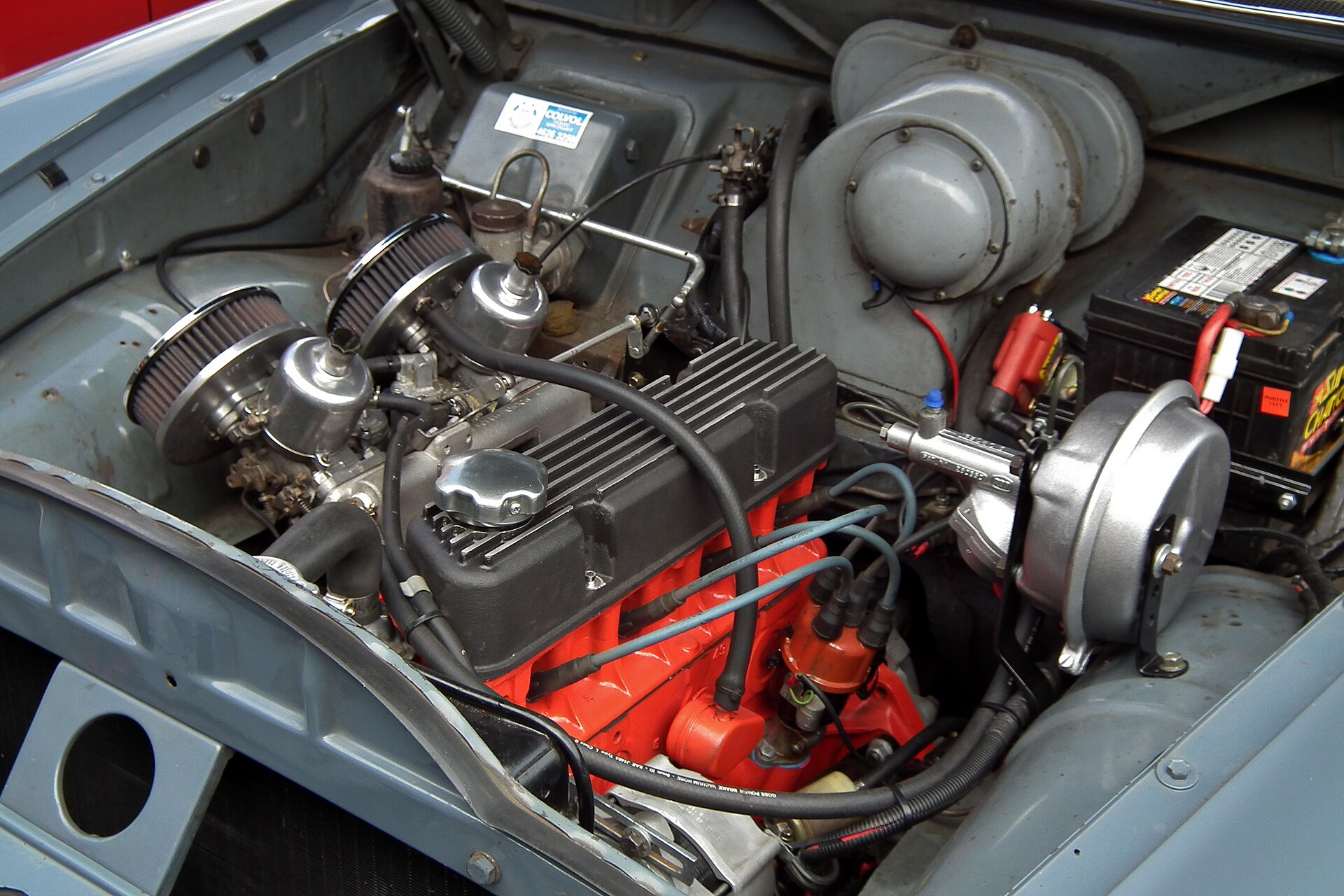
- Four-cylinder engines of 1,778 cc (B18) and 1,986 cc (B20), from 75 kW (100 hp) to 97 kW (130 bhp) with fuel injection in the 1800E.
- Styled by Pelle Petterson while working at Pietro Frua's studio; Volvo officially recognised his authorship only in 2009.
- 0–100 km/h in 9.5 seconds and about 190 km/h for the 1800E.
Specs by version
Engines
| Version | Engine | Power | Drive | Production years |
|---|---|---|---|---|
| P1800 (B18) | 1.8 l · 4 cyl · Petrol B18 | 75 kW 102 PS101 hp | Rear-wheel drive | 1961–1963 |
| 1800S (B18) | 1.8 l · 4 cyl · Petrol B18 | 86 kW 117 PS115 hp | Rear-wheel drive | 1963–1968 |
| 1800S (B20B) | 2.0 l · 4 cyl · Petrol B20B | 88 kW 120 PS118 hp | Rear-wheel drive | 1969 |
| 1800ES (B20F) | 2.0 l · 4 cyl · Petrol B20F | 93 kW 126 PS125 hp | Rear-wheel drive | 1972–1973 |
| 1800E (B20E) | 2.0 l · 4 cyl · Petrol B20E | 97 kW 132 PS130 hp | Rear-wheel drive | 1970–1972 |
Performance
Show all 1 versions
| Version | 0–100 km/h |
|---|---|
| 1800E (B20E) | 9.5 s 0–62 mph |
Dimensions and weight
Verified Manufacturer and type-approval data from our catalog · Sources and methodology
Volvo P1800 at a glance
| Parameter | Value |
|---|---|
| Maker | Volvo; assembly by Jensen Motors, West Bromwich (1961–1963), then Volvo Lundby, Gothenburg |
| Production | 1961 – 27 June 1973 |
| Built | 47,492 (39,407 coupés, 8,077 1800ES by the source's figures) |
| Body styles | two-door coupé; two-door shooting brake (1800ES) |
| Engines | B18 1,778 cc and B20 1,986 cc inline-four |
| Power | 75–97 kW (100–130 bhp) |
| Gearbox | four-speed manual, Laycock de Normanville overdrive; 3-speed automatic option on the ES |
| Designer | Pelle Petterson (under Pietro Frua) |
| Predecessor / successor | P1900 (68 built) / indirectly the 262C |
Development and production history
Volvo's first sports car, the P1900, sold only 68 examples. For its successor Volvo turned to Italy: the P1800 was styled by Pelle Petterson while he worked under Pietro Frua, whose studio was then a subsidiary of Ghia. Volvo officially recognised Petterson as its author only in 2009. The mechanical parts came from the Amazon (the 120 series) saloon.
The first contract went to Jensen Motors in West Bromwich, England, and covered 10,000 cars. Quality problems ended the arrangement early, after about 6,000 cars, and in 1963 production moved to Volvo's Lundby plant in Gothenburg. From then on the car was called the 1800S, the S standing for Sweden.
The 1800 was developed step by step. Power rose to 86 kW (115 bhp) in 1966. The 1,986 cc B20B arrived in 1969 with 88 kW (118 bhp). The 1800E of 1970 brought Bosch D-Jetronic fuel injection and disc brakes on all four wheels. In 1972 Volvo added the 1800ES, a two-door shooting brake with a frameless all-glass tailgate; in 1973 only ES models were built. Production ended on 27 June 1973. Stricter US safety and emission rules for 1974 would have required an expensive redesign, which Volvo judged too costly for a low-volume model.
| Year | Event |
|---|---|
| 1961 | P1800 production starts at Jensen, West Bromwich |
| 1962 | Roger Moore drives a white P1800 in The Saint |
| 1963 | Production moves to Lundby, Gothenburg; name 1800S |
| 1966 | B18 rated at 86 kW (115 bhp) |
| 1969 | B20B 1,986 cc, 88 kW (118 bhp) |
| 1970 | 1800E with fuel injection and four disc brakes |
| 1972 | 1800ES shooting brake |
| 27 June 1973 | End of production |


Design and engineering
The P1800 is a compact coupé on a 2,450 mm wheelbase, 4,350–4,400 mm long, 1,700 mm wide and 1,280–1,285 mm high, weighing 1,130–1,175 kg. Under the body sit the engine, gearbox and running gear derived from the Amazon saloon.
The ES was the most significant change to the design: a two-door shooting brake with a frameless all-glass tailgate, which turned the 1800 into a sports estate. It was built only in 1972 and 1973, and 8,077 were made, according to the figures in English Wikipedia.

Engines and gearboxes
| Version | Years | Engine | Power |
|---|---|---|---|
| P1800 | 1961–1963 | B18, 1,778 cc | 75 kW (100 hp) |
| 1800S | 1963–1969 | B18, 1,778 cc | 86 kW (115 bhp) from 1966 |
| 1800S | 1969 | B20B, 1,986 cc | 88 kW (118 bhp) |
| 1800E | 1970–1972 | B20E, 1,986 cc, Bosch D-Jetronic | 97 kW (130 bhp) |
| 1800ES | 1972–1973 | B20F, 1,986 cc | 93 kW (125 bhp) |
Until 1963 the cars used the M40 four-speed gearbox. From 1963 to 1972 the M41 four-speed with Laycock de Normanville electric overdrive was the popular choice. Its overdrive ratio was 0.756:1 in the D-type unit (to 1969) and 0.797:1 in the J-type (to 1973). A three-speed Borg-Warner automatic was optional on the 1800ES.
English Wikipedia gives 175 km/h (109 mph) for the 1966 1800S and about 190 km/h (118 mph) for the 1800E, which reaches 100 km/h in 9.5 seconds. It adds that non-overdrive cars could reach just under 193 km/h (120 mph) and overdrive cars about 177 km/h (110 mph). Our power converter gives the bhp figures in kW and PS.

Volvo P1800 specifications
| Parameter | Metric | Imperial |
|---|---|---|
| Wheelbase | 2,450 mm | 96.5 in |
| Length | 4,350–4,400 mm | 171.3–173.2 in |
| Width | 1,700 mm | 66.9 in |
| Height | 1,280–1,285 mm | 50.4–50.6 in |
| Kerb weight | 1,130–1,175 kg | 2,491–2,590 lb |
| Engines | 1,778 cc B18; 1,986 cc B20 | 108.5 / 121.2 cu in |
| Power | 75–97 kW | 100–130 bhp |
| 0–100 km/h (1800E) | 9.5 s | - |
| Top speed (1800E) | about 190 km/h | 118 mph |
Variants and derivatives
| Variant | Years | Body / purpose | Engine | Notes |
|---|---|---|---|---|
| P1800 | 1961–1963 | coupé | B18 | built by Jensen; about 6,000 |
| 1800S | 1963–1969 | coupé | B18, B20B from 1969 | S for Sweden; Lundby plant |
| 1800E | 1970–1972 | coupé | B20E, fuel injection | first 1800 with four disc brakes |
| 1800ES | 1972–1973 | two-door shooting brake | B20F | frameless glass tailgate; 8,077 built |
The four names describe one continuous model: the coupé of 1961 was refined but never replaced. The only body variant, the ES, was not developed further because a redesign for the coming US rules was judged too expensive. The P1900 that preceded it had sold only 68 cars, so the P1800 was in practice Volvo's first sports car built in large numbers.
The Saint and the 3-million-mile car
The P1800 became widely known through television. In The Saint (1962–1969) Roger Moore, as Simon Templar, drove a white 1962 P1800 with the registration ST1, and Moore also bought a P1800 for himself.
The car's reputation for durability rests on one owner. Irv Gordon's 1966 1800S was certified in 1998 at 1.69 million miles. It passed 2 million miles in 2002 and 3 million miles in 2013, and it had covered more than 3.2 million miles by Gordon's death on 15 November 2018. That is about 5.1 million kilometres, more than 13 times the distance to the Moon. The Volvo brand's story is told in our history of Volvo.

The P1800 in numbers
The figures in English Wikipedia allow a few calculations. The roughly 6,000 Jensen-built cars make up about 13% of the 47,492 total, and the 8,077 shooting brakes about 17%, although the ES was built for only two years. Over the twelve years from 1961 to 1973, power grew from 75 kW to 97 kW, or by about 29%, without any increase in the number of cylinders. With 97 kW and about 1,130–1,175 kg, the 1800E has about 12 kg per kilowatt, which explains its 9.5-second sprint to 100 km/h.
Irv Gordon's car is a story of its own in numbers. More than 3.2 million miles, or about 5.1 million kilometres, over the 52 years from 1966 to 2018 is an average of roughly 99,000 km a year, or around 270 km every day. Our power-to-weight calculator and cost of ownership calculator put such figures in today's terms.
Photo gallery

Volvo P1800 in our rankings
- No. 9 of 16 · Biggest engines: station wagons (1,986 cc)
- No. 291 of 912 · Longest-running car nameplates (12 years · top 35%)
- No. 416 of 557 · Biggest engines: cars (1,986 cc · top 75%)
- No. 191 of 250 · Quickest cars, 0–100 (9.5 s · top 77%)
- No. 75 of 94 · Most powerful cars of the 1960s (88 kW · top 80%)
- No. 18 of 22 · Most powerful station wagons (93 kW · top 82%)
In production longer than 65% of ranked nameplates in the 1CARS catalog (No. 291 of 912).
FAQ
When was the Volvo P1800 produced, and where?
From 1961 to 27 June 1973: by Jensen Motors in West Bromwich, England, until 1963 and then at Volvo's Lundby plant in Gothenburg.
How many Volvo P1800 were built?
47,492 in total; the source's version figures are 39,407 coupés and 8,077 1800ES.
What engine does the Volvo P1800 have?
A four-cylinder B18 (1,778 cc) or B20 (1,986 cc), from 75 kW (100 hp) to 97 kW (130 bhp) in the fuel-injected 1800E.
Who designed the Volvo P1800?
Pelle Petterson, while working at Pietro Frua's studio; Volvo officially recognised his authorship in 2009.
What is the highest-mileage Volvo P1800?
Irv Gordon's 1966 1800S, which covered more than 3.2 million miles by November 2018.
Data sources
Data checked by an editor against the sources below.