 Citroen SM
Specs, engines and history
Published Sources (1) Report an error
By Oleksandr Hnatiuk, Automotive Editor & Used Car Specialist
- Built
- 1970–1975
- Top power
- 132 kW (179 PS)
Which SM to choose
Our verdict · Oleksandr Hnatiuk
- For originality: an early 2.7 with three Weber carburettors, the most common version (7,133 built).
- For performance: a 2.7 with Bosch D-Jetronic injection, 131 kW (178 PS).
- For relaxed touring: a 3.0 with the three-speed Borg-Warner automatic (1,012 built).
- For rarity: a US-specification car with four round headlamps, or one of the Chapron conversions.
The V6 and the hydraulics both need specialist care. Today's Citroën models are in the Citroën catalogue, and more cars of the decade are under 1970s classics.
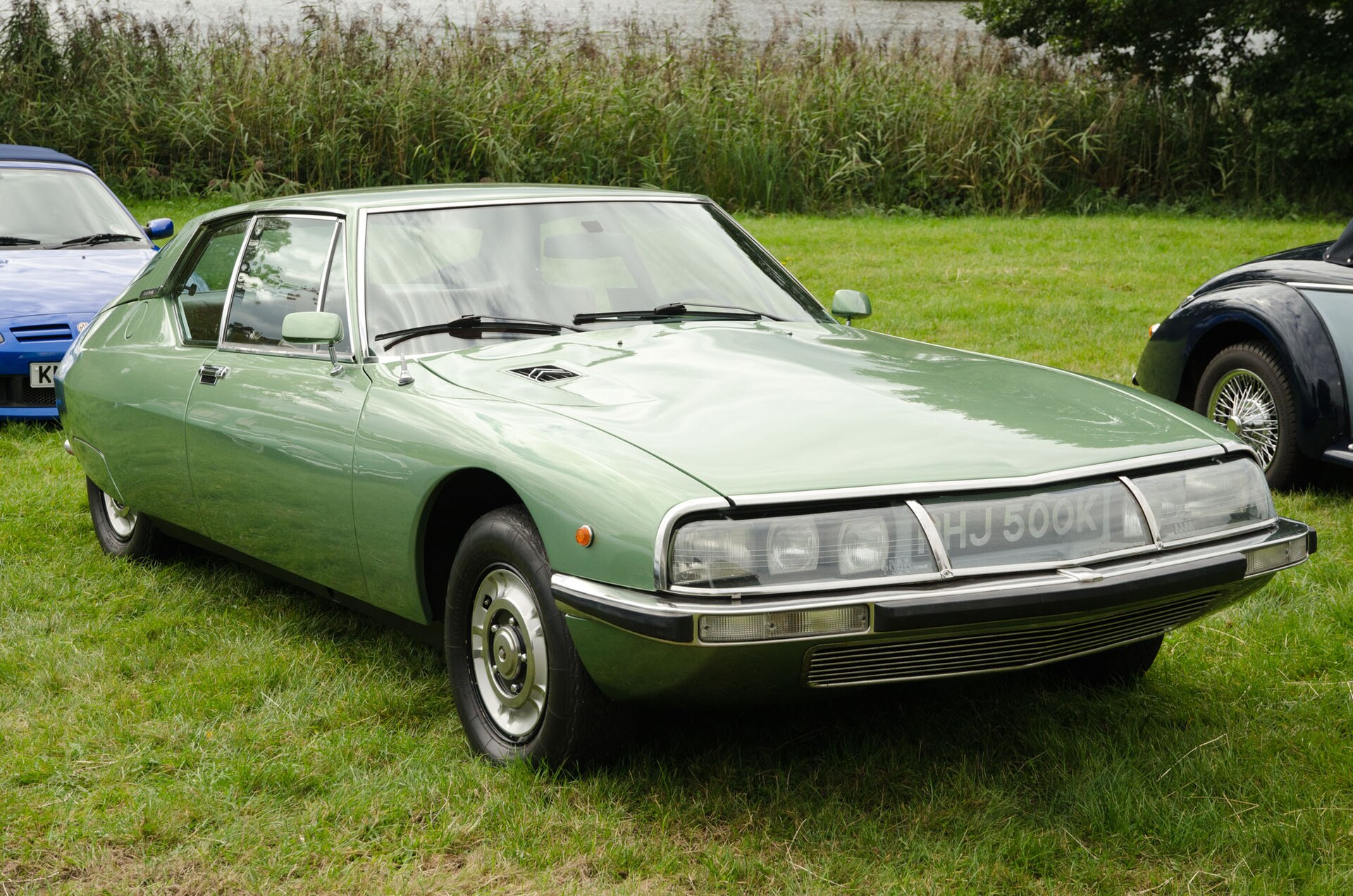
The Citroën SM is the front-wheel-drive grand tourer that Citroën built from 1970 to 1975 with a Maserati V6 engine. Presented at the Geneva Motor Show in March 1970, it combined the hydropneumatic suspension of the DS with speed-sensitive powered steering, six swivelling headlamps and a top speed of 220 km/h. Only 12,920 were made before the oil crisis, the loss of the US market and Citroën's financial collapse ended production.
In short
- Built 1970–1975 at Javel in Paris and finally by Ligier; 12,920 cars in total.
- Maserati C114 90° V6 designed by Giulio Alfieri: 2.7 litres with 125 kW (170 PS) or 131 kW (178 PS) with fuel injection, 3.0 litres with 132 kW (180 PS).
- Factory top speed 220 km/h; independent tests reached 235 km/h.
- Motor Trend Car of the Year 1972 and third in the 1971 European Car of the Year contest.
Size at a glance
| Dimensions | Citroen SM I |
|---|---|
| Length | 4,893 mm192.6 in |
| Width | 1,836 mm72.3 in |
| Height | 1,324 mm52.1 in |
| Wheelbase | 2,900 mm114.2 in |
Specs by version
Engines
| Version | Engine | Power | Gearbox | Drive |
|---|---|---|---|---|
| 2.7 V6 carburettor | 2.7 l · 6 cyl · Petrol 2,670 cc | 125 kW 170 PS168 hp | 5-sp Manual | Front-wheel drive |
| 2.7 V6 Injection | 2.7 l · 6 cyl · Petrol 2,670 cc | 131 kW 178 PS176 hp | 5-sp Manual | Front-wheel drive |
| 3.0 V6 automatic | 3.0 l · 6 cyl · Petrol 2,965 cc | 132 kW 179 PS177 hp | 3-sp Automatic | Front-wheel drive |
Performance
Show all 3 versions
| Version | Top speed |
|---|---|
| 2.7 V6 carburettor | 220 km/h137 mph |
| 2.7 V6 Injection | 220 km/h137 mph |
| 3.0 V6 automatic | 220 km/h137 mph |
Dimensions and weight
Show all 3 versions
| Version | Length | Width | Height | Wheelbase |
|---|---|---|---|---|
| 2.7 V6 carburettor | 4,893 mm192.6 in | 1,836 mm72.3 in | 1,324 mm52.1 in | 2,900 mm114.2 in |
| 2.7 V6 Injection | 4,893 mm192.6 in | 1,836 mm72.3 in | 1,324 mm52.1 in | 2,900 mm114.2 in |
| 3.0 V6 automatic | 4,893 mm192.6 in | 1,836 mm72.3 in | 1,324 mm52.1 in | 2,900 mm114.2 in |
Verified Manufacturer and type-approval data from our catalog · Sources and methodology
Citroën SM at a glance
| Parameter | Value |
|---|---|
| Maker | Citroën; final cars by Ligier |
| Production | 1970–1975 (French sales from September 1970) |
| Built | 12,920 |
| Body | two-door coupé; Chapron convertibles and saloons |
| Engine | Maserati C114 90° V6, 2,670 cc or 2,965 cc |
| Power | 125–132 kW (170–180 PS) |
| Gearbox | 5-speed manual; 3-speed Borg-Warner automatic |
| Layout | front engine behind the front axle, front-wheel drive |
| Designer | Robert Opron (body), Giulio Alfieri (engine) |
Development and production history
Citroën bought Maserati in 1968, and the SM was the first result. Robert Opron, Citroën's chief designer, styled the body in-house; Maserati's Giulio Alfieri designed a compact 90-degree V6 of aluminium, weighing about 140 kg, that sits behind the front axle. The car was launched at the Geneva Motor Show in March 1970, and French deliveries began that September.
Sales peaked straight away. Citroën built 868 cars in 1970 and 4,988 in 1971, then 4,036 in 1972 and 2,619 in 1973. North America took 1,250 cars in 1972 and 1,150 in 1973. After that the numbers collapsed: 294 cars in 1974 and 115 in 1975. English Wikipedia also states that the last 135 cars were built by Ligier, which does not fully agree with its own yearly figure for 1975.
Several things ended the SM. The 1973 oil crisis and the recession hurt sales of a fast, thirsty coupé, although English Wikipedia notes that many thirstier cars were launched at the same time. In the United States the SM could not meet the 5 mph bumper rule because of its height-adjustable suspension, and Citroën did not receive an exemption, so US sales ended after the 1974 model year. Of the 134 US-specification 1974 cars, none went to American buyers; they were sold in Japan. Citroën went bankrupt in 1974 and Peugeot took control. Peugeot sold Maserati in May 1975 and stopped the SM shortly afterwards.
| Year | Event |
|---|---|
| 1968 | Citroën buys Maserati |
| March 1970 | Launch at the Geneva Motor Show |
| September 1970 | French sales begin |
| 1971 | Win on its first event, the Rallye du Maroc; 4,988 built, the best year |
| 1972 | Motor Trend Car of the Year; US sales of 1,250 |
| 1973 | Oil crisis; 2,619 built |
| 1974 | Citroën bankrupt, Peugeot takes control; Javel plant closes; US sales end |
| 1975 | Last cars built by Ligier; Peugeot sells Maserati in May |

Design and engineering
The SM uses the hydropneumatic self-levelling suspension of the DS, with four disc brakes and inboard discs at the front. Its steering, called DIRAVI, was fully powered and speed-sensitive, and the system was later used on the CX. The front carried six swivelling headlamps; they were illegal in the United States, where the SM had four exposed round sealed-beam lamps instead.
Citroën claimed a drag coefficient of 0.26 at launch, a figure later revised to 0.339. Michelin glass-fibre wheels were offered as an option. The coupé is 4,893 mm long on a 2,900 mm wheelbase, and its kerb weight is quoted at 1,450–1,520 kg, depending on the source and the version.

The Maserati V6 engine
| Version | Displacement | Fuel system | Power | Built |
|---|---|---|---|---|
| 2.7 carburettor, manual | 2,670 cc | three Weber carburettors | 125 kW (170 PS) | 7,133 |
| 2.7 carburettor, automatic | 2,670 cc | Weber carburettors | 125 kW (170 PS) | 675 |
| 2.7 injection | 2,670 cc | Bosch D-Jetronic | 131 kW (178 PS) | 3,500 |
| 3.0 manual | 2,965 cc | - | 132 kW (180 PS) | 600 |
| 3.0 automatic | 2,965 cc | - | 132 kW (180 PS) | 1,012 |
Most SMs have a five-speed manual gearbox. A three-speed Borg-Warner automatic was offered in North America in 1972–1973 and in Europe in 1974–1975. Citroën gave a top speed of 220 km/h (137 mph), and independent tests reached 235 km/h (146 mph); 0–60 mph took 8.5 seconds. Our power converter gives the PS figures in kW and hp, and the power-to-weight calculator shows what 131 kW means for a car of about 1,450 kg.

Citroën SM specifications
| Parameter | Metric | Imperial |
|---|---|---|
| Length | 4,893 mm | 192.6 in |
| Width | 1,836 mm | 72.3 in |
| Height | 1,324 mm | 52.1 in |
| Wheelbase | 2,900 mm | 114.2 in |
| Kerb weight | 1,450–1,520 kg | 3,197–3,351 lb |
| Engine weight | about 140 kg | about 309 lb |
| Drag coefficient | 0.26 claimed; 0.339 revised | - |
| Top speed | 220 km/h (factory) | 137 mph |
| Suspension | hydropneumatic, self-levelling | - |
| Steering | DIRAVI, fully powered, speed-sensitive | - |
Production by version and market
The version figures in English Wikipedia show how the SM was actually bought. Carburettor cars with the manual gearbox made up 7,133 of the 12,920 built, or about 55%. The fuel-injected 2.7 added 3,500 cars (27%). The 3.0-litre engine, built in smaller numbers, accounts for 1,612 cars, of which 1,012 had the automatic gearbox; together with the 675 automatic 2.7s, fewer than one SM in seven was an automatic.
The market split was just as uneven. North America took 1,250 cars in 1972 and 1,150 in 1973, so North America absorbed more than a third of the 6,655 SMs built in those two years. When US sales stopped after the 1974 model year, the SM lost its largest export market at the same moment as the oil crisis hit European demand. Output fell from 2,619 cars in 1973 to 294 in 1974.
Variants and derivatives
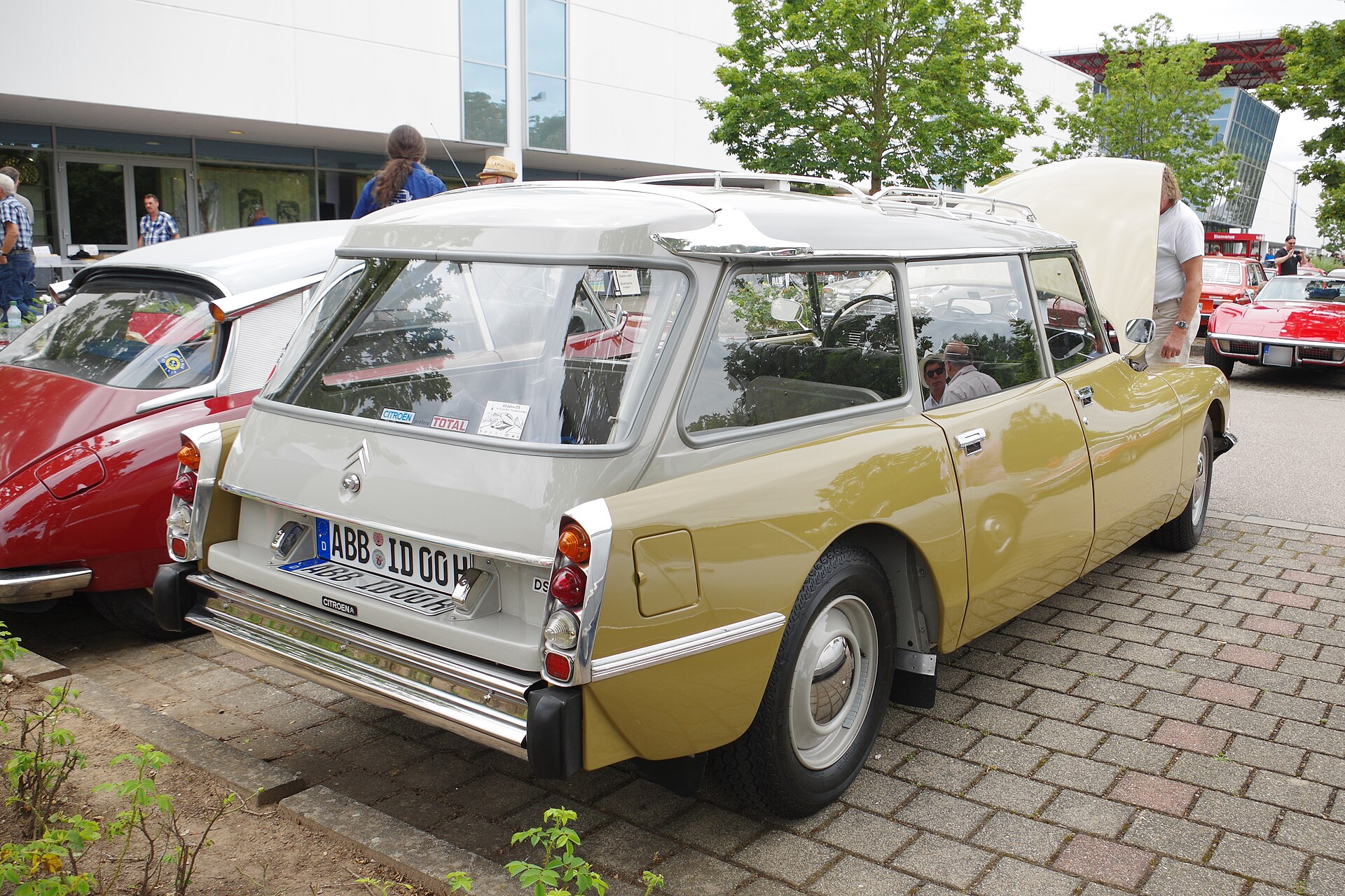
Henri Chapron built the rare coachbuilt SMs. Two four-door Présidentielle convertibles, stretched to 5.60 m, served French presidents from Georges Pompidou to Jacques Chirac; they were retired after 37 years with about 25,000 km on the clock. Chapron also made five Mylord convertibles and seven Opéra saloons. In February 2014 a Mylord sold at auction for €548,320.
The engine lived on at Maserati. The Quattroporte II, a four-door car on SM mechanicals, entered production in 1976, and 12 were built by 1978. Citroën named no direct successor, but the CX of 1974 carried forward much of the SM's technology, including the DIRAVI steering.
| Variant | Years | Body / purpose | Notes |
|---|---|---|---|
| SM 2.7 | 1970–1975 | coupé | carburettors, later injection |
| SM 3.0 | - | coupé | manual or automatic |
| SM Présidentielle (Chapron) | - | four-door convertible, 5.60 m | 2 built for the presidency of France |
| SM Mylord (Chapron) | - | convertible | 5 built; €548,320 at auction in February 2014 |
| SM Opéra (Chapron) | - | four-door saloon | 7 built |
| Maserati Quattroporte II | 1976–1978 | saloon on SM mechanicals | 12 built |
Rallying and awards
The SM won its first competitive outing, the 1971 Rallye du Maroc. It finished third in the 1971 European Car of the Year contest and won Motor Trend's Car of the Year award for 1972. More of Citroën's story is in our history of Citroën, and the story of its Italian engine partner is in the history of Maserati.

Photo gallery

Citroen SM in our rankings
- No. 3 of 16 · Fastest cars of the 1970s (220 km/h)
- No. 9 of 23 · Fastest French cars (220 km/h)
- No. 14 of 89 · Longest coupes (4,893 mm · top 16%)
- No. 81 of 420 · Longest cars (4,893 mm · top 20%)
- No. 22 of 56 · Most powerful French cars (132 kW · top 40%)
- No. 132 of 281 · Fastest cars (220 km/h · top 49%)
Longer than 84% of ranked coupes in the 1CARS catalog (No. 14 of 89).
FAQ
When was the Citroën SM produced?
From 1970 to 1975. It was launched at the 1970 Geneva Motor Show; production ended in 1975 after Peugeot took control of Citroën.
How many Citroën SM were built?
12,920 in total, most of them (4,988) in 1971.
What engine does the Citroën SM have?
A Maserati C114 90-degree V6 designed by Giulio Alfieri, with 2,670 cc and 125–131 kW (170–178 PS), or 2,965 cc and 132 kW (180 PS).
Why was the SM sold with different headlamps in the US?
Its six swivelling headlamps were illegal in the United States, so US cars had four exposed round sealed-beam lamps.
What is the top speed of the Citroën SM?
Citroën claimed 220 km/h (137 mph); independent tests reached 235 km/h (146 mph).
Data sources
Data checked by an editor against the sources below.