 Citroen Jumpy
All generations, specs and history
Published Sources (3) Report an error
By Felix Hartmann, Automotive Technology & EV Contributor
- Built
- 1994–present
- Generations
- 3 · I to III
- Top power
- 132 kW (179 PS)
Timeline
Jumpy generations
Click a generation for its own page


- Jumpy I 1994–2006 · Van, Minibus · 51–100 kW (69–136 PS)
- Jumpy II 2007–2016 · Van, Minibus · 66–120 kW (90–163 PS)
- Jumpy III Current 2016–now · Van, Minibus · 67–132 kW (91–179 PS)
Newest first · 3 generations since 1994
-
2016
-
2007
-
1994
All generations by year: Jumpy III (2016–now) · Jumpy II (2007–2016) · Jumpy I (1994–2006)
Which one is mine?
Pick the year of first registration to see which generation it is.
Check by VINWhich Jumpy to buy: verdict
Our verdict · Felix Hartmann
- For city work: the 4.6-metre XS van, short enough for tight streets.
- Best all-rounder: an M van with the BlueHDi 145 and the eight-speed automatic.
- For heavy loads and towing: the BlueHDi 180, the most powerful diesel.
- For emission-free zones: the ë-Jumpy with the 75 kWh battery and up to 350 km of range.
The Citroën Jumpy is Citroën's mid-size van, sold since 1994 and called the Dispatch in the UK and other English-speaking markets. All three generations were developed with partners: Fiat and Peugeot for the first two, and the Stellantis family, including Toyota's ProAce, for the current one. Since 2020 it has also been offered as the electric ë-Jumpy (written ë-Jumpy by Citroën), and the 2024 facelift brought new driver assistance and a range of up to 350 km.
In short
- Three generations: 1994-2006, 2007-2016 and since 2016; built mainly at the Sevel Nord plant in northern France.
- Current van in three lengths, from 4,609 to 5,309 mm, with up to 6.6 m3 of load space and up to 1,275 kg payload.
- Diesels from 88 kW (120 PS) to 132 kW (180 PS) after the 2024 facelift; ë-Jumpy with 100 kW (136 PS) and 50 or 75 kWh.
- Euro NCAP's 2023 commercial van safety rating: Bronze, 24%.
Specs by version
Engines
| Version | Engine | Power | Torque | Gearbox | Drive | Production years |
|---|---|---|---|---|---|---|
| Electric · 1 version | ||||||
| III · e-Jumpy 75 kWh | Electric | 100 kW 136 PS134 hp | 260 Nm192 lb-ft | Single-speed | Front-wheel drive | 2020 |
| Diesel · 2 versions | ||||||
| III · BlueHDi 120 | Diesel | 88 kW 120 PS118 hp | - | 6-sp Manual | Front-wheel drive | 2024 |
| III · BlueHDi 180 EAT8 | Diesel | 132 kW 179 PS177 hp | - | 8-sp Automatic | Front-wheel drive | 2024 |
Performance
Dimensions and weight
Show all 1 versions
| Version | Battery |
|---|---|
| III · 2016–present | |
| III · e-Jumpy 75 kWh | 75 kWh |
Verified Manufacturer and type-approval data from our catalog · Sources and methodology
Jumpy at a glance
| Specification | Citroën Jumpy (third generation) |
|---|---|
| Segment | mid-size light commercial vehicle |
| Body styles | panel van, crew van, minibus (Combi), chassis cab |
| Production | since 2016 (Jumpy name since 1994) |
| Plants | Sevel Nord, Lieu-Saint-Amand (France); also Luton (UK, to 2025), Ellesmere Port (UK, from 2026), Bursa (Turkey), Montevideo (Uruguay) |
| Lengths | 4,609 / 4,959 / 5,309 mm |
| Engines | BlueHDi diesels; electric (ë-Jumpy) |
| Power range | 67-132 kW (91-180 PS) |
| Sister models | Peugeot Expert, Toyota ProAce, Opel/Vauxhall Vivaro (from 2019), Fiat Scudo (from 2022) |
The passenger versions of the current van are sold as the Citroën SpaceTourer, Peugeot Traveller and Toyota ProAce Verso. All Citroën models are listed on our Citroën brand page.

Generations
| Generation | Code | Years | Body styles | Engines | Power (kW / hp) |
|---|---|---|---|---|---|
| Jumpy I | I | 1994-2006 | van, minibus | 1.6, 2.0 petrol; 1.9 D, 1.9 TD, 2.0 HDi diesel | 51-100 kW (69-136 PS) |
| Jumpy II | II | 2007-2016 | van, minibus | 2.0 petrol; 1.6 and 2.0 HDi diesel | 66-120 kW (90-163 PS) |
| Jumpy III | III | since 2016 | van, minibus, chassis cab | BlueHDi diesels; electric from 2020 | 67-132 kW (91-180 PS) |
First generation (1994-2006)
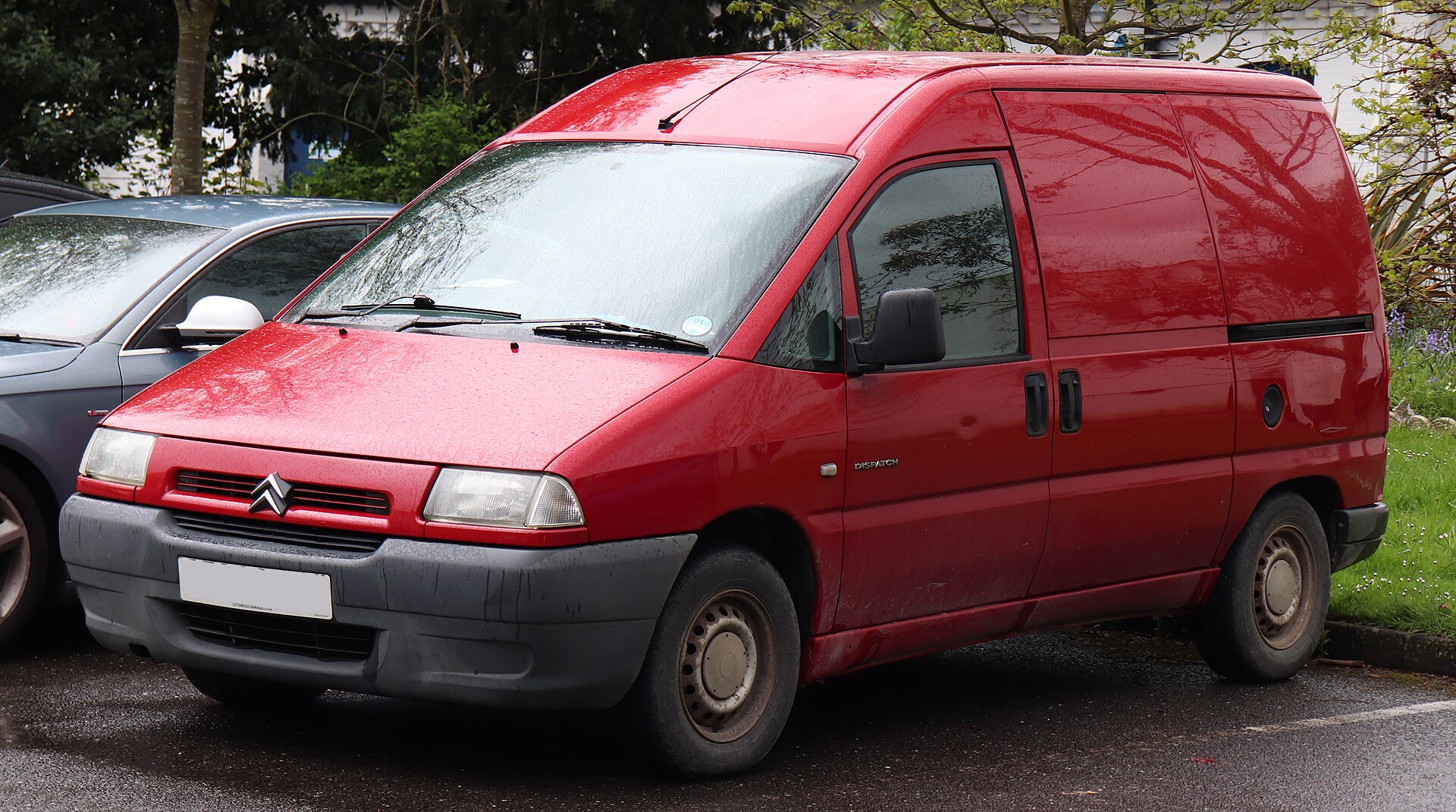
Citroën launched the Jumpy in June 1994; the Peugeot Expert followed in July 1995 and the Fiat Scudo in February 1996. The three vans shared their mechanicals and body structure with the Sevel Nord "Eurovan" people carriers. Engines were a 1.6 petrol with 58 kW (79 PS), later a 2.0 petrol with 100 kW (136 PS), naturally aspirated and turbocharged 1.9 diesels with 51 and 68 kW (69 and 92 PS), and from 1999 a 2.0 common-rail diesel with 69 or 80 kW (94 or 109 PS). A facelift in March 2004 brought a new front with combined headlamp and indicator units.
Second generation (2007-2016)
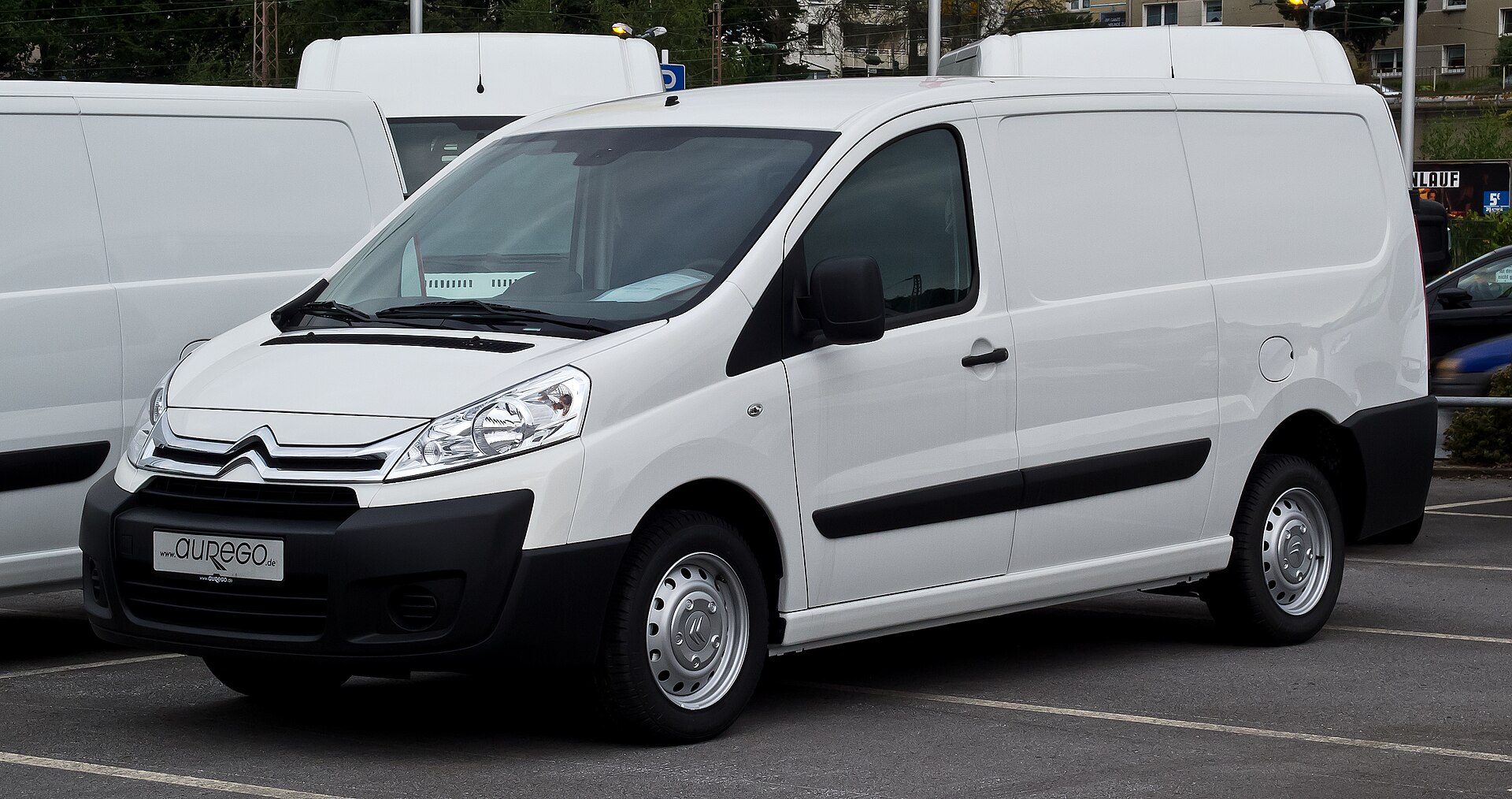
The second Jumpy was presented in November 2006 and delivered in the main markets from January 2007. It was larger, offered more cargo space and more body variants, and Peugeot added the Expert Tepee people carrier. Engines ranged from a 1.6 diesel with 66 kW (90 PS) to a 2.0 diesel with 120 kW (163 PS) from 2010, plus a 2.0 petrol with 103 kW (140 PS). The front was updated in February 2012, and from July 2013 Toyota sold a rebadged version as the ProAce.
Third generation (since 2016)
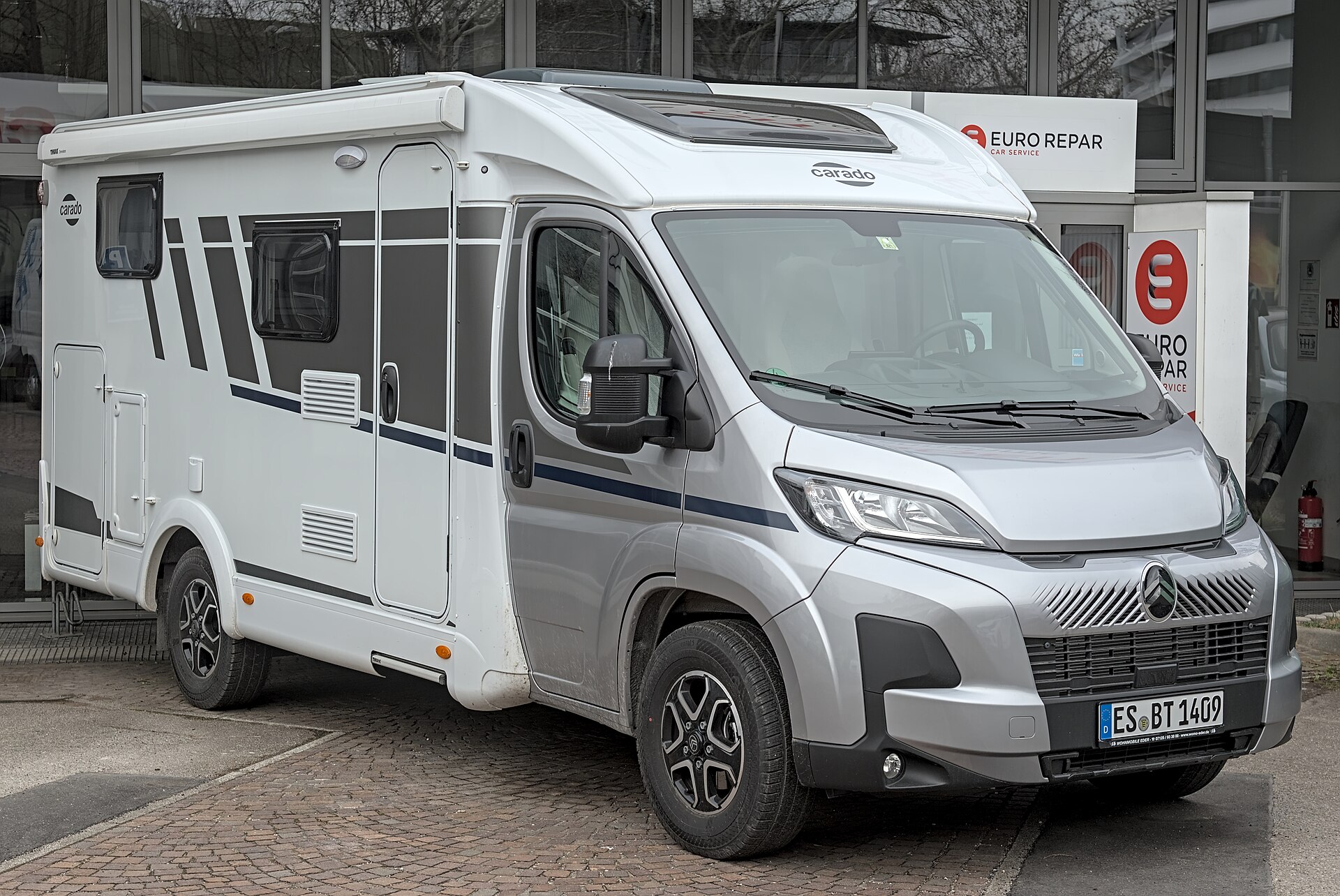
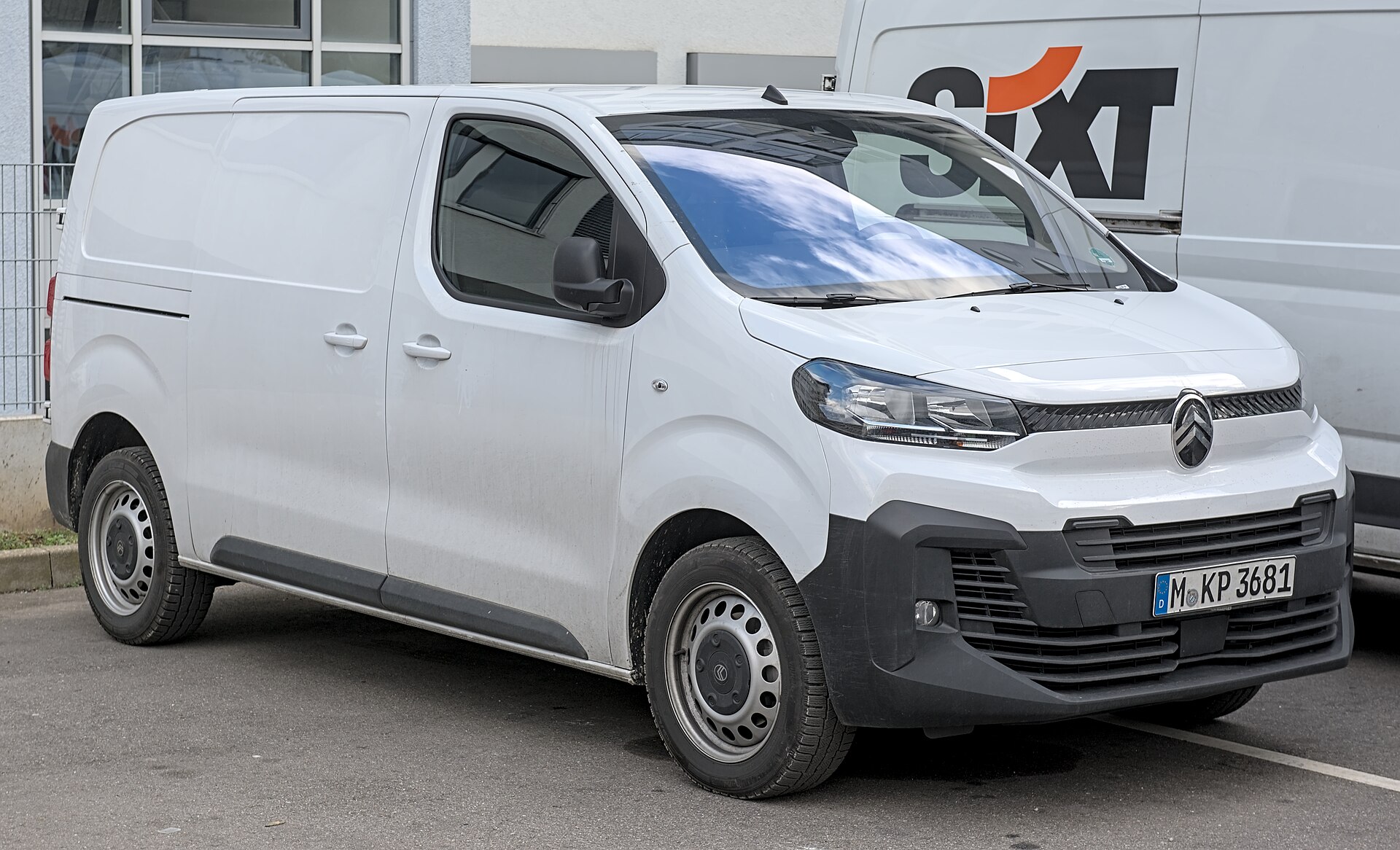
The current Jumpy was revealed with its passenger siblings at the Geneva Motor Show in 2016, and the commercial versions went on sale in March 2016. It uses a PSA van platform that Opel/Vauxhall adopted for the Vivaro in 2019 and Fiat for the Scudo in 2022. A facelift announced on 23 October 2023 for 2024 removed the upper grille to cut drag, added the new Citroën logo, a 10-inch touchscreen, a digital instrument panel and Level 2 driver assistance.


Engines and the electric version
| Engine (after 2024 facelift) | Power | Gearbox |
|---|---|---|
| BlueHDi 120 | 88 kW (120 PS) | 6-speed manual |
| BlueHDi 145 | 107 kW (145 PS) | 6-speed manual or 8-speed automatic |
| BlueHDi 180 | 132 kW (180 PS) | 8-speed automatic only |
| ë-Jumpy 50 kWh | 100 kW (136 PS) | single speed, 224 km WLTP |
| ë-Jumpy 75 kWh | 100 kW (136 PS) | single speed, up to 350 km WLTP |
Before the facelift the range used a 1.6 diesel with 67 and 86 kW and a 2.0 diesel with 89, 112 and 132 kW (122, 152 and 179 PS), according to Wikipedia's engine table.
The ë-Jumpy was announced in May 2020 and reached showrooms in the second half of 2020. Its front motor gives 100 kW (136 PS) and 260 Nm, and top speed is limited to 130 km/h. At launch, the 50 kWh battery gave up to 230 km and the 75 kWh battery up to 330 km on the WLTP cycle; for the 2024 version Auto Zeitung quotes 224 km and up to 350 km. On a 100 kW DC charger the battery reaches 80% in about 30 minutes (50 kWh) or 45 minutes (75 kWh); on-board AC chargers are 7.4 kW single-phase or 11 kW three-phase, which fills the larger battery in about 7.5 hours. A hydrogen fuel-cell version with a claimed range of over 400 km was also offered after the facelift. More electric vans and cars are listed in our electric cars section.


Dimensions, payload and load space
| Parameter | Metric | Imperial |
|---|---|---|
| Length XS / M / XL | 4,609 / 4,959 / 5,309 mm | 181.5 / 195.2 / 209.0 in |
| Wheelbase (short / long) | 2,925 / 3,275 mm | 115.2 / 128.9 in |
| Width | 1,920 mm | 75.6 in |
| Height | 1,890-1,950 mm | 74.4-76.8 in |
| Load volume | up to 6.6 m3 | up to 233 cu ft |
| Payload | up to 1,275 kg | up to 2,811 lb |
| Towing (ë-Jumpy) | up to 1,000 kg | up to 2,205 lb |
At launch the ë-Jumpy was offered in all three lengths with the 50 kWh battery, while the 75 kWh battery was limited to the M and XL vans. Before you buy, our will it fit in my garage tool checks the height and length against your space.
Prices and running costs
In November 2023 Auto Zeitung quoted the pre-facelift Jumpy in Germany from EUR 35,462 and the ë-Jumpy 50 kWh from EUR 47,362 (2023 prices), and expected the facelifted vans to cost slightly more. For an electric van the energy cost per kilometre depends mainly on where you charge; for diesel versions the official consumption depends on length and tyres, so check the figure for the exact van.
Trims and equipment
After the 2024 facelift the dashboard has more and larger storage spaces, and buyers can choose a heated multifunction steering wheel. The standard 5-inch touchscreen can be replaced by a 10-inch screen with wireless Apple CarPlay and Android Auto, and the top "My Citroën Drive Plus" system adds 3D navigation with live traffic. A comfort pack brings inductive phone charging, keyless entry and automatic climate control. The van is offered with five or six seats in crew-cab form and as a nine-seat Combi.
Safety
Euro NCAP does not give stars to vans; it rates their driver assistance with medals. In the 2023 commercial van ratings the Citroën Jumpy (2.0 diesel) received a Bronze medal with 24%, close to its sister models: Peugeot Expert 31%, Opel/Vauxhall Vivaro 30% and Toyota ProAce 23%. The 2024 facelift added Highway Driving Assist (adaptive cruise control with stop and go plus lane keeping), driver fatigue warning, traffic sign recognition, automatic emergency braking for pedestrians and cyclists, and Dynamic Surround Vision, which shows a camera view behind the van in place of the rear-view mirror.
Reliability and known issues
We have no sourced fault statistics or recall lists for the Jumpy, so we do not list typical problems. For a used van, the service history and the condition of the load area tell you more than the model name.
Rivals
| Model | Engines | Power (hp) | Load volume (m3) | Price from (EUR) |
|---|---|---|---|---|
| Citroën Jumpy | 1.5, 2.0 diesel; electric | 120-180 | up to 6.6 | 35,462 (Germany, 2023, pre-facelift) |
| Ford Transit Custom | diesel, plug-in hybrid, electric | not verified | not verified | not verified |
| Volkswagen Transporter | diesel, plug-in hybrid, electric | not verified | not verified | not verified |
| Renault Trafic | diesel, electric | not verified | not verified | not verified |
Inside Stellantis, the same van is also sold by Peugeot, Opel/Vauxhall, Fiat and Toyota, often with different equipment and prices. The comparison tool helps to compare exact versions.
Photo gallery

Citroen Jumpy evolution in numbers
Did you know?
- The Citroen Jumpy has been around for 32 years: 3 generations in our catalog since 1994.
- The longest-running generation is the Jumpy I (1994–2006): 12 years.
- The biggest jump in power came with the Jumpy II: up to 120 kW (163 PS), 20 kW more than the Jumpy I.
Most powerful version, kW
Figures from the 1cars catalog: power is the strongest version of each generation; generations without the figure are left out.
Citroen Jumpy: first vs latest generation
| Spec | Jumpy I | Jumpy III | Change |
|---|---|---|---|
| Years | 1994–2006 | 2016–present | 22 years apart |
| Most powerful version | 100 kW (136 PS) | 132 kW (179 PS) | +32 kW (+32%) |
Oldest and newest generation in the 1cars catalog. Power is the strongest version of each; other rows are shown only when both generations have the figure.
Citroen Jumpy in our rankings
More powerful than 55% of ranked vans and minibuses in the 1CARS catalog (No. 6 of 18).
FAQ
Is the Citroën Jumpy the same as the Citroën Dispatch?
Yes. Citroën sells the Jumpy as the Dispatch in the UK and other English-speaking markets.
How many generations of the Jumpy are there?
Three: 1994-2006, 2007-2016 and the current van since 2016, which was facelifted for 2024.
What is the range of the electric ë-Jumpy?
At launch in 2020 Citroën quoted up to 230 km with the 50 kWh battery and up to 330 km with the 75 kWh battery (WLTP). After the 2024 update it quotes up to 350 km with the larger battery.
Which vans are twins of the Jumpy?
The Peugeot Expert and Toyota ProAce, and since 2019 and 2022 also the Opel/Vauxhall Vivaro and Fiat Scudo.
Data sources
Data checked by an editor against the sources below.
- Wikipedia - Citroën Jumpy
- Autozeitung - Citroen Jumpy Facelift 2024 Preis Motor 205023
- Insideevs - Citroen Electric E Jumpy E Dispatch