 Land Rover Range Rover
All generations, specs and history
Published Sources (6) Report an error
By Felix Hartmann, Automotive Technology & EV Contributor
- Built
- 1970–present
- Generations
- 5 · Classic to L460
- Top power
- 453 kW (616 PS)
Timeline
Range Rover generations
Click a generation for its own page
Classic and P38A overlapped in 1994–1996, so P38A sits on a second lane
- Range Rover Classic 1970–1996 · SUV · 83–116 kW (113–158 PS)
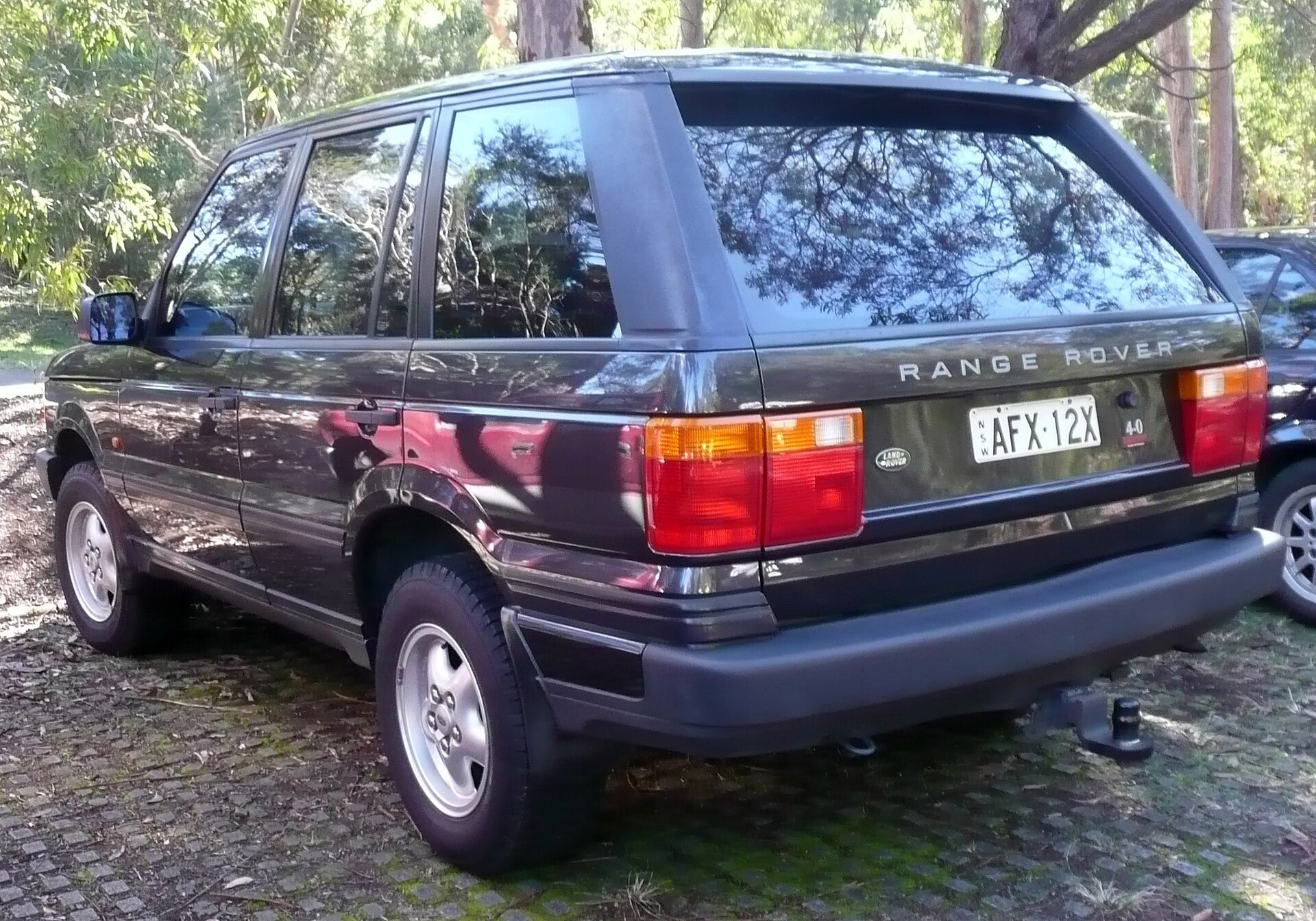
- Range Rover P38A 1994–2001 · SUV · 101–170 kW (137–231 PS)
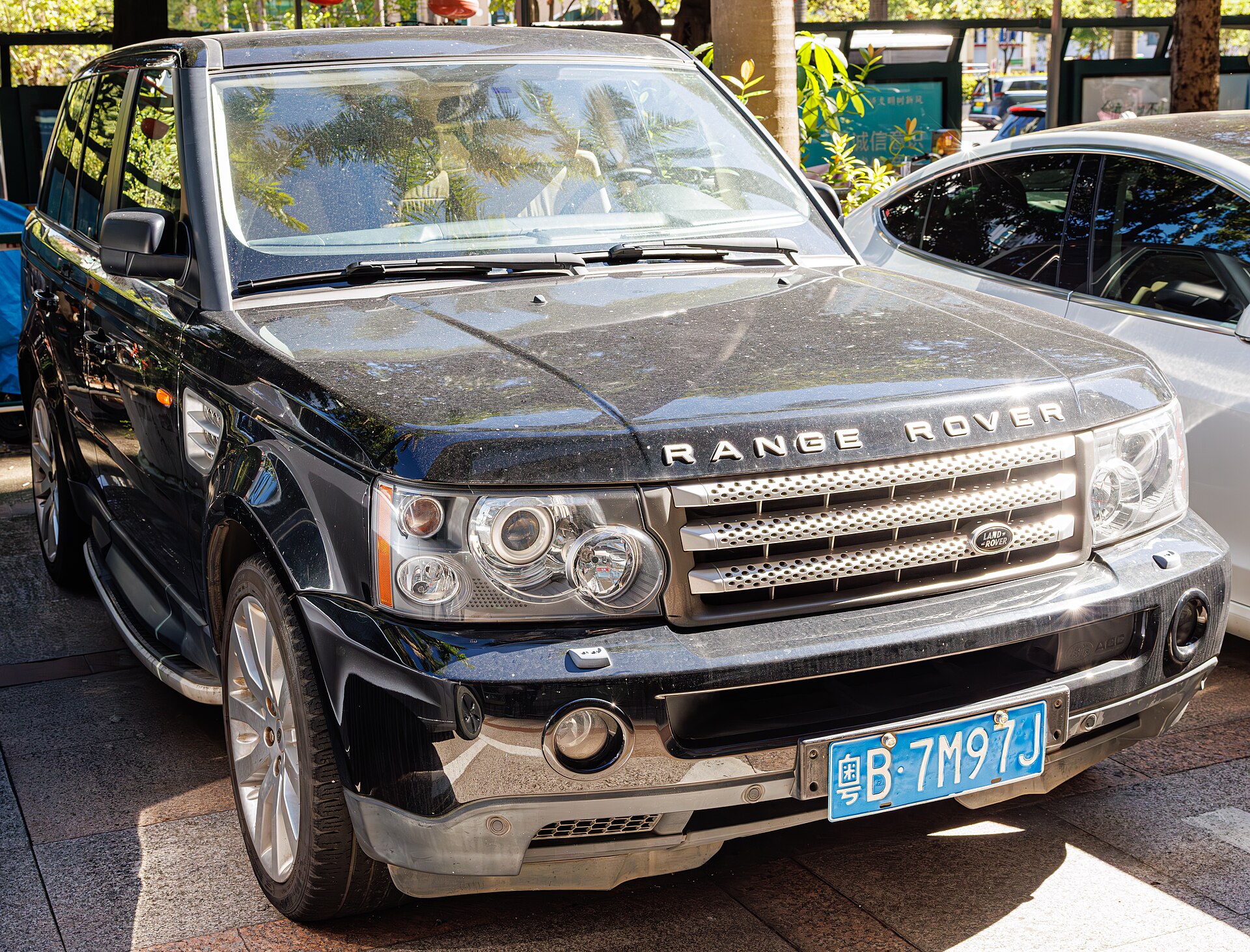
- Range Rover L322 2001–2012 · SUV · 130–375 kW (177–510 PS)
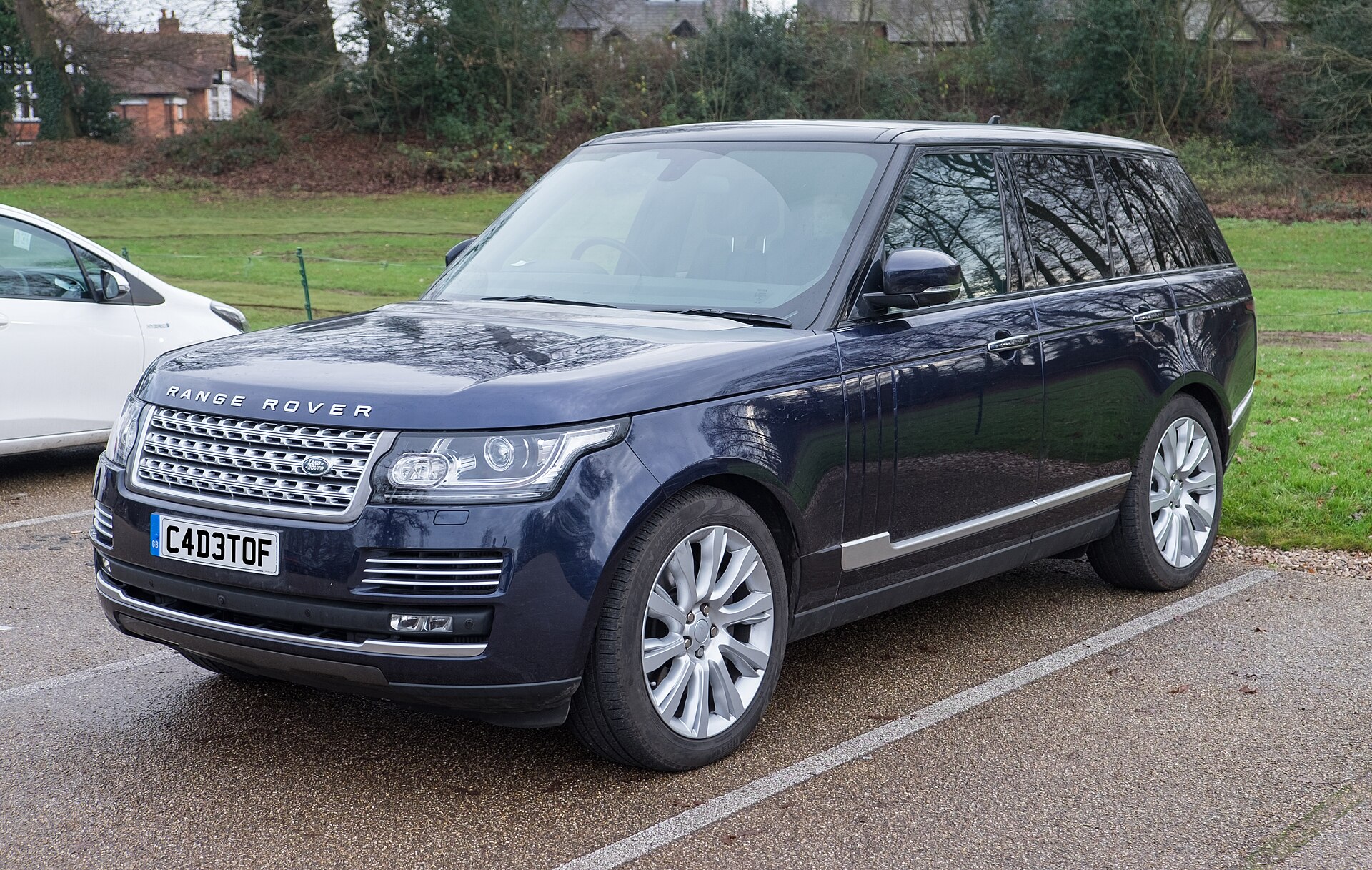
- Range Rover L405 2012–2021 · SUV · 184–416 kW (250–566 PS)
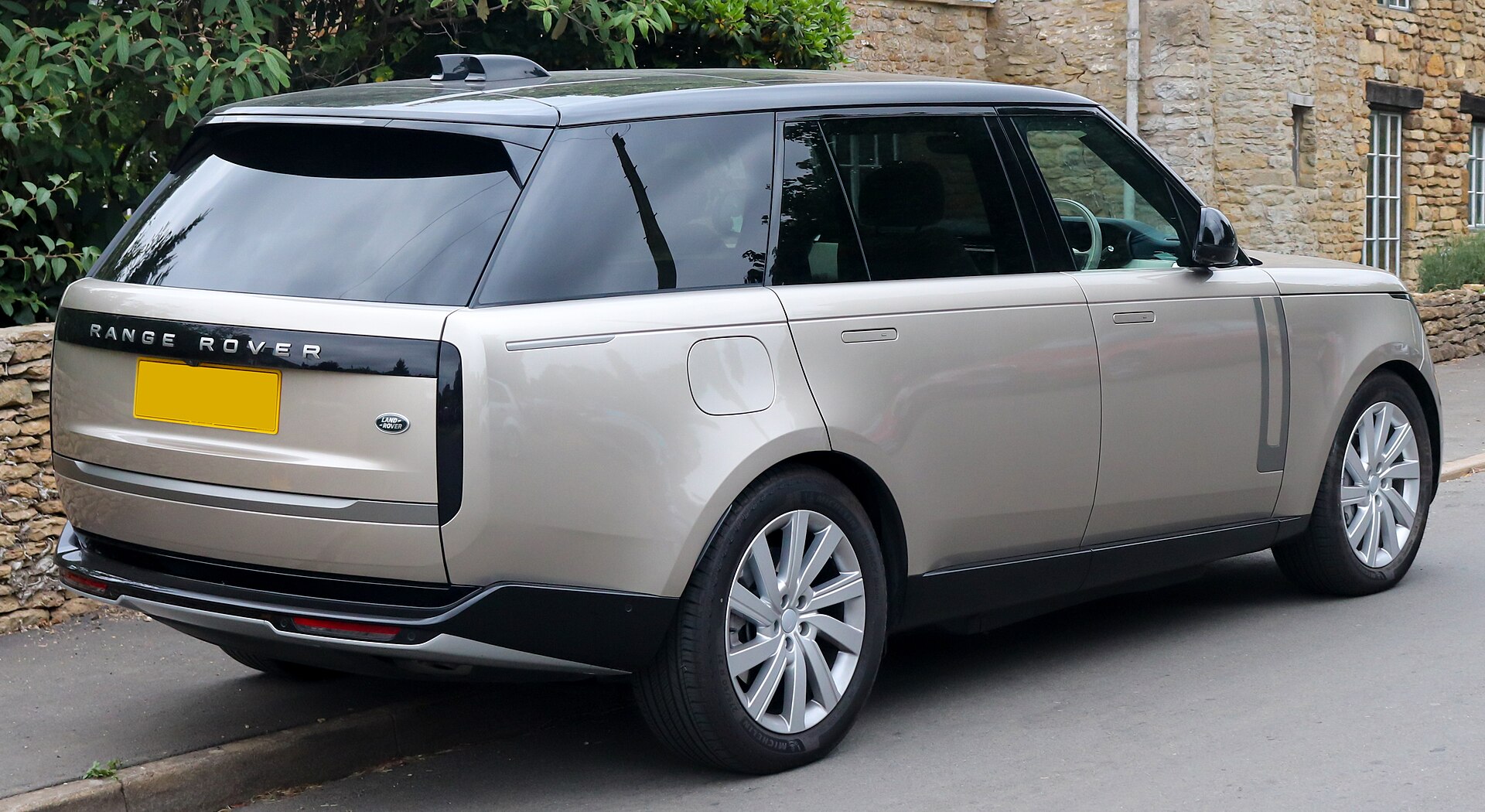
- Range Rover L460 Current 2022–now · SUV · 221–453 kW (300–616 PS)
Newest first · 5 generations since 1970
-
2022
-
2012
-
2001
-
1994
-
1970


All generations by year: Range Rover L460 (2022–now) · Range Rover L405 (2012–2021) · Range Rover L322 (2001–2012) · Range Rover P38A (1994–2001) · Range Rover Classic (1970–1996)
Which one is mine?
Pick the year of first registration to see which generation it is.
Check by VINWhich Range Rover to choose
Our verdict · Felix Hartmann
- For low running costs on short trips: a P460e or P550e plug-in hybrid, if it can be charged at home; up to 116 km of WLTP electric range.
- For long distances and towing: the D350 diesel, with 700 Nm from a six-cylinder mild hybrid.
- For maximum performance: the P615 with the BMW V8 and 750 Nm.
- For rear-seat passengers: the long-wheelbase body, 200 mm longer and available with seven seats.
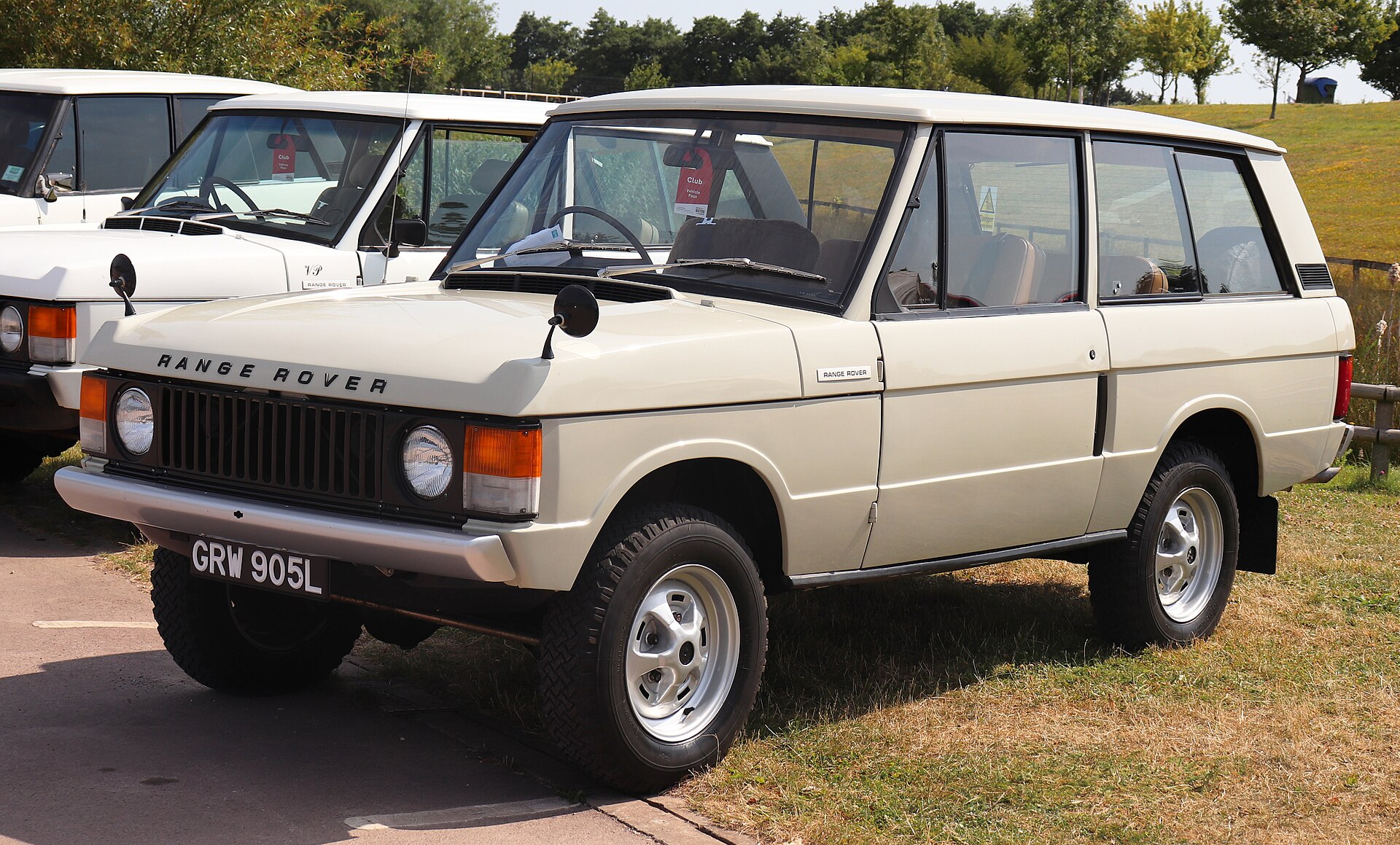
- For a classic: an early two-door Classic; the 3.5 V8, coil springs and permanent four-wheel drive are the original recipe.
The history of Land Rover explains how the Range Rover grew out of the Land Rover range. Its smaller sister models have their own guides: the Range Rover Sport, the Range Rover Velar and the supercharged Range Rover Sport SVR.
The Range Rover is Land Rover's full-size luxury SUV and the model that created the segment. It went on sale in June 1970, and five generations have followed: the Classic, the P38A, the L322, the L405 and, since 2022, the L460. Every generation has been built in Solihull, England; since 2024 the current car is also assembled in Pune, India. Today the line-up runs from six-cylinder mild hybrids to plug-in hybrids with more than 100 km of electric range and a fully electric version.
In short
- Five generations: Classic (1970–1996), P38A (1994–2001), L322 (2001–2012), L405 (2012–2021) and L460 (since 2022).
- The original 3.5-litre Rover V8 made 101 kW (135 hp); the current P615 makes 453 kW (615 PS).
- The L405 of 2012 had an all-aluminium body and weighed about 420 kg less than the L322.
- The L460 plug-in hybrids have a 38.2 kWh battery (31.8 kWh usable) and up to 116 km of WLTP electric range.
Size at a glance
Land Rover Range Rover L405
The Land Rover Range Rover L460 is 53 mm longer, 63 mm wider and 35 mm taller than the Land Rover Range Rover L405.
| Dimensions | Land Rover Range Rover L460 | Land Rover Range Rover L405 | Difference |
|---|---|---|---|
| Length | 5,052 mm198.9 in | 4,999 mm196.8 in | +53 mm+2.1 in |
| Width | 2,047 mm80.6 in | 1,984 mm78.1 in | +63 mm+2.5 in |
| Height | 1,870 mm73.6 in | 1,835 mm72.2 in | +35 mm+1.4 in |
| Wheelbase | 2,997 mm118.0 in | 2,922 mm115.0 in | +75 mm+3.0 in |
Running cost
Fuel · Range Rover L460 D350 3.0 I6 MHEV
about 1,900 EUR fuel a year at 15,000 km
7.6 l/100 km · diesel at 1.65 EUR/l · change mileage, fuel price or version
Specs by version
Engines
| Version | Engine | Power | Gearbox | Drive | Production years |
|---|---|---|---|---|---|
| Plug-in hybrid · 3 versions | |||||
| L405 · P400e 2.0 plug-in hybrid | 2.0 l · 4 cyl · Plug-in hybrid 2,000 cc | 297 kW 404 PS398 hp | 8-sp Automatic | Four-wheel drive (4×4) | — |
| L460 · P440e 3.0 I6 plug-in hybrid | 3.0 l · 6 cyl · Plug-in hybrid 3,000 cc | 324 kW 441 PS434 hp | — | Four-wheel drive (4×4) | — |
| L460 · P510e 3.0 I6 plug-in hybrid | 3.0 l · 6 cyl · Plug-in hybrid 3,000 cc | 375 kW 510 PS503 hp | — | Four-wheel drive (4×4) | — |
| Diesel · 10 versions | |||||
| P38A · 2.5 DT (BMW M51) | 2.5 l · 6 cyl · Diesel M51 | 101 kW 137 PS135 hp | — | Four-wheel drive (4×4) | 1994–2001 |
| L322 · 3.0 Td6 (BMW M57) | 3.0 l · 6 cyl · Diesel 3,000 cc | 130 kW 177 PS174 hp | — | Four-wheel drive (4×4) | 2002–2006 |
| L322 · 3.6 TDV8 | 3.6 l · 8 cyl · Diesel 3,600 cc | 200 kW 272 PS268 hp | — | Four-wheel drive (4×4) | 2006–2010 |
| L322 · 4.4 TDV8 | 4.4 l · 8 cyl · Diesel 4,400 cc | 230 kW 313 PS308 hp | — | Four-wheel drive (4×4) | 2010–2012 |
| L405 · 3 L 6 cyl Automatic (S8) · 2021 (EPA) | 3.0 l · 6 cyl · Diesel 3,000 cc | — | 8-sp Automatic | Four-wheel drive (4×4) | 2021 |
| L405 · 3 L 6 cyl Automatic (S8) · 2020 (EPA) | 3.0 l · 6 cyl · Diesel 3,000 cc | — | 8-sp Automatic | Four-wheel drive (4×4) | 2020 |
| L405 · 3.0 TDV6 | 3.0 l · 6 cyl · Diesel 3,000 cc | 190 kW 258 PS255 hp | 8-sp Automatic | Four-wheel drive (4×4) | — |
| L405 · 4.4 SDV8 | 4.4 l · 8 cyl · Diesel 4,400 cc | 250 kW 340 PS335 hp | 8-sp Automatic | Four-wheel drive (4×4) | — |
| L460 · D300 3.0 I6 MHEV | 3.0 l · 6 cyl · Diesel 3,000 cc | 221 kW 300 PS296 hp | — | Four-wheel drive (4×4) | — |
| L460 · D350 3.0 I6 MHEV | 3.0 l · 6 cyl · Diesel 3,000 cc | 257 kW 349 PS345 hp | — | Four-wheel drive (4×4) | — |
| Petrol · 11 versions | |||||
| Classic · 3.5 V8 | 3.5 l · 8 cyl · Petrol 3,500 cc | 101 kW 137 PS135 hp | — | Four-wheel drive (4×4) | 1970 |
| P38A · 4.0 V8 | 4.0 l · 8 cyl · Petrol 4,000 cc | 140 kW 190 PS188 hp | — | Four-wheel drive (4×4) | 1994–2001 |
| L322 · 4.4 V8 (BMW M62) | 4.4 l · 8 cyl · Petrol 4,400 cc | 210 kW 286 PS282 hp | — | Four-wheel drive (4×4) | 2002–2005 |
| L322 · 5.0 V8 | 5.0 l · 8 cyl · Petrol 5,000 cc | 276 kW 375 PS370 hp | — | Four-wheel drive (4×4) | 2009–2012 |
| L322 · 4.2 V8 Supercharged | 4.2 l · 8 cyl · Petrol 4,200 cc | 294 kW 400 PS394 hp | — | Four-wheel drive (4×4) | 2005–2009 |
| L322 · 5.0 V8 Supercharged | 5.0 l · 8 cyl · Petrol 5,000 cc | 375 kW 510 PS503 hp | — | Four-wheel drive (4×4) | 2009–2012 |
| L405 · 5.0 V8 Supercharged | 5.0 l · 8 cyl · Petrol 5,000 cc | 375 kW 510 PS503 hp | 8-sp Automatic | Four-wheel drive (4×4) | 2013–2016 |
| L405 · 5.0 V8 Supercharged | 5.0 l · 8 cyl · Petrol 5,000 cc | 386 kW 525 PS518 hp | 8-sp Automatic | Four-wheel drive (4×4) | 2017 |
| L460 · P400 3.0 I6 MHEV | 3.0 l · 6 cyl · Petrol 3,000 cc | 295 kW 401 PS396 hp | — | Four-wheel drive (4×4) | — |
| L460 · P530 4.4 V8 twin-turbo MHEV | 4.4 l · 8 cyl · Petrol 4,400 cc | 390 kW 530 PS523 hp | — | Four-wheel drive (4×4) | 2022–2023 |
| L460 · P615 4.4 V8 twin-turbo MHEV | 4.4 l · 8 cyl · Petrol 4,400 cc | 453 kW 616 PS607 hp | — | Four-wheel drive (4×4) | 2024 |
| Other · 4 versions | |||||
| L405 · 5 L 8 cyl Automatic (S8) · 2021 (EPA) | 5.0 l · 8 cyl 5,000 cc | — | 8-sp Automatic | Four-wheel drive (4×4) | 2021 |
| L405 · 5 L 8 cyl Automatic (S8) · 2020 (EPA) | 5.0 l · 8 cyl 5,000 cc | — | 8-sp Automatic | Four-wheel drive (4×4) | 2020 |
| L405 · 5 L 8 cyl Automatic (S8) · 2019 (EPA) | 5.0 l · 8 cyl 5,000 cc | — | 8-sp Automatic | Four-wheel drive (4×4) | 2019 |
| L460 · 5 L 8 cyl Automatic (S8) · 2022 (EPA) | 5.0 l · 8 cyl 5,000 cc | — | 8-sp Automatic | Four-wheel drive (4×4) | 2022 |
Performance
Show all 10 versions
| Version | Fuel consumption | CO₂ |
|---|---|---|
| Diesel · 4 versions | ||
| L405 · 3 L 6 cyl Automatic (S8) · 2021 (EPA) | 9.8 l/100 km24.0 mpg US · 28.8 mpg UK | — |
| L405 · 3 L 6 cyl Automatic (S8) · 2020 (EPA) | 9.8 l/100 km24.0 mpg US · 28.8 mpg UK | — |
| L405 · 4.4 SDV8 | — | 286 g/km |
| L460 · D350 3.0 I6 MHEV | 7.6 l/100 km30.9 mpg US · 37.2 mpg UK | 200 g/km |
| Petrol · 2 versions | ||
| L405 · 5.0 V8 Supercharged | 14.3 l/100 km16.4 mpg US · 19.8 mpg UK | 323 g/km |
| L460 · P530 4.4 V8 twin-turbo MHEV | 11.7 l/100 km20.1 mpg US · 24.1 mpg UK | 266 g/km |
| Other · 4 versions | ||
| L405 · 5 L 8 cyl Automatic (S8) · 2021 (EPA) | 13.1 l/100 km18.0 mpg US · 21.6 mpg UK | — |
| L405 · 5 L 8 cyl Automatic (S8) · 2020 (EPA) | 13.1 l/100 km18.0 mpg US · 21.6 mpg UK | — |
| L405 · 5 L 8 cyl Automatic (S8) · 2019 (EPA) | 13.1 l/100 km18.0 mpg US · 21.6 mpg UK | — |
| L460 · 5 L 8 cyl Automatic (S8) · 2022 (EPA) | 13.1 l/100 km18.0 mpg US · 21.6 mpg UK | — |
Dimensions and weight
Show all 22 versions
| Version | Length | Width | Height | Wheelbase |
|---|---|---|---|---|
| Plug-in hybrid · 3 versions | ||||
| L405 · P400e 2.0 plug-in hybrid | 4,999 mm196.8 in | 1,984 mm78.1 in | 1,835 mm72.2 in | 2,922 mm115.0 in |
| L460 · P440e 3.0 I6 plug-in hybrid | 5,052 mm198.9 in | 2,047 mm80.6 in | 1,870 mm73.6 in | 2,997 mm118.0 in |
| L460 · P510e 3.0 I6 plug-in hybrid | 5,052 mm198.9 in | 2,047 mm80.6 in | 1,870 mm73.6 in | 2,997 mm118.0 in |
| Diesel · 8 versions | ||||
| P38A · 2.5 DT (BMW M51) | 4,712 mm185.5 in | 1,890 mm74.4 in | 1,819 mm71.6 in | 2,746 mm108.1 in |
| L322 · 3.0 Td6 (BMW M57) | — | — | — | 2,880 mm113.4 in |
| L322 · 3.6 TDV8 | — | — | — | 2,880 mm113.4 in |
| L322 · 4.4 TDV8 | — | — | — | 2,880 mm113.4 in |
| L405 · 3.0 TDV6 | 4,999 mm196.8 in | 1,984 mm78.1 in | 1,835 mm72.2 in | 2,922 mm115.0 in |
| L405 · 4.4 SDV8 | 4,999 mm196.8 in | 1,984 mm78.1 in | 1,835 mm72.2 in | 2,922 mm115.0 in |
| L460 · D300 3.0 I6 MHEV | 5,052 mm198.9 in | 2,047 mm80.6 in | 1,870 mm73.6 in | 2,997 mm118.0 in |
| L460 · D350 3.0 I6 MHEV | 5,052 mm198.9 in | 2,047 mm80.6 in | 1,870 mm73.6 in | 2,997 mm118.0 in |
| Petrol · 11 versions | ||||
| Classic · 3.5 V8 | 4,445 mm175.0 in | 1,781 mm70.1 in | 1,801 mm70.9 in | 2,540 mm100.0 in |
| P38A · 4.0 V8 | 4,712 mm185.5 in | 1,890 mm74.4 in | 1,819 mm71.6 in | 2,746 mm108.1 in |
| L322 · 4.4 V8 (BMW M62) | 4,950 mm194.9 in | 1,923 mm75.7 in | 1,862 mm73.3 in | 2,880 mm113.4 in |
| L322 · 5.0 V8 | — | — | — | 2,880 mm113.4 in |
| L322 · 4.2 V8 Supercharged | — | — | — | 2,880 mm113.4 in |
| L322 · 5.0 V8 Supercharged | — | — | — | 2,880 mm113.4 in |
| L405 · 5.0 V8 Supercharged | 4,999 mm196.8 in | 1,984 mm78.1 in | 1,835 mm72.2 in | 2,922 mm115.0 in |
| L405 · 5.0 V8 Supercharged | 4,999 mm196.8 in | 1,984 mm78.1 in | 1,835 mm72.2 in | 2,922 mm115.0 in |
| L460 · P400 3.0 I6 MHEV | 5,052 mm198.9 in | 2,047 mm80.6 in | 1,870 mm73.6 in | 2,997 mm118.0 in |
| L460 · P530 4.4 V8 twin-turbo MHEV | 5,052 mm198.9 in | 2,047 mm80.6 in | 1,870 mm73.6 in | 2,997 mm118.0 in |
| L460 · P615 4.4 V8 twin-turbo MHEV | 5,052 mm198.9 in | 2,047 mm80.6 in | 1,870 mm73.6 in | 2,997 mm118.0 in |
Verified Manufacturer and type-approval data from our catalog · Sources and methodology
Range Rover at a glance
| Specification | Range Rover |
|---|---|
| Production | since 1970; Solihull (UK), also Pune (India) since 2024 |
| Generations | Classic, P38A, L322, L405, L460 |
| Body | three-door (Classic only) and five-door SUV; long wheelbase since 1992 |
| Drive | permanent four-wheel drive with low range |
| Current platform | MLA-Flex, shared with the Range Rover Sport (L461) |
| Current gearbox | ZF 8HP eight-speed automatic |
| Power (L460) | 183 kW (249 PS) in the D250 to 453 kW (615 PS) in the P615 |
| Length (L460) | 5,052 mm (standard), 5,252 mm (long wheelbase) |
| Kerb weight (L460) | 2,454 to 2,810 kg |
| Built (first three generations) | 326,070 Classic, 293,494 L322 |
Five generations since 1970
| Generation | Years | Body structure | Typical engines | Power range |
|---|---|---|---|---|
| Classic | 1970–1996 | separate chassis | Rover V8 3.5 to 4.2, VM and Tdi diesels | from 101 kW (135 hp) |
| P38A | 1994–2001 | separate chassis | Rover V8 4.0 and 4.6, BMW 2.5 diesel | about 101 to 172 kW (136 to 230 hp) |
| L322 | 2001–2012 | monocoque | BMW, then Jaguar V8s, Td6 and TDV8 diesels | 130 to 375 kW (175 to 503 hp) |
| L405 | 2012–2021 | aluminium monocoque | TDV6, SDV8, P400e, supercharged V8 | 190 to 416 kW (258 to 565 PS) |
| L460 | since 2022 | MLA-Flex | Ingenium six-cylinder, BMW V8, plug-in hybrid, electric | 183 to 453 kW (249 to 615 PS) |
The Classic stayed in production until 1996, two years after the P38A arrived. The generations and their engines are also listed in the Land Rover catalogue.
The Classic (1970–1996)
Spen King and Gordon Bashford began work on a more comfortable Land Rover in 1966, and David Bache styled the outer panels. The design was frozen in 1969, and 26 development vehicles were built before the public launch in June 1970. The first car had two doors, coil springs and permanent four-wheel drive with a two-speed transfer box. Earlier Land Rovers had selectable four-wheel drive. Power came from the aluminium 3.5-litre Rover V8, detuned to 101 kW (135 hp).
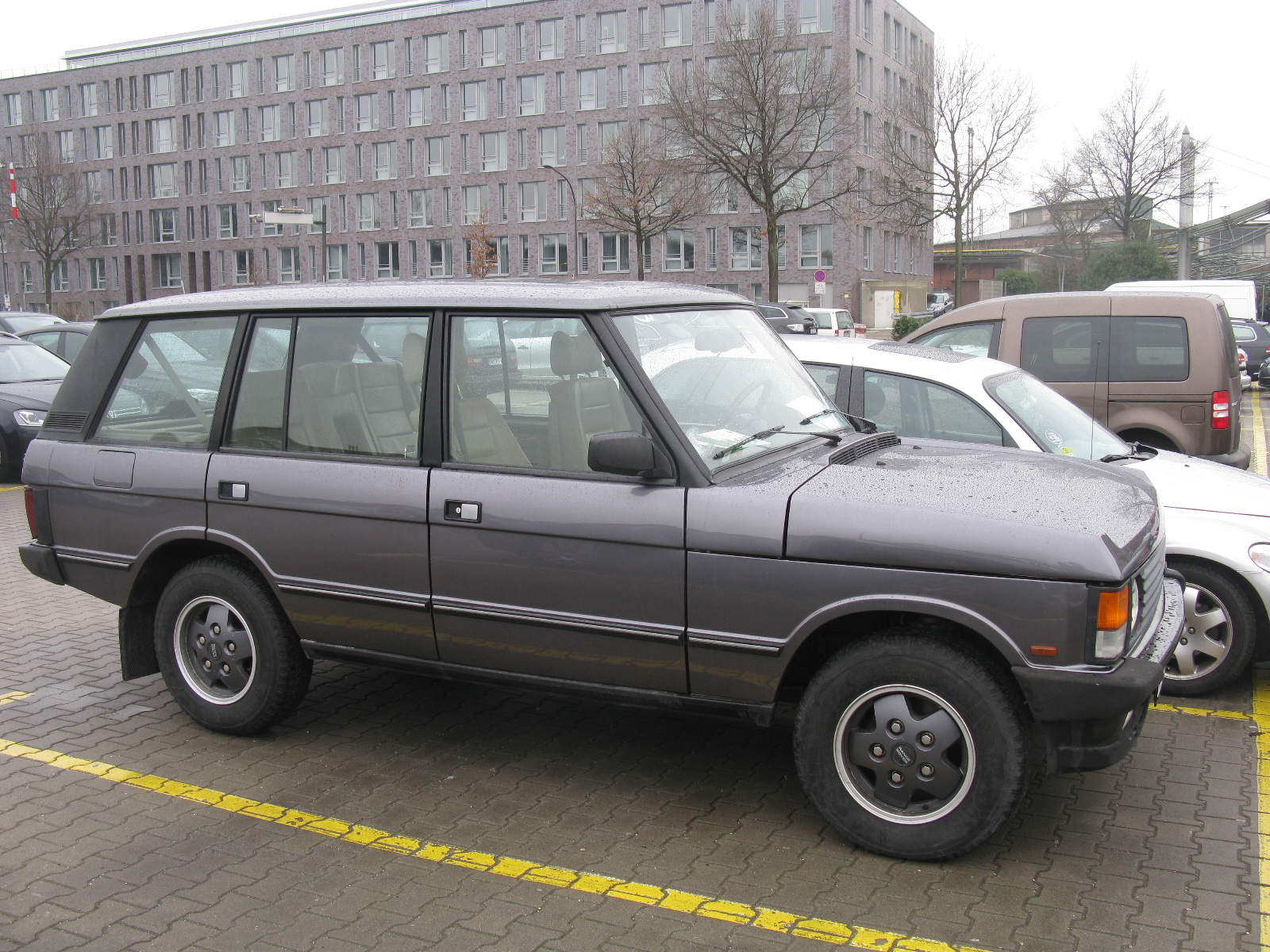
The range grew slowly. A four-door body arrived in July 1981 and a three-speed Chrysler TorqueFlite automatic in October 1982; a four-speed ZF automatic followed. The first factory diesel, a 2.4-litre VM unit, came in 1986, followed by Land Rover's own 200Tdi in 1992 and the 300Tdi at the end of 1994. The V8 grew to 3.9 litres in 1989 and 4.2 litres in 1992. That year the LSE added a 2,743 mm wheelbase and air suspension; in the US it was called the County LWB.
Two Range Rovers were among the first vehicles to cross the Darién Gap from north to south, in 1971–1972. The model also won the four-wheel-drive class of the Paris–Dakar Rally in 1979 and 1981. After 26 years and 326,070 cars, production ended in 1996.

P38A and L322: from air springs to a monocoque
The second Range Rover was launched on 28 September 1994. Its project code, P38A, came from the office block where the team worked. It kept a separate chassis but added electronic air suspension with five ride heights. The petrol engines were 4.0- and 4.6-litre Rover V8s with about 140 kW (190 hp) and 172 kW (230 hp). Diesel buyers got BMW's 2.5-litre six-cylinder with 101 kW (136 hp). The P38A was the last Range Rover with a manual gearbox. From 1999 its V8s used Bosch engine management taken from the BMW 7 Series.
The L322 was planned under BMW ownership and shared components with the BMW 7 Series (E38); Ford bought Land Rover about two years before production began. It arrived in 2001 as the first Range Rover with a monocoque body and fully independent air suspension. Until 2005 the petrol engine was BMW's 4.4-litre V8 with 210 kW (282 hp), and the diesel BMW's 3.0-litre Td6 with 130 kW (175 hp).
The 2006 model year brought Jaguar V8s, including a 4.2-litre supercharged unit with 294 kW (395 hp). The 3.6-litre TDV8 diesel with 200 kW (268 hp) followed for 2007–2010, together with Terrain Response. The 2010 model year added a 12-inch virtual instrument panel and the 5.0-litre V8, with 276 kW (370 hp) or, supercharged, 375 kW (503 hp). A 4.4-litre TDV8 with 230 kW (309 hp) served from 2010. In total 293,494 L322s were built.
L405 (2012–2021): the aluminium Range Rover
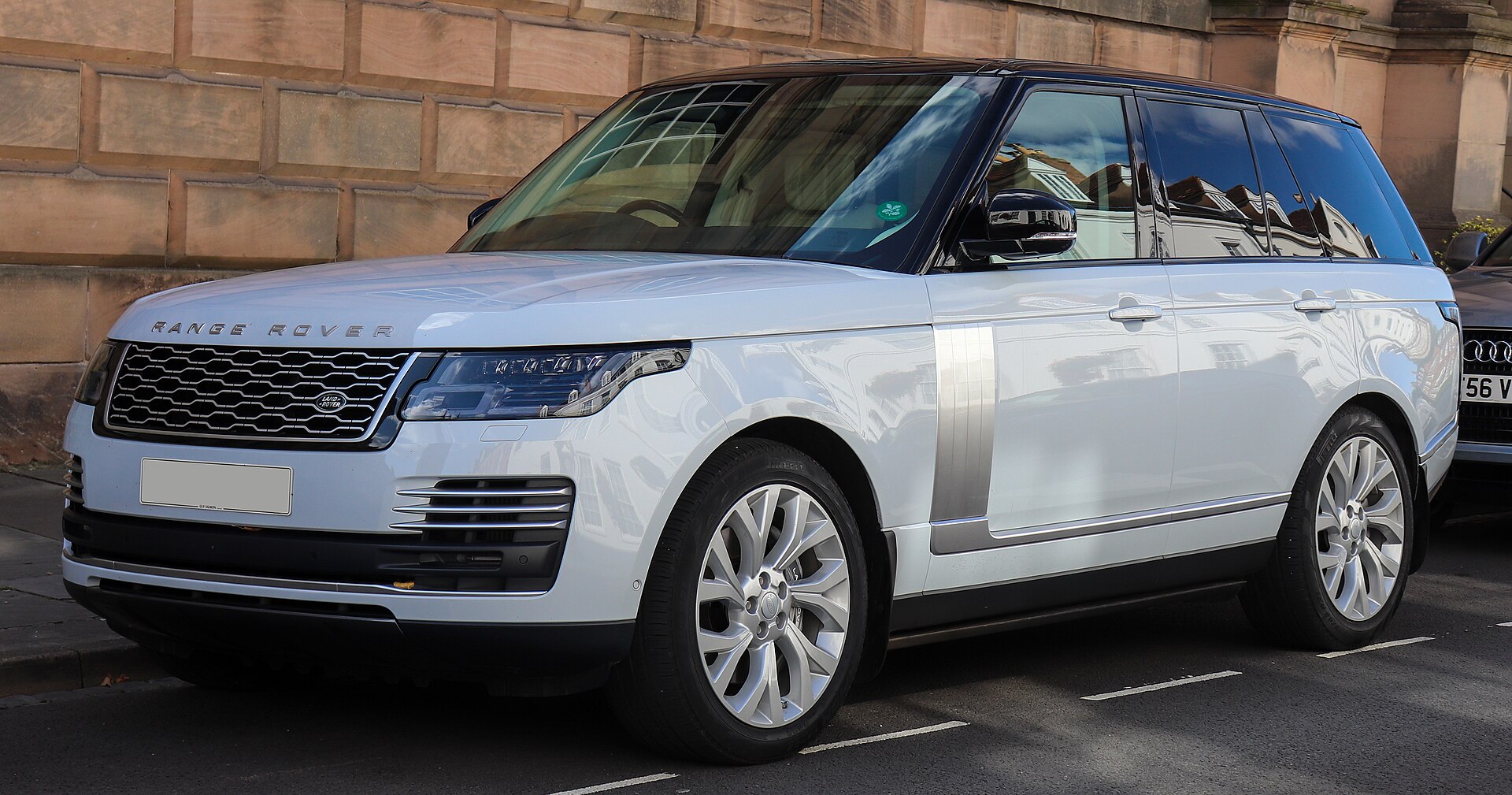
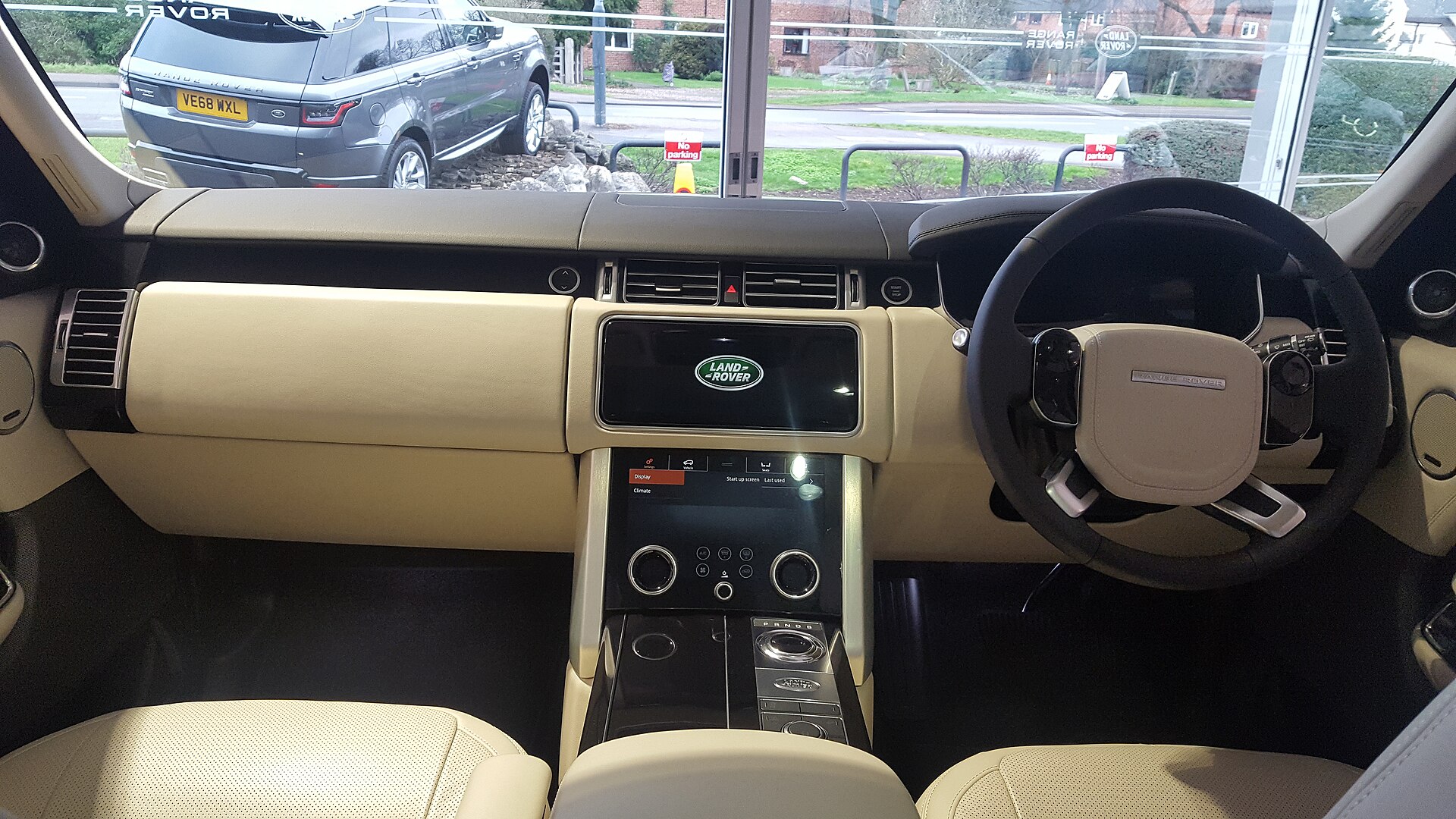
The fourth generation was shown at the 2012 Paris Motor Show and went on sale late that year as a 2013 model. Its all-aluminium monocoque made the body shell 39 percent lighter, and the whole car about 420 kg lighter than the L322. A long-wheelbase version was revealed in Los Angeles in 2013, with deliveries from early 2014. The 2018 facelift brought a new four-bar grille and LED lights, and the Touch Pro Duo infotainment. A second touchscreen replaced the climate-control knobs.
| Version (L405) | Power | Torque | Top speed |
|---|---|---|---|
| 3.0 TDV6 diesel | 190 kW (258 PS) | 600 Nm | 209 km/h |
| 3.0 SDV6 Hybrid diesel | 250 kW (340 PS) | 700 Nm | 217 km/h |
| 4.4 SDV8 diesel | 250 kW (340 PS) | 740 Nm | 217 km/h |
| P400e 2.0 plug-in hybrid | 297 kW (404 PS) | 640 Nm | 220 km/h |
| 5.0 V8 supercharged (2013–2016) | 375 kW (510 PS) | 625 Nm | 249 km/h |
| 5.0 V8 supercharged (from 2017) | 386 kW (525 PS) | 625 Nm | 249 km/h |
| SVAutobiography (2015–2016) | 405 kW (550 PS) | 680 Nm | 261 km/h |
| SVAutobiography (from 2017) | 416 kW (565 PS) | 700 Nm | 283 km/h |
The SDV6 Hybrid paired the V6 diesel with a 35 kW electric motor. The P400e combined a 2.0-litre Ingenium four-cylinder with an 85 kW motor and brought plug-in hybrid drive to the full-size Range Rover. Euro NCAP tested the car in 2012 in the large off-road class. It scored 91 percent for adult occupants, 84 for children, 63 for pedestrians and 86 for safety assistance. Wikipedia lists sales of the full-size model alone rising from 22,001 in 2009 to 60,226 in 2015.


Fifth generation L460 (since 2022)
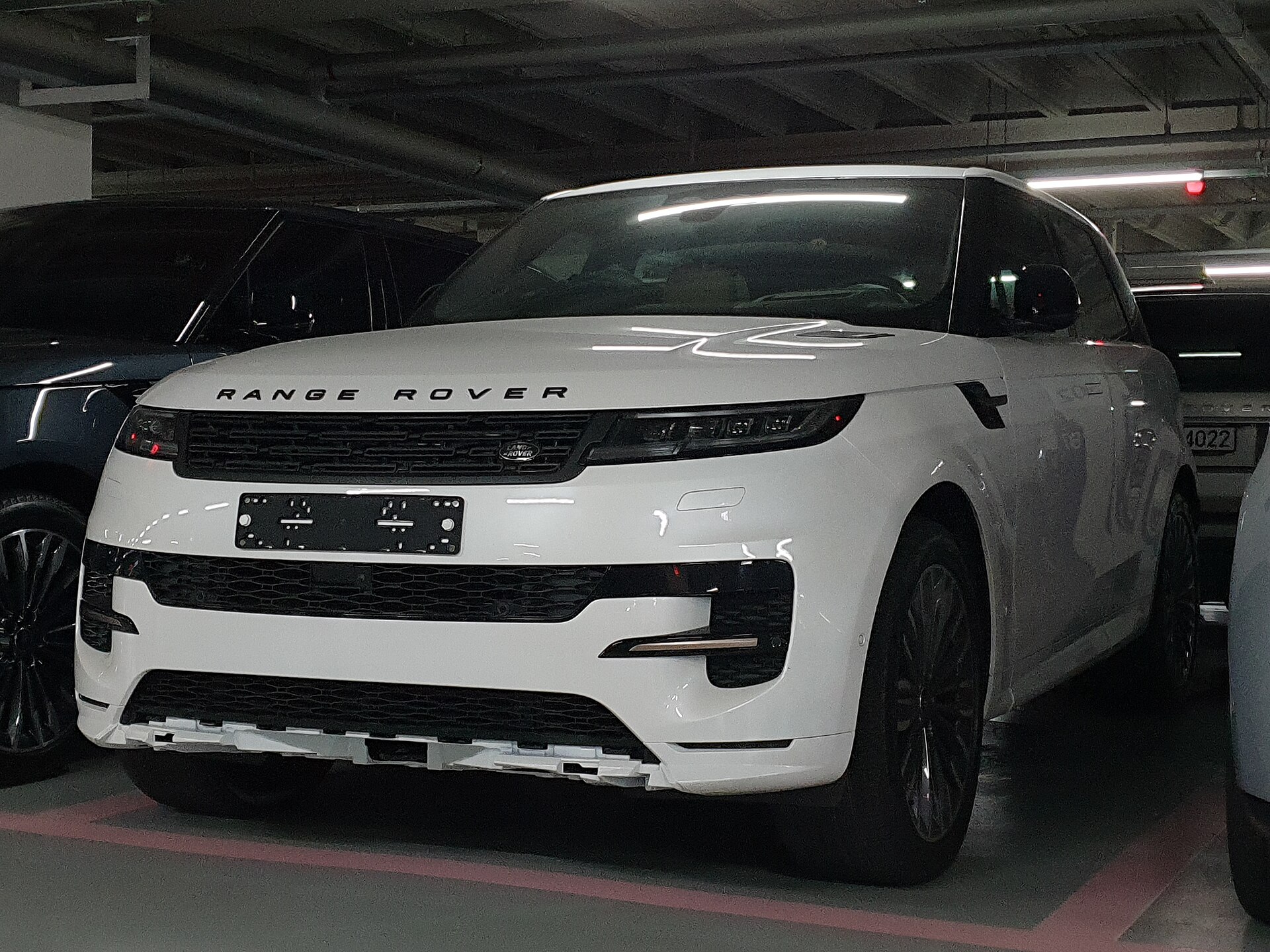
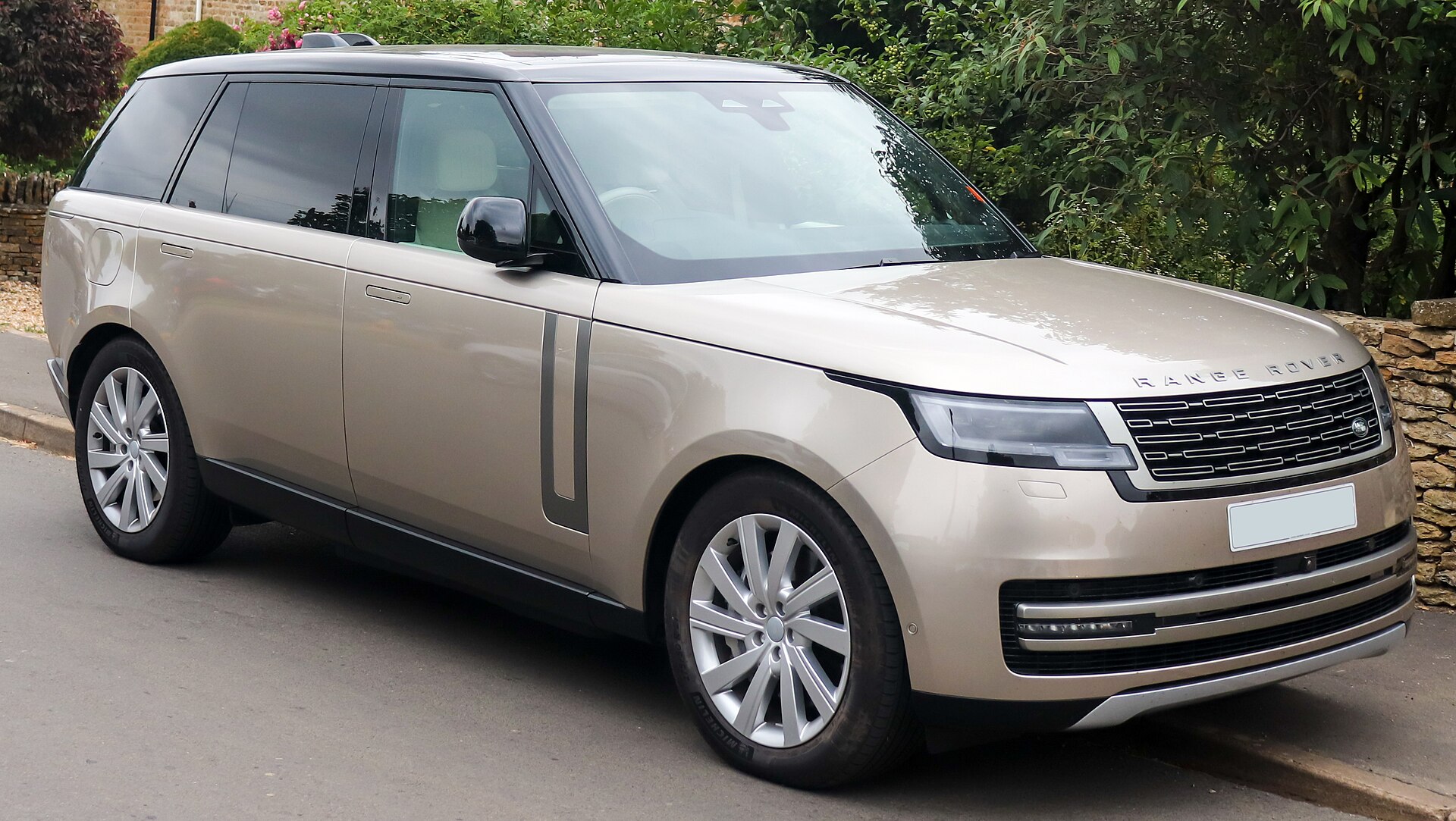
Designer Gerry McGovern revealed the L460 at London's Royal Opera House on 26 October 2021, and production began in mid-2022. It sits on the MLA-Flex platform, which it shares with the third-generation Range Rover Sport. The standard car is 5,052 mm long on a 2,997 mm wheelbase. The long-wheelbase version adds 200 mm and can seat seven. Both are 2,047 mm wide and 1,870 mm tall. All engines drive through the ZF 8HP eight-speed automatic with a low-range transfer box.
| Version (L460) | Engine | Power | Torque |
|---|---|---|---|
| D250 | 3.0 six-cylinder diesel, mild hybrid | 183 kW (249 PS) | 601 Nm |
| D300 | 3.0 six-cylinder diesel, mild hybrid | 221 kW (300 PS) | 649 Nm |
| D350 | 3.0 six-cylinder diesel, mild hybrid | 257 kW (350 PS) | 700 Nm |
| P360 / P400 | 3.0 six-cylinder petrol, mild hybrid | 265 / 295 kW (360 / 400 PS) | 500 / 550 Nm |
| P440e (2022–2023) | 3.0 six-cylinder plug-in hybrid | 324 kW (440 PS) | 620 Nm |
| P510e | 3.0 six-cylinder plug-in hybrid | 375 kW (510 PS) | 700 Nm |
| P550e (from 2024) | 3.0 six-cylinder plug-in hybrid | 410 kW (560 PS) | 800 Nm |
| P530 (2022–2023) | 4.4 BMW twin-turbo V8 (N63) | 390 kW (530 PS) | 750 Nm |
| P615 (from 2024) | 4.4 BMW twin-turbo V8 (S68) | 453 kW (615 PS) | 750 Nm |
For the 2024 model year the P550e replaced the P440e and the P615 joined the range. Land Rover Germany quotes 405 kW (550 PS) for the P550e, slightly less than the Wikipedia figure in the table.


Plug-in hybrid and Range Rover Electric
The plug-in hybrids combine the six-cylinder petrol engine with a 105 kW electric motor in the gearbox. The battery holds 38.2 kWh gross and 31.8 kWh usable. Land Rover's German website gives up to 116 km of electric range (WLTP) for the P460e and P550e.
The same website now lists a fully electric Range Rover, the EV550. It has 405 kW (550 PS) and a WLTP range of up to 600 km (October 2026).
Chassis, off-road ability and cabin
The L460 body is 50 percent stiffer in torsion than the L405's. A closed steel front bulkhead cuts the road noise reaching the cabin by about 24 percent. It was the first Land Rover with four-wheel steering, which reduces the turning circle to 10.95 m, or 11.54 m for the long-wheelbase car. Air suspension with twin-valve dampers is standard. Between 35 and 160 km/h the intelligent all-wheel drive can disconnect the front axle, which Land Rover says reduces drag losses by 30 percent.
Inside, a 13.1-inch touchscreen runs the Pivi Pro system, and a 13.7-inch screen replaces the dials. The options list includes a 35-speaker Meridian system with active noise cancelling and rear screens. A four-seat layout adds a centre console with a tray table and a fridge, and wool or other leather-free trims are available. The largest wheels grew from 22 to 23 inches.
Safety
Euro NCAP tested a Range Rover D300 in 2022. It scored 84 percent for adult occupants, 87 for children, 72 for vulnerable road users and 82 for the safety assistance systems.
Photo gallery


Land Rover Range Rover evolution in numbers
Did you know?
- The Land Rover Range Rover has been around for 56 years: 5 generations in our catalog since 1970.
- The longest-running generation is the Range Rover Classic (1970–1996): 26 years.
- The biggest jump in power came with the Range Rover L322: up to 375 kW (510 PS), 205 kW more than the Range Rover P38A.
Most powerful version, kW
Length, mm
Figures from the 1cars catalog: power is the strongest version of each generation; generations without the figure are left out.
Land Rover Range Rover: first vs latest generation
| Spec | Range Rover Classic | Range Rover L460 | Change |
|---|---|---|---|
| Years | 1970–1996 | 2022–present | 52 years apart |
| Most powerful version | 116 kW (158 PS) | 453 kW (616 PS) | +337 kW (+291%) |
| Length | 4,445 mm | 5,052 mm | +607 mm |
| Width | 1,781 mm | 2,047 mm | +266 mm |
| Wheelbase | 2,540 mm | 2,997 mm | +457 mm |
Oldest and newest generation in the 1cars catalog. Power is the strongest version of each; other rows are shown only when both generations have the figure.
Image credits · Photos from Wikimedia Commons under free licences
- Land Rover Range Rover P38A · Photo: OSX / Wikimedia Commons, Public domain
- Land Rover Range Rover L322 · Photo: Dinkun Chen / Wikimedia Commons, CC BY-SA 4.0
Land Rover Range Rover in our rankings
- No. 5 of 81 · Most torque: diesel cars (740 Nm)
- No. 6 of 146 · Longest SUVs and crossovers (5,052 mm)
- No. 6 of 305 · Oldest car models still on sale (56 years)
- No. 7 of 143 · Most powerful diesel cars (257 kW)
- No. 7 of 99 · Heaviest SUVs and crossovers (2,680 kg)
- No. 8 of 912 · Longest-running car nameplates (56 years)
In production longer than 99% of ranked nameplates in the 1CARS catalog (No. 8 of 912).
Land Rover Range Rover photos 6
FAQ
How many generations of the Range Rover are there?
Five: the Classic (1970), P38A (1994), L322 (2001), L405 (2012) and L460 (2022).
Where is the Range Rover built?
In Solihull, England. Since 2024 the L460 is also assembled in Pune, India.
What engine does the Range Rover use?
The current car uses 3.0-litre six-cylinder Ingenium petrol and diesel engines, plug-in hybrids and a 4.4-litre BMW twin-turbo V8. A fully electric EV550 is also offered.
What is the electric range of the Range Rover plug-in hybrid?
Up to 116 km on the WLTP cycle for the P460e and P550e, from a battery of 31.8 kWh usable capacity.
Is the Range Rover safe?
In the 2022 Euro NCAP test the L460 scored 84 percent for adult and 87 percent for child occupant protection.
Data sources
Data checked by an editor against the sources below.
- Wikipedia — Range Rover
- Wikipedia — Range Rover (P38A)
- Wikipedia — Range Rover (L322)
- Wikipedia — Range Rover (L405)
- Wikipedia — Range Rover (L460)
- EEA CO₂ monitoring (European Environment Agency, CC BY 4.0)