 Plymouth Superbird
Specs, engines and history
Published Sources (1) Report an error
By Sarah Whitmore, Senior Automotive Writer
- Built
- 1970
- Top power
- 317 kW (431 PS)
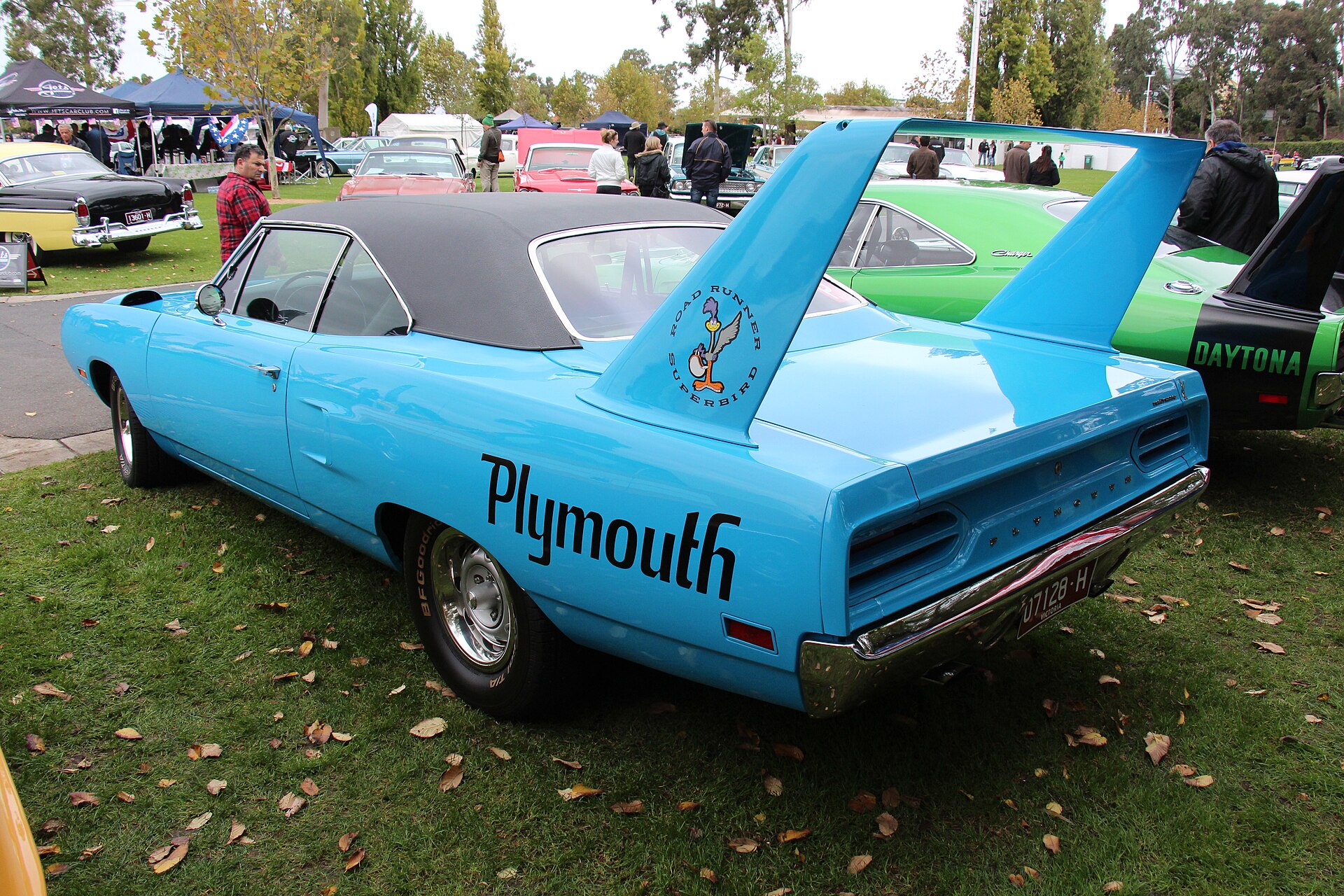
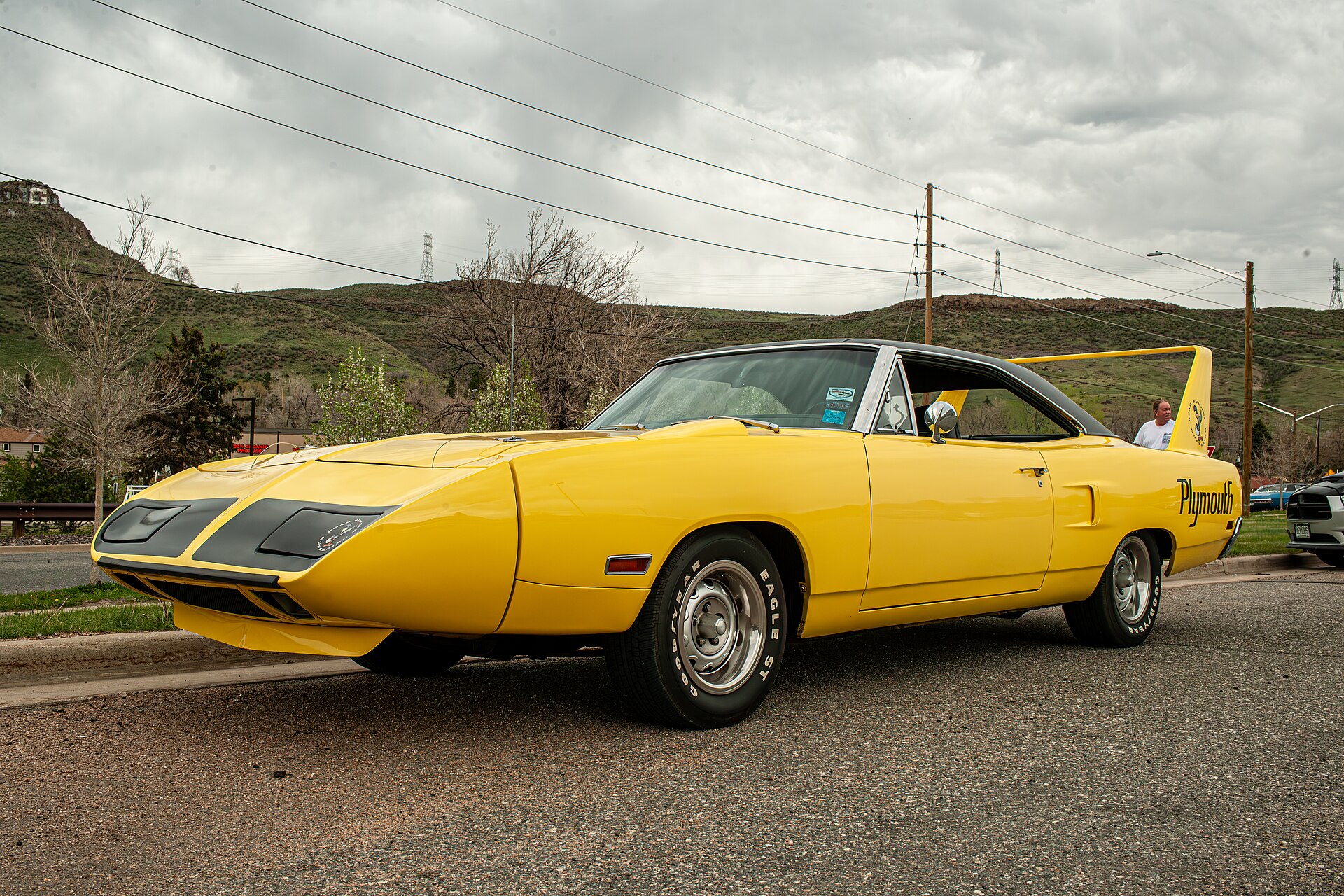
The Plymouth Superbird is the winged version of the 1970 Road Runner, built for one model year to make Plymouth competitive on NASCAR's superspeedways. A pointed nose cone and a tall rear wing, refined from the 1969 Dodge Charger Daytona, did the work at racing speeds; on the road the car was the same B-body muscle car with a 440 or a 426 Hemi V8. Plymouth built about 1,935 for US dealers, and Richard Petty won 18 races with it in 1970.
In short
- One year only: the 1970 model year, as the follow-up to the Charger Daytona.
- Engines: 440 Super Commando with 280 kW (375 hp, SAE gross), 440 Six Barrel with 291 kW (390 hp) and 426 Hemi with 317 kW (425 bhp) and 664 Nm.
- Production split, per Sports Car Market: 1,084 with the 440 four-barrel, 716 Six Barrels and 135 Hemis.
- List price US$4,298 in 1970; many cars still stood unsold at dealers in 1972.
Size at a glance
| Dimensions | Plymouth Superbird I |
|---|---|
| Length | 5,613 mm221.0 in |
| Width | 1,941 mm76.4 in |
| Height | 1,560 mm61.4 in |
| Wheelbase | 2,941 mm115.8 in |
Specs by version
Engines
| Version | Engine | Power | Torque | Drive | Production years |
|---|---|---|---|---|---|
| 440 Super Commando V8 (SAE gross) | 7.2 l · 8 cyl · Petrol 7,206 cc | 280 kW 381 PS375 hp | - | Rear-wheel drive | 1970 |
| 440 Six Barrel V8 (SAE gross) | 7.2 l · 8 cyl · Petrol 7,206 cc | 291 kW 396 PS390 hp | - | Rear-wheel drive | 1970 |
| 426 Hemi V8 (SAE gross) | 7.0 l · 8 cyl · Petrol 6,981 cc | 317 kW 431 PS425 hp | 664 Nm490 lb-ft | Rear-wheel drive | 1970 |
Dimensions and weight
Show all 3 versions
| Version | Length | Width | Height | Wheelbase | Kerb weight |
|---|---|---|---|---|---|
| 440 Super Commando V8 (SAE gross) | 5,613 mm221.0 in | 1,941 mm76.4 in | 1,560 mm61.4 in | 2,941 mm115.8 in | 1,742 kg3,840 lb |
| 440 Six Barrel V8 (SAE gross) | 5,613 mm221.0 in | 1,941 mm76.4 in | 1,560 mm61.4 in | 2,941 mm115.8 in | 1,742 kg3,840 lb |
| 426 Hemi V8 (SAE gross) | 5,613 mm221.0 in | 1,941 mm76.4 in | 1,560 mm61.4 in | 2,941 mm115.8 in | 1,742 kg3,840 lb |
Verified Manufacturer and type-approval data from our catalog · Sources and methodology
Superbird at a glance
| Specification | Plymouth Superbird |
|---|---|
| Model year | 1970 |
| Base | Plymouth Road Runner (Chrysler B-body), two-door hardtop |
| Built | about 1,935 for US dealers; 34–47 more reportedly went to Canada |
| Engines | 440 four-barrel, 440 Six Barrel, 426 Hemi |
| Power | 280–317 kW (375–425 hp, SAE gross) |
| Gearboxes | A833 four-speed manual or TorqueFlite 727 three-speed automatic |
| Extra length | the nose added 483 mm (19 in) to the Road Runner |
| Ground clearance | 183 mm (7.2 in) |
| Price new | US$4,298 (1970, Sports Car Market) |
| Survivors | over 1,000 (Wikipedia); more than 1,300 (owners' club estimate) |
The Superbird is a version of the Plymouth Road Runner, which Plymouth sold from 1968 as its budget muscle car.
Built to bring Richard Petty back
Richard Petty left Plymouth for Ford in the autumn of 1968 and finished second in the 1969 Grand National points in a Torino Talladega. Chrysler's answer that year was the Dodge Charger Daytona. For 1970 Plymouth wanted an aero car of its own, and Wikipedia says the Superbird was designed largely to lure Petty back. It worked: Petty returned to Plymouth for 1970.
NASCAR's homologation rule had also changed. Until 1969 a manufacturer had to sell 500 examples of a model through its dealers. For 1970 the minimum became one car for every two dealers in the United States, which meant 1,920 Superbirds for Plymouth. Chrysler memos from September 1969 planned for exactly that number.
The nose, the wing and the scoops
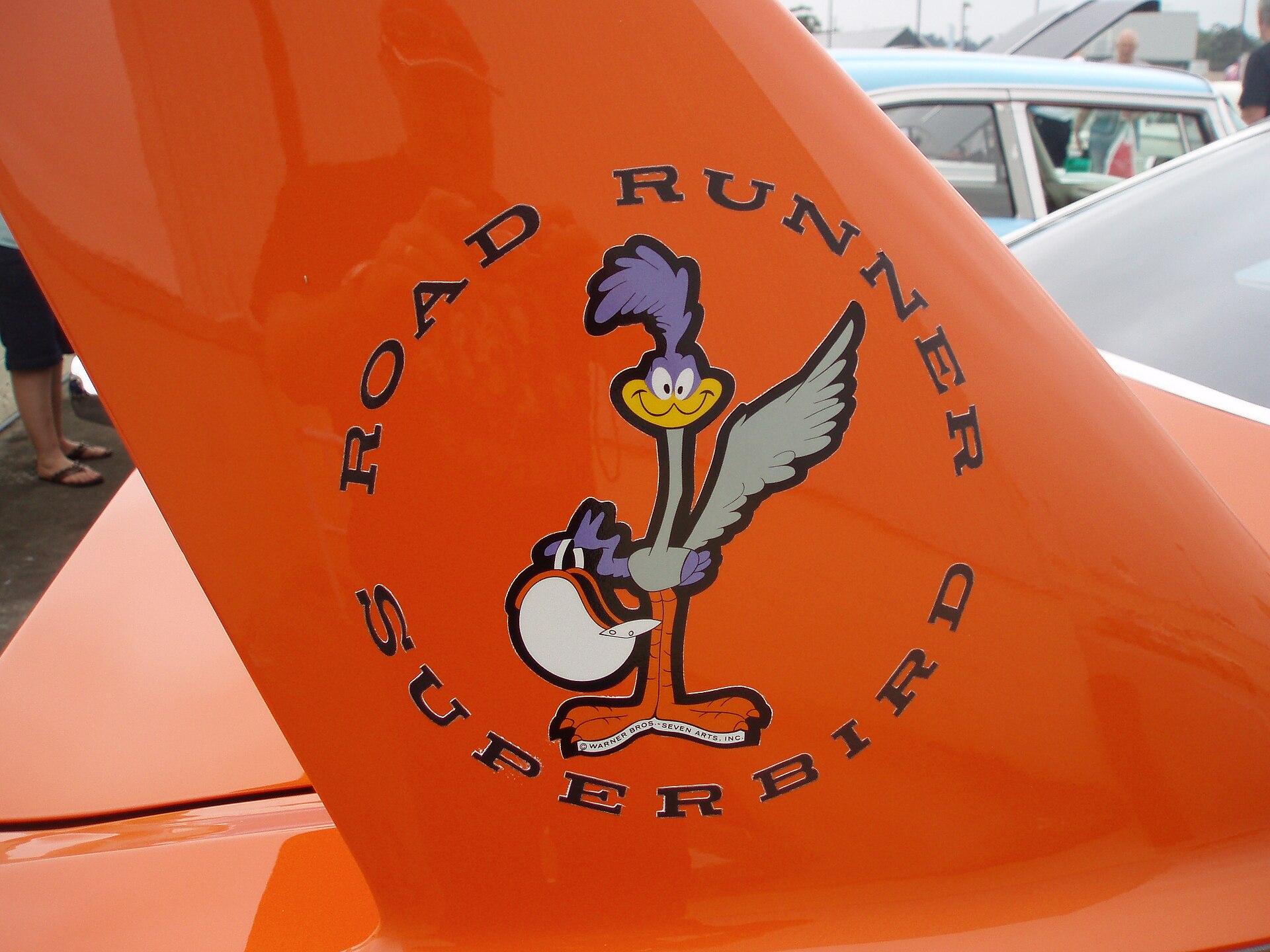
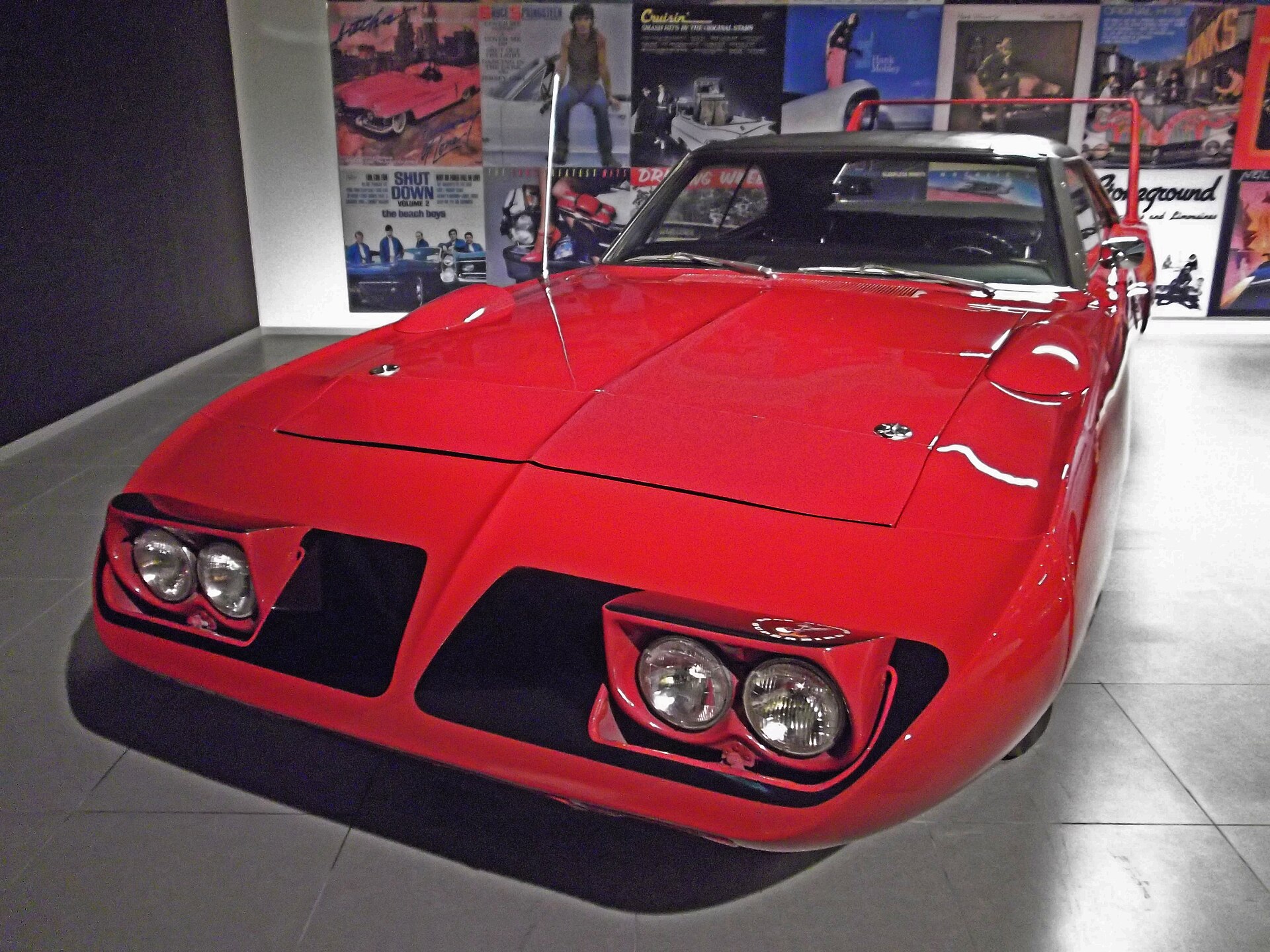
The Superbird's body was refined from the Daytona's, not copied. The fibreglass nose cone with pop-up headlights added 483 mm (19 in) to the car's length. The wing sat on tall vertical struts so that it worked in clean air above the roofline; Wikipedia calls the popular story that it was set high to let the boot lid open an urban myth. On the Daytona, the rear-facing scoops above the front wheels let air out of the wheel wells; on the road-going Superbird they were only decoration.
The aerodynamics paid off only at speed. Wikipedia notes that the regular 1970 Road Runner was quicker in quarter-mile and standard acceleration tests, and that the Superbird's advantage appeared only above about 97 km/h (60 mph). Inside, the car kept the Road Runner's character, including its "beep, beep" horn, which the Daytona did not have.

Engines and performance
| Engine | Power (SAE gross) | Torque | Built (Sports Car Market) |
|---|---|---|---|
| 440 Super Commando, one four-barrel | 280 kW (375 hp) | - | 1,084 |
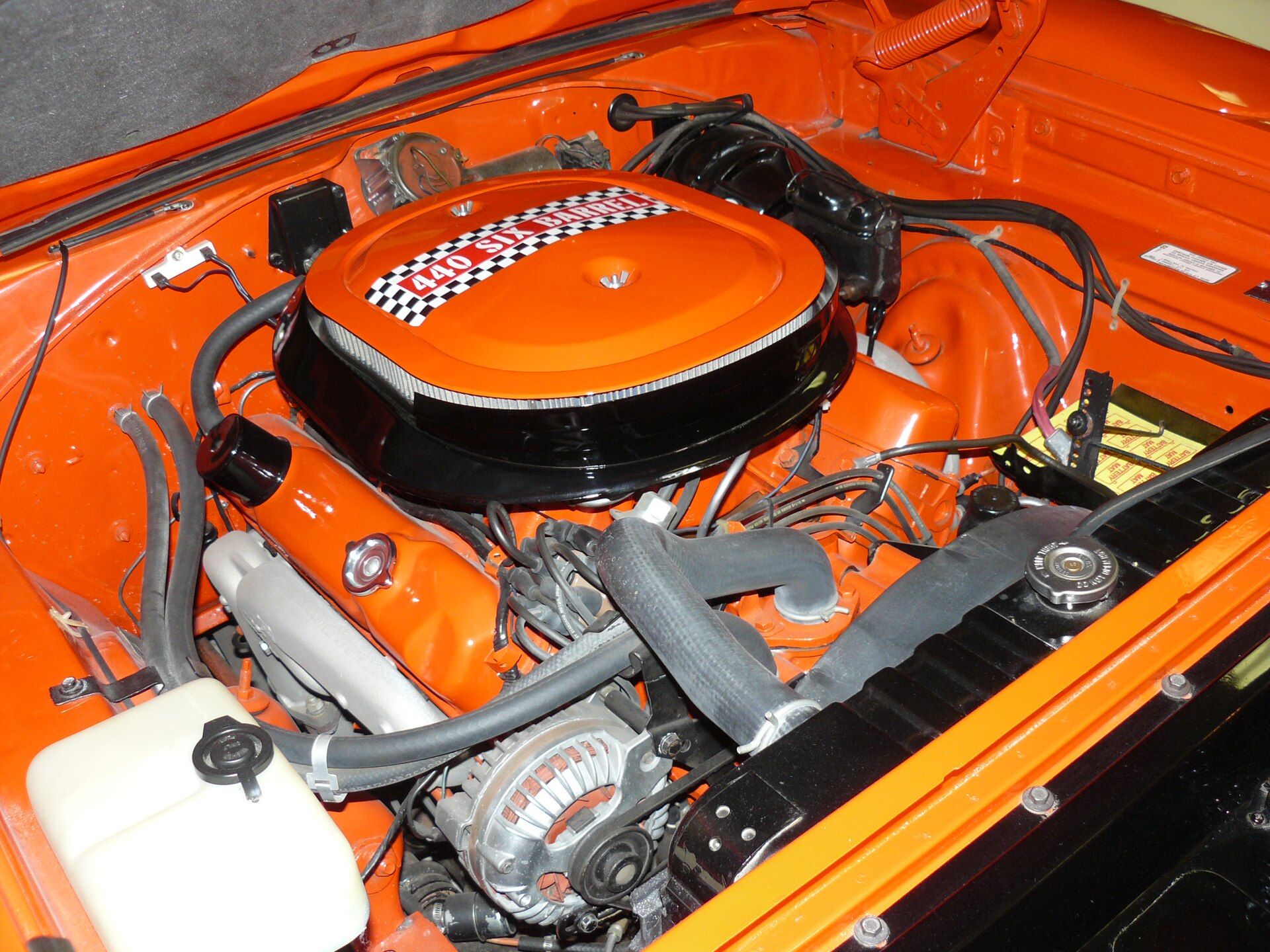
| 440 Super Commando Six Barrel, three two-barrels | 291 kW (390 hp) | - | 716 |
| 426 Hemi, two four-barrel Carter AFBs | 317 kW (425 bhp) at 5,000 rpm | 664 Nm (490 lb-ft) at 4,000 rpm | 135, of which 58 with four-speed |
The 440 was cheaper to build, so Plymouth produced only the minimum number of Hemi cars needed for homologation. Wikipedia quotes 0–60 mph in 5.5 seconds for the Hemi. By our calculation only about 7 % of the cars had the Hemi, which is why those cars bring the highest prices. Wikipedia adds that this engine split is questioned by some researchers.
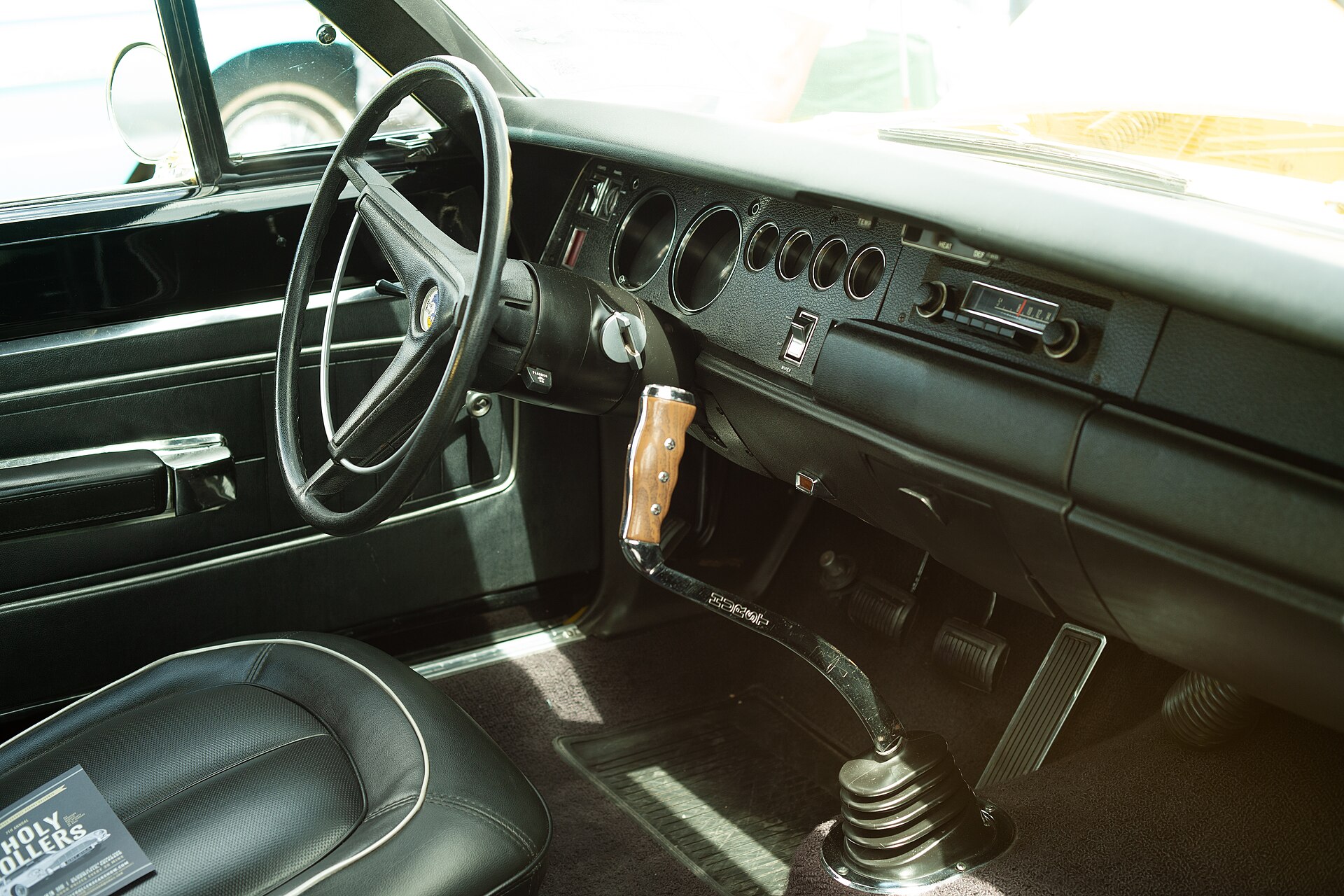
Sports Car Market lists power steering, power brakes and a vinyl roof as standard. Interiors came in white or black, with either a bench seat and column shift or bucket seats and a floor shift.

NASCAR season 1970
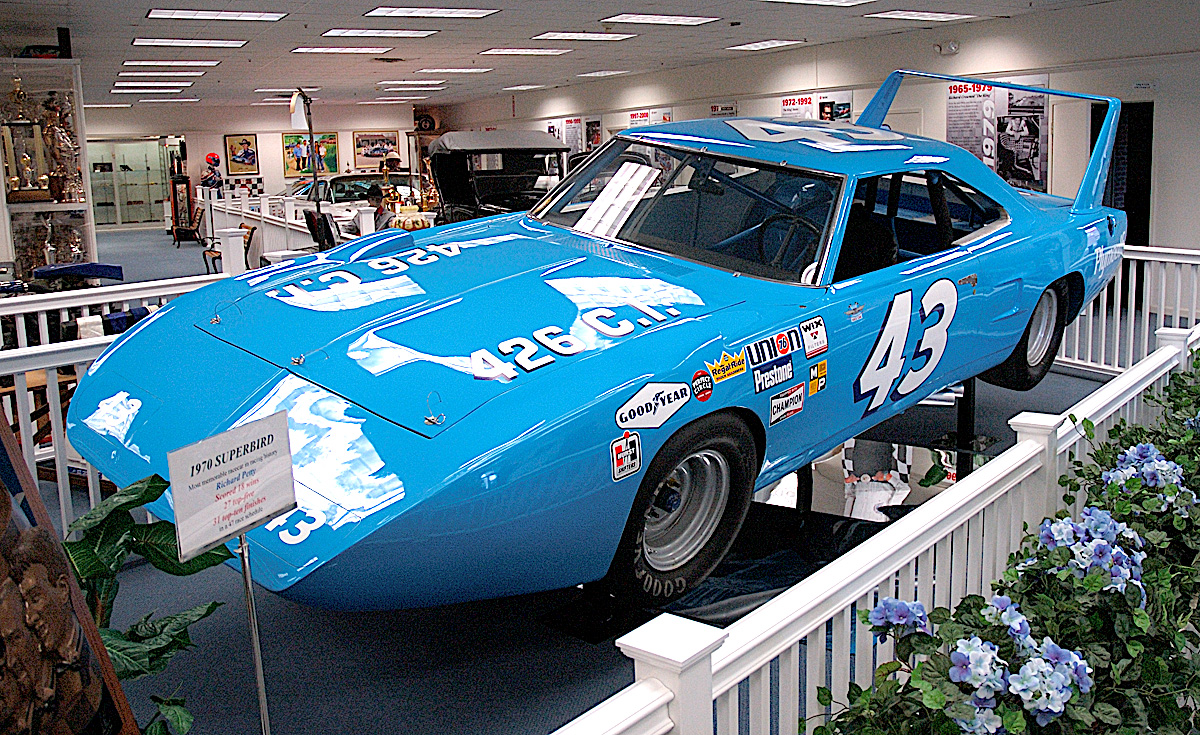
On the track the Superbird did what it was built for. Petty won 18 of the 40 races he entered in the 47-race season and scored nine more top-five finishes. He missed seven races after a crash at the 1970 Rebel 400 and finished fourth in the championship.
NASCAR then closed the door on the winged cars. From 1971 aero cars had to run engines of no more than 305 cu in (5.0 l) or carry much more weight. The penalty made them uncompetitive, and Ford abandoned its own planned aero car, the 1970 Torino King Cobra, which had a Superbird-style nose.

Hard to sell, easy to love
In the showroom the Superbird was a problem. Its styling was too extreme for many buyers, who preferred the ordinary Road Runner. Some cars still stood on dealer lots as late as 1972, and some were converted back into regular 1970 Road Runners to clear stock. Sports Car Market tells of a Six Barrel car bought off a lot in Washington state for US$1,700 (about 1973).
Values reversed long ago. Sports Car Market recorded US$36,650 for a 440 automatic at Mecum in 1999, US$169,500 near the 2006 market peak and US$529,200 for a Hemi at an RM sale in 2007. In August 2017 a 440 four-barrel car sold for US$154,000 at Bonhams Quail Lodge. Wikipedia, as read in October 2026, puts current prices at US$200,000 to 450,000 in 2026, depending on engine, gearbox and options.
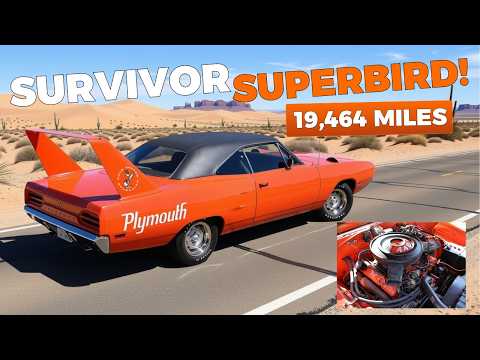
Superbird buying guide
Sports Car Market's 2017 profile gives practical points for checking a car:
- Numbers: the VIN plate is on the driver's side of the dashboard behind the windscreen, and the engine number is on a pad on top of the block near the water pump.
- Engine and gearbox: with only 135 Hemis and 716 Six Barrels, the paperwork must back up the engine; a four-speed Hemi is one of just 58.
- Body details: check that the lower front valance lines up with the wheel opening, the headlight trim is decaled, not painted, and the bonnet pins are set correctly.
- Correct parts: the right radiator and hose routing, original-type battery, jack and spare tyre; the last two are expensive to find.
- Nose and wing: stories of cars that had them removed are mostly unproven, but Sports Car Market says a few existed.
The owners' club is the Daytona-Superbird Auto Club; its estimate of more than 1,300 survivors is quoted by Sports Car Market.
Superbird or Charger Daytona?
| Point | Dodge Charger Daytona | Plymouth Superbird |
|---|---|---|
| Model year | 1969 | 1970 |
| Base | Dodge Charger | Plymouth Road Runner |
| Wing-side scoops | functional, vent the wheel wells | cosmetic |
| Horn | standard | Road Runner "beep, beep" |
| Body | first aero design | refined nose cone and body |
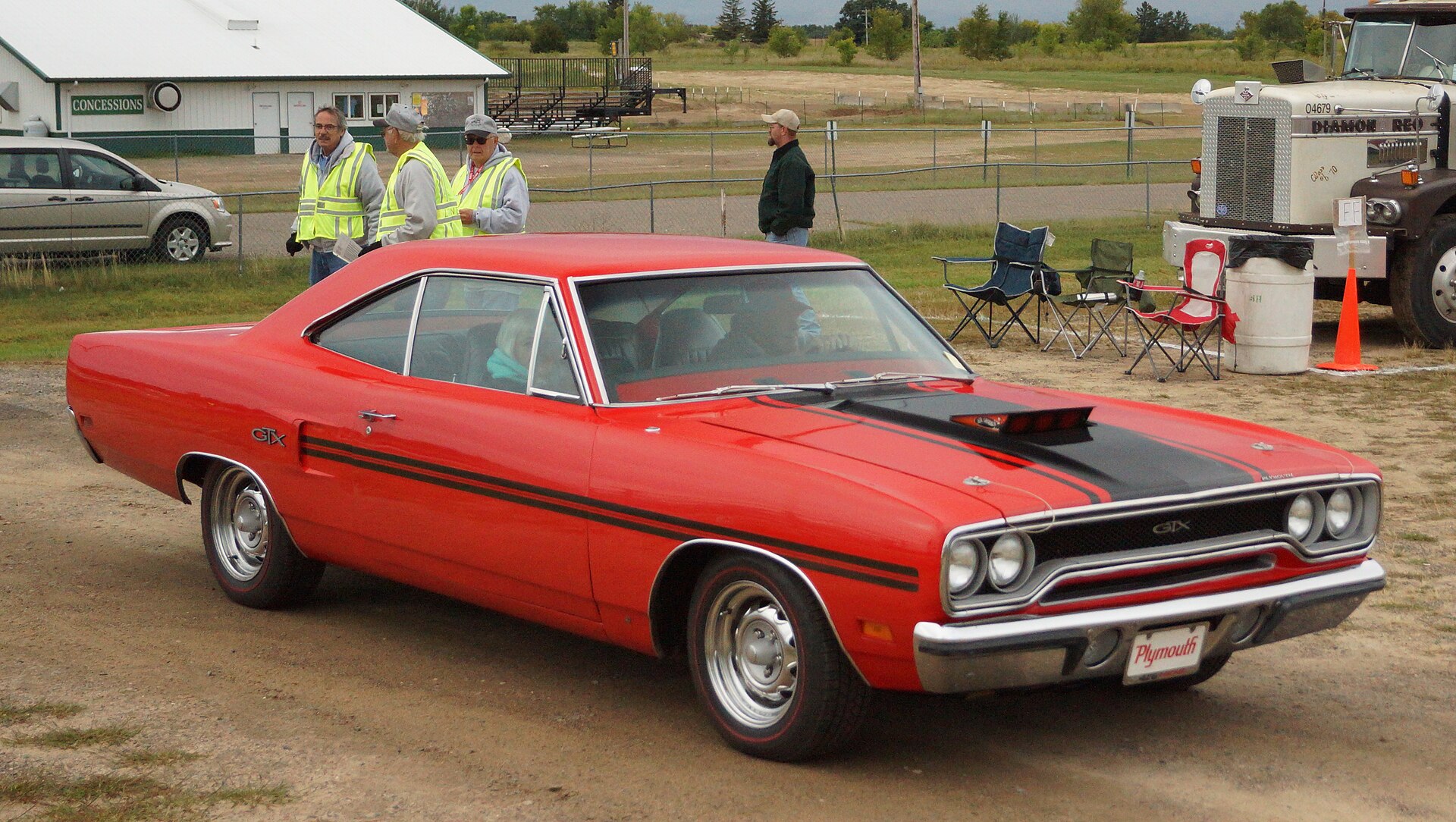
Both cars are covered on 1CARS: read the story of the Dodge Charger Daytona, its 1969 predecessor, and compare it with the upscale B-body Plymouth GTX. The American muscle car guide places them in the golden age, and our Plymouth catalogue lists every Superbird engine; the car rankings show how its power compares.
Photo gallery


Popular comparisons
Plymouth Superbird in our rankings
- No. 3 of 89 · Longest coupes (5,613 mm)
- No. 5 of 420 · Longest cars (5,613 mm)
- No. 8 of 88 · Most powerful cars of the 1970s (317 kW)
- No. 27 of 557 · Biggest engines: cars (7,206 cc · top 5%)
- No. 20 of 173 · Biggest engines: coupes (7,206 cc · top 12%)
- No. 83 of 403 · Widest cars (1,941 mm · top 21%)
Longer than 98% of ranked cars in the 1CARS catalog (No. 5 of 420).
Plymouth Superbird photos 6
FAQ
How many Plymouth Superbirds were made?
The generally accepted figure is 1,935 built for US dealers, with 34 to 47 more reportedly sent to Canada; some published figures go as high as 2,783.
How many Hemi Superbirds exist?
135 were built with the 426 Hemi, 58 of them with a four-speed manual.
Why does the Superbird have such a tall wing?
The wing was mounted high so that it worked in clean air above the roof and gave more downforce; the story that it had to clear the boot lid is a myth.
What did a Superbird cost new?
US$4,298 in 1970, according to Sports Car Market.
Why was the Superbird built for only one year?
NASCAR restricted aero cars to engines of 305 cu in or more weight from 1971, and the cars sold slowly, so Plymouth did not continue it.
Data sources
Data checked by an editor against the sources below.