
 Plymouth Barracuda Formula S
All generations, specs and history
Published Sources (4) Report an error
By Felix Hartmann, Automotive Technology & EV Contributor
- Built
- 1965–1969
- Generations
- 2
- Top power
- 246 kW (334 PS)
Timeline
Barracuda Formula S generations
Click a generation for its own page
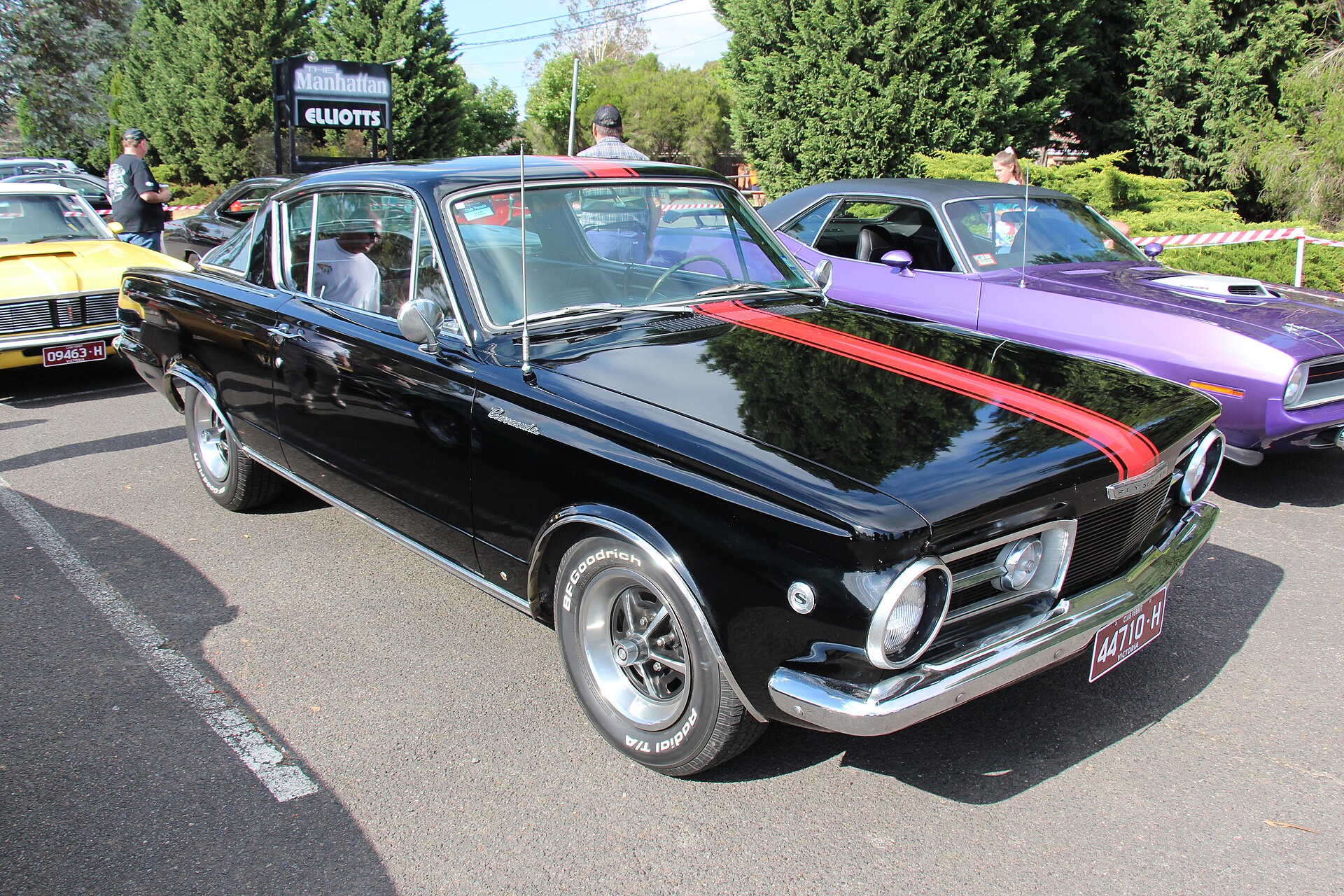
- Barracuda Formula S I 1965–1966 · Coupe · 175 kW (238 PS)
- Barracuda Formula S II 1967–1969 · Coupe, Convertible · 175–246 kW (238–334 PS)
Newest first · 2 generations since 1965
-
1967
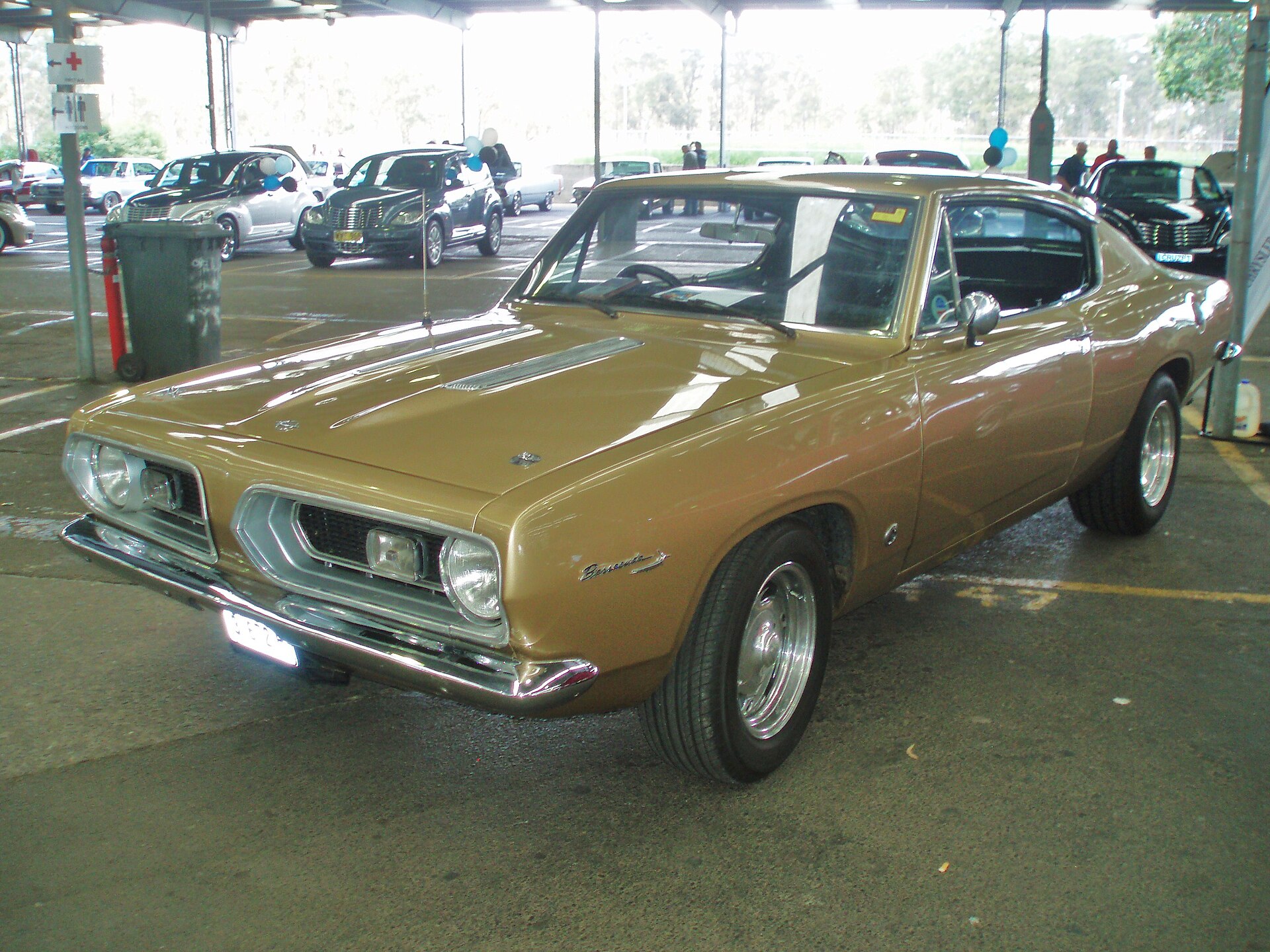
- 1965 I 1965–1966 · Coupe · 175 kW (238 PS)

All generations by year: Barracuda Formula S II (1967–1969) · Barracuda Formula S I (1965–1966)
Which one is mine?
Pick the year of first registration to see which generation it is.
- Barracuda Formula S II 1967–1969
- Barracuda Formula S I 1965–1966
The Barracuda Formula S was the performance package for Plymouth's first pony car, sold from the 1965 to the 1969 model year. It started with the 4.5-litre 273 Commando V8 at 175 kW (235 hp, SAE gross) and ended with a choice of the 340 and the 383, the latter rated 246 kW (330 hp) in 1969. Every Formula S also had firmer suspension, wider tyres and a tachometer.
In short
- Five model years on the compact Chrysler A-body: fastback only in 1965-1966, fastback, notchback hardtop and convertible from 1967.
- Engines: 273 Commando (1965-1967), 383 big-block (1967-1969) and 340 small-block (1968-1969).
- The 1965 package added US$230 to US$311 (1965) to the base price, depending on the gearbox.
- Old Cars Weekly reports 5,316 Formula S cars for 1966, out of 38,029 Barracudas.
Specs by version
| Version | Engine | Power | Torque | Drive | Production years |
|---|---|---|---|---|---|
| Barracuda Formula S I · 273 Commando 4-barrel V8 (SAE gross) | 4.5 l · 8 cyl · Petrol 4,474 cc | 175 kW 238 PS235 hp | 380 Nm280 lb-ft | Rear-wheel drive | 1965–1966 |
| Barracuda Formula S II · 273 Commando 4-barrel V8 (SAE gross) | 4.5 l · 8 cyl · Petrol 4,474 cc | 175 kW 238 PS235 hp | 380 Nm280 lb-ft | Rear-wheel drive | 1967 |
| Barracuda Formula S II · 340 4-barrel V8 (SAE gross) | 5.6 l · 8 cyl · Petrol 5,572 cc | 205 kW 279 PS275 hp | 461 Nm340 lb-ft | Rear-wheel drive | 1968–1969 |
| Barracuda Formula S II · 383 4-barrel V8 280 hp (SAE gross) | 6.3 l · 8 cyl · Petrol 6,276 cc | 209 kW 284 PS280 hp | - | Rear-wheel drive | 1967 |
| Barracuda Formula S II · 383 4-barrel V8 300 hp (SAE gross) | 6.3 l · 8 cyl · Petrol 6,276 cc | 224 kW 305 PS300 hp | 542 Nm400 lb-ft | Rear-wheel drive | 1968 |
| Barracuda Formula S II · 383 4-barrel V8 330 hp (SAE gross) | 6.3 l · 8 cyl · Petrol 6,276 cc | 246 kW 334 PS330 hp | - | Rear-wheel drive | 1969 |
Verified Manufacturer and type-approval data from our catalog · Sources and methodology
Barracuda Formula S at a glance
| Specification | Barracuda Formula S |
|---|---|
| Model years | 1965-1969 |
| Built | 5,316 in 1966 (reported); other years not broken out |
| Bodies | two-door fastback; notchback hardtop and convertible from 1967 |
| Platform | Chrysler A-body (Valiant), 2,743 mm (108 in) wheelbase from 1967 |
| Engines | 273 V8, 4.5 L; 383 V8, 6.3 L; 340 V8, 5.6 L |
| Power (SAE gross) | 175 kW (235 hp) 273; 205 kW (275 hp) 340; 209 to 246 kW (280 to 330 hp) 383 |
| Torque | 380 Nm (280 lb-ft) 273; 461 Nm (340 lb-ft) 340; 542 Nm (400 lb-ft) 1968 383 |
| Gearboxes | three-speed manual; four-speed manual or TorqueFlite automatic optional |
| 1965 tyres | Goodyear Blue Streak 6.95 x 14 |
| 0-60 mph | 8.9 s, 1966 273 with automatic (Motor Trend, February 1966) |
| Quarter mile | 16.5 s at 84 mph (same test); 14.20 s reported for a 1968 383 four-speed |
| Package price | US$230-311 (1965); US$212 with the 340, US$251 with the 383 (1968) |
Why Plymouth added the Formula S in 1965
The Barracuda arrived in 1964 as a fastback version of the Valiant compact and sold 23,443 cars in its short first season, against 126,538 Mustangs over the same period. For 1965 Plymouth answered with a package that turned the car into a small grand tourer. The Formula S brought the 273 Commando V8 with a Carter four-barrel carburettor, 10.5:1 compression, solid tappets and a hotter camshaft.
The chassis changes mattered as much as the engine. Plymouth fitted heavy-duty front torsion bars, heavier rear springs, firm-ride dampers and an anti-roll bar, along with wide 14-inch rims, Goodyear Blue Streak tyres, a tachometer, stripes and Formula S medallions. Depending on the gearbox, the package cost US$230 to US$311 in 1965. Car and Driver drove an early car in its October 1964 issue and found it slower in a straight line than a K-code Mustang but better through corners. Plymouth built 64,596 Barracudas for 1965; no source used here gives the Formula S share.
The 273 Commando years, 1965-1966
The 273 Commando was rated at 175 kW (235 hp) at 5,200 rpm and 380 Nm (280 lb-ft) at 4,000 rpm, against 134 kW (180 hp) for the two-barrel 273. In 1966 it received an unsilenced air cleaner and little else. Motor Trend tested a 1966 Formula S with the TorqueFlite automatic in February 1966 and recorded 0-60 mph in 8.9 seconds and the quarter mile in 16.5 seconds at 84 mph. Its test car cost US$3,616.50 (1966) as tested; a V8 Barracuda started at US$2,655 (1966).
The option list of that car shows how a Formula S was usually built up: front disc brakes for US$81.95, power steering for US$80.35 and a tachometer at US$48.70 (all 1966 prices). Barracuda sales fell to 38,029 in 1966, and Old Cars Weekly reports 5,316 Formula S cars that year, 2,346 with the automatic and 2,970 with the four-speed.
The 383 and the 340 in the second generation, 1967-1969
The 1967 redesign gave the Barracuda its own body on a wheelbase stretched by 51 mm (2 in) to 2,743 mm (108 in). Length grew to 4,897 mm (192.8 in) and the front track widened by 38 mm (1.5 in). Old Cars Weekly counts about 30,000 fastbacks, 28,000 hardtops and 4,000 convertibles for 1967. The 273 Commando carried over, and the new 383 B-block became a Formula S-only engine with 209 kW (280 hp), 10.0:1 compression and a Carter four-barrel. Plymouth's bigger cars had 242 kW (325 hp) from the same engine, and the 383 Barracuda was seldom ordered.
For 1968 the 340 replaced the 273. It gave 205 kW (275 hp) at 5,000 rpm and 461 Nm (340 lb-ft) at 3,200 rpm, while the 383 rose to 224 kW (300 hp) at 4,400 rpm and 542 Nm (400 lb-ft) at 2,400 rpm. The package now included dual exhausts, wide wheels with red or white stripe wide-oval tyres and extra instruments. Car Life's 1968 Barracuda 340-S weighed 1,574 kg (3,470 lb) with air conditioning. Plymouth built 45,412 Barracudas that year: 22,575 fastbacks, 19,997 hardtops and 2,840 convertibles.
| Model year | Formula S engines | Power (SAE gross) |
|---|---|---|
| 1965-1966 | 273 Commando four-barrel | 175 kW (235 hp) at 5,200 rpm |
| 1967 | 273 Commando or 383 four-barrel | 175 kW (235 hp) or 209 kW (280 hp) |
| 1968 | 340 or 383 four-barrel | 205 kW (275 hp) or 224 kW (300 hp) |
| 1969 | 340 or 383 four-barrel | 205 kW (275 hp) or 246 kW (330 hp) |
In 1969 the 383 was rated at 246 kW (330 hp). Plymouth also introduced the 'Cuda trim that year, built on the Formula S option and offered with the 340, 383 or 440. Car Life's 'Cuda 340 test car from the November 1968 issue cost US$3,449 (1968) and ran 0-60 mph in 7.1 seconds and the quarter mile in 14.93 seconds at 96.63 mph. Sports Car Market cites 1,431 Formula S 340 fastbacks for 1969, and total Barracuda output that year was 31,987.

Against the Mustang and the A-body Dodge
The Barracuda's handicap was volume. By the end of 1966 Plymouth had built 126,058 Barracudas, while Ford had built 1,288,557 Mustangs. The Formula S fought on handling and on engine choice, and from 1967 the 383 gave it a big-block option in a compact pony car. Dodge used the same A-body for the Dart, so the two brands shared much of the hardware.
How the Formula S name ended
The 1969 'Cuda trim took over the Formula S role, and the name did not return when the E-body Barracuda arrived for 1970. The later cars, from the 340 small-block to the Hemi, are covered in the Plymouth Barracuda generations guide, and the brand's background in the history of Plymouth.
Barracuda Formula S today: what to check
Old Cars Weekly calls the 1965 production figures fuzzy, so a Formula S claim depends on the car's equipment and paperwork. A 1965-1966 car should have the four-barrel 273 Commando, the tachometer, the heavy-duty suspension and the Formula S medallions. A two-barrel 273 with added badges is a regular V8 Barracuda.
- 383 cars: rare from new; the Old Cars Weekly example has a four-speed and an 8 3/4-inch axle with 3.91:1 gears.
- 340 cars (1968-1969): check that the engine is the high-compression 340 and that the package parts, such as dual exhausts, are present.
- Brakes: front discs were an option in 1966, so many cars have drums all round.
- Values: Sports Car Market reported a 1969 Formula S 340 fastback sold for US$47,300 at Barrett-Jackson Las Vegas on 26 September 2013.
The Formula S is listed in the Plymouth catalogue and belongs to the early pony cars of the American muscle car guide.

Plymouth Barracuda Formula S: first vs latest generation
| Spec | Barracuda Formula S I | Barracuda Formula S II | Change |
|---|---|---|---|
| Years | 1965–1966 | 1967–1969 | 2 years apart |
| Most powerful version | 175 kW (238 PS) | 246 kW (334 PS) | +71 kW (+41%) |
Oldest and newest generation in the 1cars catalog. Power is the strongest version of each; other rows are shown only when both generations have the figure.
Plymouth Barracuda Formula S in our rankings
- No. 97 of 663 · Biggest engines: cars (6,276 cc · top 15%)
- No. 67 of 202 · Biggest engines: coupes (6,276 cc · top 34%)
- No. 189 of 509 · Most torque: cars (542 Nm · top 38%)
- No. 437 of 1040 · Most powerful cars (246 kW · top 43%)
- No. 50 of 114 · Most powerful cars of the 1960s (246 kW · top 44%)
- No. 114 of 190 · Most powerful American cars (246 kW · top 60%)
Bigger engine than 85% of ranked cars in the 1CARS catalog (No. 97 of 663).
FAQ
What does Formula S mean on a Barracuda?
It was Plymouth's performance package from 1965 to 1969. It added a high-output V8, heavy-duty suspension, wider tyres, a tachometer and special badges to the Barracuda.
What engines came with the Formula S?
The 273 Commando with 175 kW (235 hp) from 1965 to 1967, the 383 from 1967 with up to 246 kW (330 hp), and the 340 with 205 kW (275 hp) in 1968 and 1969.
How many Barracuda Formula S cars were built?
Exact totals are not published in the sources used here. Old Cars Weekly reports 5,316 for 1966, and Sports Car Market cites 1,431 Formula S 340 fastbacks for 1969.
How fast was the Barracuda Formula S?
Motor Trend timed a 1966 Formula S 273 automatic at 8.9 seconds to 60 mph. A 1968 383 four-speed was reported at 14.20 seconds for the quarter mile.
Data sources
Data checked by an editor against the sources below.
- Wikipedia - Plymouth Barracuda
- Musclecarfacts
- Oldcarsweekly - 1967 Barracuda A Fearsome Car
- Over-drive-magazine - 1968 Plymouth Barracuda Fact Sheet


