 Plymouth Fury
Specs, engines and history
Published Sources (1) Report an error
By Sarah Whitmore, Senior Automotive Writer
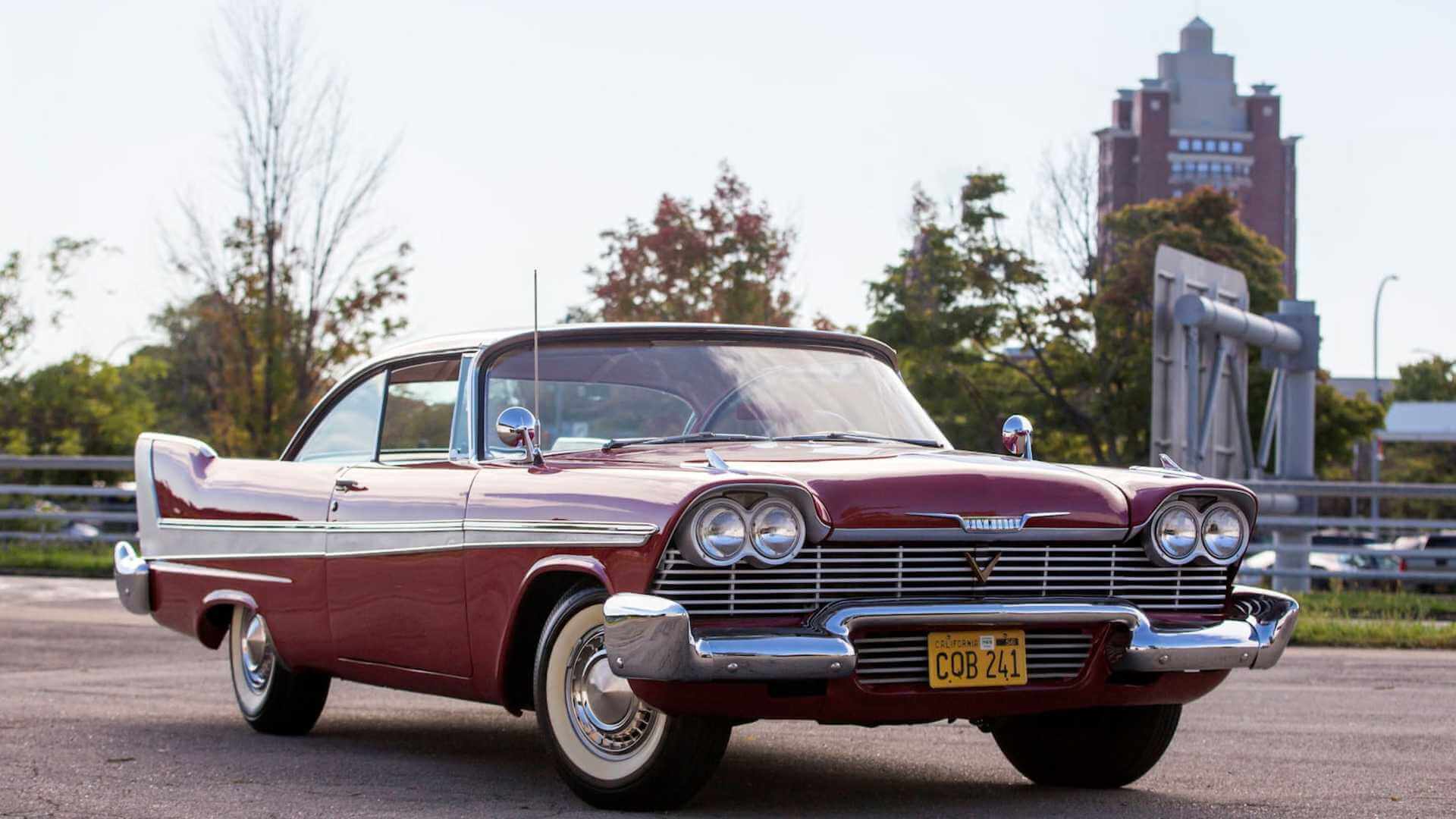
The Plymouth Fury is one of the best-known American cars of the 1950s. It was introduced for the 1956 model year as a top-of-the-range sub-series of the Plymouth Belvedere: a two-door hardtop that was almost identical to the Belvedere sport coupé but positioned as an exclusive, expensive model to lift the image of the whole Plymouth brand. The Fury name then stayed in Plymouth's line-up, across many generations, until 1989. Thanks to Stephen King's 1983 novel Christine and John Carpenter's film of the same year, the 1958 Fury became a pop-culture icon.
In short
- 1956–1958: exclusive two-door hardtop, Sandstone White in 1956–1957 and Buckskin Beige in 1958, with gold anodised aluminium trim.
- 1957: 318 cu in V8 with twin four-barrel carburettors and 216 kW (290 hp).
- 1958: optional Golden Commando 350 cu in V8 with 227 kW (305 hp); a short-lived fuel-injected 235 kW (315 hp) version was recalled.
- From 1959 the Fury became a regular model, built in several sizes until 1989.
Plymouth Fury at a glance
The original Fury is a full-size, rear-wheel-drive two-door hardtop with a V8 engine. The name - "fury" means rage - suits the car's dramatic looks, and it later helped the Fury play the villain on screen. More American classics from Chrysler's brands are listed in our Chrysler catalogue.
The 1956–1958 Fury
The first Furys were sporty, exclusive models built in limited numbers and offered only as a two-door hardtop in a single colour: Sandstone White in 1956 and 1957 and Buckskin Beige in 1958. They had special interiors, bumper wing-guards and V8s with twin four-barrel carburettors.
Exterior
The Fury shared the "Forward Look" styling of the regular Belvedere, Savoy and Plaza, created under Chrysler design chief Virgil Exner. What set it apart was the trim: the grille, mouldings, badges and other brightwork were finished in gold anodised aluminium rather than ordinary chrome. On the rear fins, the trim panel - a continuation of the broad side moulding - was divided into four horizontal sections.
The 1957 redesign made the car longer and wider and gave it the large tailfins for which it is famous. Sharp, almost angular lines, plenty of chrome, prominent headlights and fins resembling the tail of an aircraft defined the look. Tailfins became fashionable in the mid-1950s, and within a few years almost every American manufacturer had adopted them.
Interior
Inside, the Fury looked much like other cars of its day. A thin steering wheel sat in front of an unusual instrument panel dominated by the speedometer, with smaller round dials for fuel level, engine temperature and other information on either side. The front bench is soft but not very comfortable by today's standards, while visibility is good. The front seatbacks fold forward to give access to the rear seats, there is plenty of room in the front footwells, and the doors carry attractive trim inserts. The boot is wide and large.
Engines and transmissions
| Year | Engine | Power (kW / hp) | Induction |
|---|---|---|---|
| 1957 | 318 cu in (5.2 l) V8 | 216 kW / 290 hp | 2 × four-barrel carburettors |
| 1958 | 318 cu in (5.2 l) "Dual Fury V-800" | 216 kW / 290 hp | 2 × four-barrel carburettors |
| 1958 | 350 cu in (5.7 l) Golden Commando | 227 kW / 305 hp | 2 × four-barrel carburettors |
| 1958 | 350 cu in Golden Commando, fuel injection | 235 kW / 315 hp | Bendix fuel injection (recalled) |
The 318 V8 was shared with the Dodge Coronet. A three-speed manual gearbox was standard, and Chrysler's three-speed TorqueFlite automatic was available. The 1958 Bendix fuel-injection option proved unsuccessful: the factory recalled the injected cars and refitted them with a conventional twin four-barrel set-up.
Chassis
The Fury had a body-on-frame construction with rear-wheel drive. With the 1957 redesign Chrysler introduced torsion-bar front suspension, which gave its cars notably good handling for the period.
Christine
In Stephen King's novel Christine, published in 1983, a 1958 Plymouth Fury is possessed by an evil force - and in the story the car is red, a colour the real 1958 Fury was never sold in. For John Carpenter's 1983 film, several 1958 Plymouth Belvederes were therefore painted and dressed as Furys, and many were destroyed during filming. Today the surviving film cars are prized collector's items, and the story is one reason the Fury became such a cult car; enthusiasts have also restored many scrapped Plymouths of the period.
Later Fury generations
| Years | Size and platform | Notes |
|---|---|---|
| 1959–1961 | Full-size | Sport Fury becomes the top model; unibody and slant-six from 1960; fins removed for 1961 |
| 1962–1964 | Mid-size B-body | Slow sales at first, then the Sport Fury returns |
| 1965–1968 | Full-size C-body | 426 "street wedge" V8 with 287 kW (385 hp); VIP luxury trim from 1966 |
| 1969–1971 | Full-size | "Fuselage" styling; Sport Fury GT with a 440 V8 of up to 291 kW (390 hp) |
| 1972–1974 | Full-size | Gran Fury trim from 1972; all-new C-body for 1974 |
| 1975–1978 | Mid-size B-body | Full-size role taken by the Gran Fury |
| 1980–1989 | R-body, then M-body (Gran Fury) | Last rear-wheel-drive V8 car built at Kenosha in December 1988 |
Key specifications (1958 Fury)
| Parameter | Value |
|---|---|
| Body | Two-door hardtop |
| Colour | Buckskin Beige with gold anodised trim |
| Engines | 318 or 350 cu in V8 |
| Power | 216–227 kW (290–305 hp) |
| Gearboxes | 3-speed manual, 3-speed TorqueFlite automatic |
| Drive | Rear-wheel |
Strengths and weaknesses
The early Fury's strengths are its striking Forward Look styling, exclusive gold trim, powerful V8 engines with twin carburettors and good handling for its time, as well as its fame as one of the defining cars of American 1950s design. Its weaknesses are typical of the era: a soft but not very supportive bench seat, high fuel consumption and, today, the rarity and cost of good examples. Rivals included the Chrysler 300, Ford Thunderbird, Pontiac Bonneville, Cadillac Eldorado and DeSoto Fireflite.
Plymouth Fury in our rankings
In production longer than 79% of ranked nameplates in the 1CARS catalog (No. 173 of 912).
FAQ
What colour was the 1958 Plymouth Fury?
Buckskin Beige with gold anodised trim; the red of Christine was never offered from the factory.
What engine does the 1958 Plymouth Fury have?
A 318 cu in V8 with 216 kW (290 hp) as standard, or the optional 350 cu in Golden Commando with 227 kW (305 hp).
Which cars were used in the Christine film?
Several 1958 Plymouth Belvederes were dressed as Furys, because the real Fury was not sold in red.
How long was the Plymouth Fury made?
The Fury name was used from the 1956 model year until 1989.
Data sources
Data checked by an editor against the sources below.