
 Plymouth Cuda 340
All generations, specs and history
Published Sources (2) Report an error
By Felix Hartmann, Automotive Technology & EV Contributor
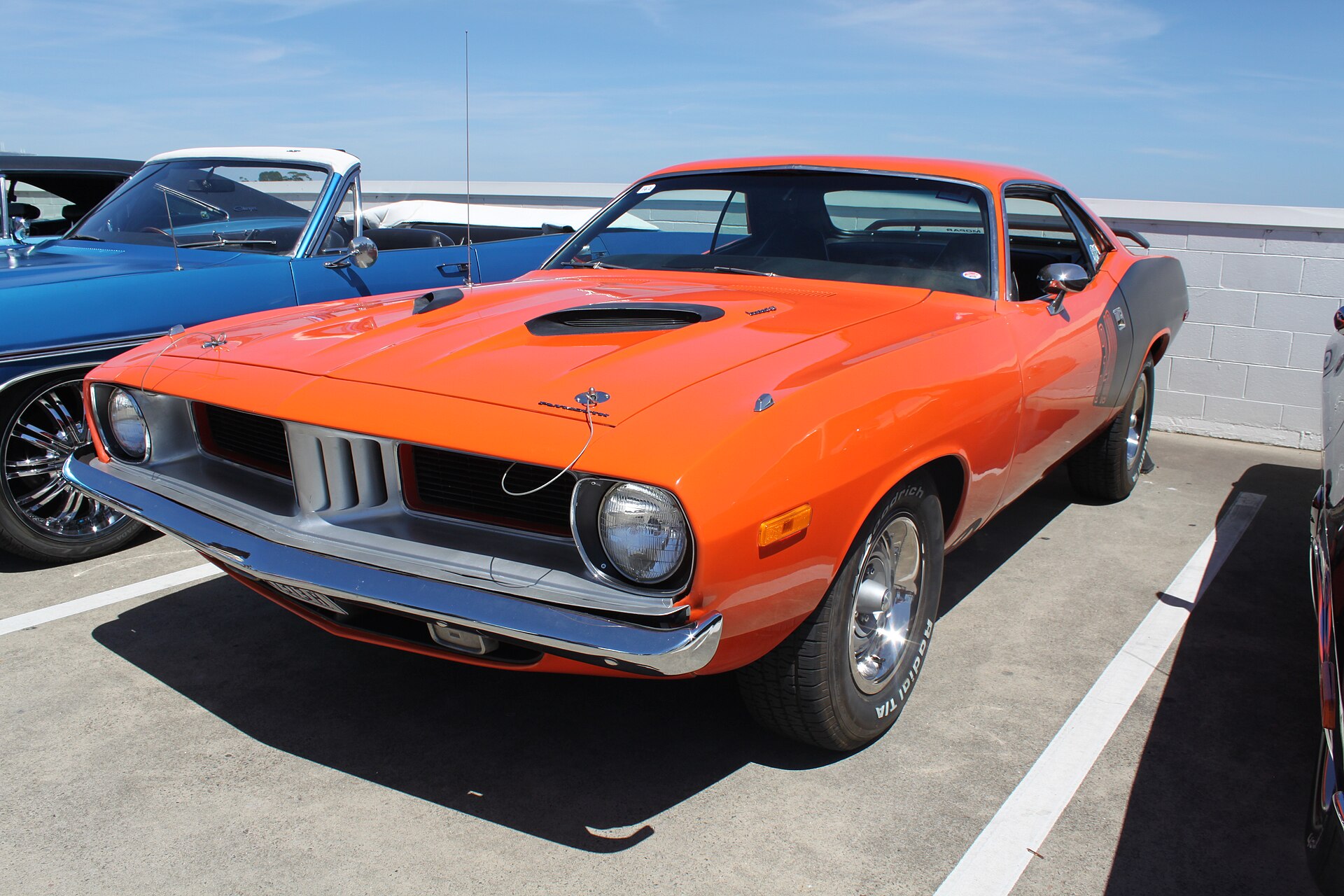
- Built
- 1970–1973
- Generations
- 2
- Top power
- 205 kW (279 PS)
Timeline
Cuda 340 generations
Click a generation for its own page
- 'Cuda 340 1970–1971 · Coupe, Convertible · 205 kW (279 PS)
- 'Cuda 340 1972–1973 · Coupe · 179 kW (243 PS)
Newest first · 2 generations since 1970
- 1972 'Cuda 340 1972–1973 · Coupe · 179 kW (243 PS)
- 1970 'Cuda 340 1970–1971 · Coupe, Convertible · 205 kW (279 PS)
All generations by year: 'Cuda 340 (1972–1973) · 'Cuda 340 (1970–1971)
Which one is mine?
Pick the year of first registration to see which generation it is.
Check by VINThe 'Cuda 340 was the small-block version of Plymouth's E-body 'Cuda, built for the 1970 to 1973 model years. Its 5.6-litre 340 V8 with a single four-barrel carburettor was rated at 205 kW (275 hp, SAE gross) in 1970 and 1971 and 179 kW (240 hp, SAE net) in 1972 and 1973, when it was the strongest engine left in the Barracuda range.
In short
- 1970-1971: an option in place of the standard 383, which had 250 kW (335 hp); 1972-1973: the top 'Cuda engine after the 383, 440 and Hemi were dropped.
- Compression fell from 10.5:1 (1970) to 10.2:1 (1971) and 8.5:1 (1972-1973).
- Car Life, February 1970: 0-60 mph in 7.5 seconds and the quarter mile in 15.0 seconds at 94 mph with the TorqueFlite automatic.
- A 360 V8 replaced the 340 in late 1973 production.
Specs by version
| Version | Engine | Power | Gearbox | Drive | Production years |
|---|---|---|---|---|---|
| 'Cuda 340 · 340 4-barrel V8 (SAE gross) | 5.6 l · 8 cyl · Petrol 5,572 cc | 205 kW 279 PS275 hp | - | Rear-wheel drive | 1970–1971 |
| 'Cuda 340 · 340 4-barrel V8 (SAE gross), TorqueFlite automatic | 5.6 l · 8 cyl · Petrol 5,572 cc | 205 kW 279 PS275 hp | 3-sp Automatic | Rear-wheel drive | 1970 |
| 'Cuda 340 · 340 4-barrel V8 (SAE net) | 5.6 l · 8 cyl · Petrol 5,572 cc | 179 kW 243 PS240 hp | - | Rear-wheel drive | 1972–1973 |
Verified Manufacturer and type-approval data from our catalog · Sources and methodology
Cuda 340 at a glance
| Specification | Plymouth 'Cuda 340 |
|---|---|
| Model years | 1970-1973 |
| Bodies | two-door hardtop and convertible |
| Platform | Chrysler E-body, 2,743 mm (108 in) wheelbase |
| Engine | 340 V8, 5.6 L (340 cu in), single four-barrel carburettor |
| Power | 205 kW (275 hp) SAE gross 1970-1971 (175 kW, 235 hp net in 1971); 179 kW (240 hp) SAE net 1972-1973 |
| Compression ratio | 10.5:1 (1970), 10.2:1 (1971), 8.5:1 (1972-1973) |
| Carburettor | four-barrel; Carter Thermoquad from 1971 |
| Gearboxes | three-speed manual, A833 four-speed manual, TorqueFlite automatic |
| Test weight | 1,647 kg (3,630 lb), Car Life 1970 car with automatic |
| 0-60 mph | 7.5 s (Car Life, February 1970) |
| Quarter mile | 15.0 s at 94 mph (same test) |
| Fuel use | 16.9 L/100 km (13.9 mpg US), Car Life test average |
The 340 in the 1970 E-body range
For 1970 the Barracuda moved from the compact A-body to the new E-body, which was 127 mm (5 in) wider and 152 mm (6 in) shorter overall than the outgoing car. The 'Cuda became a separate model with the 383 four-barrel as its standard engine. The 340 was the optional small-block, rated 45 kW (60 hp) below the 383 on paper.
Plymouth offered three hotter engines above it. The AAR 'Cuda used a 340 with three two-barrel carburettors, rated at 216 kW (290 hp) gross, and the Hemi 'Cuda had the 426 Hemi. Car Life found the engine set two inches further back than in the old Barracuda and called it "our favorite Mopar powerplant", while noting that Plymouth did not seem to encourage its use.
Car Life tests the 1970 Cuda 340
Car Life published its test of a 1970 'Cuda 340 in February 1970. The car had the TorqueFlite automatic with Chrysler's console "Slap-Stick" shifter, a 3.55:1 axle and E60-15 tyres. It weighed 1,647 kg (3,630 lb), 73 kg (160 lb) more than the four-speed 1969 'Cuda 340 the magazine had driven with a 3.91 axle. Each new door and its surrounding structure added about 34 kg (75 lb), which accounted for most of the gain.
The figures followed the weight. The 'Cuda reached 60 mph in 7.5 seconds, 100 mph in 19.4 seconds and covered the quarter mile in 15.0 seconds at 94 mph, the first 340 the editors had driven that would not break 15 seconds. They listed a top speed of 202 km/h (125.4 mph) and averaged 16.9 L/100 km (13.9 mpg US). The test car understeered heavily, because the promised rear anti-roll bar was missing, and stopped on power drum brakes. Car Life also found the boot smaller and the rear seat usable only by young children.
Compression and ratings year by year
| Model year | Compression | Rating | Changes |
|---|---|---|---|
| 1970 | 10.5:1 | 205 kW (275 hp) gross | new E-body; 383 standard in the 'Cuda |
| 1971 | 10.2:1 | 205 kW (275 hp) gross, 175 kW (235 hp) net | Thermoquad, four headlights, fender gills; six-barrel 340 dropped |
| 1972 | 8.5:1 | 179 kW (240 hp) net | 383, 440 and Hemi gone; 318 is the base V8 |
| 1973 | 8.5:1 | 179 kW (240 hp) net | 318 and 340 only; 360 takes over late in the year |
The 1971 car was the last high-compression 340 'Cuda. At 10.2:1 it still needed premium fuel, and Carter's spread-bore Thermoquad became the factory carburettor, cruising on two small barrels and opening large secondaries under load. That year brought four headlights and fender gills, both used only for 1971, while the scalloped bonnet was standard and did not feed air. The large "billboard" side graphics were an option that buyers could leave off. Plymouth built 16,492 Barracudas for 1971, of which 1,983 were V8 cars with the four-speed.
For 1972 compression dropped to 8.5:1 so the engine could run on lower-octane pump fuel, and the rating moved to SAE net. The 'Cuda range shrank to the 318, now the base V8, and the 340, with the 225 six still offered in the Barracuda. In 1973 only the 318 and 340 V8s remained. Barracuda output rose to 18,490 in 1972 and 19,281 in 1973. Late 1973 production and the 1974 cars used the 360 V8, rated at 183 kW (245 hp) net.

Small-block rivals inside Chrysler
Plymouth put the same four-barrel 340 into the smaller A-body Duster 340, with the same 205 kW (275 hp) gross rating in 1970 and 1971. Dodge sold the same E-body as the Challenger, which Car Life found roomier inside than the Barracuda.
How many 340 Cudas were built
Chrysler's production split by engine is not published in the sources used here, so the 340 share is unknown. Wikipedia gives 48,867 Barracudas for 1970 with 43,280 V8s, while the author of the Car Life retrospective gives 55,499 for the year. Base Barracudas made up 49 % of 1970 output, and only 13.2 % of 1970 Barracudas had front disc brakes, according to Automotive Industries.
Cuda 340 today: what to check
The vehicle identification number is the first check. On 'Cuda 340 hardtops sold through Hagerty's records, such as BS23H0B391963 (1970) and BS23H1B148243 (1971), BS23 identifies a 'Cuda hardtop, H is the high-performance four-barrel 340 and the next digit is the model year. A 318 car fitted later with a 340 keeps its original engine code.
- Year details: four headlights and gills belong to 1971 only; an 8.5:1 engine belongs to 1972-1973.
- Brakes: many cars left the factory with drums all round.
- Driveline: the A833 four-speed with a Pistol Grip shifter and an 8 3/4-inch axle with Sure Grip were options worth documenting.
- Rarity: the 1971 car combines the higher compression with the one-year trim.
The 'Cuda 340 sits in the Plymouth catalogue and in the E-body years of the muscle car guide.

Plymouth Cuda 340: first vs latest generation
| Spec | 'Cuda 340 | 'Cuda 340 | Change |
|---|---|---|---|
| Years | 1970–1971 | 1972–1973 | 2 years apart |
| Most powerful version | 205 kW (279 PS) | 179 kW (243 PS) | −26 kW (−13%) |
Oldest and newest generation in the 1cars catalog. Power is the strongest version of each; other rows are shown only when both generations have the figure.
Plymouth Cuda 340 in our rankings
- No. 139 of 665 · Biggest engines: cars (5,572 cc · top 21%)
- No. 89 of 203 · Biggest engines: coupes (5,572 cc · top 44%)
- No. 52 of 106 · Most powerful cars of the 1970s (205 kW · top 50%)
- No. 561 of 1042 · Most powerful cars (205 kW · top 54%)
- No. 139 of 191 · Most powerful American cars (205 kW · top 74%)
- No. 271 of 347 · Most powerful coupes (205 kW · top 79%)
Bigger engine than 79% of ranked cars in the 1CARS catalog (No. 139 of 665).
FAQ
How much horsepower did the 340 Cuda have?
205 kW (275 hp, SAE gross) in 1970 and 1971, which equalled 175 kW (235 hp) net in 1971. In 1972 and 1973 the lower-compression 340 was rated at 179 kW (240 hp, SAE net).
Was the 340 standard in the Cuda?
Not in 1970, when the 383 was the standard 'Cuda engine and the 340 an option. In 1972 and 1973 the 340 was the most powerful engine in the range, with the 318 as the base V8.
What is the difference between the Cuda 340 and the AAR Cuda?
The 'Cuda 340 used one four-barrel carburettor and 205 kW (275 hp). The 1970 AAR 'Cuda had three two-barrel carburettors and 216 kW (290 hp), plus its own bodywork for Trans-Am homologation.
How fast was a Cuda 340?
Car Life timed a 1970 automatic at 7.5 seconds to 60 mph and 15.0 seconds at 94 mph for the quarter mile, with a 3.55 axle and 1,647 kg (3,630 lb) of test weight.
Data sources
Data checked by an editor against the sources below.
- Wikipedia - Plymouth Barracuda
- Curbsideclassic - Vintage Car Life Road Test 1970 Plymouth Barracuda Cuda 340 At Least The Stylists Did A Good Job Of It


