 Lotus Exige
All generations, specs and history
Published Sources (1) Report an error
By Felix Hartmann, Automotive Technology & EV Contributor
- Built
- 2000–2021
- Generations
- 3
- Top power
- 321 kW (436 PS)
Timeline
Exige generations
Click a generation for its own page
- Series 1 2000–2001 · Coupe · 132–142 kW (179–193 PS)
- Series 2 2004–2011 · Coupe · 142–202 kW (193–275 PS)
- Series 3 2012–2021 · Coupe · 257–321 kW (349–436 PS)
Newest first · 3 generations since 2000
-
2012
-
2004
-
2000


All generations by year: Series 3 (2012–2021) · Series 2 (2004–2011) · Series 1 (2000–2001)
Which one is mine?
Pick the year of first registration to see which generation it is.
Check by VINThe Lotus Exige is the closed, track-oriented sister car of the Lotus Elise, built at Hethel in Norfolk from 2000 to 2021. Over three series it changed from a light, four-cylinder coupé with a fixed hard top and a rear wing into a supercharged V6 car with up to 321 kW (436 PS). In total Lotus built 10,497 Exiges before the Emira took over its place in the range in 2021.
In short
- Built at Hethel, England, in three series: Series 1 (2000–2001), Series 2 (2004–2011) and Series 3 (2012–2021); 10,497 cars in total.
- Engines: 1.8-litre Rover K-series (S1), 1.8-litre Toyota 2ZZ-GE with or without supercharger (S2), supercharged 3.5-litre Toyota V6 (S3).
- Power from 132 kW (179 PS) in the first car to 321 kW (436 PS) in the Cup 430 Final Edition of 2021.
- Successor: the Lotus Emira, launched on 6 July 2021.
Lotus Exige at a glance
| Specification | Series 1 | Series 2 | Series 3 |
|---|---|---|---|
| Years | 2000–2001 | 2004–2011 | 2012–2021 |
| Engine | 1.8 Rover K-series I4 | 1.8 Toyota 2ZZ-GE I4, supercharged in S versions | 3.5 Toyota 2GR-FE V6, supercharged |
| Power | 132–142 kW (179–193 PS) | 142–191 kW (193–260 PS) | 257–321 kW (350–436 PS) |
| Gearbox | five-speed manual | six-speed manual | six-speed manual; automatic optional |
| Weight | — | 914–942 kg | 1,054–1,176 kg |
| Built | 604 | — | — |
The Exige is based on the Lotus Elise and shares its basic structure. All models of the brand are listed in the Lotus catalogue.
Series 1 (2000–2001): the Elise with a roof
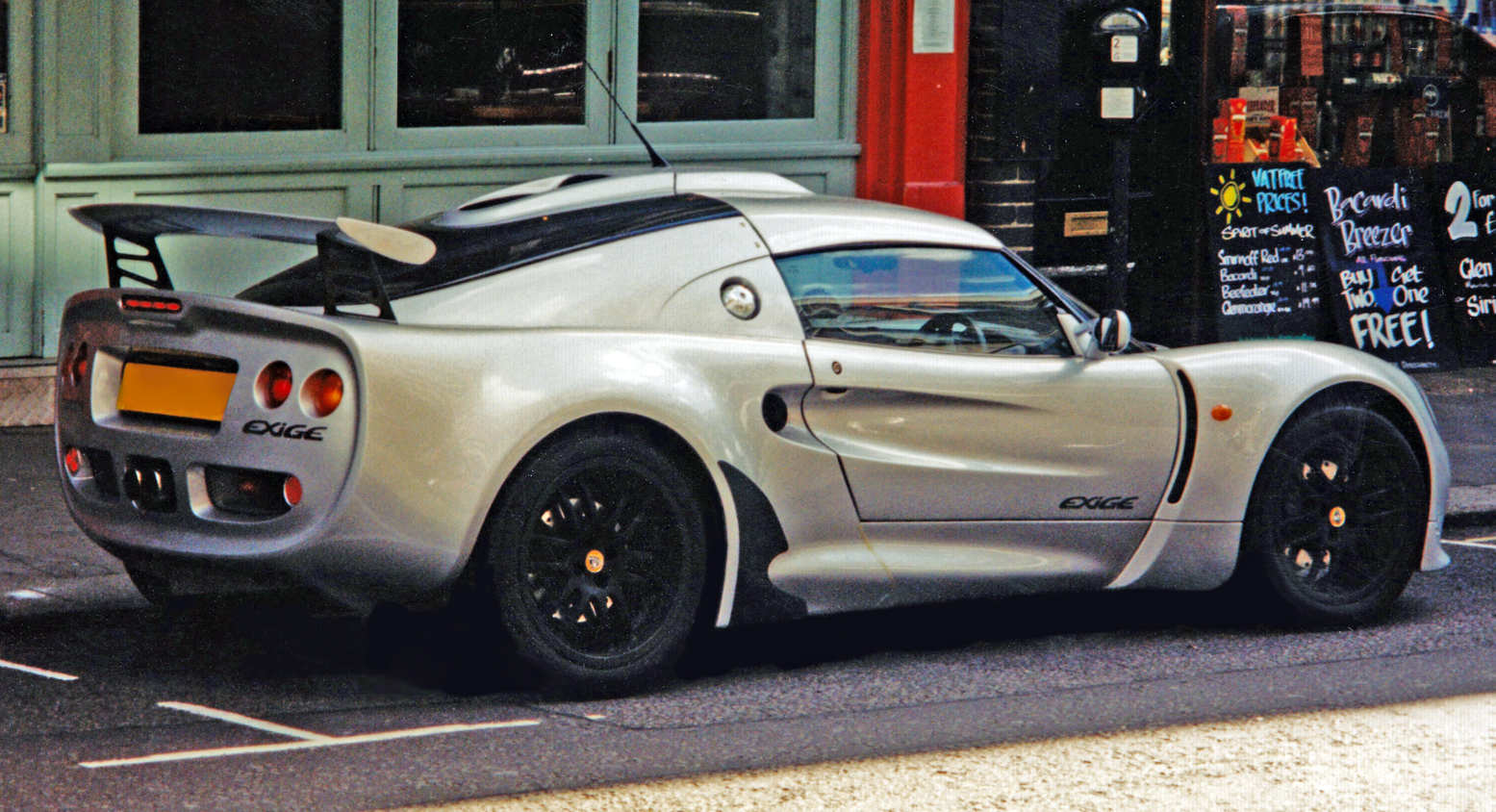
The first Exige was developed from the Series 1 Elise, which had been on sale since 1996. Lotus gave it a fixed hard top, a fastback rear and a wing mounted on pylons above the tail. The engine was a 1.8-litre Rover K-series four-cylinder in its VHPD tune, with 132 kW (179 PS) at 7,800 rpm, or 142 kW (193 PS) in track specification. It drove the rear wheels through a five-speed manual gearbox.
Wikipedia gives 0–100 km/h in 4.9 seconds and a top speed of 219 km/h for the Series 1. Only 604 were built before production ended in 2001.
Series 2 (2004–2011): Toyota power
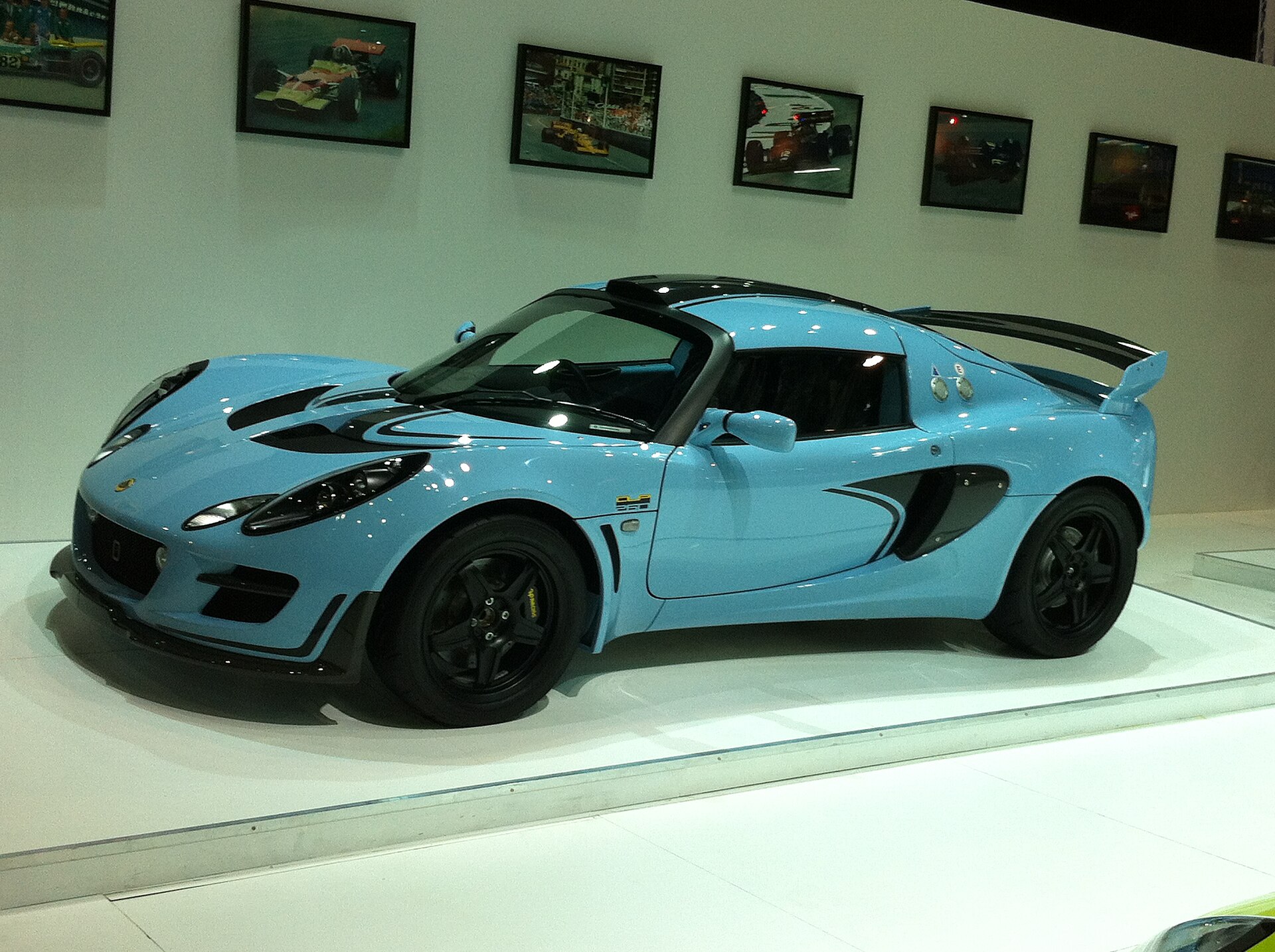
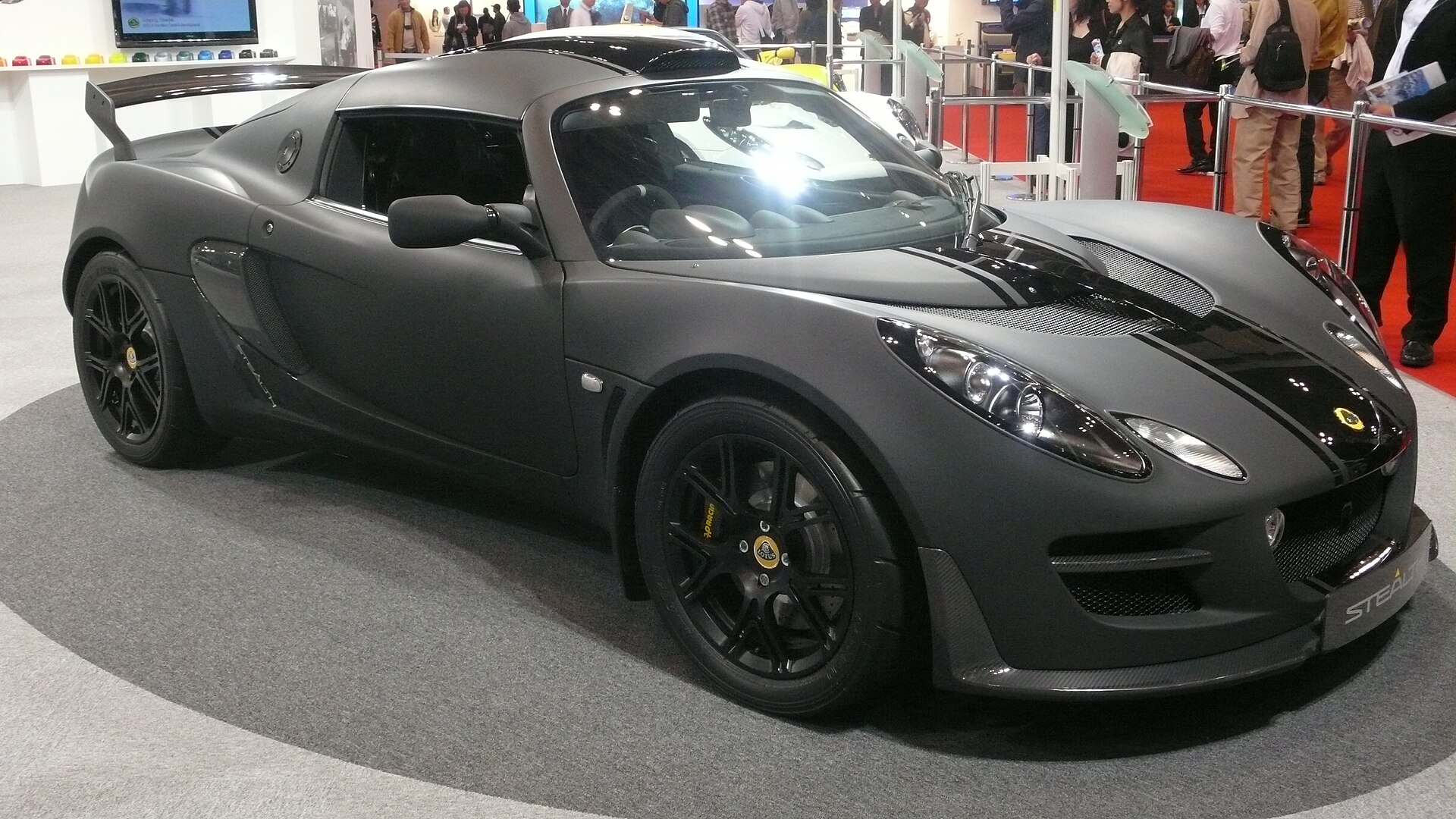
The Series 2 returned in 2004 on the basis of the second-generation Elise, with a Toyota engine. The 1.8-litre 2ZZ-GE four-cylinder, designed by Yamaha, has variable valve timing and lift (VVTL-i) and a compression ratio of 11.5:1. In the Exige it produced 142 kW (193 PS) at 7,800 rpm and 187 Nm at 6,800 rpm, through a close-ratio six-speed Aisin gearbox. The car weighed 914 kg and reached 237 km/h.
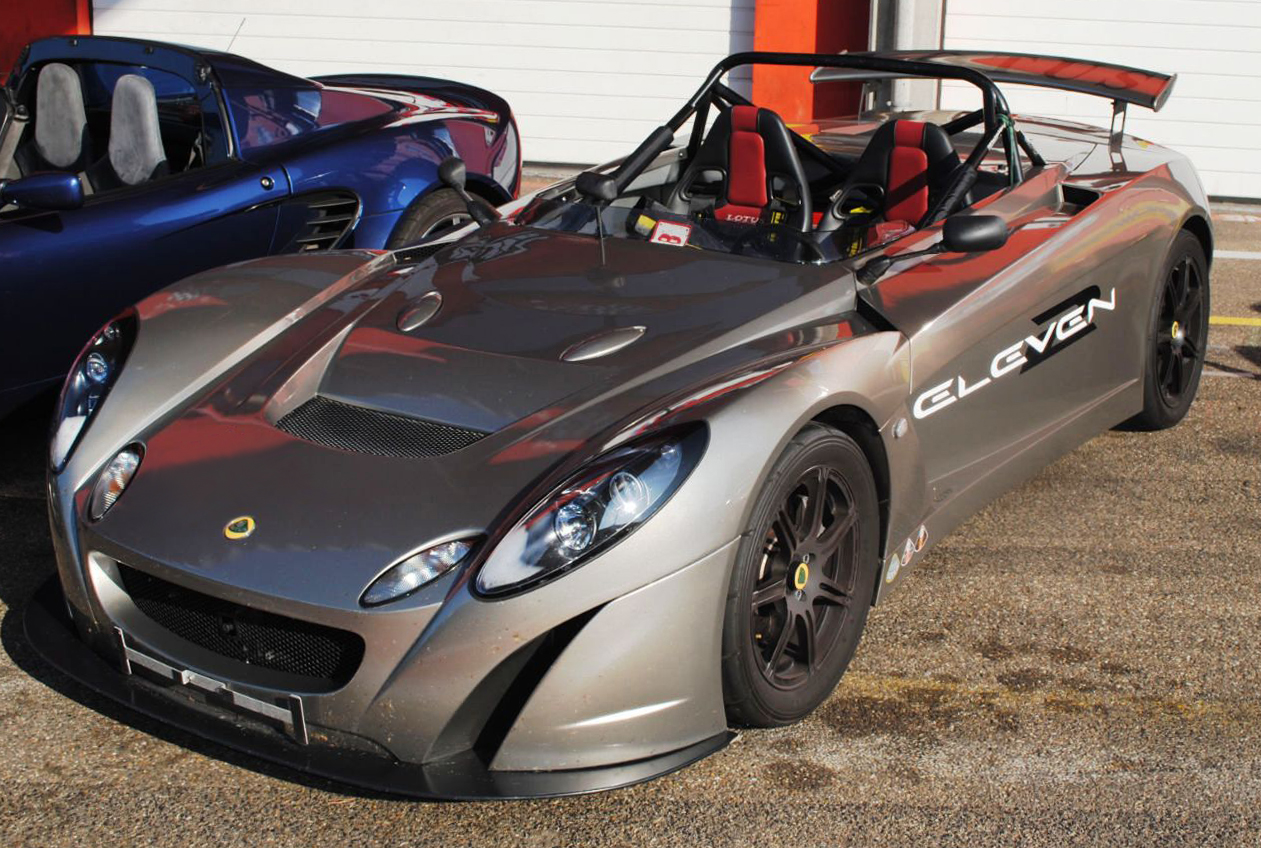
Compared with the Elise, the Series 2 Exige has a front splitter, a hard top with a roof scoop for the engine air and a rear spoiler. These parts produce about 45 kg of downforce at 161 km/h, against 5.9 kg for the Elise.
Supercharged versions followed:
| Version | Year | Power | Torque | Weight | Notes |
|---|---|---|---|---|---|
| Exige | 2004 | 142 kW (193 PS) | 187 Nm | 914 kg | naturally aspirated |
| Exige 240R | 2005 | 181 kW (246 PS) | — | — | 50 cars, yellow or black only |
| Exige S | 2006 | 163 kW (221 PS) | 215 Nm | 933 kg | supercharged and intercooled |
| Exige S 240 | 2008 | 179 kW (243 PS) | — | 942 kg | 9 per cent more power than the S |
| Exige S 260 | 2009 | 191 kW (260 PS) | — | 916 kg | lighter than the S 240 |
| Exige Cup 260 | — | 191 kW (260 PS) at 8,000 rpm | 236 Nm | — | also as Stealth and Scura |
Lotus also showed an Exige 265E that ran on E85 bioethanol, with 197 kW at 8,000 rpm and 249 Nm; it was a demonstrator, not a production car. North American production of the Series 2 ended in August 2011, with Final Edition models of 25 and 30 cars.

Series 3 (2012–2021): supercharged V6
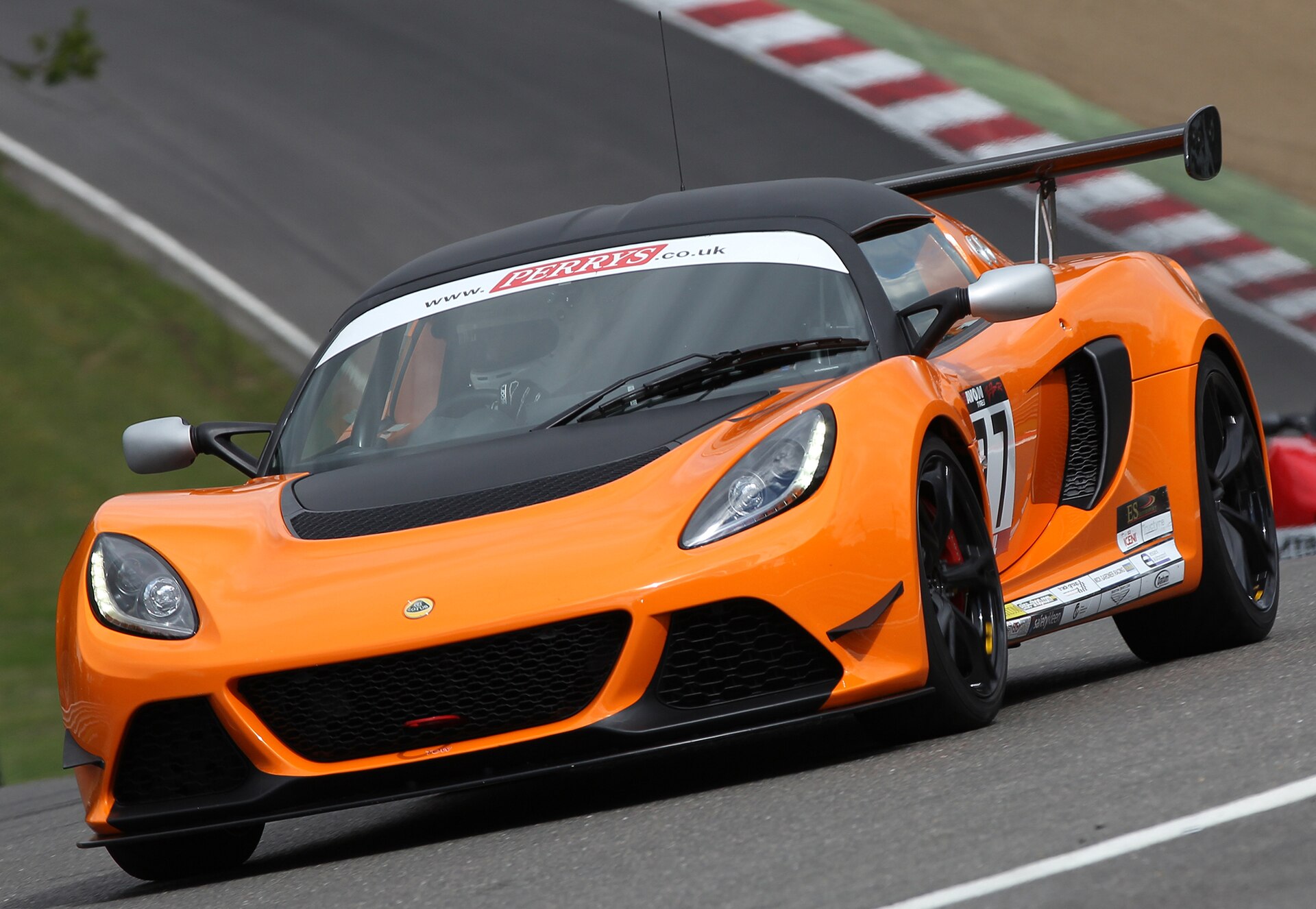
The Series 3, launched in 2012 as the Exige S, was a much bigger step. It uses a 3.5-litre Toyota 2GR-FE V6 with a supercharger but no intercooler, producing 257 kW (350 PS) at 7,000 rpm and 400 Nm at 4,500 rpm. A six-speed Toyota manual gearbox was standard, an automatic was optional. The car is 4,052 mm long, 1,802 mm wide and 1,130 mm high — about 25 cm longer and 5 cm wider than the four-cylinder car — and weighs 1,176 kg. Its top speed is 277 km/h. A Roadster with a removable roof followed in 2013.
Lotus developed the V6 car in a long series of steps, each a little more powerful or lighter than the last:
| Version | Introduced | Power | Torque | Weight | Top speed |
|---|---|---|---|---|---|
| Exige S | 2012 | 257 kW (350 PS) | 400 Nm | 1,176 kg | 277 km/h |
| V6 Cup R | 2013 | 269 kW (366 PS) | 413 Nm | 1,040 kg dry | 274 km/h |
| Sport 350 | December 2015 | 257 kW (350 PS) | 400 Nm | 1,125 kg | — |
| Sport 380 | November 2016 | 280 kW (380 PS) | 410 Nm | 1,076 kg | 286 km/h |
| Cup 430 | November 2017 | 316 kW (430 PS) | 440 Nm | 1,056 kg dry | 290 km/h |
| Sport 410 | May 2018 | 306 kW (416 PS) | 420 Nm | 1,054 kg dry | — |
The Sport 350 replaced the Exige S and was 51 kg lighter. The Sport 380 added polycarbonate side windows and two rear lights instead of four. The Cup 430 was the most extreme version: its Edelbrock supercharger with a charge cooler raised the output to 316 kW (430 PS), it produced 220 kg of downforce, ran on Michelin Pilot Sport Cup 2 tyres and was offered only with a manual gearbox.


Final Editions (2021)
On 9 February 2021 Lotus announced the last Exiges, three Final Edition models:
| Final Edition | Power | Torque | 0–100 km/h | Top speed | Weight |
|---|---|---|---|---|---|
| Sport 390 | 296 kW (403 PS) | 420 Nm | 3.8 s | 276 km/h | 1,138 kg |
| Sport 420 | 313 kW (426 PS) | 427 Nm | 3.4 s | 290 km/h | 1,110 kg |
| Cup 430 | 321 kW (436 PS) | 440 Nm | 3.3 s | 280 km/h | 1,098 kg |
Production ended in 2021. The Exige's successor is the Emira, launched on 6 July 2021 and on sale from March 2022.
Special and limited editions
Over two decades Lotus built many special Exiges:
- Exige GT3: a Series 2 version with 202 kW (275 PS) at 8,000 rpm, an Eaton M62 supercharger and a six-speed C64 gearbox; Wikipedia gives 0–100 km/h in 4.0 seconds and an electronically limited 257 km/h.
- Exige LF1 (2014): 81 cars, one for each Grand Prix win of Lotus in Formula One, in the colours of the Lotus F1 team.
- Exige 360 Cup (2015): limited to 50 cars, 257 kW (350 PS), 1,120 kg dry.
- Exige Type 25: 25 cars based on the Cup 430, a tribute to the 1963 Lotus 25 that Jim Clark drove.
- Exige Sport 240 (2007): six cars for Australia, with 179 kW (243 PS) and 0–100 km/h in 4.2 seconds.

Legacy
The Exige carried Lotus's lightweight philosophy for more than twenty years. It started as an Elise with a roof and ended with a supercharged V6, up to 321 kW (436 PS) and up to 220 kg of downforce, while the weight of most versions stayed close to 1,100 kg. Its long list of special editions also shows how the company used one platform to serve both road drivers and track-day customers. The background of the brand is told in our history of Lotus.
Photo gallery

Lotus Exige evolution in numbers
Did you know?
- The Lotus Exige ran for 21 years, from 2000 to 2021, over 3 generations in our catalog.
- The longest-running generation is the Series 3 (2012–2021): 9 years.
- The biggest jump in power came with the Series 3: up to 321 kW (436 PS), 119 kW more than the Series 2.
Most powerful version, kW
Figures from the 1cars catalog: power is the strongest version of each generation; generations without the figure are left out.
Lotus Exige: first vs latest generation
| Spec | Series 1 | Series 3 | Change |
|---|---|---|---|
| Years | 2000–2001 | 2012–2021 | 12 years apart |
| Most powerful version | 142 kW (193 PS) | 321 kW (436 PS) | +179 kW (+126%) |
Oldest and newest generation in the 1cars catalog. Power is the strongest version of each; other rows are shown only when both generations have the figure.
Image credits · Photos from Wikimedia Commons under free licences
- Lotus Series 1 · Photo: Mr.choppers / Wikimedia Commons, CC BY-SA 3.0
Lotus Exige in our rankings
- No. 151 of 912 · Longest-running car nameplates (21 years · top 18%)
- No. 250 of 859 · Most powerful cars (321 kW · top 30%)
- No. 140 of 313 · Most powerful coupes (321 kW · top 45%)
- No. 56 of 109 · Most powerful British cars (321 kW · top 52%)
- No. 173 of 345 · Cars with the most generations (3 generations · top 68%)
- No. 116 of 170 · Most powerful cars of the 2000s (142 kW · top 70%)
In production longer than 82% of ranked nameplates in the 1CARS catalog (No. 151 of 912).
FAQ
What is the difference between the Lotus Elise and the Exige?
The Exige is based on the Elise but has a fixed hard top, more aerodynamic parts — a splitter, roof scoop and rear wing — and usually more power. The Series 3 Exige also has a V6 instead of the Elise's four-cylinder engine.
What engine does the Lotus Exige have?
The Series 1 used a 1.8-litre Rover K-series engine, the Series 2 a 1.8-litre Toyota 2ZZ-GE (supercharged in the S versions), and the Series 3 a supercharged 3.5-litre Toyota V6.
What is the most powerful Lotus Exige?
The Cup 430 Final Edition of 2021, with 321 kW (436 PS) and 440 Nm.
How many Lotus Exiges were built?
Wikipedia gives 10,497 cars built between 2000 and 2021, including 604 of the Series 1.
What replaced the Lotus Exige?
The Lotus Emira, launched on 6 July 2021 and on sale from March 2022.
Data sources
Data checked by an editor against the sources below.